
Reviewed · TOURS IN CASABLANCA
10 Days Tour From Casablanca, Morocco
The big draw here is the camel trek into Erg Chebbi. You cross the orange dunes at sunset, sleep in a Berber desert camp, and rise early for sunrise before continuing through Morocco’s imperial cities, mountain roads, gorges, and kasbahs. It is a lot of Morocco in 10 days, with a private vehicle and your own group.
I like the mix of famous sights and human encounters, especially the Gnawa music in Khamlia and the visit with nomad families. I also like the route itself: Fes, the Middle Atlas, the Sahara, Todra Gorge, Ait Ben Haddou, and Marrakech form a memorable eastward arc. The drawback is the long driving. Days of nine hours in the car are part of the deal, and entrance tickets, lunches, and some dinners are extra.
Key points at a glance
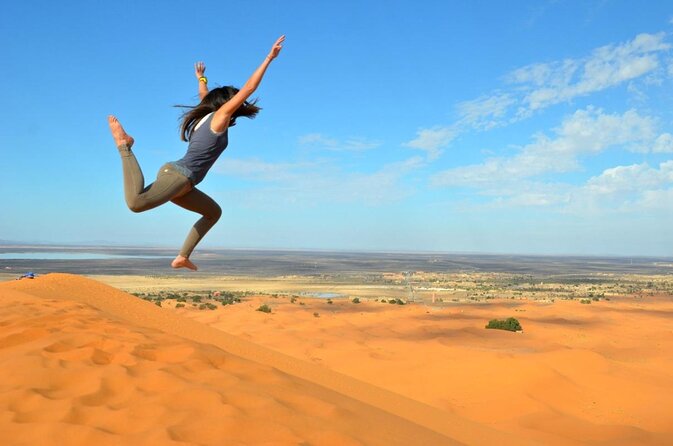
- A true Sahara overnight: Ride a camel for about 1.5 hours to a camp in the Erg Chebbi dunes, with sunset, dinner, music, and an early sunrise.
- Private touring: Only your group takes part, with pickup at Mohammed V Airport and an air-conditioned vehicle.
- Four imperial cities: See Rabat, Meknes, Fes, and Marrakech, each with a different feel and set of monuments.
- Mountain and canyon scenery: Cross the Rif, Middle Atlas, High Atlas, and Anti-Atlas regions, with stops at Todra Gorge and the Ziz Valley.
- Cultural stops beyond the postcard view: Meet nomad families, hear Gnawa music in Khamlia, visit a pottery and zellij cooperative, and see a traditional tannery.
- Plan for extras: Lunches, entrance fees, flights, and some dinners are not included in the $1,100 price.
What this 10-day Morocco route does well
This is a private circuit rather than a single-city tour. You begin in Casablanca and finish with a transfer back to Casablanca Airport, but the heart of the trip lies inland: Fes, the Sahara, the kasbah country, and Marrakech.
At $1,100 per person, the price has reasonable value if you want a driver, hotel and riad stays, desert transport, and a private schedule bundled together. The value is less clear if you prefer to travel slowly or dislike long road days. You will cover a great deal of ground, but you will not have long, unplanned stretches in each place.
The tour includes an air-conditioned vehicle, a guide-driver, nine breakfasts, three dinners, and a camel for each person. The wording around meals needs a close look: dinners are listed as included in one section, while the exclusions also mention dinner. Ask the operator to confirm exactly which three dinners are covered before paying. Lunches and entrance tickets are clearly extra.
The company is Africa Morocco Tours, based in the Merzouga area. One account names a guide called Mr. Said, but the assigned guide can vary, so treat that as a useful example rather than a guarantee. The private format is important: your group can request schedule changes, and one account specifically describes the operator adjusting plans when asked.
Other trips people book in Casablanca:
- From Marrakech: Casablanca Tour with Hassan II Mosque Visit
★ 4.7 · 4,756 reviews - Casablanca: Hassan II Mosque Premium Tour with Entry Ticket
★ 4.5 · 2,971 reviews - Casablanca City Tour with Hassan II mosque ticket
★ 5.0 · 2,480 reviews
Casablanca and Rabat: a gentle start with major monuments
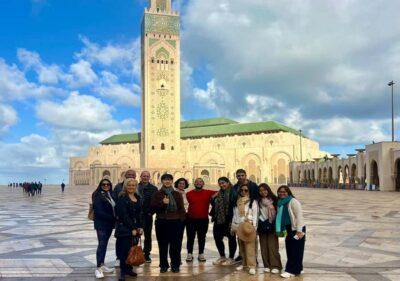
Your arrival day begins at Mohammed V Airport. A guide waits with your name on a sign, then takes you toward Casablanca. If your flight arrives early enough, the first major stop is the Hassan II Mosque.
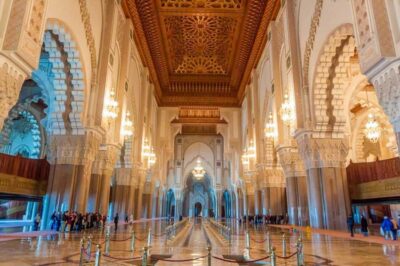
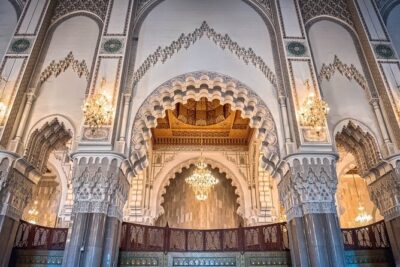
This is Morocco’s largest mosque and one of the country’s few mosques open to non-Muslim visitors. The interior visit requires an entrance ticket, which is not included. Allow about two hours for the stop, and remember that your arrival time determines how much of Casablanca you see. The Corniche and Pigeon Square may be added if the schedule allows.
You spend the night in Rabat rather than Casablanca. That makes sense for the next morning, though it means Casablanca is more of an arrival gateway than a full city visit.
Rabat gives you a stronger historical start. The Kasbah of the Udayas is an old fortified quarter with narrow lanes and views toward the water. You also see Hassan Tower, the unfinished minaret of an incomplete mosque, and the Mausoleum of Mohammed V.
The planned sightseeing in Rabat takes around six hours, followed by the drive to Chefchaouen. That is a full day, so your free afternoon in the blue town may be shorter than it sounds. If Chefchaouen is high on your list, ask how much time you will actually have after the transfer.
Chefchaouen, Volubilis, and Meknes in two busy days
Chefchaouen is often called Morocco’s blue pearl, and the free time here is one of the more relaxed moments in the schedule. You can wander the painted lanes, browse small shops, and enjoy the mountain setting without being tied to a long guided program.
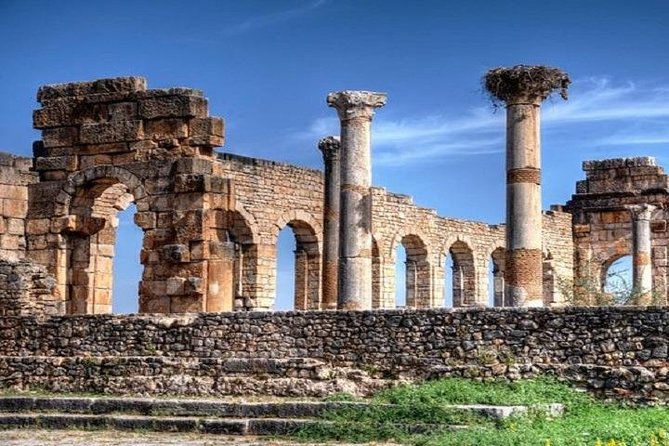
The next day includes Chefchaouen, Wazan, and villages in the Rif before reaching Volubilis. The Roman ruins receive about an hour, which is enough for a focused walk but not a slow archaeological study. The entrance ticket is extra.
Volubilis matters because it adds a Roman layer to a route otherwise centered on Moroccan dynasties and Berber culture. Look for the surviving mosaics and the remains of the ancient settlement, then let the guide explain how the site fits into Morocco’s past.
Meknes follows with a stop of about two hours. You have time for lunch, the broad walls of the medina, Bab El Mansour, and the shrine of Moulay Ismail. Meknes was a major royal center in the 17th century, and the scale of its gates and defensive walls helps explain that role.
You sleep in Fes after the drive from Meknes. The sequence is efficient, but not leisurely. If you want extended time in Chefchaouen or Volubilis, you may need to trade away another stop.
Fes: the trip’s best city for history and craft
Fes receives a full guided day, and that is necessary. The old city is large, dense, and easy to get turned around in. A local guide helps you connect the monuments rather than simply pointing out one doorway after another.
The route includes the Royal Palace gate, the Mellah, and the University of Karaouine. The university dates to 859 and is described as the world’s oldest continuously operating university. Fes served for centuries as a religious, intellectual, and cultural center, and the city still feels shaped by that role.
The traditional tannery is a memorable stop, though the smells can be strong. You will also visit a pottery and zellij tile cooperative. This is more useful than a quick shop stop because you can see how Moroccan tilework and pottery are made. You may also have the chance to try the work and buy finished pieces.
Shopping is part of the day, so set your own limits before entering a cooperative or craft shop. The tour does not state that purchases are required, but the sales opportunity is clearly part of the experience.
A panoramic viewpoint over the Fes medina closes the day. You sleep in a riad, a traditional house arranged around an interior courtyard. Riad rooms can feel atmospheric and personal, though layouts are often less predictable than a standard hotel. If stairs or room access matter to you, ask ahead.
Same base, a different sort of day:
- Casablanca: City Tour with Hassan II Mosque Entry Ticket
★ 4.6 · 1,137 reviews - Private Tour of Casablanca with Hassan II Mosque Entry Ticket
★ 5.0 · 1,102 reviews - Marrakech Day Trip with Camel Ride from Casablanca
★ 5.0 · 740 reviews - Casablanca: Hassan II Mosque & City Highlights Tour
★ 4.5 · 573 reviews
The long road from Fes to Merzouga
Day five is the most demanding driving day, listed at about nine hours. You pass through Ifran, known as Moroccan Switzerland, then stop in the cedar forest near Azrou to see Barbary apes in their natural setting.
From there, the road crosses the Middle Atlas toward Midelt for lunch. Lunch is not included, so budget for meals along the route. The scenery changes steadily from upland forest to dry mountain country, then toward Erfoud and the Ziz Valley.
Erfoud is associated with fossils and date palms. The Ziz Valley adds a ribbon of green to an otherwise increasingly dry route. By evening, you reach Merzouga and stay at a hotel near the dunes.
This day is about transition, not a string of major attractions. You should be comfortable sitting in a vehicle for long periods. The reward is arriving at the Sahara with enough time to prepare for the desert program the next day.
Merzouga: music, nomads, and the main desert night
The Merzouga day is the emotional center of the tour. You use a four-wheel-drive vehicle with air conditioning to explore the area around Erg Chebbi.
The route may include Merzouga Lake, depending on water levels. You continue to Khamlia, sometimes called the Black Town, for Gnawa music and mint tea. The music gives the desert day a cultural focus, rather than reducing it to a dune photo stop.
You also travel along old Paris-Dakar routes toward the black mountains for views over Erg Chebbi and toward the Algerian border. A phosphate mine and a ruined French village are included in the route, followed by a meeting with nomad families in Berber tents.
The nomad visit is one of the more meaningful parts of the program because you see how people live in a difficult environment, rather than only looking at the desert from a vehicle. Expect mint tea and conversation, with the understanding that this is a short introduction, not a full study of nomadic life.
In the afternoon, you ride a camel for about 1.5 hours to the desert camp. The camels are a practical way to reach the camp, but they are not soft transport. One account specifically notes that the ride can be uncomfortable, so wear loose clothing and expect a slow, rocking journey.
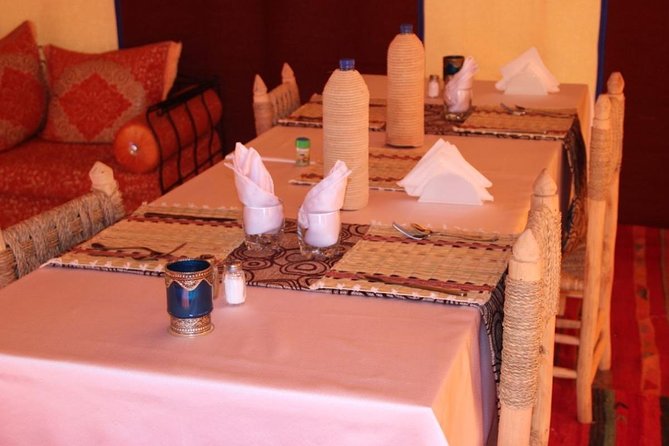
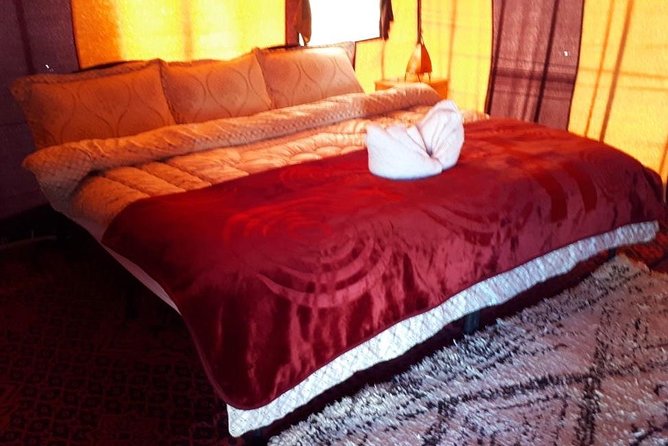
The camp provides mattresses, blankets, and cushions. Dinner, music around a fire, and the night sky are central to the experience. Desert temperatures can drop sharply after dark, so bring a warm layer even if the daytime heat is intense.
Sunrise, Todra Gorge, and the road through the valleys
The following morning begins before sunrise. The dunes take on orange tones as the light arrives, and you then return by camel or vehicle from the camp.
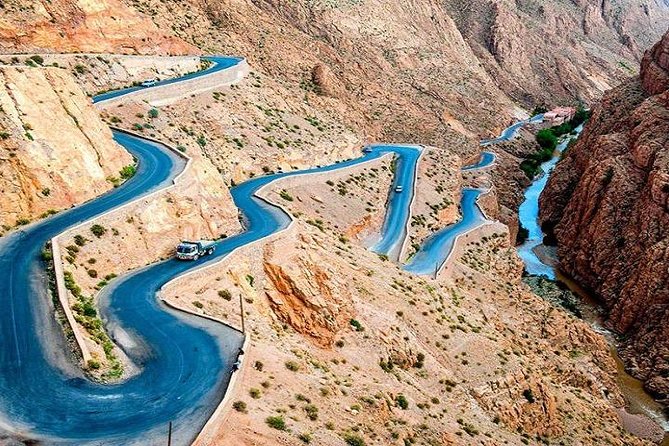
The group continues through Tinghir toward Todra Valley. Todra Gorge has cliffs described as reaching 300 meters, with a narrow passage in places. You have time for a walk and lunch in the valley, though lunch is at your own expense.
The gorge is a good counterpoint to the desert. Instead of wide sand and open sky, you get towering rock walls and a more enclosed route through the High Atlas foothills. The day continues to Dades Valley and Dades Gorge, where you spend the night in a hotel.
The itinerary gives about two hours to the Todra Gorge stop. That is enough for a walk and photographs, but not an extended hike. Tell your guide if walking is a priority, since the schedule also includes the transfer to Dades.
Kasbah country and the crossing to Marrakech
Day eight follows the Road of a Thousand Kasbahs through Kalaat Mgouna, known for its pink roses and May festival. You stop in Skoura to see Kasbah Ameridhil, an 18th-century kasbah in an oasis setting.
Ouarzazate follows. The town is linked with Morocco’s film industry, and the itinerary includes Taourirte Kasbah and Cinema Atlas Studio. Film references can be fun, but they are secondary to the architecture and the desert-edge setting. If you are not interested in movie locations, focus on the kasbah and the town’s role as a gateway through southern Morocco.
Ait Ben Haddou is the major stop. This fortified village is a UNESCO site and remains home to Berber families. A guided walk lets you see the earthen buildings, lanes, and elevated views that have made the site a familiar film setting.
The tour ends the day in Marrakech after crossing the High Atlas. The transfer, photo stops, and sightseeing make this another active day. You will want practical shoes for uneven paths at kasbahs and old quarters.
Marrakech: souks, gardens, and a final city day
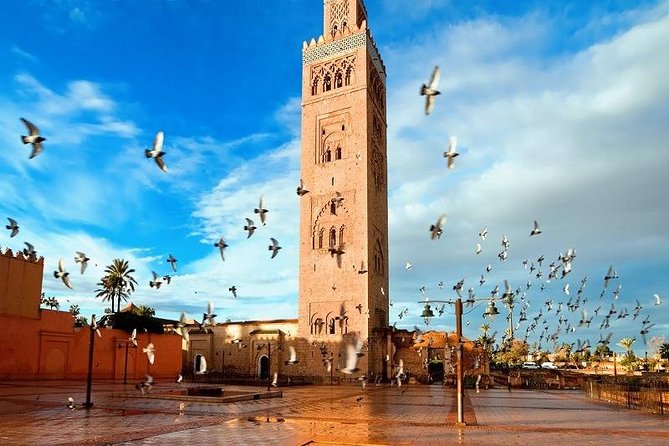
Marrakech receives a guided visit of about three hours. The route includes Jemaa el-Fna square, the Koutoubia Mosque, souks, palaces, and museums.
Jemaa el-Fna is the city’s famous central gathering place. The souks give you a chance to shop for crafts and everyday goods, but they can feel intense if you prefer quiet streets. Stay close to your guide at first, then use free moments to explore at your own pace.
The schedule also includes Gueliz, the modern part of Marrakech, plus Menara Gardens and Majorelle Garden. The tour information does not state that garden entrance fees are included, so ask before the visit. Entrance fees throughout the tour are excluded.
You spend the night in another riad. That keeps the accommodation style consistent with Fes, though you should confirm whether the final night is included in the quoted price and what type of room is provided.
How the transport and private format affect the experience
A private tour makes this route more flexible than a large coach trip. Your group does not have to wait for strangers, and the operator can respond to requests for schedule changes. That is especially useful when you want more time at a market, a viewpoint, or a cultural stop.
The tradeoff is that private touring does not shorten the roads. Fes to Merzouga is a long day, and the route from the desert through the gorges and kasbahs also involves substantial driving. The vehicle is air-conditioned, which matters in the warmer parts of the country, but you should still bring water and keep small essentials within reach.
The tour is best for a couple, family, or small group that wants one organized route without giving up private space. It is less suited to anyone who wants long stays in only two or three places, or who finds repeated early starts and road days tiring.
What to budget beyond the $1,100 price
The headline price does not cover everything. Plan for:
- Lunches throughout the tour
- Entrance fees for places such as Hassan II Mosque, Volubilis, and other paid attractions
- Flights
- Dinners not covered by the three included meals
- Personal purchases at craft cooperatives and markets
The camel, vehicle, guide-driver, nine breakfasts, and three dinners are listed as included. Because the meal information conflicts about dinner, get written confirmation before booking.
The tour is often booked well in advance, with an average of 238 days between booking and departure. That suggests you should not leave the planning until the last minute if your dates are fixed, especially since confirmation is subject to availability and is expected within 48 hours.
Cancellation is allowed for a full refund up to three full days before the start time. Changes or cancellations inside that period are not accepted for a refund.
Should you book this Morocco tour?
Book it if you want the major Moroccan highlights in one private circuit, especially the Sahara camp, Fes, Ait Ben Haddou, and the imperial cities. The desert section is the strongest reason to choose it: the 4×4 outing, Khamlia music, nomad visit, camel ride, sunset, dinner, and sunrise give you much more than a quick dune photograph.
Think twice if your ideal holiday means slow mornings, long museum visits, or several nights in each city. This is a packed road trip, and the $1,100 price requires extra spending for lunches, entrance tickets, and possibly additional dinners.
For most first-time visitors who want a broad introduction to Morocco and are comfortable with long drives, this is a practical and memorable choice. Confirm the meal inclusions, entrance fees, accommodation details, and assigned guide before you commit.
FAQ
Where does the tour begin?
The tour begins at Mohammed V Airport in Casablanca, Morocco.
Where does the tour end?
The activity ends back at the meeting point, with a transfer to Casablanca Airport on the final day.
How long is the tour?
The tour lasts 10 days.
Is this a private tour?
Yes. Only your group takes part in the activity.
Is airport pickup available?
Yes. Pickup is offered, and the guide waits at the airport with your name on a sign.
Is transportation included?
Yes. Transportation is provided in an air-conditioned vehicle with a guide-driver.
Is a camel ride included?
Yes. A camel is included for each person, with a ride of about 1.5 hours to the desert camp.
Are meals included?
Nine breakfasts and three dinners are listed as included. Lunches are not included, and the dinner information is unclear in the tour details, so confirm which dinners are covered before booking.
Are entrance fees included?
No. Entrance fees are not included.
Can I cancel for a full refund?
Yes. You can cancel for a full refund if you cancel at least three full days before the experience start time. Changes or cancellations made later are not accepted.
Just added in Casablanca
- Casablanca Airport Transfer from hotel in Casablanca★ 5.0 · 18 reviews
- Exclusive tour of Casablanca with access to the Hassan II Mosque★ 5.0 · 205 reviews
- Your Private Casablanca Transfer★ 5.0 · 52 reviews
- 14 Days From Casablanca- Morocco Grand Tour★ 5.0 · 24 reviews
- Sunset Camel Ride in the Palm Grove Of Marrakech★ 5.0 · 34 reviews
- Casablanca Night Tour with Andalusian Dinner Show★ 4.5 · 25 reviews
- Chefchaouen the Blue City Full-Day Trip from Casablanca★ 4.5 · 79 reviews
- Marrakeck City tour from Casablanca all the day around trip★ 5.0 · 35 reviews
Tours in Casablanca, compared.
Hassan II Mosque Premium Tour with Entry Ticket
Read our review →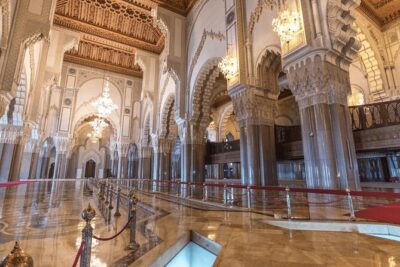
Casablanca City Tour with Hassan II mosque ticket
Read our review →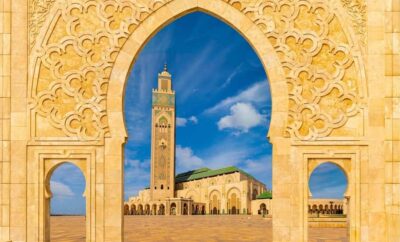
Private Tour of Casablanca with Hassan II Mosque Entry Ticket
Read our review →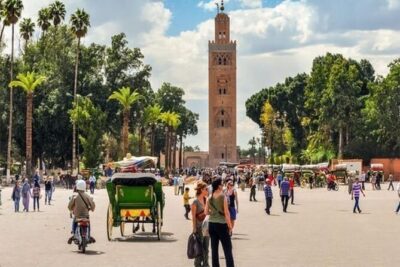
Marrakech Day Trip with Camel Ride from Casablanca
Read our review →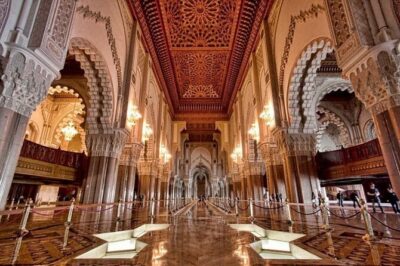
Casablanca Layover Tour with Round-Trip Airport Transfer
Read our review →Browse the lists this tour appears in