
Reviewed · TOURS IN CASABLANCA
12 Day Morocco Tour
Morocco packs several very different trips into one. In 12 days, you go from Casablanca’s Atlantic coast to Tangier, the blue lanes of Chefchaouen, Fes’s maze-like medina, the Sahara dunes, Todra Gorge, and Marrakech. The biggest attraction is that you see the country change by the hour: city, mountain, desert, valley, kasbah, and red-walled medina.
I like the private transportation and the personal guidance from Mohamed, who is praised for his care, local contacts, and easygoing help. I also like the links with local families, artisans, Gnaoua musicians, and women’s cooperatives. These give the trip more human texture than a sightseeing bus that simply checks off monuments.
The tradeoff is mileage. This is an ambitious route, and several days involve long drives or early starts. At $3,500 per person, the value depends on how much you want a guided, private framework, so confirm exactly which hotels and other services are included before paying.
Key points at a glance
- Hassan II Mosque and Rabat: Begin with Morocco’s Atlantic-facing capital area, royal monuments, and a mosque open to non-Muslim visitors.
- Chefchaouen to Fes: See the blue mountain town, then use a guide in Fes, where the old city has more than 10,000 streets and passageways.
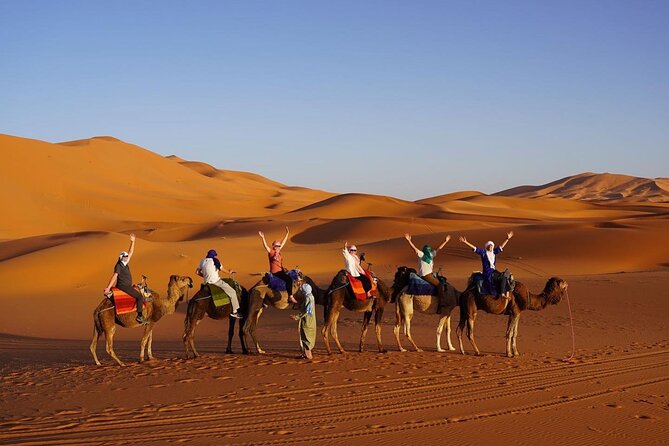
- One night in the Sahara: Travel by 4-wheel drive, ride a camel at sunset, sleep at camp, and return after sunrise.
- Roman ruins and desert architecture: Volubilis, Kasbah Amridil, Todra Gorge, and Ait Ben Haddou give the middle of the tour real variety.
- Local connections: Meet pottery makers, hear Gnaoua music in Khamlia, and visit a women’s rug cooperative if you wish.
- A guide-led private trip: Mohamed handles the route, orientation, and many small decisions, while you travel in an air-conditioned vehicle.
Why this route works for a first visit
The smart idea here is the geographic sweep. Morocco is not one visual experience, and this route does not pretend it is. You’ll see white Casablanca, blue Chefchaouen, ocher desert country, green valleys where conditions allow, and the red tones of Marrakech.
The schedule also mixes major monuments with ordinary cultural settings. Hassan II Mosque and Bahia Palace give you grand architecture. The pottery cooperative, Khamlia village, and women’s rug cooperative show working traditions and local enterprise.
Mohamed is central to the experience. His role goes beyond explaining dates and buildings. He provides evening briefings, arranges meals and optional activities, introduces you to people he knows, and helps handle changes along the way. That personal attention is especially useful in places such as Fes, where wandering alone can turn into a tiring game of wrong turns.
Still, this is not a slow trip. You will spend time in the vehicle, particularly between Fes and Merzouga and during the crossing from the desert toward Marrakech. If you prefer two or three nights in each place, this program may feel rushed. If you want to see a large portion of Morocco in one organized journey, the pace makes sense.
Other trips people book in Casablanca:
- From Marrakech: Casablanca Tour with Hassan II Mosque Visit
★ 4.7 · 4,756 reviews - Casablanca: Hassan II Mosque Premium Tour with Entry Ticket
★ 4.5 · 2,971 reviews - Casablanca City Tour with Hassan II mosque ticket
★ 5.0 · 2,480 reviews
Days 1 and 2: Casablanca, Rabat, and Tangier
Your arrival day is deliberately light. Private pickup takes you from Casablanca airport to your hotel, with Rabat airport also possible. You meet Mohamed that evening for an overview, then go out for a traditional Moroccan dinner.
That first dinner matters. Moroccan food is part of the trip’s education, and beginning with a shared meal gives you a gentle introduction before the sightseeing becomes more demanding. The first day includes airport transport and dinner, but you should confirm hotel arrangements and the full list of included services.
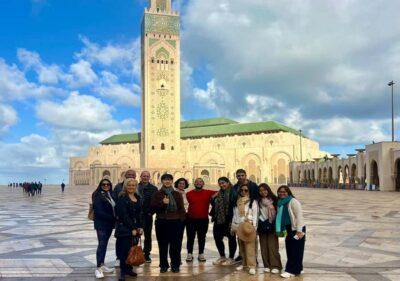
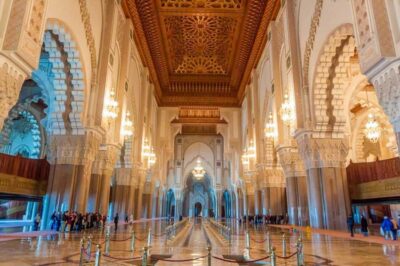
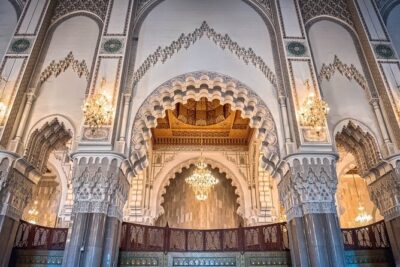
Day 2 begins at the Hassan II Mosque beside the Atlantic. It is the only mosque in Morocco open to non-Muslim visitors, and the scale is striking: the mosque accommodates up to 25,000 worshippers inside and 80,000 outside. Allow about 90 minutes for the visit.
You then continue to Rabat for the Hassan Tower and the Mausoleum of Mohammed V. The tower belongs to an unfinished mosque begun in 1199, while the mausoleum is guarded by men in colorful traditional uniforms. These stops are compact, so they provide useful historical context without consuming the whole day.
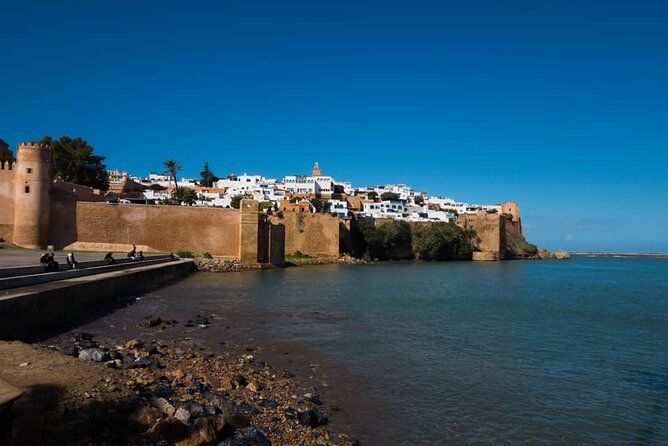
A walk through Rabat’s medina, followed by mint tea, gives you a more relaxed look at the capital. Later, you reach Tangier’s blue and white Casbah, a fitting place to think about Morocco’s position between Europe and Africa. The day covers a lot, but the stops are varied enough to keep it from feeling like a string of similar monuments.
Day 3: Cap Spartel and the blue lanes of Chefchaouen
Cap Spartel offers views toward the Strait of Gibraltar and is often described as North Africa’s answer to the Cape of Good Hope. The visit is short, around 30 minutes, but the geographic setting is the point.
At the Caves of Hercules, you’ll see a site tied to Greek mythology and an unusual sea opening said to have been shaped by Phoenicians in the form of Africa. This is more a scenic and archaeological stop than a long museum visit, so keep expectations in line with the one-hour timing.
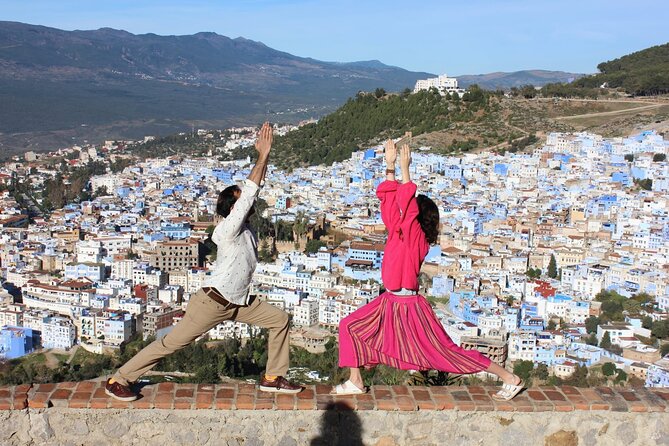
Then comes Chefchaouen, one of the route’s most photogenic places. The town’s blue-painted medina sits in the Rif Mountains, and you’ll have about three hours to walk with Mohamed, take pictures, shop, and pause for the atmosphere.
The walk to Bouzafer Mosque, also called the Spanish Mosque, takes about an hour and rewards you with broad views over Chefchaouen. Wear shoes with a good grip. The itinerary calls for moderate fitness, and the combination of mountain setting, medina lanes, and walking uphill is more demanding than a flat city tour.
Days 4 and 5: Volubilis and the Fes medina
Volubilis is one of the strongest history stops on the route. The UNESCO-listed Roman ruins date back to the first century, and three hours gives you enough time to see the remains and appreciate the setting rather than making a quick photo stop.
Afterward, you continue to Fes, Morocco’s cultural and spiritual center. That evening includes dinner in the historic medina, a useful chance to eat in the old city after Mohamed has helped you get oriented.
Day 5 is devoted to Fes. The old medina is famous for its more than 10,000 streets and passageways, so a guide is not a luxury here. It is practical. You can pay attention to workshops, doorways, tilework, and food stalls instead of worrying about finding the exit.
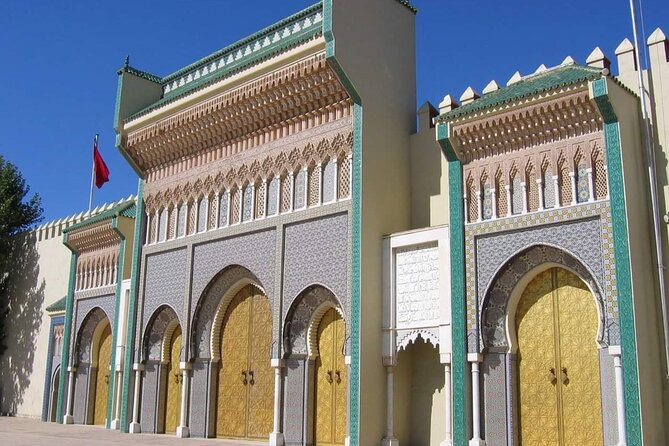
The Royal Palace offers a look at formal Moroccan craftsmanship from the outside. You’ll then visit a pottery cooperative, where master craftspeople and pupils make the tilework and pottery associated with Morocco. This is one of the tour’s better local-economy elements, though you should expect a shopping opportunity and decide in advance what you actually want to buy.
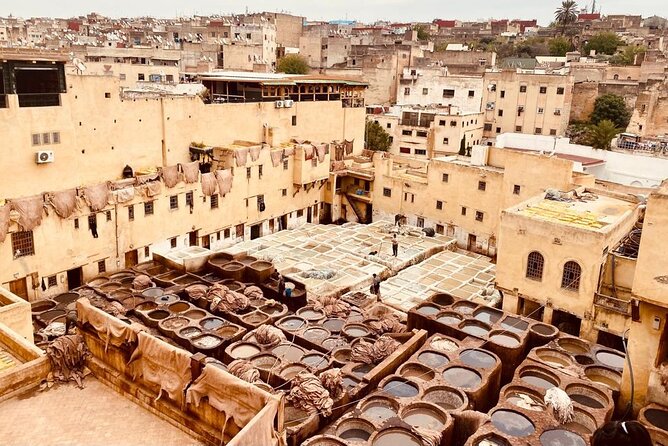
The Al-Attarine Madrasa is a detailed architectural stop, filled with carved surfaces and tilework. It once served as a Koranic school, though it is no longer used that way. At Chouara Tannery, traditional leather softening and dyeing methods remain in use, a sight that connects the modern city with older craft practices.
Fes can be intense. The lanes are crowded, the smells are strong, and the day involves plenty of walking. That is precisely why this part works better with someone who can explain what you are seeing and keep the route moving.
Same base, a different sort of day:
- Casablanca: City Tour with Hassan II Mosque Entry Ticket
★ 4.6 · 1,137 reviews - Private Tour of Casablanca with Hassan II Mosque Entry Ticket
★ 5.0 · 1,102 reviews - Marrakech Day Trip with Camel Ride from Casablanca
★ 5.0 · 740 reviews - Casablanca: Hassan II Mosque & City Highlights Tour
★ 4.5 · 573 reviews
Day 6: The long road to Merzouga
Day 6 is primarily a travel day. You leave Fes for Merzouga, passing through the Mid-Atlas and High Atlas Mountains with breaks for coffee and lunch. The stated driving time is about six hours, though road conditions and stops can affect the day.
This is the point where you need to be honest about your travel style. The route is efficient, but not leisurely. The reward is arriving at the Sahara rather than spending an extra day in northern Morocco.
The changing terrain is part of the experience. You leave the energy of Fes and head toward the desert gateway at Merzouga. Keep water, sun protection, and anything you need during the day within reach rather than packed away.
Days 7 and 8: Erg Chebbi, Khamlia, and Todra Gorge
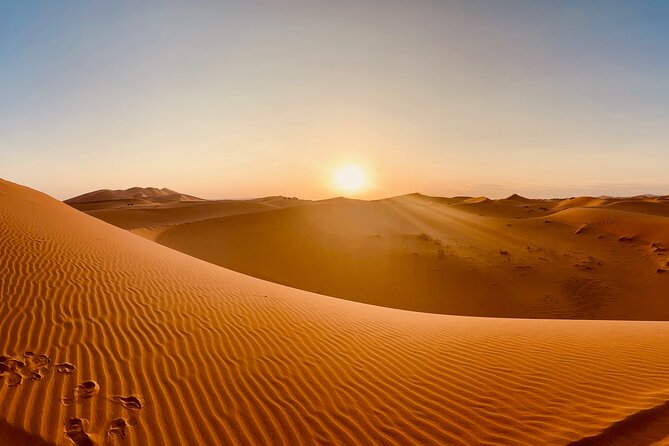
Day 7 gives you your full Sahara experience. A 4-wheel-drive outing across the Erg Chebbi dunes lets you see the desert beyond the camp transfer route. The three-hour visit is a good balance, since a whole day among dunes can become repetitive.
Lunch in Khamlia adds something different. Traditional Gnaoua music accompanies the meal, linking the desert route with a musical tradition shaped by Morocco’s African connections. This is an important cultural stop, not just a break for food.
Later, you ride a camel at sunset to your desert camp. After dinner, there is time around the campfire and under the stars. The camp is described as comfortable, but the exact accommodation standard should be confirmed before booking if that matters to you.
Sunrise is as important as sunset. On Day 8, you’ll want an early start to see the dunes change color, then return by camel or 4-wheel drive, depending on your preference. Having that choice is helpful if you find the camel ride uncomfortable.
The afternoon brings you to Todra Gorge. You’ll walk beside the river at the base of the cliffs for about three hours. After the desert, the canyon gives the itinerary a welcome change of scale and texture. You should again expect moderate walking, uneven surfaces, and a full day after the early sunrise.
Day 9: Kasbah Amridil, Ouarzazate, and Ait Ben Haddou
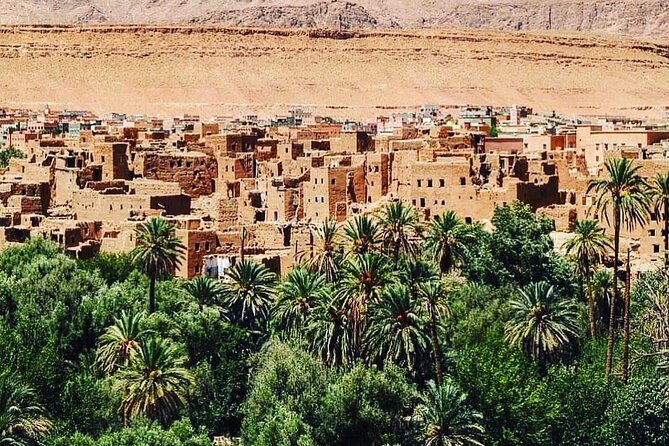
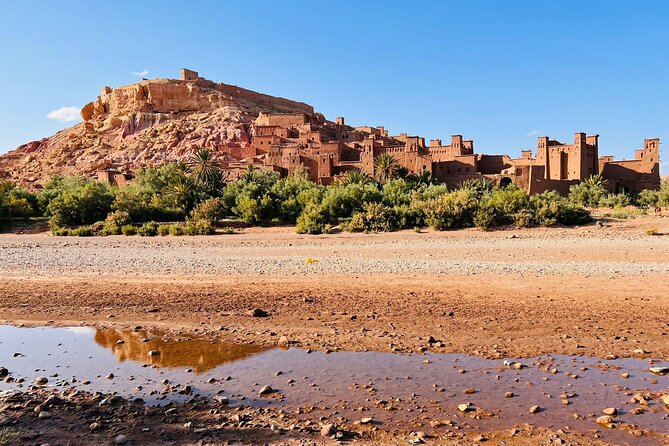
The road toward Ait Ben Haddou passes through Dades Valley and Skoura. At Kasbah Amridil, you’ll see one of Morocco’s best-preserved fortified residences. Its earthen construction and careful details help explain how communities once lived and worked in the valleys.
Ouarzazate is known as the Moroccan Hollywood. A studio tour can be arranged as an optional activity, but it is not listed as included. If you enjoy film history, ask Mohamed about the timing and additional cost before deciding.
Ait Ben Haddou is the day’s main event. The UNESCO-listed ksar rises in layers, and the walk to its highest point gives you a clear sense of its defensive design and desert setting. The climb is worth taking slowly, especially in warm weather.
You can also visit a women’s cooperative producing Moroccan rugs. This offers a direct way to support local women’s work, but do not feel obliged to buy. Ask about prices, size, shipping, and how the cooperative operates before making a purchase.
Days 10 and 11: Marrakech, Bahia Palace, and free time
Day 10 takes you to Marrakech and Jemaa el-Fnaa, the city’s famous central square. Mohamed will orient you to the medina, which is useful because the square and surrounding lanes can feel confusing at first.
You then visit Bahia Palace, with its courtyards, tilework, and story of how it came into being. Two hours allows time to look closely rather than simply walk through for a quick photograph.
Day 11 is intentionally more open. You can ask Mohamed to help arrange a tagine cooking class, a hot-air balloon ride, museums and gardens, or a hammam and massage. These optional choices let you adjust the final day to your energy level.
That flexibility is valuable after ten active days. You might want one more cultural activity, or you might prefer a slow morning and time to shop. The farewell dinner completes the trip with a final shared meal.
What $3,500 per person really buys
The price is high enough that you should look carefully at the value. You receive private transportation in an air-conditioned vehicle, airport transfers, a dedicated guide, local experts, 11 breakfasts, three dinners, lunch, entry to several listed sights, and a route covering much of Morocco.
You are also paying for organization. Mohamed handles the sequence of cities, the desert logistics, local introductions, and optional arrangements. That can save considerable effort, especially in Fes and during the desert crossing.
The price does not automatically answer every practical question. Personal travel insurance is required, tips for the guide and driver are optional, and some activities such as the Ouarzazate studio tour are extra. Hotel details are not specified in the information provided, so ask what lodging category, room setup, and desert camp standard are part of the $3,500.
For a private 12-day route with this range of included transport and guiding, the price may be reasonable for people who value convenience and personal attention. It is less compelling if you mainly want independent city time or are comfortable arranging transport and guides yourself.
Who should book this Morocco tour?
I would recommend it to a first-time visitor who wants to see Morocco’s major regions without managing every transfer. It suits couples, families, and small private groups that value a guide who can adjust the day and make introductions.
It is also a good fit if you want more than monuments. The music in Khamlia, pottery workshop, rug cooperative, family connections, and traditional meals add useful contact with daily Moroccan culture.
I would hesitate if you dislike long road days, early mornings, moderate walking, or fixed schedules. The trip is ambitious, and the Sahara night requires some flexibility. Before booking, confirm the hotels, group size, exact inclusions, optional costs, and airport arrangements.
The tour is non-refundable, though a different date or full refund is offered if poor weather or an insufficient minimum causes the operator to cancel. That makes travel insurance especially important.
FAQ
Where does the tour begin?
The tour begins in Casablanca, with private pickup from Casablanca airport. Transfers from Rabat airport can also be accommodated.
Where does the tour end?
The tour ends in Marrakech, where the guide helps arrange transportation to the airport.
How long is the tour?
The experience lasts approximately 12 days, from arrival in Casablanca through departure from Marrakech.
Is this a private tour?
Yes. Only your group participates in the private tour or activity.
Who is the guide?
The guide named in the tour information and praised throughout the supplied material is Mohamed, also referred to as Mohamed Ourhou.
Is transportation included?
Yes. The tour includes private transportation in an air-conditioned vehicle, as well as airport-to-hotel transport on arrival and help with departure transport.
What meals are included?
The tour includes 11 breakfasts, three dinners, and lunch. The first evening includes a traditional Moroccan dinner, and the final night includes a farewell dinner.
Does the tour include a camel ride?
Yes. You ride a camel at sunset to the Sahara camp and may return by camel or 4-wheel drive after sunrise.
Is the tour physically demanding?
A moderate level of physical fitness is recommended. The route includes medina walking, mountain viewpoints, the Todra Gorge walk, the climb through Ait Ben Haddou, camel riding, and early starts.
Are insurance and tips included?
Personal travel insurance is mandatory but not included. Tips for the guide and driver are optional and also not included.
Should you book this tour?
Book it if you want a carefully managed first look at Morocco, with the Sahara, Chefchaouen, Fes, Roman ruins, kasbahs, and Marrakech all in one route. Before committing, confirm the lodging details and prepare yourself for long drives. If those conditions suit you, the combination of broad sightseeing and personal guidance makes this a strong introduction to the country.
Just added in Casablanca
- Casablanca Airport Transfer from hotel in Casablanca★ 5.0 · 18 reviews
- Exclusive tour of Casablanca with access to the Hassan II Mosque★ 5.0 · 205 reviews
- Your Private Casablanca Transfer★ 5.0 · 52 reviews
- 14 Days From Casablanca- Morocco Grand Tour★ 5.0 · 24 reviews
- Sunset Camel Ride in the Palm Grove Of Marrakech★ 5.0 · 34 reviews
- Chefchaouen the Blue City Full-Day Trip from Casablanca★ 4.5 · 79 reviews
- Marrakeck City tour from Casablanca all the day around trip★ 5.0 · 35 reviews
- Casablanca Night Tour with Andalusian Dinner Show★ 4.5 · 25 reviews
Tours in Casablanca, compared.
Hassan II Mosque Premium Tour with Entry Ticket
Read our review →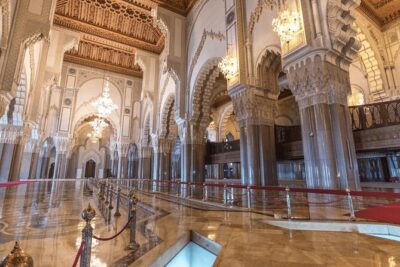
Casablanca City Tour with Hassan II mosque ticket
Read our review →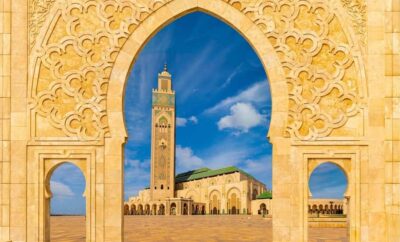
Private Tour of Casablanca with Hassan II Mosque Entry Ticket
Read our review →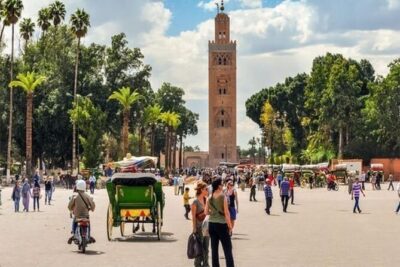
Marrakech Day Trip with Camel Ride from Casablanca
Read our review →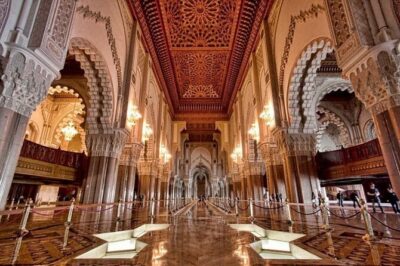
Casablanca Layover Tour with Round-Trip Airport Transfer
Read our review →Browse the lists this tour appears in