
Reviewed · TOURS IN CASABLANCA
15 Days Morocco Private Grand Tour From North To South Starting From Casablanca
The biggest appeal here is scale. In 15 days, you move from Casablanca’s Atlantic coast to Roman ruins, blue mountain towns, cedar forests, Saharan dunes, mud-brick kasbahs, and Marrakech’s night market. The private vehicle and driver-guide keep the long transfers manageable, while local guides take over in Fez and Marrakech.
I like the one-night desert camp, especially because the private tent includes a toilet and shower. I also like the mix of planned sightseeing and free time, which lets you wander Chefchaouen, Essaouira, and the medinas at your own speed. The main drawback is the pace: some days involve many hours on the road, and several stops are brief introductions rather than full visits.
Key points to know before booking
- A true north-to-south route: You cover Casablanca, Rabat, Asilah, Tangier, Tetouan, Chefchaouen, Fez, the Sahara, Marrakech, Essaouira, and the Atlantic coast.
- One private night in the Sahara: Ride a camel to a luxury camp with a private tent, toilet, and shower, then wake for sunrise over Erg Chebbi.
- Two especially important guided medinas: Local city guides lead you through Fez and Marrakech, where a guide helps make sense of tangled streets and major sights.
- Long driving days are part of the deal: The route from Chefchaouen to Fez, Fez to Merzouga, and the desert to Marrakech covers serious ground.
- Meals are partly covered: Fifteen breakfasts and three dinners are included, but many lunches, dinners, drinks, and attraction tickets cost extra.
- A strong family option: The private format means only your group participates, and the supplied family account specifically praises driver-guide Khalil, the accommodations, and the airport service.
Why this Morocco route works so well
Morocco rewards variety. One day you are looking at Roman mosaics, the next you are haggling in a souk, and soon after you are watching sunset turn Saharan sand orange. This trip links those contrasts without asking you to arrange a new taxi, hotel, or transfer every morning.
The route also avoids the common problem of seeing only Marrakech and the desert. You get northern Morocco, the Rif Mountains, the imperial cities, the Atlantic coast, and the deep south. That broad reach is the tour’s strongest selling point.
The cost is $1,825.27 per person. For 15 days, that works out to roughly $122 per day before optional admissions, tips, personal spending, and meals not listed. That is a fair value for a private vehicle, fuel, airport transfers, 14 nights of accommodation, a driver-guide, two local city guides, camel transport, a private desert tent, breakfasts, and three dinners.
Still, do not treat the price as all-inclusive. The Hassan II Mosque, Bahia Palace, Jemaa el-Fnaa area sights, the Rissani market, and other admissions may not be covered. Ask exactly which room category and entrance tickets apply before paying.
Other trips people book in Casablanca:
- From Marrakech: Casablanca Tour with Hassan II Mosque Visit
★ 4.7 · 4,756 reviews - Casablanca: Hassan II Mosque Premium Tour with Entry Ticket
★ 4.5 · 2,971 reviews - Casablanca City Tour with Hassan II mosque ticket
★ 5.0 · 2,480 reviews
Casablanca and Rabat: a strong beginning by the Atlantic
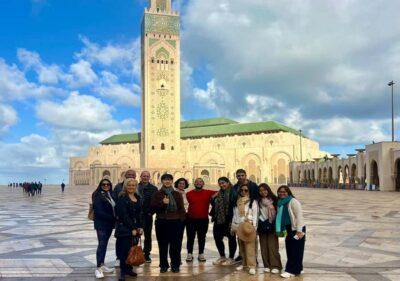
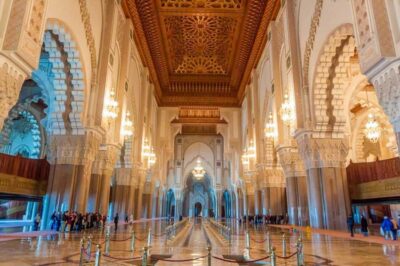
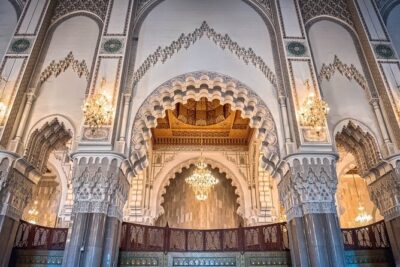
Your arrival day centers on the Hassan II Mosque, Casablanca’s great landmark. Its minaret rises 210 meters, and the mosque sits beside the Atlantic, giving the setting real drama. Non-Muslim visitors are permitted inside on a guided visit, but the admission charge is not included.
Casablanca itself is Morocco’s modern economic center, so this is not the most old-world stop on the route. That contrast is useful. You begin with the country’s contemporary face before moving into walled medinas and mountain towns.
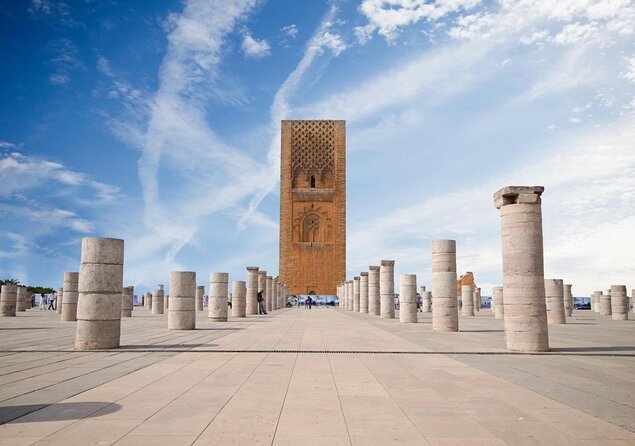
Rabat gives you a more historical setting. The Chellah Necropolis combines Roman and Islamic remains, while the Kasbah des Oudaias leads you into the old city. The Andalusian Gardens offer a quiet pause, and the Hassan Tower, an unfinished 12th-century mosque project, is one of the city’s key sights.
From Rabat, you continue to Asilah. Its fortified medina sits beside the Atlantic and still shows Portuguese influence in the ramparts and the Raisuni Palace. The overnight may be in a hotel or traditional riad, so confirm the exact accommodation if the style of lodging matters to you.
Tangier, Tetouan, and blue Chefchaouen
Tangier has one foot in Europe and one in Morocco. You can walk through the compact Kasbah, enter by Bab Haha, pause at Place du Mechouar, and spend time around the marina or Zoco Chico. The route also allows time for Cap Spartel and the Cave of Hercules, about 15 to 20 minutes outside the city.
The cave is a quick stop, not a full-day outing. Its opening is associated with the outline of Africa, and the Atlantic setting makes it worthwhile if your schedule allows. Ask your driver how much time is available, since Tangier’s medina and the coastal sights compete for attention.
Tetouan comes next, at the foot of the Rif Mountains. Its UNESCO-listed medina has a more traditional feel than the larger medinas, and you explore it independently with suggestions from your driver. Lunch is on your own, giving you flexibility but also adding another decision to a busy day.
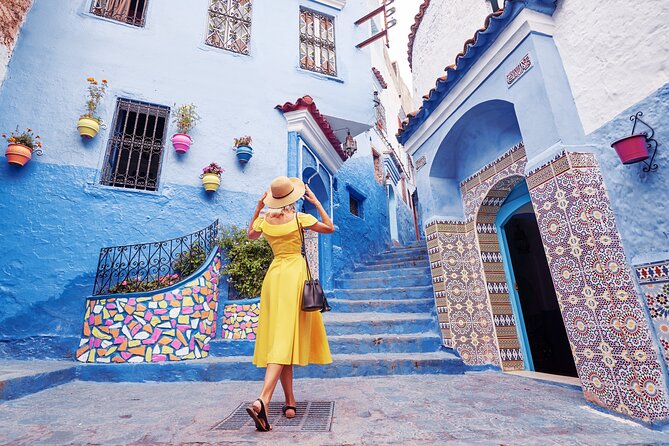
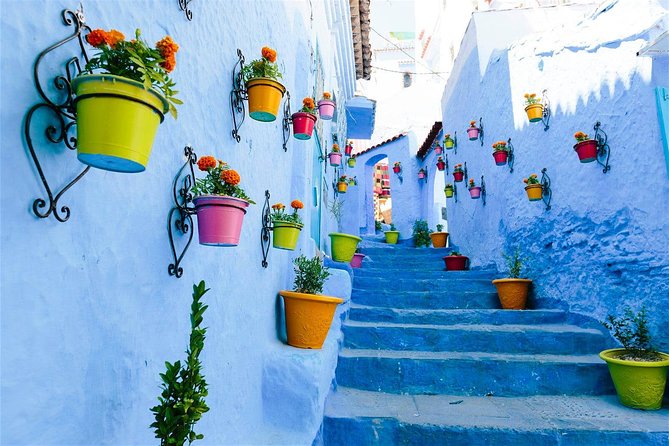
Chefchaouen is the visual star of the north. Blue walls, stairways, doors, and alleyways make the town easy to recognize, but the real pleasure comes from leaving the main square. Outa el Hammam is the natural place to watch local life, while the smaller lanes show a quieter side of town.
Get up early for the walk toward the Spanish Mosque. The morning light over the mountains is one of the best moments here, and many shops do not open until 10 a.m. That early start gives you peaceful streets before the day gets busy.
The following day adds a hike to the Cascades d’Akchour. Depending on weather and conditions, you may see smaller falls, swim, or continue toward God’s Bridge, a natural rock formation. This is one of the few parts of the route that asks for more than casual walking, so wear proper shoes and keep in mind that the hike may feel tiring after several days of sightseeing.
Roman ruins and imperial Fez
The drive from Chefchaouen to Fez includes three excellent stops. Volubilis is Morocco’s best-preserved Roman site, with merchant houses, heating systems, temples, and mosaics. You can hire a guide there if you want more explanation, but that cost is separate.
Moulay Idriss is a small but important pilgrimage town. Founded in 789, it became Morocco’s first Islamic capital under Moulay Idriss. Its unusual round minaret is a detail worth looking for, and the town’s shape on the hills is often compared to a seated camel.
Meknes is the final stop before Fez. Its medina is smaller and generally easier to explore at a relaxed pace. The Ville Impériale includes Bab al-Mansour, gardens, palaces, the Mausoleum of Moulay Ismail, and the Royal Stables.
Watch for Roman columns reused in later buildings. Materials from Volubilis were used in Meknes, so the day connects Morocco’s Roman past with its imperial era in a very physical way.
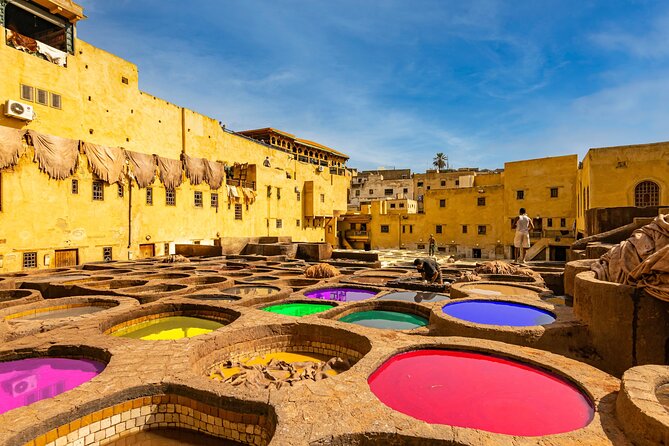
Fez deserves a full day. The tour focuses on Fes el Bali and Fes el Jdid, with a local guide leading you along Talâa Kebira and through the narrow lanes. The Chouara Tannery is viewed from a nearby rooftop, where you can see the workers and the traditional process from above.
You will also see the 9th-century Al-Qarawiyyin University and the Al Attarine Madrasa, known for fine Moroccan craftsmanship. A guide is particularly useful here because the streets can be confusing, and the main sights are easy to miss when you are watching your feet and dodging carts.
Fez is also one of the most intense parts of the trip. Expect crowds, strong smells near the tannery, narrow passages, and plenty of shops. The private format helps, since your guide can adjust the walking pace to your group.
Same base, a different sort of day:
- Casablanca: City Tour with Hassan II Mosque Entry Ticket
★ 4.6 · 1,137 reviews - Private Tour of Casablanca with Hassan II Mosque Entry Ticket
★ 5.0 · 1,102 reviews - Marrakech Day Trip with Camel Ride from Casablanca
★ 5.0 · 740 reviews - Casablanca: Hassan II Mosque & City Highlights Tour
★ 4.5 · 573 reviews
Across the Middle Atlas to the Sahara
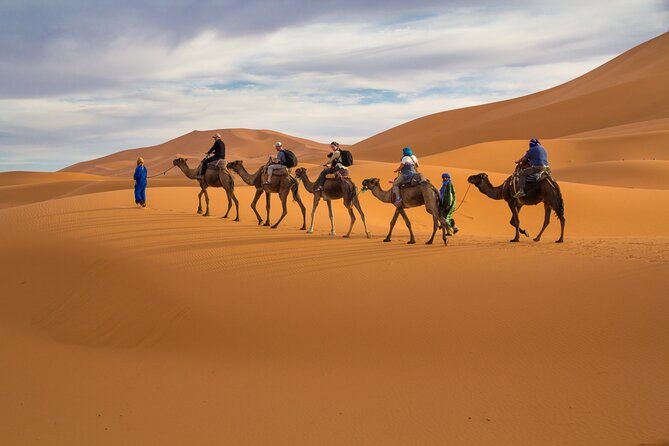
Day eight is a major transfer day. You cross the Middle Atlas through Ifrane and Azrou, with a possible stop in the cedar forest where Barbary macaques gather. Lunch is in Midelt, known as Morocco’s Apple City because the Moulouya River supports orchards on this high, dry plateau.
From there, the route follows the Ziz Valley and passes fortified houses called ksars. These structures recall the old Saharan trade routes, when gold, salt, and spices moved through the region. The scenery changes steadily from mountain country to dry valleys and then to dunes.
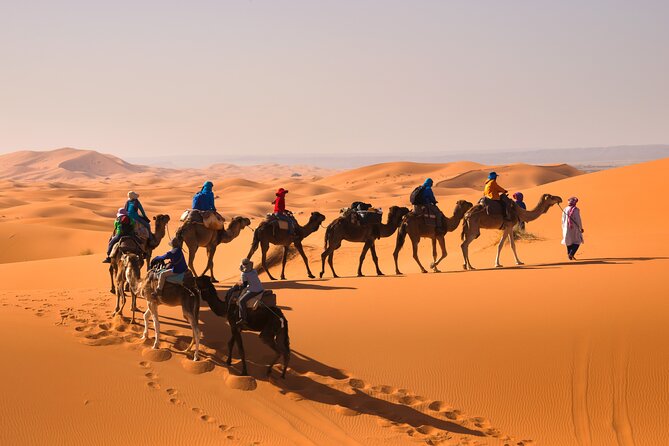
Near Merzouga, you prepare for the camel ride to camp. Arriving before sunset gives you time to climb a dune and watch the colors change. The camp includes a private tent with a toilet and shower, a useful comfort after a long day in the vehicle.
Dinner and traditional music are included on the desert night. The next morning, wake early for sunrise if you can. Desert light changes quickly, and sunrise is often worth the lost hour of sleep.
The Merzouga excursion adds more than a camel ride. You visit the lake, see nomadic life, follow part of the route associated with the Paris-Dakar rally, visit the Mifis mines, and stop in Khamlia to hear music connected with Black Berber communities whose roots include Mali and Niger.
This is a valuable day because it adds people and places to the desert scenery. At the same time, the word luxury needs context. A private tent with plumbing is comfortable, but this is still a desert camp, not a city hotel.
Rissani, Todra Gorge, and the road of kasbahs
If your visit falls on Tuesday, Thursday, or Sunday, the Rissani souk is scheduled into the route. It is the largest market in the region and a good place to see how the desert towns serve local communities, not just visitors. The market admission is not included.
Erfoud is known for dates, fossils, and the yearly date festival. At an artisan collective, you can see fossil-bearing rock turned into decorative objects. This is a good stop for understanding local craft, though you should feel no pressure to buy.
Todra Gorge brings a sharp change in scenery. Sheer cliffs rise about 300 meters on either side of the narrow passage, and the area is popular with climbers. The route then reaches the Dades Valley, with mud kasbahs and the rock formation known as Monkey’s Fingers.
These days combine long driving with short walks. I would not choose this itinerary if you want several slow mornings in one hotel. I would choose it if you want to see how Morocco changes from one region to the next.
The next day passes through the Rose town area, where rose petals are collected in spring for rosewater and perfume. In Skoura, palm groves surround a collection of kasbahs, giving you another view of southern Morocco’s mud-brick architecture.
Ouarzazate is associated with film studios and is often called Hollywood of Africa. The main historical stop is Ait Ben Haddou, a UNESCO-listed fortified village and one of Morocco’s most photographed sights. You have free time to explore and eat lunch before continuing toward Marrakech.
Marrakech, the Atlantic, and the final coast
Marrakech receives a full guided day. The medina is a maze of souks and alleys filled with djellabas, babouches, lanterns, spices, and workshops. A private guide helps you see the main sights without spending the whole day trying to work out where you are.
The program includes Bahia Palace, El Badii Palace, the Saadian Tombs, and Majorelle Gardens. Entrance fees are not included for the palace and garden visits, so budget for them.
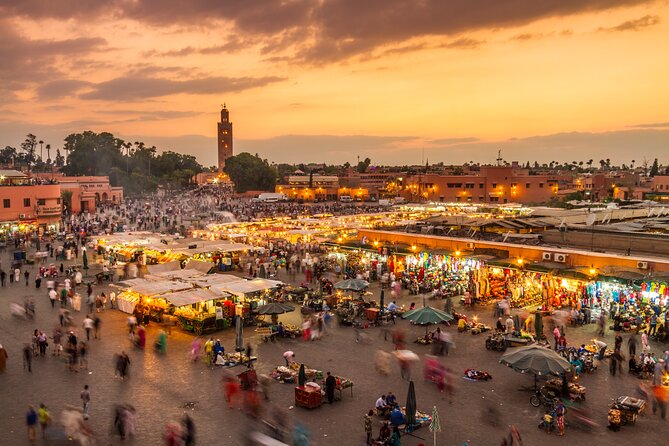
Jemaa el-Fnaa changes character in the evening. Musicians, storytellers, acrobats, dancers, food stalls, and cafés fill the square. For a calmer view, choose a café above the square and watch the activity from a table rather than trying to eat at the busiest stall.
Essaouira offers a welcome change of pace. The route passes through argan country, with a possible stop at a cooperative to see how oil is made. Goats in argan trees may appear along the road, though the sight depends on timing and luck.
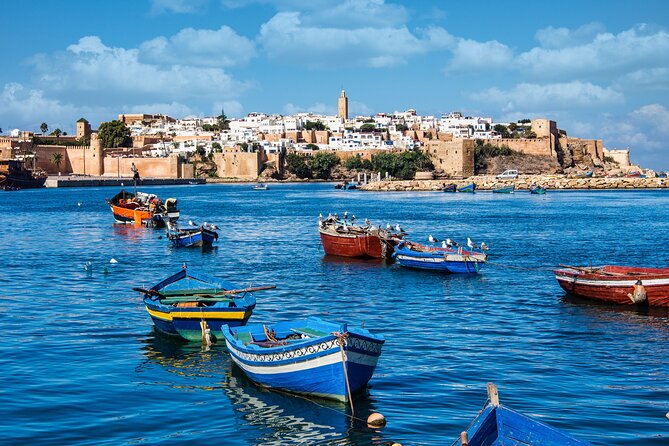
In Essaouira, walk the harbor, watch fishermen work around the blue boats, and visit the fortified Scala and Bab al Mersa. The old city is UNESCO listed, but the mood is looser than in Marrakech. This is one of the best places on the route for simply walking without a fixed checklist.
The return to Casablanca may take four to five hours, with possible stops in Safi and El Jadida. Safi is known for pottery and ceramics, and you can see the Castle of the Sea and views over the port.
El Jadida adds a Portuguese cistern, old ramparts, and the Church of the Assumption. Back in Casablanca, you can walk along the Corniche, visit the Old Medina, and stop at Rick’s Café, a restaurant inspired by the classic film.
Hotels, meals, and transport
Accommodation covers 14 nights in hotels and traditional riads. The exact properties are not named, so ask for a sample accommodation list if room style, location, or hotel rating is important to you.
The transport is private and air-conditioned, with fuel included. Airport arrival and departure transfers, as well as hotel pickup and drop-off, are also covered. That matters on a route this long, since you avoid repeatedly negotiating taxis and intercity transport.
Fifteen breakfasts are listed, along with three dinners. Other meals and drinks are your responsibility. The free evenings in Chefchaouen, Marrakech, and elsewhere are useful because you can choose a simple local meal or a more formal restaurant.
Tipping is not included. Plan separately for the driver, local guides, hotel staff, and restaurant staff. Personal expenses and unlisted admissions are also extra.
Who should book this private tour?
I would recommend it to first-time visitors who want to see most of Morocco in one trip and prefer one point of contact for transport. It also suits families and small private groups. The supplied family account describes a group with children aged 6, 13, and 18, and specifically praises driver-guide Khalil, the local guides, accommodation quality, and airport service.
The private setup is a major advantage. You can ask for a photo stop, adjust the pace, or spend more time in a market without waiting for a large coach group. The tradeoff is that private touring costs more than joining a basic shared itinerary.
This trip is less suitable if you dislike long drives, want detailed free time in every city, or prefer to stay several nights in each place. The desert and southern Morocco require distance, and the schedule sometimes gives you only a short introduction before moving on.
Should you book it?
Book this tour if you want Morocco’s greatest variety in 15 days: Atlantic cities, imperial capitals, blue mountain streets, Roman ruins, desert dunes, kasbahs, and coastal medinas. The strongest features are the private logistics, the desert camp with a private bathroom, and the use of local guides in Fez and Marrakech.
Before booking, confirm the exact hotels, which entrance tickets are included, the expected daily driving times, and how the desert transfer operates. If you are comfortable with a full schedule and several long road days, the $1,825.27 price offers solid value for the amount covered. If you want a slower holiday, ask the operator about extending the trip to 20 or more days, with extra time in southern coastal towns such as Agadir, Taghazout, and Legzira.
FAQ
How long is the Morocco tour?
The tour lasts approximately 15 days and includes 14 nights of accommodation.
Where does the tour start and finish?
It starts in Casablanca and includes airport or port arrival pickup. The final transfer takes you to Casablanca airport.
Is this a private tour?
Yes. Only your group participates in the activity.
Is transportation included?
Yes. Private air-conditioned transportation, fuel, airport transfers, and hotel pickup and drop-off are included.
Are a driver and local guides included?
Yes. A driver-guide is included, along with local city guides in the medinas of Fez and Marrakech. Driver-guide Khalil is specifically identified in the supplied trip information.
Is the desert camp included?
Yes. The tour includes a camel ride and one night at a luxury desert camp in a private tent with a toilet and shower.
Are meals included?
Fifteen breakfasts and three dinners are included. Other meals, drinks, and food not listed in the program are not included.
Are entrance tickets included?
Not all entrance tickets are included. The Hassan II Mosque, Bahia Palace, Jemaa el-Fnaa area sights, Rissani market, and other listed attractions may require separate payment.
Can most people participate?
The tour states that most people can participate. Service animals are allowed, and the experience is near public transportation.
Can the tour be extended?
Yes. The trip can be modified to add more days, including a 20-day or longer route with extra time in southern coastal areas such as Taghazout, Agadir, and Legzira.
Just added in Casablanca
- Casablanca Airport Transfer from hotel in Casablanca★ 5.0 · 18 reviews
- Exclusive tour of Casablanca with access to the Hassan II Mosque★ 5.0 · 205 reviews
- Your Private Casablanca Transfer★ 5.0 · 52 reviews
- 14 Days From Casablanca- Morocco Grand Tour★ 5.0 · 24 reviews
- Sunset Camel Ride in the Palm Grove Of Marrakech★ 5.0 · 34 reviews
- Casablanca Night Tour with Andalusian Dinner Show★ 4.5 · 25 reviews
- Chefchaouen the Blue City Full-Day Trip from Casablanca★ 4.5 · 79 reviews
- Marrakeck City tour from Casablanca all the day around trip★ 5.0 · 35 reviews
Tours in Casablanca, compared.
Hassan II Mosque Premium Tour with Entry Ticket
Read our review →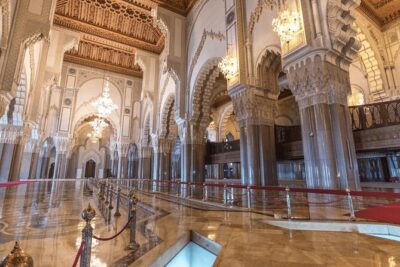
Casablanca City Tour with Hassan II mosque ticket
Read our review →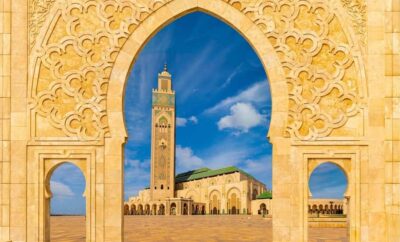
Private Tour of Casablanca with Hassan II Mosque Entry Ticket
Read our review →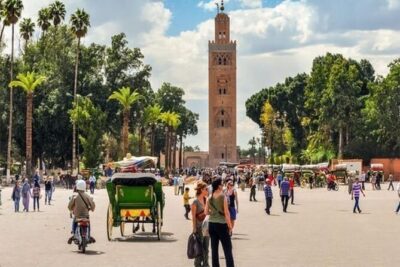
Marrakech Day Trip with Camel Ride from Casablanca
Read our review →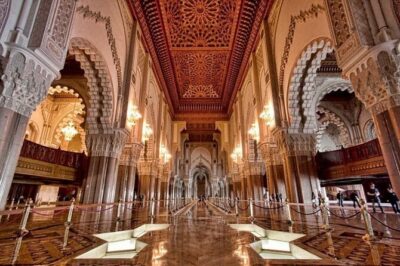
Casablanca Layover Tour with Round-Trip Airport Transfer
Read our review →Browse the lists this tour appears in