
Reviewed · ATLAS MOUNTAINS DAY TRIPS
From Marrakesh: 4-Day Private Atlas Mountains & Desert Tour
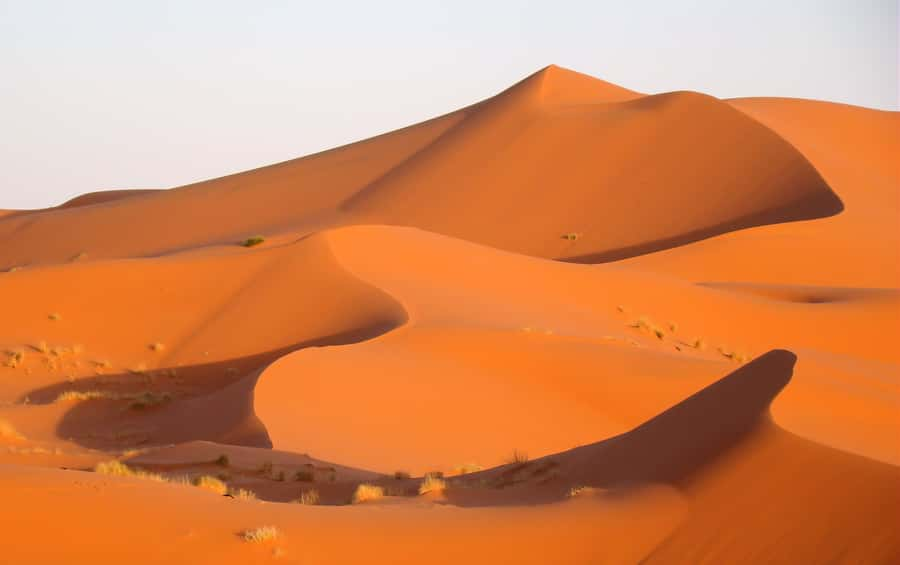
The best part of this four-day trip is the change in Morocco outside Marrakech. One morning you are crossing the High Atlas, the next you are walking beside palms and canyon walls, and by evening you are riding a camel across the Erg Chebbi dunes. It packs a large slice of southern Morocco into one road trip.
I like the generous four-day pace compared with the common three-day desert run, and I like the private format, which gives you more say over photo stops and breaks. Guides including Mahmoud, Reda, Aziz, and Ali are especially praised for careful driving and thoughtful help. The catch is simple: expect five to eight hours in the car on some days, with long mountain roads and desert heat.
Key points to know
- Sunset and sunrise in Erg Chebbi: The camel ride and desert camp are the emotional high point.
- Aït Ben Haddou included: You visit Morocco’s best-known fortified village and a UNESCO World Heritage site.
- Private road-trip format: You have more flexibility than on a large group minibus.
- Great variety in four days: Expect Atlas villages, kasbahs, palm groves, gorges, film studios, and desert dunes.
- Meals and lodging included: Three nights, meals during the tour, bottled water, and Marrakech hotel transfers are covered.
- Allow for extra costs: Drinks and some entrances, including certain kasbahs and the Atlas film studio, are not included.
What the four-day route really delivers
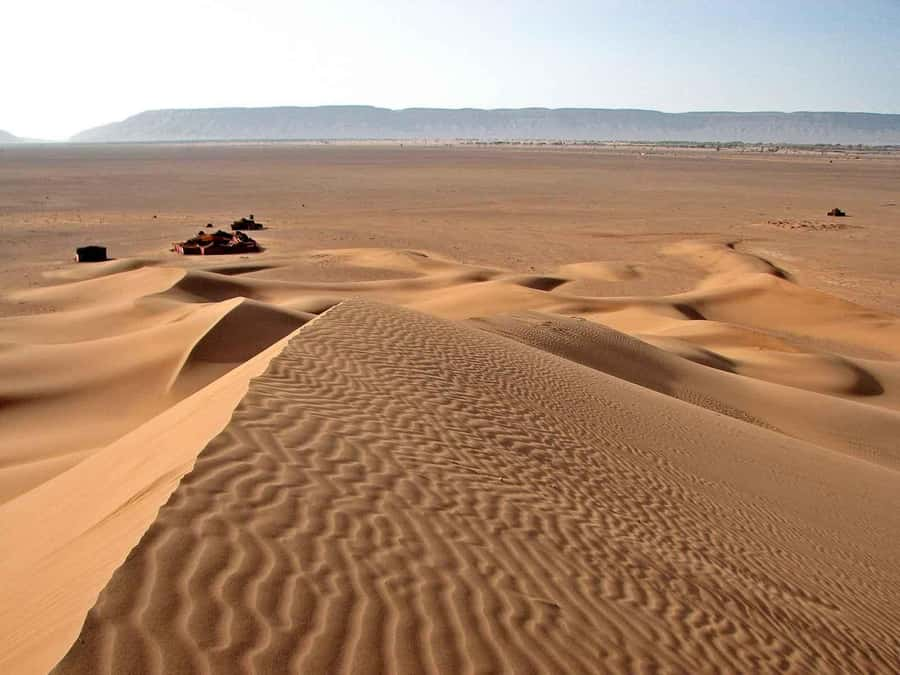
This is not a slow holiday based in one town. It is a moving trip across southern Morocco, designed to connect several major sights that are too far apart for casual day trips from Marrakech.
The route works because it gives you time to reach the Sahara without turning the whole experience into one exhausting overnight dash. You still spend plenty of time in the vehicle, but the road itself is part of the show. The colors change from red city walls to gray mountain rock, green palm groves, dusty plains, and orange dunes.
The price is about $452 per person. That is a serious outlay, but it includes private transfers from your Marrakech accommodation, a guide, bottled water, meals during the trip, and three nights of lodging. Compared with a basic three-day group trip, the extra day can make the long distance more manageable and gives you more room for stops.
More of the High Atlas from Marrakech:
- Marrakech: Atlas Mountains, Ourika Valley, Waterfall & Lunch
★ 4.8 · 15,834 reviews - Berber villages : Atlas Mountains Day Hike from Marrakech
★ 5.0 · 14,007 reviews - From Marrakech: Atlas Mountains Full-Day Hiking Trip w Lunch
★ 4.8 · 7,417 reviews
Day one: Tizi n’Tichka, Ouarzazate, and the Dades Valley
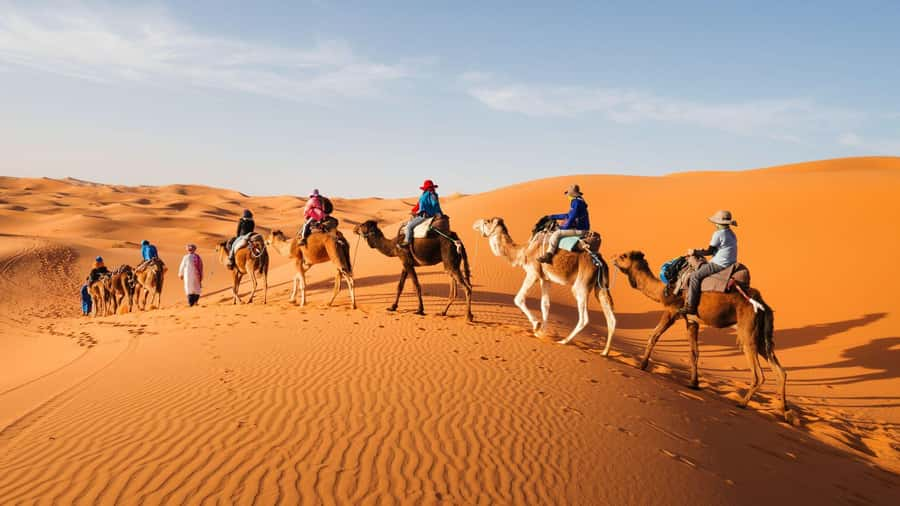
Pickup begins in Marrakech, followed by the climb toward the Tizi n’Tichka pass. This is one of the most memorable road sections because the scenery changes quickly as the road rises into the High Atlas.
You pass Berber villages and see the terrain shift with the light. The route has plenty of bends, so a good driver matters. Aziz Talaoul, Reda, Mahmoud, and other named guides have received repeated praise for smooth, safe driving. That matters here more than fancy commentary. A calm driver lets you watch the mountains instead of gripping the door.
Ouarzazate is the first major stop. You have free time for lunch and may visit Taourirt Kasbah. The town is also known for its film studios and its nickname, the Hollywood of Africa. The film connection is fun, but keep your expectations sensible. This is a working tourism stop, not a full film-history course.
From Ouarzazate, the route continues toward Skoura, the Valley of Roses, and the Dades Valley. Skoura is known for its palm grove, a welcome change after the bare mountain roads. The contrast is one of the pleasures of this trip: a narrow strip of green life appears wherever water reaches the desert edge.
Your first night is in a guest house or hotel in the Dades area. The exact property can vary, but the trip has included charming places such as Riad Gabsi du Dades and Hotel Babylon. Lodging standards are not perfectly uniform, so do not expect the same finish every night. Still, the first night often feels more personal than a standard city hotel, with local food and a quieter setting.
Day two: Todra Gorge and the road to Merzouga
After breakfast, you follow the route often called the Road of a Thousand Kasbahs. The name is not a literal count, but it captures the feel of the journey. Earthen fortresses and old village walls appear along the valleys, sometimes blending into the hills.
Tinghir gives you another look at Morocco’s palm country. The palm groves create a striking ribbon of green against the dry surroundings. Your guide can point out local life and explain how the valleys support settlements in a region with very little rainfall.
The main natural stop is Todra Gorge. The canyon walls rise dramatically, and the planned activity includes time for walking and hiking. The description refers to canyon walls about 300 meters high, though your actual walking route will depend on timing, weather, and your group’s ability.
This is a good place to stretch your legs after the morning drive. Wear shoes with a firm sole, bring water, and do not treat the walk as a major mountain trek unless your guide confirms the route. The stop is valuable partly because it breaks up the road to the desert.
The afternoon continues toward Merzouga and Erg Chebbi. This is the longest-feeling transition of the trip. You are moving from canyon country into open desert, and the views become wider and more spare.
By late day, you reach the camel departure point. The ride toward camp is timed for sunset, one of the strongest moments of the tour. The camel ride is not a long expedition, but it gives you enough time to watch the dunes change color and to reach the camp in the traditional way.
The Erg Chebbi camp: sunset, dinner, and stars
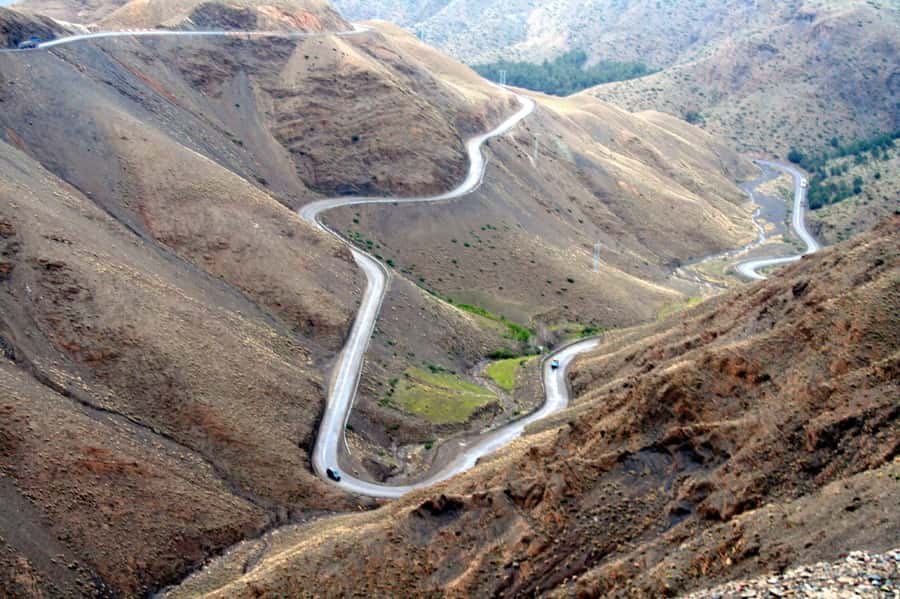
The desert night is the tour’s signature experience. You stay in a nomadic-style tent or a more comfortable camp, depending on the arrangement. Several accounts describe the camp as surprisingly comfortable, with some tents offering a large, clean bathroom.
Do not picture total isolation. This is a popular desert stop, and other camps may be nearby. Even so, the combination of sand, darkness, firelight, and music creates a strong sense of place.
Dinner is included, followed by camp activities. Drums, singing, and time around the fire are part of the evening. You may also spend time under the stars, weather permitting. The desert is at its best when you give it quiet time, so resist the urge to treat the camp as only a place to eat and sleep.
The next morning, wake early for sunrise over Erg Chebbi. This is worth the lost sleep. The dunes take on a soft color before the heat builds, and the silence feels very different from Marrakech.
After breakfast, you return by camel to a hostel or similar base for a quick shower. The camel ride is gentle but can be uncomfortable if you are not used to the saddle. Loose clothing, sunscreen, and a scarf or hat are useful. Pack a small overnight bag so you do not need to bring all your luggage into the camp.
Same base, a different sort of day:
- Marrakech: Agafay Desert Sunset, Camel Ride, and Dinner Show
★ 4.6 · 35,119 reviews - From Marrakech: Ouzoud Waterfalls Guided Hike and Boat Trip
★ 4.7 · 33,630 reviews - Marrakech: Agafay Desert Quad & Camel Rides with Dinner Show
★ 4.8 · 27,382 reviews - Marrakech: Agafay Desert Quad Biking Tour with Dinner-Show
★ 4.8 · 16,569 reviews
Day three: Rissani, fossils, and the return toward Ouarzazate
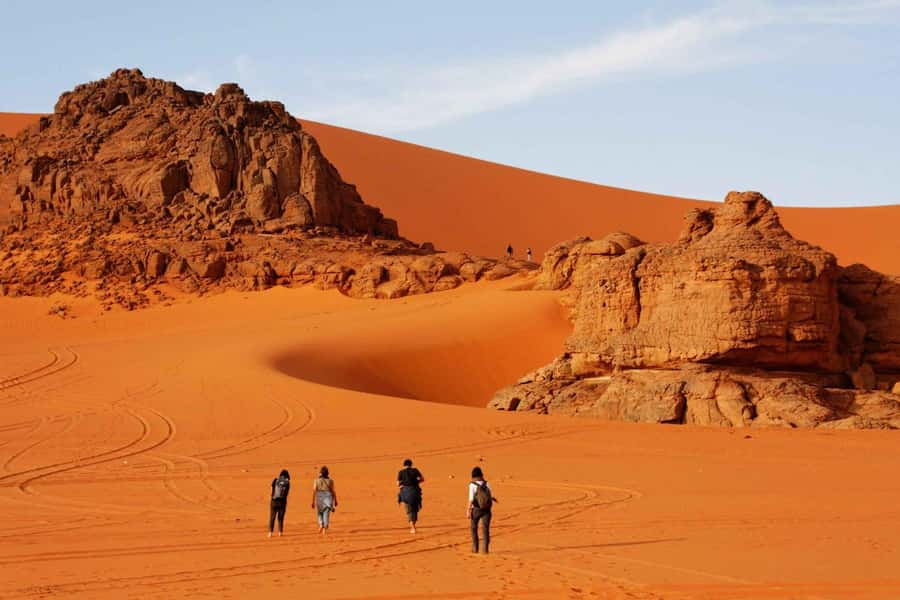
Day three starts with the desert behind you, but the route still has worthwhile stops. You travel toward Rissani, a small town in southern Morocco, with a stop at a fossil workshop listed in the program.
Fossil visits are common on this route, and they can feel commercial. They are still useful if you are curious about the geology of the region or want to understand why fossils are sold throughout southern Morocco. You do not need to buy anything.
The route then turns toward the Draa and Agdz valleys before continuing to Ouarzazate. This day has less of the headline drama of the camel ride, but it helps break up the return journey. You see more of the interior and get another look at the dry valley systems that make settlement possible.
Some of the best food on this trip may come from an unexpected stop. A lunch in a Berber home has been singled out as a high point, especially the tajine. The exact meal location can change, but the possibility of eating in a local home gives the route a more human side than a chain of roadside restaurants.
Dinner and lodging are in Ouarzazate. You may have a long day behind you, so keep the evening easy. The following morning has more sightseeing before the final drive to Marrakech.
Day four: Ouarzazate film studios and Aït Ben Haddou
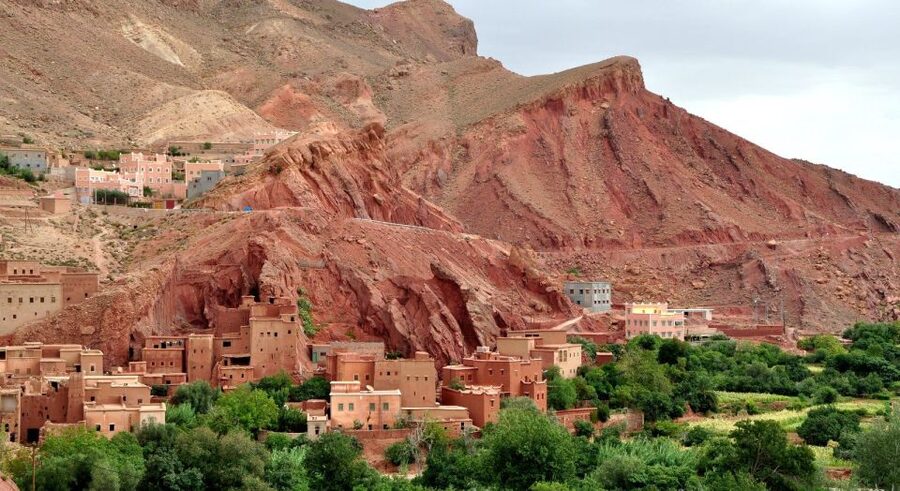
The morning begins with a tour connected to Ouarzazate’s film industry. The studios and sets have been used for productions including Gladiator, Indiana Jones, and Lawrence of Arabia.
This stop suits anyone who enjoys seeing how movies are made. You will see constructed sets and film-related displays, not ancient ruins untouched by modern use. The visit is worth considering because it adds a different layer to the trip, especially after several days focused on natural scenery and old architecture.
The major cultural stop is Aït Ben Haddou. This fortified village, or ksar, is a UNESCO World Heritage site and one of Morocco’s most recognizable sights. Its earth-colored buildings rise along a slope, with narrow paths leading between homes, walls, and old communal spaces.
Aït Ben Haddou is beautiful, but it is also a working tourist site. You may find local artists and shops along the route. Go with a clear idea of what you want to see, and do not feel obliged to buy. The strongest reason to visit is the architecture and the view from above.
The final route crosses the mountains toward Marrakech, including the Telouet area. You will likely arrive tired but satisfied. This is not a trip that leaves you refreshed in the usual resort sense. It leaves you with a strong visual sense of Morocco beyond the red walls of Marrakech.
Food, hotels, and what the price covers
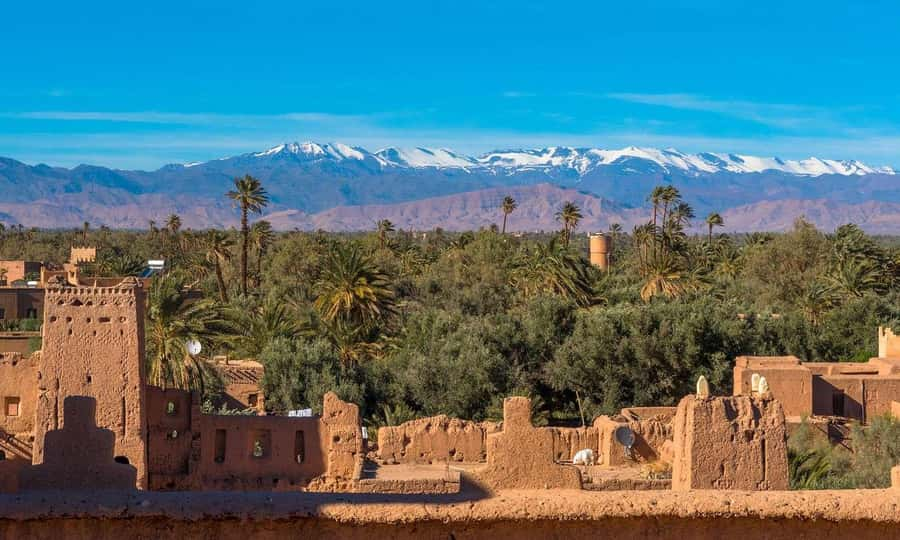
Meals during the tour are included, and most are described as filling and enjoyable. Tajine, desert-camp food, and the final meal in a local home receive especially warm praise.
The quality can vary. Some meals are repetitive, and one family reported that vegetarian needs were not discussed in advance. If you do not eat meat, tell the operator before departure and repeat it to your guide on day one. Extra food and drinks are not included, so budget for beverages and snacks.
The accommodation also varies from simple guest houses to a more polished desert camp. That is normal for a route crossing remote areas. The desert camp may be the most comfortable night, while the valley lodging offers more charm and local character.
The value is strongest for couples, families, or friends who want transport, meals, desert activities, and lodging handled in one package. It is less compelling if you want complete control over every hotel and restaurant.
Private transport and the long hours on the road
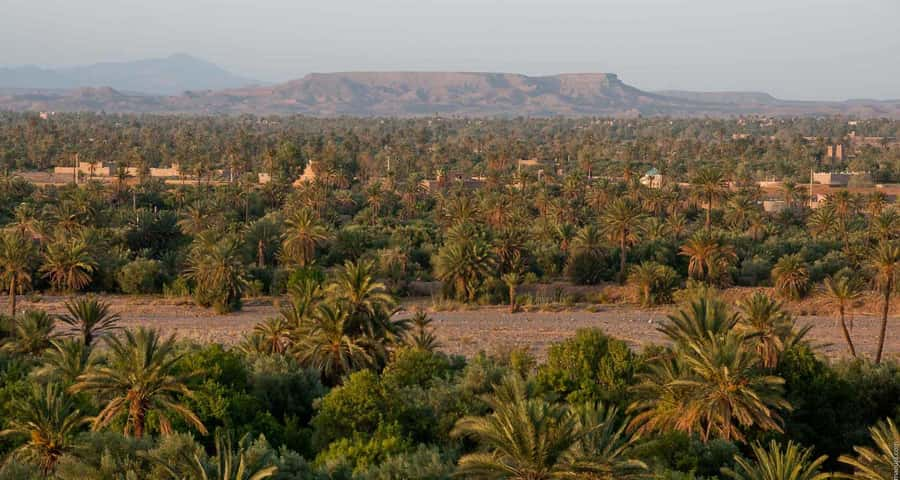
The private format is a real advantage. You can ask for photo stops, adjust the pace, and take breaks when needed. Several guides are praised for stopping at panoramic viewpoints and taking good photographs for their groups.
Vehicle quality appears to vary. Many people describe comfortable, clean transport, but one family found its vehicle old and less comfortable than expected. Another account raised concerns about air conditioning and seat belts. This is the most important practical point to clarify before booking: ask what vehicle is assigned and how many people will share it.
Families can manage the trip. Children aged three, five, seven, and eleven have completed it successfully with patient guides. Still, the driving time is real. Bring music, games, snacks, and patience. Summer heat can reach the mid-40s Celsius in the desert, so spring, autumn, and cooler winter periods may feel easier.
The guides are a major part of the experience. Mahmoud, Reda, Aziz Talaoul, Ali, Lahcen, Youssef, Bader, and others have been praised for kindness, local stories, flexibility, and safe driving. The exact person is not guaranteed, and the quality of guiding can differ. Ask whether your guide will personally lead the visits or mainly drive while local guides handle certain sites.
Who should book this Morocco desert tour?
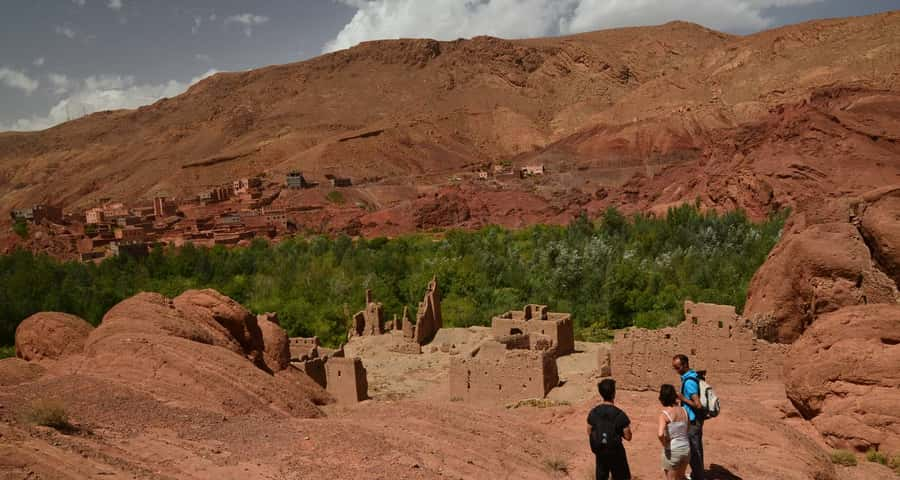
I would choose this trip if you have four days, want the Sahara without arranging several separate bookings, and prefer a private vehicle to a large group coach. It suits first-time visitors who want a broad introduction to the Atlas region and southern Morocco.
It is especially good for:
- Couples and friends who want flexibility
- Families comfortable with long drives
- Solo visitors who prefer organized transport
- First-time visitors to Morocco
- Anyone who values scenery, local food, and a desert night over slow hotel time
I would hesitate if you dislike winding roads, cannot sit in a vehicle for several hours, or want a luxury standard at every stop. I would also think twice about the hottest summer months, especially if you struggle with heat.
Cancellation is free up to 24 hours before departure, and you can reserve now and pay later. Bring your passport, towel, and camera. A small bag for the desert night, sun protection, and comfortable walking shoes will make the trip easier.
Should you book it?
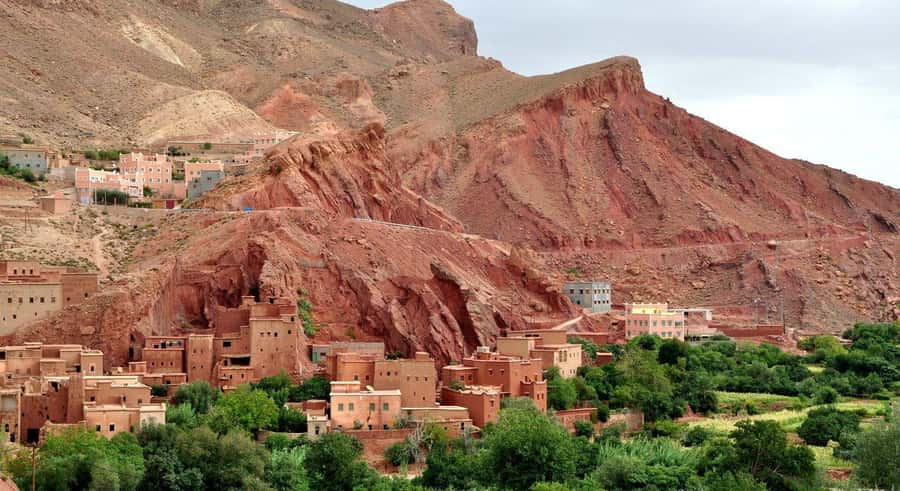
Book this tour if your main goal is to see a lot of Morocco beyond Marrakech in a short time. The best moments are very good: the High Atlas road, Todra Gorge, Aït Ben Haddou, and especially the sunset camel ride followed by a night in Erg Chebbi.
Before paying, confirm the vehicle, dietary needs, exact accommodation level, and which entrances are extra. If those details suit you, the $452 price offers solid value because it combines the long-distance transport, three nights, meals, bottled water, guide, camel ride, and desert camp.
FAQ
How long is the tour?
The tour lasts four days, with pickup and return in Marrakech.
What languages can the guide speak?
Guides may provide tours in English, French, Spanish, or Arabic.
Is the camel ride included?
Yes. A camel ride toward the Erg Chebbi camp at sunset is part of the experience.
Are meals and accommodation included?
Yes. The price includes meals during the tour and three nights of accommodation. Extra food and drinks are not included.
What should I bring?
Bring your passport, a towel, and a camera. Comfortable walking shoes, sun protection, and a small bag for the desert night are also practical choices.
Can I cancel the booking?
You can cancel up to 24 hours before departure for a full refund. The reserve-now, pay-later option is also available.
Just added in Marrakech
- Quad Ride In The Agafay Desert★ 5.0 · 39 reviews
- Quad Biking Agafay desert★ 5.0 · 20 reviews
- Marrakech: Tailor-Made City Tour With Your Own Private Guide★ 4.9 · 236 reviews
- Surf Training and Lunch on Essaouira Day Trip from Marrakech★ 4.9 · 51 reviews
- Essaouira: Surf Trip from Marrakech★ 4.9 · 31 reviews
- Marrakech palm grove: Sunset camel ride★ 4.8 · 194 reviews
- Marrakech: Sunrise Desert Tour with Camel Ride and Breakfast★ 4.4 · 36 reviews
- Marrakech : Agafay Desert Sunset Camel Ride & Luxury Dinner★ 4.3 · 39 reviews
Atlas Mountains Day Trips, compared.
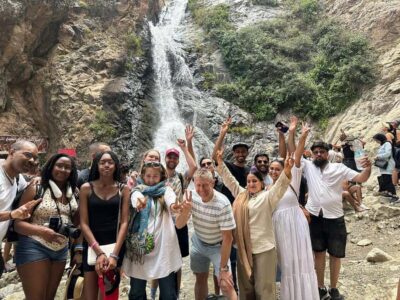
Atlas Mountains, Ourika Valley, Waterfall & Lunch
Read our review →
Berber villages : Atlas Mountains Day Hike from Marrakech
Read our review →
Ourika Waterfalls, Atlas Mountains, Guide + Lunch
Read our review →
Atlas Mountains & Agafay Desert Tour w Camel Ride
Read our review →
Atlas Mountains, Waterfalls, Ourika Valley +Lunch
Read our review →
Atlas Mountains & 5 Valleys Tour from Marrakech – All inclusive –
Read our review →Browse the lists this tour appears in