
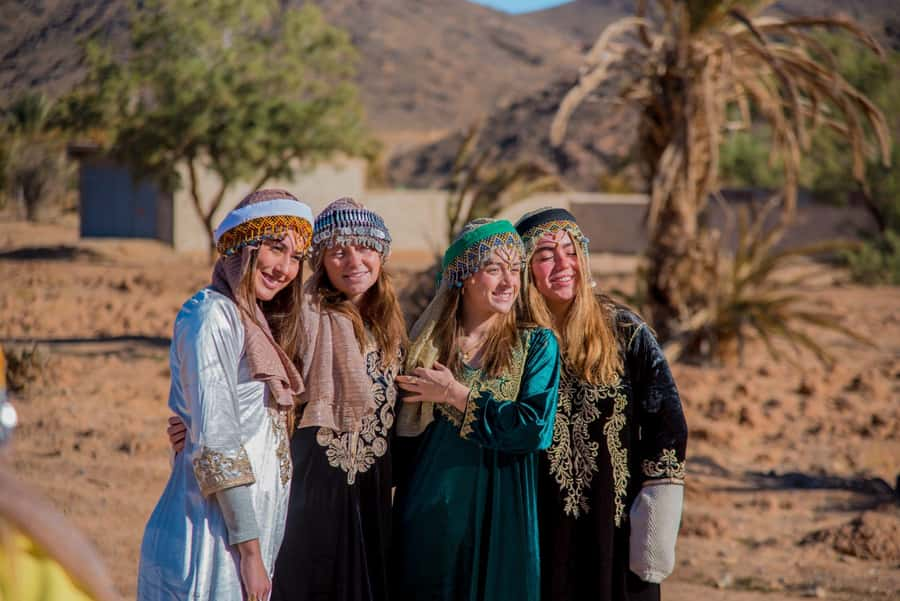
Reviewed · MERZOUGA & ERG CHEBBI DESERT TOURS
Marrakech to Fes: 3-Day Merzouga Desert Camel & Sandboarding
The best part of this Marrakech to Fes journey comes late on the second day, when you leave the road for Erg Chebbi’s golden dunes. A camel ride at sunset, sandboarding, Berber drumming, and a star-filled night turn a long road trip into a proper Sahara experience.
I like the way this tour links several of Morocco’s best sights in one route, especially Ait Benhaddou and Todra Gorge. I also like the practical value: transport, two nights of lodging, breakfasts, dinners, camel rides, sandboarding, and luggage service are included for $154 per person.
The tradeoff is time. You cover a great deal of ground, and some stops can feel brief. Lunches and drinks cost extra, some shopping stops may be pricier than expected, and the return drive to Fes makes Day 3 a long one.
Key points to know before booking
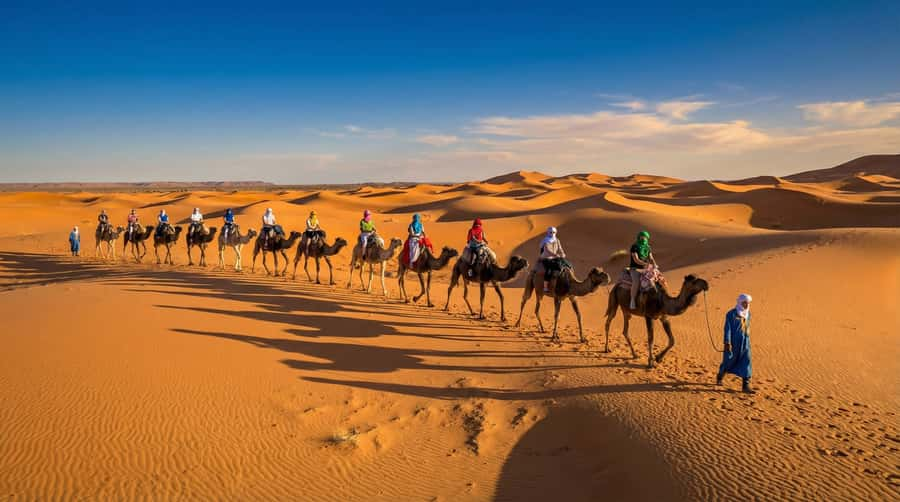
- Sunset camel ride at Erg Chebbi: The main event is a slow ride across the dunes, timed for the changing colors of evening.
- Ait Benhaddou and Todra Gorge: You get two very different Moroccan sights, one built of earthen kasbahs and one cut between towering cliffs.
- Standard or luxury camp: Standard tents use shared bathrooms. Luxury tents have private bathrooms and may include comforts such as heating, which matters in cold months.
- Long but useful road route: The trip connects Marrakech and Fes while showing you mountain villages, valleys, gorges, cedar forests, and desert towns.
- Small-group feel with named guides: Guides and drivers such as Omar, Youness, Rahim, Hakim, and Moncef are frequently assigned, and personal service is a major part of the experience.
- Sandboarding is included: You do not need to arrange a separate desert activity, though quad bikes cost €40 per person for one hour, with at least two people required.
Why this route works so well
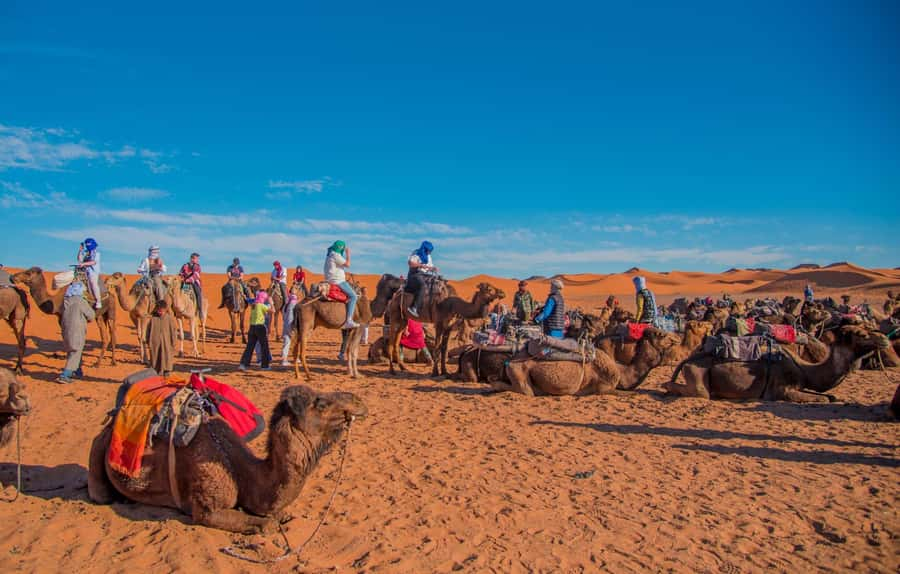
Morocco’s geography changes quickly once you leave Marrakech. The road climbs through the High Atlas, crosses dry valleys, reaches the kasbahs around Ouarzazate, then continues toward the Sahara. By the end, you have gone from red city walls to mountain passes, palm-filled oases, canyon cliffs, and open sand.
That variety is the real reason to choose this tour. You are not simply being transported from one city to another. You are using the long journey to see parts of Morocco that are difficult to connect by public transport in only three days.
The price is especially strong if you want the desert without arranging every hotel, transfer, meal, and activity yourself. At $154 per person, the package covers air-conditioned transport, a driver-guide, WiFi onboard, one hotel or riad night, one desert camp night, breakfasts, dinners, camel rides, sandboarding, and luggage handling.
Still, this is a road trip, not a slow cultural retreat. You may spend several hours in the vehicle on some days. The air-conditioned transport and regular stops help, but you should be comfortable with a packed schedule.
Other desert runs people book from Marrakech:
- From Marrakech: 3-Day Merzouga and Sahara Desert Tour
★ 4.9 · 15,308 reviews - From Marrakech: Merzouga 3-Day Desert Safari with Food
★ 4.7 · 12,232 reviews - 3 Days Desert Tour From Marrakech To Merzouga Dunes & Camel Trek
★ 5.0 · 10,125 reviews
Day 1: Crossing the Tizi n’ Tichka Pass
Pickup begins around 7:00 AM from your hotel or riad. If your accommodation cannot be reached by car, you will meet the driver at a nearby point, usually within a five-minute walk. Pickup details arrive by WhatsApp and email the day before, so keep your phone available, especially if you book late.
The first major stretch runs through the High Atlas Mountains over the Tizi n’ Tichka Pass. This is a scenic start, with views of Berber villages, steep slopes, and waterfalls. The road is winding, and snow can affect conditions in winter. One group needed a route change after a road closure caused by snow, so flexibility matters.
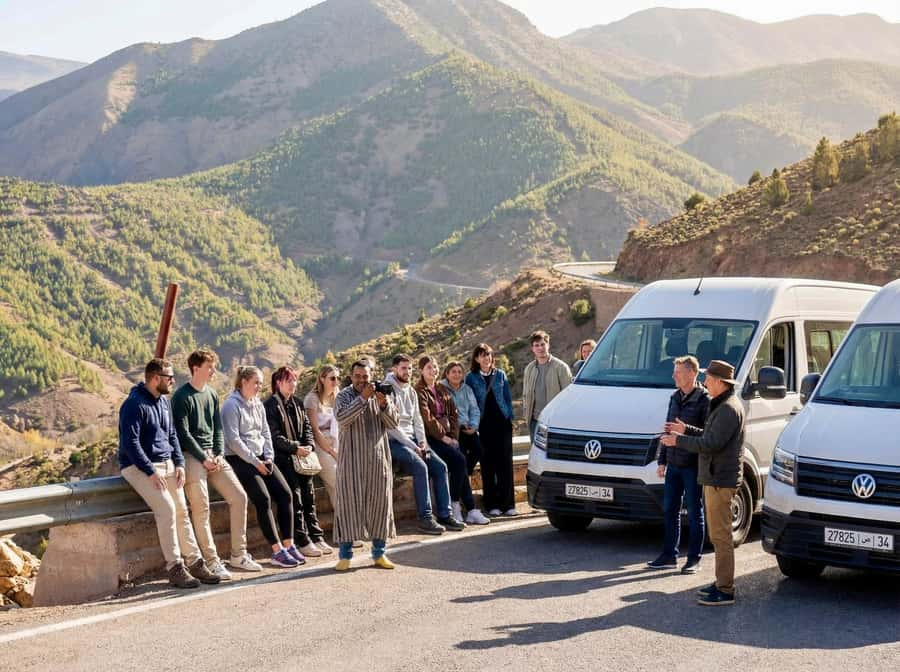
Your driver is an important part of the day. Names vary, but people such as Youness, Simo, Moncef, Hakim, Abdelkhalek, and Rachid have been praised for careful driving, clear explanations, and frequent stops for photographs, toilets, coffee, and stretching your legs.
The journey is not only about scenery. Stops in the Atlas may include local craft or food experiences, such as argan oil production and time in Berber villages. These visits give the route a human side, though you should expect that some may lead to shops where prices are higher than in ordinary local stores.
Ait Benhaddou: Morocco’s famous earthen village
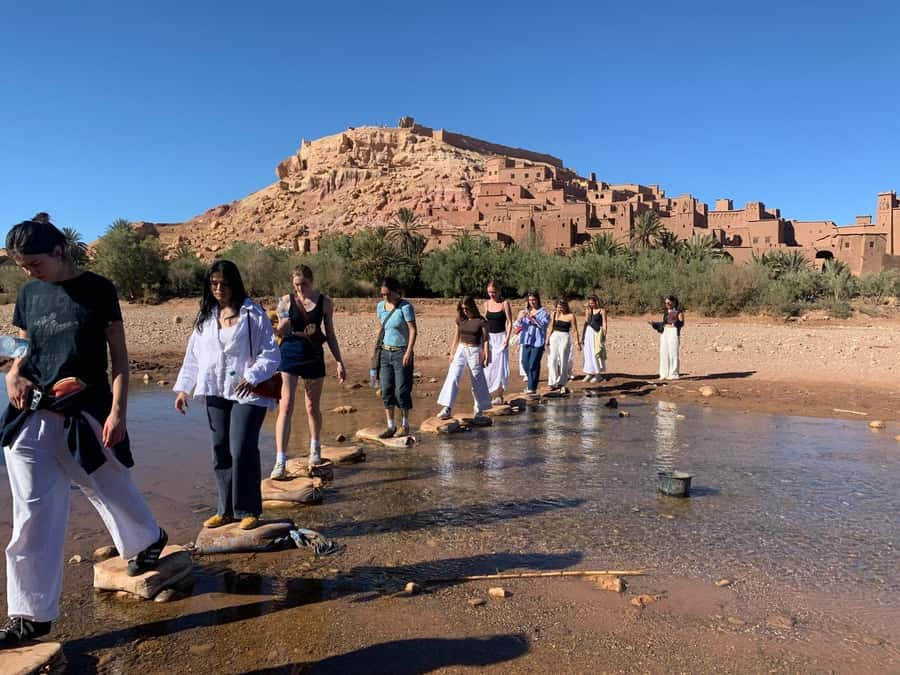
Ait Benhaddou is one of the strongest stops on the route. This UNESCO World Heritage site is a fortified village of earthen buildings, narrow lanes, and high walls. Its location has also made it popular with film crews, which explains why the name may sound familiar even if you have never been to Morocco.
You will have time to walk through the kasbah and take photographs from different levels. The place is most interesting when you look beyond the famous movie connection and notice how the buildings work together as a fortified settlement.
A local guide is not included in the base price. You can hire one for €2 per person. I recommend doing so if you want the architecture, local customs, and story of the village explained rather than simply seeing it as a photo stop.
The schedule can feel tight here. You are visiting one of Morocco’s most important historic sites during a route that still has many kilometers ahead, so do not expect a full day to explore every lane.
Ouarzazate and the Valley of the Roses
The road continues to Ouarzazate, often linked with Morocco’s film industry. The city makes a useful break between the Atlas and the desert regions. You will have a chance to look around before continuing toward the Valley of the Roses and the Dades area.
The Valley of the Roses adds a softer note to the route. Compared with the bare mountain roads and dry plateaus, the valley shows how settlements and farming survive along water sources. The exact appearance changes with the season, so do not expect roses in bloom year-round.
The first night is spent near Dades Gorge in a local hotel. Dinner and breakfast are included. Accommodation reports vary by property, but the overall setup is a private air-conditioned room or suite with a private bathroom. One particularly useful detail is that some hotels have a swimming pool, which can be welcome after a full day on the road.
This is not a luxury hotel tour from start to finish. One person found the first hotel more basic than their usual choice, although the private room and view were satisfactory. Think of this night as a clean and practical stop before the desert, not as the main event.
Other dune days near Marrakech:
- Marrakech: 3-Day Trip to Fez with Sandboarding & Camel Ride
★ 4.8 · 143 reviews - Marrakech: 3-Day Merzouga Desert Tour Camel & Sandboarding
★ 5.0 · 43 reviews - Agadir/Taghazout: Quad Bike and Sandboarding Tour
★ 4.7 · 1,286 reviews - Best Agadir Desert Adventure: Quad Camel Sandboarding & BBQ
★ 4.7 · 768 reviews
Day 2: Todra Gorge and the road to Merzouga
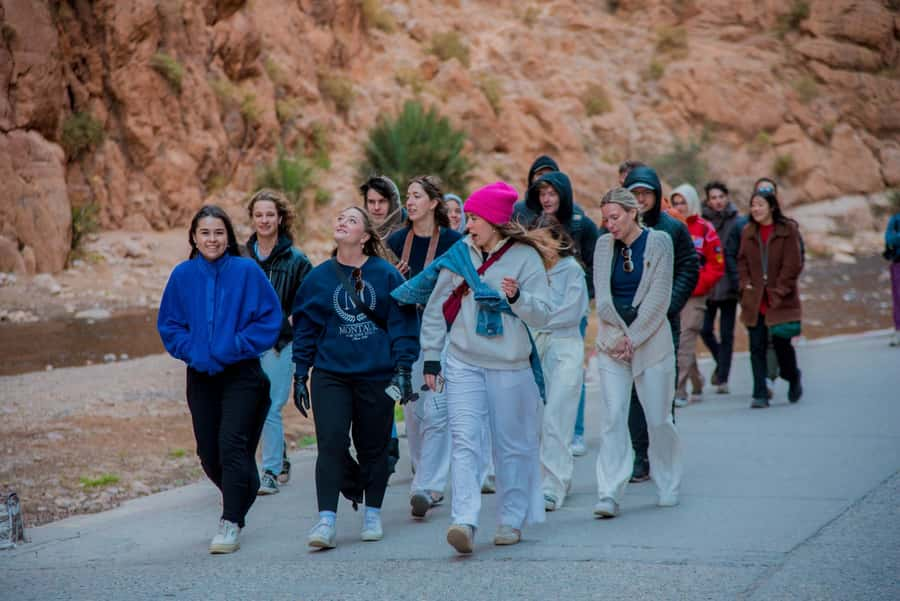
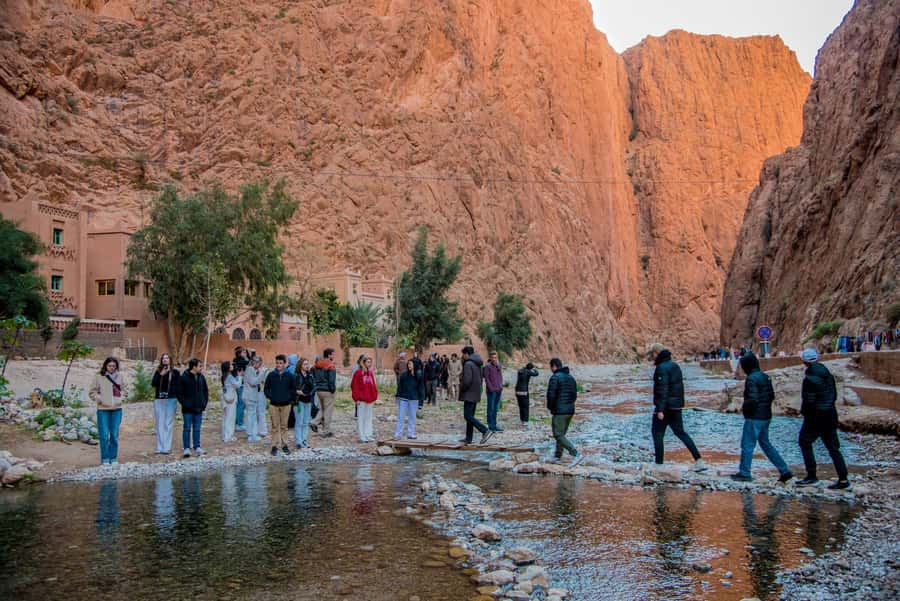
After breakfast, you travel through the oasis of Tinghir toward Todra Gorge. The gorge is one of the most impressive natural stops on the route, with cliffs rising about 300 meters on either side. A walk beneath the rock walls gives you a chance to leave the vehicle and experience the scale of the place.
Todra Gorge is worth more than a quick photograph. Look up at the cliff faces, notice the narrow passage, and pay attention to the sudden change from open road to enclosed stone corridor. The stop also breaks up the long drive to Merzouga.
The day remains full. You will continue through desert villages and changing dry country before reaching Erg Chebbi, the dune area near Merzouga. Some sections feel like a series of viewpoints and short walks rather than long visits, but that is the price of covering so much ground in three days.
Lunch and drinks are not included. Restaurants used along the route can charge around 120 Moroccan dirhams per person, and prices may feel high compared with local cafés. Bring cash, snacks, and a water bottle. Small bills are also useful for tips.
Erg Chebbi at sunset: camels and sandboarding
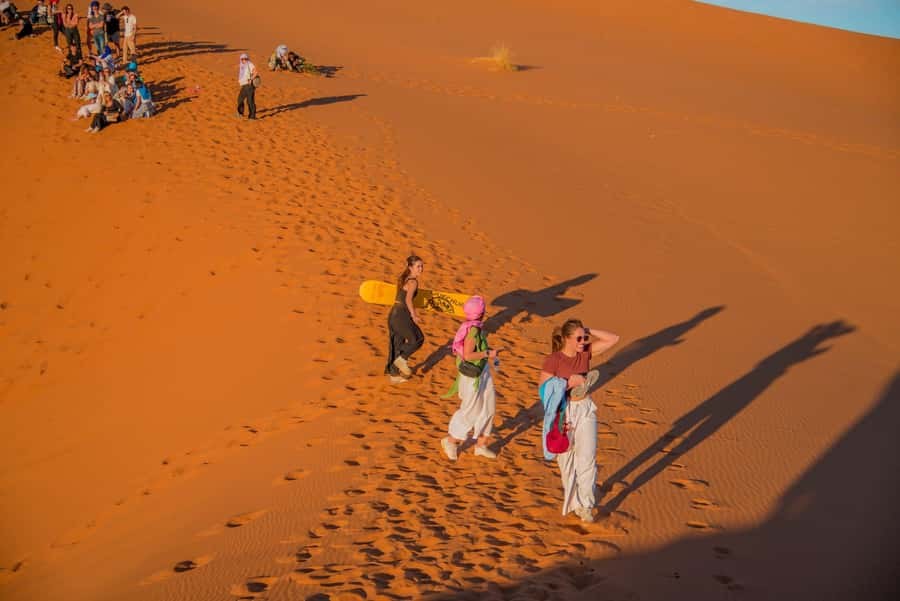
The desert portion is timed well. You reach the dunes in the afternoon, ride a camel across the sand, and aim for sunset. The pace is slow, giving you time to watch the light move from bright gold to orange and red.
Camel riding is not physically difficult for most people, but it is not perfectly comfortable either. The saddle can be hard on your legs and backside, especially if you have not ridden before. Wear trousers or other clothing that allows easy movement, and use closed-toe shoes.
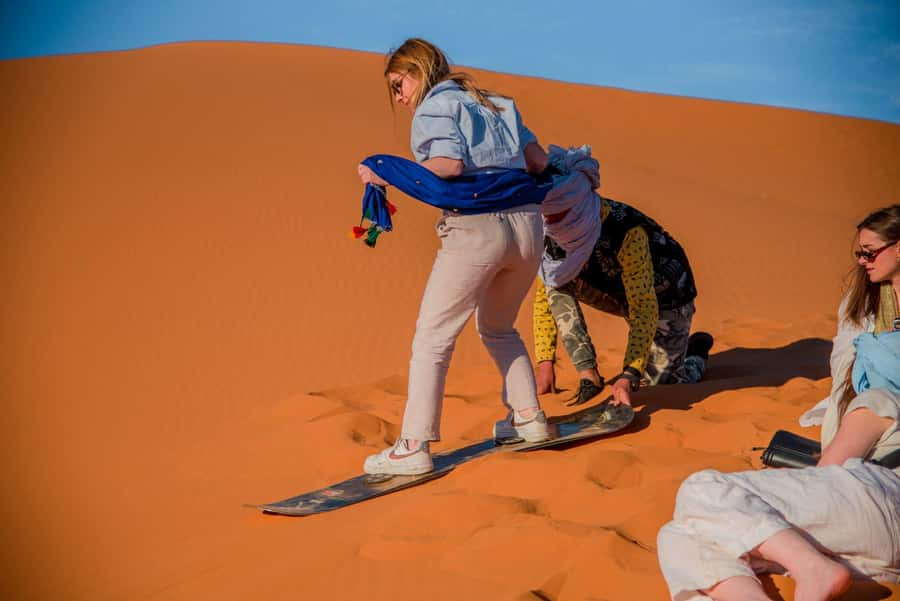
Sandboarding is included, and it is a fun contrast to the calm camel ride. You can climb a dune, sit or stand on the board, and slide down. The sand is forgiving, though climbing back up can be the tiring part.
A free 4×4 transfer to the camp is available if you prefer not to ride a camel for the entire approach. Quad biking is an optional extra at €40 per person for one hour, with a minimum of two people. Buggy rides are also available, but the price is supplied at the camp.
A night in the desert camp
After sunset, you reach your camp for dinner, music, and drumming around the fire. The evening is designed around simple pleasures: Moroccan food, a dark sky, warm conversation, and Berber music beneath the dunes.
The accommodation choice matters. Standard tents are private, clean, and generally spacious, but bathrooms are shared. Luxury tents have private bathrooms and may offer air-conditioning or heating. In winter, the extra comfort can be worth paying for because desert nights become cold. In summer, heat can remain a problem even after sunset.
One useful booking detail is easy to miss: everyone in your party should choose the same camp category. Standard and luxury groups may be separated, meaning people who select different options could spend the night in different parts of the desert.
Facilities can vary. Hot water has been available at standard camps, but bathroom quality is not always perfect. If a private bathroom, heated shower, or more reliable comfort matters to you, choose the luxury option rather than assuming every tent has the same setup.
The camp atmosphere also depends on the night. Music may continue late, especially during New Year celebrations. If you need a very quiet night and an early start, bring earplugs and understand that the desert camp is a social experience, not a silent hotel.
Day 3: Ziz Valley, the Middle Atlas, and Fes
After breakfast, you leave the camp and begin the long drive toward Fes. The route passes through the Ziz Valley and the Middle Atlas Mountains, providing another change in scenery after the wide dunes.
The cedar forests near Azrou offer one of the day’s more unusual stops. You may see wild monkeys in their natural habitat. They are entertaining to watch, but remember that they are wild animals and should not be treated like pets.
The final drive ends in Fes around 8:00 PM. This timing matters if you have a train, flight, or fixed evening appointment. I would not schedule anything important after arrival, since road conditions, stops, or weather can affect the timing.
Day 3 is mainly about getting you to Fes while adding a few worthwhile sights. It does not have the relaxed feeling of a free day in the city. If you want to explore Fes immediately, allow yourself enough energy for the late arrival.
Guides, vehicles, and group style
The tour includes a driver-guide, and the guide assignment can change. Names appearing on different departures include Omar, Rahim, Youness, Imad, Hakim, Moncef, Ayoube, Abdellah, and others. The strongest part of the service is usually the personal care: stopping when needed, helping with luggage, explaining the route, and checking that everyone is comfortable.
The guides speak Arabic, English, French, Spanish, and Portuguese across the service. Optional audio guidance is available in English, French, Spanish, and Arabic. A private group can also be arranged if you do not want to travel with other people.
The vehicle is air-conditioned and has onboard WiFi. One departure used a Mercedes with USB sockets and comfortable seats, which matters because you spend a lot of time inside the vehicle. Group size is described as small, and one group had eight people, enough for a social atmosphere without feeling like a large coach tour.
What to pack and how to prepare
Bring comfortable closed-toe shoes, sunglasses, sunscreen, a camera, cash, and a jacket. The jacket is important even if Marrakech is warm when you leave. Winter nights in the desert can be cold, while summer days and evenings can remain very hot.
Pack clothes for changing conditions rather than one heavy outfit. You will need practical clothing for mountain stops, dusty dunes, camel riding, and a night outside the city. Keep medicines, chargers, and a water bottle within reach in the vehicle.
Small bills are helpful for tips. You may want to thank drivers, local guides, camel handlers, and camp staff, so do not rely only on a bank card.
The tour allows free cancellation up to 24 hours before departure, and you can reserve now and pay later. Pickup instructions arrive by 5:00 PM the day before, not at 5:00 PM on the departure day.
Is this tour good value at $154?
For the number of services included, $154 is a strong price. You receive transportation between two major cities, two nights of accommodation, two dinners, breakfasts, camel riding, sandboarding, luggage service, and a guide.
The value is best for someone who wants a first look at southern Morocco without organizing a private car, hotels, camp, and desert activities separately. The tour also saves you from backtracking to Marrakech.
The compromises are clear. Lunches and drinks are extra. Some stops are brief, some meals are merely acceptable, and the first hotel may not match your usual standard. You are paying for access, variety, and convenience rather than a slow, polished luxury holiday.
Who should book this Marrakech to Fes trip?
You should book it if your time in Morocco is limited and you want the Atlas Mountains, kasbah country, a gorge, the Sahara, and Fes connected in one trip. Families can manage it, and the included activities give children something to anticipate, though the long drives require patience.
It is also a good fit if you enjoy meeting guides and other people along the way. The human side of the trip, including Berber music, village visits, local explanations, and camp life, adds more than a simple desert transfer would.
You should think twice if you dislike early starts, long drives, shared bathrooms, organized stops, or fixed schedules. If your priority is high-end accommodation and quiet, choose the luxury camp and consider a private group, or arrange a slower private itinerary.
Should you book it?
Yes, if you want a budget-friendly route from Marrakech to Fes with the Sahara as its centerpiece. The camel ride at sunset, sandboarding, campfire music, and starry sky are the moments most likely to stay with you.
Choose the luxury camp if cold nights or private bathrooms matter. Bring snacks and cash, expect a busy schedule, and leave no important plans for the evening you reach Fes. With those expectations, this tour offers a lot of Morocco for three days and a very fair price.
FAQ
How long is the tour?
The tour lasts three days. It begins around 7:00 AM on Day 1 and ends around 8:00 PM on Day 3.
Where does the tour start?
Pickup is from your Marrakech hotel or riad if it can be reached by car. Otherwise, you will use a nearby meeting point within about a five-minute walk.
Where does the tour finish?
The tour finishes in Fes, with drop-off included under the same access rules as pickup.
Is transportation air-conditioned?
Yes. Transportation is air-conditioned and includes onboard WiFi.
Is the camel ride included?
Yes. Camel rides in the Erg Chebbi dunes are included, along with sandboarding.
Are meals included?
Breakfasts and dinners are included. Lunches and drinks are not included.
What is included at the desert camp?
Your selected option includes one night at a desert camp in Erg Chebbi. Standard private tents use shared bathrooms, while luxury tents have private bathrooms.
Can I avoid the camel ride to the camp?
Yes. A 4×4 transfer to the camp is available at no extra charge.
How much does quad biking cost?
Quad biking costs €40 per person for one hour, and at least two people are required.
Can I cancel the booking?
Yes. You can cancel up to 24 hours before departure for a full refund. You can also reserve now and pay later.
Just added in Marrakech
- Quad Ride In The Agafay Desert★ 5.0 · 39 reviews
- Quad Biking Agafay desert★ 5.0 · 20 reviews
- Marrakech: Tailor-Made City Tour With Your Own Private Guide★ 4.9 · 236 reviews
- Surf Training and Lunch on Essaouira Day Trip from Marrakech★ 4.9 · 51 reviews
- Essaouira: Surf Trip from Marrakech★ 4.9 · 31 reviews
- Marrakech palm grove: Sunset camel ride★ 4.8 · 194 reviews
- Marrakech: Sunrise Desert Tour with Camel Ride and Breakfast★ 4.4 · 36 reviews
- Marrakech : Agafay Desert Sunset Camel Ride & Luxury Dinner★ 4.3 · 39 reviews
Merzouga & Erg Chebbi Desert Tours, compared.
3 Days Desert Tour From Marrakech To Merzouga Dunes & Camel Trek
Read our review →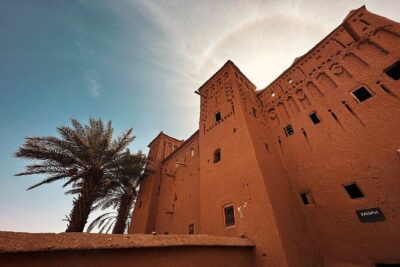
3-Day Marrakech to Merzouga Desert Tour: Camel Rides & Overnights
Read our review →
3-Day Marrakech to Fes Sahara Desert Tour via Merzouga
Read our review →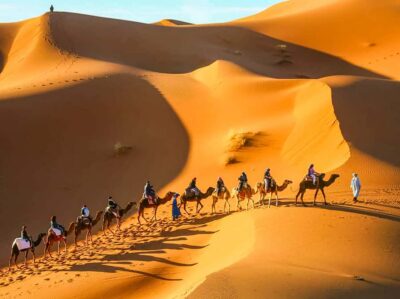
3-Day Merzouga Desert Experience Camel & Meals
Read our review →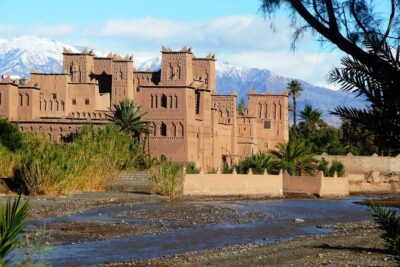
3-Day Tour to Merzouga Erg Chebbi with Food & Camel Trek
Read our review →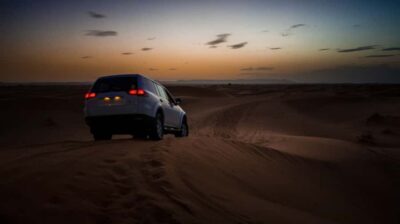
Sahara Desert 2-Day Tour with Merzouga Camp Stay
Read our review →Browse the lists this tour appears in