
Reviewed · POTTERY & CRAFT WORKSHOPS
Marrakech: Make Your Own Moroccan Zellige Mosaic Masterpiece
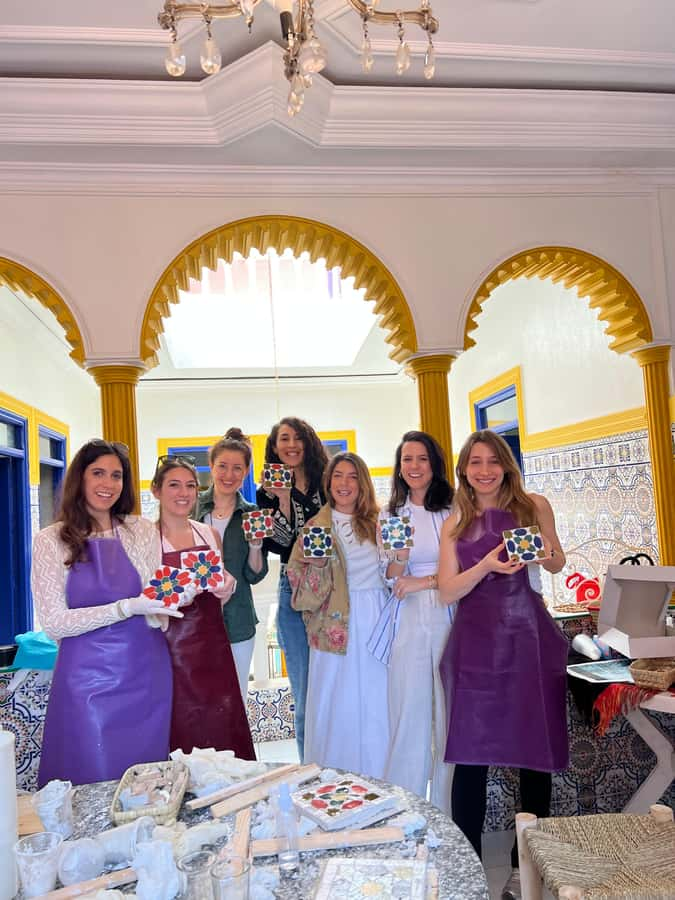
The best part of this two-hour Marrakech workshop is that you do not just look at Moroccan tilework, you make a piece of it. You choose colors, arrange precut shapes, and leave with a small mosaic that carries your own design choices. Salma, Laila, and Leila are praised for patient, clear guidance, especially when the pattern first seems confusing.
I like the small-group feel, with one session described as having six people, and I like the simple extras: mint tea and Moroccan pastries during the work. The workshop also gives you a useful rainy-afternoon or midday break from the souks and palaces. One thing to keep in mind is that the tile shapes are precut and the color range may be more limited than you expect, so this is a hands-on introduction rather than full traditional tile production from raw clay.
Key points to know before you book
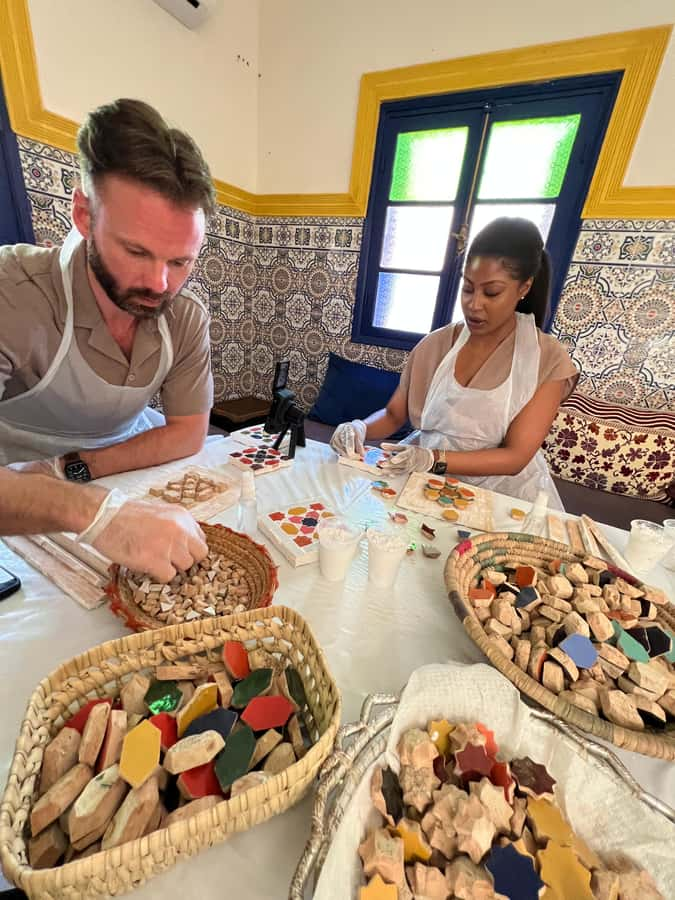
- Make a personal tile: Arrange precut zellige pieces into a pattern and take your finished artwork home.
- Learn from named instructors: Salma, Laila, and Leila have been singled out for clear explanations, patience, and friendly help.
- Enjoy a Medina setting: The studio sits off a souk side street in the Old Town, in a spacious, well-ventilated setting.
- Tea is part of the experience: Moroccan tea and pastries give the two-hour class a pleasant pause.
- Good value at $42: Materials, instruction, refreshments, and a souvenir are included.
- Plan for simple access needs: Transportation is not included, and the activity is not suitable for wheelchair users or children under five.
What this zellige workshop really offers
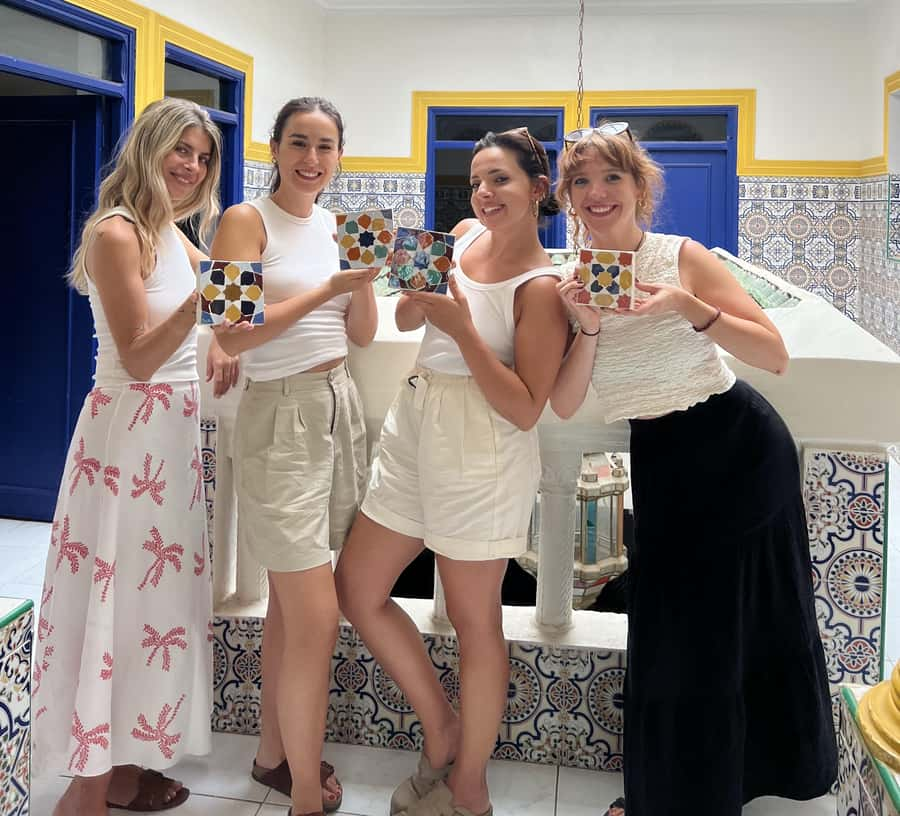
Moroccan zellige is the careful arrangement of small glazed tile pieces into repeating geometric designs. You see it on fountains, walls, courtyards, palaces, and religious buildings across Morocco. The appeal is not only in the color. It is in the precision, balance, and patience needed to make many small pieces work as one pattern.
This class gives you a friendly introduction to that visual language. You are not expected to arrive with art training. The instructors explain the basic ideas, show examples, and help you assemble your own tile. That makes the activity approachable for a first-time craft project, while still giving you a taste of the discipline behind Moroccan architectural decoration.
The class is listed at two hours, which is enough time to understand the process and complete a keepsake without giving up an entire day of sightseeing. I see that length as a real advantage in Marrakech. You can fit it between a palace visit, a meal, or time in the souks.
Other things to make with your hands in Marrakech:
- Marrakech: Pottery Workshop with Moroccan Tea
★ 4.8 · 756 reviews - Lamsaty Pottery Workshop with Moroccan Tea
★ 5.0 · 75 reviews - Marrakech: Pottery Workshop
★ 4.9 · 47 reviews
Entering the Medina studio
The workshop takes place in the heart of Marrakech’s Medina, in a studio described as spacious, well ventilated, and air-conditioned. One useful detail is its position off a side street near a souk. You get the atmosphere of the Old Town without having to spend the whole activity in a crowded market lane.
The setting appears to be part of the charm. It has been described as a beautiful house with a rustic Moroccan feel, rather than a polished modern classroom. That matters if you want an activity connected to the place you are visiting. You are working with a traditional Moroccan craft in an environment that feels local, not like a generic hotel workshop.
Plan to arrive 15 minutes early. Marrakech’s Medina can take longer to cross than a map suggests, especially if you are walking from another part of the Old Town. The booking includes no transportation, so you need to make your own way to the studio.
You should wear comfortable clothing suitable for crafting. Smoking is not allowed, and you should bring water. A camera is also listed as something to bring, which makes sense for recording your pattern, your work in progress, and the finished tile.
The opening lesson on Moroccan tilework
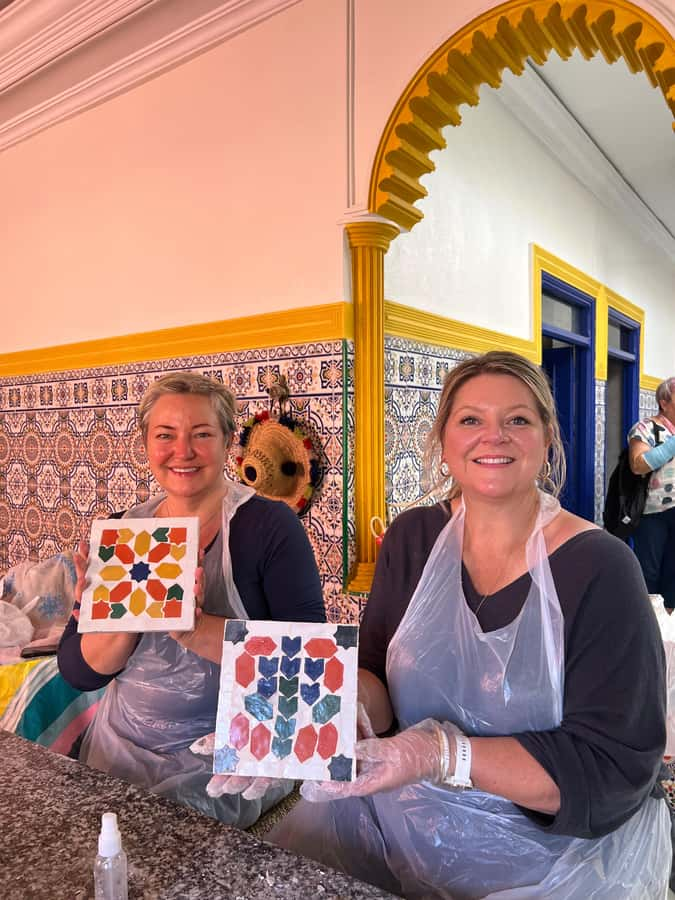
The class begins with an introduction to zellige’s history, design principles, and basic techniques. This part gives the craft meaning. You learn why geometric arrangements matter in Moroccan decoration and how repeated shapes can create an intricate finished surface.
The instruction is available in Arabic, French, and English. That language range is useful in a craft class, where a small misunderstanding about placement can affect the whole pattern. Salma has been praised for explaining the intricate placement clearly in English, while Leila and Laila are also noted for patient, encouraging help.
The teaching style is practical. You see examples and proposed patterns, then start making choices of your own. Beginners receive enough support to get moving, and more artistic participants can think about color and layout rather than simply copying a sample.
I would not book this expecting a long academic lecture on Moroccan architecture. The class is designed around making something. Its cultural context is there to help you understand the craft, but the main purpose is practical: learn enough to create a finished mosaic.
Choosing colors and arranging precut pieces
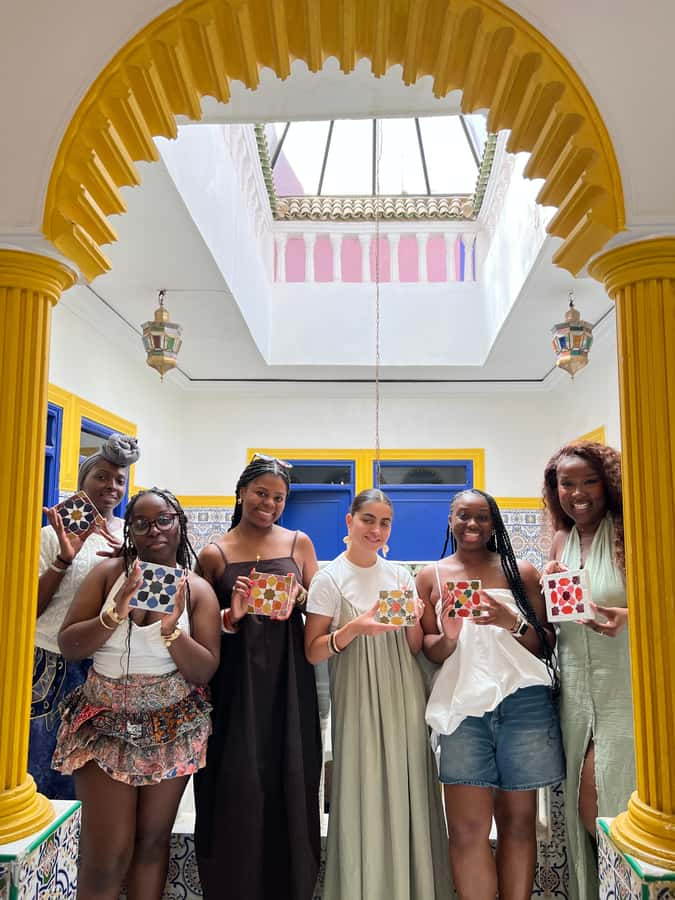
After the introduction, you work with precut tile pieces. You arrange them into a pattern, decide how the colors should sit together, and assemble the design with guidance from the instructor.
This is where the activity becomes personal. You are not buying a finished tile from a shop. You are making choices about the look of your own piece. Several people have enjoyed selecting their colors and watching the design take shape, and one instructor even wrote the makers’ names in Arabic on the backs of their mosaics. That small touch turns a decorative object into a personal souvenir.
The precut format also keeps the class manageable within two hours. Cutting and shaping zellige from larger tiles would require specialized tools, more time, and a much more technical setup. Here, you concentrate on pattern, spacing, and assembly.
There is a tradeoff. If you imagine making every tiny tile from scratch, this workshop will not go that far. You receive prepared pieces and arrange them according to a selection of patterns. One participant felt the craft process could have been explained in greater depth, and that is a fair expectation to manage. This is an introduction to zellige design and assembly, not professional artisan training.
Same base, a different sort of day:
- Marrakech: Agafay Desert Sunset, Camel Ride, and Dinner Show
★ 4.6 · 35,119 reviews - From Marrakech: Ouzoud Waterfalls Guided Hike and Boat Trip
★ 4.7 · 33,630 reviews - Marrakech: Agafay Desert Quad & Camel Rides with Dinner Show
★ 4.8 · 27,382 reviews - Marrakech: Agafay Desert Quad Biking Tour with Dinner-Show
★ 4.8 · 16,569 reviews
Creating a pattern that feels like yours
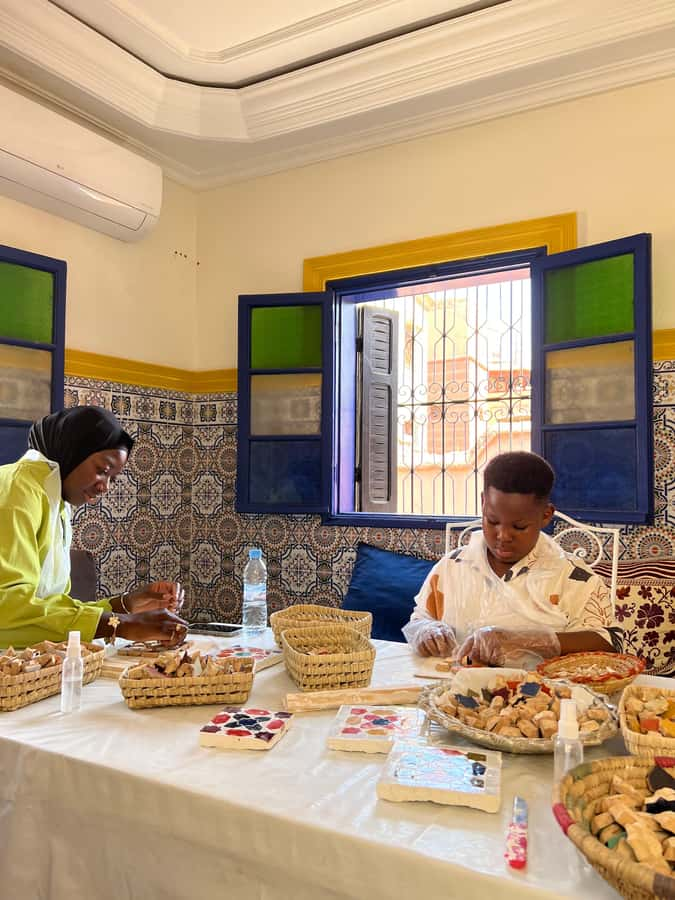
You can follow a suggested design or make your own choices within the materials provided. This makes the class suitable for mixed groups. Someone who wants clear direction can use an example, while a more confident maker can experiment with color combinations and arrangement.
The design stage may be the trickiest part for beginners. Geometric patterns can look simple until you need to decide which piece goes where. This is where the instructor’s presence matters. Salma, Laila, and Leila are described as patient and attentive, and that kind of help can save you from becoming stuck over a small section.
The group size can shape the experience. One session had six people, which sounds comfortable for an activity requiring individual support. Another class had a larger group, and one person felt it might have worked better with two hosts, though Laila remained attentive. If personal guidance is important to you, ask about the expected group size when you book or contact the provider.
Families can also find this appealing. One parent made mosaics with daughters aged 14 and 16, and another family worked alongside two children under 10. The formal restriction is that children under five are not suitable, so young children should be able to handle a careful, seated craft activity.
Tea, pastries, and a welcome pause
Tea and Moroccan pastries are included. This is not a full meal, and the activity does not include meals, but the refreshments fit the setting and provide a welcome pause while your design develops.
The tea break also gives the class a social rhythm. You are not simply sitting silently over a craft project for two hours. There is time to look at the examples, compare color choices, and enjoy a familiar Moroccan hospitality ritual.
If you are booking this around lunch, do not count the pastries as a substitute for a meal. Plan food separately. The activity works best as a cultural stop between meals, not as a food tour.
Taking home a handmade Marrakech souvenir
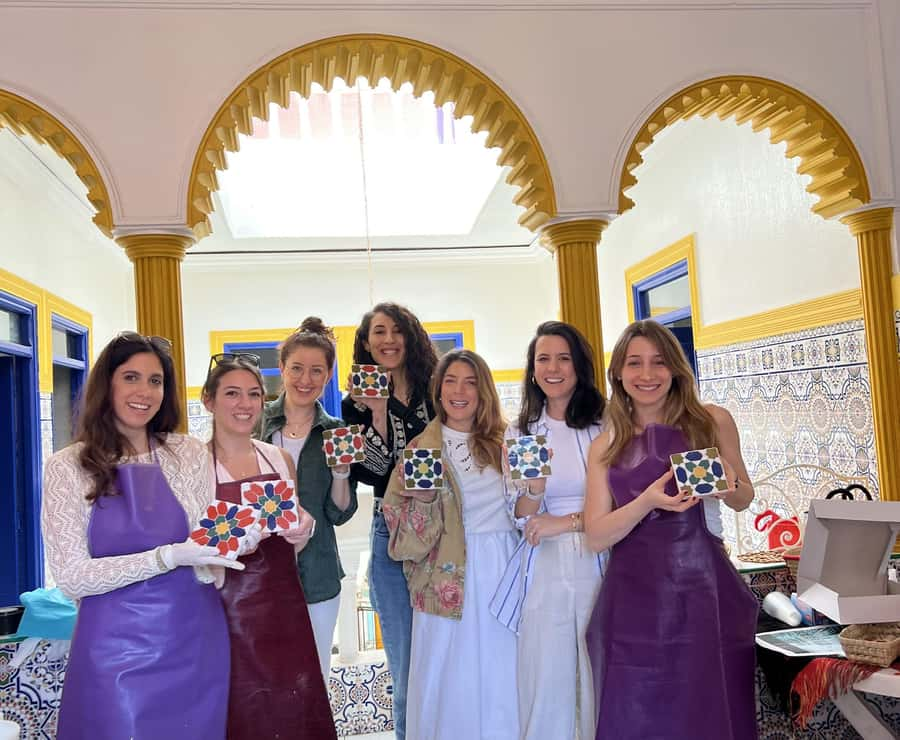
The finished zellige piece is included, and you take it home at the end. That is the strongest practical reason to choose this class over a standard sightseeing stop. You leave with something connected to the activity, rather than only photographs.
A handmade tile is also easier to value after you have made one. Once you have wrestled with spacing, color balance, and small pieces, the tilework on Moroccan buildings becomes easier to notice. The workshop can sharpen your eye for details you might otherwise pass without a second thought.
The size and finish of the piece are not specified, so you should not expect a large wall panel or a museum-quality commission. Think of it as a personal decorative tile and a record of your time in Marrakech. The instructors may add a name in Arabic on the reverse, which gives the souvenir an extra personal mark.
Pack it carefully for the journey home. The activity provides the artwork, but no special transport packaging is specified. If you are continuing to travel, ask the staff how they recommend protecting it.
Is $42 good value?
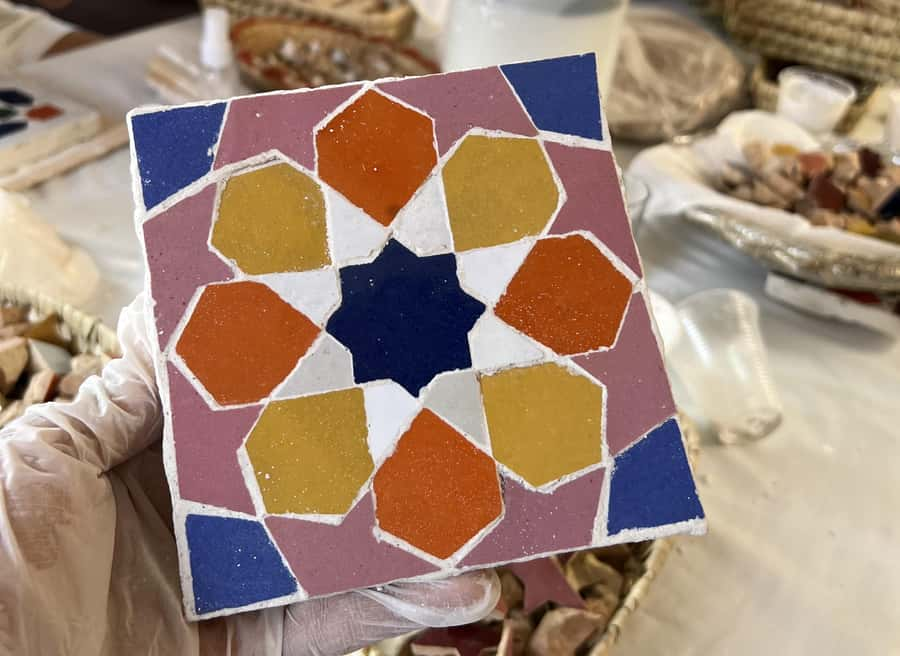
At $42 per person, the workshop is reasonably priced for a two-hour cultural activity that includes instruction, materials, refreshments, and a finished piece. You are paying for more than a craft kit. The price also covers access to an instructor who can explain the pattern and help correct mistakes.
The value is strongest if you want an activity rather than another hour of sightseeing. A tile bought in a shop may be faster, but it will not carry the memory of making it. For couples, families with older children, and friends, the shared process adds to the appeal.
The value is less clear if you already have strong experience with mosaic work and want advanced instruction. Since the pieces are precut and the patterns are fairly guided, an experienced tile artist may find the technical side limited.
The rating of 4.8 from 103 ratings suggests a consistently strong experience, and the specific praise tends to center on the same points: kind instructors, clear help, a relaxed setting, and a finished souvenir. The main cautions are also consistent enough to note: color choices may be narrower than expected, and a larger group may place more demand on one instructor.
Who will enjoy this most
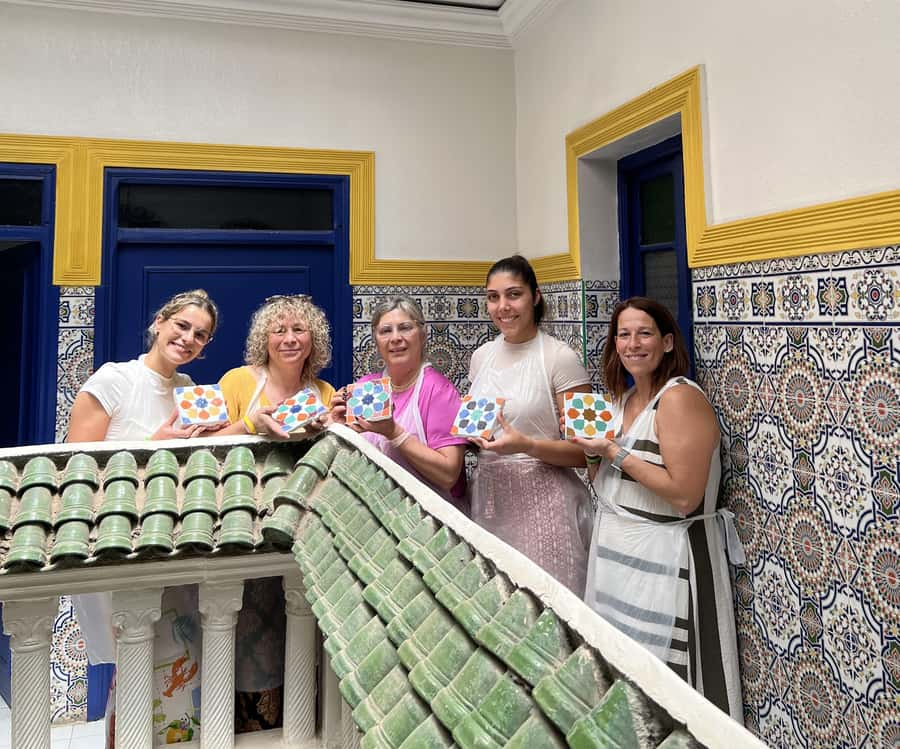
I would recommend this workshop to you if you like making things, want a break from walking, or prefer a cultural activity with a clear result. It is especially well suited to:
- Couples looking for a relaxed shared activity
- Families with children older than five
- Teenagers interested in art or Moroccan design
- Visitors wanting a personal souvenir
- Anyone seeking an indoor plan for a hot or rainy afternoon
- Architecture fans curious about the tilework seen at Moroccan palaces and courtyards
You do not need to be artistic. The examples and instructor help make the process accessible. Still, you should enjoy patient, detailed work. If you dislike arranging small pieces or want a fast activity, the pace may feel slow.
The workshop is not suitable for wheelchair users, according to the activity information. Details about the exact entry route and seating are not provided, so anyone with mobility concerns should contact the provider before booking.
Practical planning for the two-hour session
Allow extra time to find the studio and arrive 15 minutes early. Since transportation is not included, check your route before setting out, especially if you are coming through the Medina’s narrow lanes.
Wear clothing you can work in comfortably. You are handling craft materials, so your best outfit is practical rather than formal. Bring water, and keep your camera ready for the examples and finished work.
The activity has free cancellation up to 24 hours before the start time, and you can reserve now and pay later. Those options are useful if your Marrakech schedule is still shifting. Starting times depend on availability, so check the time before building the rest of your day around it.
The workshop is offered in Arabic, French, and English. If you need a particular language, confirm it when arranging your session.
Should you book the zellige workshop?
Book it if you want to understand Moroccan tilework by working with it yourself. The class offers a good mix of cultural context, creative time, refreshments, and a souvenir you have a hand in making. The patient instruction from Salma, Laila, and Leila is a major benefit for beginners.
Skip it if you want advanced tile cutting, a long technical course, or a large finished artwork. The pieces are precut, the class is only two hours, and the color range may not be as broad as you picture.
For $42, I think it is a solid choice for couples, families with older children, and anyone wanting a quieter Medina experience. It gives you a reason to slow down, look closely at Moroccan design, and carry a small piece of Marrakech home.
FAQ
How long does the zellige workshop last?
The workshop lasts two hours. You should also arrive 15 minutes early to settle in.
What is included in the price?
The price includes expert instruction, all workshop materials, your own zellige artwork to take home, tea, and Moroccan pastries. Meals and transportation are not included.
Can beginners take part?
Yes. The workshop is designed for all skill levels, and instructors provide examples, explanations, and hands-on help with arranging the pieces.
Which languages are available?
Instruction is available in Arabic, French, and English.
Are children allowed to join?
Children under five are not suitable for the activity. Older children can take part, and the workshop has been enjoyed by families with children and teenagers.
Is the workshop wheelchair accessible?
The activity is listed as not suitable for wheelchair users. Contact Khmisa Workshops directly if you need more detailed access information.
Just added in Marrakech
- Quad Ride In The Agafay Desert★ 5.0 · 39 reviews
- Quad Biking Agafay desert★ 5.0 · 20 reviews
- Marrakech: Tailor-Made City Tour With Your Own Private Guide★ 4.9 · 236 reviews
- Surf Training and Lunch on Essaouira Day Trip from Marrakech★ 4.9 · 51 reviews
- Essaouira: Surf Trip from Marrakech★ 4.9 · 31 reviews
- Marrakech palm grove: Sunset camel ride★ 4.8 · 194 reviews
- Marrakech: Sunrise Desert Tour with Camel Ride and Breakfast★ 4.4 · 36 reviews
- Marrakech : Agafay Desert Sunset Camel Ride & Luxury Dinner★ 4.3 · 39 reviews
Pottery & Craft Workshops, compared.
Pottery and Mosaic Workshop in Fes Led by Local Artisans
Read our review →
Interactive Pottery Painting and Zellige Mosaic Workshop in Fes
Read our review →
Artisan for a Day: Pottery & Zellige Workshop in Fez
Read our review →
Guided Pottery and Zellige Workshops in Fes Morocco
Read our review →Browse the lists this tour appears in