
Reviewed · POTTERY & CRAFT WORKSHOPS
Pottery and Mosaic Workshop in Fes Led by Local Artisans
The most memorable part of this Fes workshop is getting past the finished tiles and painted pots to see how Moroccan craft is made. You work with clay, try the pottery wheel, paint a traditional design, and assemble a small Zellige mosaic with guidance from local artisans such as Abdou and Ahmed.
I like the personal welcome and the chance to ask questions inside a working cooperative, rather than simply browsing a shop. I also like that you leave with objects made by your own hands. The main consideration is time: a pottery piece needs at least three days to be glazed and fired, so you must plan ahead or pay to have it shipped.
Key points at a glance
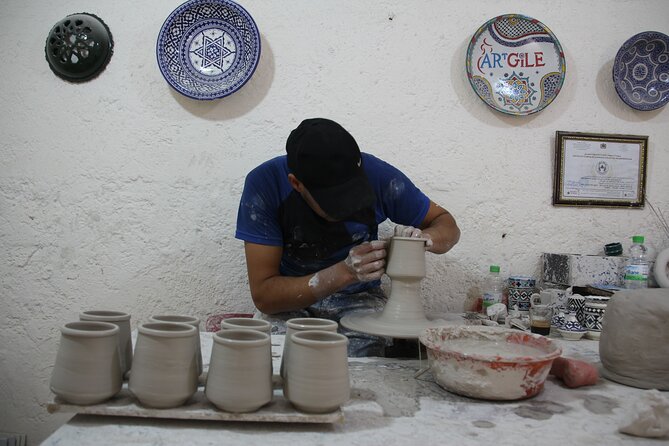
- Three crafts in one visit: Try pottery, paint a clay piece, and make a Zellige mosaic.
- Private activity: Only your group participates, which makes it easier to ask questions and work at your own pace.
- Local instruction: Abdou, Ahmed, and other cooperative artisans explain the work and guide each stage.
- Free pickup: Transport to the workshop is included in an air-conditioned vehicle.
- Plan for firing time: Finished pottery needs at least three days before it can be collected.
- Good family activity: Children and teenagers can take part, and most people can participate.
Why this Fes workshop is worth your afternoon
Fes is full of tilework, carved plaster, painted ceramics, and decorated doors. Much of it is easy to admire but hard to understand. This workshop gives you a practical look at the work behind those details.
You do not simply watch an artisan spin a pot or cut a tile. You get a short, guided turn at the wheel, paint a pottery piece, and build a small mosaic panel. The work is scaled for visitors, so you are not expected to produce a large tagine or a full wall of geometric tile. That is a good thing. You can enjoy the process without needing years of training.
I especially like the mixture of demonstration and participation. The cooperative lets you see finished objects and working areas before you begin. Abdou is described as giving visitors an introduction to the different activities, which helps you understand where your small project fits into the larger craft.
The mood is warm and informal. Tea and coffee are included, along with bottled water, and the staff are described as attentive with families and teenagers. The workshop is also private, meaning only your own group takes part. That matters if you want to ask basic questions, need a little extra help, or are booking this as a family activity.
Other things to make with your hands in Fez:
- Creative Painting on Fes Pottery
★ 4.9 · 38 reviews - Interactive Pottery Painting and Zellige Mosaic Workshop in Fes
★ 5.0 · 25 reviews - Artisan for a Day: Pottery & Zellige Workshop in Fez
★ 4.4 · 23 reviews
From clay to a small pottery piece
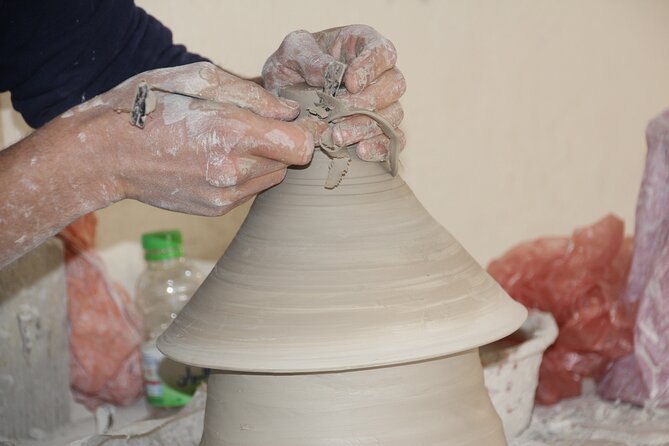
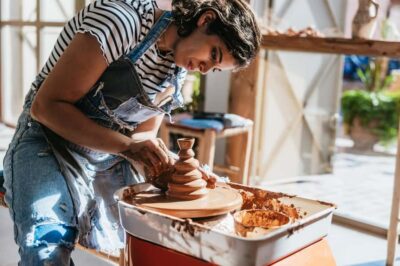
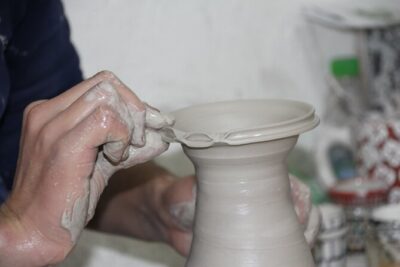
The pottery section begins with clay. An artisan shows you how it is shaped, then helps you form your own item. The exact result can vary, but the activity may involve a small tagine-shaped piece or another decorative object.
The pottery wheel is the part many people look forward to, but keep your expectations sensible. A short introduction gives you a feel for centering and shaping clay. It does not turn you into a professional potter in one sitting. One useful account describes the wheel experience as brief, with most of the finished work still handled by the artisans.
That is not a criticism so much as a practical safety point. The wheel requires control, and clay can collapse quickly in inexperienced hands. You will probably get the most from this part if you treat it as a chance to feel the material and see the artisan’s technique up close, rather than expecting a perfect vessel.
For children and first-time potters, this format works well. You can make something personal without the pressure of producing museum-quality work. If you already work with clay, you may wish for more time at the wheel, but you will still gain a useful look at the local method and workshop setting.
Painting Moroccan patterns by hand
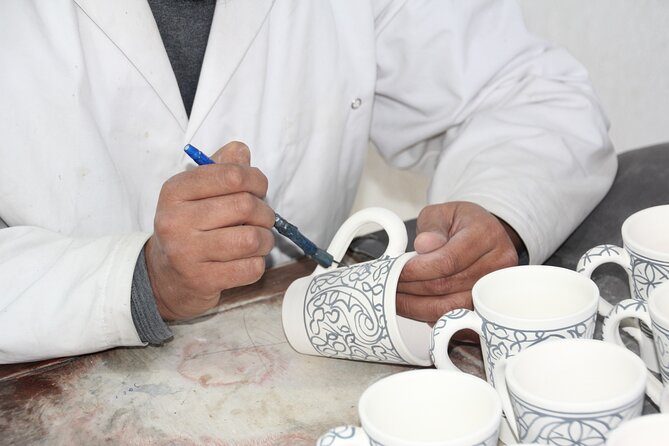
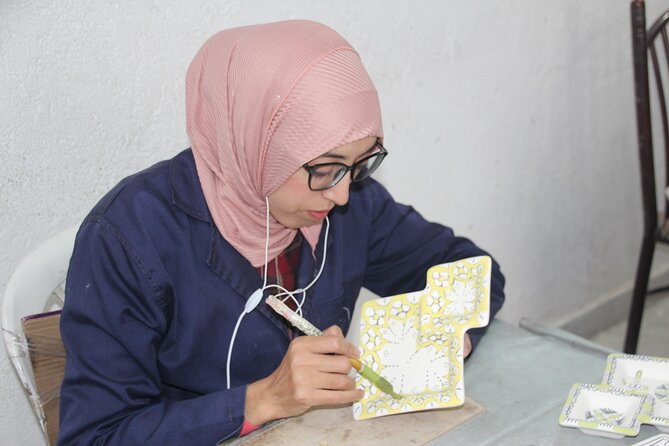
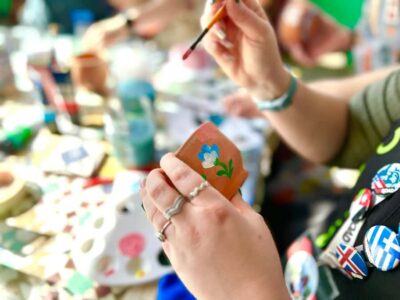
After shaping or selecting a pottery piece, you move to decoration. You paint a small clay object with patterns inspired by Moroccan ceramic design.
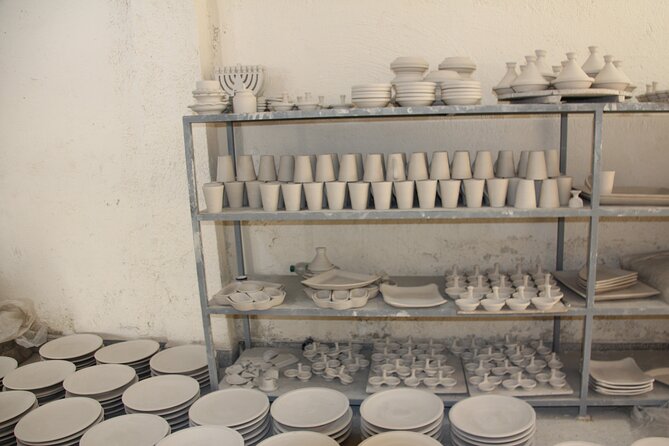
This is where the workshop becomes especially personal. The cooperative’s shelves may contain highly polished examples, but your own piece will show your hand. That uneven line or slightly different pattern is part of the charm. The goal is not factory precision. It is to understand how color, shape, and repeated motifs come together.
The artisans guide you through the process, so you are not left guessing which materials to use or how to approach the design. If you enjoy drawing, you can spend more time on the pattern. If you are less confident, you can follow a simpler example.
There is one important timing issue. Painted pottery cannot usually go straight into your suitcase. It needs at least three days to be glazed and fired. If your stay in Fes is shorter, you have two choices: take the piece home unglazed, or arrange shipping for an additional fee.
I would not leave this decision until the final hour. If the finished, fired object matters to you, book the workshop early in your Fes stay. The activity is commonly booked around 15 days ahead, and an early appointment gives the cooperative time to finish the work before you leave.
Understanding the Zellige mosaic process
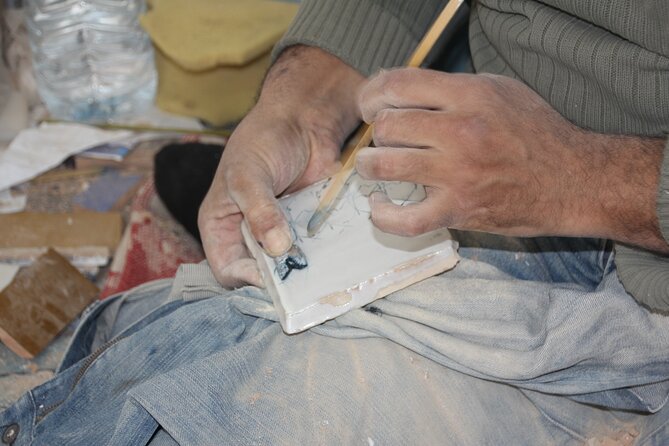
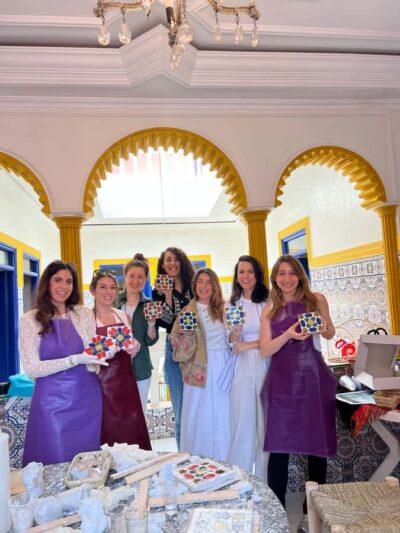
The second major craft is Zellige, also spelled Zellij. These are the small, hand-cut ceramic tiles used in Moroccan geometric designs. The finished patterns can look effortless, but the process depends on careful cutting, color matching, and precise arrangement.
You receive an introduction to the craft and make a small mosaic square from prepared pieces. This is an important distinction. You are assembling a visitor-sized project, not cutting every tile from raw ceramic or producing a full architectural panel. The artisans have already prepared the pieces so you can focus on arrangement and pattern.
That makes the mosaic section accessible, but it also limits how much of the full production process you personally handle. One account found that there was only a small amount of hands-on work, including a quick turn at the wheel, painting a small pottery object, and arranging prepared Zellige pieces. If you want an advanced craft lesson with hours of cutting and shaping, this is not that.
For most people, the shorter format is a fair trade. You get to handle the tiles, see how the pattern is assembled, and leave with a small piece that is ready at the end of the session. Unlike the pottery, the mosaic does not need several days of firing before you can take it with you.
Same base, a different sort of day:
- Chefchaouen Day Trip from Fez (Shared Group Tour)
★ 4.6 · 2,394 reviews - Fes: Volubilis Roman Ruins, Mouly Idriss, & Meknes Day Trip
★ 4.6 · 2,375 reviews - Fez Medina Guided Tour
★ 4.6 · 2,079 reviews - Blue City magic: Affordable Day Trip from Fez to Chefchaouen
★ 4.6 · 1,960 reviews
A working cooperative, not just a showroom
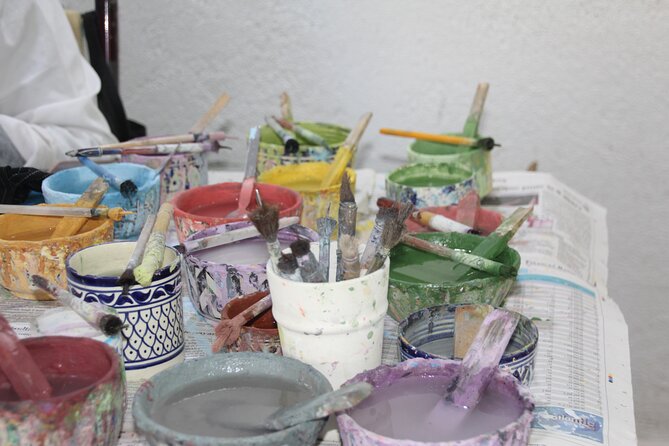
The setting adds value. You see artisans making pottery, mosaics, and other objects, rather than receiving a craft demonstration in an isolated classroom. That gives you a better sense of the scale and repetition involved in Moroccan ceramic work.
I find this useful because finished Moroccan ceramics can make the process seem simpler than it is. A bowl may look like a single object, but it represents several stages: forming the clay, drying it, firing it, applying color, glazing, and firing again. Zellige work has its own sequence of preparation, cutting, sorting, and assembly.
The workshop also gives you a chance to talk with the people doing the work. Abdou is singled out for explaining the cooperative and helping coordinate the visit, while Ahmed is named as one of the artisans involved in teaching the techniques. Staff assistance is a recurring feature of the experience, particularly with arranging transport and handling finished pieces.
The cooperative does have a shop, and you may be encouraged to browse or buy additional pottery. That is normal in a craft workshop, but you should know it in advance. One candid account found the shop prices high. Your $45 fee covers the experience, instruction, drinks, transport to the workshop, and the pieces made during the activity, but it does not mean every shop item will feel like a bargain.
How the pickup and timing work
Pickup is included, and the activity begins in Fes. An air-conditioned vehicle takes you to the workshop. The experience lasts about three hours and is available daily between 9 a.m. and 6 p.m., subject to the booking time you select or arrange.
The transport is useful if you are staying in the medina and do not want to locate the cooperative on your own. Clear communication is important, so confirm the pickup point and time when you book. The activity ends back at the meeting point according to the stated arrangements.
Some accounts describe the host helping coordinate taxis, return transport, and delivery of completed work to a riad. Because the formal details state that the activity ends at the meeting point, ask directly about return transport and delivery if those services are important to you. This is especially wise if your accommodation is inside a pedestrian section of the medina.
Morning or afternoon can work equally well. I would choose a time that leaves room for the workshop to run a little long, especially if you are traveling with children or want to browse the cooperative afterward. There is no lunch included, but tea, coffee, and bottled water are provided.
Is $45 a fair price?
At $45 per person, this is not the cheapest way to see Moroccan ceramics. You can browse pottery shops for free, and a short demonstration may cost less. The better comparison is the complete package: private instruction, local artisans, transport, drinks, and handmade objects that you create yourself.
I consider the price fair for someone who values participation over shopping. You are paying for time with artisans and access to techniques that are otherwise easy to miss. The private format also gives the experience more value than a crowded demonstration, especially if your group includes a child or a first-time potter.
The value is weaker if you only want to watch. You handle the materials, but the hands-on portions are limited by the three-hour format and by the fact that some Zellige pieces are already prepared. A serious ceramic artist may want a longer technical session.
Group discounts are available, so families and friends should ask about the final per-person price. The experience also accepts a mobile ticket, and confirmation is sent at booking. Free cancellation is allowed up to 24 hours before the start time. Within 24 hours, you do not receive a refund, and changes are not accepted.
Who will enjoy this most?
This workshop is a strong choice for families, couples, teenagers, and anyone who likes making things. A teenager and parent can work side by side, and the activity does not depend on prior artistic skill.
It also suits people who want a cultural activity away from the usual sightseeing route. You learn about Moroccan craft through your hands, not only through a guide’s explanation. That makes the details of Fes architecture easier to appreciate later.
You may want to choose another activity if you need a long, technical pottery lesson or want to produce a large finished object. The session offers an introduction and guided practice, not professional training.
Most people can participate, and the workshop is near public transportation. Still, the supplied information does not give detailed accessibility measurements or explain the layout of the workspace. If you need step-free access or have mobility concerns, ask before booking.
Practical tips for a better visit
Book early in your stay if you want your pottery fired before departure. Three days is the stated minimum, and extra time gives you a cushion if your plans change.
Wear clothes you do not mind getting dusty or marked with clay and paint. The supplied information does not specify an apron or protective clothing, so ask what the workshop provides.
Tell the cooperative if you are especially interested in the pottery wheel, painting, or Zellige. The three-hour visit includes all three areas, but the amount of time you spend on each can vary.
Do not judge your finished pottery too harshly. The point is to experience the craft and make a personal keepsake. Your mosaic should be ready at the end, while pottery may need firing or shipping.
If you are considering a purchase from the cooperative shop, look around before deciding. Enjoy the chance to support the artisans, but remember that the workshop fee and shop prices are separate.
Should you book the Fes pottery and mosaic workshop?
Book it if you want an active cultural experience, enjoy meeting local artisans, or are traveling with family. The combination of wheel work, painting, and Zellige gives you more variety than a single craft lesson, and the private setting makes the visit friendly and flexible.
The strongest reasons to go are the personal instruction, included pickup, and handmade souvenirs. The main drawbacks are the limited time at the wheel, the use of prepared mosaic pieces, and the three-day wait for fired pottery.
For most visitors, $45 is a reasonable price for a three-hour introduction to Fes craftsmanship. Schedule it early, confirm the pickup details, and decide in advance whether you will collect, ship, or take home your pottery unglazed.
FAQ
How long does the pottery and mosaic workshop last?
The activity lasts approximately three hours.
How much does the workshop cost?
The listed price is $45 per person. Group discounts are offered.
Is pickup included?
Yes. Free pickup to the workshop is included, with an air-conditioned vehicle provided.
Does the experience include food?
Lunch is not included. Coffee, tea, and bottled water are included.
Can I take my pottery home the same day?
Pottery pieces need at least three days to be glazed and fired. If you are leaving Fes sooner, you can take the piece home unglazed or arrange shipping for an additional cost.
Is the Zellige mosaic ready at the end?
The Zellige piece can be taken at the end of the visit and does not require the same three-day firing wait described for pottery.
Is this a private tour?
Yes. Only your group participates in the activity.
Who leads the workshop?
Local cooperative artisans lead the craft work. Abdou and Ahmed are named among the people who welcome visitors and guide the pottery and mosaic activities.
What is the cancellation policy?
You can cancel for a full refund up to 24 hours before the local start time. Cancellations or changes made within 24 hours are not accepted and are not refunded.
Just added in Fez
- Fes to Chefchaouen Day Trip★ 5.0 · 20 reviews
- FES TO Chefchaouen Day Trip- luxury Private Tour★ 5.0 · 49 reviews
- Fes to Volubilis, Moulay Idriss and Meknes Private Day Trip★ 5.0 · 92 reviews
- walking day : private excursion in the ancient city of Fez★ 5.0 · 27 reviews
- Fes to Middle Atlas Private Day Trip★ 5.0 · 48 reviews
- Private Guided Tour in Fez Medina★ 5.0 · 94 reviews
- Volubilis and Meknes day trip from Fez★ 4.5 · 17 reviews
- Tour guide in the old city of Fez★ 4.0 · 18 reviews
Pottery & Craft Workshops, compared.
Make Your Own Moroccan Zellige Mosaic Masterpiece
Read our review →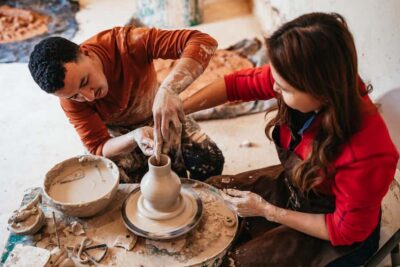
Interactive Pottery Painting and Zellige Mosaic Workshop in Fes
Read our review →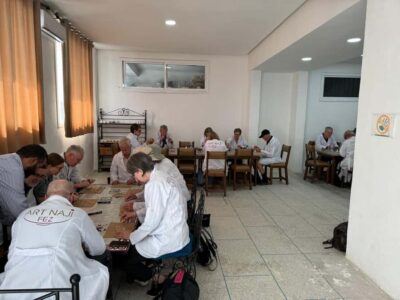
Artisan for a Day: Pottery & Zellige Workshop in Fez
Read our review →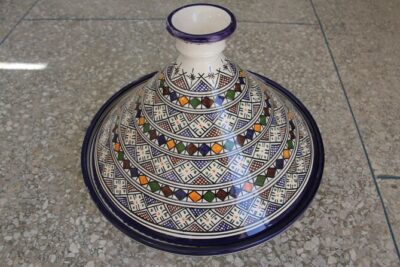
Guided Pottery and Zellige Workshops in Fes Morocco
Read our review →Browse the lists this tour appears in