
Reviewed · BERBER VILLAGE TOURS
From Marrakesh: 3-Day Trip to Berber Villages
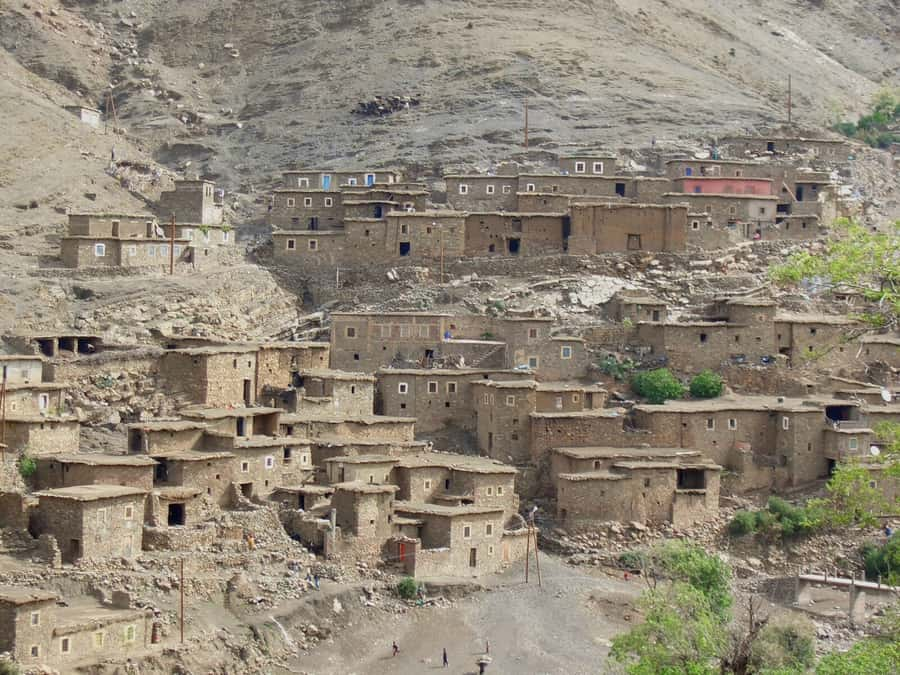
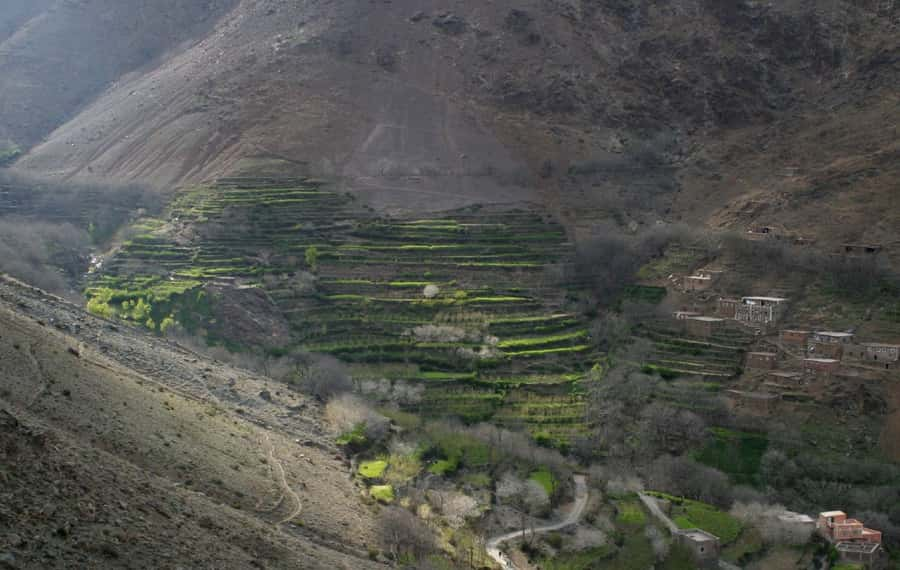
The best part of this trip is that it gets you out of Marrakesh and into the High Atlas villages, where the pace is set by steep paths, mule trains, tea, and mountain weather. You walk from Imlil through Tamatert, Tinerhourhine, Ikkiss, Aït Aïssa, and Tizi Oussem, with views toward Mount Toubkal, Morocco’s highest peak. I like the small-group format and the fact that a cook comes along to prepare proper meals, sometimes in places where there is little more than rock, sky, and a mountain path.
I also like the human side of the trip. Guides such as Hassan, Hamid, and Ibrahim have helped make past departures feel personal, explaining local customs and adjusting the pace when needed. The main drawback is comfort: Berber lodges are basic, some rooms may have no electricity, and winter nights can be very cold. This is a mountain trek, not a countryside hotel tour.
Key points to know before you book
- Three days on foot: Expect about four hours of walking on Day 1, six to seven hours on Day 2, and four hours on Day 3.
- Mount Toubkal views: You do not climb the summit, but the route gives you views toward Morocco’s highest mountain.
- A mule carries luggage: You still carry your day-use items, but your main bag can travel with the mule.
- Fresh cooking on the trail: A chef and cooking equipment are included, with lunch prepared along the route.
- Simple village accommodation: Overnight stays are in local Berber lodges, with some basic facilities and possible cold nights.
- Small groups and flexible guides: The group is limited to 10, and the guide can adjust the walking pace to the group.
Leaving Marrakesh for Imlil and the High Atlas
The trip begins with private transport from your Marrakesh hotel to Imlil, the mountain village where the walking starts. That transfer matters because it moves you quickly from city streets to the High Atlas foothills, without asking you to arrange separate taxis or local transport.
Imlil is the practical starting point for many walks in this part of Morocco. Here, you meet the local guide, hand over heavier luggage for the mule, and begin the trek on foot. Bring a small daypack for water, warm layers, sunscreen, personal items, and anything you want during the day.
The group size is limited to 10 people. That is small enough for the guide to keep an eye on the pace and answer questions without turning the walk into a procession. Past departures have included guides named Hassan, Hamid, and Ibrahim, with English, French, and Spanish available. Your guide is also your link to the villages, the route, and local customs.
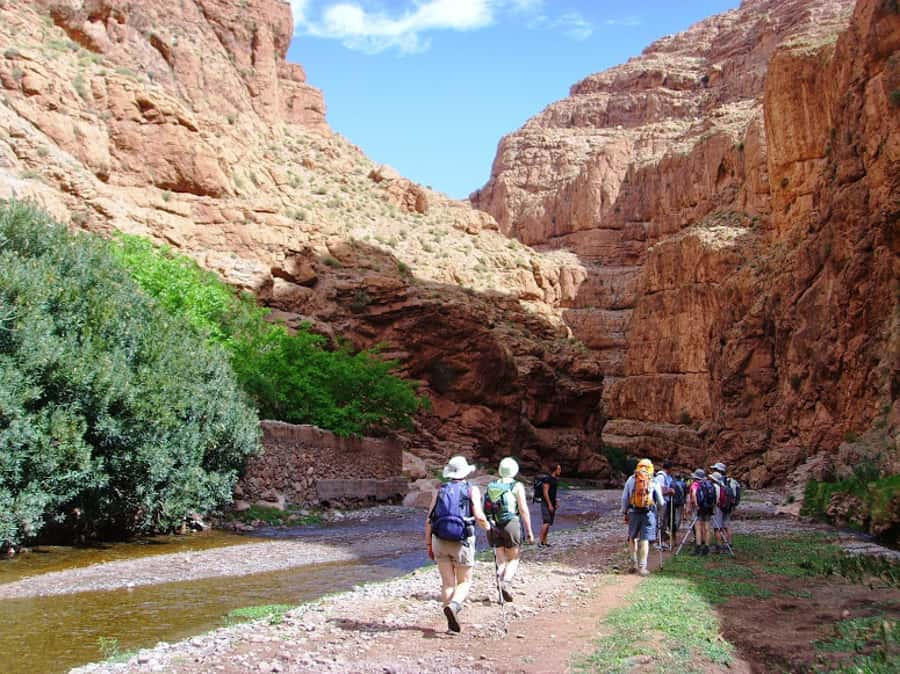
The walking is not technical mountaineering, but it is not a soft stroll either. The paths include steep climbs, uneven ground, and rocky sections. A person who completed the route over New Year reported about 48 kilometers across the three days, so you should think of this as a proper mountain trek, even if the daily times look modest on paper.
Other village days out of Marrakech:
- Berber villages : Atlas Mountains Day Hike from Marrakech
★ 5.0 · 14,007 reviews - Atlas Mountains, Berber Villages and Three Valleys all inclusive
★ 5.0 · 2,471 reviews - Marrakech: Atlas Mountains, Berber Villages, Agafay & Camel Ride
★ 5.0 · 1,672 reviews
Day 1: Imlil, Tamatert, and Tinerhourhine
Day 1 covers about four hours of walking. From Imlil, you head toward Tinerhourhine, passing through or near Tamatert before stopping for lunch at the high mountain pass of Tizi n Tamatert.
The pass is one of the first big rewards of the route. You gain height, leave the busy feel of the city far behind, and get broad views across the High Atlas. The climb can feel demanding early in the trip, especially if you have arrived in Marrakesh without much recent walking. Take the first day steadily. There is no prize for rushing to lunch.
The included chef prepares food along the way, and this is one of the trip’s strongest practical features. You are not relying only on packaged snacks or whatever happens to be available in a remote village. Past departures had meals prepared at mountain stops, including lunches served in open areas along the route. Food is included, as is the cooking equipment, so the mountain meal becomes part of the day rather than a minor detail.
After lunch, the route continues toward Ouanesekra-Tamguist and then Tinerhourhine, where you spend the night in a local inn. The accommodation is simple, and expectations matter here. You may get a bed, food, and a shower, but the facilities are not comparable to an Alpine refuge or a Marrakesh hotel. Some lodges can have limited electricity.
This is also the point where the trip’s appeal becomes clear. You are sleeping in a working mountain community, not returning to a resort each evening. If you want polished rooms and reliable heating, this will feel rough. If you want contact with ordinary village life, it is exactly the right setting.
Day 2: The Imnane Valley and the hardest walking
Day 2 is the longest day, with about six to seven hours on foot. You leave Tinerhourhine and follow the Imnane Valley, passing the Berber village of Ikkiss before continuing toward Tizi n Aguersioual and Matate.
This is likely to be the most tiring section. The route includes demanding climbs and stony paths, and one account described the ascents as strenuous. The guide’s role matters here. Good pacing can turn a hard day into a manageable one, while a rushed group can make the same route miserable.
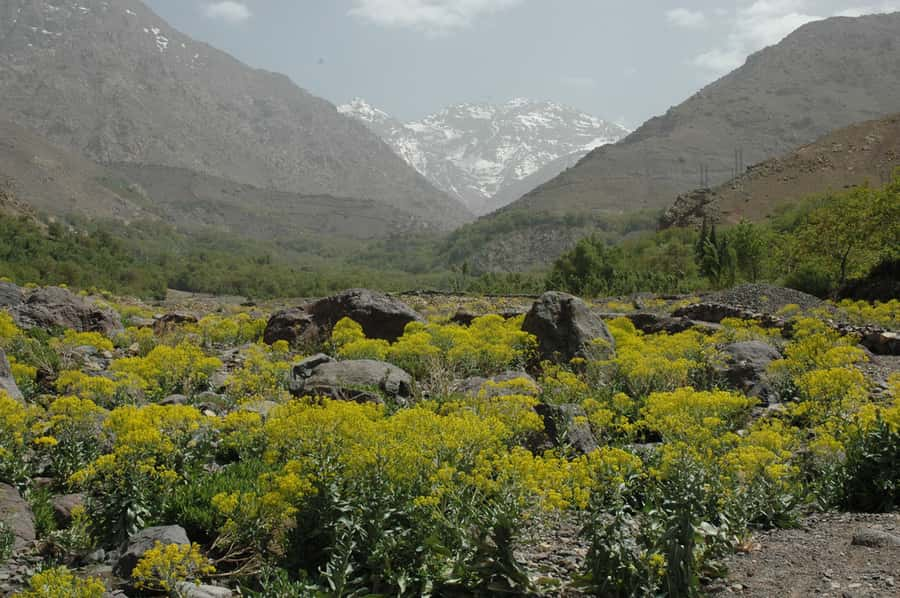
You will have views toward Mount Toubkal, the highest peak in Morocco. This is not a summit trip, and the itinerary does not include climbing Toubkal. Still, seeing the mountain from the surrounding valleys gives the route a clear sense of place. You are walking in the same High Atlas region that attracts serious peak climbers, but on a village route that focuses more on daily life and mountain scenery.
Lunch takes place at Matate. Again, the cook travels with the group and prepares food with the supplied equipment. That arrangement is more useful than it may first sound. After several hours of uphill and rocky walking, a hot meal at the right time can make the difference between enjoying the afternoon and simply enduring it.
The day ends at Aït Aïssa, where you sleep in another local inn. A past winter departure described the nights as freezing, while thick camel-hair blankets helped in the accommodation. Pack a warm layer even if Marrakesh feels mild. Mountain temperatures can change sharply after sunset, and the lodges do not necessarily have heating.
Day 2 is the key test of fitness and attitude. You do not need to be an elite hiker, but you should be comfortable walking for most of a day and climbing on uneven paths. If you prefer short walks followed by long café breaks, choose a gentler Atlas outing instead.
Day 3: Tizi Mzik and the return to Imlil
The final day involves about four hours of walking. From Aït Aïssa, you head toward Tizi Oussem, pass Tizi Mzik, and continue through the village of Mzik before returning to Imlil.
The route gives you a final stretch of mountain walking without the long hours of Day 2. The pass and village sections keep the focus on the terrain and local settlements, rather than turning the morning into a simple transfer. Once back in Imlil, private transport takes you to your Marrakesh hotel.
That return arrangement is convenient. You do not have to find a taxi in Imlil or work out how to reconnect with the city after three days in the mountains. It also means you can plan your Marrakesh accommodation with the knowledge that the tour finishes at your hotel.
Same base, a different sort of day:
- Marrakech: Agafay Desert Sunset, Camel Ride, and Dinner Show
★ 4.6 · 35,119 reviews - From Marrakech: Ouzoud Waterfalls Guided Hike and Boat Trip
★ 4.7 · 33,630 reviews - Marrakech: Agafay Desert Quad & Camel Rides with Dinner Show
★ 4.8 · 27,382 reviews - Marrakech: Agafay Desert Quad Biking Tour with Dinner-Show
★ 4.8 · 16,569 reviews
Berber village life without a staged show
The village visits are not presented as a series of formal attractions with set performances. Their value comes from walking through communities that are part of the route, staying in local lodges, and seeing how people live in a difficult mountain setting.
Your guide can explain local customs and answer questions about the villages. Past departures praised guides for being present when needed without talking constantly. That balance is worth looking for. You may want to learn about Berber culture, but you may also want quiet stretches where you can hear the wind and your own footsteps.
Keep your expectations realistic. These villages are described as somewhat isolated, and the facilities are limited. You should not expect a full range of shops, strong phone service, or hotel-style comforts. The point is not to inspect village life from a bus window. You spend nights there and move through the area on foot.
That also means you should treat the setting with care. Ask before taking close-up photographs of people, follow your guide’s advice, and remember that the villages are homes, not scenery arranged for visitors.
What the $353 price includes
At $353 per person, the price covers private transport from and back to Marrakesh, a local guide, a mule for luggage, the chef, cooking equipment, food, and two nights in Berber lodges. For a three-day trip, that is a useful bundle of services.
The mule is especially helpful. You still need a daypack, but you do not have to carry every piece of clothing and equipment over the passes. The cook is another major part of the value. Three days of meals in a remote area would be awkward to arrange independently, and the price includes both the food and the equipment needed to prepare it.
The real question is not just the cost. It is what kind of comfort you want for your money. You are paying for access, support, meals, and local staffing, not for polished accommodation. If you compare this with a city-based tour, it may look expensive. If you compare it with arranging transport, a mountain guide, food, village stays, and luggage support separately, the package makes more sense.
Drinks are not included. Bring money for soft drinks and mineral water, and plan your water supply before each walking day. Sleeping bags are also excluded. This is important in winter, when nights can be very cold. The lodges provide bedding, and thick blankets may be available, but you should not assume that the supplied bedding will suit everyone.
Food, lodging, and what to pack
The food is a high point of the trip. The chef prepares three daily meals on some departures, with lunch made at scenic points along the route. You are eating cooked food in remote places, which adds real value after a long climb.
The accommodation is functional rather than comfortable. Expect local inns in Berber villages, with beds and basic washing facilities. Warm water may be available, but electricity and heating are not guaranteed. Bring toiletries, a headlamp if you have one, and toilet paper. Toilet paper was specifically recommended by a past participant, and it is the sort of small item that matters once you are away from city shops.
For clothing and equipment, prioritize:
- Sturdy walking shoes with good grip
- Warm clothing for evenings and winter departures
- A small daypack
- Water and money for drinks
- Toilet paper and basic toiletries
- A sleeping bag if you want extra warmth
- Sun protection and a hat
Do not pack only for Marrakesh temperatures. Imlil and the higher passes can be cold, especially at night. Winter can bring sunny days and freezing evenings, so layers are more useful than one heavy item.
How difficult is the trek?
The walking schedule adds up to about 14 to 15 hours across three days. Day 2 is the longest and most demanding. The route includes steep sections, rocky paths, and mountain passes, so you should be comfortable with sustained walking.
The guide can help set a sensible pace. One small departure had only two people, allowing the guide to match their speed and even give them quiet time when they preferred to enjoy the scenery. That kind of flexibility is more likely in a small group than on a large coach excursion, though the exact group size can vary up to the stated limit of 10.
You should not book this if you are looking for a relaxed sightseeing break with minimal effort. You should consider it if you enjoy long walks, simple accommodation, and the satisfaction of reaching a village or pass under your own power.
Who should book this High Atlas trip?
I would choose this tour if you want three days of active travel, local guides, village stays, and mountain views without planning every detail yourself. It suits couples, friends, and solo hikers who are comfortable joining a small group.
It also works well for people who want more than a quick day trip from Marrakesh. You have time to slow down, sleep in the mountains, and see several villages instead of simply photographing the Atlas from a roadside stop.
I would be more cautious if you need reliable heating, easy access to drinks, private facilities, or a fixed level of hotel comfort. The trip’s value depends on accepting basic conditions as part of the setting. The mountains are the reason to come, and the lodges reflect where you are.
Free cancellation up to 24 hours before departure and the option to reserve now and pay later make planning less rigid. Guides are available in English, French, and Spanish, but you should check the available starting time before booking.
Should you book it?
Book this trip if you want a real walking route through the High Atlas, not a sightseeing transfer with a few photo stops. The strongest reasons are the village stays, the mule support, the cook who prepares meals on the trail, and the chance to walk near Mount Toubkal without taking on a summit climb.
Skip it if basic lodges, cold nights, and a six to seven-hour walking day sound unpleasant. For the right person, $353 buys a well-supported three-day mountain journey with genuine contact with Berber communities. For someone seeking comfort first, it is the wrong sort of bargain.
FAQ
How long is the trek each day?
Day 1 involves about four hours of walking, Day 2 takes about six to seven hours, and Day 3 takes about four hours.
Does the tour climb Mount Toubkal?
No. The route provides views from the High Atlas toward Mount Toubkal, Morocco’s highest peak, but the itinerary does not include a summit climb.
Where do you sleep?
You spend the nights in local Berber lodges, first in Tinerhourhine and then in Aït Aïssa.
Is food included?
Yes. Food, a chef, and cooking equipment are included. The cook prepares meals along the route, including lunch at mountain stops.
Is luggage carried for you?
A mule is included to carry your luggage. You should still bring a small daypack for items you need during the walking day.
Are drinks and sleeping bags included?
No. Soft drinks, mineral water, and sleeping bags are not included.
What languages are available for the guide?
The live guide service is available in English, French, and Spanish.
Just added in Marrakech
- Quad Ride In The Agafay Desert★ 5.0 · 39 reviews
- Quad Biking Agafay desert★ 5.0 · 20 reviews
- Marrakech: Tailor-Made City Tour With Your Own Private Guide★ 4.9 · 236 reviews
- Surf Training and Lunch on Essaouira Day Trip from Marrakech★ 4.9 · 51 reviews
- Essaouira: Surf Trip from Marrakech★ 4.9 · 31 reviews
- Marrakech palm grove: Sunset camel ride★ 4.8 · 194 reviews
- Marrakech: Sunrise Desert Tour with Camel Ride and Breakfast★ 4.4 · 36 reviews
- Marrakech : Agafay Desert Sunset Camel Ride & Luxury Dinner★ 4.3 · 39 reviews
Berber Village Tours, compared.
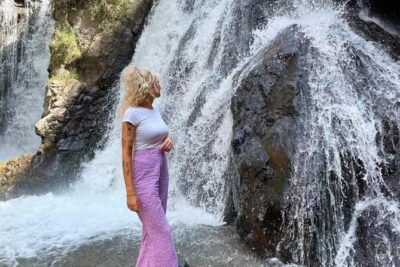
Berber villages : Atlas Mountains Day Hike from Marrakech
Read our review →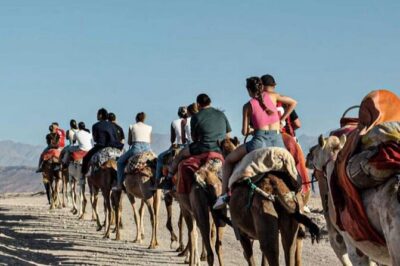
Atlas Mountains, Berber Villages and Three Valleys all inclusive
Read our review →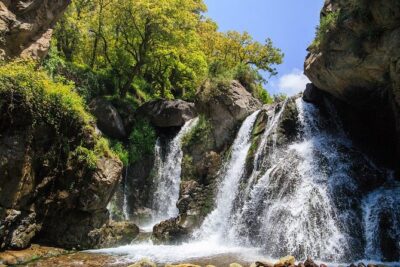
Atlas Mountains, Berber Villages, Agafay & Camel Ride
Read our review →
Paragliding, Camel Ride & Berber Villages Trip
Read our review →
Agafay Desert & Berber villages & Atlas Mountains, Full Day Trip From Marrakech
Read our review →
Day Trip To Atlas Mountains and Three Valleys & Berber Villages from Marrakech
Read our review →
Atlas Mountain, Berber Villages, & Valleys Tour
Read our review →
Zip-Line in the Atlas Mountains & Berber villages
Read our review →Browse the lists this tour appears in