
Reviewed · TOURS IN MARRAKECH
From Marrakech: 3-Day Desert Tour to Agadir
The best part of this trip is the sheer variety packed into three days. You cross the High Atlas Mountains, walk through old kasbah country, pass gorges and palm-filled valleys, then ride a camel into the Sahara for sunset. The desert night, with dinner, drumming, and stars, is the main event, but Ait Ben Haddou and Todra Gorge give the journey real depth.
I like the way the tour links famous sights with smaller stops, including Berber villages, an argan oil cooperative, scarf shops, and local communities. I also like the careful service from drivers such as Ayoub, Walid, Imad, Hakim, and Azzdin, who are often praised for making stops, explaining local life, and helping with practical needs. The trade-off is simple: three days means long hours in the van, especially on the final run to Agadir.
Key points to know before you book
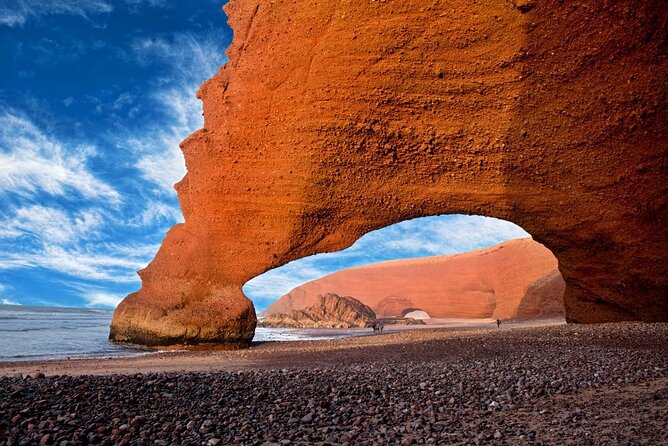
- Camel ride at sunset: Reach the Erg Chebbi dunes by camel and watch the sun drop over the Sahara.
- Ait Ben Haddou and film country: Visit Morocco’s best-known kasbah and several places linked with films and television.
- Todra Gorge and Dades: See towering rock walls, an oasis, and striking desert scenery before reaching Merzouga.
- Desert camping: Dinner, breakfast, drumming, and a night in a traditional camp are included.
- Marrakech to Agadir transfer: The trip finishes in Agadir, but the final day involves substantial driving and a taxi transfer after Ouarzazate.
- Bring winter clothes: Desert nights can be surprisingly cold, even when the day feels hot.
What this Marrakech to Agadir desert trip really covers
This is not a slow desert retreat. It is a moving tour across southern Morocco, designed for you to see a lot in a short period. You spend much of the day on the road, but the route is broken up by major sights, photo stops, meals, local guides, and short walks.
The advertised score is 4.8 from 297 ratings, and the strongest pattern is clear: people value the guides, the smooth organization, and the number of major Moroccan sights included. Names vary by departure, but Ayoub, Walid, Imad, Hakim, Youssef, Azzdin, Abdul, and others receive repeated praise for being friendly, funny, careful, and flexible.
Transport is by an air-conditioned vehicle, with fuel included. Some groups use a nine-seat van with good legroom. That said, one particularly useful warning is that the air conditioning may not always feel powerful, so expect a warm ride in the hottest months. Pickup is from your Marrakech accommodation, or from the nearest accessible point if your riad is in a narrow lane.
Other trips people book in Marrakech:
- Marrakech: Agafay Desert Sunset, Camel Ride, and Dinner Show
★ 4.6 · 35,119 reviews - From Marrakech: Ouzoud Waterfalls Guided Hike and Boat Trip
★ 4.7 · 33,630 reviews - Marrakech: Agafay Desert Quad & Camel Rides with Dinner Show
★ 4.8 · 27,382 reviews
Day one: crossing Tizi n’Tichka to Ait Ben Haddou
The first morning takes you out of Marrakech and over the High Atlas Mountains. Tizi n’Tichka is the high pass, and the road brings changing views of mountain slopes, valleys, and Berber villages.
This is an early lesson in the character of the trip. You are not simply being driven from one city to another. The route gives you a look at southern Morocco beyond the main tourist centers, with stops for photographs and short breaks along the way.
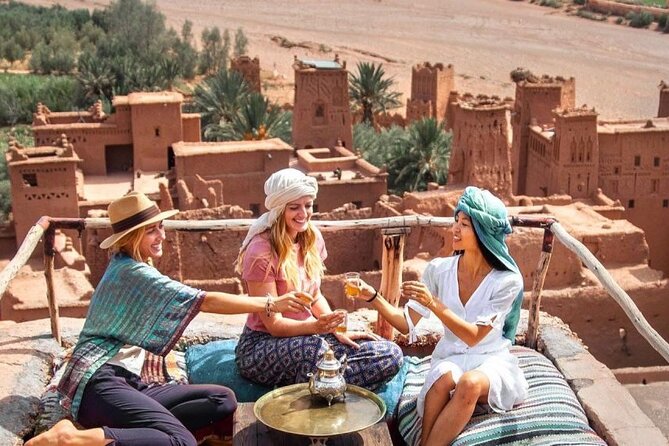
Ait Ben Haddou is the day’s major sight. This fortified village, built from earthen walls and towers, is one of Morocco’s most memorable historic places. It is also famous as a filming location, with connections to productions such as Gladiator and Game of Thrones. You usually explore with a local guide, and a guided visit helps you understand how the buildings fit together rather than seeing only a photogenic wall.
Allow for a small extra charge here. Entrance fees are not included, and one departure required about €4 for a local guide. The amount is modest, but you should carry cash for this and for other stops.
The tour then continues to Ouarzazate, often called Morocco’s cinema city. You visit or pass the Taourirt Kasbah, another impressive earthen complex, before traveling through Skoura and the Valley of Roses. The valley is known for its kasbahs and cultivated stretches, giving the drive a welcome change from bare mountain and rock.
You finish the first day in Dades Town or the Dades Valley. Accommodation, dinner, and breakfast are included. The overnight stop breaks up the route well, though you should not expect a leisurely afternoon. This is a full sightseeing day followed by more driving.
Day two: Todra Gorge, Erfoud, and the road to Merzouga
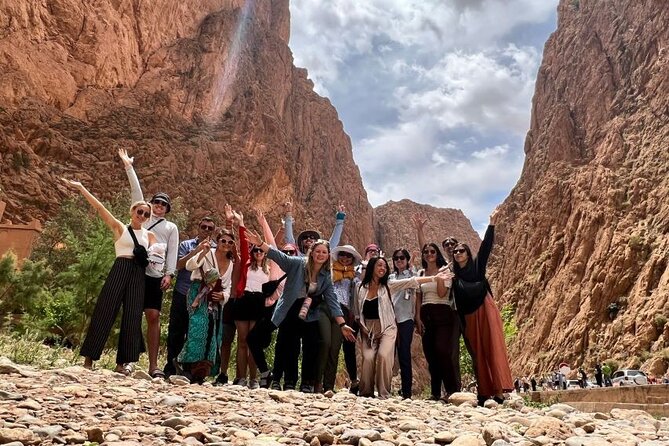
Day two is the most varied day on paper and the one that usually feels most like a true desert journey. You leave the Dades area for Todra Gorge, where tall rock walls close around the road and walking area.
Todra is worth more than a quick photograph. The scale of the cliffs gives you a sense of how different southern Morocco is from Marrakech. A local guide may show you nearby communities and explain aspects of Berber life. One stop in Tinghir includes an introduction to local families and the oasis area.
The schedule can include shops selling scarves, carpets, and local products. Some people enjoy these encounters and the chance to buy directly from makers or cooperatives. Others find the sales stops less useful than extra time at the natural sights. You should ask your guide how much time is planned, especially if shopping is not your priority.
After Todra and Tinghir, the road continues toward Erfoud. The scenery becomes drier and more open as you approach Merzouga and the Erg Chebbi dunes. This is a long day in the vehicle, but the stops help. Drivers such as Imad, Hakeem, and Rahim have been praised for pausing for drinks, snacks, photographs, and ATMs when needed.
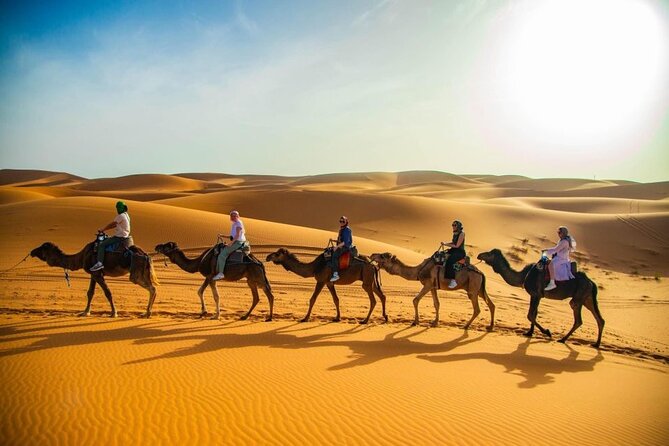
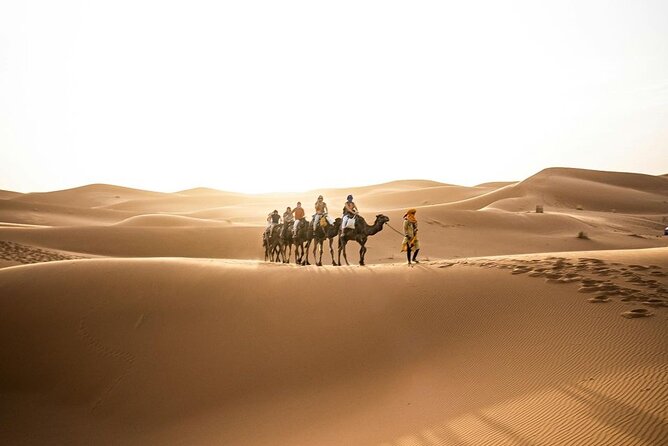
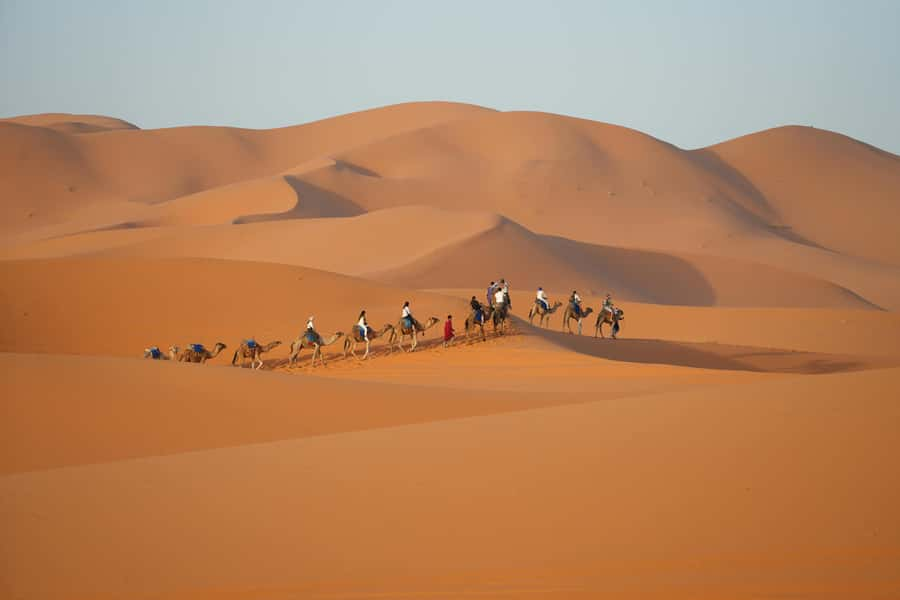
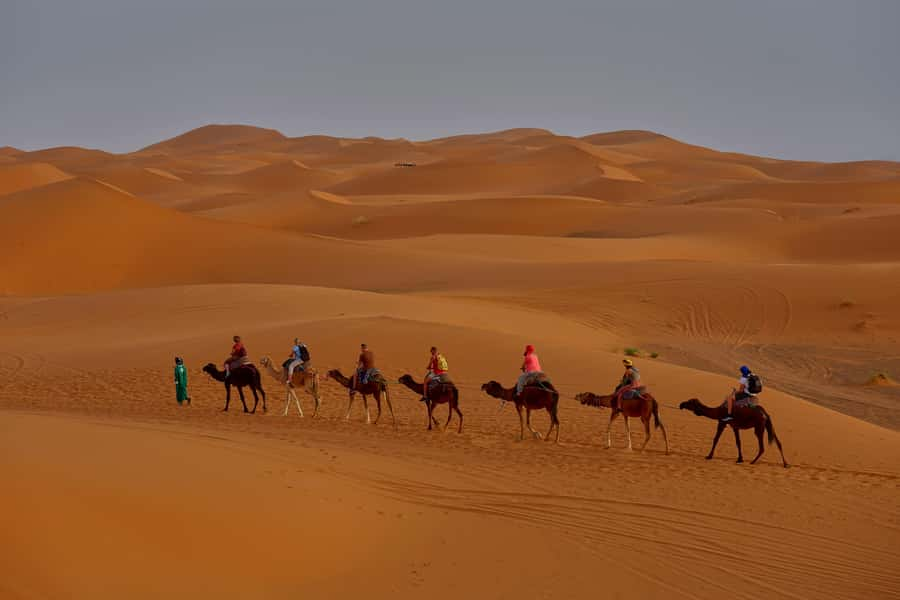
The arrival at Merzouga is the emotional high point. You leave the vehicle and take a camel toward camp, usually timing the ride for sunset. The camel trek is included, with one camel per person. You should wear comfortable shoes, but remember that sand will find its way into almost everything.
Camel riding is not a fast activity. It is a slow, swaying journey that lets the silence and scale of the dunes take over. If you have back problems or motion sickness, take the warning seriously. You can also ask about the optional quad-bike experience, which several groups enjoyed, but it is not listed among the included services.
At camp, dinner and breakfast are provided. The evening includes drumming and a shared desert atmosphere. The camp is comfortable rather than completely remote in the old-fashioned sense. Some departures offer a premium camp with air conditioning and charging plugs, which can make a major difference in summer. A traditional camp may feel more atmospheric, but comfort levels can vary.
Sleeping in the dunes and handling the desert cold
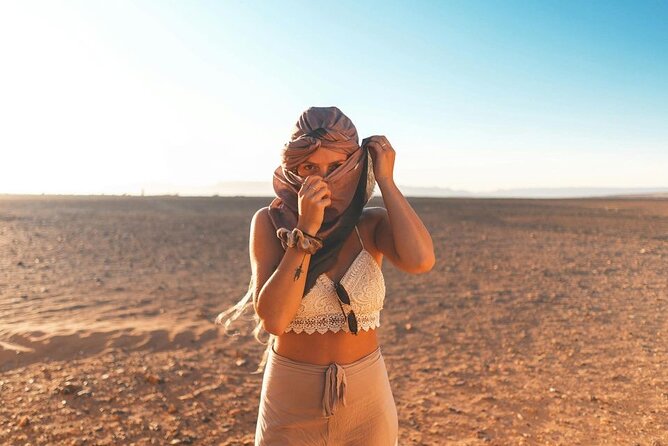
Do not judge the desert by the afternoon temperature. Several people found the night very cold, even with thermal clothing and blankets. Pack gloves, thick socks, a warm hat, and a proper extra layer in winter. Warm clothing is not just a suggestion here.
The camp includes dinner and breakfast, but lunches are not included anywhere on the trip. You will need cash for meals, drinks, small purchases, local guides, and possible entrance fees. Sunglasses and a sun hat are equally useful during the day, while closed shoes make walking over sand easier.
The sunrise is another major reason to choose this route. You wake early enough to see light spread across the dunes, then return to the auberge or camp area. Some people choose to leave by quad bike, while others take camels back. The camel return is slower, but it gives you more time in the dunes.
Same base, a different sort of day:
- Marrakech: Agafay Desert Quad Biking Tour with Dinner-Show
★ 4.8 · 16,569 reviews - Marrakech: Atlas Mountains, Ourika Valley, Waterfall & Lunch
★ 4.8 · 15,834 reviews - From Marrakech: 3-Day Merzouga and Sahara Desert Tour
★ 4.9 · 15,308 reviews - Berber villages : Atlas Mountains Day Hike from Marrakech
★ 5.0 · 14,007 reviews
Day three: Draa Valley and the long run to Agadir
After sunrise and breakfast, the group heads west. The route passes through the Draa Valley, where palm groves and old kasbahs break up the dry surroundings. This is one of the most rewarding stretches for understanding how people have lived in southern Morocco, using oasis water and traditional settlements in an otherwise arid region.
You continue through Ouarzazate and then toward Taznakht and Taliouine before reaching Agadir. The scenery remains varied, but this is primarily a transfer day. It is the part of the tour most likely to test your patience.
There is an important transport detail here. On arrival in Ouarzazate, you may be separated from the original group and taken onward to Agadir by taxi. This arrangement is part of the stated plan, but it can feel less personal than the first two days with your main guide and driver. Confirm the handover with your guide so you know who is taking you onward and where you will be dropped off.
The tour ends at your Agadir hotel, or at the closest accessible point if your accommodation cannot be reached by vehicle. You do not return to Marrakech, so this works especially well if Agadir is your next base. It is less suitable if you need to be back in Marrakech after three days.
Guides, drivers, and the human side of the trip
The people running this trip are a major part of its appeal. Ayoub is praised for being flexible, organized, funny, and attentive. Walid is described as especially caring and good at explaining the desert and local culture. Imad is noted for his local knowledge and for looking after the whole group.
Other well-regarded names include Hakim, Hakeem, Azzdin, Abdul, Youssef, Ali, Muha, and Abderrahman. Assignments vary, so you cannot book a specific personality with certainty, but the pattern is encouraging. Drivers often help with small practical matters, explain what is coming next, and adjust stops for snacks, drinks, photographs, or cash.
Local guides take over at some sights, including Ait Ben Haddou and areas around Tinghir. Their quality and style may differ from your main driver. You should treat the added explanations as useful context, while remembering that shopping stops can be part of the route.
What the price represents
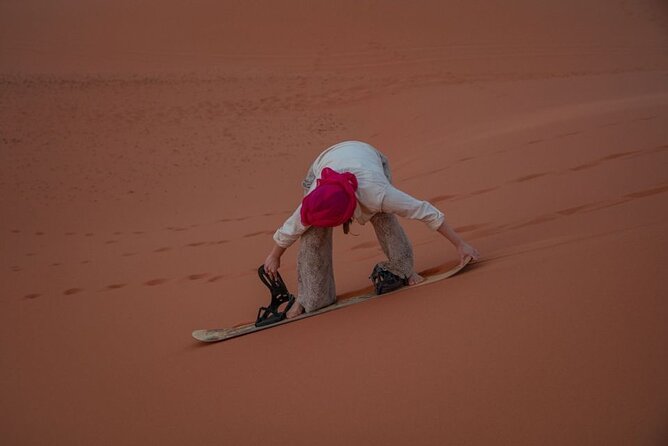
No price is supplied here, so I cannot judge the exact fare. I can judge the package. It includes Marrakech pickup, Agadir drop-off, fuel, an air-conditioned vehicle, an English, French, or Spanish-speaking guide-driver, two nights of accommodation, dinners and breakfasts, the camel trek, and sandboarding.
That is a substantial bundle for a three-day cross-country trip. You are paying not only for a desert night, but also for the long transport between Marrakech and Agadir, the logistics of changing vehicles, and access to several major sights.
Budget for lunches, drinks, entrance fees, local guide charges, and optional activities such as quad biking. If you choose a premium camp, check exactly what is included. Air conditioning and charging points can be valuable, but they change the feel and possibly the price of the night.
Who should book this trip?
You should consider it if you want to see the Sahara but have limited time. It suits first-time visitors who want the Atlas Mountains, Ait Ben Haddou, gorges, kasbahs, oasis country, and desert camping in one route.
It is also a good fit for solo visitors and small groups who value help with transport and local arrangements. Several solo guests felt well cared for, and the drivers are often praised for creating an easy group mood.
Think twice if you dislike long drives, need a slow pace, have back problems, or suffer from motion sickness. The final day to Agadir is especially demanding. You should also avoid treating this as a luxury trip unless you specifically arrange a premium camp and are comfortable with the possibility of a vehicle that is not perfectly cool.
Practical packing advice
Bring:
- Warm layers, gloves, thick socks, and a hat for the desert night
- Sunglasses and a sun hat
- Comfortable footwear for sand and short walks
- Cash for lunches, drinks, entrance fees, guides, and shopping
- A phone charger and a portable fan if you are sensitive to heat
- Light luggage that is easy to handle during the camp transfer
Carry water and small snacks in the vehicle. The route includes stops, but meal choices are not included and timing can vary.
Should you book this Marrakech to Agadir tour?
I would choose this trip if your priority is seeing a large slice of southern Morocco without arranging several separate transfers. The combination of Ait Ben Haddou, Todra Gorge, and a Sahara sunset is hard to beat in three days, and the included camel ride, camping, breakfasts, dinners, and drop-off in Agadir give it useful value.
I would skip it if you want long visits at each sight or dislike spending hours on the road. For everyone else, pack warmly, carry cash, expect a busy schedule, and treat the desert night as the centerpiece. The route is demanding, but it gives you a memorable cross-country view of Morocco rather than just a quick photo stop in the dunes.
FAQ
Where does the tour start?
Pickup is provided from your Marrakech accommodation, or from the nearest accessible point if your riad cannot be reached by vehicle.
Where does the tour finish?
The tour finishes in Agadir, with drop-off at your hotel or the closest accessible location if your accommodation is not reachable by vehicle.
Is the camel ride included?
Yes. A camel trek in the Erg Chebbi dunes is included, with one camel per person.
Is desert camping included?
Yes. The package includes an overnight camp in the Merzouga desert, along with dinner and breakfast.
Is accommodation in the Dades Valley included?
Yes. One overnight stay in the Dades Valley area is included, with bed, dinner, and breakfast.
Are lunches included?
No. Lunches are not included, so you should bring cash for meals and drinks during the journey.
Are entrance fees included?
No. Any entrance fees are excluded. You should also carry cash for possible local guide charges and small purchases.
What languages does the main guide speak?
The guide-driver may speak English, French, or Spanish.
Is sandboarding included?
Yes. Sandboarding in the dunes is included.
Is quad biking included?
Quad biking is not listed among the included services. Some departures offer it as an optional activity, so you should ask your guide about the current arrangements and price.
How much driving should I expect?
The tour includes long drives on all three days, with the longest stretch generally occurring on the final day from the desert area toward Agadir.
What happens after Ouarzazate on the final day?
You may be separated from the original group at Ouarzazate and transported onward to Agadir by taxi.
Is this tour suitable for people with back problems?
The tour may not be suitable for people with back problems or motion sickness because of the long drives and camel ride.
Just added in Marrakech
- Quad Ride In The Agafay Desert★ 5.0 · 39 reviews
- Quad Biking Agafay desert★ 5.0 · 20 reviews
- Marrakech: Tailor-Made City Tour With Your Own Private Guide★ 4.9 · 236 reviews
- Surf Training and Lunch on Essaouira Day Trip from Marrakech★ 4.9 · 51 reviews
- Essaouira: Surf Trip from Marrakech★ 4.9 · 31 reviews
- Marrakech palm grove: Sunset camel ride★ 4.8 · 194 reviews
- Marrakech: Sunrise Desert Tour with Camel Ride and Breakfast★ 4.4 · 36 reviews
- Marrakech : Agafay Desert Sunset Camel Ride & Luxury Dinner★ 4.3 · 39 reviews
Tours in Marrakech, compared.
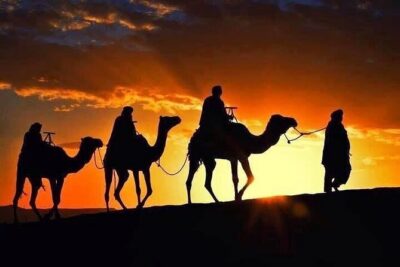
Agafay Desert Sunset, Camel Ride, and Dinner Show
Read our review →
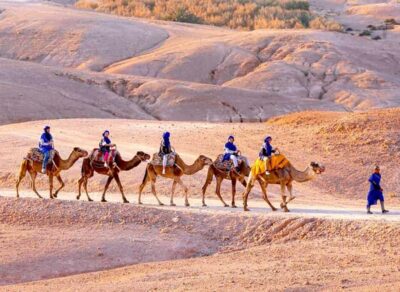
Agafay Desert Quad & Camel Rides with Dinner Show
Read our review →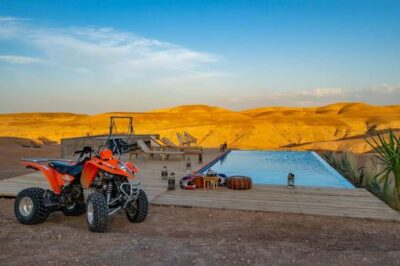
Agafay Desert Quad Biking Tour with Dinner-Show
Read our review →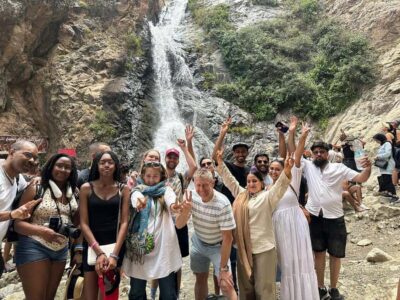
Atlas Mountains, Ourika Valley, Waterfall & Lunch
Read our review →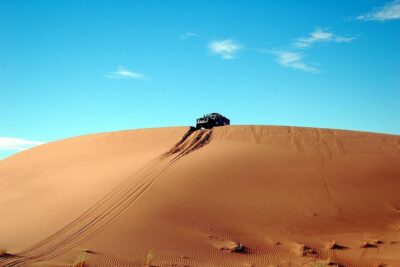
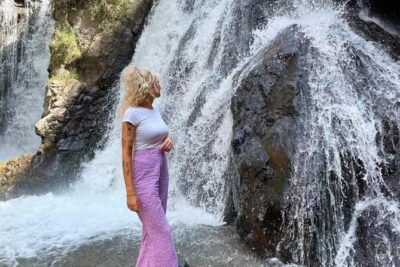
Berber villages : Atlas Mountains Day Hike from Marrakech
Read our review →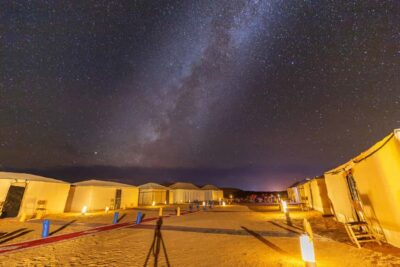
Browse the lists this tour appears in