
Reviewed · MEDINA & SOUK TOURS
Berber Cooking Class at a Farm in the Countryside & shopping at a rural Souk.
The best part of this day is that cooking begins at the market. You visit a rural souk south of Essaouira, choose produce and other staples, then carry those ingredients into an authentic Berber kitchen. It gives the meal a clear connection to daily life in the Haha hills, rather than treating Moroccan food as a staged demonstration.
I like the small maximum of eight people, which suits a hands-on class, and I like the old methods: barley roasted over a fire, flour ground in a stone mill, bread baked in a clay oven, and couscous steamed in a clay pot. The main consideration is time. Seven hours is a full outing, and the farm lies about 35 kilometers south of Essaouira.
Key points
- A rural souk comes first: Shop for fruit, vegetables, meat, eggs, honey, and other cooking staples before class.
- Two local women lead the kitchen work: Khadija and Khadija demonstrate traditional Berber food preparation.
- The meal is made from basic ingredients: Prepare flat bread, couscous, and a vegetable and goat tagine with Moroccan spices.
- The farm supplies part of the story: Olive oil comes from trees growing on the property, and tea uses fresh garden herbs.
- An argan oil stop may be included: Learn how this regional product is made and taste products from the cooperative.
- Keep your eyes up on the drive: The route passes through the argan zone, where you may see goats in trees.
From Essaouira to the Haha hills
Your day starts at 9:00 am at Labo Abdelkrim Khatabi d’Analyses Médicales, 287 Rue Oued El Makhazine in Essaouira. The activity ends back at the same meeting point, so you do not need to arrange a separate return journey.
The destination is the Haha region, about 35 kilometers south of town. This is Berber country, with small farms, olive trees, goats, and sheep. The setting matters because the class is not simply about copying a recipe. You see how food connects to farming, shopping, fuel, tools, and the rhythm of rural life.
The day lasts about seven hours. That gives you time for the market, the drive, the cooking, lunch, tea, and possible stops along the way. It also means this is not a quick class you can squeeze between a morning at the beach and an afternoon in Essaouira’s medina.
The group size is capped at eight. That is a useful limit for a class where you may need to watch demonstrations closely and take part in preparing food. The available information does not promise a particular vehicle or explain every transfer detail, so confirm any transport questions when booking.
More cooking in Essaouira:
- l’Atelier – Moroccan Cooking Workshop in Essaouira
★ 5.0 · 110 reviews - Traditional Moroccan Cooking Class
★ 5.0 · 81 reviews - Essaouira: Traditional Family Style Moroccan Cooking Class
★ 5.0 · 58 reviews
Shopping for lunch at a rural souk
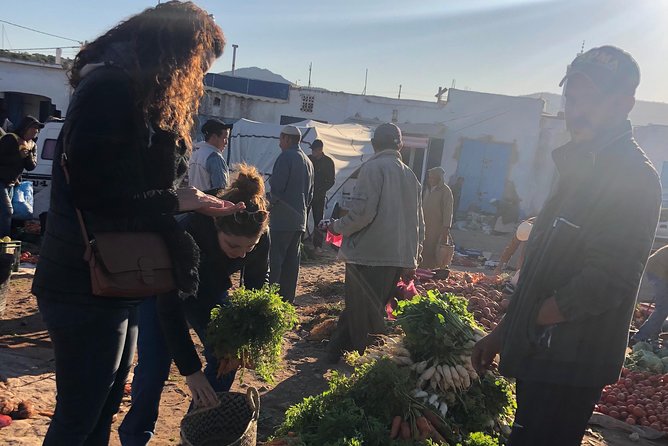
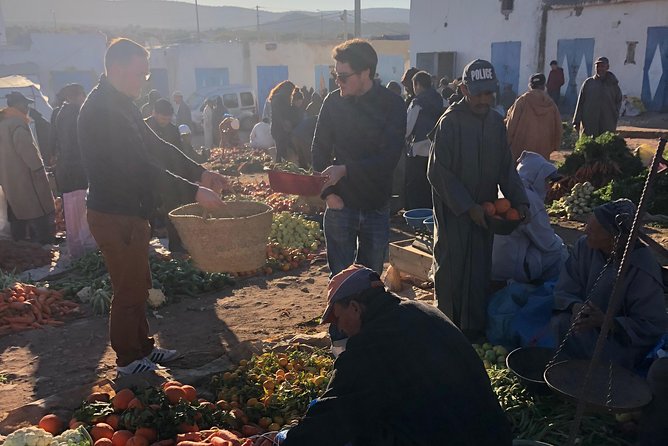
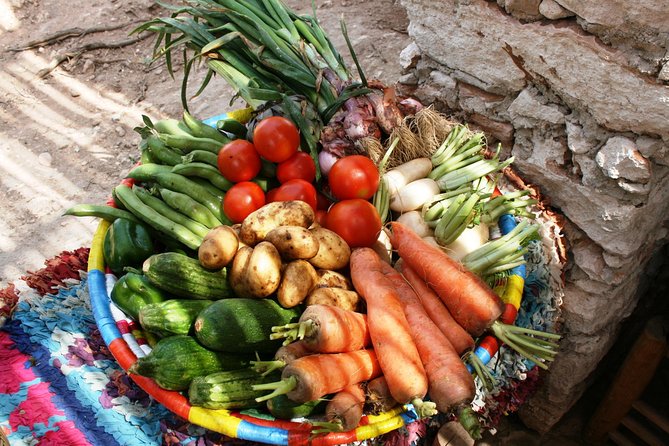
The first major stop is a local souk. You find freshly harvested fruit and vegetables alongside meat, eggs, honey, and other everyday supplies. This is shopping with a purpose: the ingredients become part of the meal later in the day.
I like this order. Many cooking classes hand you premeasured ingredients and move straight to the stove. Here, the market sets up the lesson. You get a glimpse of what people buy for ordinary meals, and you see the raw materials before they are chopped, seasoned, or cooked.
A rural souk can also feel less polished than a market aimed at visitors. That is part of its value, but it may require patience and attention. The supplied information does not state how much time you have to shop, so do not expect a long, independent market tour. The point is to gather what the class needs.
A German-speaking guide named Nicole led at least one of the outings. If having a German-speaking guide matters to you, ask about guide availability rather than assuming Nicole leads every departure. The market can be a particularly good place to have a guide explain unfamiliar ingredients and help with the practical side of buying them.
Entering an authentic Berber kitchen
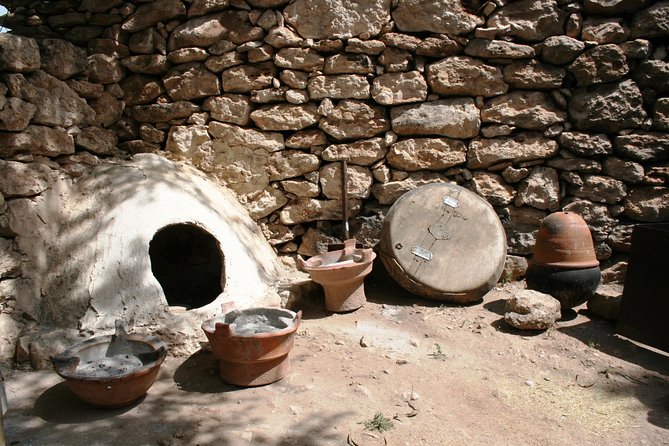
The class takes place on an ecological farm centered on a traditional Berber kitchen. The kitchen is stocked with old-style tools and equipment, giving the preparation a strong sense of place.
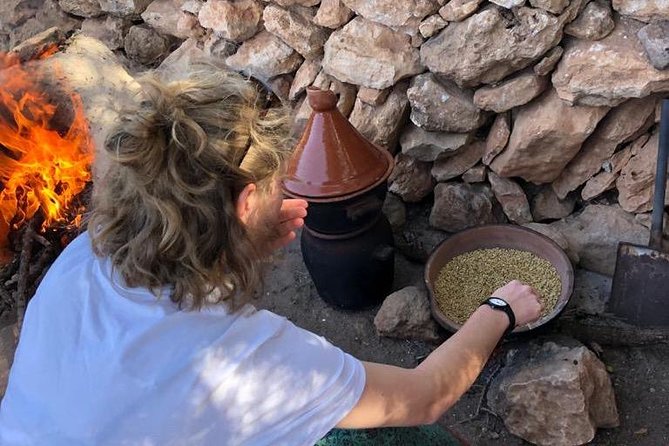
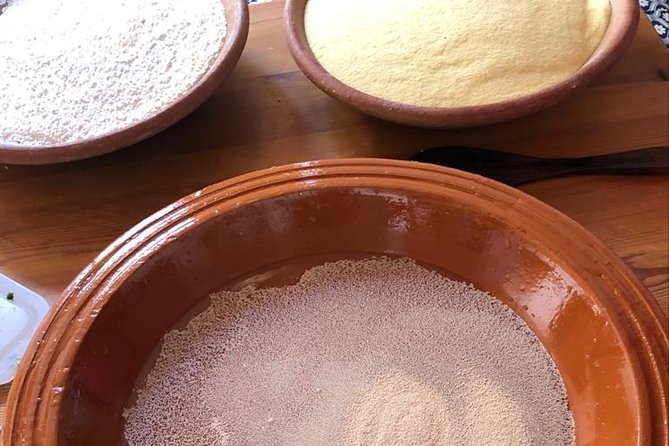
The first lesson involves barley. Khadija and Khadija roast the grains over a fire, then grind them in a stone mill. The resulting flour and semolina form the base for flat bread and couscous.
This is the sort of detail I value in a cooking class. You see the work that comes before the recipe. Grain does not appear as a neat bag of flour, and couscous is not treated as a quick side dish from a packet. The process shows how time, hand tools, and local crops shape a meal.
You should also expect smoke, heat, and traditional equipment rather than the comfort of a modern demonstration kitchen. That is a benefit if you want a rural experience. It may be less appealing if you prefer a polished class with precise workstations, printed recipes, or restaurant-style facilities. Those features are not listed here.
Making bread in a clay oven
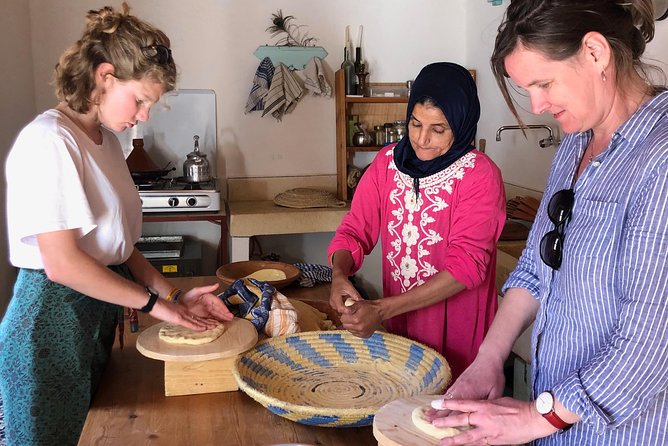
Flat bread is baked in a clay oven. After the barley has been processed, you see how the flour becomes part of a simple bread made for the table.
Bread is a practical way to understand the cooking culture. It is not just another item on a tasting menu. It accompanies the rest of the meal and shows how a few basic ingredients can become something central to daily eating.
The class description does not specify how much hands-on time each person gets, so the exact balance between watching and doing may depend on the group. With no more than eight people, you have a better chance of seeing the work clearly and taking part, but you should not assume that every person makes a full loaf alone.
Other walks through the old town in Essaouira:
- Essaouira: Sqala du Port, Medina Ramparts & Fish Market Tour
★ 4.7 · 212 reviews - Essaouira: Sqala du Port, Citadel, Fish Market & Medina Tour
★ 4.6 · 73 reviews - Essaouira Day Trip from Marrakech _ medina, old port
★ 4.8 · 66 reviews - Marrakech: Bahia Palace, Saadian Tombs, Souk and Medina Tour
★ 4.7 · 4,974 reviews
Steaming couscous the traditional way
Couscous is prepared in a traditional clay pot. The grain is steamed rather than treated as an instant product, which gives you another look at the patient side of Moroccan cooking.
This method is useful context. Couscous is often presented as one of Morocco’s best-known foods, but the important lesson is the preparation behind it. Here, the class connects the grain to the barley, the stone mill, the fire, and the clay cookware.
The class also makes the difference between food and food culture clear. You are not only learning what goes into couscous. You are seeing the tools and stages that turn a local crop into a shared meal.
Preparing goat and vegetable tagine
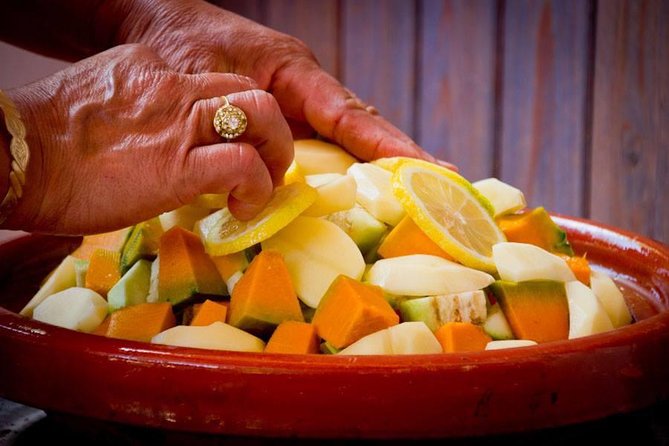
The main savory dish is a traditional tagine made with vegetables and goat meat. Moroccan spices and olive oil provide the seasoning, and the oil comes from olive trees growing on the farm.
The goat connection fits the Haha hills, where local families keep goats and sheep. It also makes this meal different from a generic Moroccan cooking lesson built around chicken or preserved lemon. If you eat meat, goat tagine is a useful way to connect the cooking to the animals and farms of the region.
The supplied information does not say that a vegetarian substitute is available. If you do not eat goat or meat, ask before booking. The class includes vegetables, but that does not by itself confirm a meat-free main dish.
The use of farm olive oil is another worthwhile detail. You are not just told that olive oil matters in Moroccan cooking. You learn that the oil used in the meal can come from the trees around you. That link between the ingredient and the place is one of the day’s strongest features.
Eating outdoors and finishing with garden tea
If the weather allows, lunch is served outside. The farm’s calm rural setting gives the meal a slower pace than a restaurant lunch in town.
The outdoor meal depends on weather, so you should be prepared for lunch to take place indoors if conditions are poor. The experience requires good weather, and a cancellation caused by bad weather comes with the choice of another date or a full refund.
After lunch, you drink tea infused with fresh herbs from the garden. This is a small detail, but it completes the farm-to-table thread. The day begins with buying ingredients and ends with a drink made from plants growing nearby.
The meal is also the payoff for the morning’s work. You are not merely watching a cooking show and then receiving a plate prepared by someone else. The exact amount of participation can vary, but the food has been made through the methods demonstrated during the class.
The optional argan oil stop
The drive passes through Morocco’s argan-growing zone, and you may have the option to visit an argan oil cooperative. At the cooperative, you learn how the oil is produced and taste products made with it.
Argan oil is closely linked to this part of Morocco. A stop at the cooperative adds an agricultural and commercial side to the day, showing how a regional product moves from local production into wider use.
The stop is described as optional, not guaranteed. Ask the provider if it is operating on your date and how much time it adds. If you have limited interest in food products or shopping, the cooking class and souk are the core of the day. If you want more context about local farming and regional products, the cooperative can make the outing feel more complete.
Watching for goats in the trees
One of the memorable sights along the route may be goats perched in argan trees. The tour passes through the argan zone, and the description says you are very likely to see them.
Do not treat this as a scheduled animal encounter. The goats are a possible roadside sight, not a separate stop with a guaranteed viewing time. Keep your eyes open during the drive and have a camera ready, but let the cooking and farm remain the main reason for booking.
The goats also make sense within the day’s larger story. The Haha region is home to families who raise animals, and the tagine uses goat meat. The tree-climbing sight is unusual, but it is most meaningful when viewed as part of the area’s farming life rather than as a novelty alone.
What the $98.76 price buys you
At $98.76 per person, this is not the cheapest way to eat in Essaouira. The value depends on how much you want from the day beyond lunch.
You are paying for a seven-hour outing, the rural drive, the souk visit, the farm setting, instruction, ingredients, and the prepared meal. The experience also brings together several activities that would be difficult to arrange independently: shopping in a local market, visiting a Berber farm kitchen, preparing traditional dishes, and possibly visiting an argan cooperative.
The maximum group size of eight helps justify the price. A small class should make the demonstrations easier to follow and the cooking more personal. Still, the available details do not say that hotel pickup, a printed recipe booklet, or a guaranteed argan stop is included. Check those points before you book if they affect your budget.
The rating is 4.8 from 18 reviews, with 94 percent recommending the experience. One detailed German-language account praised the full day with Nicole, the market visit, and the open-fire cooking. That praise points to the strongest value here: the outing combines practical food preparation with a direct look at rural life.
Who should book this day
I would choose this experience if you want food connected to place. It suits you if you enjoy markets, simple farm settings, traditional tools, and a long day outside Essaouira.
It is also a good fit for people who prefer a small group. Eight participants is enough for company but small enough to keep the class from becoming a large performance.
Families and mixed-age groups may find something to enjoy, since the day includes a market, animals, outdoor scenery, cooking, and lunch. The information says most people can participate, and service animals are allowed. Specific child policies are not provided, so ask if you are booking for young children.
I would think twice if you want a short, highly polished cooking lesson in a city kitchen. The fire, clay oven, stone mill, and rural setting are the point, but they may feel less convenient than a modern classroom. I would also confirm dietary options before paying, since goat meat is part of the main dish and no substitutions are specified.
Book at least a few weeks ahead if your schedule is fixed. The experience is booked an average of 55 days in advance, which suggests that popular dates can fill well before departure. Confirmation is sent within 48 hours, subject to availability.
You can cancel for a full refund up to 24 hours before the 9:00 am start time. Changes or cancellations inside that window are not accepted for a refund. If the minimum number is not reached, you can choose another date or experience, or receive a full refund.
Should you book the Berber farm cooking class?
Book it if you want a full-day food experience that begins at a souk and ends around a farm table. The strongest reasons are the small group, the traditional preparation methods, the local guides Khadija and Khadija, and the chance to connect bread, couscous, goat, olives, herbs, and argan oil to the region itself.
Skip it if you only want a quick recipe lesson or if you need a confirmed vegetarian menu, guaranteed argan visit, or modern kitchen facilities. For most food-focused visitors with a free day in Essaouira, the $98.76 cost is reasonable because it covers far more than lunch. It gives you a practical look at Berber cooking and rural life, with the tree-climbing goats as a possible bonus.
FAQ
Where does the experience start?
It starts at 9:00 am at Labo Abdelkrim Khatabi d’Analyses Médicales, 287 Rue Oued El Makhazine, Essaouira 44000, Morocco.
Where does the cooking class take place?
The class takes place at an ecological farm in the Haha region, about 35 kilometers south of Essaouira.
How long does the experience last?
The experience lasts approximately seven hours and ends back at the meeting point in Essaouira.
How many people can join?
The activity has a maximum of eight participants.
What food will be prepared?
You learn to make traditional flat bread, steamed couscous, and a tagine with vegetables, goat meat, Moroccan spices, and olive oil.
Is the argan oil cooperative visit guaranteed?
No. The visit is optional, and the experience information describes it as a possible stop while driving through the argan zone.
Can I cancel for a full refund?
Yes. You can cancel at least 24 hours before the local start time for a full refund. Cancellations or changes made less than 24 hours before the start are not refunded.
What happens if bad weather cancels the activity?
You will be offered a different date or a full refund if poor weather causes the experience to be canceled.
More farm visits near Essaouira
- Moroccan Cooking Class: Farm-to-Table Tagine
★ 5.0 · 50 reviews
Just added in Essaouira
- Private Kitesurf Lesson in Essaouira Morocco★ 5.0 · 38 reviews
- Group Kitesurfing lesson with a Local in Essaouira Morocco★ 5.0 · 175 reviews
- Individual Lessons of Kite Surf in Essaouira★ 5.0 · 113 reviews
- Surf Rental★ 5.0 · 31 reviews
- How To Be A Real Moroccan Chef★ 5.0 · 101 reviews
- Private Surf Lesson★ 5.0 · 21 reviews
- Essaouira: Private Transfer from or to Essaouira Airport★ 5.0 · 17 reviews
- The Sunday Market in Had Draa & Local Food Tasting.★ 5.0 · 33 reviews
Medina & Souk Tours, compared.
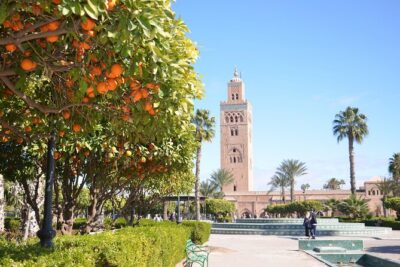
Bahia Palace, Saadian Tombs, Souk and Medina Tour
Read our review →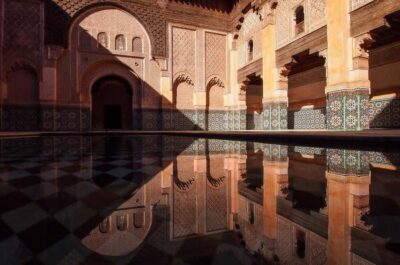
Ben Youssef, Secret Garden, & Souks Walking Tour
Read our review →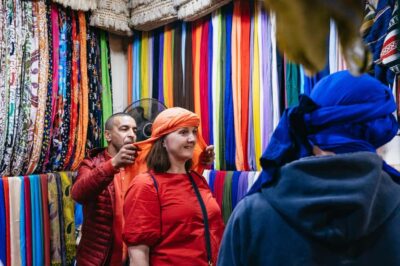
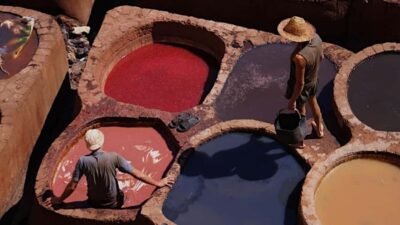
Museum, Al Attarine Madrasa & Tannery and Medina Tour
Read our review →
Bahia Palace, Madrasa Ben Youssef and Medina Tour
Read our review →
Explore Fes: Unforgettable Guided Walking Tour of the Medina
Read our review →Browse the lists this tour appears in