
Reviewed · MEDINA & SOUK TOURS
Evening Marrakech: Gastronomic and Market Tour Inside the Medina
Marrakech’s best food tour is not about sitting down to one polished meal. It is about following your guide through the medina as the city changes gear, from spice stalls and meat counters to steaming pots and the nightly commotion of Djemaa El Fna. You may taste olives, nuts, spiced fish, and ghoulal, a herbal snail soup, before dinner even begins.
I like the small group, capped at 12, and the chance to see where local people shop rather than simply eat in a restaurant. Guides such as Jihad, Brahim, Atika, Ibrahim, and Yousif have earned praise for explaining food, culture, and medina customs in a friendly way. The main caution is that the food can be basic, and a few stops may test your comfort with hygiene or unusual dishes.
Key points to know before you go
- The evening ends with dinner in Djemaa El Fna: Eat Moroccan food while watching the square fill with performers, food sellers, and evening crowds.
- You taste more than one course: Expect three market tastings plus a local dinner, with possible stops for olives, nuts, spiced foods, and snail soup.
- The meat market is part of the lesson: You watch buyers and sellers bargain for poultry and beef, a direct look at everyday commerce in the medina.
- The spice stop has real practical value: Learn how saffron, cumin, anise, turmeric, paprika, and cardamom are used in Moroccan cooking.
- The group stays fairly small: A maximum of 12 people gives you a better chance to ask questions and keep up in narrow lanes.
- Dietary requests need planning: Vegetarian and vegan diets can be accommodated if arranged at least 24 hours before the tour, but gluten intolerance cannot be catered for.
Start at Djemaa El Fna as Marrakech wakes up for the night
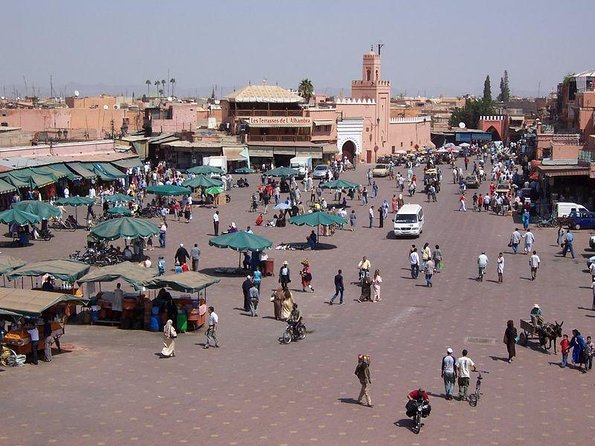
The tour begins at 6 pm outside Hôtel Restaurant Café de France, on the edge of Djemaa El Fna. This is a sensible meeting point, but the square can feel confusing on a first evening, so allow time to find the café and look for your guide.
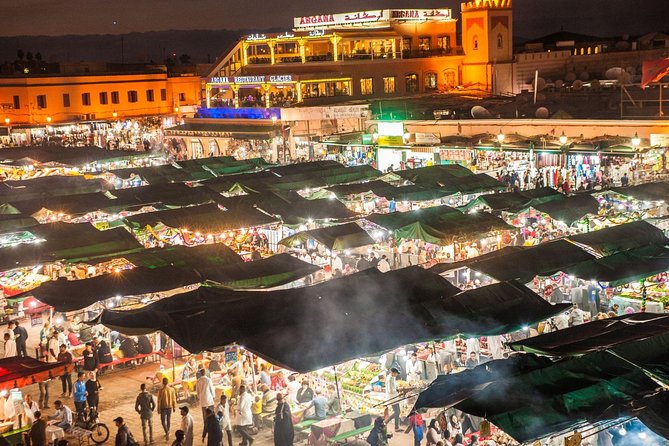
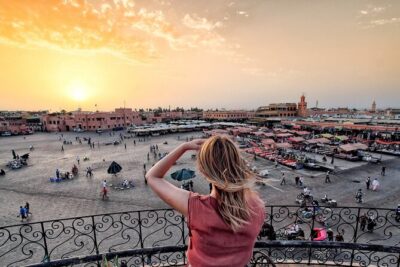
At this hour, the square is shifting from daytime activity to its more theatrical nighttime form. Food stands light up, people gather for their evening walks, and entertainers draw small crowds. The square has UNESCO World Heritage status, but its appeal is less about monuments than about the steady human show around you.
Your guide gives you an introduction before leading the group into the surrounding lanes. This opening matters because Djemaa El Fna can be a lot to take in. A good guide helps you understand what you are seeing instead of leaving you to sort out the noise, sales pitches, and crowds alone.
The strongest guides make this first evening in Marrakech easier. Atika received especially warm praise for explaining local clothing, customs, women’s roles, and practical rules for moving through the medina. Brahim was also praised for explaining the culture around the square in clear, lively terms. Guide quality can shape the whole experience, so the uneven feedback about less engaged guides is worth keeping in mind.
Other medina and souk tours in Marrakech people book:
- Marrakech: Bahia Palace, Saadian Tombs, Souk and Medina Tour
★ 4.7 · 4,974 reviews - Marrakech: Ben Youssef, Secret Garden, & Souks Walking Tour
★ 4.6 · 2,802 reviews - Marrakech: Colorful Medina Souks Guided Walking Tour
★ 4.7 · 2,470 reviews
Riad Zitoun Jdid adds a quieter slice of the medina
The walk passes through Riad Zitoun Jdid, an area known for traditional riads, hammams, pottery shops, kaftans, and leather bags. The name refers to the newer olive district, and the streets here give you a change of pace from the open square.
The area also sits close to Bahia Palace and Dar Si Said Museum, though this food tour does not include admission to either attraction. You are seeing the neighborhood from street level, with its old homes and shops, rather than taking a formal architecture tour.
This section helps place the food in its setting. Moroccan cooking is not separate from the medina. Markets, home courtyards, small eateries, and spice stalls all sit close together, and the walking route makes those connections easier to see.
The stop is listed at about 15 minutes, so do not expect a long historical talk or a palace visit. Think of it as a short neighborhood passage between food stops.
In Mellah, shopping becomes part of the food lesson
The route then reaches Mellah, the former Jewish quarter of Marrakech. Its narrow lanes include the Lazama Synagogue, the Miaara Jewish cemetery, a meat and produce market, and the Bab Mellah Spice Souk. The tour focuses on the market side rather than formal sightseeing.
This is one of the most useful parts of the walk because you see food being bought before it reaches a plate. At the poultry and beef market, your guide explains how bargaining works while buyers and sellers negotiate over meat. Haggling is not just a tourist performance here. It is part of the rhythm of buying and selling.
You should expect an active market rather than a tidy food hall. The smells can be strong, the lanes narrow, and the surroundings plainly practical. That is precisely why the stop has value, although it may not suit anyone looking for a polished culinary outing.
The nearby spice market offers a more colorful pause. Saffron, paprika, cardamom, anise, cumin, and turmeric are displayed in bright piles, and your guide explains how these seasonings are used in tagines and other Moroccan staples. This is a good place to ask questions before buying spices elsewhere in Marrakech.
The tour includes guidance for souks and eating areas, so you can use the walk to build confidence for the rest of your stay. Several guides have been praised for helping first-time visitors understand the medina and find their way around.
The food stops range from familiar olives to snail soup
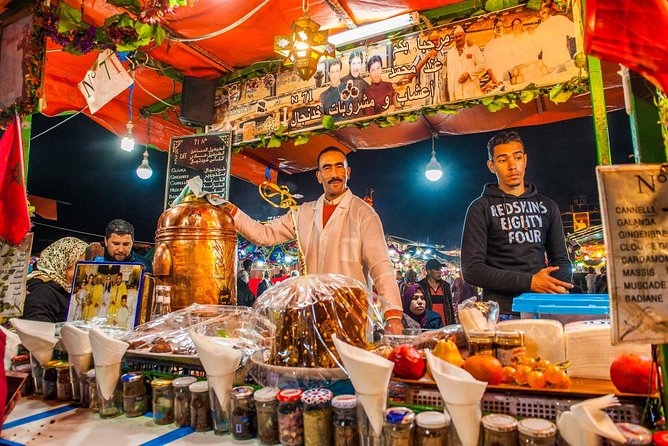
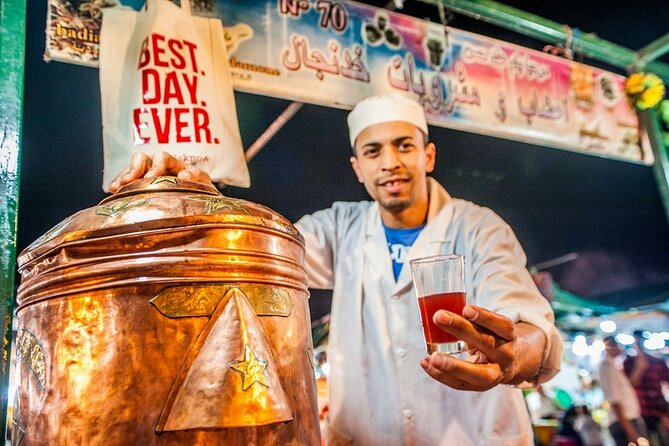
The included tastings are the heart of the tour. You receive three typical market tastings along with the final meal, though the exact selection can vary. Olives, nuts, pastries, and spiced foods are among the items associated with the route.
Some foods will be easy introductions. Moroccan olives and nuts need little explanation, but your guide can place them in the wider food culture and point out how locals buy and eat them. Other tastings are more adventurous.
Ghoulal, or Moroccan snail soup, is served with herbs and spices. It is a small but memorable taste, especially if you have never considered snails part of street food. The soup is one of the tour’s most distinctive details, but it is also where expectations matter. One unhappy account described the soup as not hot and reported illness, while other accounts describe enjoyable food with no problems. You should use your own judgment at each stop and tell the guide if you do not want to try something.
Other unusual possibilities include sheep’s head and cow’s hoof. These are not guaranteed as individual servings, and the tour is not designed around luxury portions. If you want a careful tasting menu with refined presentation, this is not the right product. If you want to learn what people actually eat in the medina, the rough edges are part of the point.
The food quality appears to depend partly on the guide and the stop used that evening. Several people found the tastings varied and authentic, while others felt the food locations were too basic for the price. That split is important. You are paying for access, explanation, and navigation as much as for the food itself.
Other walks through the old town in Marrakech:
- Marrakech: Saadian Tombs & Bahia Palace, Medina Guided Tour
★ 4.6 · 1,989 reviews - Marrakech Monuments & Souks 3-Hour Tour
★ 3.8 · 1,540 reviews - Marrakech: Bahia Palace, Madrasa Ben Youssef and Medina Tour
★ 4.7 · 1,347 reviews - Marrakech: Madrassa Ben Youssef, Secret Garden & Medina Tour
★ 4.8 · 1,303 reviews
Chez Lamine Hadj Mustapha brings you close to traditional meat cooking
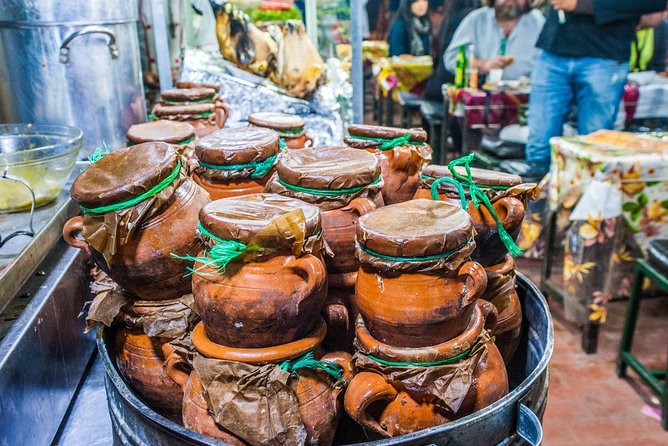
A major food stop is Chez Lamine Hadj Mustapha, located in Mechoui Alley behind the Alhambra restaurant in Djemaa El Fna. Look for the stand decorated with sheep’s heads and traditional tangia pots.
Mechoui is slow-cooked lamb, and tangia is a Marrakech specialty prepared in a clay pot. The meat cooks in the embers of coals from a local bathhouse, according to the tour description. Beef pots are served throughout the day, while the succulent mechoui is especially associated with daytime eating.
This is the kind of stop that gives the tour its local character. You are not simply told that Moroccan cooking uses slow heat and strong seasoning. You see the pots, the meat, the bread, and the juices collected at the bottom of the bowl.
Do not expect a large restaurant meal here. One negative account complained that two people shared a small plate of bones and considered it inadequate as dinner. That may reflect a particularly poor serving, but it points to a real issue: the quantity and presentation may feel modest. If you arrive expecting several full courses, you may be disappointed.
Souk Semmarine brings the walking tour back into the medina
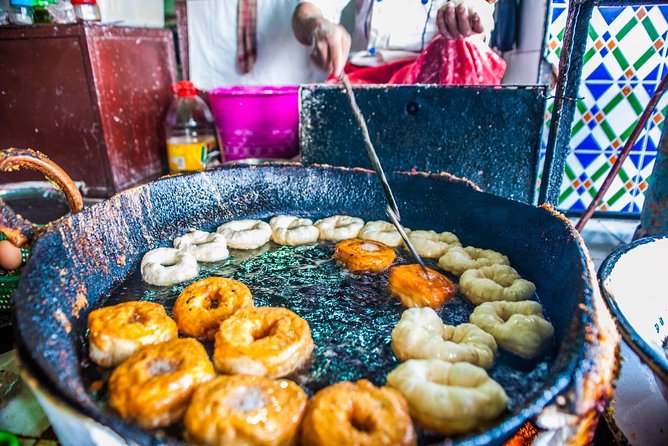
Souk Semmarine is the main artery of the Marrakech souks. It begins near Djemaa El Fna and runs through a network of narrow alleys filled with shops and foot traffic. Its name relates to the farriers who once worked here, shoeing the animals used by caravan merchants.
The souk portion lasts about an hour, so comfortable shoes matter. You will be walking, stopping for explanations, and keeping track of the group in lanes where the flow of people can change quickly.
The value here is not only the chance to shop. You learn how the food markets fit into the larger medina, where spices, leather, clothing, pottery, and household goods share the same streets. Your guide can also offer practical advice about navigating the souks and buying goods without feeling pressured.
This is a useful reason to schedule the tour early in your Marrakech stay. Several people found that the walk helped them get their bearings, and some booked it within their first day or two. After the tour, the medina should feel less like a maze and more like a set of connected districts.
Dinner in Djemaa El Fna finishes the evening
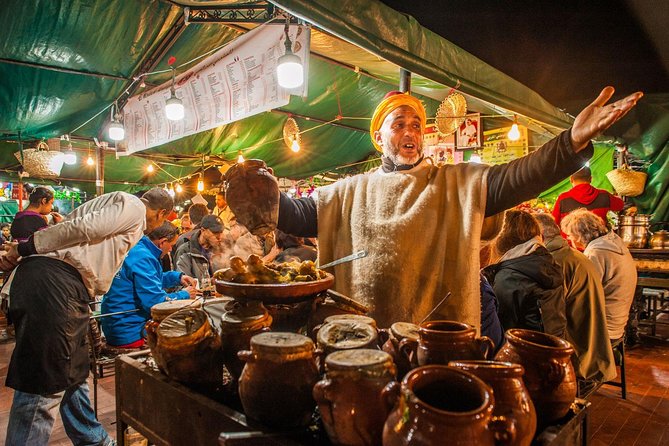
The final meal takes place near or on Djemaa El Fna as the square reaches its nighttime peak. You eat traditional Moroccan food while watching peddlers, snake charmers, entertainers, and food sellers work the crowd.
The square is the backdrop, not a quiet dining room. Expect noise, movement, and plenty to watch while you eat. That setting is one of the tour’s strongest features, and it makes the final meal feel tied to Marrakech rather than interchangeable with dinner at a hotel.
The meal is included, but additional food is not. The tour also does not include hotel pickup or drop-off. It ends back at the meeting point, so you can return to your riad or continue exploring on your own.
The meal may feel more satisfying if you treat the whole evening as dinner in stages. The tour is built around small tastes, conversation, market visits, and one final meal. It is not a restaurant crawl with a large serving at every stop.
How the guides shape the experience
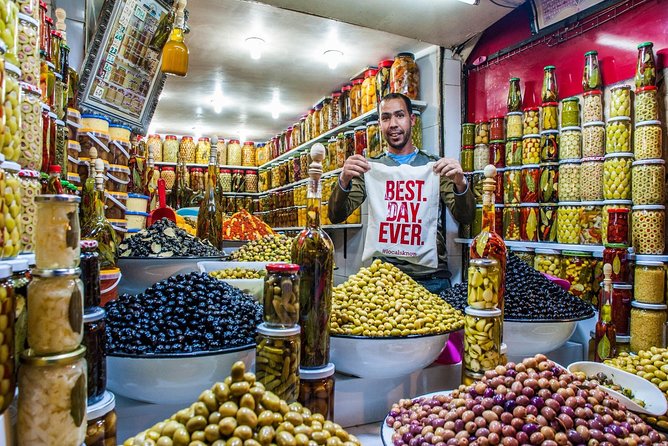
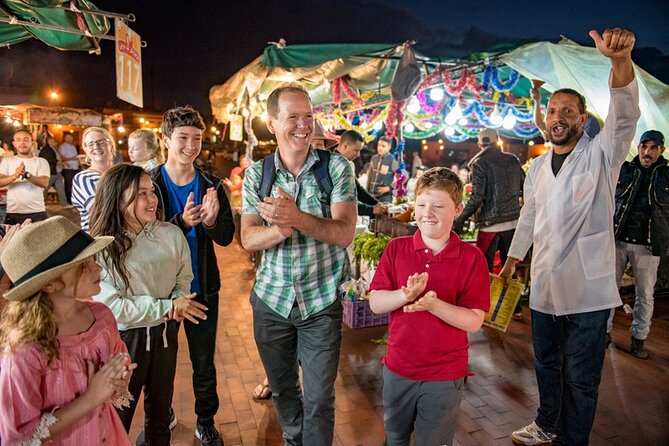
The tour is sold as a small-group experience, with no more than 12 people. That is a useful limit in the medina. You can hear the guide more easily, ask questions, and stay together in tight lanes.
Guide quality is the most important variable. Jihad was praised for tailoring a one-person tour around dietary needs and serving harira soup, spiced sardines, and local pastries. Yousif was praised for his enthusiasm and for helping the group interact with local sellers. Ibrahim received praise for being friendly and clear, while Brahim was repeatedly valued for his explanations and easy manner.
Not every guide delivers the same level of energy. Some accounts describe a guide who arrived late, offered little commentary, and left early. Another described a guide who answered questions but did not actively lead the conversation. You cannot fully control that variable, but you can improve the experience by asking questions and telling the guide what you want from the evening.
A private option may be worth considering if you have strong dietary needs or want a more tailored pace. The standard tour can accommodate vegetarians and vegans when notified at least 24 hours ahead. It cannot cater to gluten intolerance, so this is not a safe choice if avoiding gluten is essential.
Price, timing, and who gets the best value
At $46.08 per person, the tour is reasonably priced if you value a local guide, several tastings, dinner, and help finding your way through the medina. It is less compelling if you judge value by food quantity alone.
The 3.5-hour duration gives you enough time to see several parts of the medina without turning the evening into a marathon. The 6 pm start is well chosen for the changing atmosphere of Djemaa El Fna, though the late finish may not suit very young children. Children under six can join free, and most people can participate.
I would recommend this tour most strongly to first-time visitors, curious eaters, and anyone nervous about entering the medina alone. It also suits people who want context around the food instead of a simple list of dishes.
I would be more cautious if you want fine dining, generous portions, strict food safety standards, or a carefully controlled menu. The experience is street-level and sometimes rustic. That is its appeal, but it is also its limitation.
You can cancel for a full refund up to 24 hours before the 6 pm start time. Changes or cancellations inside that window are not accepted for a refund, so plan carefully if your Marrakech schedule is uncertain.
Should you book the Marrakech food tour?
Book it if you want a lively introduction to Marrakech through its markets, spices, bargaining, and everyday dishes. The strongest guides, including Brahim, Atika, Jihad, Ibrahim, and Yousif, add real value by explaining the customs around the food and helping you move through the medina with confidence.
Go in expecting small tastings, unusual ingredients, and a simple final meal rather than a polished food showcase. Ask questions, tell the guide about dietary needs early, and keep an open mind about ghoulal, sheep’s head, and tangia.
For a first evening in Marrakech, this can be a useful way to get your bearings and see the famous square at its busiest. Just remember that the price pays for the guide and access to local food culture as much as it pays for dinner.
FAQ
How long does the Marrakech food tour last?
The tour lasts approximately 3 hours and 30 minutes.
What time does the tour begin?
It begins at 6 pm local time.
Where does the tour start?
The meeting point is Hôtel Restaurant Café de France, at Djemaa El Fna on Rue des Banques in Marrakech.
Where does the tour end?
The activity ends back at the meeting point in Djemaa El Fna.
What food is included?
The tour includes three typical market tastings and an authentic local dinner. Possible foods include olives, nuts, pastries, ghoulal snail soup, and other Moroccan specialties.
Is snail soup included?
Ghoulal, a Moroccan snail soup with herbs and spices, is included as one of the tasting experiences.
Can vegetarians and vegans join?
Yes. Vegetarian and vegan diets can be accommodated if you provide the request at least 24 hours before the tour begins.
Can the tour accommodate gluten intolerance?
No. The tour cannot cater to gluten intolerance.
How many people are in the group?
The group has a maximum of 12 participants.
Can children join the tour?
Yes. The tour is child-friendly, and children under six may join free of charge.
Is hotel pickup included?
No. Hotel pickup and drop-off are not included.
What is the cancellation policy?
You can cancel at least 24 hours before the start time for a full refund. Cancellations or changes made within 24 hours are not accepted for a refund.
Just added in Marrakech
- Quad Ride In The Agafay Desert★ 5.0 · 39 reviews
- Quad Biking Agafay desert★ 5.0 · 20 reviews
- Marrakech: Tailor-Made City Tour With Your Own Private Guide★ 4.9 · 236 reviews
- Surf Training and Lunch on Essaouira Day Trip from Marrakech★ 4.9 · 51 reviews
- Essaouira: Surf Trip from Marrakech★ 4.9 · 31 reviews
- Marrakech palm grove: Sunset camel ride★ 4.8 · 194 reviews
- Marrakech: Sunrise Desert Tour with Camel Ride and Breakfast★ 4.4 · 36 reviews
- Marrakech : Agafay Desert Sunset Camel Ride & Luxury Dinner★ 4.3 · 39 reviews
Medina & Souk Tours, compared.
Bahia Palace, Saadian Tombs, Souk and Medina Tour
Read our review →
Ben Youssef, Secret Garden, & Souks Walking Tour
Read our review →
Museum, Al Attarine Madrasa & Tannery and Medina Tour
Read our review →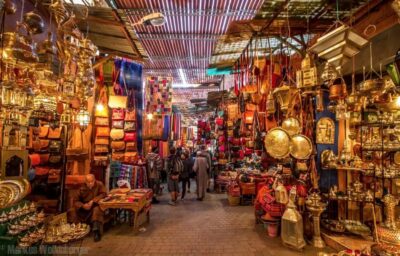
Bahia Palace, Madrasa Ben Youssef and Medina Tour
Read our review →
Explore Fes: Unforgettable Guided Walking Tour of the Medina
Read our review →Browse the lists this tour appears in