
Reviewed · MEDINA & SOUK TOURS
Fes: Bou Inania Madrasa, Museum, Tannery, Souk & Medina Tour
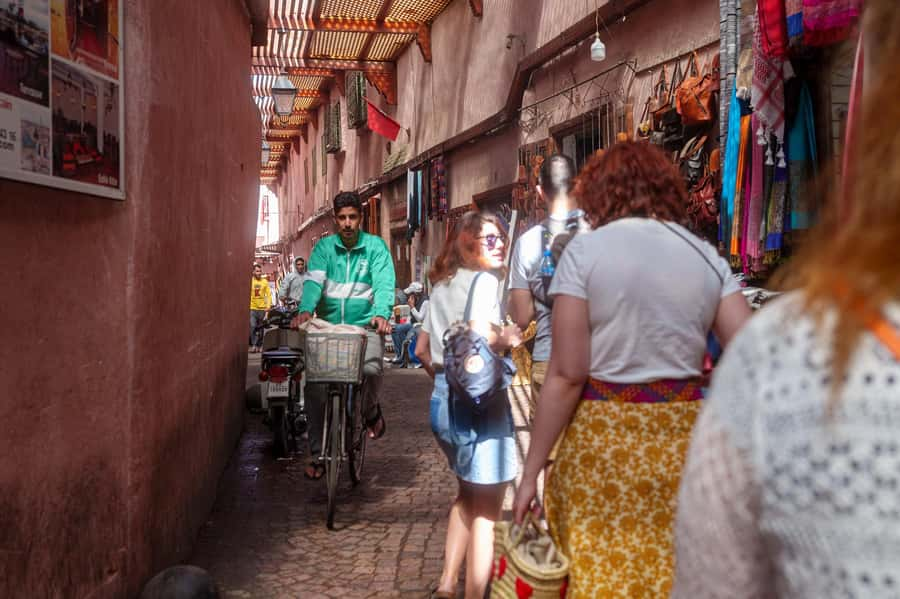
Fes is easiest to understand from inside its narrow Medina lanes, where a woodworker, coppersmith, potter, spice seller, and leather artisan may all be working within a few minutes of one another. This four-hour walk takes you from Bab Boujloud through major monuments and working souks, with a local guide to explain the streets and keep you from getting turned around.
I like the practical route through the Medina, which joins Bou Inania Madrasa, Dar Batha Museum, Al-Karaouine, Chouara Tannery, and several craft districts in one afternoon. I also like the human side of the tour: guides such as Mouanis, Houssine, Jamal, and Driss have been praised for answering questions, adjusting the pace, and showing where goods are made rather than only pointing out shop displays.
The main consideration is that some craft stops can become shopping stops. You may be shown carpets, leather, textiles, jewelry, argan oil, or pottery, and you may need to politely decline. Also, the $12 price does not include the 20 MAD admission to Bou Inania or the 20 MAD admission to Dar Batha.
Key points at a glance
- Four hours on foot: The route covers the Medina at a useful but active pace, with time for photos and short periods to look around.
- A guide who knows the maze: Guides including Mouanis, Houssine, Jamal, Driss, Oujdi, and Reda have led this experience, depending on the booking.
- Two paid sights: Bou Inania Madrasa and Dar Batha Museum each charge 20 MAD per adult, separate from the tour price.
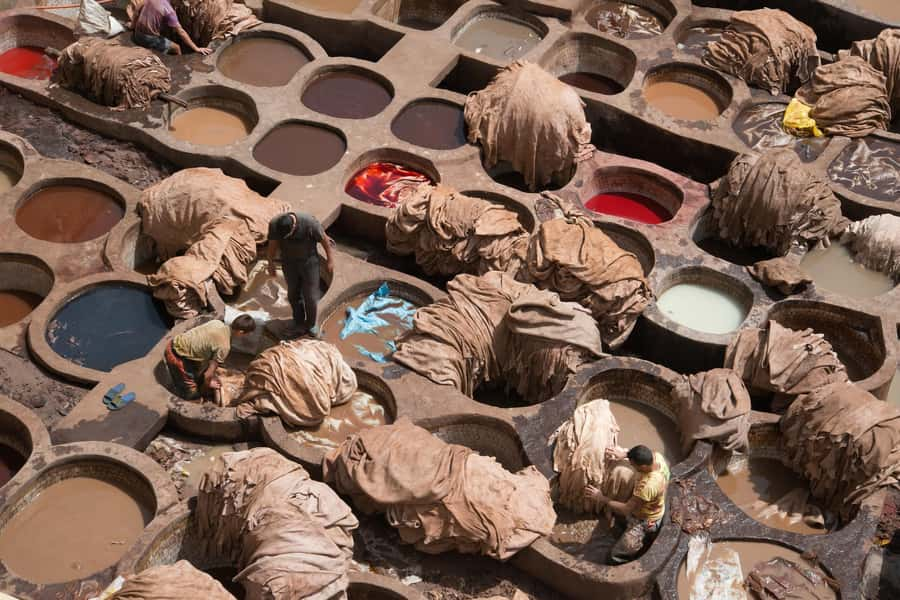
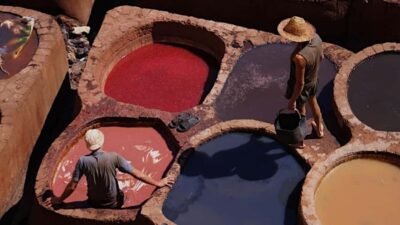
- The tannery from above: At Chouara, you view the leather pits from a terrace and see hand-dyeing with natural colors such as saffron and indigo.
- Real working crafts: The route can include wood, rugs, scarves, jewelry, pottery, zellige tile, copper, and leather workshops.
- Come ready to walk: Comfortable shoes, water, sun protection, and some cash will make the outing easier.
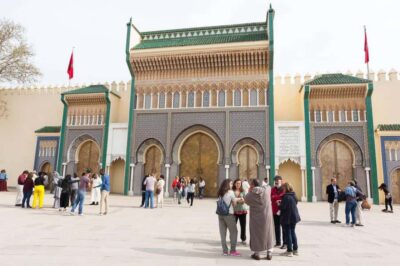
Starting at Bab Boujloud, Fes’s Blue Gate
The walk normally begins at Hotel Batha, near Bab Boujloud, unless you choose private pickup from a riad inside the Medina. Bab Boujloud is a useful place to start because it gives you a clear marker before the lanes become more tangled.
You get a short introduction, then enter the old city on foot. The first ten minutes are not a major sightseeing stop, but they set the tone. Fes is not a city you simply view from the edge. You follow foot traffic through lanes that can narrow quickly, with shops and workshops opening directly onto the route.
A local guide matters here for more than directions. The Medina is large enough that you could spend hours wandering and still miss the places that explain how the city works. Guides such as Houssine and Mouanis have been praised for knowing the streets well and for helping families and small groups keep a comfortable pace.
If you meet at Hotel Batha, allow time to find the exact entrance and look for the guide. The operator sends the guide’s name, meeting point, and reminders by WhatsApp before the tour.
Other medina and souk tours in Marrakech people book:
- Marrakech: Bahia Palace, Saadian Tombs, Souk and Medina Tour
★ 4.7 · 4,974 reviews - Marrakech: Ben Youssef, Secret Garden, & Souks Walking Tour
★ 4.6 · 2,802 reviews - Marrakech: Colorful Medina Souks Guided Walking Tour
★ 4.7 · 2,470 reviews
Dar Batha Museum, a palace of Moroccan arts
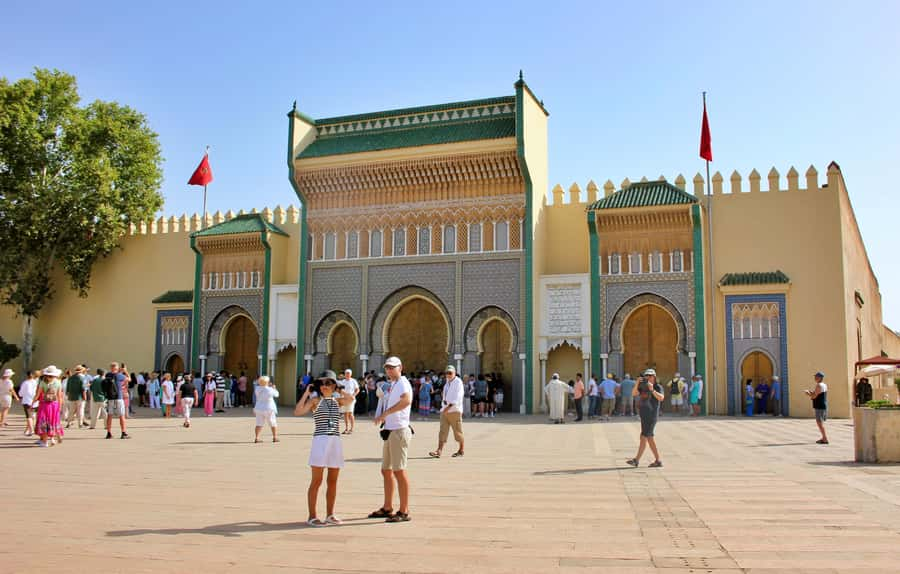
Dar Batha is the first major stop and usually receives about 30 minutes. The building was once a royal palace and now houses Moroccan arts and crafts. Inside, you can expect displays connected with carved wood, ceramics, embroidery, and other forms of local workmanship.
This stop adds useful context before you reach the souks. In the markets, you will see finished objects for sale. At Dar Batha, you can look more closely at the style and skill behind those objects, which makes it easier to recognize the difference between careful handwork and mass-produced merchandise.
The museum visit includes time for photos, a guided explanation, and some freedom to look around. The entrance fee is 20 MAD per adult and is not included in the $12 tour cost.
Thirty minutes is enough for an introduction, but not for a slow study of every display. If Moroccan decorative arts are a major interest, you may want to return independently. For most people, the museum works well as a compact first lesson in the visual language of Fes.
Bou Inania Madrasa and its cedar, tile, and marble
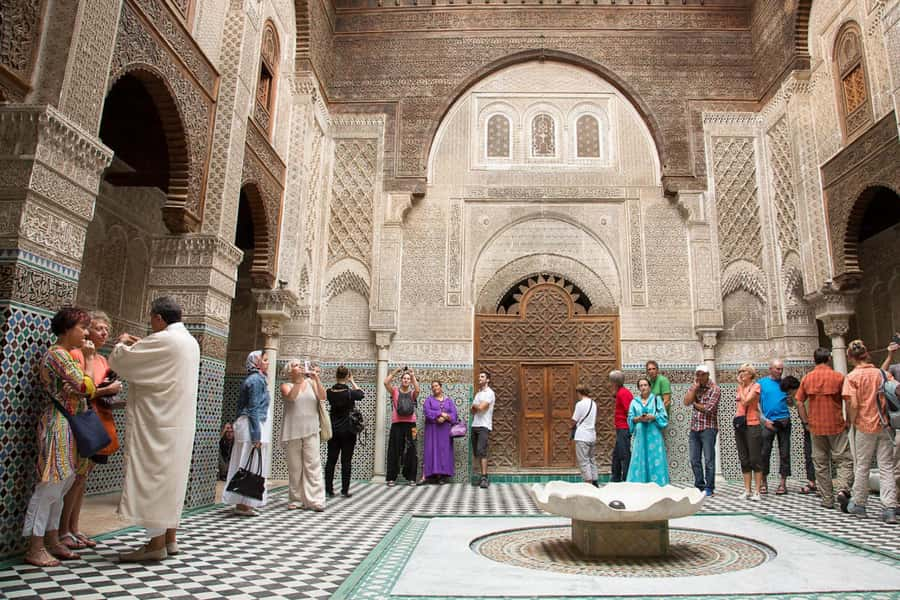
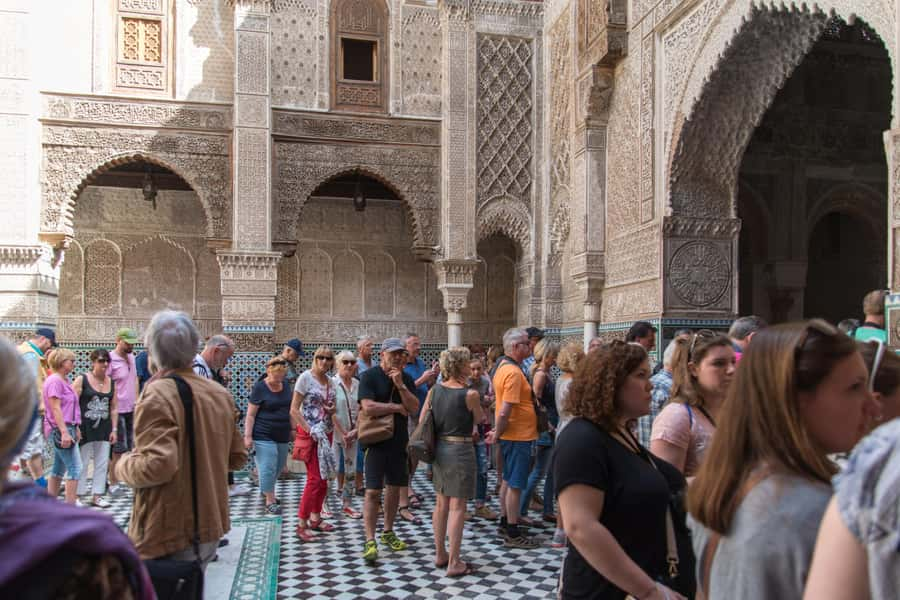
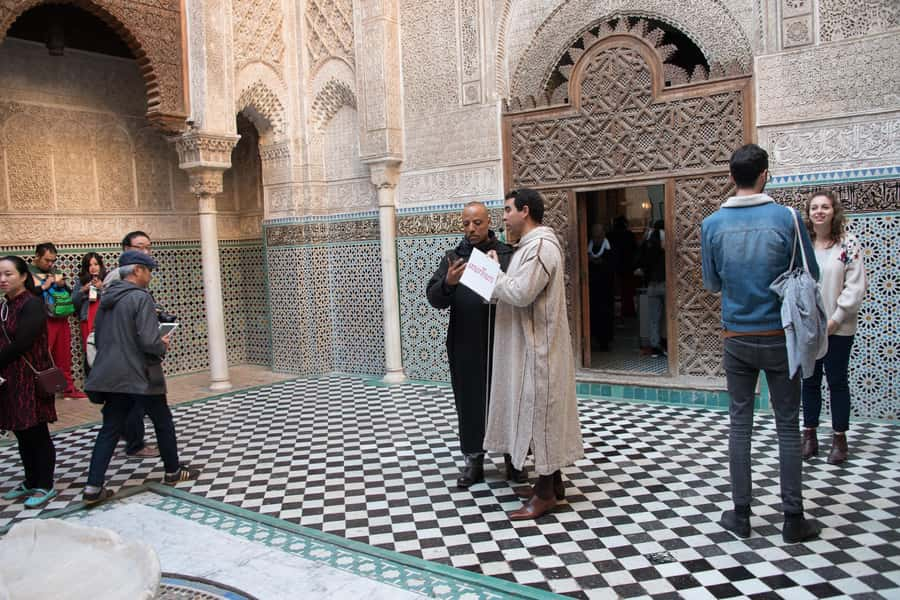
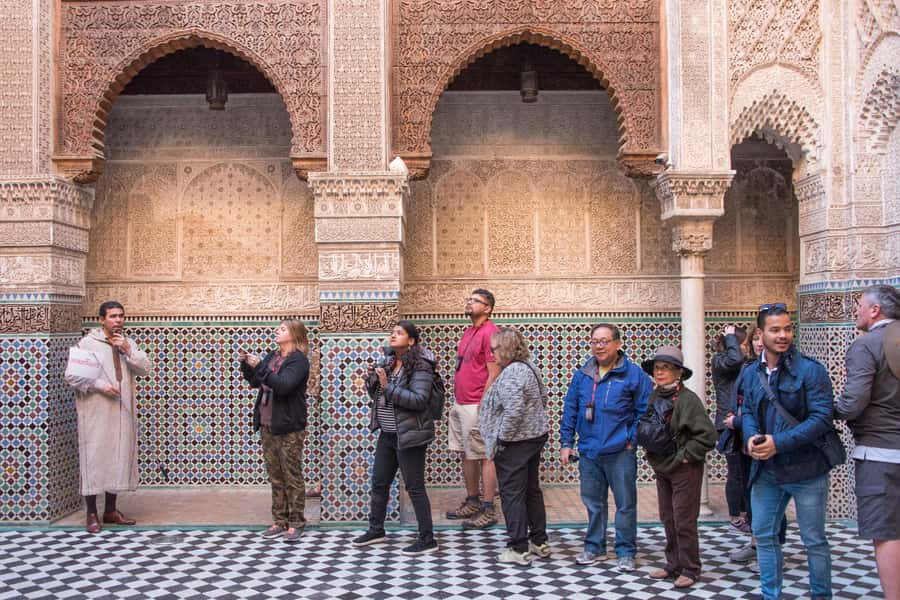
Bou Inania Madrasa gets about 35 minutes, making it one of the longer monument stops. This 14th-century Marinid school is known for carved cedarwood, zellige tilework, and a marble courtyard.
The details reward a slow look. Study the repeated geometry in the tile, the carved wooden surfaces, and the way the courtyard brings order to the surrounding Medina. The building also served as a mosque, an unusual feature among madrasas, and your guide can explain its place in Fes’s religious and scholarly life.
The admission fee is 20 MAD per adult. The tour includes skip-the-line access to selected monuments, but you should still expect the visit to be on foot and within a busy old-city setting.
I would treat Bou Inania as the architectural high point of the first half of the walk. It is more than a quick photo stop, but the 35-minute window means you should listen closely to the guide and save your most detailed photography for the courtyard and major decorative surfaces.
Al-Karaouine from the outside
The next stop takes about 20 minutes and focuses on the Mosque and University of Al-Karaouine. This is an exterior visit, so you should not expect a full tour inside the complex.
Al-Karaouine is one of the world’s oldest universities and an important symbol of Fes’s intellectual and spiritual life. From outside, the value comes from understanding its role in the city and seeing how it fits into the dense Medina around it.
This is a good example of why expectations matter. If you want an interior visit, this tour does not promise one. If you want context and a well-placed stop along a walking route, the exterior visit makes sense.
Your guide can connect Al-Karaouine with the scholars, religious institutions, and long-running traditions that shaped Fes. That explanation is more useful than a rushed attempt to see every doorway in the area.
Other walks through the old town in Marrakech:
- Marrakech: Saadian Tombs & Bahia Palace, Medina Guided Tour
★ 4.6 · 1,989 reviews - Marrakech Monuments & Souks 3-Hour Tour
★ 3.8 · 1,540 reviews - Marrakech: Bahia Palace, Madrasa Ben Youssef and Medina Tour
★ 4.7 · 1,347 reviews - Marrakech: Madrassa Ben Youssef, Secret Garden & Medina Tour
★ 4.8 · 1,303 reviews
Chouara Tannery and the smell of leather
Chouara Tannery receives about 30 minutes, including time for photos, viewing, and shopping. You see the tannery from a panoramic terrace, looking down over the famous dyeing pits.
The work follows a centuries-old process. Artisans hand-dye leather in colorful vats, using natural dyes such as saffron and indigo. The sight is striking, but the smell can be strong, especially in warm weather. Bring water and be prepared for a sensory experience rather than a polished museum display.
A tannery visit often includes a stop at a leather cooperative or shop. This is where you may see bags, slippers, jackets, belts, and other goods. The selling approach can vary, but the experience information makes clear that shopping is part of the route. You can look, ask questions, and decline without treating the shop as an obligation.
The terrace view helps you understand the scale and method of the work. It also gives you a better basis for judging leather products than a shop display alone. If you plan to buy, ask about the material, workmanship, and origin, and remember that bargaining is part of shopping in the souks.
The souks of textiles, spices, copper, and leather
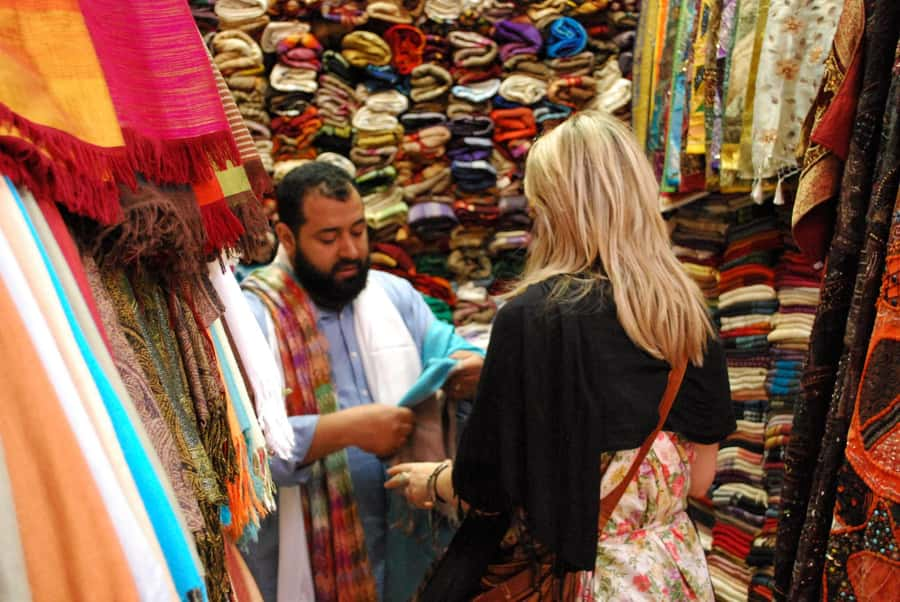
After the tannery, the route spends about 45 minutes in the Medina’s souks. This is the part I find most useful for seeing how Fes functions as a working city rather than a collection of monuments.
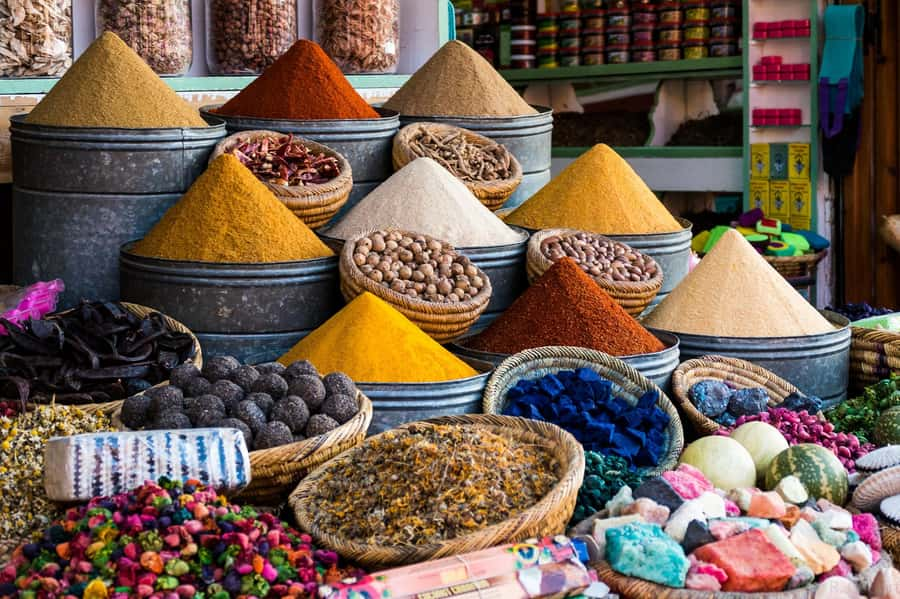
Souk Sabaghine is associated with handwoven textiles. Souk El Attarine brings spices, perfumes, and herbal remedies into the picture. At Hammam Seffarine, you can hear the rhythmic hammering of coppersmiths and see how metalwork remains part of daily trade.
The route can also include workshops producing woodwork, rugs, scarves, jewelry, pottery, and leather goods. Guides with local connections may take you to places where artisans are actually working, not only to stores filled with finished stock. That distinction matters if you want to understand the craft before you decide to buy.
This is also where a guide is most useful for shopping. Driss, for example, has helped visitors distinguish Moroccan craft from cheap imported goods, while Houssine has been praised for explaining bargaining. You still need to make your own purchasing decisions, but an informed second opinion can help.
The tradeoff is time. Every workshop visit takes minutes away from simply walking the lanes. If you prefer street life and architecture over shopping, say so early and ask the guide to keep commercial stops brief. One guide may adjust readily, while the route itself naturally includes opportunities to buy.
Pottery and zellige, the final craft lesson
The final craft focus is a pottery and zellige workshop. You may see clay shaped into pottery, ceramics painted by hand, and small tiles cut for detailed mosaic designs.
Zellige is one of Morocco’s most recognizable decorative arts. Tiny pieces are arranged into repeating patterns used on fountains, walls, courtyards, and religious buildings. Seeing the process helps explain the precision behind the tiled surfaces at Bou Inania and elsewhere in the Medina.
This stop is especially helpful if you are considering ceramics or tiles as a souvenir. You can watch the making process before examining finished pieces. As with the tannery and other workshops, shopping may be part of the visit, so decide in advance how much time and money you want to spend.
The tour returns toward Bab Boujloud, with drop-off near Hotel Batha or in Fes El Bali. Because the route is on foot, you should not expect transportation between stops.
What the $12 price really covers
At $12 per person, this is a low-cost way to get orientation in a complicated old city. The price covers a licensed local guide, a private or small-group format depending on the option, guided walking, free time at selected stops, and optional Medina pickup for private bookings when your riad is inside the old town.
The two main admissions add 40 MAD per adult. Food, drinks, and transport are extra. Even with those additions, the outing can offer good value if you want several major sights explained in one half-day rather than arranging separate visits.
The best value comes from the guide’s local knowledge. The monuments are only part of the experience. The route shows how the Medina’s crafts, markets, religious buildings, and lanes connect. If you already know Fes well and mainly want unstructured wandering, the value is lower.
The tour lasts about 210 minutes to four hours. That is long enough to cover a lot, but not so long that it takes over your day. It also means you should wear shoes suited to uneven walking and carry water.
Pace, group size, and practical comfort
The experience is available as a private group or small-group walk. A private option gives you more control over pace and shopping time. It also includes pickup from a Medina riad, which can save you the trouble of finding Hotel Batha.
The pace is described as comfortable and not rushed, but this remains a walking tour through narrow lanes. Families have found the slower approach useful, and guides such as Mouanis have been praised for being patient with children and answering questions without pushing the group along.
The supplied details call the activity wheelchair accessible but also list it as unsuitable for people with mobility impairments. Treat that as a reason to confirm directly before booking. The Medina includes extensive walking, and this route does not offer transportation between the stops.
Bring:
- Comfortable walking shoes
- Water
- Sunglasses and sunscreen
- Cash for admissions and purchases
French and English are the available guide languages. Cancellation is free up to 24 hours before the start, and you can reserve now and pay later if you need flexibility.
Who should book this Fes walk?
I would choose this tour for a first visit to Fes, especially if you want the main sights and a clear introduction to the Medina in one outing. It suits couples, families, and small groups that want to ask questions and pause for photos.
It is also a strong choice if you are nervous about getting lost. The route covers enough ground that walking alone could mean missing important monuments or spending much of your time checking directions.
You may want a different plan if you dislike shopping entirely. The tannery, craft workshops, and souks are central to the experience, and some stops may involve sales presentations. You can decline purchases, but you should not expect a museum-only tour.
Should you book this tour?
Book it if you want a reasonably priced, four-hour introduction to Fes that combines major sights with working crafts. The strongest reasons are the route, the practical help inside the Medina, and the chance to see leather, copper, textiles, pottery, and zellige in context.
Choose a private option if you want more control over pace, family needs, or shopping time. If you join a shared group, tell your guide early whether you want more history, more street walking, or less time in shops. With the right expectation, this tour gives you a useful map of Fes, both in the streets and in your head.
FAQ
Where does the Fes Medina tour meet?
The usual meeting point is in front of Hotel Batha on Avenue de La Liberte in Fes. If you book the private option and stay in a riad inside the Medina, pickup from the accommodation reception may be available.
How long does the tour last?
The tour lasts about 210 minutes to four hours, depending on the selected option and timing.
Are entrance fees included?
No. Bou Inania Madrasa costs 20 MAD per adult, and Dar Batha Museum costs 20 MAD per adult. These fees are separate from the tour price.
Is Al-Karaouine visited inside?
No. The Mosque and University of Al-Karaouine is an exterior visit on this route.
Which languages are available?
The live guide is available in English or French.
Is the tour suitable for wheelchair users?
The activity information lists it as wheelchair accessible but also says it is not suitable for people with mobility impairments. Because the route involves extensive walking through the Medina, confirm your needs with the provider before booking.
More museums in Marrakech
- Marrakech: Majorelle Garden, YSL, and Berber Museum Entry
★ 4.6 · 5,168 reviews - Marrakech: Palace, Museum, Madrasa & Medina Highlights Tour
★ 4.7 · 706 reviews - Marrakech: Majorelle Garden, Museums Tickets, & Audio Guide
★ 4.6 · 38 reviews - Fes: Museum, Al Attarine Madrasa & Tannery and Medina Tour
★ 4.6 · 1,655 reviews
Just added in Marrakech
- Quad Ride In The Agafay Desert★ 5.0 · 39 reviews
- Quad Biking Agafay desert★ 5.0 · 20 reviews
- Marrakech: Tailor-Made City Tour With Your Own Private Guide★ 4.9 · 236 reviews
- Surf Training and Lunch on Essaouira Day Trip from Marrakech★ 4.9 · 51 reviews
- Essaouira: Surf Trip from Marrakech★ 4.9 · 31 reviews
- Marrakech palm grove: Sunset camel ride★ 4.8 · 194 reviews
- Marrakech: Sunrise Desert Tour with Camel Ride and Breakfast★ 4.4 · 36 reviews
- Marrakech : Agafay Desert Sunset Camel Ride & Luxury Dinner★ 4.3 · 39 reviews
Medina & Souk Tours, compared.
Bahia Palace, Saadian Tombs, Souk and Medina Tour
Read our review →
Ben Youssef, Secret Garden, & Souks Walking Tour
Read our review →
Museum, Al Attarine Madrasa & Tannery and Medina Tour
Read our review →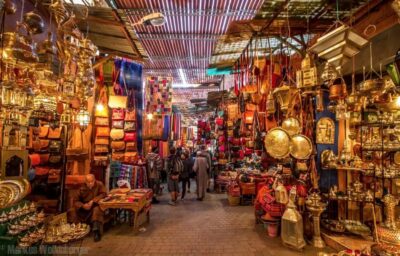
Bahia Palace, Madrasa Ben Youssef and Medina Tour
Read our review →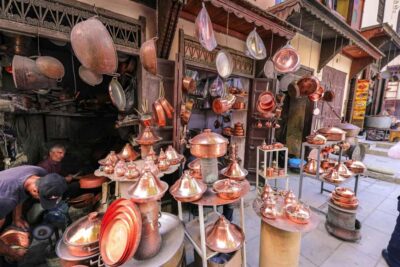
Explore Fes: Unforgettable Guided Walking Tour of the Medina
Read our review →Browse the lists this tour appears in