Reviewed · TOURS IN MARRAKECH
Hidden Sights of Marrakech:
Marrakech’s most revealing sights are often tucked behind the famous monuments. This small-group walk takes you into working parts of the Medina, where you may see a bakery, a caravan inn, a communal oven for tangia, blacksmiths, and a centuries-old mausoleum. Guides such as Azim and Mohamed add local stories and practical advice about getting around.
I like two things right away: the maximum group size of six, which leaves room for questions, and the useful mix of history and daily life. You are not simply looking at grand doors and decorated walls. You are learning how bread is baked, how tangia is cooked, where craftspeople work, and how the souks fit together.
The main consideration is that the title may suggest a string of secret monuments, while the experience is really a guided walk through lesser-seen corners of the Medina. If you want major palace interiors and formal museum visits, this is not that tour. If you want help understanding the city’s back streets, it makes more sense.
Key points at a glance
- Small group of up to six: Easier to hear the guide and ask about customs, food, and bargaining.
- A working Medina, not only monuments: See a local bakery, tangia oven, caravan inn, blacksmiths, and bookbinding or craft areas.
- Useful first-day orientation: The route helps you get your bearings before tackling the souks alone.
- Strong local storytelling: Azim and Mohamed are praised for explaining Marrakech’s culture, languages, history, and everyday life.
- Good value at $39: Bottled water and a professional local guide are included in a 3 to 4-hour walk.
- A few limits: Food, lunch, hotel transport, and entrance tickets are not included, and you need a moderate level of fitness.
Why this Medina walk is different
The easiest way to see Marrakech is to follow the broad tourist path around Jemaa el-Fnaa, the Koutoubia area, and the busiest shopping lanes. That route has its place, but it can leave you with a narrow picture of the city.
This walk shifts attention to the Medina as a living neighborhood. You pass through places connected to work, worship, cooking, trade, and local memory. Some stops are brief, around five or ten minutes, so the value lies less in long visits and more in having someone explain what you are seeing.
I especially like this format early in a Marrakech stay. The Medina can feel confusing at first, and a guide gives you a mental map of its lanes and souks. You also get basic advice about bargaining and shop prices, something several participants valued when buying crafts later on their own.
The pace is described as gentle, but you will still walk for several hours on foot. The route includes narrow lanes and busy market sections. Wear sensible shoes, bring sun protection, and use the included bottled water.
Other trips people book in Marrakech:
- Marrakech: Agafay Desert Sunset, Camel Ride, and Dinner Show
★ 4.6 · 35,119 reviews - From Marrakech: Ouzoud Waterfalls Guided Hike and Boat Trip
★ 4.7 · 33,630 reviews - Marrakech: Agafay Desert Quad & Camel Rides with Dinner Show
★ 4.8 · 27,382 reviews
Starting at Bab Ftouh and Mouassine
The meeting point is Café Argana, at number 18 on Znikat Rahba beside Jemaa el-Fnaa. The start time is 10:00 a.m. From there, the walk begins at Bab Ftouh, described as one of Marrakech’s old inner gates and an entrance to the souks.
This is a good opening because it gets you away from the broad public square and into the structure of the Medina. A gate is not just a photo stop here. It helps you understand how people entered and moved through the old city.
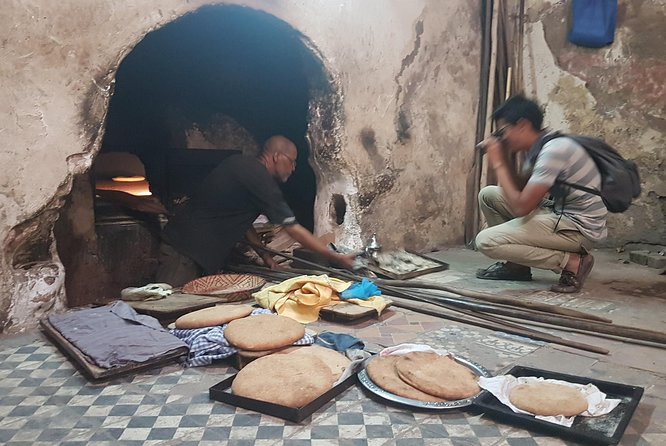
The next stop is Mouassine, where you visit a local bakery. The visit is short, but it gives you a useful look at a daily service rather than another decorative facade. Bread is part of ordinary Moroccan life, and a working bakery tells you more about the neighborhood than a quick pass through a souvenir shop.
You should not expect a cooking class or a tasting session. Food and drinks are not included. Think of the bakery as a place for explanation and observation.
El Mouassine Mosque and the old Jewish quarter
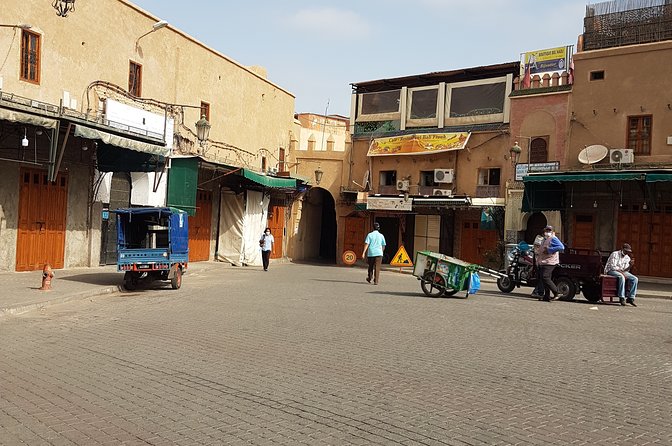
The route continues to El Mouassine Mosque, one of Marrakech’s old mosques, dating from the 16th century. The area was once a residential quarter used by Moroccan Jews known as the Toshavim.
The stop lasts about ten minutes. Since this is a mosque, the visit may focus on the exterior and surrounding area rather than an interior tour. The important point is the neighborhood context. Marrakech’s old quarters were shaped by different communities, trades, and religious traditions, and the guide helps connect those threads.
This is one reason the guide matters. Without local explanation, you might walk past the mosque, notice its age, and move on. With context, you can place it within the city’s changing neighborhoods.
Foundouk Sarsar and the caravan trade
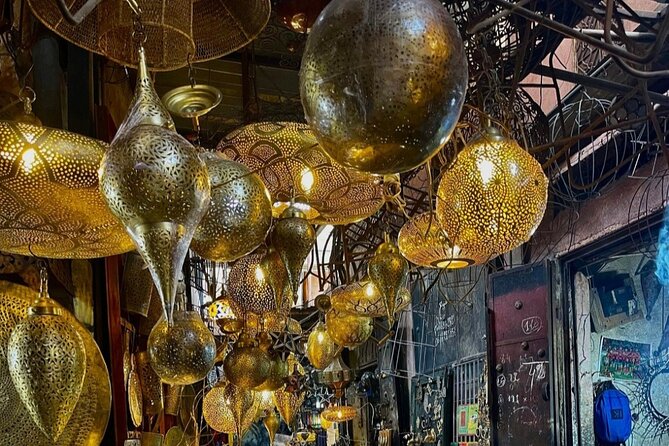
Foundouk Sarsar is presented as one of Marrakech’s oldest caravan inns. The word foundouk refers to the type of lodging and storage space once used by merchants, pack animals, and goods moving through the city.
This stop gives the tour a welcome link to Marrakech’s role as a trading center. It also shows why the Medina has such a practical layout. Its lanes were not built only for residents. They supported commerce, storage, workshops, lodging, and the movement of goods.
The condition and use of an old caravan inn can vary, so you should not expect a polished attraction with a full museum display. The interest comes from seeing the space and hearing how it once functioned.
Same base, a different sort of day:
- Marrakech: Agafay Desert Quad Biking Tour with Dinner-Show
★ 4.8 · 16,569 reviews - Marrakech: Atlas Mountains, Ourika Valley, Waterfall & Lunch
★ 4.8 · 15,834 reviews - From Marrakech: 3-Day Merzouga and Sahara Desert Tour
★ 4.9 · 15,308 reviews - Berber villages : Atlas Mountains Day Hike from Marrakech
★ 5.0 · 14,007 reviews
The tangia oven on Route Sidi Abdelaziz
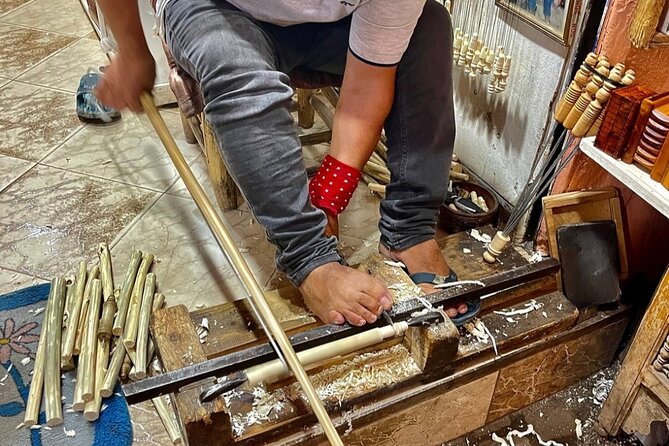
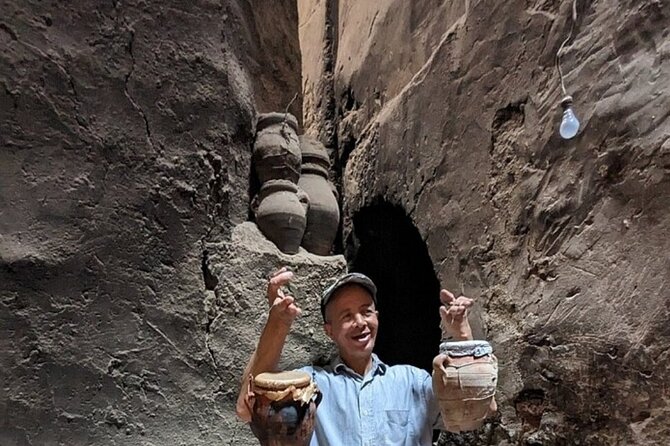
One of the most distinctive stops is a cooking oven where local people bring tangia to cook slowly. Tangia is a traditional Marrakech dish prepared in a narrow clay vessel. The dish is associated strongly with the city, and the communal oven offers a glimpse of how food can be prepared outside a private kitchen.
This is a particularly good stop for anyone interested in food culture. You are not merely hearing the name of a dish in a restaurant. You are seeing the cooking system around it.
The visit is brief, about five minutes, and lunch is not included. Still, it may be one of the most memorable moments because it connects the Medina to ordinary routines. Ask the guide how the oven works and how people use it. That conversation is likely to be more useful than a rushed photograph.
Sidi Abdel Aziz Tabaa and the leather auction area
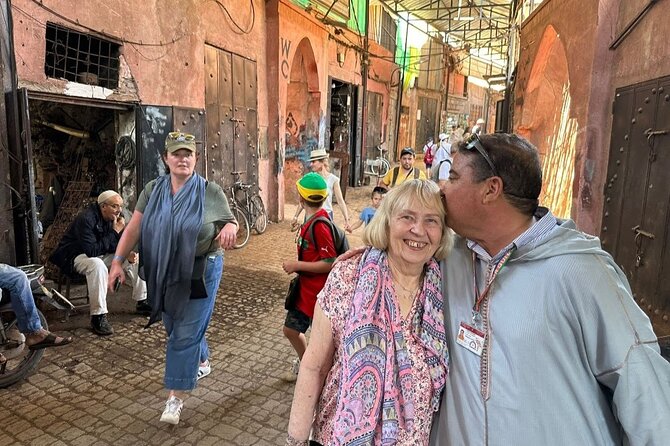
The walk then reaches the mausoleum of Sidi Abdel Aziz Tabaa, one of the Seven Saints of Marrakech. The stop lasts roughly ten minutes.
A mausoleum is a place to approach with care. It is not simply an attraction to enter and photograph. Your guide can explain who Sidi Abdel Aziz Tabaa was and why the Seven Saints matter to Marrakech’s religious identity.
Next comes Talaa, a souk where an auction of leather takes place except on Fridays. This is an unusual detail and one of the better examples of the tour’s focus on working commerce. The Medina is not just a shopping backdrop for visitors. It remains a place where goods are handled, sold, and assessed.
Schedules can matter here. Since the auction does not take place on Fridays, you should not count on seeing it if your tour falls that day. The route still includes the souk, but the specific auction activity may not be present.
Blacksmiths and the craft lanes
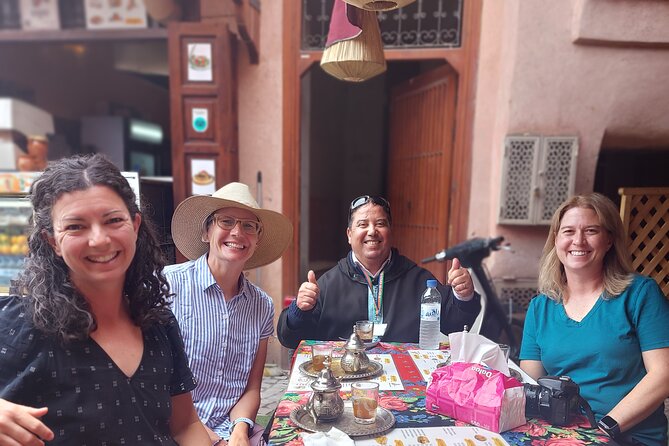
At Souk Haddadine, the route continues through workshops used by blacksmiths. This is the kind of stop that gives the souks their character. Instead of only seeing finished lamps, trays, or decorative objects in shop windows, you get closer to the work behind them.
The visit lasts about ten minutes. Conditions in craft lanes can be noisy and tight, and you should give workers room to do their jobs. The guide can also help you understand the difference between a working workshop and a shop aimed mainly at tourists.
Several people found this part especially useful because it revealed parts of the Medina they would not have entered alone. One participant later returned to buy from craftspeople encountered during the walk. That is a good approach: look first, ask questions, and decide later what you actually want.
Rahba Kedima and the spice market
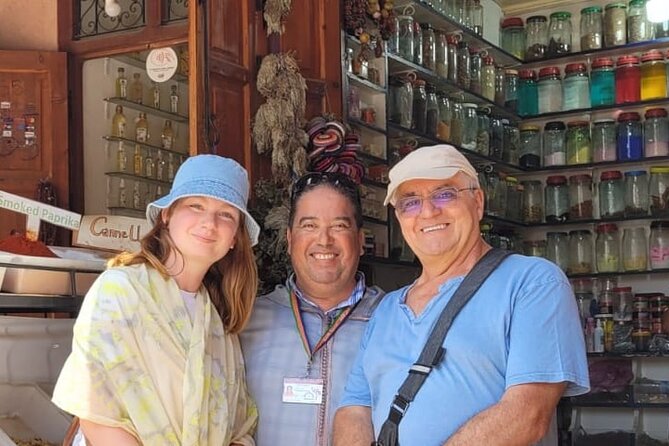
Rahba Kedima Square is the spice stop. It is also known as the Place des Épices, and the route focuses on the smells and displays of fresh spices.
A visit to a local spice stall is optional. That matters because you can look without feeling obliged to buy. If you do shop, the guide can help you judge prices and understand bargaining customs. One guide, Aziz, was specifically praised for pointing out when a shop price seemed too high and for encouraging fair bargaining.
You should still make your own decisions. A guide may offer useful orientation, but buying remains your responsibility. The best reason to visit the spice market is not to collect every product on display. It is to notice how food, scent, trade, and presentation shape the Medina experience.
Souk Semmarine and the return to Jemaa el-Fnaa
Souk Semmarine is the busiest and most famous section of the Marrakech souks. By this point, the walk has taken you through quieter working areas, so the contrast is useful.
Here you will encounter the more familiar side of the market, with its stronger tourist presence and greater shopping pressure. Because you have already seen bakeries, workshops, an old inn, and a communal oven, you can view this part with better context. You will know that the Medina is more than its main shopping lanes.
The tour ends at Jemaa el-Fnaa, the large public square known for musicians, storytellers, snake charmers, and other performances. The route information also describes the activity as ending back at the meeting point, so confirm the precise finishing spot when you meet the guide. In either case, you finish in the same central area where you began.
What the guides add
The guide is the heart of this experience. The guides named in the information provided are Azim and Mohamed, and the descriptions of their work point to different strengths: storytelling, historical context, help with bargaining, and an easy pace.
Azim is associated with clear explanations of Marrakech’s people, languages, culture, and past. Mohamed is praised for his stories, courtesy, and ability to show places visitors might otherwise pass without noticing. Aziz is also mentioned as a helpful guide for shop prices and bargaining.
Guide assignments can change, so you should not assume a particular person unless your booking confirms it. The important feature is the personal guidance. This is not an audio tour where you follow a fixed script. You can ask why a lane is laid out a certain way, how a craft works, or what a local custom means.
The small group helps here. With no more than six people, it is easier to hear in narrow streets and easier to ask a question without holding up a large party.
Is $39 a fair price?
At $39 per person, the tour is reasonably priced for a 3 to 4-hour guided walk, especially since bottled water and a local professional guide are included. You are paying for access to places that are difficult to interpret on your own, not for entrance tickets or a meal.
There are no listed admission charges at the stops. That keeps the cost simple, but it also means you should not expect a palace visit, museum ticket, tasting menu, or other paid attraction.
The value is highest if you are new to Marrakech and want a practical introduction before exploring the Medina independently. It is also useful if you care more about local routines and craft work than about collecting major monuments.
Who should book this walk?
I would choose this for a first or second day in Marrakech. The route can help you get your bearings, understand how the souks connect, and feel less uncertain about wandering into side lanes later.
It suits adults, families with older children, and anyone who likes history explained through ordinary places. Children must be accompanied by an adult. You should have a moderate level of physical fitness because this is a walking experience lasting several hours.
The tour may also suit people who want a small group rather than a large bus outing. It is not a hotel pickup tour, so you need to reach Café Argana in Jemaa el-Fnaa yourself.
A few things to know before you go
Bring comfortable shoes and dress for a warm walk. Keep your belongings close in crowded souks, and listen carefully when the guide explains where to stop and regroup.
You do not need to plan lunch during the route, but you should eat beforehand or arrange food afterward because lunch and drinks beyond the bottled water are not included.
Free cancellation is available if you cancel at least 24 hours before the local start time. Changes or cancellations made later are not accepted for a refund.
Should you book Hidden Sights of Marrakech?
Book it if you want a friendly, story-led orientation to the Medina and prefer working neighborhoods over a checklist of grand sights. The bakery, tangia oven, caravan inn, mausoleum, leather market, blacksmiths, and spice square give the walk a useful range.
Skip it if you want formal monument interiors, a food tasting, or a shopping-free route. Also adjust your expectations about the word hidden. The experience is not a secret archaeological expedition. It is a guided look at less obvious corners of a famous old city, and at $39, that is a fair trade for a first morning in Marrakech.
FAQ
How long does the Hidden Sights of Marrakech tour last?
The walk lasts approximately 3 to 4 hours.
What time does the tour begin?
The scheduled start time is 10:00 a.m.
Where does the tour meet?
The meeting point is Café Argana, number 18, Znikat Rahba, beside Jemaa el-Fnaa in Marrakech.
Where does the tour finish?
The route ends at Jemaa el-Fnaa, and the activity information also describes the end as back at the meeting point. Confirm the exact finishing spot with the guide at the start.
What is included in the price?
The $39 price includes bottled water, a local guide, and a professional guide.
Are food and lunch included?
No. Food, drinks, and lunch are not included. A visit to a local spice stall is optional.
How large is the group?
The tour has a maximum of six participants.
Can I cancel for a full refund?
Yes, if you cancel at least 24 hours before the experience starts. Cancellations or changes made less than 24 hours before the start time are not accepted for a refund.
Just added in Marrakech
- Quad Ride In The Agafay Desert★ 5.0 · 39 reviews
- Quad Biking Agafay desert★ 5.0 · 20 reviews
- Marrakech: Tailor-Made City Tour With Your Own Private Guide★ 4.9 · 236 reviews
- Essaouira: Surf Trip from Marrakech★ 4.9 · 31 reviews
- Surf Training and Lunch on Essaouira Day Trip from Marrakech★ 4.9 · 51 reviews
- Marrakech palm grove: Sunset camel ride★ 4.8 · 194 reviews
- Marrakech: Sunrise Desert Tour with Camel Ride and Breakfast★ 4.4 · 36 reviews
- Marrakech : Agafay Desert Sunset Camel Ride & Luxury Dinner★ 4.3 · 39 reviews
Tours in Marrakech, compared.

Agafay Desert Sunset, Camel Ride, and Dinner Show
Read our review →
Agafay Desert Quad & Camel Rides with Dinner Show
Read our review →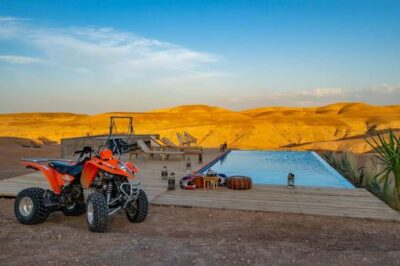
Agafay Desert Quad Biking Tour with Dinner-Show
Read our review →
Atlas Mountains, Ourika Valley, Waterfall & Lunch
Read our review →

Berber villages : Atlas Mountains Day Hike from Marrakech
Read our review →