
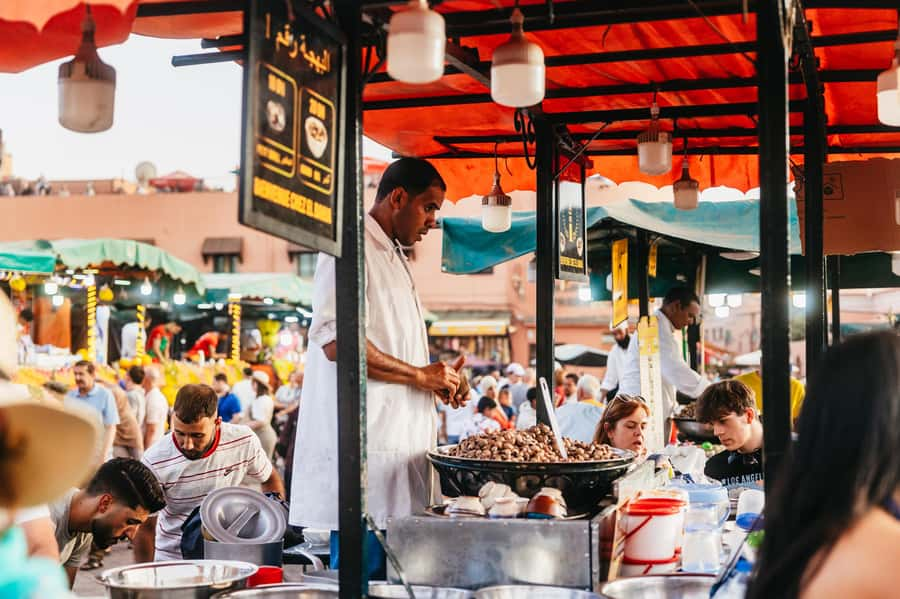
Reviewed · WALKING TOURS
Marrakech: Authentic Moroccan Food Walking Tour & Dinner
Marrakech’s best food often hides behind ordinary doors, tucked into souks and small stalls rather than printed on a tourist menu. This three-hour walk takes you from Poste du Maroc into the Medina for local snacks, Moroccan tea, and a full dinner, with guides such as Yahya, Yaya, Ali, Rachid, and Mehdi adding the cultural background.
I like the wide range of food, from Harira and Msemmen to Moroccan snails, cactus fruit, pastries, olives, and grilled meat. I also like the way the guides help you get comfortable in the Medina, explaining customs, pointing out places you might return to, and sharing practical tips about Marrakech.
The main thing to consider is the sheer amount of food. You may sample more than a dozen items before dinner, so eat only a small lunch. The exact stops also change with the guide, season, and evening route, and the dinner arrangement differs between a restaurant and an open-air grill.
Key points at a glance
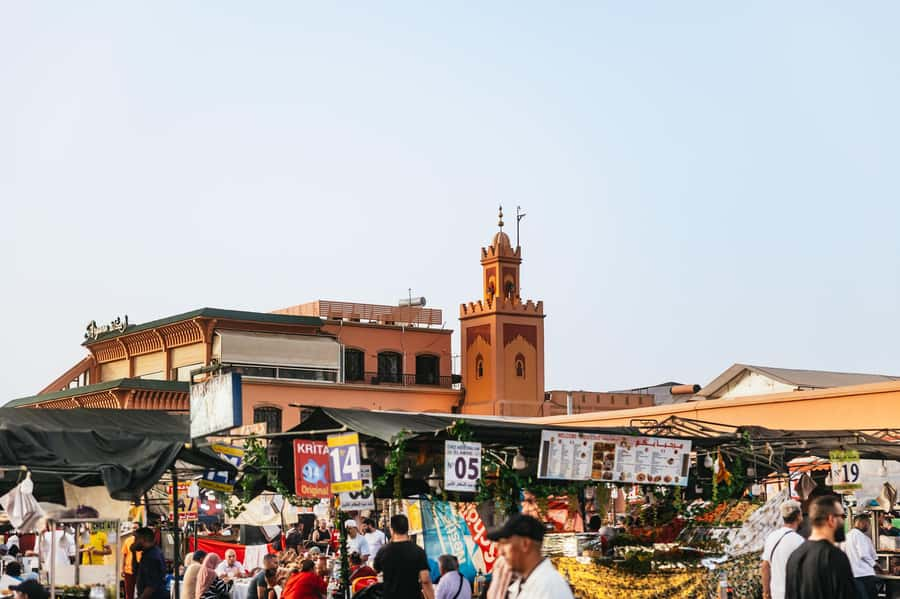
- Two possible food routes: One may feature Babbouche, Fakya, Kaab Ghzal, Tajine, and Raïb, while another can include Msemen Amer, Makkla bel Kefta, Sfenj, cactus fruit, and grilled meat.
- A real Medina walk: The route begins and ends at Poste du Maroc and moves through local food spots in the Old Medina.
- Dinner is included: Depending on the route, you finish with Tajine at a local restaurant or an open-air Chwa barbecue.
- The guides make the difference: Yahya and Yaya receive repeated praise for humor and local insight, while Ali, Rachid, and Mehdi are also named for warm, helpful guiding.
- Come hungry, but not overfed: The tasting sequence can be substantial before the final meal.
- Good first-night choice: The tour can help you understand the Medina, Moroccan food customs, and where you may want to eat later.
Starting at Poste du Maroc and entering the Medina
You meet your guide in front of Poste du Maroc on Rue Beni Marine. This is a useful meeting point because the tour returns there after roughly three hours, and you do not need to arrange hotel pickup or drop-off.
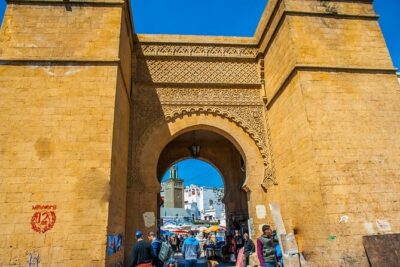
From there, you walk into the Old Medina. This is not a sightseeing tour with a few token tastings added on. Food is the main thread, while the streets, souks, cooking traditions, and daily habits provide the setting.
I would book this early in your Marrakech stay. The Medina can feel confusing at first, especially when you are trying to find a small food stall on your own. A good guide gives you a working introduction to the area and may point out places you want to revisit later.
The walking is part of the experience, not a gap between attractions. Bring comfortable shoes and expect to move through busy market streets. The route is conducted in English, and the guide may adjust the pace and order of stops depending on the evening.
Other guided walks in Marrakech:
- Marrakech: Ben Youssef, Secret Garden, & Souks Walking Tour
★ 4.6 · 2,802 reviews - Marrakech: Colorful Medina Souks Guided Walking Tour
★ 4.7 · 2,470 reviews - Marrakech: Medina by Night Walking Tour with Moroccan Tea
★ 4.6 · 586 reviews
Harira, dates, and the food of Ramadan
One possible route begins with Moroccan coconut macaroons, a sweet that is especially popular with children. You may then try Kaab Ghzal, often translated as gazelle ankles, a pastry filled with almond paste and scented with orange blossom water.
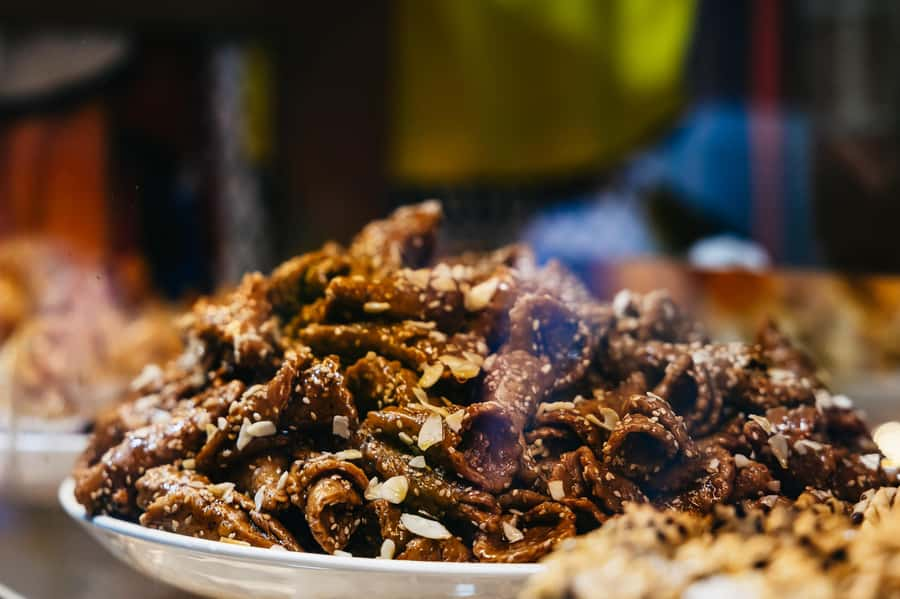
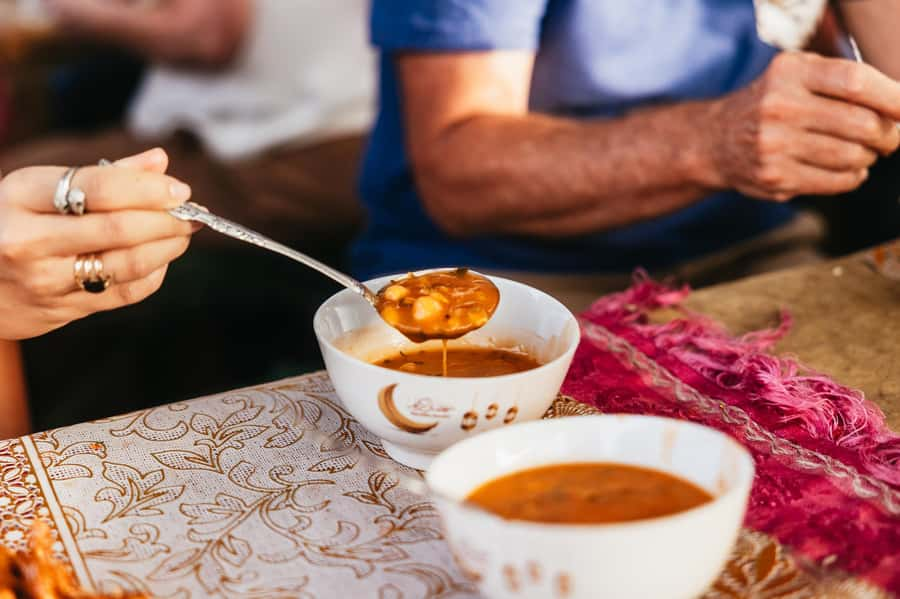
Harira is one of the most useful dishes on the route because it opens a window onto Moroccan customs as well as flavor. This hearty soup is commonly served with dates and Chebakia, a sesame-coated sweet pastry. Together, they are closely linked with the meal used to break the fast during Ramadan.
The timing can make this especially interesting during Ramadan. One evening described by a participant coincided with sunset, when the fast ended, giving the group a chance to see how food and prayer shape the rhythm of the city. There is an important detail to check before booking: the activity information says the included dinner is not available during Ramadan, even though the food walk itself can still include Ramadan-related tastings.
Harira is filling, and it comes early in the evening. That is one reason I would avoid a full lunch or a large snack before meeting your guide.
Babbouche, olives, and the more adventurous stops
Babbouche, or Moroccan snails, may be the tour’s first real test for cautious eaters. The snails are slowly cooked in an aromatic herbal broth. You can try them as a small taste rather than treating the stop as a full serving, and the broth itself is part of the experience.
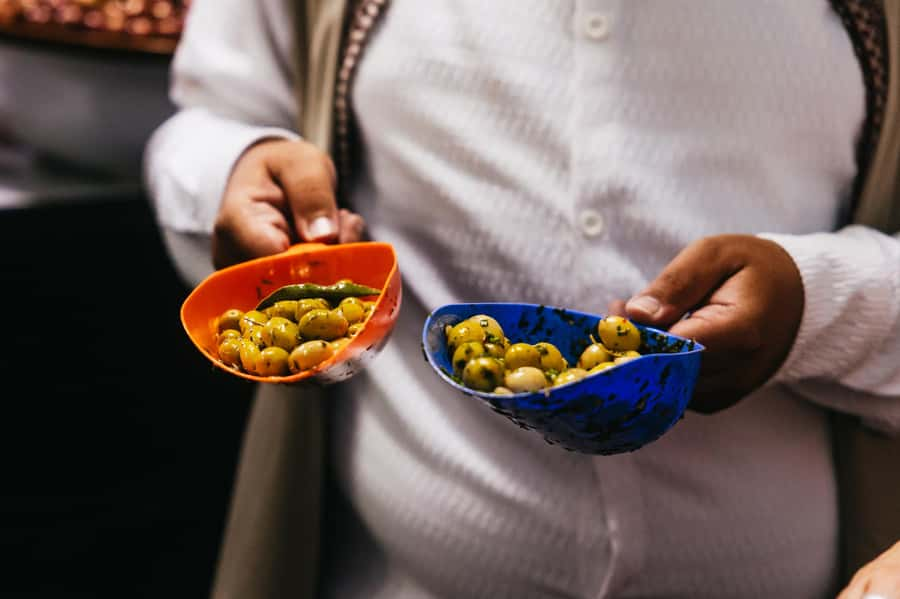
The route can also include Moroccan olives in several styles. Green olives may have a soft, creamy texture, while red olives can be dressed with parsley and cilantro. This is a good example of how a familiar ingredient changes when it is prepared in a distinctly Moroccan way.
Fakya is another stop with cultural value. It is a mixture of dried fruits and nuts, traditionally prepared and shared during celebrations. Here, you are not just ticking off another snack. You are seeing how food moves through family gatherings and special occasions.
Some versions of the walk include Rass Mbekher, steamed sheep’s head seasoned with cumin. That is an adventurous dish, and it will not suit every appetite. On some evenings, it may be replaced by local Chawarma, such as chicken or crispy falafel. The changing route is useful if you want variety, but it means you cannot treat the published food list as a guaranteed menu.
Msemmen, mint tea, and sweet Moroccan pastry
Mint tea arrives with Msemmen on one route. Msemmen is a pan-fried Moroccan pancake, often served with honey and cheese. It is crisp in places, soft in others, and substantial enough to slow down the tasting pace.
The tea stop is also a natural pause in the walk. Depending on the evening, you may visit a traditional herbalist’s shop, where you can learn about Moroccan spices, sip tea, and use the restroom. This break can be welcome after several food stops and gives your guide time to explain the everyday uses of herbs and spices.
The herbalist visit is not simply another sales stop to rush through. It can help you place the ingredients in context, though you should remember that shopping is optional. You are paying for the food walk and guiding, not for products from the shop.
The sweet stops are varied. Coconut macaroons offer a simple, familiar start, while Kaab Ghzal is more delicate and almond-heavy. Chebakia brings honey and sesame into the mix. Later, Raïb, a homemade yogurt, may be served as dessert after the Tajine meal.
Same base, a different sort of day:
- Marrakech: Agafay Desert Sunset, Camel Ride, and Dinner Show
★ 4.6 · 35,119 reviews - From Marrakech: Ouzoud Waterfalls Guided Hike and Boat Trip
★ 4.7 · 33,630 reviews - Marrakech: Agafay Desert Quad & Camel Rides with Dinner Show
★ 4.8 · 27,382 reviews - Marrakech: Agafay Desert Quad Biking Tour with Dinner-Show
★ 4.8 · 16,569 reviews
The second route: Msemen Amer, Sfenj, and Panaché
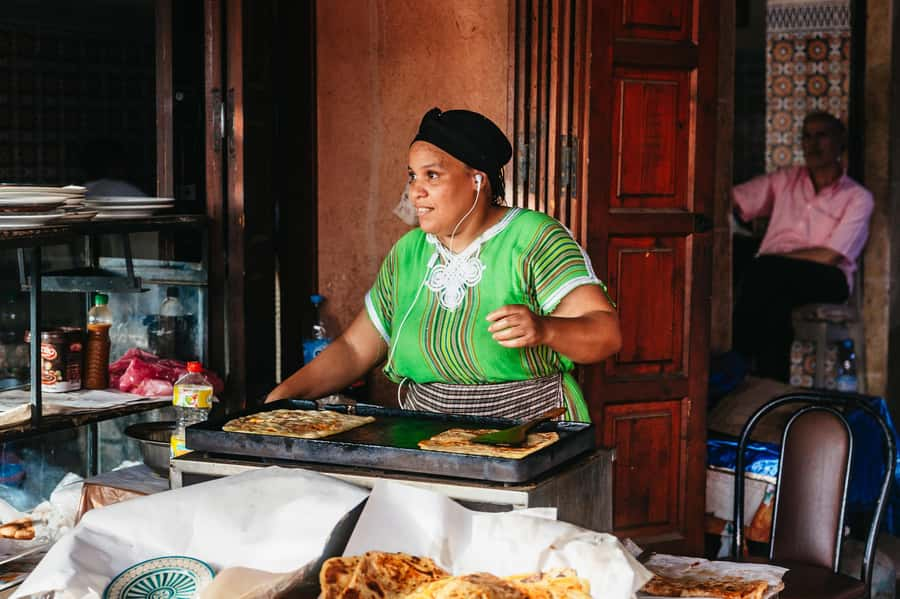
The other possible route begins with Msemen Amer, a stuffed version of the Moroccan pancake. Fillings often include seasoned vegetables, making this a savory change from the honey-and-cheese version.
Makkla bel Kefta is a Moroccan take on the familiar shakshouka idea, with spiced meatballs added to the dish. It gives you a chance to taste Moroccan seasoning in a warm, saucy preparation rather than only in dry snacks or pastries.
Sfenj is a traditional Moroccan doughnut. It is golden and crisp on the outside, airy and chewy inside, and commonly eaten as street food. This is the kind of stop that helps explain why a food walk is more useful than ordering a single restaurant meal. You are sampling the quick foods people eat between errands, shopping, and social visits.
Lhindiya, or cactus fruit, brings freshness to the route. It is especially welcome in hot weather and provides a cool contrast to fried foods and rich pastries.
Panaché is a colorful smoothie made from seasonal fruit. The exact flavor depends on what is available, so you should expect a fresh fruit drink rather than a fixed recipe. Khoudenjal, a hot herbal infusion made with galangal root, may follow. It is traditionally enjoyed as a comforting drink and is associated with digestion.
Finishing with Tajine or an open-air Moroccan barbecue
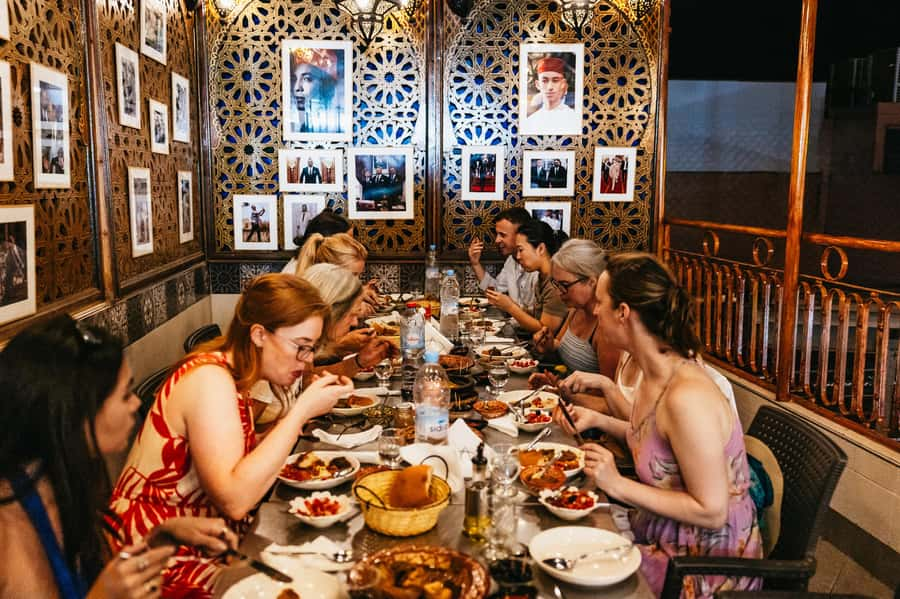
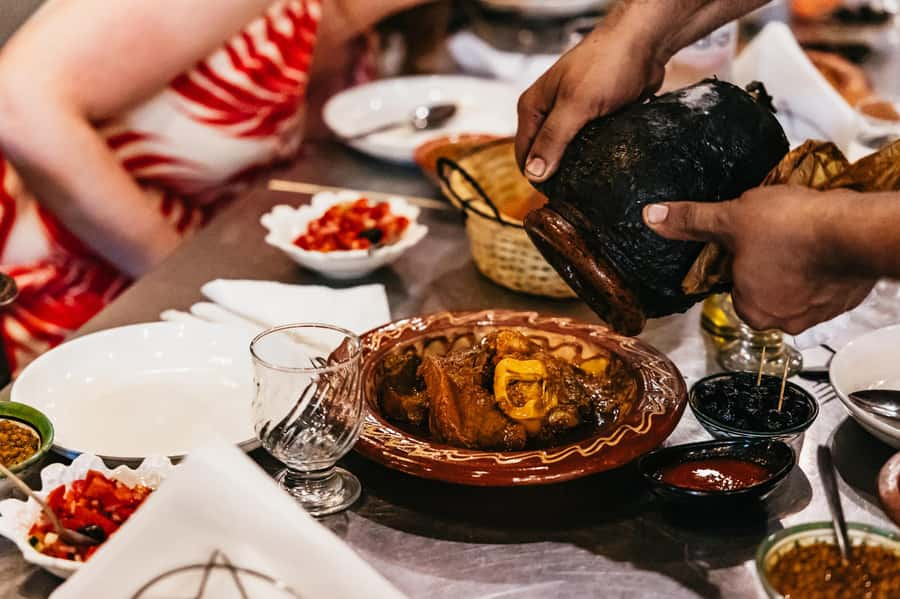
The final meal depends on the route. One version takes you to a cozy local restaurant for a Moroccan salad followed by Tajine. Dessert is Raïb, a homemade yogurt that provides a cool, mild finish after the spices and grilled or fried foods.
The other route ends with an open-air Chwa experience, meaning Moroccan barbecue. The meal may include beef, turkey, and liver cooked over the grill. If you prefer a sit-down restaurant, this difference matters when you book, although the exact dinner style is not presented as a choice you can select in advance.
The dinner is not a tiny afterthought. It comes after a long series of tastings, which explains why several people found the full experience extremely filling. I would treat the tour as dinner, not as an appetizer before another meal.
Vegetarians can be accommodated. One vegetarian participant specifically noted that the guide repeatedly provided alternatives. Still, you should tell the guide about dietary needs at the start, since the route includes meat, liver, sheep’s head, snails, and other foods that may not suit every diet.
What the guides add to the evening
Food tours rise or fall on the guide, and this one appears to rely heavily on personality. Yahya and Yaya are frequently singled out for humor, warmth, and local insight. The names may refer to different guides or variations in spelling, so do not assume you will receive one particular person.
Ali is also described as a friendly guide who explains Moroccan food customs with a smile. Rachid has been praised for explaining each stop, adjusting to different preferences, and helping the market come alive after sunset prayer. Mehdi is noted for keeping the pace comfortable and making the evening work for the whole group.
The best guides do more than name each dish. They explain why a food is eaten at a certain time, how it is shared, and what it says about Moroccan family or religious customs. They also answer questions beyond food, which is useful when you are trying to understand the Medina as a whole.
The activity has a 4.8 rating from 261 reviews, with repeated praise for the guides, the range of tastings, and the off-route food stops. I would still keep expectations practical. The route and guide can vary, the food is served in small portions at multiple locations, and this is a social walking tour rather than a private culinary lesson.
Is $52 a fair price?
At $52 per person, the value depends on how much you would otherwise spend sampling food on your own. The fee covers a certified local guide, several specialty-food stops, mint tea, and a full dinner. It also saves you from guessing which stalls are worth trying or worrying about ordering an unfamiliar dish without explanation.
The strongest value is for a first visit. You get a broad sample of Moroccan food in one evening, plus a guide who can help you return to places you liked. Several people returned to particular food stops later during their stay, which is a good sign that the tour can shape the rest of your eating plans.
The price is less attractive if you only want a single relaxed dinner. You will be walking, stopping often, and eating many small portions before the main meal. If you dislike group meals, unfamiliar foods, or a changing itinerary, a fixed restaurant reservation may suit you better.
Free cancellation is available up to 24 hours before the start, and you can reserve while paying later. Starting times vary, so check availability for your date. Hotel transfers are not included.
Who should book this Marrakech food walk?
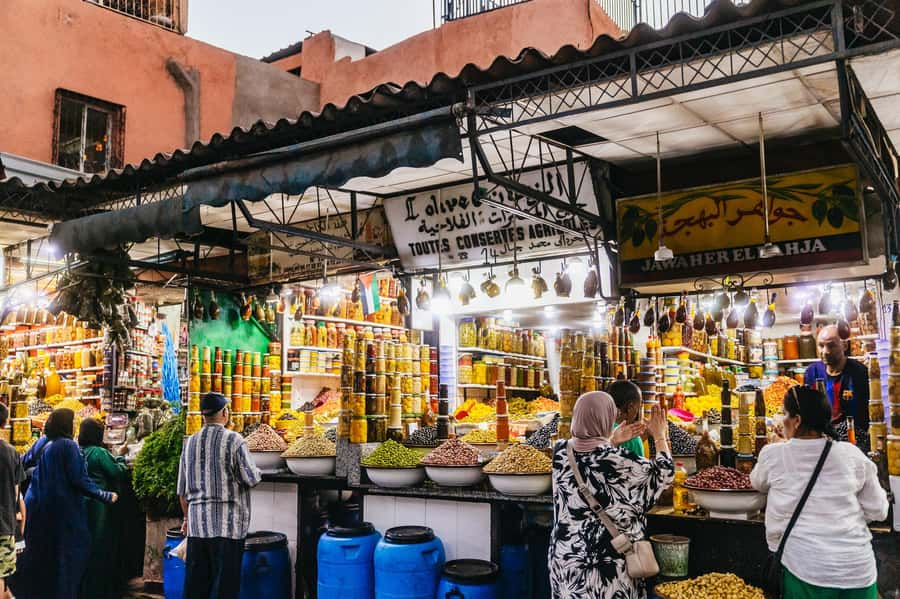
I would choose this tour for first-time visitors who want an easy entry into the Medina’s food culture. It suits curious eaters, families with older children, and anyone who wants local guidance before choosing independent restaurants.
It is also a good match for people who like social tours. The walk can include a larger group, and the stops create plenty of chances to talk with people from different places. Families have brought children as young as seven, with the sweet foods and unusual snacks providing plenty of variety.
You should think twice if you need a fully fixed menu, dislike walking on uneven market streets, or have serious dietary restrictions. Vegetarian substitutions are possible, but the advertised route is strongly centered on meat, dairy, wheat, nuts, and foods cooked in shared local settings.
Should you book it?
Yes, if you want your first Marrakech evening to be practical as well as tasty. The combination of Medina orientation, local snacks, cultural explanation, and a full dinner gives you more than a standard restaurant booking.
Book it early in your stay, arrive hungry but not stuffed, and wear comfortable shoes. Tell the guide about dietary needs immediately, and accept that the evening may include sheep’s head, snails, or a substitute such as chicken or falafel. If that sounds fun rather than alarming, $52 buys a generous introduction to how Marrakech eats.
FAQ
Where does the Marrakech food tour begin?
Meet your English-speaking guide in front of Poste du Maroc on Rue Beni Marine.
Where does the tour finish?
The walk returns to Poste du Maroc after approximately three hours.
How long does the experience last?
The food walk and dinner last about three hours.
What food might I taste?
Possible tastings include Harira, Chebakia, Babbouche, Msemmen, Moroccan macaroons, Kaab Ghzal, Fakya, olives, Sfenj, cactus fruit, Panaché, and other seasonal or local specialties.
Is dinner included?
Yes. Depending on the route, dinner is either Tajine with salad at a local restaurant or an open-air Moroccan barbecue with grilled meats. The activity information says dinner is not available during Ramadan.
Is the tour suitable for vegetarians?
Vegetarian alternatives can be provided. Tell your guide about your dietary needs at the beginning of the tour.
Is hotel pickup included?
No. You must make your own way to the meeting point, and hotel drop-off is not included.
What should I bring?
Wear comfortable walking shoes. You can cancel up to 24 hours in advance for a full refund, and reserve now while paying later.
Just added in Marrakech
- Quad Ride In The Agafay Desert★ 5.0 · 39 reviews
- Quad Biking Agafay desert★ 5.0 · 20 reviews
- Marrakech: Tailor-Made City Tour With Your Own Private Guide★ 4.9 · 236 reviews
- Surf Training and Lunch on Essaouira Day Trip from Marrakech★ 4.9 · 51 reviews
- Essaouira: Surf Trip from Marrakech★ 4.9 · 31 reviews
- Marrakech palm grove: Sunset camel ride★ 4.8 · 194 reviews
- Marrakech: Sunrise Desert Tour with Camel Ride and Breakfast★ 4.4 · 36 reviews
- Marrakech : Agafay Desert Sunset Camel Ride & Luxury Dinner★ 4.3 · 39 reviews
Walking Tours, compared.
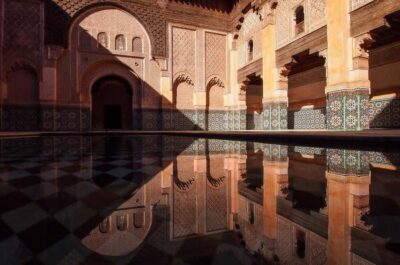
Ben Youssef, Secret Garden, & Souks Walking Tour
Read our review →
Explore Fes: Unforgettable Guided Walking Tour of the Medina
Read our review →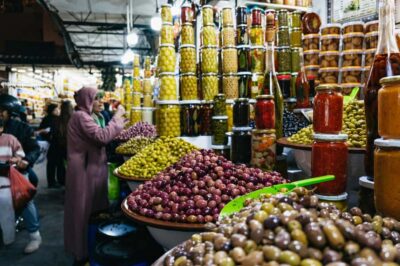
Exclusive Fez Medina Walking Tour with Private Guide
Read our review →
Morning Casablanca: The Medina and Beyond Cultural Walking Tour
Read our review →Browse the lists this tour appears in