Reviewed · TOURS IN FEZ
Shared Half Day Guided Fes Tour with Local Guide
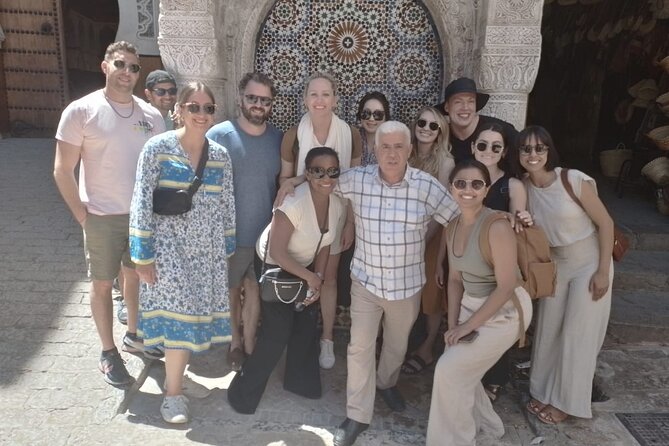
Fes is easiest to understand on foot, and this half-day walk takes you straight into the old Medina through its famous Blue Gate. With local guide Idriss, also listed as Idrees, you move from theological school to tannery, metalworking square, wood museum, and shopping lanes without wasting time on transport. I like the small maximum group of 15 and the useful local advice on food, restaurants, and architecture. The main drawback is that the route is packed, with two paid stops and plenty of walking in narrow lanes.
I also like the price: at $17.45 per person, the tour gives you a guide for roughly three to four hours at a modest cost. Idriss is praised for being friendly, helpful, and good at explaining the Medina in clear terms, even when visitors have only a short stay. You should still budget for the two small entrance fees and expect the pace to feel brisk.
Key points at a glance
- Start at Bab Boujloud: Use Fes’s famous Blue Gate as your first orientation point before entering the old city.
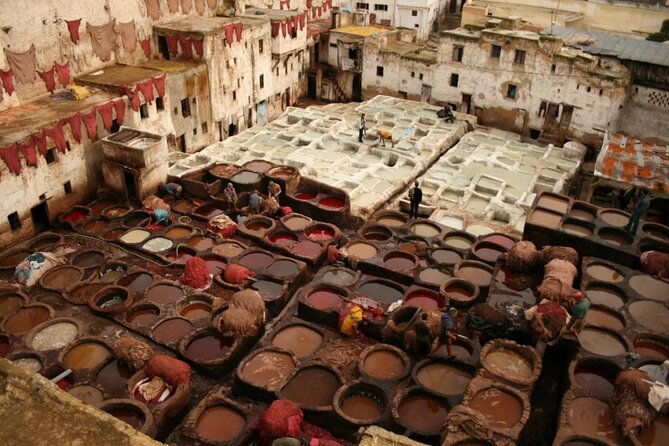
- See the Chouara Tannery: The stop gives you a look at one of Fes’s best-known working craft areas, with admission listed as included.
- Visit two paid historic sites: Bou Inania Medersa and the Nejjarine Museum each cost 20 dirhams.
- Meet a local guide: Idriss, also called Idrees, explains architecture, food, Medina life, and Moroccan history in English or French.
- Walk a full half-day: The tour lasts about 3 to 4 hours and finishes back at the meeting point.
- Keep the price in perspective: The $17.45 rate is strong value if you want orientation and context, but meals and the two site fees are extra.
Why this Fes walk works well for a first visit
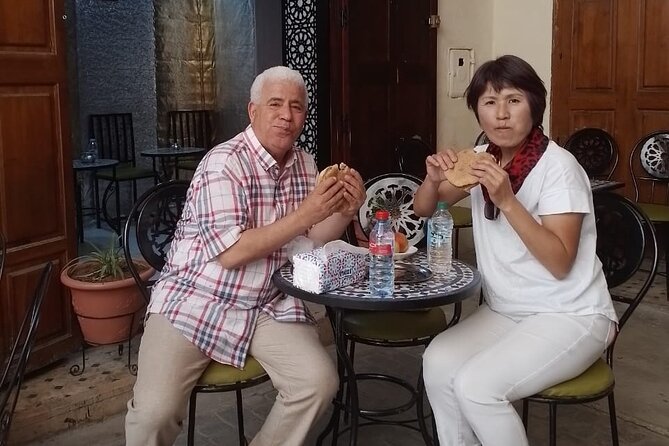
Fes Medina can feel like a maze even when you have a good map. Streets twist, names change, and some of the most useful details are easy to miss when you are focused on getting from one landmark to the next. This tour gives you a clear path through several different sides of the old city.
You begin at Rue de la Poste, then walk to Bab Boujloud on the western side of the Medina. From there, the route moves through Talaa Kebira and into the older quarters. You will see religious architecture, working crafts, shopping streets, and public squares in one compact outing.
The guide is the main reason to book this rather than simply follow a map. Idriss explains how buildings were used, points out features in the architecture, and gives practical tips about local food and restaurants. That help matters in Fes, where a short explanation can turn a plain doorway or crowded lane into part of the city’s story.
The group can reach 15 people. That is not a private walk, but it is still small enough for a guide to manage a moving group through tight streets. If you want constant one-to-one conversation, a private tour would suit you better. If you want an affordable introduction, this group size keeps the cost down without creating a huge procession.
Other trips people book in Fez:
- Chefchaouen Day Trip from Fez (Shared Group Tour)
★ 4.6 · 2,394 reviews - Fes: Volubilis Roman Ruins, Mouly Idriss, & Meknes Day Trip
★ 4.6 · 2,375 reviews - Fez Medina Guided Tour
★ 4.6 · 2,079 reviews
Bab Boujloud and the first look at the Medina
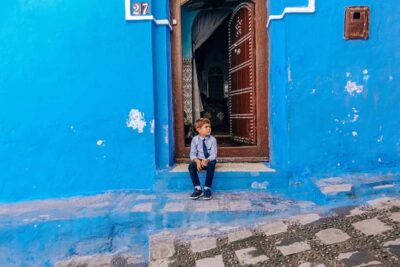
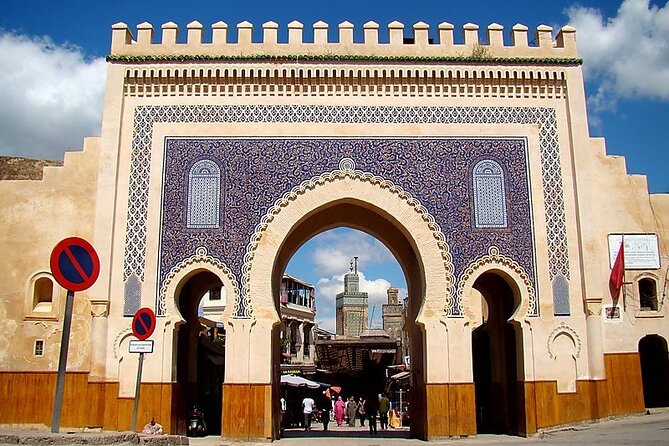
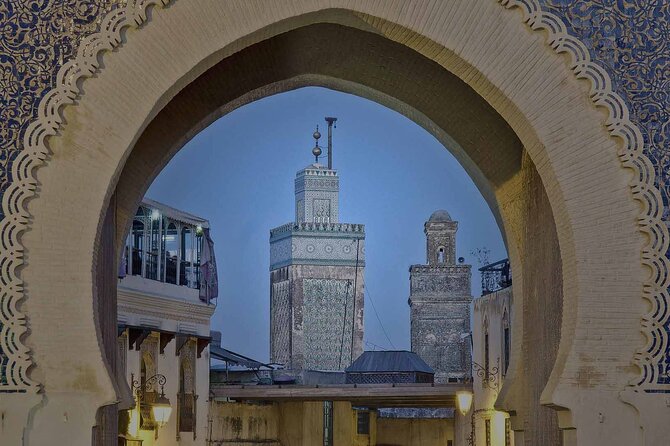
The tour opens at Bab Boujloud, usually called the Blue Gate. It is the grand western entrance to Fes el-Bali, the oldest Medina quarter, and a sensible place to begin because you can pause before the lanes narrow.
The original gate dates to the 12th century, while the familiar triple-arched structure was rebuilt in 1913 under French rule. The blue tilework on the outside has made it one of Fes’s best-known sights, but the more useful part of the stop is orientation. From here, you start to see how the modern city gives way to the old walled quarter.
The scheduled time is about 30 minutes, with no admission charge. That gives your guide room to explain the gate and set up the rest of the route rather than rushing you through a photograph.
Once inside, you turn toward Talaa Kebira, one of the main Medina streets. Shops, cafés, and stalls begin almost at once. Keep your attention on the guide and the street around you. This is an active part of town, and the point is not simply to tick off landmarks. You are getting your bearings in a place where daily business still fills the lanes.
Bou Inania Medersa, an ornate school and mosque
A quick left and right brings you toward Bou Inania Medersa on Talaa Kebira. Built in the 1350s, it was a theological school and includes a mosque. The site is one of the clearest places on this walk to see how learning, worship, and decorative design came together in historic Fes.
Allow about 20 minutes here. The entrance fee is 20 dirhams, listed as about 2 euros per person, and it is not included in the tour price. That is a small extra cost, but you should carry enough local currency for both paid stops.
The value of visiting with a guide is the explanation of function. Without context, the carved decoration and tilework can blur into a series of attractive details. Idriss can point you toward the building’s use and explain the style of its architecture, something specifically appreciated in the tour feedback.
This stop is not a long museum visit. You get an introduction, a look at the building, and then return to the street. That suits a half-day route, though anyone wanting time for quiet inspection or photography may find 20 minutes short.
Chouara Tannery, one of Fes’s working craft districts
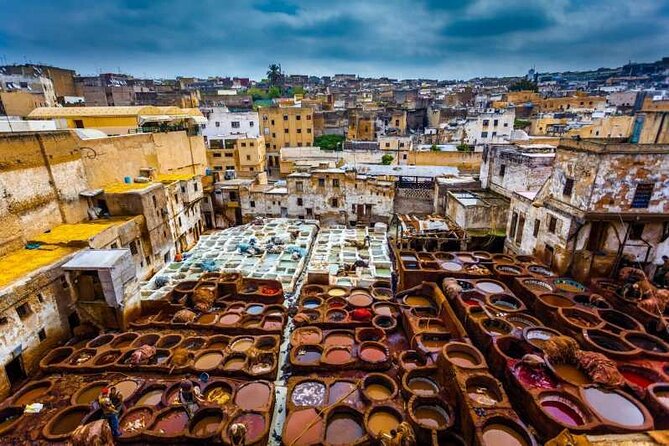
The route continues into Fes el-Bali toward the Chouara Tannery, near the Saffarin Madrasa and the Oued Fes. This is the most distinctive working-craft stop on the walk, and it gives the tour a different feel from the schools and monuments.
The tannery is associated with the leather trade that has long been part of Fes’s identity. Here, the city’s old craft economy is not just a museum display. You are seeing a working area connected with the making and selling of leather goods.
The listed visit lasts about 30 minutes, and admission is included. That is useful because this is one of the stops where a guide can help you understand what you are looking at rather than leaving you to take in a crowded view with no explanation.
Keep your expectations practical. The route gives you a short introduction, not a detailed industrial tour. You may also find the working setting intense in smell and activity. That is part of the experience, but it may not suit everyone. If you are sensitive to strong odors, this is the point to be prepared rather than surprised.
Same base, a different sort of day:
- Blue City magic: Affordable Day Trip from Fez to Chefchaouen
★ 4.6 · 1,960 reviews - From Fez: Sahara Desert 2-Day Tour with Merzouga Camp Stay
★ 4.8 · 1,716 reviews - Fes: Museum, Al Attarine Madrasa & Tannery and Medina Tour
★ 4.6 · 1,655 reviews - From Fez: Chefchaouen Day Trip with Hotel Pickup
★ 4.6 · 1,534 reviews
Metalworkers and Place Seffarine
The walk then passes through the dyers’ souk and mirror stalls along Leather Street before reaching the area around Place Seffarine. The itinerary gives Place R’cif its own 30-minute stop, followed by Place Seffarine later for another 20-minute pause, so the exact flow may feel like a looping route through connected parts of the Medina rather than a straight line.
That is not a bad thing. Fes is made of linked quarters, and this part of the walk lets you watch the city change from leather and textiles to metalwork. Place Seffarine is known for coppersmiths shaping pots and pans by hand. The sound of repeated hammering is part of the character of the square.
You are given time for mint tea at Crèmerie la Place, with the chance to sit on the pavement and watch the work. The tea is not stated as included, so plan to pay for it yourself. This is one of the nicest built-in pauses because it breaks up the walking and gives you a moment to watch ordinary Medina life.
A stop like this is also where a local guide adds value. Idriss is familiar with people around the Medina, and his connections help the walk feel less like a list of buildings and more like an introduction to a living neighborhood.
Fes el-Bali, shopping streets, and Moulay Idriss III
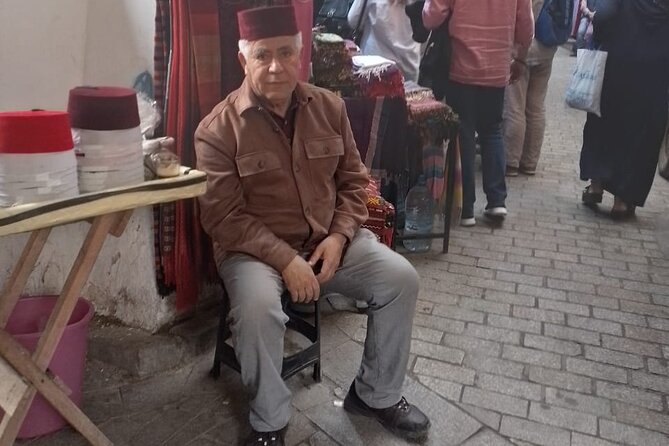
After the craft quarters, you return to the main shopping streets of Fes el-Bali. Souk el Attarine sells clothing and jewelry, while the ornate mausoleum of Moulay Idriss III is nearby. The mausoleum was built in 1323 and is regarded as one of the central points of the Medina.
The scheduled visit is about 20 minutes and does not carry a separate admission charge. As with many religious sites, the important thing is to follow the guide’s instructions about where you may enter and what you can view. The tour information does not promise interior access, so think of this as a chance to understand the site and its place in the quarter rather than a guaranteed full visit.
This section is useful for shoppers, but it is not a dedicated shopping tour. You will pass clothing, jewelry, mirrors, leather goods, and other stalls. If something catches your eye, you may need to make a note and return later, since the group has a schedule to keep.
The guide can also help you read the difference between a shop-lined passage and a historic structure. That distinction is helpful in Fes, where commerce and old buildings sit side by side and the street itself is part of the experience.
Nejjarine Museum and the woodworkers’ quarter
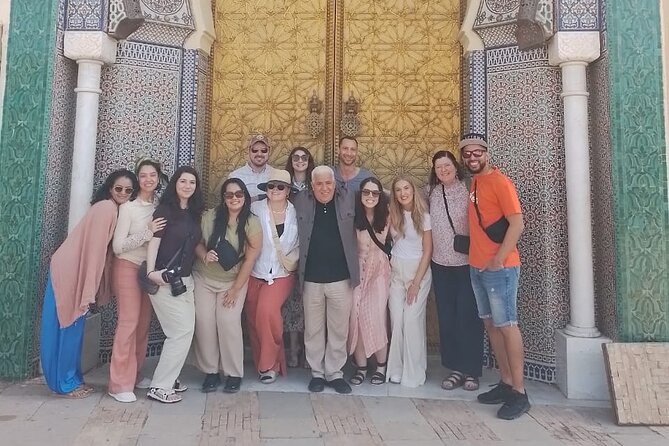
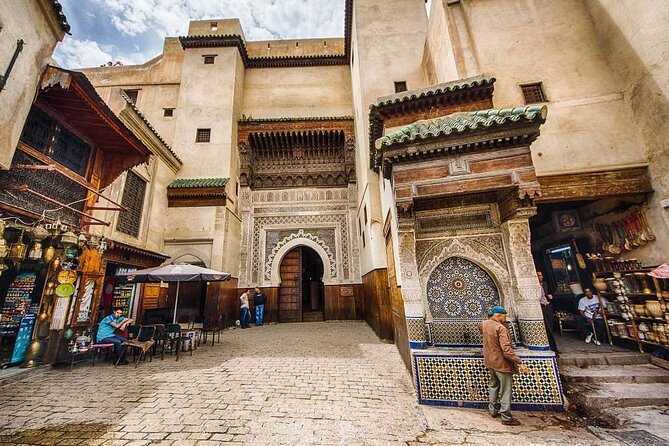
The next section leads through the Henna Souk to the Museum of Wood, Arts and Crafts at Place an-Nejjarine. The museum occupies a restored fondouk, a traditional inn once used by merchants and craftsmen. It is a good match for this tour because it connects the building to the trades that shaped the surrounding quarter.
Admission is 20 dirhams, about 2 euros, and is not included. The planned visit lasts around 20 minutes. Add both paid entries together and your extras come to about 40 dirhams, or roughly 4 euros, based on the prices supplied.
The museum gives you a quieter change of pace after the souks and tannery. You can expect displays connected with woodwork, arts, and crafts, along with the restored building itself. It is not presented as a long museum session, so visitors who care deeply about craft history may want extra time on another visit.
From here, the route follows Talaa Seghira back toward Bab Boujloud. The tour suggests finding a place for a late lunch near the Blue Gate. Lunch is not included, and the timing may suit you best if you have a flexible afternoon rather than a tight restaurant reservation.
What the $17.45 price really covers
At $17.45 per person, this is an inexpensive way to get a structured introduction to Fes. Your payment covers the English or French-speaking guide and the planned walking route. It does not cover the Bou Inania Medersa fee, the Nejjarine Museum fee, mint tea, or lunch.
For the price, the strongest value is the guide’s local knowledge of the Medina. Idriss explains history, food, restaurant choices, and architectural features, and he can give you a useful first reading of the city. One short-stay visitor found that the guide still managed to explain Moroccan history and the Medina clearly despite limited time, which is exactly where a half-day tour earns its keep.
The rate is also attractive for solo visitors and couples who do not want to pay for a private guide. Group discounts are available, though the supplied details do not specify the discount amount. Since the group limit is 15, you get the financial benefit of sharing while avoiding the scale of a large bus tour.
The tradeoff is pace. Seven named stops across three to four hours leaves limited time at each place. You will receive a well-shaped introduction, not an exhaustive study of every monument. That is a fair exchange at this price, especially on a first morning or afternoon in Fes.
Practical details before you book
The tour begins at Rue de la Poste in Fes and ends back at the same meeting point. Confirmation is provided when you book, and mobile tickets are supported.
Wear comfortable shoes. Even though the route is only half a day, it moves through several Medina quarters and includes shopping streets, craft areas, and narrow lanes. The supplied details say most people can participate, but no special accessibility information is provided.
The tour operates in English and French. If you need a different language, this experience is not described as offering one. It is also worth telling the guide early if you care most about architecture, food, shopping, or history. Idriss has been praised for adapting to requests, including adding places such as carpet shops and restaurants when time allowed, but the core route still needs to fit the group schedule.
Book at least a day ahead if your plans are firm. The activity is often reserved about 22 days in advance, which suggests that early planning can be sensible during busy periods. You can cancel for a full refund up to 24 hours before the start time. Cancellations or changes made inside that window are not refunded or accepted.
Who should book this Fes experience?
I would choose this tour if you are visiting Fes for the first time, have only part of a day, or want help making sense of the Medina before exploring on your own. It is especially useful for anyone who values local explanations more than a long list of formal monuments.
It also suits solo visitors and budget-minded couples. The price is low, the group is capped at 15, and the route includes several places that would be harder to connect on your own.
I would hesitate if you want a slow photography walk, a private conversation with a guide, or extended time inside each museum and historic building. The schedule is active, and the tour’s strength is coverage rather than depth.
Should you book it?
Yes, if you want an affordable first look at Fes with a friendly local guide. The combination of Bab Boujloud, Bou Inania Medersa, Chouara Tannery, Place Seffarine, the souks, and Nejjarine Museum gives you a useful cross-section of the city in three to four hours.
Book it with realistic expectations: bring about 40 dirhams for the two entrance fees, leave room for tea or lunch, and expect steady walking. For $17.45, Idriss’s local guidance and the chance to connect Fes’s architecture, crafts, shopping, and food culture make this a strong-value orientation tour.
FAQ
How long does the Fes tour last?
The tour lasts approximately 3 to 4 hours.
Where does the tour begin?
It begins at Rue de la Poste in Fès, Morocco.
Where does the tour end?
The activity ends back at the meeting point.
What language does the guide speak?
The guide speaks English and French.
Who is the local guide?
The guide is named Idriss, also listed as Idrees in the tour information.
What is the maximum group size?
The tour has a maximum of 15 travelers.
Are the entrance fees included?
The entrance fee for Chouara Tannery is listed as included. Bou Inania Medersa costs 20 dirhams per person, and Nejjarine Museum also costs 20 dirhams per person. Those two fees are not included.
Can I cancel for a full refund?
Yes. You can cancel at least 24 hours before the experience start time for a full refund. Cancellations or changes made less than 24 hours before the start time are not refunded or accepted.
Just added in Fez
- Fes to Chefchaouen Day Trip★ 5.0 · 20 reviews
- FES TO Chefchaouen Day Trip- luxury Private Tour★ 5.0 · 49 reviews
- Fes to Volubilis, Moulay Idriss and Meknes Private Day Trip★ 5.0 · 92 reviews
- walking day : private excursion in the ancient city of Fez★ 5.0 · 27 reviews
- Fes to Middle Atlas Private Day Trip★ 5.0 · 48 reviews
- Private Guided Tour in Fez Medina★ 5.0 · 94 reviews
- Volubilis and Meknes day trip from Fez★ 4.5 · 17 reviews
- Tour guide in the old city of Fez★ 4.0 · 18 reviews
Tours in Fez, compared.
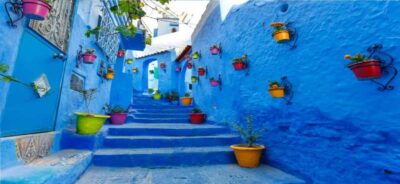
Chefchaouen Day Trip from Fez (Shared Group Tour)
Read our review →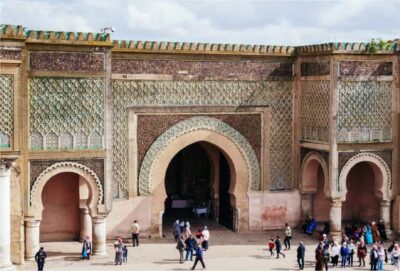
Volubilis Roman Ruins, Mouly Idriss, & Meknes Day Trip
Read our review →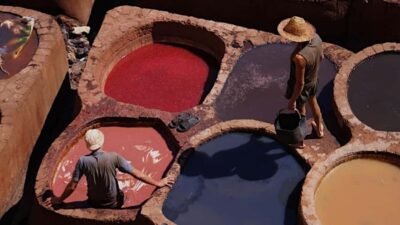
Blue City magic: Affordable Day Trip from Fez to Chefchaouen
Read our review →
Sahara Desert 2-Day Tour with Merzouga Camp Stay
Read our review →
Museum, Al Attarine Madrasa & Tannery and Medina Tour
Read our review →