
Reviewed · MARRAKECH PALACES & GARDENS
Marrakech: Bahia Palace, Saadian Tombs & Medina Walking Tour
Marrakech reveals itself best on foot, and this three-hour walk puts you among the city’s finest tiles, carved cedar, royal gates, spice stalls, and narrow Medina lanes. I like the local guide format, especially when the guide is someone such as Abdul, who grew up in Marrakech and knows how to pace the walk through hot streets. I also like the route’s mix of grand monuments and ordinary daily life in the Kasbah and Mellah.
The main catch is practical: Bahia Palace and Saadian Tombs tickets cost extra, and Koutoubia Mosque is an exterior stop only. The route is also not suitable for people with mobility impairments, since much of the experience takes place on uneven streets and in crowded historic quarters.
Key points to know before booking
- Three hours on foot: The route covers Koutoubia, Bab Agnaou, the Saadian Tombs, Mellah, Bahia Palace, souks, Medina lanes, and Jemaa el-Fna.
- Guides shape the experience: English and French tours are available, with guides such as Abdel, Abdul, Momo, Ismael, and Mo leading recent departures.
- Monument tickets are separate: Bring cash to pay for entry to Bahia Palace and the Saadian Tombs.
- Private or shared options: A private group gives you more control over questions and pace, while a shared walk costs less.
- Heat planning matters: Morning shade breaks, water stops, and a steady pace are especially useful in the hot months.
- Skip the ticket line, not every queue: The arrangement can help you bypass the outside ticket line, but interior waiting may still occur at busy times.
Why this walking route works in Marrakech
Marrakech’s old city is not a place you understand by ticking off isolated monuments. The real pleasure comes from seeing how the grand and ordinary sit side by side. A carved royal gate may be a few minutes from a lane where someone is repairing a bicycle, selling bread, or working a piece of metal.
This tour gives you that contrast in a compact half-day. You begin with major landmarks, then move through the Kasbah, the former Jewish quarter, the souks, and the Medina. That progression helps you understand Marrakech as a living city rather than an open-air museum.
The guide matters a great deal here. In a maze of lanes, a local guide can explain what you are seeing and keep the group moving without wasting time on wrong turns. Recent guides have included Abdel, Abdul, Momo, Ismael, and Mo. Their approach can vary, but the strongest reports point to clear explanations, friendly manners, and a pace that includes shade and short breaks.
You should still expect a proper walking tour, not a gentle sightseeing ride. Wear shoes with good support, carry water, and bring a sun hat. Cash is useful for monument admission and cold water.
Other medina and souk tours in Marrakech people book:
- Marrakech: Bahia Palace, Saadian Tombs, Souk and Medina Tour
★ 4.7 · 4,974 reviews - Marrakech: Ben Youssef, Secret Garden, & Souks Walking Tour
★ 4.6 · 2,802 reviews - Marrakech: Colorful Medina Souks Guided Walking Tour
★ 4.7 · 2,470 reviews
Koutoubia Mosque and the first city bearings
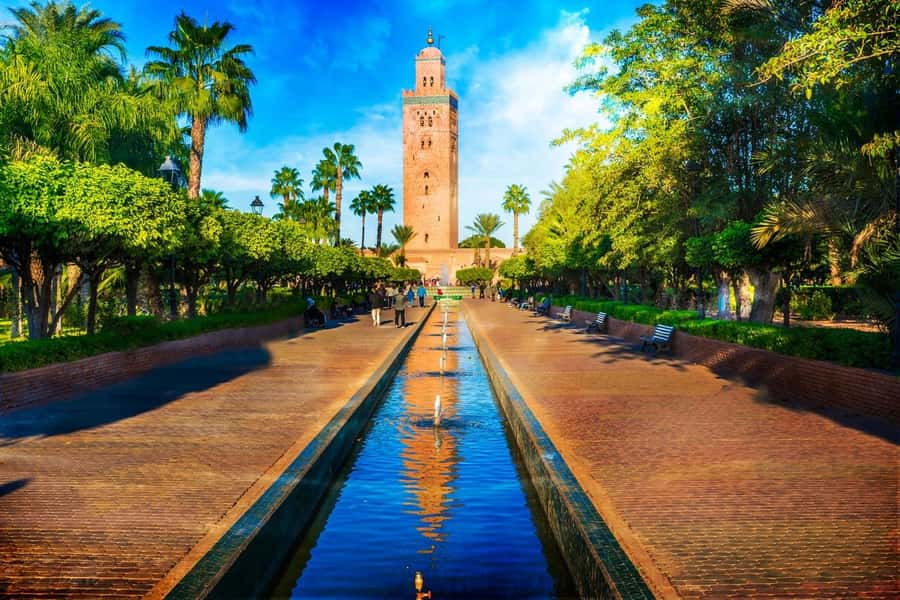
The tour begins around Koutoubia Mosque, Marrakech’s best-known landmark. You will view it from outside, since entry is restricted to Muslims during prayer times. That limitation is worth knowing before you book, especially if you expect an interior visit.
Even from outside, Koutoubia gives you a useful introduction to Marrakech. Its tall minaret has guided the city skyline for centuries, and the Almohad design sets a visual standard you will see echoed in other parts of the old city. Your guide can explain the mosque’s place in Marrakech without asking you to spend time waiting at a door you cannot enter.
This first stop also helps you get oriented. The Medina can feel confusing at first, with busy routes leading into quieter alleys. Starting beside a clear landmark makes the transition into the older quarters easier.
A small point of disappointment is possible here. One French-language participant wished the walk had included a circuit around the mosque enclosure. The published route focuses on an exterior visit, so you should think of Koutoubia as a brief orientation stop rather than a full monument visit.
Kasbah streets and Bab Agnaou
From Koutoubia, you continue toward the Kasbah, once a fortified royal quarter. This part of the walk is less about a single grand interior and more about seeing how the old neighborhood functions.
The streets are narrow, and the rhythm changes as you leave the broad area near Koutoubia. Your guide may point out everyday details that are easy to miss when you walk alone. The value here comes from context: the Kasbah was shaped by royal power, but today it is also a neighborhood where people live, work, and move through their day.
Bab Agnaou provides the architectural highlight. This 12th-century gate is known for its detailed stone carving and royal symbolism. It is a good place to pause because the decoration rewards a closer look. Rather than treating it as a quick photo stop, take a moment to inspect the patterns and the way the gate frames the street beyond.
The Kasbah section also gives you a sense of the route’s physical demands. You are walking through old streets rather than along a smooth museum path. If you have limited mobility, the tour’s own restrictions are important to take seriously.
The Saadian Tombs and their fine decoration
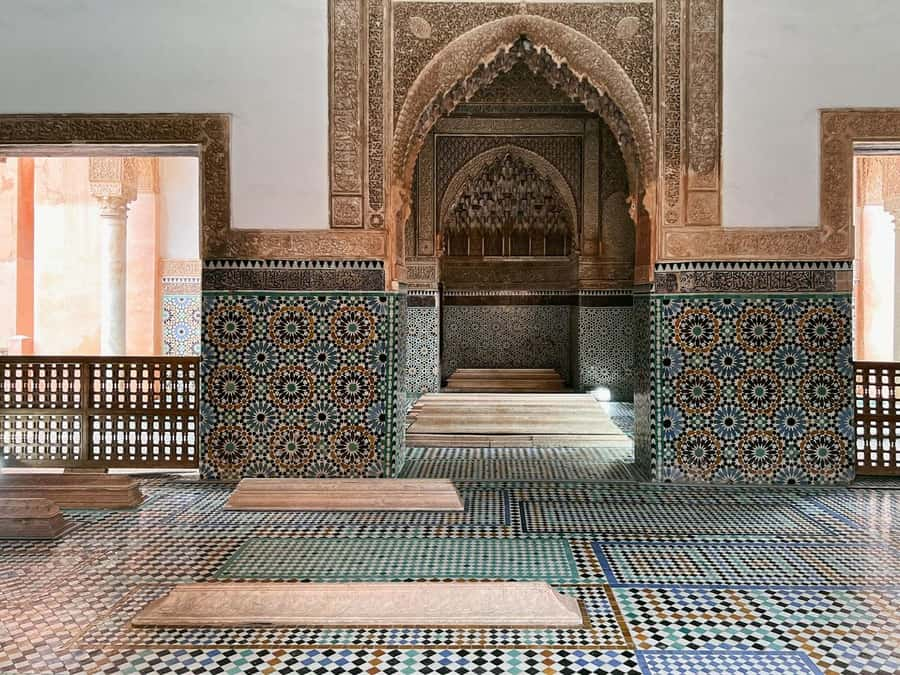
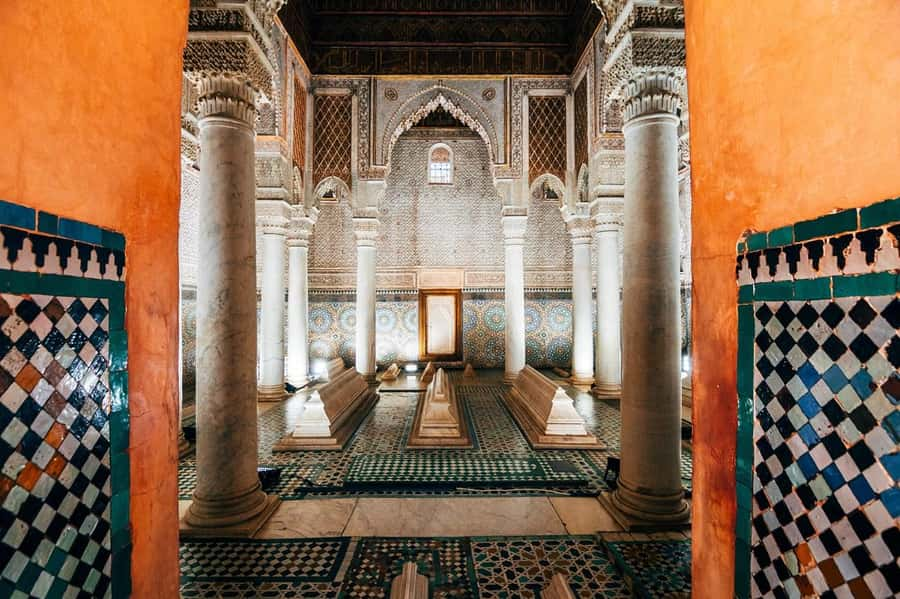
The Saadian Tombs are one of the tour’s essential interior visits. This burial complex was hidden for centuries and rediscovered in 1917. Its survival gives you a rare look at the workmanship associated with the Saadian dynasty.
Inside, look for zellij tilework, marble columns, and decorated ceilings. The details are close together, so a guide can help you understand where to focus. You may notice how the small spaces create a sense of ceremony through pattern and proportion rather than sheer size.
This is not a huge complex, and the visit can become crowded. The tour includes skip-the-line access, but that does not guarantee a clear path inside. Interior queues may still form during peak periods. Your guide accompanies you through the monument, then gives you time for photographs and closer viewing.
Entry is not included in the $16 tour price. You must pay the monument charge in cash on-site. That keeps the advertised price low, but it means the total cost will be higher than the headline figure. Bring enough cash so you are not forced to search for an exchange point during the walk.
Other palaces and gardens to see in Marrakech:
- Marrakesh: Majorelle Garden Entry Tickets
★ 4.5 · 9,651 reviews - Marrakech: Majorelle Garden, YSL, and Berber Museum Entry
★ 4.6 · 5,168 reviews - Marrakech: Bahia Palace, Saadian Tombs, & Koutoubia Mosque
★ 4.5 · 2,529 reviews - Marrakech: Saadian Tombs & Bahia Palace, Medina Guided Tour
★ 4.6 · 1,989 reviews
The Mellah and Marrakech’s multicultural past
Next, the route enters the Mellah, Marrakech’s former Jewish quarter. This is one of the more valuable stops because it broadens the story beyond palaces, sultans, and religious monuments.
The layout and architecture offer clues about the communities that helped shape the city. Your guide can explain the quarter’s role and help you notice features that might otherwise pass without comment. You will not simply be looking at decorated walls. You will be seeing how a historic neighborhood was organized and how different parts of Marrakech developed distinct identities.
The Mellah is also a useful pause between the tombs and Bahia Palace. After the formal atmosphere of the burial complex, the streets bring you back into ordinary city life. Keep your pace flexible and your belongings secure in the crowded sections, as you would in any busy market area.
One point to clarify before booking: the planned route has sometimes varied. A recent participant felt that a religious school listed among the expected stops was not included. The main route still covers major sites, but if one specific monument matters most to you, ask the guide at the beginning whether it will be visited.
Bahia Palace, cedar ceilings, and tiled courtyards
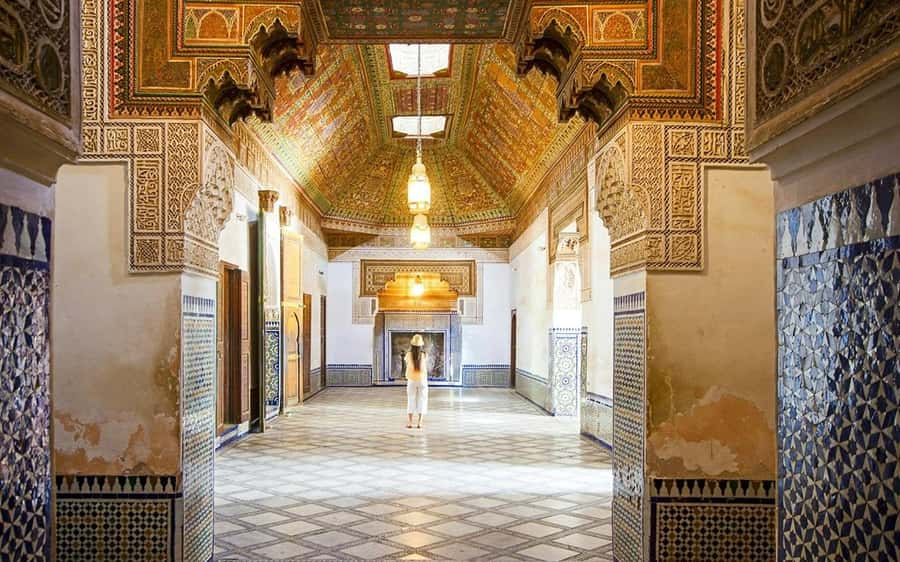
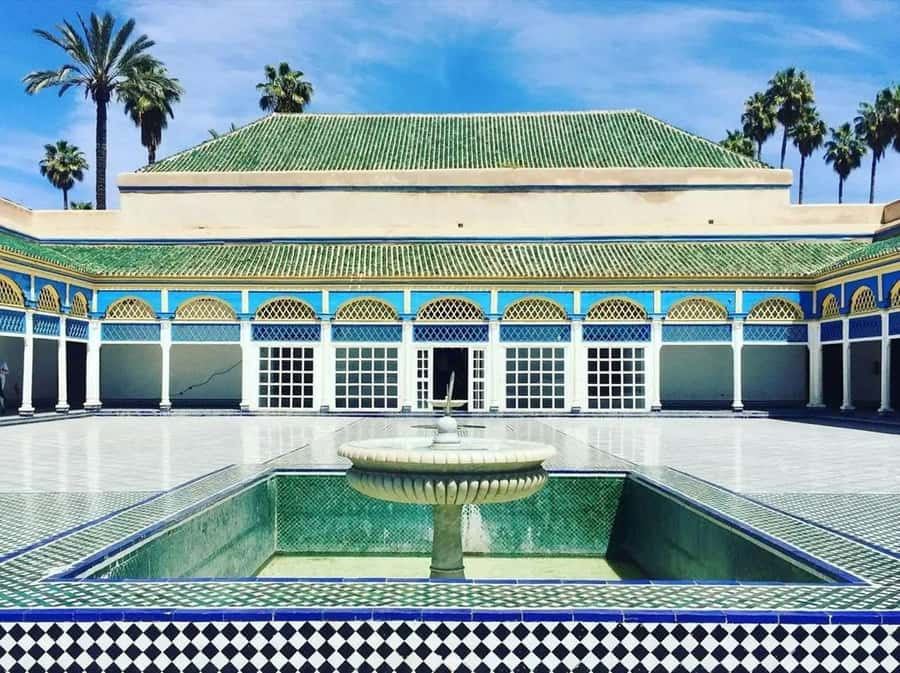
Bahia Palace is the grand interior centerpiece of the walk. Built in the 19th century, it was designed to display fine decorative arts and the power of its owner.
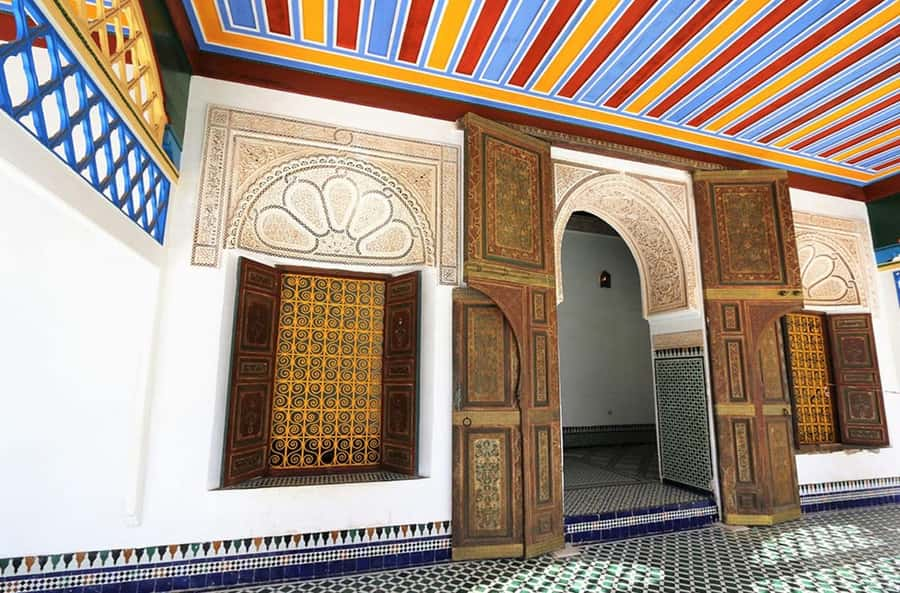
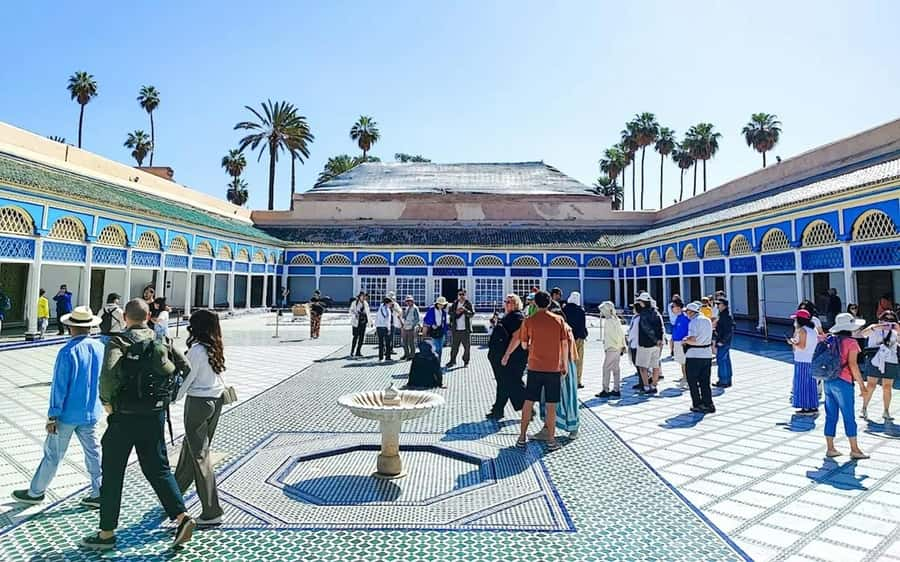
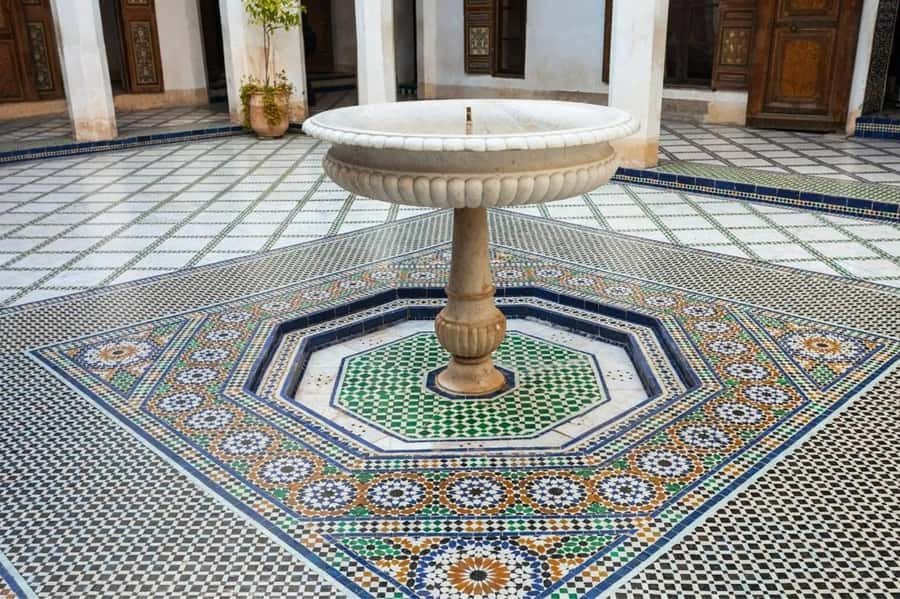
The palace is organized around courtyards and rooms rather than one giant hall. You will see colorful tilework, carved cedar ceilings, and intricate decorative surfaces. The calm courtyards make a sharp contrast with the noise of the streets outside, and the change of mood is part of the appeal.
Your guide accompanies you inside and explains the palace before allowing time for photographs and personal looking. That balance suits this kind of site. Without guidance, it is easy to photograph a doorway and move on. With a little context, you can pay attention to the craftsmanship and the way the building was arranged for privacy, ceremony, and display.
Bahia Palace can be crowded, especially at popular times. Skip-the-line access helps with the outside ticket process, but you may still encounter lines within the complex. Some areas can also be closed for renovation, so do not expect every room to be open on every visit.
The ticket is separate from the tour price and must be paid in cash. This is the stop where the $16 fee begins to make sense: the tour gives you a guide, route planning, and monument access arrangements, while you pay the site charges directly.
Souks, workshops, and the working Medina
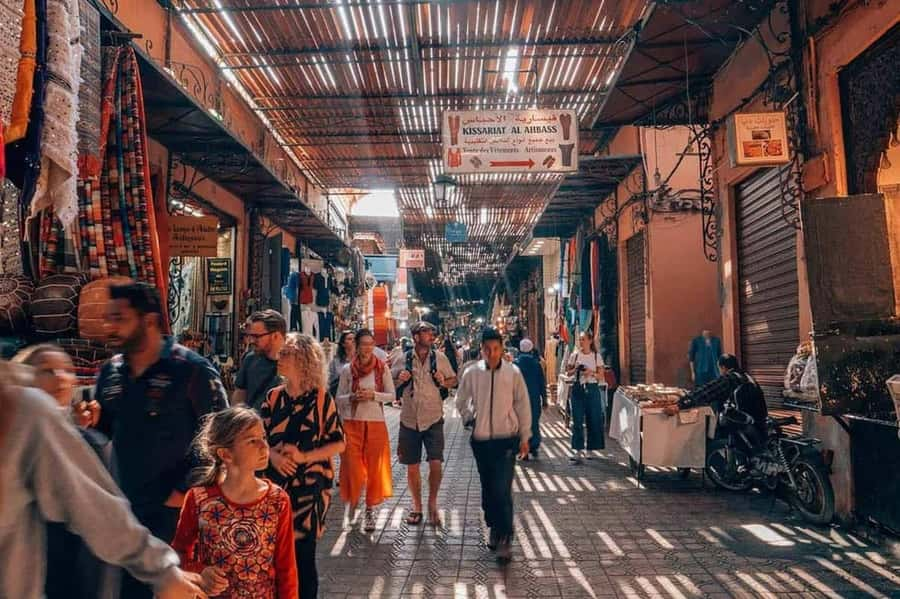
After Bahia Palace, the route heads into the souks. This is where the tour becomes less about formal history and more about Marrakech as a center of trade and craft.
You will pass stalls carrying spices, textiles, lanterns, and leather goods. Artisan workshops may show pottery, metalwork, and woodcraft made with traditional methods. The guide can explain what you are looking at and help you distinguish a working craft area from a shop aimed mainly at visitors.
The souks are colorful and lively, but they can also be crowded and tiring. You may need to step aside for people moving goods through the lanes. Keep your group in sight, listen for directions, and avoid assuming that every turn is obvious. This is a place where a local guide earns their keep.
If you are interested in shopping, the tour gives you useful orientation, but it is not mainly a shopping trip. You should not expect a long bargaining session at every stall. The focus is on seeing the market and learning how the old commercial quarter fits into the city.
Jemaa el-Fna and the end of the walk
The experience concludes around Jemaa el-Fna, Marrakech’s famous central square. It is a fitting ending because the square gathers many of the city’s themes in one place: commerce, food, performance, conversation, and movement.
The exact timing will affect what you see. The square changes during the day, and the walk may finish with the area in a quieter or more active mood. The tour information does not promise a meal or a special performance, so treat Jemaa el-Fna as the final setting and orientation point rather than an included entertainment program.
This is a useful place to continue on your own if you still have energy. You can return later, explore nearby lanes, or use the square as a reference point for the rest of your stay. Your guide may also offer practical suggestions for future visits. Ismael, for example, was specifically appreciated for giving additional city advice beyond the scheduled route.
Timing, heat, and group size
Three hours is enough to cover the main route, but it is not enough for long, unhurried time at every stop. You will get explanations at each monument, guided movement through the quarters, and some free time for photographs. If you want a full morning at Bahia Palace alone, this is not the right format.
A morning departure can be a sensible choice in hot weather. One late-June group walked in temperatures above 100 degrees Fahrenheit, yet the guide made the conditions more manageable with shade spots, pauses, and chances to buy cold water. That does not make summer cool, but it shows why a well-planned pace matters.
Water is included, though you should still carry your own bottle. Food and other drinks are not included. Bring a hat, comfortable shoes, and cash. There is no reason to dress for a formal palace visit, but modest clothing is a sensible choice for a tour that passes religious and historic sites.
The shared option gives you a lower-cost way to join the route. A private group is better if you want more control over pace, questions, or photo stops. The guide language is English or French, and the meeting point can change according to the option you book, so check the exact instructions before setting out.
Is $16 good value?
At $16 per person, the tour is priced as an affordable introduction to central Marrakech. The value comes from the guide and route, not from included admission. Since Bahia Palace and the Saadian Tombs charge separate entrance fees, compare the final cost rather than looking only at the advertised price.
For a first visit, I think the price is fair if you want historical context and help with navigation. You are covering several major areas in three hours, and a local guide can connect the monuments with the neighborhoods between them. Going alone costs less in guiding fees, but you lose the explanations and the structure.
The private option will naturally cost more than the shared experience, though the exact amount depends on the booking choice. If you are a small group with strong interests, the extra flexibility may be worthwhile. If you mainly want an efficient introduction, shared is likely enough.
Cancellation is flexible up to 24 hours before the start for a full refund, and you can reserve without paying immediately. Those terms are useful if your Marrakech schedule may change.
Who should book this Marrakech walk?
I would choose this tour if you want to see several central sights in one organized route and prefer a local person to explain what you are seeing. It suits first-time visitors, couples, families with good walking stamina, and anyone who wants an introduction before exploring the Medina alone.
It is also a good fit if the souks make you nervous. The guide gives you a route through the lanes and helps you understand the difference between a market stop, an artisan workshop, and a historic neighborhood.
I would skip it if you dislike crowds, cannot walk comfortably for three hours, or want extensive time inside each monument. The tour moves at a sensible pace, but it still covers a lot. I would also look elsewhere if entering Koutoubia Mosque is important to you, since this experience includes an exterior visit only.
FAQ
How long does the Marrakech walking tour last?
The tour lasts three hours. Starting times depend on availability when you book.
Which languages are available?
The live guide service is available in English and French.
Are Bahia Palace and Saadian Tombs tickets included?
No. Entrance tickets to Bahia Palace and the Saadian Tombs are paid separately in cash on-site.
Can I visit inside Koutoubia Mosque?
No. This tour includes an exterior visit to Koutoubia Mosque. Entry is reserved for Muslims during prayer times.
Is a private group available?
Yes. You can choose a private group option, subject to availability. Shared group tours are also offered.
What should I bring?
Bring comfortable shoes, a sun hat, water, and cash. Food and drinks are not included, although water is included with the activity.
Should you book it?
Book this walk if you want a compact, well-organized introduction to Marrakech’s old city, with major monuments balanced by souks, workshops, and neighborhood streets. The strongest reason to choose it is the guide: people such as Abdul, Abdel, Momo, Ismael, and Mo have brought local knowledge, good pacing, and practical help with shade and breaks.
Just budget separately for monument tickets, expect crowds, and remember that three hours gives you a broad look rather than a slow, detailed study of every site. For most first visits, that is a useful trade. You get the essential landmarks, a feel for the Medina, and enough orientation to continue exploring on your own.
More walking tours elsewhere in Morocco
- Marrakech: Medina by Night Walking Tour with Moroccan Tea
★ 4.6 · 586 reviews - Marrakech: Medina Souks Guided Walking Tour
★ 4.5 · 381 reviews - Medina of Marrakech Walking Tour
★ 4.0 · 300 reviews - Marrakech: Authentic Moroccan Food Walking Tour & Dinner
★ 4.8 · 261 reviews
More medina and souk tours elsewhere in Morocco
- Marrakech Monuments & Souks 3-Hour Tour
★ 3.8 · 1,540 reviews - Marrakech: Bahia Palace, Madrasa Ben Youssef and Medina Tour
★ 4.7 · 1,347 reviews - Marrakech: Madrassa Ben Youssef, Secret Garden & Medina Tour
★ 4.8 · 1,303 reviews - Marrakech: Palace, Museum, Madrasa & Medina Highlights Tour
★ 4.7 · 706 reviews
Just added in Marrakech
- Quad Ride In The Agafay Desert★ 5.0 · 39 reviews
- Quad Biking Agafay desert★ 5.0 · 20 reviews
- Marrakech: Tailor-Made City Tour With Your Own Private Guide★ 4.9 · 236 reviews
- Surf Training and Lunch on Essaouira Day Trip from Marrakech★ 4.9 · 51 reviews
- Essaouira: Surf Trip from Marrakech★ 4.9 · 31 reviews
- Marrakech palm grove: Sunset camel ride★ 4.8 · 194 reviews
- Marrakech: Sunrise Desert Tour with Camel Ride and Breakfast★ 4.4 · 36 reviews
- Marrakech : Agafay Desert Sunset Camel Ride & Luxury Dinner★ 4.3 · 39 reviews
Marrakech Palaces & Gardens, compared.
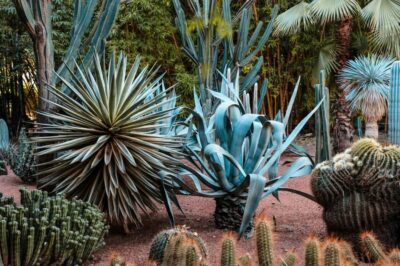
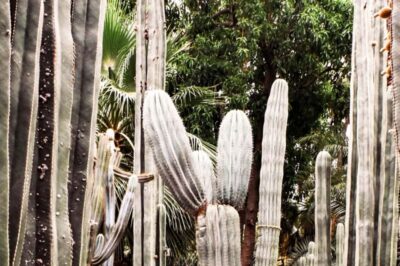
Majorelle Garden, YSL, and Berber Museum Entry
Read our review →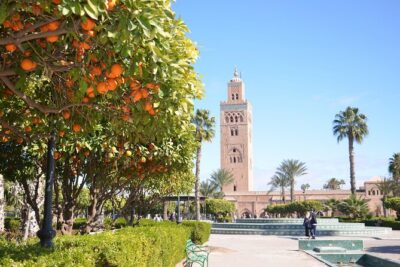
Bahia Palace, Saadian Tombs, Souk and Medina Tour
Read our review →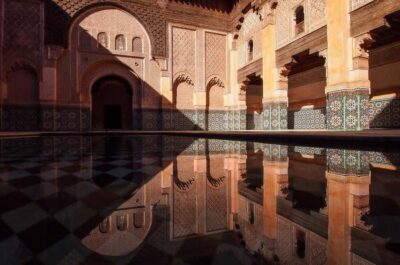
Ben Youssef, Secret Garden, & Souks Walking Tour
Read our review →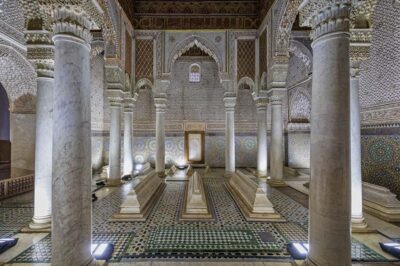
Bahia Palace, Saadian Tombs, & Koutoubia Mosque
Read our review →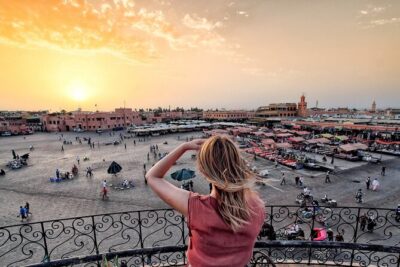
Bahia Palace, Madrasa Ben Youssef and Medina Tour
Read our review →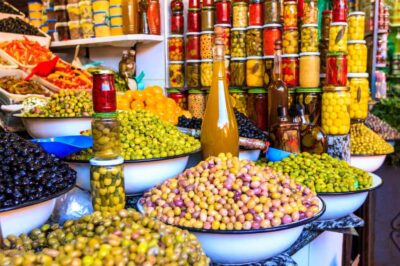
Madrassa Ben Youssef, Secret Garden & Medina Tour
Read our review →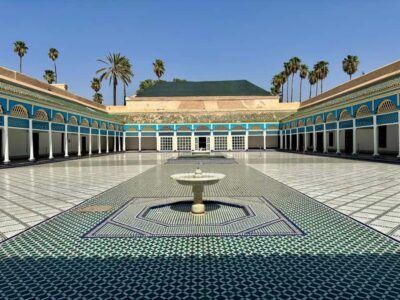
Bahia Palace Guided Tour with Skip-the-Line Entry
Read our review →Browse the lists this tour appears in