
Reviewed · HISTORICAL TOURS
Discovery of Moroccan Culinary Heritage, History and Secrets
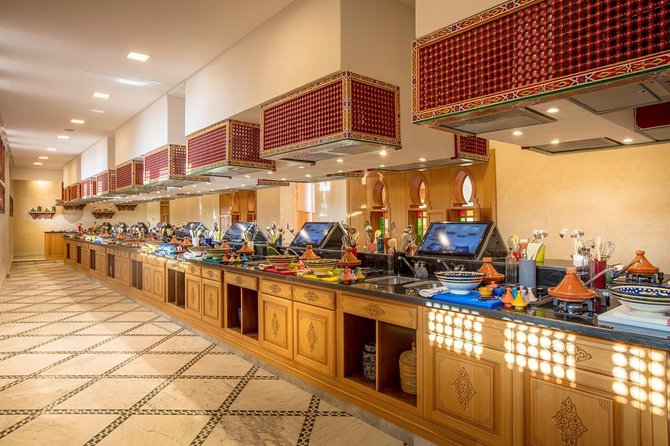
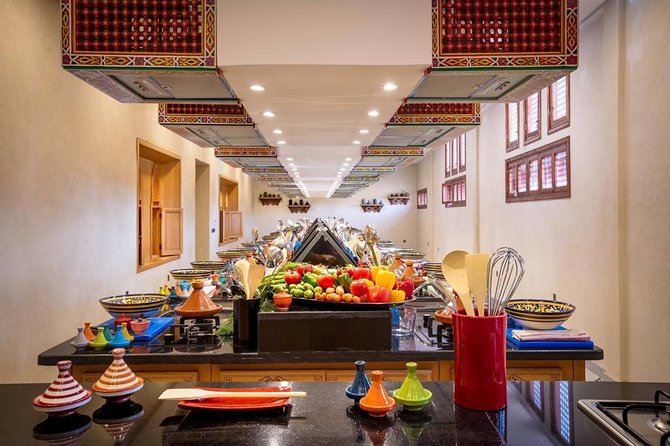
The best part of this experience is the setting: a restored Marrakech riad filled with cooking displays, a professional teaching kitchen, a Moroccan living room and a terrace. You learn by doing, from shaping bread to seasoning tagine, then sit down to eat the results. I especially like the 34 individual kitchen stations and the visit to the local bread oven and herbalist, which connect the lesson to daily Moroccan life.
I also like that the class includes more than recipes. A traditional Dada cook explains how Moroccan cooks balance spices, while the museum adds context about dishes, utensils and serving customs. The main caution is language: the experience is advertised with French or English interpretation, but one booking was conducted in French despite being reserved in English, so confirm this detail before paying.
Key points to know before booking
- A hands-on class in a restored riad: You cook rather than simply watch, with a dedicated station for each participant.
- Bread, spices and local food traditions: The program includes a bread-making demonstration, a bread-oven visit and an herbalist stop.
- A traditional Dada leads the cooking: Expect instruction on Moroccan seasoning, baking methods and cooking techniques.
- The meal is part of the lesson: You eat the dishes you prepare, with bottled water and tea or coffee listed as included.
- Moroccan wine is optional: Alcohol is not included, so ask about the wine discovery before the meal.
- A maximum of 34 people: The kitchen is built for a sizable class, though the format gives each person a work area.
Entering the Moroccan Culinary Arts Museum
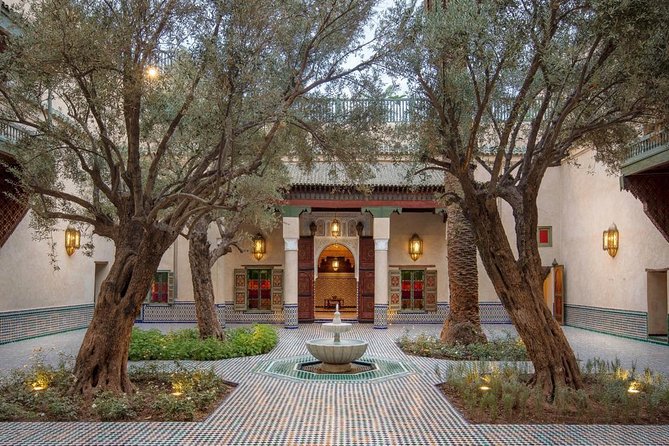
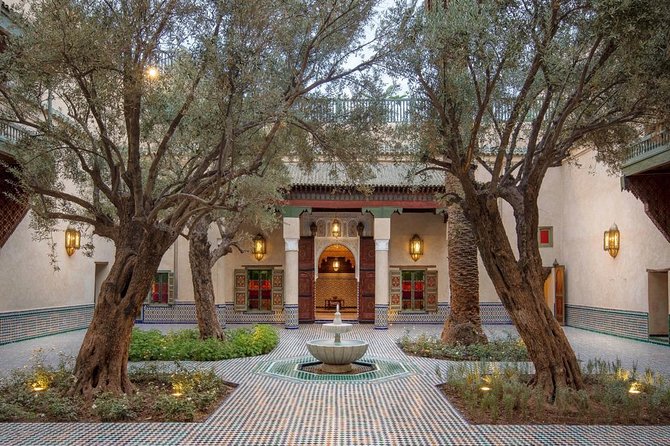
Your meeting point is the Moroccan Culinary Arts Museum on Rue Riad Zitoun el Jdid, close to the Bahia Palace area of Marrakech. The building is one of the main reasons to choose this activity. It occupies a beautifully restored riad, with courtyards, traditional rooms and a terrace that gives the cooking lesson a sense of place.
The museum itself explains Moroccan food through displays, photographs, videos and cooking stations. You may see information on regional ingredients, kitchen methods, table settings and the customs behind Moroccan meals. The museum is not the same as a large national institution with endless galleries. It is compact enough to visit without wearing yourself out, and its strongest feature is the building.
Some people find the displays less impressive than the architecture. I would treat the museum as an introduction rather than a full-day cultural attraction. If you have little time in Marrakech, the cooking class gives the exhibits a clear purpose. If you visit only the museum, you can still learn about Moroccan cuisine, but the hands-on course is the part that makes the subject stick.
The setting also provides a quieter alternative to the busiest sights near the Bahia Palace. The nearby palace can draw heavy crowds, while the culinary museum has a calmer courtyard atmosphere. That does not mean the class is private, since the maximum group size is 34, but the restored riad gives the activity a more personal feel than a standard restaurant lesson.
A few more things to do in Morocco worth a look
- Marrakech Historical and Cultural Tour – Half Day City Tour
★ 4.5 · 1,180 reviews - Fez: Guided Walking Tour of the Historic Medina
★ 5.0 · 359 reviews - Full-day Historical Meknes Volubilis and Moulay Idriss Tour
★ 4.5 · 196 reviews
Meeting the Dada and getting started
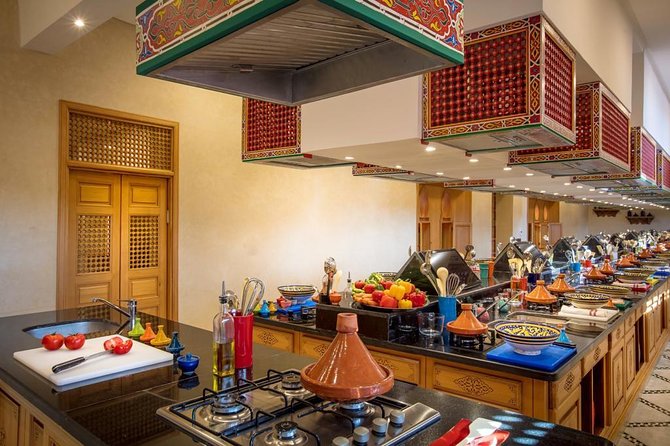
The class begins with a welcome and an introduction in French or English. A Dada, the traditional Moroccan cook who leads the lesson, explains the dishes and demonstrates the methods. The interpreter or support staff helps make the instructions clear, especially when the class includes several nationalities.
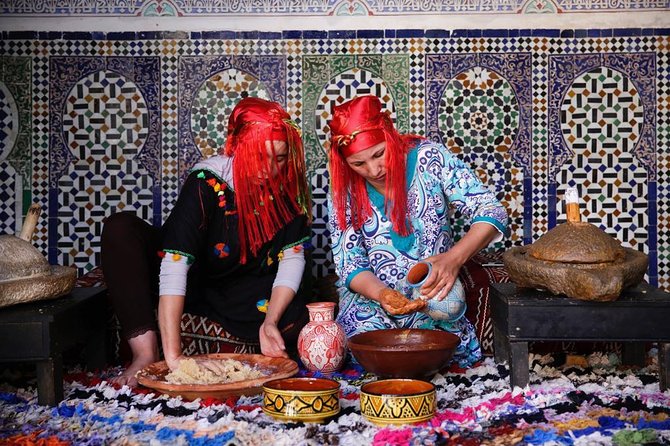
The word Dada refers to a traditional female cook in Moroccan households. Her role here is important because the lesson is not only about measurements. Moroccan cooking often relies on judgment: how much cumin feels right, when onions have softened enough, how spices should be combined and how a dish changes as it cooks.
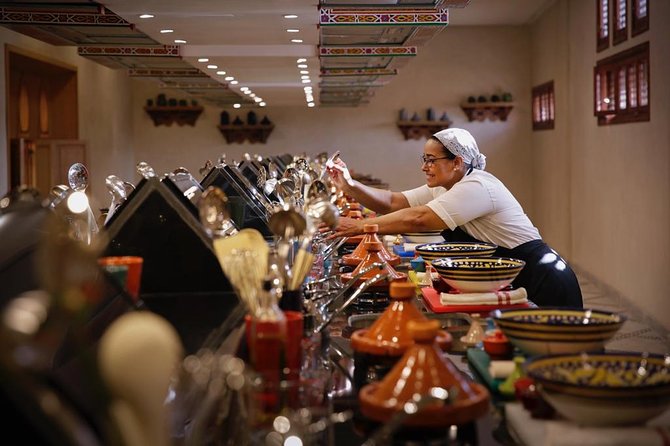
You should expect practical instruction rather than a formal chef demonstration designed only for watching. The class is set up with 34 kitchen stations, so you can take part in the preparation. That arrangement is particularly useful if you are new to Moroccan food. You can see the process close up and repeat it at your own station.
The number of stations also explains the possible tradeoff. A class that can handle up to 34 people may feel lively and social, but it will not have the quiet pace of a private lesson. Staff support is available, and the kitchen has been designed for teaching, yet you should choose this knowing it is a group activity.
Bread, the neighborhood oven and the herbalist
Bread is given its own place in the program. You first see how Moroccan bread is made, then visit the bread oven and an herbalist in the district. This is one of the more useful parts of the experience because it takes you beyond the museum walls.
Bread is central to Moroccan meals, and the visit helps explain where the daily loaf fits into local life. You are not just learning a recipe in a kitchen. You are seeing the sort of neighborhood food network that supports ordinary meals, from bread baking to the herbs and spices used in cooking.
The herbalist visit is also a good chance to connect names with aromas. Moroccan cuisine is known for its use of herbs and spices from different regions, but a written list can feel abstract. Seeing where those ingredients come from, and hearing how they are used, gives the lesson a more useful practical edge.
The itinerary does not provide an exact list of every herb or spice you will see, so do not arrive expecting a fixed market tour. The value is the connection between ingredient, preparation and finished dish. If you enjoy food culture more than simple sightseeing, this part should matter to you.
Cooking tagine, couscous and Moroccan salads
The main lesson covers Moroccan cooking methods, with tagine, couscous and other traditional dishes forming the core of the class. Some sessions have included two salads, a chicken tagine and dessert. The exact menu can vary, so check what is planned at the time of booking.
Tagine is not just the name of a dish. It also refers to the conical cooking vessel traditionally used to prepare it. The class helps separate tagine from tangia, another Moroccan dish that is often confused with it. That kind of distinction is useful because Moroccan menus can look familiar at first glance while hiding different cooking methods.
Couscous also benefits from a hands-on explanation. You learn how Moroccan cooks handle ingredients, season food and build several courses into a meal. Salads are not an afterthought here. Moroccan meals often include several cooked or seasoned vegetable dishes, and preparing them shows how much flavor can come from careful spice balance rather than heavy sauces.
I like this format because you leave with techniques you can repeat. You may not reproduce the full meal perfectly at home, since ingredients and cooking equipment vary, but you will have a better feel for spice quantities and the order in which things are prepared.
The class is also suitable for mixed ability levels. One account describes a participant who considered herself a poor cook but still enjoyed making chicken tagine and Moroccan dishes with help from the teacher and assistants. That is a useful sign for beginners. You do not need to arrive as an experienced home cook, though you should be ready to take part rather than simply observe.
Same base, a different sort of day:
- Marrakech: Agafay Desert Sunset, Camel Ride, and Dinner Show
★ 4.6 · 35,119 reviews - From Marrakech: Ouzoud Waterfalls Guided Hike and Boat Trip
★ 4.7 · 33,630 reviews - Marrakech: Agafay Desert Quad & Camel Rides with Dinner Show
★ 4.8 · 27,382 reviews - Marrakech: Agafay Desert Quad Biking Tour with Dinner-Show
★ 4.8 · 16,569 reviews
Tea, lunch and the Moroccan wine option
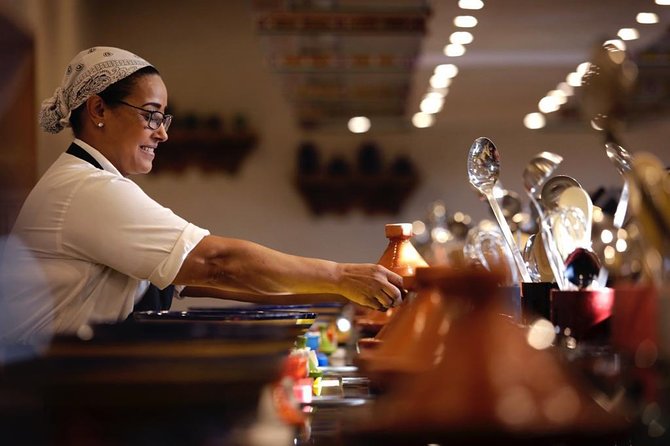
After cooking, you eat the dishes prepared during the lesson. Lunch is listed as included, along with bottled water and coffee or tea. The meal is not an extra restaurant course added at the end. It is the payoff for the work you have just done, and it lets you taste how the ingredients and seasoning came together.
The Moroccan tea ceremony is another planned part of the experience. Tea is closely tied to hospitality, and the ceremony gives the class a cultural finish rather than ending with a quick plate of food. It also gives you a chance to sit in the Moroccan living room or on the terrace and slow down after the kitchen work.
Moroccan wines are offered as an optional discovery, but alcoholic beverages are not included in the listed price. If you want wine with the meal, ask about the cost and availability before the class begins. Do not assume that the price includes it.
There has also been an issue with basic inclusions not always matching expectations. Bottled water and tea or coffee are listed as included, but one booking reported paying separately for water and not being offered tea or coffee. I would politely confirm the meal, water and tea arrangements at reception. That simple check can prevent an awkward surprise.
How much time and money should you allow?
The experience is listed at $69.79 per person and takes about two hours. The description also uses the phrase half-day, which does not match the shorter duration, so treat two hours as the practical estimate unless the provider gives you a different schedule.
For the price, you are paying for several parts in one visit: museum access, interpretation, a hands-on cooking lesson, ingredients, lunch, the bread and herbalist visits, tea and use of the teaching kitchen. That makes it more than a basic museum ticket or a quick food tasting.
Older admission information associated with the museum listed separate entry at 40 dirhams and a tasting option at 120 dirhams in January 2020. Those figures are historical and should not be used as the current price. They do show why the cooking activity is a different purchase from simple museum entry.
I think the value is strongest if you want practical cooking instruction and a meal. If your only aim is to see Moroccan architecture, the museum admission may be enough. If you want a private chef, a small group or extensive time in the market, this is less suitable because the class can reach 34 participants and the listed duration is short.
Language, group size and family suitability
French and English interpretation is available, and the class can include participants from several countries. Still, language deserves attention. Since one English booking was handled in French, ask the provider to confirm the teaching language and interpreter before your visit.
The museum and class can work well for families. A 12-year-old took part in one cooking session with a grandparent, and the hands-on format gives younger participants something concrete to do. Children who enjoy food preparation should get more from this than from a display-only museum visit.
The activity is also near public transportation, and service animals are allowed. No special mobility details are provided, so if you need step-free access or have other access concerns, contact the museum before booking rather than guessing from the riad setting.
The group maximum of 34 is worth keeping in mind. The dedicated stations help, but the atmosphere will depend on how full the class is. Solo visitors and couples can expect to share the room with other participants, while families may appreciate the social setup.
Booking advice and cancellation terms
You receive confirmation when booking unless you reserve within one day of departure. Last-minute confirmation is subject to availability, so booking early is the sensible choice, especially because the cooking classes can fill while museum admission remains available.
Free cancellation applies when you cancel at least 24 hours before the start time. Cancellations made within 24 hours are not refunded, and changes inside that period are not accepted. The cut-off follows Marrakech local time.
Bring an appetite and allow enough time to find the museum on Rue Riad Zitoun el Jdid. The activity begins and ends at the same meeting point, so you do not need to arrange a separate return transfer.
Should you book this Marrakech cooking class?
Book it if you want to understand Moroccan food through your hands, not just your camera. The restored riad, Dada-led instruction, bread-oven visit, herbalist stop and shared meal give you a useful look at how Moroccan cooking works from ingredient to table.
I would especially recommend it to first-time visitors, food-focused families, couples and beginners who want a structured introduction to tagine, couscous, salads and Moroccan tea. Confirm the language, included drinks and exact menu before paying, and remember that the class may be busy.
Skip it if you want a quiet private lesson, a long market tour or a purely architectural visit. For everyone else, the $69.79 price is reasonable when you use the cooking lesson, meal and cultural visits together. The museum may be the doorway, but the real value is learning how Moroccan food is made and then eating your own work on the terrace.
FAQ
Where does the Moroccan cooking experience begin?
It begins at the Moroccan Culinary Arts Museum on Rue Riad Zitoun el Jdid, Marrakesh 40000, Morocco.
Where does the activity end?
The activity ends back at the Moroccan Culinary Arts Museum, the same place where it begins.
How long does the experience last?
The listed duration is approximately two hours, although the description also refers to it as a half-day activity. Confirm the schedule if timing matters to you.
What dishes will I learn to prepare?
The class covers Moroccan bread, tagine, couscous, salads and other traditional dishes. Some sessions include two salads, chicken tagine and dessert, but the exact menu is not fixed in the supplied information.
Is the class offered in English?
French or English interpretation is advertised. Because one English booking was conducted in French, confirm your preferred language before attending.
Is food included?
Yes. Lunch, bottled water and coffee or tea are listed as included. Alcoholic drinks are not included.
Can I taste Moroccan wine?
Moroccan wine is available as an optional discovery according to the activity description, but alcoholic beverages are excluded from the listed price.
What is the cancellation policy?
You can receive a full refund if you cancel at least 24 hours before the start time. Cancellations or changes made less than 24 hours before the activity are not accepted and are not refunded.
Just added in Morocco
- Fes to Chefchaouen Day Trip★ 5.0 · 20 reviews
- FES TO Chefchaouen Day Trip- luxury Private Tour★ 5.0 · 49 reviews
- Fes to Volubilis, Moulay Idriss and Meknes Private Day Trip★ 5.0 · 92 reviews
- walking day : private excursion in the ancient city of Fez★ 5.0 · 27 reviews
- Fes to Middle Atlas Private Day Trip★ 5.0 · 48 reviews
- Private Guided Tour in Fez Medina★ 5.0 · 94 reviews
- Volubilis and Meknes day trip from Fez★ 4.5 · 17 reviews
- Tour guide in the old city of Fez★ 4.0 · 18 reviews
Historical Tours, compared.
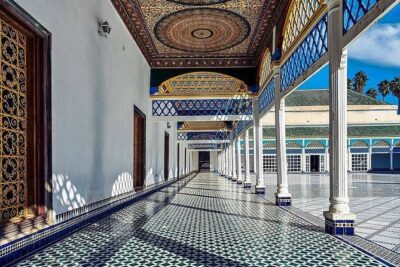
Marrakech Historical and Cultural Tour – Half Day City Tour
Read our review →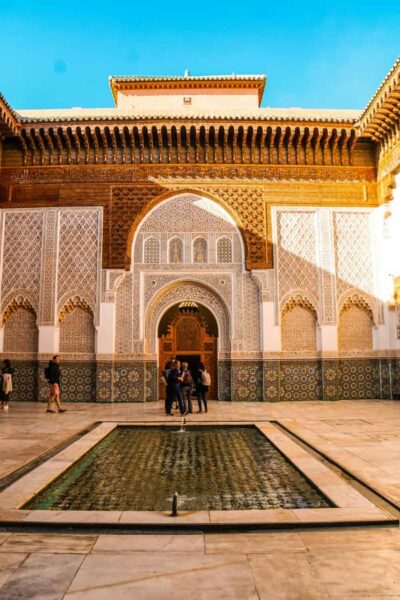
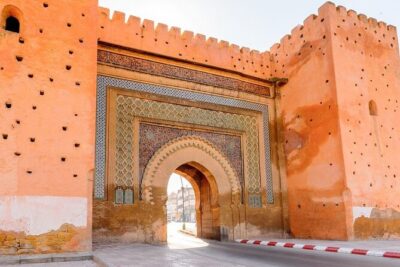
Full-day Historical Meknes Volubilis and Moulay Idriss Tour
Read our review →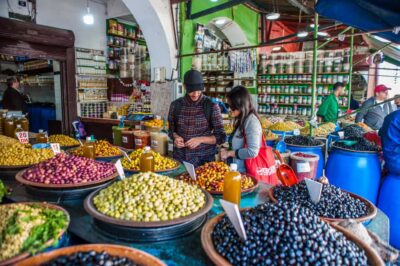
Casablanca Cultural Tour: Medina, Views & Local Delights
Read our review →
Casablanca to Fez: Scenic & Historical Day Trip with Lunch
Read our review →
Discover the secrets of the Medina of Fez: guided cultural tour (private)
Read our review →
History and culture with Fes Medina private tour guide
Read our review →Browse the lists this tour appears in