
Reviewed · CITY TOURS
Marrakech Historical and Cultural Tour – Half Day City Tour
Marrakech reveals itself best on foot, and this tour puts you inside the medina’s narrow lanes, palace courtyards, royal quarter, and working souks in one compact outing. You’ll see Bahia Palace, the Saadian Tombs, Koutoubia Mosque, and Jemaa el-Fna, with a guide helping you find the right turns.
I like the mix of grand monuments and ordinary city life, especially the workshops of tinsmiths, dyers, and herbalists that are easy to miss alone. I also like the guide-led pace and the chance to hear useful cultural details from guides such as Abdul, Ali, Hassan, and Jaouad. The main catch is that entrance fees are extra, and crowds at the tombs can force the group to change plans.
Key points to know before you book
- Three hours on foot: The route covers major sights in the medina and Kasbah, with no hotel pickup or drop-off.
- Several paid sights: Bahia Palace and the Saadian Tombs require separate admission, with most monument fees reported at about $10 each.
- A guide makes the souks easier: You can reach workshops and lanes that are less obvious if you are finding your own way.
- Crowds can change the route: A long wait at the Saadian Tombs may lead the group to vote on visiting the souks instead.
- Small group format: The maximum group size is 15 people, with private-tour upgrades available.
- Strong guide feedback: Abdul, Ali, Hassan, Mohamed, Jaouad, and others are praised for clear explanations, humor, group care, and local insight.
Why this half-day route works in Marrakech
At $30.94 per person, this is an inexpensive way to get oriented in Marrakech’s old city. The price covers a local professional guide, but not the monument tickets, drinks, or transportation. That distinction matters because two paid entrances can add a noticeable amount to the day.
I see the tour as an introduction rather than a complete visit to every landmark. You get the route, the setting, and the background. Afterward, you can return to the palace or tombs on your own if you want more time, or spend the rest of the day shopping and exploring.
The three-hour length is useful if you have only a short stay or want to leave room for lunch, a hammam, or independent wandering. It also means the pace can feel brisk. The listed stops alone include about 10 minutes at Jemaa el-Fna, an hour at Bahia Palace, an hour at the tombs, and 30 minutes at Koutoubia Mosque, before allowing for walking and the souks.
Choose the morning if you want cooler conditions and more time afterward. An afternoon departure leaves the earlier part of the day free, though Marrakech’s sun can make a walking route tiring. Departure times vary, so check the available option when booking.
Other ways to see Marrakech in a day:
- Marrakech: Private Guided Half-Day City Tour
★ 5.0 · 1,249 reviews - Marrakech City Tour: Private Custom-Made
★ 4.5 · 596 reviews - Highlights of Marrakech: Private Half-Day City Tour
★ 5.0 · 478 reviews
Starting at Jemaa el-Fna
The meeting point is Hôtel Restaurant Café de France on Rue des Banques, beside Jemaa el-Fna. This is a practical central location, but it is also crowded and busy with several tours gathering nearby. Allow extra time to identify the correct guide and keep your phone available for the meeting instructions.
The square itself receives about 10 minutes on the route. That is enough for an introduction, not a full visit. Your guide can point out the performers and explain how the square functions as a meeting place, with storytellers, musicians, acrobats, jugglers, and snake charmers forming part of its daily character.
I would not expect a quiet, carefully framed photo stop here. Jemaa el-Fna is noisy and constantly changing. The short visit works best as a starting point before you move into the older quarters, rather than as the main event.
The tour finishes back at the same meeting point. There is no hotel pickup or drop-off, so you need to make your own way to the café and arrange transport afterward.
Walking the souks and working quarters
The souks are one of the best reasons to take this tour with a guide. The lanes twist through the medina, and the most interesting workshops are not always on the obvious shopping paths. The route may lead you toward tinsmiths, dyers, herbalists, and other craftspeople working in traditional ways.
This part gives the tour its everyday character. Palaces show how rulers lived, but the souks show how the old city still works. You can ask what a product is used for, how a craft is made, or which details in the architecture matter.
The group size is capped at 15, which is manageable in theory but still requires attention in tight lanes. Motorcycles can pass quickly through the medina, and busy crossings call for care. Guides such as Hassan and Abdu have been praised for keeping groups together, watching children, and making sure nobody is lost in crowded areas.
Expect some shopping pressure to be possible in this setting. One guide has been criticized for ending with a sales-focused visit involving products such as argan goods, while another account treated the chance to see argan being processed by hand as an interesting extra. I would listen to the explanation, but feel free to decline any purchase.
Bahia Palace and its tiled courtyards
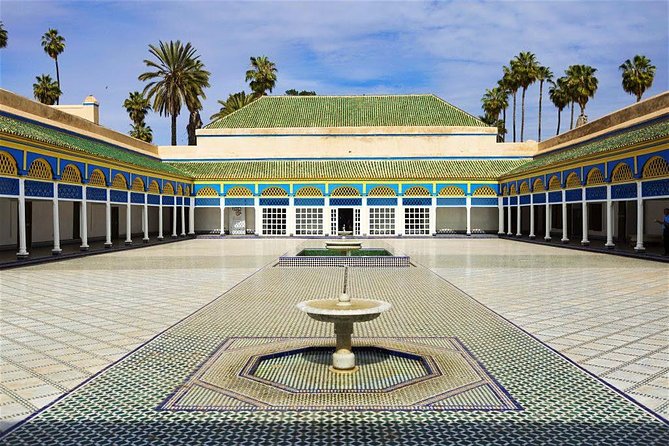
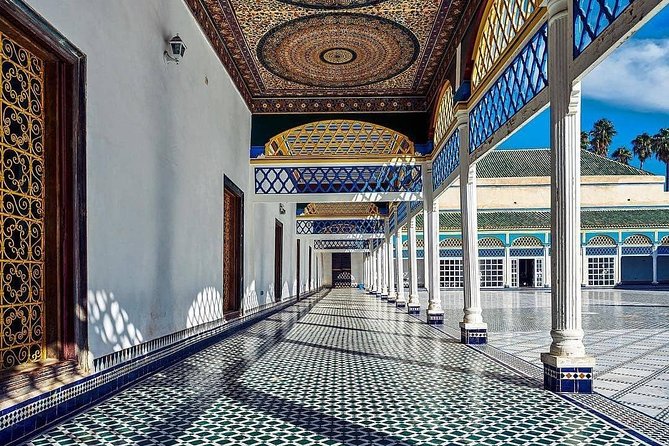
Bahia Palace receives about an hour, and it is likely to be the most rewarding paid stop for many people. Built in the late 19th century, the palace was intended to be one of the grandest residences of its time. Its name means brilliance, a fitting label for the decorated rooms and garden spaces.
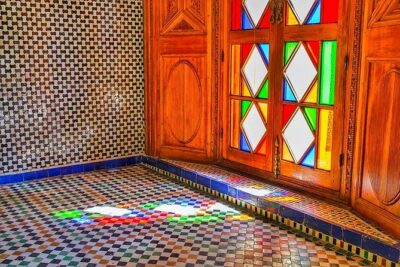
The appeal is not only size. Look for the details: tilework, painted ceilings, carved surfaces, courtyards, and the relationship between rooms and gardens. Guides have explained the meaning of patterns, the eight points of Moroccan stars, the use of color, and the different architectural styles found in the city.
The ticket is not included. Most monument entrances on this tour cost about $10 each, according to the supplied price information, so budget for Bahia Palace separately. The guide can provide context as you move through the rooms, but you should not assume the admission is covered by the $30.94 tour price.
Crowding can affect the experience. A guide is useful here because it is easy to lose your group among the courtyards and visitors. Still, the hour passes quickly, especially if you want photographs and time to inspect the decoration.
A few more things to do in Marrakech worth a look
- Marrakech: Historical Discovery Tour
★ 4.1 · 87 reviews - Marrakech: Day Trip to the Beautiful and Historic Essaouira
★ 4.3 · 39 reviews - From Marrakech: Essaouira Full day trip, beach and History
★ 4.9 · 26 reviews - Marrakech: Guided Medina History & Culture Tour
★ 5.0 · 23 reviews
The Jewish quarter and Kasbah route

The route includes the historic Jewish quarter, an area seeing renewed life, and the Kasbah district. These sections help connect the famous monuments to Marrakech’s wider story.
The Kasbah is the royal quarter and includes the area around the Saadian Tombs. It has a more peaceful rhythm once the tombs close, with traditional shops and local streets that remain part of daily life. This is a useful contrast with the crowded square and market lanes.
You should treat these sections as walking context rather than guaranteed standalone museum visits. The supplied schedule names the quarter and Kasbah as parts of the route, but does not assign them separate admission stops or fixed durations. Their value comes from seeing how the monuments fit into the surrounding neighborhood.
Saadian Tombs and the crowd problem
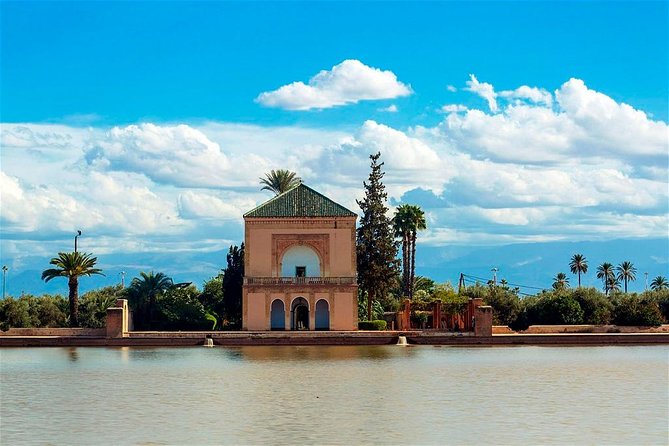
The Saadian Tombs date from the period of Sultan Ahmad al-Mansur and contain the burial places of members of the Saadian dynasty. They were covered over and forgotten for centuries before being rediscovered in 1917 through aerial photography. The Beaux-Arts service later restored them.
The site is compact but important. The decoration and royal associations make it one of the key historic stops in the Kasbah. The planned visit lasts about an hour, and admission is extra.
This is also the least predictable part of the route. Long queues can form, and the group may face a wait of up to an hour. In at least one outing, the guide asked the group to vote on waiting or visiting more of the souks instead. That is a sensible response to an impractical queue, but it creates a real problem: you may book a tour that promises the tombs and still not enter them.
If seeing the tombs is your main reason for booking, ask about current waiting times at the start. You could also return independently at another time, subject to opening conditions and admission arrangements. If the tombs are less important to you, the flexible choice may give you a better overall morning or afternoon.
Bab Agnaou and the approach to Koutoubia
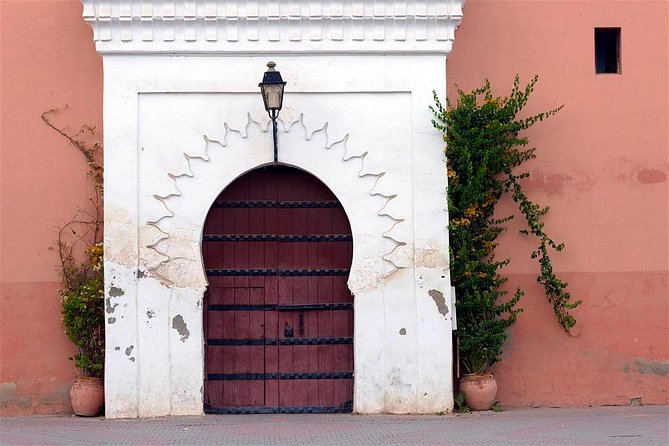
Bab Agnaou is one of Marrakech’s historic gates and dates from the 12th-century Almohad period. It once served as the entrance to the royal Kasbah, while Bab er Robb was the official city entrance. The gate helps you read the old city as a place of defense, ceremony, and royal power.
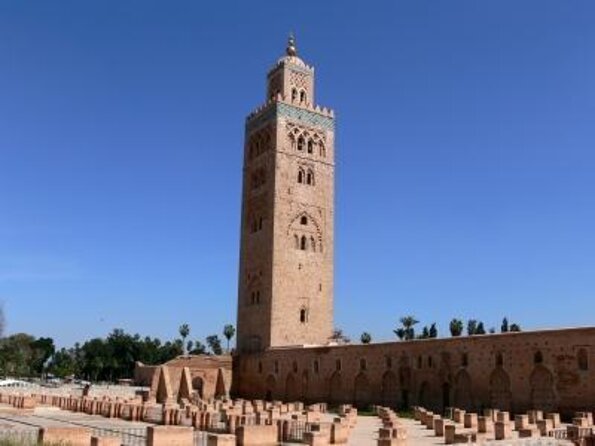
The tour then reaches Koutoubia Mosque, Marrakech’s largest mosque. The name is linked to booksellers, and the mosque’s tall minaret is one of the city’s clearest reference points.
The scheduled visit lasts about 30 minutes, and admission is free. This should be understood mainly as an exterior visit. The supplied details do not promise entry inside, and the reviews specifically note that the mosque is not an included interior attraction. Your guide can explain its role and architectural importance while you view it from outside.
That is still worthwhile. Koutoubia helps you get your bearings in Marrakech, and its minaret gives the old city a strong visual anchor. The short stop also prevents the tour from becoming overloaded with paid interiors.
What the guides add
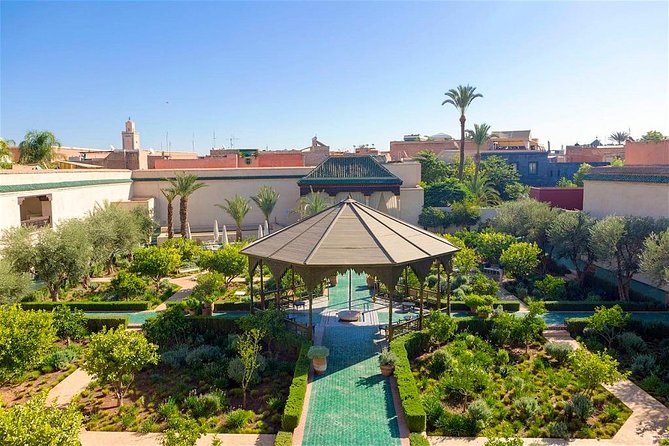
The best part of this experience depends heavily on the individual guide. Abdul is praised for stories, cultural explanations, humor, and keeping a group engaged. Ali brings the perspective of someone who lives in the medina, while Hassan is noted for patience, group care, and attention to families.
Jaouad and Mohamed are also praised for clear explanations of Marrakech’s past and local customs. Abdorahim and Oussama have been singled out for friendly service. These names do not guarantee who will lead your departure, but they show the kind of guiding style to hope for: personal, lively, and willing to answer questions.
A good guide changes the souks from a maze into a readable neighborhood. You may learn why certain colors and tile patterns appear, how architecture differs across periods, and how Muslim cultural practices shape the city. One guide even helped a solo participant with photos, a small touch that can make a group outing feel more welcoming.
The weaker side is organization at the meeting point. Finding the guide at Café de France can be chaotic, especially when several groups gather. Give yourself time and confirm the guide before leaving the square.
Who will get the most from this tour
I would choose this tour if you are visiting Marrakech for the first time and want a clear introduction without giving up a full day. It suits couples, solo visitors, families with children, and anyone who prefers a guide in the medina’s narrow streets.
It is also useful if you want cultural context, not just photographs. The guide can explain the city’s religious buildings, royal quarters, craft traditions, and decorative language in a way that is hard to gather from a quick solo walk.
I would hesitate if you dislike group pacing or want long, quiet visits at each monument. The group can include up to 15 people, and a queue may force a change of plan. Independent visitors who already know the medina may get better value by paying only for the sites they most want to see.
Wear practical walking shoes, carry water, and dress for strong sun. Drinks are not included. Children must be accompanied by an adult, but most people can participate and the meeting point is near public transportation.
Is $30.94 a fair price?
The price is fair if you value navigation and explanation. A local guide can save you from losing time in the souks, help you stay together in crowded streets, and add meaning to details that might otherwise look like decoration.
It is less compelling if you count only the entrance tickets. Bahia Palace and the Saadian Tombs are not included, and the tour may not enter the tombs if the queue is long. Add the monument fees before comparing this with a self-guided visit.
The private upgrade may suit anyone who wants a slower pace, more questions, or flexibility when a queue appears. The standard group option is the better bargain for a short orientation, especially if you plan to revisit the places you like later.
Free cancellation is available if you cancel at least 24 hours before the start time. Changes or cancellations inside that window are not refunded.
Should you book the Marrakech half-day tour?
Book it if you want a compact first look at Marrakech with a guide who can connect palaces, mosques, markets, and neighborhoods. The strongest reasons are the souk access, the local explanations, and the practical help inside crowded places.
Book with realistic expectations about the tombs and extra costs. If admission to Saadian Tombs is essential, do not treat it as guaranteed, since queues can change the plan. For most first-time visitors, though, this is a useful and reasonably priced way to get oriented before exploring Marrakech on your own.
FAQ
How long does the Marrakech Historical and Cultural Tour last?
The tour lasts approximately three hours, though some outings may run longer depending on crowds, walking conditions, or the guide’s pace.
What sights are included on the route?
The route includes Jemaa el-Fna, Bahia Palace, the historic Jewish quarter, the Kasbah district, Saadian Tombs, Bab Agnaou, Koutoubia Mosque, and sections of the souks.
Are entrance fees included?
No. Entrance fees are separate. Most monuments cost about $10 each, according to the supplied tour information.
Is entry to Koutoubia Mosque included?
The tour includes a visit to Koutoubia Mosque, but the supplied details do not promise interior entry. The admission is listed as free.
Does the tour include hotel pickup and drop-off?
No. You meet at Hôtel Restaurant Café de France beside Jemaa el-Fna, and the activity ends back at the meeting point.
How many people can join the group?
The maximum group size is 15 people. A private-tour upgrade is available.
Can children join the tour?
Yes. Children can participate but must be accompanied by an adult.
What is the cancellation policy?
You can cancel for a full refund up to 24 hours before the experience starts. Cancellations or changes made less than 24 hours in advance are not refunded.
Just added in Marrakech
- Quad Ride In The Agafay Desert★ 5.0 · 39 reviews
- Quad Biking Agafay desert★ 5.0 · 20 reviews
- Marrakech: Tailor-Made City Tour With Your Own Private Guide★ 4.9 · 236 reviews
- Surf Training and Lunch on Essaouira Day Trip from Marrakech★ 4.9 · 51 reviews
- Essaouira: Surf Trip from Marrakech★ 4.9 · 31 reviews
- Marrakech palm grove: Sunset camel ride★ 4.8 · 194 reviews
- Marrakech: Sunrise Desert Tour with Camel Ride and Breakfast★ 4.4 · 36 reviews
- Marrakech : Agafay Desert Sunset Camel Ride & Luxury Dinner★ 4.3 · 39 reviews
City Tours, compared.
Casablanca City Tour with Hassan II mosque ticket
Read our review →

Highlights of Marrakech: Private Half-Day City Tour
Read our review →
Browse the lists this tour appears in