
Reviewed · CITY TOURS
Casablanca: City Tour with Round-Trip Cruise Port Transfers
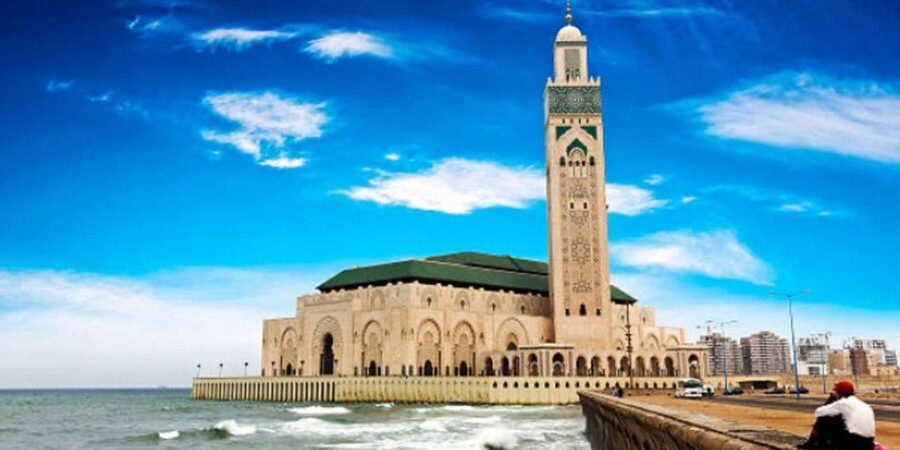
Casablanca’s Hassan II Mosque gives this city tour its grand opening, but the real pleasure is moving between very different parts of the city: the oceanfront Corniche, the old walled quarter, French-era streets, traditional markets, and central squares. You get a quick but broad look at Casablanca rather than spending the day in one neighborhood.
I like the round-trip cruise-port transfer, which removes the usual worry about finding a taxi in an unfamiliar city, and I like the range of stops for $40. You see religious buildings, markets, architecture, and everyday neighborhoods in one outing. The tradeoff is pace: with so many places on the route, most stops are for viewing and orientation rather than long, unhurried visits.
Key points at a glance
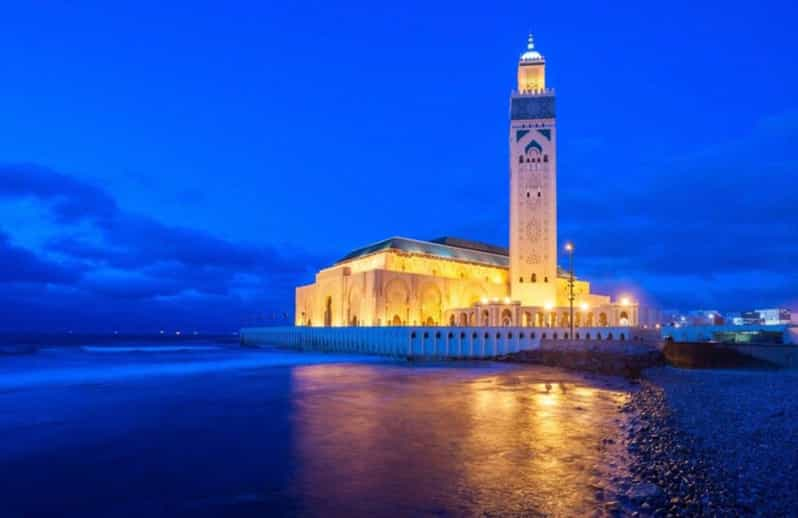
- Panoramic Hassan II Mosque visit: See Casablanca’s most famous landmark from the outside and take in its setting beside the Atlantic.
- Old Medina and Habous Quarter: Compare the older souks with the more planned traditional-style streets of Habous.
- Colonial and Art Deco Casablanca: Look for the city’s French-era architecture around central squares and major streets.
- A useful cruise-day setup: Air-conditioned transport, port pickup and drop-off, bottled water, WiFi, and a guide are included.
- Several praised guides: Mohamed, Saad, El Mehdi, and Mus are specifically associated with warm, helpful tours, with El Mehdi also speaking some Italian.
- Good value for a short visit: The route covers major sights, markets, churches, and neighborhoods without requiring you to organize several separate rides.
Hassan II Mosque and the Atlantic beginning
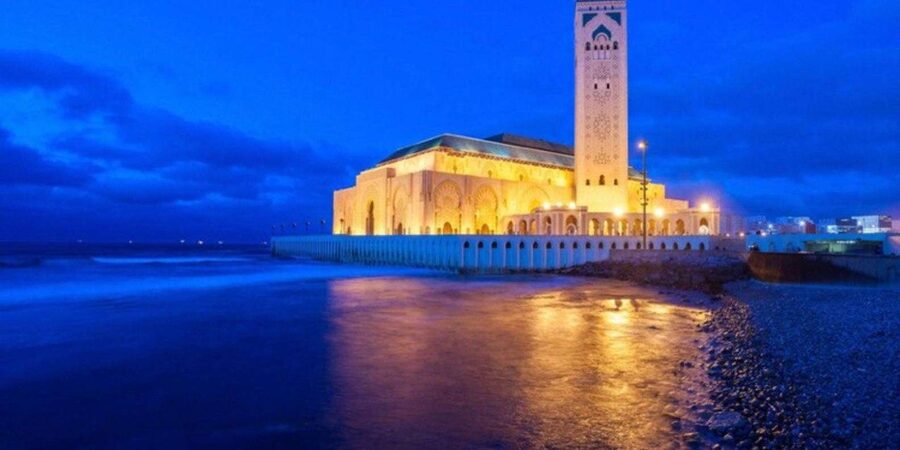
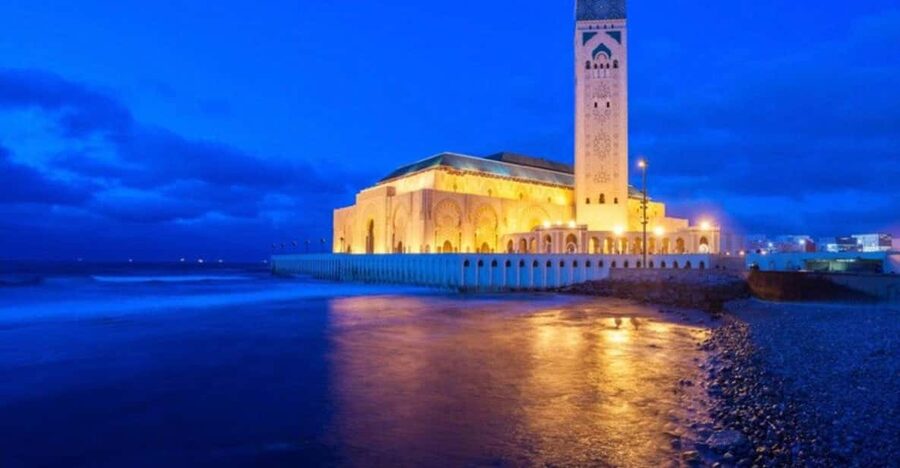
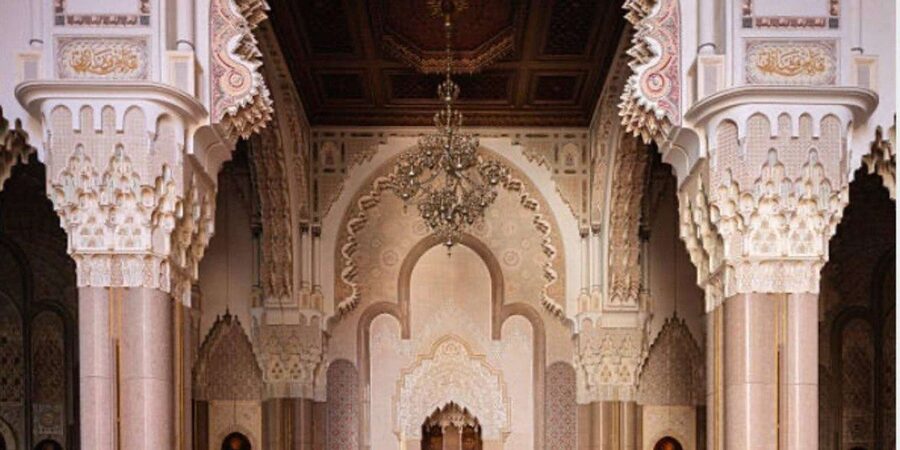
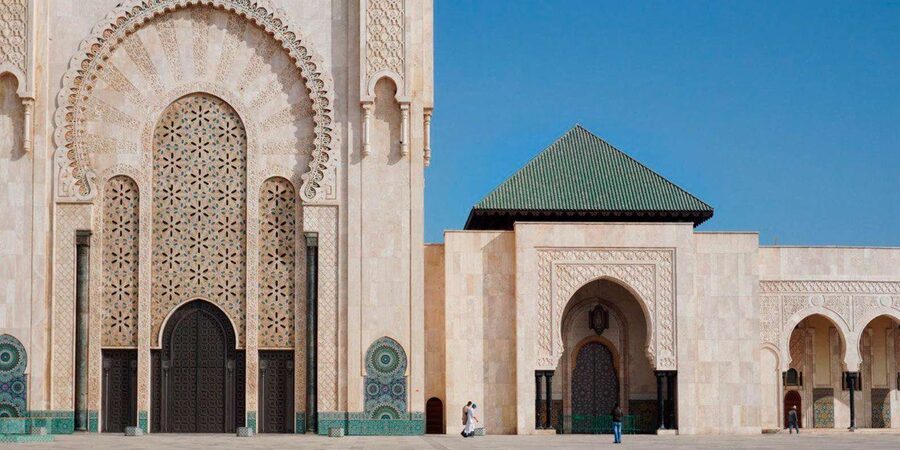
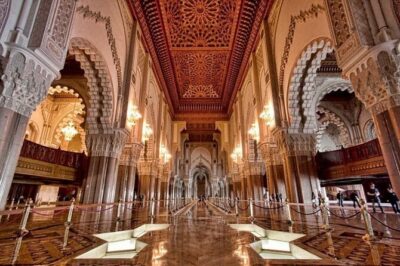
The tour starts with a panoramic look at Hassan II Mosque, Casablanca’s most recognizable building. Its scale, detailed decoration, and position near the Atlantic make it an easy first stop, especially if this is your only day in the city.
Be clear about what is included: the information provided describes a panoramic view, not an interior mosque visit. That distinction matters because the outside setting is a major part of the experience, but you should not book this tour expecting a full guided visit inside the prayer hall.
From here, the route follows the Corniche. The drive gives you a chance to see Casablanca facing the ocean, with views toward the water and the city skyline. I like this part because it breaks up the historic stops with open scenery and helps you understand the city’s coastal character.
The Corniche is mainly a scenic portion of the tour rather than a long free period. If you want time for a leisurely seaside meal or an extended walk, check how the day’s timing is arranged with your guide.
Other city tours in Casablanca people book:
- Casablanca City Tour with Hassan II mosque ticket
★ 5.0 · 2,480 reviews - Casablanca: City Tour with Hassan II Mosque Entry Ticket
★ 4.6 · 1,137 reviews - Casablanca: Hassan II Mosque & City Highlights Tour
★ 4.5 · 573 reviews
Old Medina: narrow streets and practical orientation
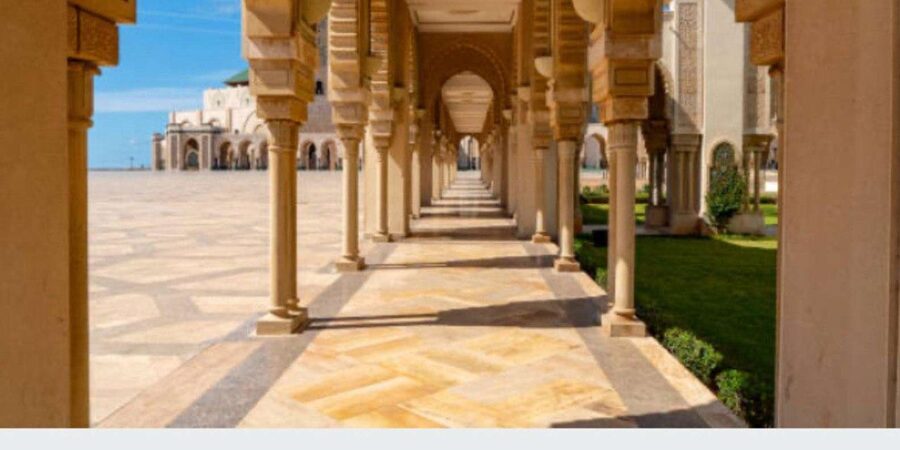
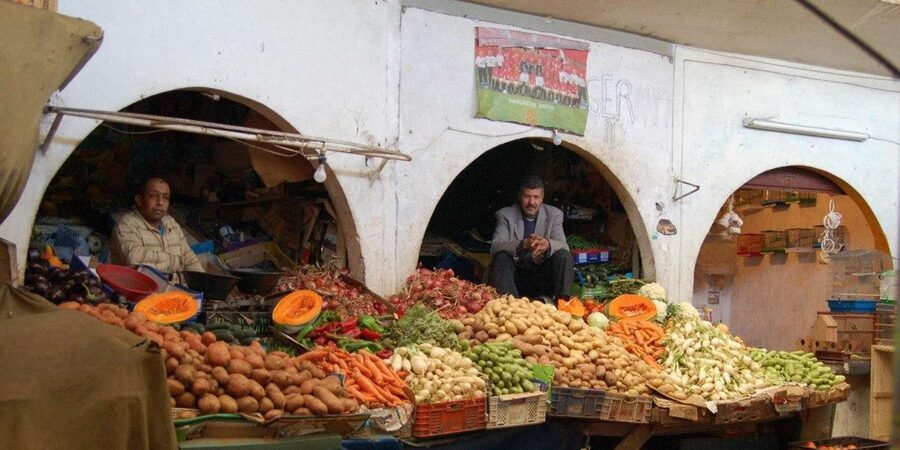
The Ancient Medina offers the most traditional urban setting on the route. Its narrow streets, small shops, and souks give you a close look at the older side of Casablanca, where the pleasure comes from walking slowly and noticing details rather than checking off one grand monument.
A guide is useful here. The lanes can feel confusing, and a local guide can point out the difference between a place meant for residents, a market street, and a shop aimed at visitors. The guide also gives context that you would miss by simply passing through on your own.
Do not expect a huge block of free shopping time. The itinerary has many other stops, so the Medina works best as a compact introduction. You can see the atmosphere, browse the streets, and ask questions, but serious shopping may require a separate visit.
The tour also includes the Central Market, described as a fish market. This gives the day a more everyday feel. Instead of seeing only polished monuments, you get a look at one of the city’s working commercial spaces.
Habous Quarter and traditional-style streets
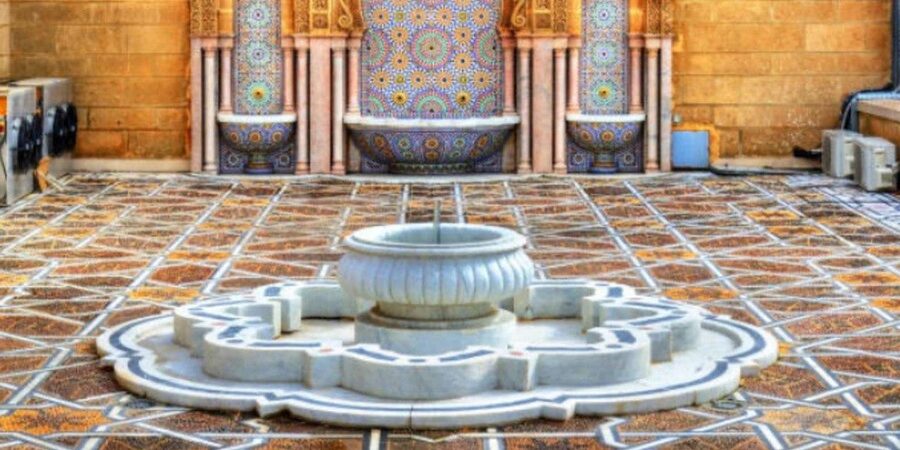
The Habous Quarter provides a useful contrast with the Old Medina. It has traditional markets, artisan workshops, and Moroccan-style architectural details, but its streets are more orderly and easier to navigate than the older quarter.
I especially like having both areas on one route. The Old Medina shows you the older street pattern, while Habous helps explain how Casablanca presented Moroccan design within a more planned neighborhood. You can browse market stalls, look at craft work, and pause for architectural details without losing the larger thread of the city.
The visit includes the Quartier Habous, and the guide can help you make sense of what you are seeing. Since the tour is designed to cover several districts, your time here may be shorter than you would want if you were shopping for specific crafts.
If you see something you want to buy, ask about the time available before making a purchase. A quick city tour is not the best setting for a long negotiation or for comparing many shops.
Anfa, Art Deco streets, and Casablanca’s modern identity
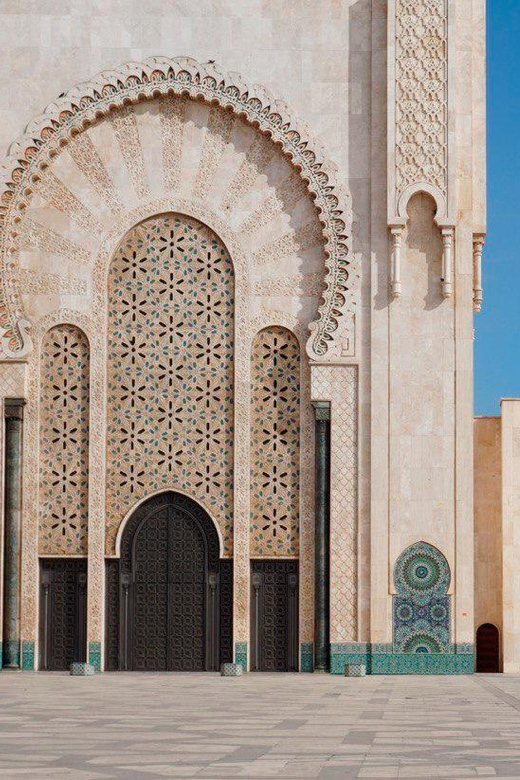
Casablanca is not simply an old city with a port. The Anfa residential quarter and the Art Deco district show another side of it, shaped by the city’s colonial-era development and later growth.
The Art Deco buildings give the central streets a distinctive look. Their facades, geometric details, and broad urban setting help explain why Casablanca feels different from Morocco’s more medieval inland cities. You do not need to be an architecture specialist to enjoy this part. The guide can point out the features, and you can compare them with the traditional design seen in Habous.
The visit to Anfa adds a residential perspective. It is less about a single landmark and more about seeing how Casablanca’s neighborhoods fit together. For me, that kind of drive is valuable on a short city visit because it prevents the tour from becoming a string of isolated monuments.
The limitation is that these areas are viewed mostly from the vehicle or during brief stops. If you want a detailed architectural walk, this is only a starting point. Still, it gives you enough orientation to return later to the streets that catch your attention.
Other ways to see Casablanca in a day:
- Casablanca: Hassan II Mosque & City Highlights Tour
★ 5.0 · 526 reviews - Casablanca City Tour with Hassan II mosque ticket
★ 5.0 · 403 reviews - Casablanca Full-Day City Tour with round-trip hotel transfer
★ 4.7 · 266 reviews - Casablanca City Tour with Hotel Pickup and drop off
★ 4.7 · 224 reviews
Churches that reveal Casablanca’s mixed past
Notre-Dame de Lourdes Church is one of the more unexpected stops. Its architecture and quiet interior offer a pause from the traffic and market streets, while its presence reflects the city’s varied religious and cultural past.
The itinerary also includes Sacré-Cœur Cathedral, a striking neo-Gothic building. These church visits add balance to the mosque and market stops. You are not seeing Casablanca through only one tradition or one period of history.
The available details do not promise a full religious service, interior tour, or special access, so think of these as sightseeing visits. Opening conditions can affect what you see inside, and your guide will be the best source of information on the day.
I appreciate these stops because they widen the picture. Casablanca’s identity comes from several layers: Moroccan neighborhoods, French-era architecture, Islamic landmarks, Christian buildings, commercial streets, and modern city life.
Mohammed V Square and Place des Nations Unies
Mohammed V Square and Place des Nations Unies bring the tour back to central Casablanca. Both are useful places to see the city’s public face, with major streets, government or commercial architecture, and a steady flow of local activity.
Place des Nations Unies is the stated ending point before you return to your accommodation or cruise transfer. It is a practical final stop because it puts you near the center of the city and gives you one last chance to watch Casablanca at street level.
These squares are not quiet museum spaces. Traffic, pedestrians, and city noise are part of the experience. If you prefer a slow, contemplative tour, the pace may feel brisk. If you want a useful first look at Casablanca, the central squares help tie the route together.
The sequence also makes sense geographically. You begin near the ocean, move through older and traditional neighborhoods, see colonial-era districts and religious buildings, then finish in the central city.
Rick’s Café and the Casablanca film connection
Rick’s Café adds a light bit of movie nostalgia. It was inspired by the classic film Casablanca, making it an appealing stop for anyone who enjoys the connection between the city and the screen.
The important practical point is that the café visit includes the chance to enjoy a beverage or snack, but the food and drink are not listed as included. Plan to pay separately if you order something.
This stop is more about atmosphere and a famous cultural reference than about Moroccan history. Some people will find it fun, while others may prefer more time in the markets. I would treat it as a short change of pace, not the main reason to book the tour.
What the $40 price really covers
At $40 per person, the tour offers solid value if you are arriving by cruise and want transport, a guide, and a wide city overview in one purchase. You are not paying only for a sightseeing route. The price also covers pickup and drop-off, an air-conditioned vehicle, onboard WiFi, bottled mineral water, wet wipes, and travel insurance.
The port transfer is the most useful part of the package. A cruise stop gives you limited time, and arranging separate rides to Hassan II Mosque, the Medina, Habous, Anfa, and the churches can become inconvenient. Having one vehicle connect the stops makes the day easier to manage.
The price does not include tips. Food and drinks at Rick’s Café are also not listed as included. Keep a little extra money available for those costs and for anything you choose to buy in the markets.
Group size is not provided, so you should ask before booking if that detail matters to you. A small group usually allows more questions and a more flexible pace, while a larger group may feel more like a scheduled overview.
Guides, languages, and the human side of the tour
The guide can make or break a fast city tour. The available guide feedback is especially strong on friendliness, patience, and the ability to answer questions.
Mohamed is described as friendly and professional. Saad is noted for adapting to expectations, which is useful when a group wants more time at one type of stop and less at another. Mus is described as informative and fun, a helpful combination for a group of eight.
El Mehdi received particularly warm praise for taking care of families and for speaking some Italian. The Italian is described as limited, so Italian-speaking visitors should confirm how much support is available if language is important to them.
The tour offers Arabic, French, English, and Italian. Since individual language ability can vary, mention your preferred language when booking. The strongest pattern in the guide feedback is personal attention, which matters when the itinerary moves quickly.
Transport and comfort on a cruise day
The air-conditioned vehicle is a real benefit in Casablanca, particularly when the route includes several stops and you are trying to fit a city visit between ship departure times. You can leave your port transfer planning to the operator and travel between districts without repeatedly negotiating with taxis.
WiFi onboard and bottled mineral water are included. Wet wipes are a small but useful touch after time in markets or during a warm day.
Pickup and drop-off are described for hotels and cruise port locations. If you are staying somewhere other than a hotel or arriving at a port under a tight ship schedule, confirm the exact meeting point and return timing before the tour begins.
Travel insurance is included, which adds a measure of protection. It does not remove the need to watch your ship’s all-aboard time. Give yourself a generous margin when discussing the return with the guide.
Who should book this Casablanca tour
I would choose this for a first visit, a cruise stop, or anyone who wants to see the city’s main contrasts without arranging transport independently. It suits families and mixed-interest groups because the route includes architecture, markets, religious buildings, scenic views, and a film-related café.
It also works well for people who want a guide to explain what they are seeing. The tour moves through neighborhoods that can be hard to understand as separate pieces, and the guide helps connect them.
You may want a different plan if your priority is spending a long time inside Hassan II Mosque, shopping carefully in the souks, or sitting for a full meal on the Corniche. The route is broad, not slow. It gives you a strong first orientation, then lets you decide what deserves a return visit.
With a rating of 4.6 from 22 reviews, the overall response is strong, and the most consistent praise centers on the guides. That is important here because the value depends on how well someone turns a fast route into a coherent story.
Should you book it?
Book this tour if you want a dependable Casablanca overview with cruise-port transport, especially for a first visit. For $40, you cover major landmarks, markets, central districts, churches, and oceanfront views without piecing together separate rides.
Skip it if you want one deep, slow experience rather than a city sampler. If you do book, tell the operator your preferred language, ask about group size, and confirm the return timing around your ship. Choose it for coverage, convenience, and a guide-led introduction to Casablanca.
FAQ
What does the Casablanca city tour cost?
The price is $40 per person.
Does the tour include cruise-port pickup and drop-off?
Yes. Pickup and drop-off at the cruise port are included, along with hotel pickup and drop-off.
Is transportation included?
Yes. Transportation is provided in an air-conditioned vehicle.
Is the Hassan II Mosque entrance included?
The experience includes a panoramic view of Hassan II Mosque. The provided information does not state that interior entrance is included.
What languages are available?
Guiding is available in Arabic, French, English, and Italian.
Is food included at Rick’s Café?
No food or drink is listed as included. You can enjoy a beverage or snack there at your own expense.
Does the tour visit the Old Medina?
Yes. You visit the Ancient Medina, including its narrow streets and souks.
Does the tour include the Habous Quarter?
Yes. The Quartier Habous is included, along with its traditional markets, artisan workshops, and architecture.
What is included besides transport and the guide?
The package includes onboard WiFi, bottled mineral water, wet wipes, entry to the Corniche and Quartier Habous, a Central Market fish-market visit, Anfa, a panoramic Hassan II Mosque view, Mohammed V Square, and travel insurance.
Can I cancel for a full refund?
Yes. You can cancel up to 24 hours in advance for a full refund.
Just added in Casablanca
- Casablanca Airport Transfer from hotel in Casablanca★ 5.0 · 18 reviews
- Exclusive tour of Casablanca with access to the Hassan II Mosque★ 5.0 · 205 reviews
- Your Private Casablanca Transfer★ 5.0 · 52 reviews
- 14 Days From Casablanca- Morocco Grand Tour★ 5.0 · 24 reviews
- Sunset Camel Ride in the Palm Grove Of Marrakech★ 5.0 · 34 reviews
- Casablanca Night Tour with Andalusian Dinner Show★ 4.5 · 25 reviews
- Chefchaouen the Blue City Full-Day Trip from Casablanca★ 4.5 · 79 reviews
- Marrakeck City tour from Casablanca all the day around trip★ 5.0 · 35 reviews
City Tours, compared.
Casablanca City Tour with Hassan II mosque ticket
Read our review →
Marrakech Historical and Cultural Tour – Half Day City Tour
Read our review →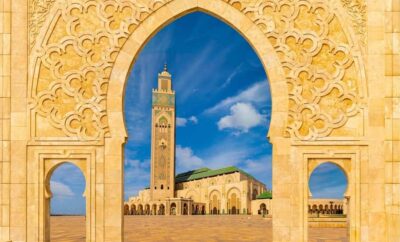
Highlights of Marrakech: Private Half-Day City Tour
Read our review →Browse the lists this tour appears in