
Reviewed · FOOD TOURS
Marrakech: Local Food Tasting Tour with a Guide
Marrakech’s best food often hides behind an unmarked doorway or appears at a stand you might pass without a second glance. This small-group food walk leads you through the medina and Mellah, pairing 10 local tastings with the stories and customs behind them.
I like the focus on places used by local residents, not just polished tourist restaurants. I also like the range: you can move from harira and dates to smoky tanjia, barbecue, sheep’s head, sweets, and cooling fruit drinks in one outing. The main drawback is simple: this is a lot of food, and the two-hour walking section may feel long in Marrakech’s heat.
What makes this food walk worth considering
- A full meal in small portions: Expect about 10 tastings, plus drinks, sweets, and possible surprises.
- Marrakech beyond the main square: The route passes through the medina and Mellah, including areas you might not explore alone.
- A guide-led cultural lesson: Your guide explains Moroccan food customs while taking you between local eating spots.
- Rare dishes for curious eaters: Tanjia cooked in a wood-fired furnace and steamed sheep’s head are among the more unusual stops.
- Good choice for mixed diets: Vegetarian options are available, though the advertised menu also includes plenty of meat.
- Limited group size: With no more than eight people, it should be easier to hear the guide and ask questions.
A Marrakech food tour built around local eating
At $45 per person, this is priced as more than a simple snack crawl. You are paying for a 210-minute guided walk, a series of tastings, local sweets and tea, and the help of someone who knows where to take you. If you bought every dish separately, you might spend less, but you would lose the route, explanations, and confidence that comes with having a guide order and organize the food.
That last point matters in Marrakech. Food stalls can be exciting, but the medina can also feel confusing when you are trying to decide what is worth eating, how much to order, and where to sit. This experience gives you a set path and lets you try foods you may not choose on your own.
The group is capped at eight people. That is a useful middle ground. You still get the social feel of a group outing, but you are not being herded through narrow lanes with a large crowd. The guides connected with this experience include Mohammed, Muhammad, and Medhi. The exact person assigned to your departure may vary, and the tour is offered in English or French.
More eating your way round Marrakech:
- Marrakech: Street Food Tour by Night
★ 4.8 · 2,838 reviews - Authentic Moroccan Food Tour in Marrakech with Dinner
★ 5.0 · 1,423 reviews - Marrakech: Jemma El Fnaa Food Tour with Dinner
★ 4.7 · 394 reviews
Meeting at Argana Cafe and entering the medina
The meeting point is in Jemaa el-Fnaa Square, in front of Argana Cafe. This is a convenient landmark, but the square can be busy and confusing, so arrive with enough time to locate the cafe and guide. Transportation to the meeting point is not included, and you make your own way back to the same area at the end.
The tour starts with a walk toward a local restaurant and nearby food stops. This opening section lasts about 30 minutes and includes a visit and a photo stop. It gives your guide time to explain the plan and begin introducing Moroccan food culture before the tasting list grows.
Wear shoes made for walking on uneven city streets. A hat, sunscreen, and a camera are sensible additions. The route is outdoors and takes place in the medina, so sun protection matters even when the food stops provide shade.
The Mellah adds context to the meal
The route includes about 20 minutes in the Mellah, Marrakech’s historic Jewish quarter. Here, the tour is not only about what goes into your mouth. Your guide connects the streets and neighborhoods to the wider food culture of the city.
The Mellah stop also breaks up the eating. That is useful because the menu is generous. You are walking, looking around, and hearing about the area between tastings rather than sitting down to one large meal.
You should expect the route to use local streets rather than only the most familiar tourist paths. That can be one of the best parts of the experience, but it also means the setting may be less polished and more crowded than a standard restaurant visit. Go in ready for a working neighborhood, not a staged food show.
Msemen, harira, and the sweet opening course
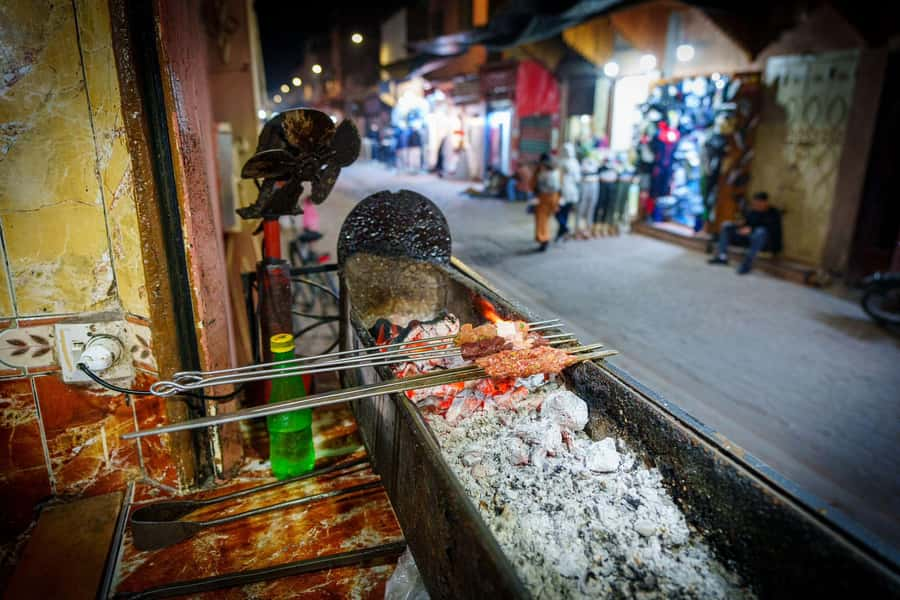
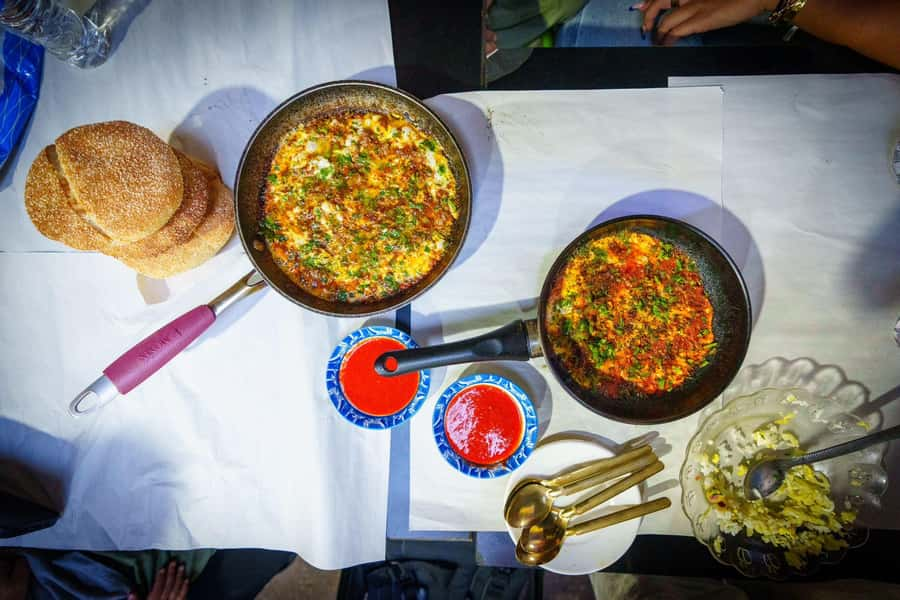
One early tasting is msemen, a Moroccan flatbread served with tomato sauce, onion, coriander, and spices. Msemen is filling, so even a modest piece makes a useful start to the meal. Its mix of crisp, layered bread and seasoned toppings gives you an immediate sense of everyday Moroccan cooking.
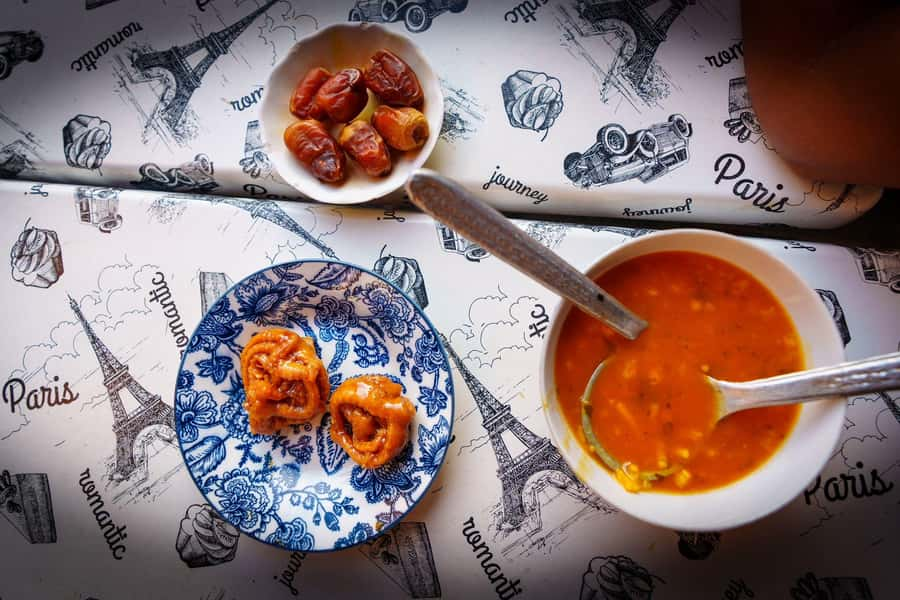
You may also try original-style harira, the tomato and legume soup strongly associated with Moroccan home cooking and Ramadan meals. It is served with dates and chebakia, a sticky, sesame-coated sweet. The combination makes sense: warm, savory soup followed by fruit and pastry.
These first tastings are approachable for nearly everyone, including people who prefer familiar flavors. They also show why a guided menu works well. You get several small portions instead of having to commit to a full bowl or plate before you know what you like.
Same base, a different sort of day:
- Marrakech: Agafay Desert Sunset, Camel Ride, and Dinner Show
★ 4.6 · 35,119 reviews - From Marrakech: Ouzoud Waterfalls Guided Hike and Boat Trip
★ 4.7 · 33,630 reviews - Marrakech: Agafay Desert Quad & Camel Rides with Dinner Show
★ 4.8 · 27,382 reviews - Marrakech: Agafay Desert Quad Biking Tour with Dinner-Show
★ 4.8 · 16,569 reviews
Makkla bel Kefta and Marrakech’s meatier side
Makkla bel kefta is another stop on the advertised menu. Kefta generally means seasoned ground meat, and this dish gives the food walk a heartier turn. The precise preparation can vary, so listen to your guide for the local explanation at the stop.
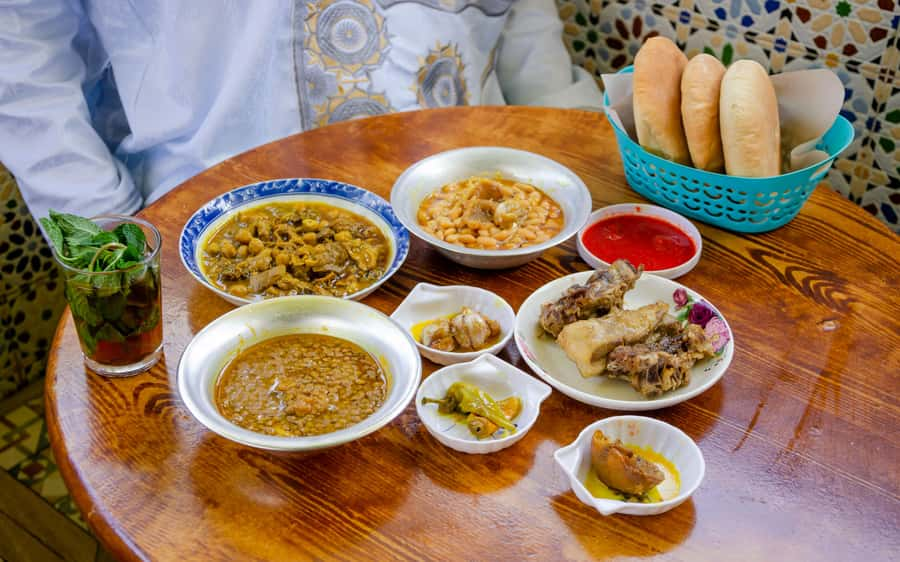
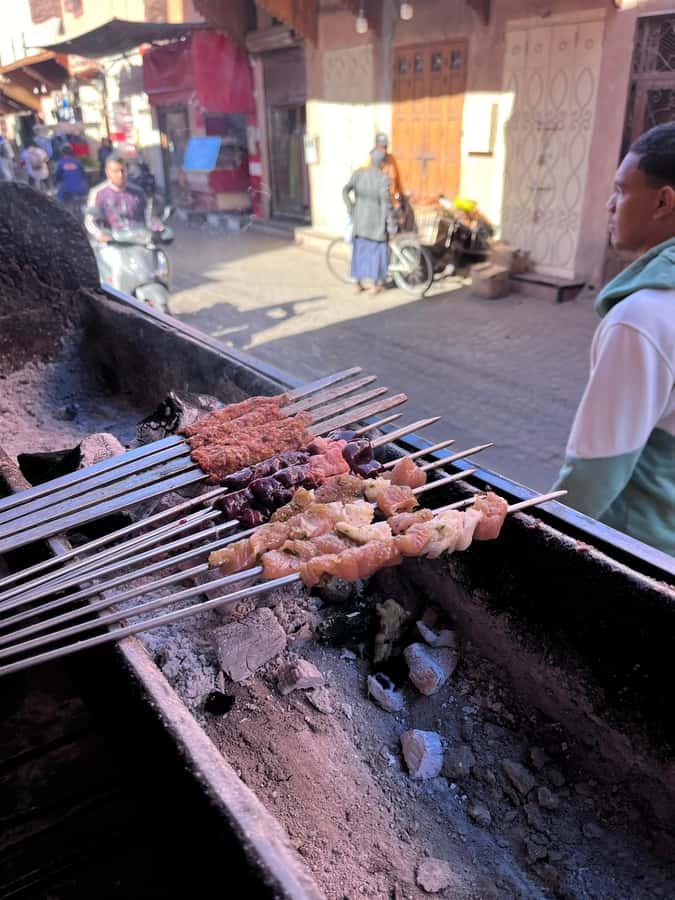
The experience includes several meat dishes, including Moroccan barbecue made with beef, turkey, and liver. This is useful if you want to compare different textures and seasonings rather than sample only one familiar kebab. It is less useful if you are vegetarian, although vegetarian choices are available and should be raised with the guide at the start.
The menu is not ideal for people who dislike strong meat flavors or who want a purely plant-based tour. Vegetarian options are listed, but the most distinctive dishes include meat, organ meat, and sheep’s head. If those foods are outside your comfort zone, tell the guide clearly and early.
Sfenj, Moroccan doughnuts, and a sweet break
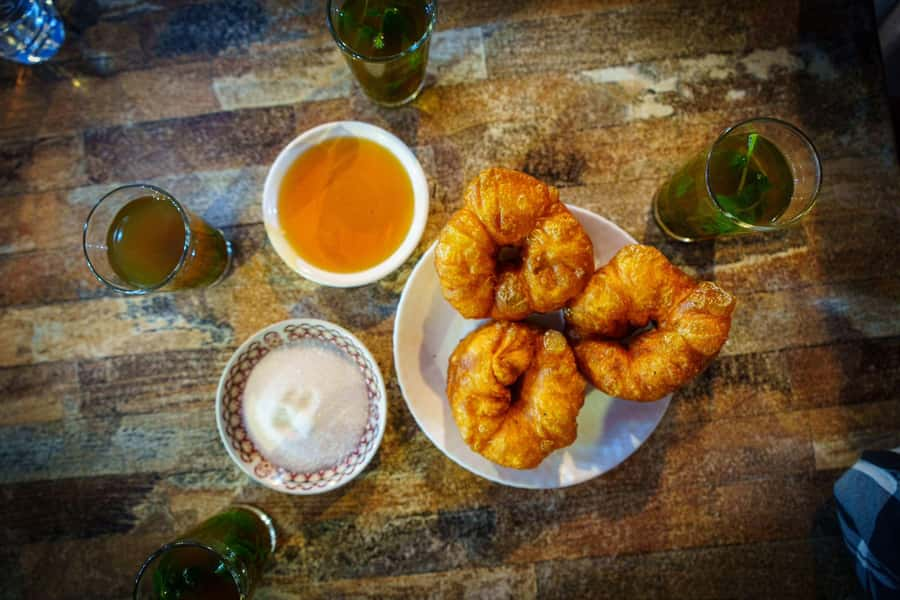
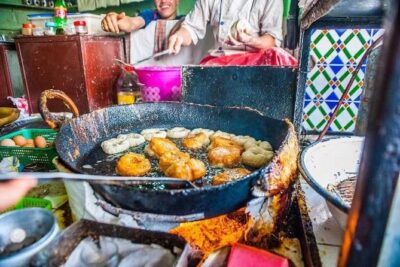
Sfenj is a Moroccan doughnut, usually light and fried, and it provides a change from the savory dishes. It is the sort of snack that works well during a walking tour because it is easy to share and does not require a formal meal setting.
Local sweets and tea are included as part of the experience. The tea is an important part of Moroccan hospitality, and it gives you a slower pause between the quicker street-food tastings. The food may arrive in small portions, but the cumulative effect is substantial.
One useful tip is to arrive hungry. The menu includes enough food that you may feel full after the first few stops, yet the route continues with more dishes and drinks. This is not a light pre-dinner nibble.
Lfranatchi and the smoky taste of tanjia
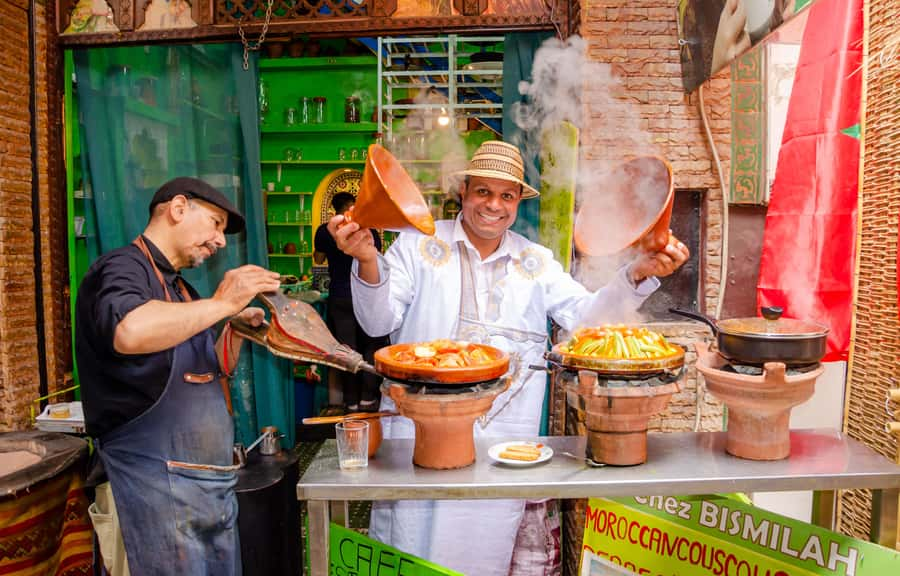
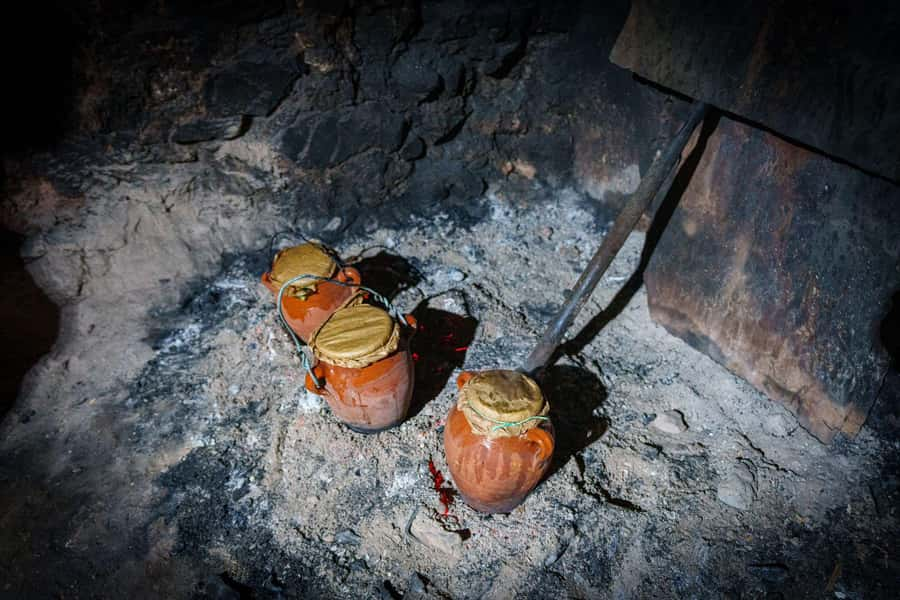
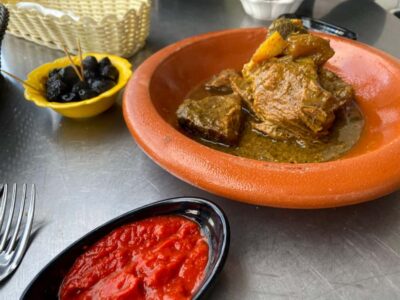
The Lfranatchi stop is one of the most unusual parts of the route. This is a wood-fired furnace associated with heating hammams and cooking tanjia. Tanjia is a clay-pot Moroccan dish cooked slowly and infused with smoky flavors.
Seeing the cooking setting gives the dish more meaning than simply receiving it on a plate. You get a connection between Marrakech’s neighborhood services, old cooking methods, and the food itself. It is exactly the kind of detail that can be missed if you only eat in a restaurant designed for sightseeing.
Do not expect every stop to be a sit-down meal. The point is to see how food is prepared and sold around the medina, then taste it in the place where it belongs. Some people will love this direct approach. Others may prefer a quieter table and more time with each dish.
Barbecue and steamed sheep’s head
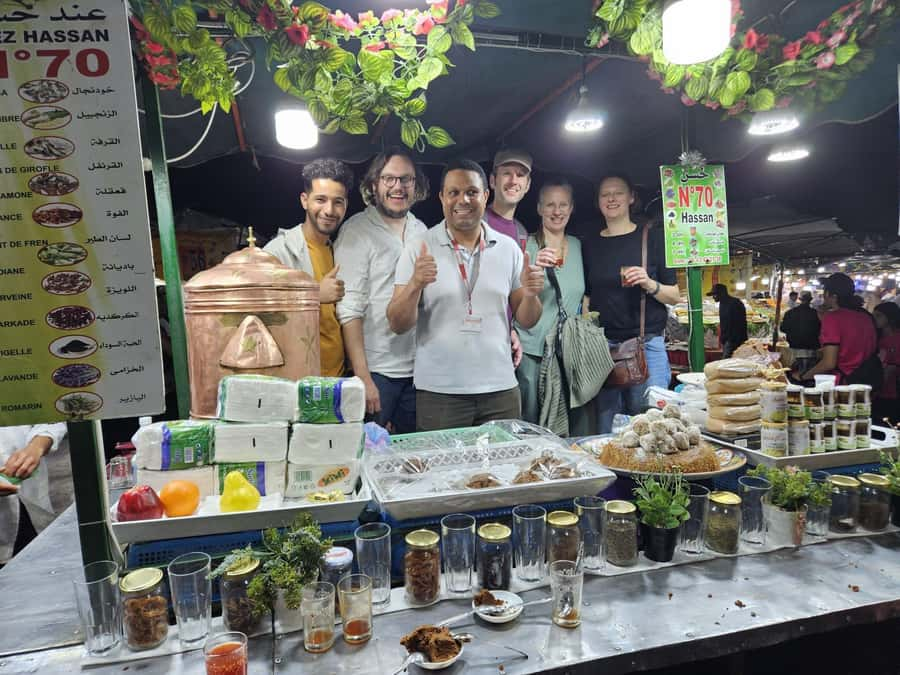
The Moroccan barbecue stop includes beef, turkey, and liver. That gives you a broad sample, but it also makes this portion less suitable for anyone avoiding meat or offal. The guide can help explain what you are tasting, which is especially useful if you have not tried liver before.
Rass Lmbkher, or steamed sheep’s head with cumin, is the boldest item on the menu. This is a traditional dish for adventurous eaters, and cumin helps bring out its savory character. You do not need to eat every item to enjoy the tour, but you should know in advance that this is not a cautious introduction limited to bread, soup, and sweets.
The food walk treats these dishes as part of normal Moroccan food life rather than as a stunt. That approach is valuable, but you should be honest about your own limits. Ask what is being served, take a small portion, and choose the alternatives offered if a dish is not for you.
Panache and khodnjal keep the route balanced
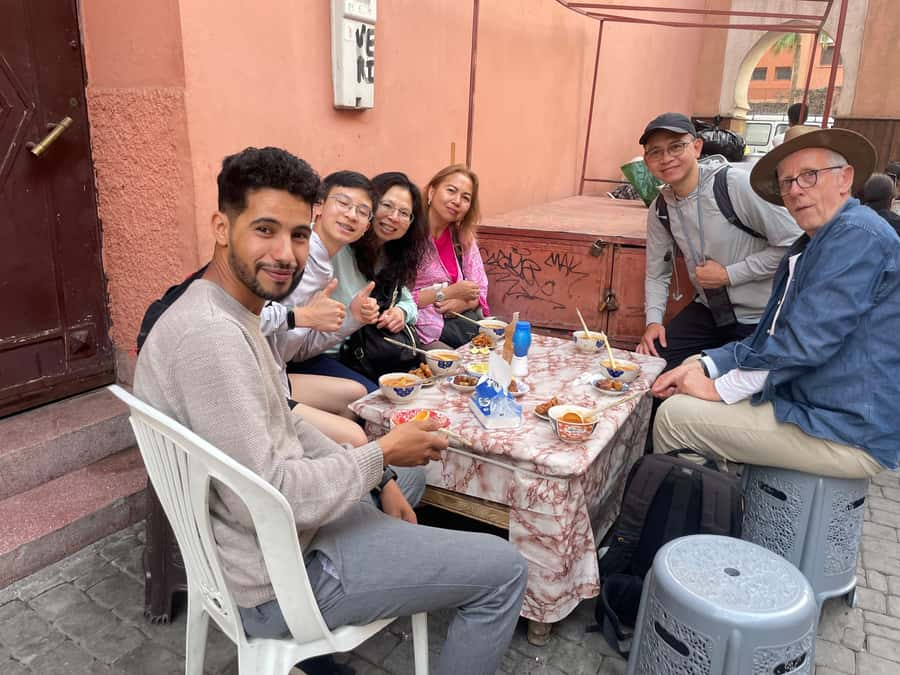
After several savory tastings, panache provides a fresh change. It is a smoothie made from seasonal fruit blended with milk or an orange juice base. The drink can be a welcome break from grilled meat, bread, and fried foods.
Khodnjal is a hot herbal infusion with eucalyptus. It is described as soothing and useful for clearing the senses and aiding digestion. Whether you choose it for the flavor or simply want a warm drink after the meal, it adds another side of Moroccan beverage culture beyond mint tea.
These drinks matter because the tour is not only a parade of heavy dishes. Still, the overall menu remains substantial. Bring your appetite, and avoid planning a large dinner immediately afterward.
Two hours of walking through Marrakech’s medina
The itinerary allows about two hours for the main guided walk through Marrakech’s medina, with shorter visits in the restaurant area and Mellah. That is enough time to cover food, neighborhood details, and several stops, but it also means you should plan for a fair amount of standing and walking.
The route ends back at Argana. There is no included transport between stops, which is normal for a medina food walk and helps keep the experience focused on the streets. You should not book this as a vehicle-based tasting tour.
The activity information presents mixed accessibility details. It says wheelchair accessible in one place, but it also lists wheelchair users under not suitable for the tour. Because the route involves medina walking and narrow or uneven streets may be possible, anyone using a wheelchair should confirm access directly with Marrakechtips before booking.
How the guides shape the experience
The guide is the key part of this tour. The strongest praise attached to the experience centers on guides who stay with the group from beginning to end, explain Moroccan culture, and lead people into areas they might otherwise miss.
Mohammed and Muhammad are named in connection with especially warm, attentive guiding, while Medhi is also associated with the experience. Names can vary by departure, so you should not assume a particular guide unless the operator confirms it. The important feature is having a local person manage the route, explain the dishes, and help you try foods with some confidence.
The English and French guide options make the tour practical for many visitors. Ask questions as you go. This is not just a pass-the-plate activity, and the cultural explanations are part of what makes the $45 price reasonable.
Who should book this food walk?
I would choose this experience if you want a food-centered introduction to Marrakech and enjoy trying dishes you would not order alone. It suits curious eaters, first-time visitors, and anyone who wants a local guide to connect food with the medina’s neighborhoods.
It is also a strong first or second-day activity. You can learn which foods you like, pick up ideas for later meals, and get your bearings around the medina without spending your first afternoon searching for every stop yourself.
I would think twice if you want a relaxed restaurant meal, dislike walking, or need a carefully controlled diet. The menu includes meat, liver, sheep’s head, fried food, dairy, and multiple spices. Vegetarian options are available, but the experience is not presented as fully vegetarian or vegan.
Book with comfortable shoes, sun protection, and room in your stomach. Alcohol is not included or allowed, and personal expenses and extra food outside the tasting menu are your responsibility. You can cancel up to 24 hours before the activity for a full refund, and reserve now while paying later if that option is offered at booking.
Should you book it?
Book this tour if your idea of Marrakech food includes local stalls, smoky tanjia, soup, sweets, grilled meat, herbal drinks, and a guide who can take you beyond the obvious stops. The small group and long duration give you good value at $45, especially if you would otherwise feel unsure about ordering street food.
Skip it if you want a short, polished tasting with little walking or if the meat-heavy menu concerns you. For adventurous eaters who want food and neighborhood culture in the same outing, this is one of the more useful ways to spend three and a half hours in Marrakech.
FAQ
How long does the Marrakech food tour last?
The activity lasts 210 minutes, or three and a half hours.
How much does the tour cost?
The listed price is $45 per person.
Where does the tour meet?
The meeting point is in Jemaa el-Fnaa Square, in front of Argana Cafe.
Where does the tour end?
The route returns to Argana.
What languages does the guide speak?
Live guiding is available in English and French.
How many people are in the group?
The group is limited to eight participants.
What foods and drinks are included?
The tastings can include msemen, harira, dates, chebakia, Makkla bel Kefta, sfenj, tanjia, Moroccan barbecue, steamed sheep’s head with cumin, panache, khodnjal, local sweets, and tea.
Are vegetarian options available?
Yes, vegetarian options are available. The advertised menu also includes several meat dishes, so tell the guide about your dietary needs.
Can I cancel the tour?
You can cancel up to 24 hours in advance for a full refund. Reserve now and pay later is also available.
Just added in Marrakech
- Quad Ride In The Agafay Desert★ 5.0 · 39 reviews
- Quad Biking Agafay desert★ 5.0 · 20 reviews
- Marrakech: Tailor-Made City Tour With Your Own Private Guide★ 4.9 · 236 reviews
- Surf Training and Lunch on Essaouira Day Trip from Marrakech★ 4.9 · 51 reviews
- Essaouira: Surf Trip from Marrakech★ 4.9 · 31 reviews
- Marrakech palm grove: Sunset camel ride★ 4.8 · 194 reviews
- Marrakech: Sunrise Desert Tour with Camel Ride and Breakfast★ 4.4 · 36 reviews
- Marrakech : Agafay Desert Sunset Camel Ride & Luxury Dinner★ 4.3 · 39 reviews
Food Tours, compared.
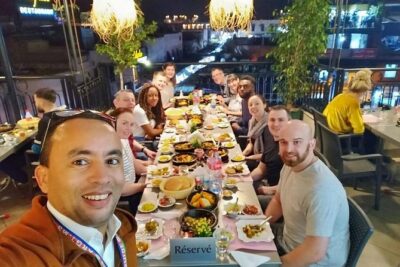
Authentic Moroccan Food Tour in Marrakech with Dinner
Read our review →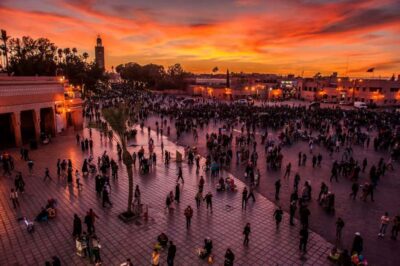
Marrakech Night Street Food Tour / Taste The Real Marrakech
Read our review →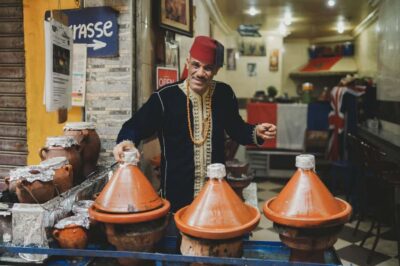

Authentic Food Tour in Agadir – Eat Like A Local
Read our review →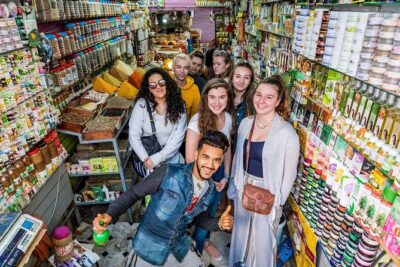
Browse the lists this tour appears in