
Reviewed · FOOD TOURS
Marrakech: Street Food Tour by Night
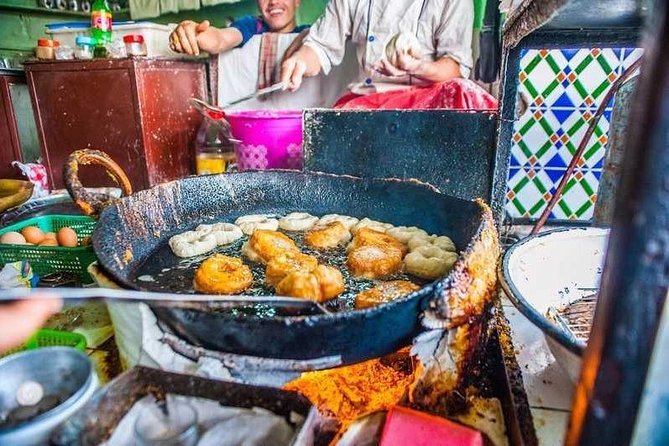
Marrakech’s best food often appears in small bites, smoky stalls, market counters, and side streets that are easy to miss. This evening walk takes you from Jemaa el-Fnaa into the souks and Mellah, with tastings that can build into a full Moroccan dinner.
I like the wide food range, from dates and olives to harira, snails, pastries, and tangia. I also like the way guides such as Yaya, Mohammed, Ali, and Omar add stories about cooking, markets, and local customs instead of simply handing you a plate.
The main thing to plan for is the amount of food. This is not a light tasting stroll. Several people finished with a full three-course meal, so eat sparingly beforehand and expect the advertised two to three hours to run longer if the group takes its time.
Key points to know before you book
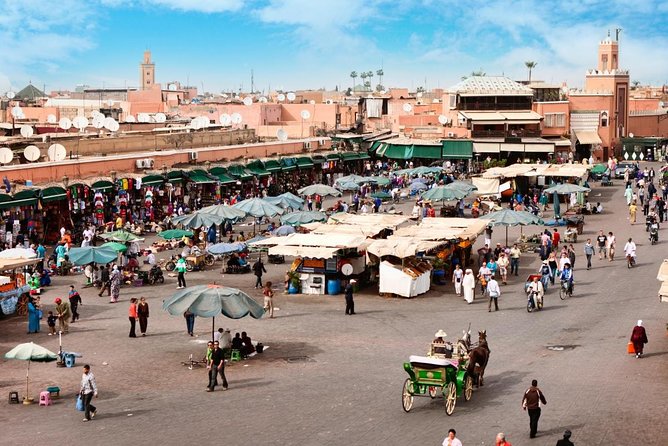
- More than market nibbles: Tastings can include olives, dates, pastries, soup, salads, snails, flatbreads, tagine, tangia, kofte, and dessert.
- A strong first-night activity: The route helps you get your bearings in the Medina while giving you safe guidance through narrow market lanes.
- The final meal matters: The evening often ends with a generous traditional meal at a rooftop restaurant or cozy café.
- Guides shape the experience: Yaya, Ali, Mohammed, Omar, Yahya, and others are praised for humor, food knowledge, and local explanations.
- Come hungry: The food is plentiful enough that you may not want dinner afterward.
- Shared or private: You can choose a group outing or arrange a private group, with English, Arabic, French, German, and Spanish available.
Starting at Jemaa el-Fnaa after dark
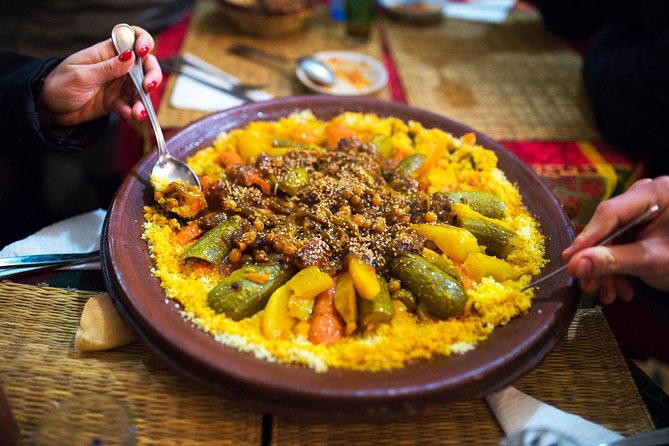
The tour begins near Hôtel Restaurant Café de France, with the exact meeting point depending on the option booked. From there, you meet your guide in or around Jemaa el-Fnaa, Marrakech’s main square.
At night, this part of the city takes on a different rhythm. Food stalls, performers, shoppers, vendors, and passing groups fill the square. It can feel confusing if this is your first evening in Marrakech, which is why starting with a guide is useful. You can focus on the smells and sounds instead of trying to work out which alley leads where.
The initial stop includes time at Jemaa el-Fnaa for a guided visit and walk of about 30 minutes. Do not think of this as a formal sightseeing lecture. The value lies in connecting the square to the food around it, learning what people eat, and seeing how the evening market works.
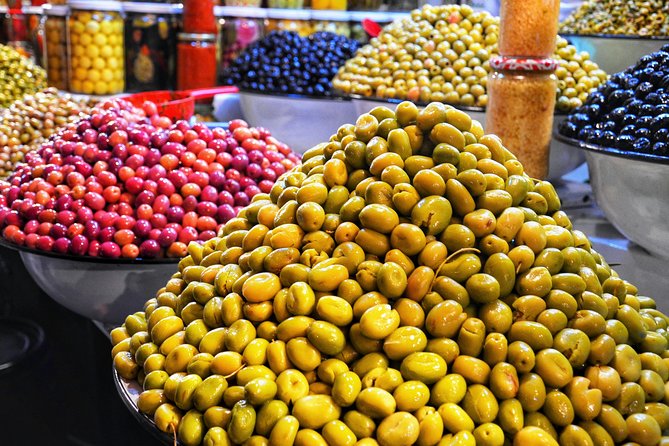
Your guide may begin with simple items such as olives, dates, nuts, fruit, or sweets. These foods give you an easy start before the more unusual tastings appear. You will also have time to ask questions about ingredients, meal customs, and Moroccan flavors.
More eating your way round Marrakech:
- Authentic Moroccan Food Tour in Marrakech with Dinner
★ 5.0 · 1,423 reviews - Marrakech: Jemma El Fnaa Food Tour with Dinner
★ 4.7 · 394 reviews - Marrakech Night Street Food Tour / Taste The Real Marrakech
★ 4.9 · 200 reviews
Through the Mellah and the main market
The route continues toward the Mellah and the city’s main market. Here, stalls display fresh fruit, meat, poultry, and vegetables. This is one of the more useful parts of the experience because it gives context to the dishes you eat later.
Instead of seeing tagine as a mysterious dish on a restaurant menu, you can ask how Moroccan cooks choose vegetables, meat, spices, and cooking methods. Saffron, cumin, herbs, and other aromas become easier to recognize when you encounter them in the market and then taste them in prepared food.
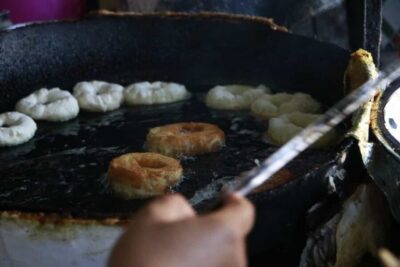
The guide also points out artisans at work, including a local pastry maker. Watching a pastry being prepared adds something that a standard restaurant dinner cannot provide. You see the labor behind the food and get a clearer sense of how much of Marrakech’s cooking remains tied to small-scale production.
Haggling is another part of the market scene. Your guide can show you how local buying works and help explain the difference between watching a transaction and taking part in one. This is useful if you plan to return to the souks on your own.
Sweet pastries, almond drink, and Moroccan cooking
The tastings are arranged as a sequence rather than one large meal at the start. Sweet pastries may appear early, followed by savory bites, drinks, and more substantial dishes.
One refreshing stop features a traditional almond drink. It gives you a break between foods and introduces a flavor that is easy to miss if you stick to mint tea and bottled water. You also receive a local recipe to take home, a small but practical souvenir that helps extend the experience beyond the evening.
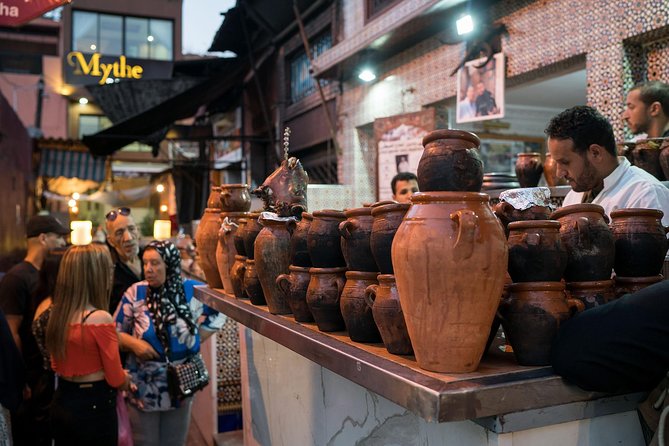
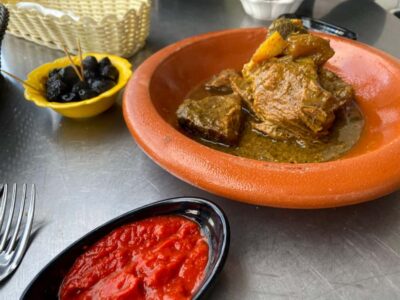
Tagine receives special attention. You can try a charcoal-baked version and ask about the different types of tagine, from meat-based dishes to vegetable preparations. The point is not simply to taste one pot. It is to understand how the cone-shaped cooking vessel works, why slow cooking matters, and how Moroccan cooks build flavor with spice, fat, herbs, and time.
Food preferences are handled best when you tell the guide early. Vegetarian options are available, and one outing included careful help for a person with celiac disease, with the guide checking ingredients at each stop. That is encouraging, but anyone with a serious allergy should still explain the condition clearly before eating.
Side streets and the food stops most people miss
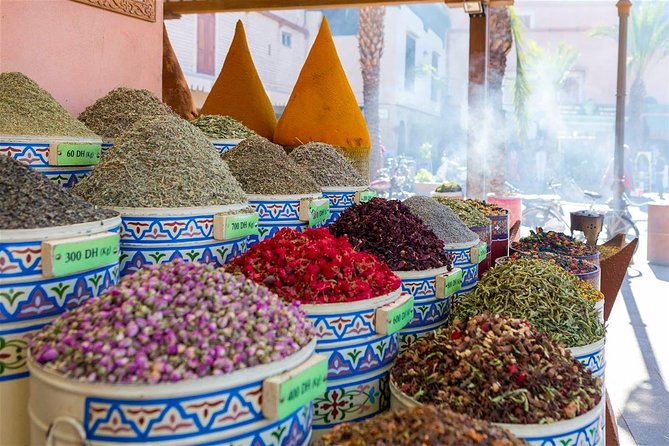
After the main market, the group moves into the souks and smaller side streets. This is where the tour earns much of its value. The Medina is a maze, and food stalls that look obvious to a local can be hard for a first-time visitor to identify.
You may stop for juicy olives, sweet dates, pancakes, soup, flatbreads, or other quick bites. Some foods are familiar and some are more adventurous. Snails, for example, appear on some routes, and the guide explains how to eat them rather than leaving you to guess.
Prickly pear fruit and local sweets may also feature. Guides usually explain what you are trying and give you the choice to pass on anything that does not appeal. That matters because the best food tour encourages curiosity without turning every unusual dish into a dare.
One of the more striking sights is a méchoui maker preparing a whole lamb or sheep in a traditional pit oven. You may not spend long here, but it gives you a glimpse of an old cooking method and shows how much Moroccan food depends on slow roasting and shared meals.
The walking is generally described as moderate rather than punishing. Still, the route uses Medina lanes, uneven surfaces, and crowded market passages. Wear comfortable shoes, as requested, and be ready to stop often rather than cover a large distance quickly.
Same base, a different sort of day:
- Marrakech: Agafay Desert Sunset, Camel Ride, and Dinner Show
★ 4.6 · 35,119 reviews - From Marrakech: Ouzoud Waterfalls Guided Hike and Boat Trip
★ 4.7 · 33,630 reviews - Marrakech: Agafay Desert Quad & Camel Rides with Dinner Show
★ 4.8 · 27,382 reviews - Marrakech: Agafay Desert Quad Biking Tour with Dinner-Show
★ 4.8 · 16,569 reviews
Harira, salads, tangia, and kofte
The food becomes more substantial as the evening goes on. You may try harira, a traditional soup, along with three different salads made from fresh local ingredients. These salads are not just filler. They show how Moroccan meals balance cooked dishes with vegetables, herbs, and bright flavors.
A hidden restaurant stop brings more serious food. Tangia is a Marrakech specialty cooked slowly in a distinctive vessel, often with meat and aromatic seasoning. It is different from tagine, and tasting both helps you understand that Moroccan cuisine is not one single style of stew.
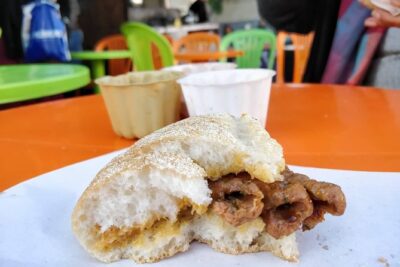
Kofte, freshly baked bread, and other savory dishes may follow. The bread is important because it acts as both utensil and accompaniment. You will often find yourself using it to scoop up sauces and salads, which is part of the meal rather than a novelty.
The route can include six or more food stops, and some groups report tasting around a dozen or more dishes. The exact menu depends on the guide, vendors, season, and group needs. That variation is a benefit if you want a genuine market experience, but it also means you should not expect a fixed restaurant-style menu.
The rooftop finish and the real amount of food
The final stop is often the evening’s biggest surprise. Instead of ending after a few samples, the tour commonly finishes with a sit-down Moroccan meal at a rooftop restaurant or a cozy café overlooking a courtyard.
Expect a full meal in some form, sometimes described as three courses. That can make the tour excellent value at $43 per person, since the price includes the guide, food, and drinks. You are paying for a guided walk, repeated tastings, cultural explanation, and a substantial dinner rather than only a short sampling session.
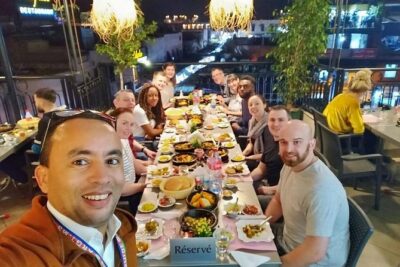
The setting also gives the evening a calmer finish. After the noise and movement of the souks, you can sit among rugs, mosaic lamps, fountains, and traditional decoration. Mint tea is served, and the group has time to talk and take in the courtyard or rooftop view.
This ending is especially useful for your first night because it removes the pressure of finding a restaurant after the tour. Several food stops may leave you too full for anything else. Plan the evening as dinner, not as an appetizer before dinner.
The main drawback is pacing. A group of 18 has taken about three hours, and even a tour advertised at two hours can run longer when the guide allows time for explanations and eating. That is not a problem if you have a relaxed evening, but it matters if you have a show, transfer, or late reservation afterward.
What the guides add to the evening
The guide is the difference between a collection of snacks and a useful introduction to Marrakech. Names assigned to recent outings include Yaya or Yahya, Mohammed, Mohamed Kaseem, Ali, Omar, Mo, and Ousamma.
The strongest guide style combines food explanations with humor and practical help. Yaya, for example, is praised for arranging tastings in a sensible order, beginning with small appetizers and sweets before moving into soup, snails, and the final meal. Ali is described as energetic and good at connecting food with Moroccan culture. Mohammed and Omar are also praised for friendly explanations and a warm welcome.
A shared group can be lively, with people from different countries comparing reactions to unfamiliar foods. That social side adds value, but a larger group may mean waiting at some stops or standing slightly apart from the guide. If you want more control over the pace, questions, or menu, choose the private option.
The tour offers live guidance in English, Arabic, French, German, and Spanish. The exact language arrangement depends on the option you choose, so check that before booking.
Is $43 good value?
At $43, this tour sits above the cost of simply buying snacks in the souks, but that is not the right comparison. You are also paying for a local guide, route planning, introductions to vendors, food explanations, drinks, and a final meal.
If you tried to reproduce the evening alone, you could spend less on individual snacks. You would also miss the recipe, the market context, the explanation of dishes such as tangia and tagine, and the confidence that comes from having someone guide you through the Medina.
The value improves if the final meal is included as it commonly is. A three-course dinner plus many tastings can make the price reasonable, especially on your first evening. It is less appealing if you want only a short food sampler or prefer to choose every dish yourself.
Who should book this Medina food walk?
I would choose this tour for a first visit to Marrakech, particularly if you want food and orientation in the same evening. It suits curious eaters, couples, families, and solo visitors who like meeting people in a shared group.
It also works well for adventurous eaters who want to try snails, prickly pear, unfamiliar soups, and local specialties with a guide nearby. You are not required to sample every unusual item, so cautious eaters can still enjoy pastries, olives, salads, bread, tea, and cooked dishes.
Families with older relatives can manage it if everyone is comfortable walking through the Medina. One outing included an 80-year-old participant, but the route still involves standing, narrow streets, and uneven walking areas.
This may not suit you if you dislike group meals, have a very restricted diet, or need a tightly timed evening. Wheelchair access is listed, but you should confirm the practical details for your chosen meeting point and route, since Medina streets can be difficult in places.
The meeting point varies by booking, and hotel pickup and drop-off are not included. You need to reach the starting point yourself, usually around Hôtel Restaurant Café de France. Comfortable shoes are essential.
Should you book it?
Book this Marrakech night food tour if you want a generous, social introduction to Moroccan cooking and the Medina. The combination of market tastings, unusual bites, local stories, and a rooftop meal gives you far more than a simple snack crawl.
I especially like it as a first-night plan. You get your bearings, learn which foods to seek out later, and finish dinner without having to navigate the souks alone. Just arrive hungry, leave room for the final meal, and allow the full three hours rather than planning something immediately afterward.
FAQ
How much does the Marrakech street food tour cost?
The tour costs $43 per person. Food, drinks, and a tour guide are included.
How long does the tour last?
The stated duration is two to three hours. The evening may take longer when the group spends extra time tasting food and listening to explanations.
Where does the tour start?
The meeting point may vary by booking option. Hôtel Restaurant Café de France is listed as a starting and drop-off location, with the tour beginning around Jemaa el-Fnaa.
Is hotel pickup included?
No. Hotel pickup and drop-off are not included, so you must make your own way to the meeting point.
What food can I expect to try?
Possible tastings include olives, dates, nuts, sweet pastries, almond drink, soup, salads, flatbreads, snails, tagine, tangia, kofte, roasted meat, and Moroccan mint tea. The exact selection can vary.
Does the tour include a full dinner?
The evening ends with food at a restaurant or café, and some tours include a full three-course Moroccan meal. You should treat the experience as dinner rather than a small tasting only.
Are vegetarian options available?
Yes. Vegetarian options are available, but you should tell the guide about your dietary needs before the tastings begin.
What languages are offered?
Live guides are available in English, Arabic, French, German, and Spanish. Check the selected option for the language provided.
Can I book a private tour?
Yes. You can choose a shared group or private group option. Free cancellation is available up to 24 hours before the tour, and reserve-now, pay-later booking is offered.
Just added in Marrakech
- Quad Ride In The Agafay Desert★ 5.0 · 39 reviews
- Quad Biking Agafay desert★ 5.0 · 20 reviews
- Marrakech: Tailor-Made City Tour With Your Own Private Guide★ 4.9 · 236 reviews
- Surf Training and Lunch on Essaouira Day Trip from Marrakech★ 4.9 · 51 reviews
- Essaouira: Surf Trip from Marrakech★ 4.9 · 31 reviews
- Marrakech palm grove: Sunset camel ride★ 4.8 · 194 reviews
- Marrakech: Sunrise Desert Tour with Camel Ride and Breakfast★ 4.4 · 36 reviews
- Marrakech : Agafay Desert Sunset Camel Ride & Luxury Dinner★ 4.3 · 39 reviews
Food Tours, compared.
Authentic Moroccan Food Tour in Marrakech with Dinner
Read our review →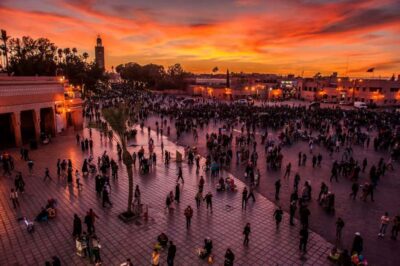
Marrakech Night Street Food Tour / Taste The Real Marrakech
Read our review →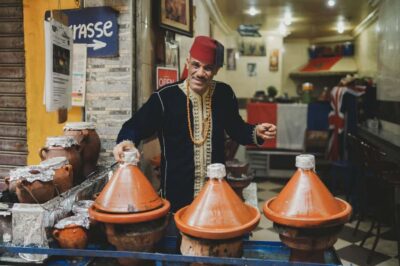

Authentic Food Tour in Agadir – Eat Like A Local
Read our review →
Casablanca Food Tour – Moroccan Street Food Tour
Read our review →Browse the lists this tour appears in