
Reviewed · FOOD TOURS
Casablanca Food Tour – Moroccan Street Food Tour
Casablanca’s best food stories are found under the arches of Habbous, beside olive stalls, public ovens, spice sellers, and small shops that serve local life rather than a polished tourist version of Morocco. This three-hour street-food walk takes you from the historic Quartier Habous into nearby market lanes, with more than 10 tastings at over six stops.
I like the small group, capped at eight people, and the way the meal doubles as a neighborhood walk. I also like that guides such as Nezha and Naima explain how food fits into Moroccan family life, markets, and daily routines. The main drawback is practical: you will walk and stand for about three hours, with no quick bathroom access for most of the route.
Key points to know before you book
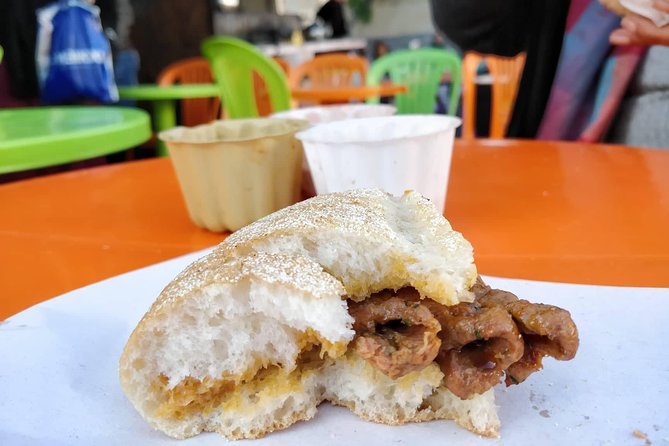
- More than 10 tastings: Expect savory pastries, street snacks, fried breads, grilled meats, sweets, fruit, nuts, and other Moroccan bites.
- Habbous at street level: You pass under arched walkways, browse food and craft markets, and enter lanes many visitors would miss without a local guide.
- A full meal, not a nibble: Dinner is included, and the food is intended to cover your main meal of the day.
- Small group format: The maximum is eight people, with a minimum of two adults needed for the tour to operate.
- Three hours on foot: Wear comfortable shoes and dress modestly, especially in warmer months.
- Plan your ride home: Evening taxi service can be difficult in Habbous, so check the return transport suggestions in your booking confirmation.
Starting beneath the arches of Quartier Habous
The tour begins at Cafe Malakiya, also listed as Cafe Malakiya Royale, at H9HV+4H4 in Casablanca. You should arrive five to 10 minutes early. The group leaves on schedule, and finding the exact meeting point is easier when you have the address and map code ready.
Quartier Habous gives you a gentle start. The neighborhood is known for its arched passages, artisanal shops, housewares, bakeries, and market stalls. As you walk, your guide connects the buildings and street layout with food traditions. That matters because this is not simply a sequence of tastings. You get a sense of where food is bought, prepared, shared, and sold.
The first part should feel manageable for most people with moderate fitness. You are not hiking, but you will remain on your feet. The walking takes place in an active city neighborhood, so the pace may pause as the group gathers, crosses lanes, or waits for a food stop.
Your guide is a major part of the experience. Named guides include Nezha, Naima, Hasna, Hasma, and Neyhsa, though the person assigned to your date can vary. The strongest guide accounts describe warm, clear explanations about Moroccan language, customs, markets, and food. Nezha, in particular, is described as a local who grew up in the area and knows the food scene well.
More eating your way round Casablanca:
- Casablanca Food Tour
★ 5.0 · 60 reviews - Night Tour of Casablanca with Street Food Tasting
★ 4.8 · 29 reviews - Street Private Guided Food Tour with Tastings at Casablanca
★ 5.0 · 19 reviews
From bakery counters to the olive market
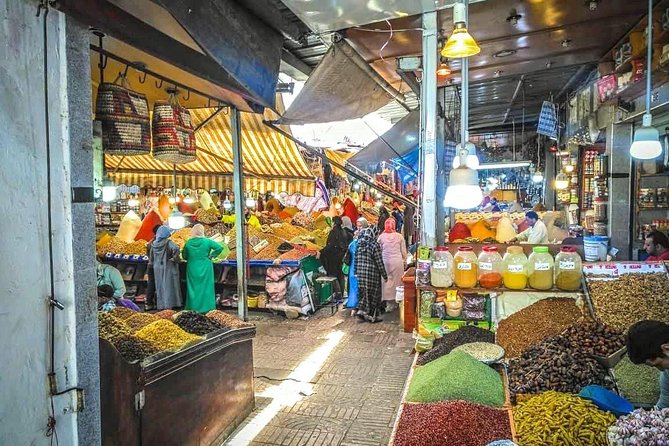
The food selection is designed to build across the walk. You may begin with savory pastries or other baked items, then move toward fried breads, street snacks, grilled meats, sweets, fruit, and nuts. The exact order and dishes can change, but the plan is to offer a broad taste of Moroccan everyday food rather than one formal restaurant meal.
The bakery and public oven details are especially useful for understanding the neighborhood. Moroccan food is often tied to shared local services and habits, not only to what appears on a restaurant menu. A stop near a working public oven can show how residents use the area for practical food preparation, while a traditional bakery gives you a look at the small-scale shops that keep daily life moving.
The olive market is another memorable part of the route. The smell of olives, the display of different varieties, and the steady trade around the stalls add a sensory layer that a standard city walk would miss. You are not just told that olives matter in Moroccan cooking. You see them sold in the place where local people shop.
You might also encounter prickly pears, fresh meat, vegetables, cookies, and desserts along the way. One especially useful feature is the chance to see ingredients before they become a meal. The route can include a market visit where meat and vegetables are selected, followed by a local restaurant preparing them. That kind of stop gives you a better idea of how shopping and eating connect in Casablanca.
Entering the covered market and side streets
After the more orderly Habbous passages, the walk moves into back streets and a covered market in a nearby city neighborhood. This shift is part of the tour’s appeal. You move from an area with a clear historic design into tighter lanes where the rhythm is more local and less arranged for sightseeing.
A guide is valuable here because the market can be confusing if you do not know where to look or how to approach each stall. The group can stop for food without turning the outing into a hunt for random samples. Your guide also explains what you are eating and why a particular food matters.
This is where the experience feels most different from a typical Casablanca highlights tour. The focus is not on checking off famous buildings. It is on food counters, market sounds, smells, and quick exchanges with sellers. You may see shoppers buying ingredients for home, workers picking up snacks, and shopkeepers who know the guide. The setting is active, so stay close to the group and keep your bag secure.
The tour provider suggests a cross-body bag or backpack rather than a shoulder bag. That is sensible in crowded lanes. It also advises against carrying an expensive camera on a neck strap. You can take photos, but the food and market are easier to enjoy when your hands remain free.
What the food adds up to
The included dinner is one of the strongest value points. The tour offers more than six food stops and over 10 tastings, with enough food to serve as your main meal of the day. You are not paying for a guided walk and then needing to find dinner afterward.
The range is also important. A single Moroccan meal can give you one strong impression, but a sequence of small tastings lets you compare textures and styles. Savory pastries show one side of the food culture. Fried breads and street snacks bring a quick, filling quality. Grilled meats add smoke and heft. Cookies, sweets, fruit, and nuts round out the meal.
You should arrive hungry, but not so hungry that you cannot pace yourself. The tour runs for roughly three to three and a half hours, and the food comes in stages. Ask your guide questions as you go. You will get more from the meal if you learn which foods are everyday staples, which are treats, and how Moroccans might eat them at home or in the street.
Diet is the main limitation. The experience is not a good fit for severe food allergies or strict vegetarian, vegan, or gluten-free diets. Substitutions may be possible if you contact the provider in advance, but they are not guaranteed. Send your restrictions before booking or as soon as possible, rather than relying on a last-minute request.
Same base, a different sort of day:
- From Marrakech: Casablanca Tour with Hassan II Mosque Visit
★ 4.7 · 4,756 reviews - Casablanca: Hassan II Mosque Premium Tour with Entry Ticket
★ 4.5 · 2,971 reviews - Casablanca City Tour with Hassan II mosque ticket
★ 5.0 · 2,480 reviews - Casablanca: City Tour with Hassan II Mosque Entry Ticket
★ 4.6 · 1,137 reviews
Why the guide matters more than the menu
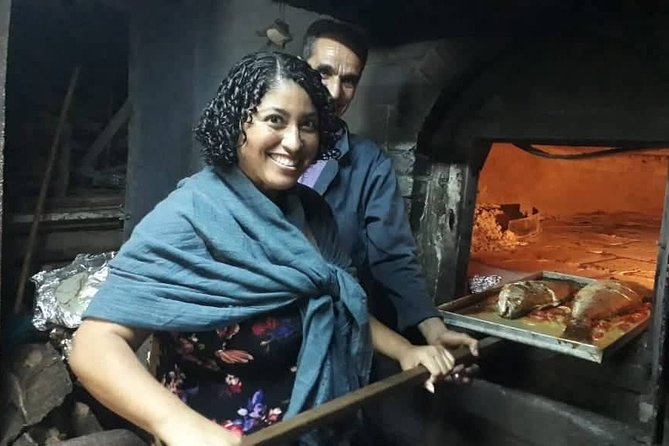
You can find Moroccan food on your own, but you may not find the same context. A menu can tell you the name of a dish. A local guide can explain how the dish fits into family habits, market shopping, language, and social life.
The guides associated with this tour are repeatedly praised for their personal approach. Nezha is described as a true food enthusiast who introduces people to foods they might otherwise skip. Naima is noted for making the outing feel complete. Hasna and Hasma are associated with useful explanations about food, markets, and Moroccan history. Neyhsa is described as helping the group feel safe and welcome while walking through the Medina area.
Those details are useful when choosing this experience. The tour is not a self-guided food crawl with a fixed list of restaurants. The quality depends partly on the guide’s ability to explain, adapt, and keep the group moving. The small maximum of eight helps. It gives you a better chance to ask questions and hear the answers than you would in a large coach group.
The guide can also help with unfamiliar flavors. You may be offered a food you would not order from a menu because you do not recognize it. Having someone explain what it is and how it is normally eaten makes trying it less of a gamble.
Price, timing, and the real value
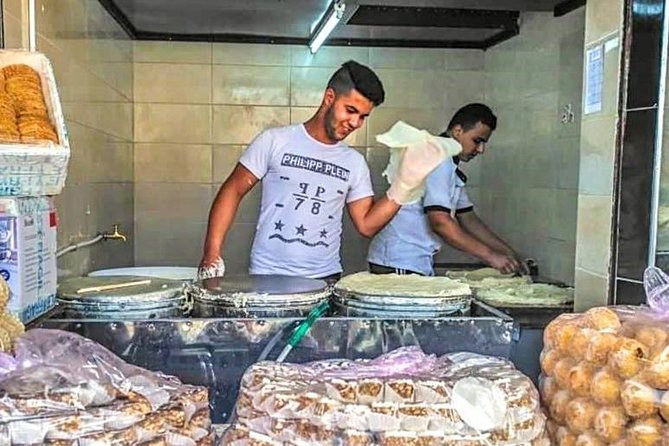
At $107 per person, this is not the cheapest way to eat in Casablanca. The price makes more sense when you count the included dinner, the number of tastings, the local guide, and the neighborhood orientation. You are buying several small meals plus three hours of access to places that may be hard to navigate alone.
I would see the tour as good value for a first day in Casablanca, especially if you want help deciding what to eat during the rest of a Morocco trip. The food introduction can be useful beyond this one evening. You leave with a better idea of what to order in Casablanca, Fez, or Marrakesh.
The tour is also useful as a shore excursion, provided your ship’s schedule gives you enough time to reach Habbous and return to the port. The experience itself ends back at the starting point, and transportation to and from the meeting place is not included. Build in extra time for getting there and returning to your ship.
For an evening booking, think about the return before you start. Taxis can be hard to catch in Habbous at night. Your confirmation includes suggestions for getting back, and you should read them before leaving your hotel or ship.
Comfort, clothing, and common-sense planning
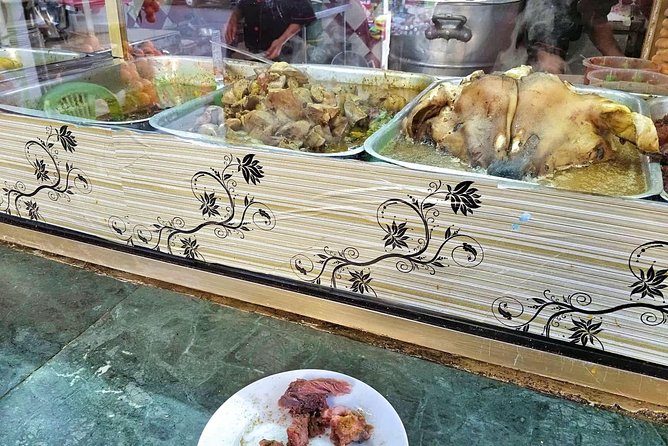
Wear shoes that can handle three hours of walking and standing. The route includes streets, market lanes, and covered areas, but it is not a seated tasting event. Rain does not automatically stop the tour, so check the forecast and bring suitable clothing.
Modest dress is recommended because the route enters a less tourist-oriented part of Casablanca. In warm weather, avoid bare shoulders, bare midriffs, and shorts or skirts above the knee. This is both a sign of respect and an easy way to avoid unwanted attention.
Bathroom access is limited for most of the route. Use the facilities at the starting point before you set out. A bathroom is also available at the end, but you should not count on a convenient stop halfway through.
The tour requires moderate physical fitness. Children may find the food exciting, but the walking, limited bathroom access, and busy market lanes need to be considered carefully. The provider does not describe this as a dedicated family tour.
The group requires at least two adult bookings to operate and has a maximum of eight participants. If the minimum is not reached, the provider may offer another date or experience, or a full refund. The same applies if poor weather leads to cancellation. You can cancel for a full refund up to 24 hours before the start time, but changes or cancellations inside that window are not accepted.
Who should book the Casablanca food walk
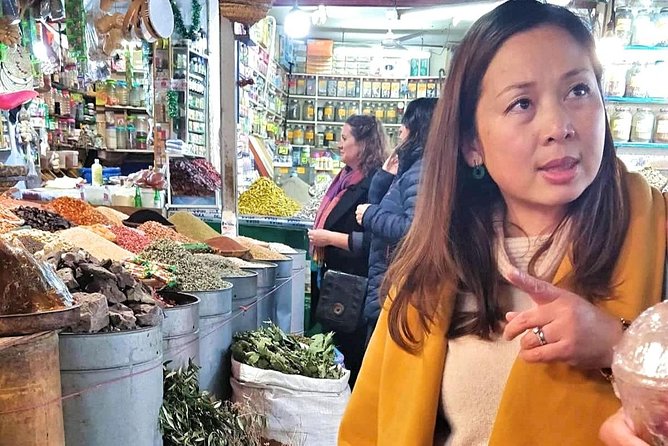
I would choose this tour if you want food to be your way into Casablanca. It suits first-time visitors, curious eaters, cruise passengers with enough time ashore, and anyone who prefers a small group to a large sightseeing outing.
It is especially useful at the start of a Morocco trip. The combination of tastings and explanations can help you recognize ingredients and dishes later. You also get a practical introduction to Habbous without needing to work out the market route alone.
I would skip it if you need a short, highly accessible activity, dislike walking in crowded markets, or follow a strict diet that limits pastries, breads, meats, and other mixed foods. I would also think twice about a late evening booking if you have no clear plan for getting back to your hotel or ship.
For everyone else, the strongest reason to book is the combination of food and local guidance. You get a full meal, a market walk, and a look at ordinary Casablanca life in one compact outing. The price is substantial, but the small group and broad food selection make it a sound choice for a first taste of the city.
FAQ
How long does the Casablanca food tour last?
The tour lasts about three to three and a half hours. Expect a moderate amount of walking and to be on your feet for most of that time.
Where does the tour start and end?
It starts at Cafe Malakiya, also listed as Cafe Malakiya Royale, at H9HV+4H4, Casablanca 20250, Morocco. The tour ends back at the same meeting point.
How much food is included?
Dinner is included, with more than 10 Moroccan tastings at more than six stops. The food is intended to provide enough for your main meal of the day.
How large is the group?
The maximum group size is eight people. At least two adult guests are required for the tour to run.
Is transportation included?
No. Transportation to and from the meeting point is not included. Evening participants should plan ahead because taxis can be difficult to catch in Habbous after the tour.
Can people with dietary restrictions join?
The tour is not ideal for severe food allergies or vegetarian, vegan, or gluten-free diets. You can contact the provider about restrictions, and substitutions may be possible, but they are not guaranteed.
What happens if the weather is poor?
The tour operates rain or shine, but if it is canceled because of poor weather, you can choose another date or receive a full refund. You can also cancel up to 24 hours before the start time for a full refund.
Just added in Casablanca
- Casablanca Airport Transfer from hotel in Casablanca★ 5.0 · 18 reviews
- Exclusive tour of Casablanca with access to the Hassan II Mosque★ 5.0 · 205 reviews
- Your Private Casablanca Transfer★ 5.0 · 52 reviews
- 14 Days From Casablanca- Morocco Grand Tour★ 5.0 · 24 reviews
- Sunset Camel Ride in the Palm Grove Of Marrakech★ 5.0 · 34 reviews
- Casablanca Night Tour with Andalusian Dinner Show★ 4.5 · 25 reviews
- Chefchaouen the Blue City Full-Day Trip from Casablanca★ 4.5 · 79 reviews
- Marrakeck City tour from Casablanca all the day around trip★ 5.0 · 35 reviews
Food Tours, compared.
Authentic Moroccan Food Tour in Marrakech with Dinner
Read our review →
Marrakech Night Street Food Tour / Taste The Real Marrakech
Read our review →

Authentic Food Tour in Agadir – Eat Like A Local
Read our review →
Browse the lists this tour appears in