
Reviewed · FOOD TOURS
Authentic Moroccan Food Tour in Marrakech with Dinner
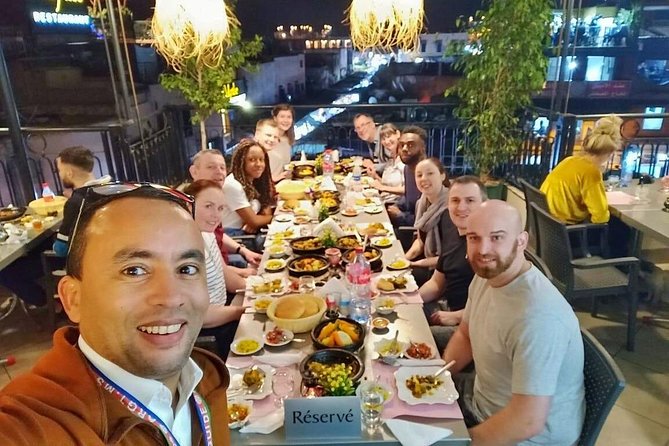
Marrakech’s best food experiences often happen in small stalls and side streets, not on a restaurant menu. This tour takes you through the medina near Jemaa el-Fna for Moroccan pastries, harira, olives, mint tea, snails, stuffed msemen, and other local bites, then aims to finish with a three-course rooftop dinner.
I like the way the tour turns a maze of food stalls into a guided tasting route, and I like the sheer range of food. You may try both familiar treats and more adventurous dishes, including babbouche snails or sheep’s head seasoned with cumin. The main point to clarify before booking is the dinner arrangement, since the experience can vary by guide, route, and evening.
- About 10 food stops: Taste small portions at local stalls and eateries around the medina and Jemaa el-Fna.
- Two possible routes: Your guide may follow a pastry-and-snack route or a more street-food-heavy route.
- Dinner included: The intended finish is a three-course Moroccan meal at a rooftop restaurant.
- Small group format: The maximum is 15 people, with smaller groups possible.
- Local guides: Guides named in guest feedback include Mehdi, Houssaine, Hamza, Ali, Mohamed, Mo, and Hamsa.
- Good value for curious eaters: At $54.45 per person, you get multiple tastings, a guide, mint tea, and dinner.
Starting at Poste du Maroc in the Marrakech Medina
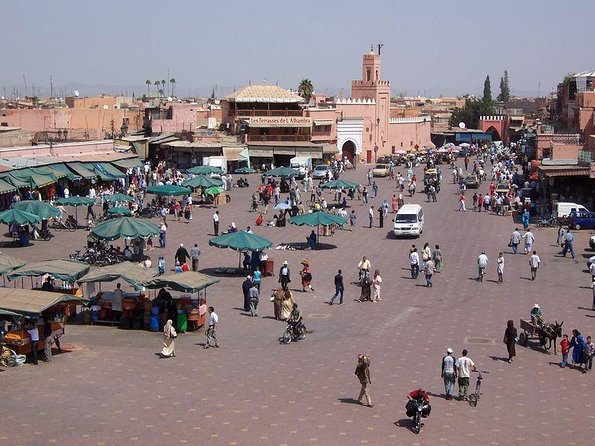
You meet at Poste du Maroc on Rue Beni Marine, in the heart of Marrakech’s old medina. The tour ends back at this meeting point, so you do not need to arrange a ride across town after dinner.
The evening lasts about three hours. That sounds short for a food tour with many stops and a full meal, and the pace can feel brisk when the route is busy. You will spend much of the time walking through narrow lanes, stopping to taste, listening to an explanation, and moving on before the next bite.
The group limit is 15. That is not an intimate private tour, but it is manageable for a walking route through the medina. A smaller group will make it easier to hear the guide and gather around tiny food stalls. If you are bringing a stroller, mention it clearly when booking. One poor experience involved a stroller and repeated stairs, and the route is not designed around that kind of equipment.
The tour runs near public transportation, but hotel pickup and drop-off are not included. Plan to reach the meeting point on your own. A mobile ticket is provided, and confirmation arrives when you book.
Two Routes Through the Medina
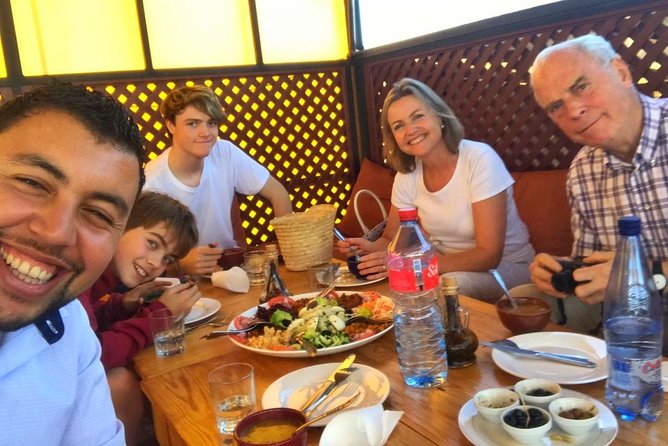
The company uses two different tasting routes. The exact path may depend on the guide, season, and the flow of the evening. This matters because you should think of the menu as a broad guide, not a guaranteed checklist.
One route focuses on sweets, soup, tea, and classic Moroccan snacks. The other gives more attention to the open-air food culture around Jemaa el-Fna. Both offer a useful introduction, but the experience will not be identical every night.
This flexible approach can work well in Marrakech. Food stalls open and close, ingredients change with the season, and the medina never follows a tidy schedule. The tradeoff is that you cannot know every tasting in advance.
More eating your way round Marrakech:
- Marrakech: Street Food Tour by Night
★ 4.8 · 2,838 reviews - Marrakech: Jemma El Fnaa Food Tour with Dinner
★ 4.7 · 394 reviews - Marrakech Night Street Food Tour / Taste The Real Marrakech
★ 4.9 · 200 reviews
Route One: Pastries, Harira, Snails, and Mint Tea
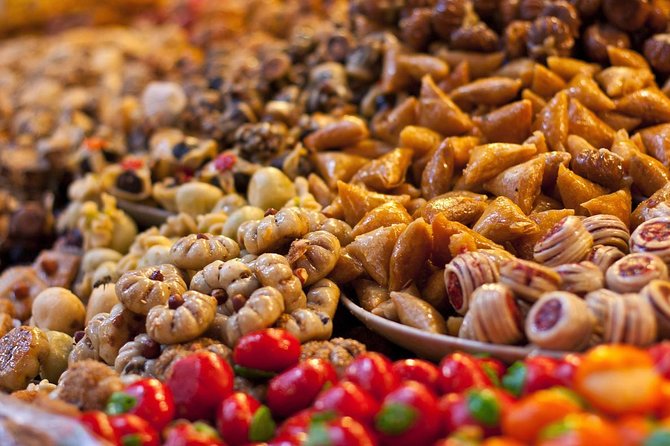
The first possible route begins with Moroccan coconut macaroons, a soft, sweet treat that is especially popular with children. You may then try kaab ghzal, often translated as gazelle ankles, a delicate pastry filled with almond paste and scented with orange blossom water.
The route also includes harira, Morocco’s famous tomato-based soup with pulses and herbs, served with dates and chebakia. This pairing is closely associated with breaking the fast during Ramadan. Even outside Ramadan, it gives you a useful lesson in how Moroccan food balances savory soup with a sticky, sesame-coated sweet.
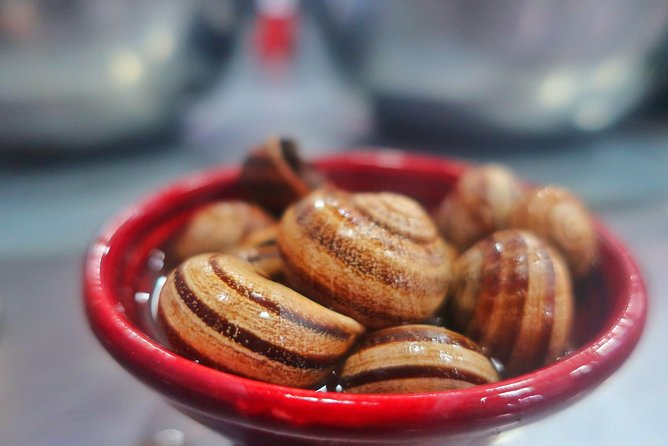
Babbouche, or Moroccan snails, is one of the more unusual stops. The snails are slowly cooked in an aromatic herbal broth. This is not a dare-style tasting. It is a regular Moroccan street food, and the broth is part of the appeal. If you like trying foods that do not appear on standard tourist menus, this can be one of the evening’s most memorable bites.
You may also taste msemmen, a layered pan-fried Moroccan pancake served with honey and cheese, alongside traditional mint tea. The texture is crisp at the edges and tender inside. Mint tea is more than a drink here. It is part of Moroccan hospitality and a chance for the guide to explain how tea fits into daily life.
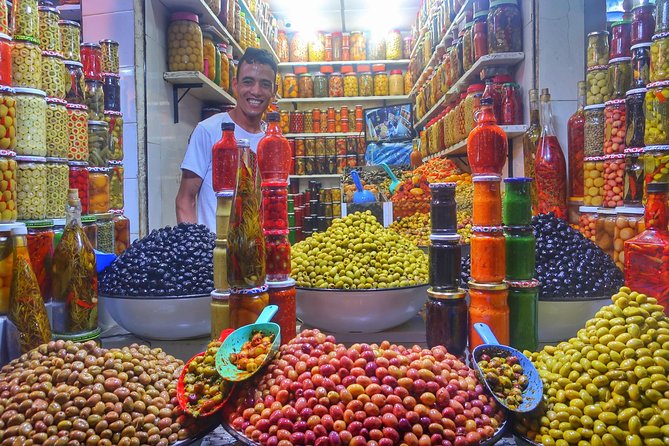
The route can finish its snack portion with fakya, a festive mix of dried fruit and nuts, plus Moroccan olives. Olive varieties differ in color, texture, and seasoning, so this is a simple tasting that helps you notice something you might otherwise treat as a garnish.
Route Two: Jemaa el-Fna Street Food
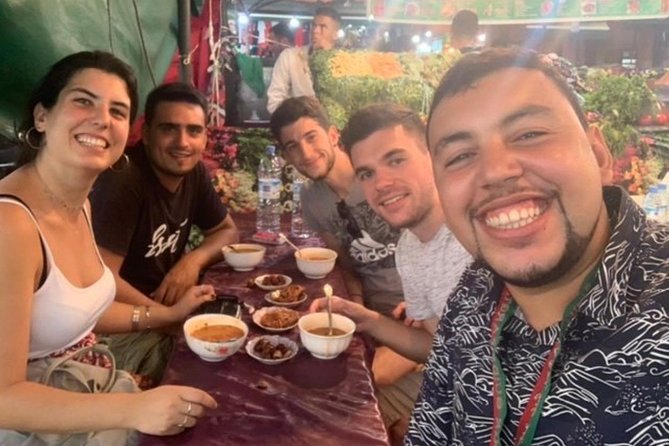
The second route is more adventurous. Msemen Amer is a Moroccan pancake filled with savory ingredients, often spiced vegetables. It is commonly eaten at teatime, but on this tour it works as a substantial early bite.
You may receive harira and chebakia again, since the combination is central to Moroccan food culture. Another stop is makkla bel kefta, a Moroccan version of shakshouka made with spiced meatballs and eggs. It offers a heavier, more filling taste than the pastries and soup.
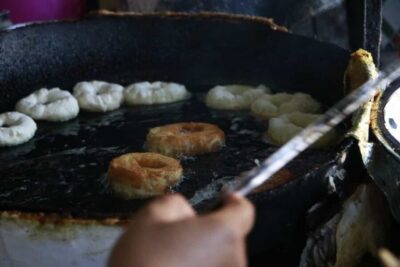
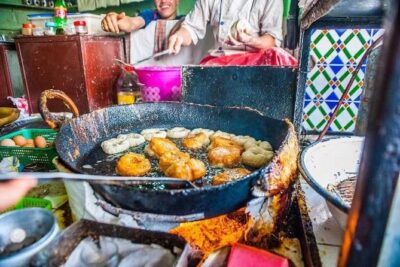
Sfenj is Morocco’s traditional doughnut. It is golden and crisp outside, airy and chewy within, and often eaten as a street snack. Lhindiya, or cactus fruit, provides a fresh contrast and can be especially welcome during hot weather.
The most daring tasting is rass mbekher, delicately steamed sheep’s head seasoned with cumin. You do not have to pretend every dish will suit you. The value is in seeing what people actually eat and having the guide explain the food before you decide.
The route may also include panaché, a smoothie made from seasonal fruit, and khoudenjal, a hot Moroccan drink. The combination of sweet, spicy, savory, crisp, chewy, and warm makes this route feel more like a full tour of Moroccan street food than a simple restaurant crawl.
The Rooftop Dinner Near Jemaa el-Fna
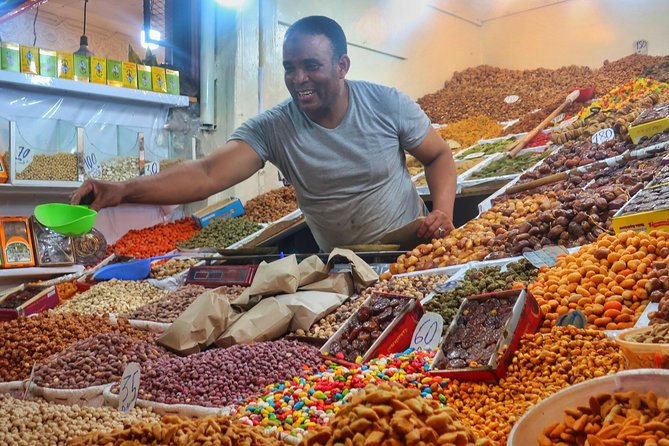
After the tastings, the planned finale is a sit-down three-course Moroccan dinner at a rooftop restaurant. This is important because the small samples add up, but they are still samples. A proper meal gives the evening a calm finish and lets you sit down after walking through the medina.
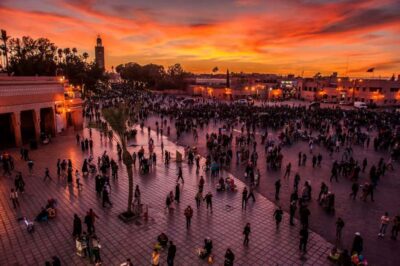
The rooftop setting is one of the strongest parts of the experience. You can look over Jemaa el-Fna and the surrounding old city while eating, rather than trying to balance a plate beside a crowded stall. Several accounts describe a satisfying meal with three dishes and dessert, and one specifically praises the evening view over the square.
The exact menu is not listed, so do not book this expecting a particular tagine, couscous, or dessert. The tour says there are various menu options, and vegetarian or other dietary needs can be arranged if you notify the provider after booking.
There is one practical warning. At least one account describes an evening that ended with food-stall tastings but no dinner, despite dinner being advertised. Other accounts clearly describe a full rooftop meal, so this appears to be an inconsistency rather than the intended format. I would confirm at the meeting point that the rooftop dinner is part of your evening, especially if the meal is the main reason you booked.
Same base, a different sort of day:
- Marrakech: Agafay Desert Sunset, Camel Ride, and Dinner Show
★ 4.6 · 35,119 reviews - From Marrakech: Ouzoud Waterfalls Guided Hike and Boat Trip
★ 4.7 · 33,630 reviews - Marrakech: Agafay Desert Quad & Camel Rides with Dinner Show
★ 4.8 · 27,382 reviews - Marrakech: Agafay Desert Quad Biking Tour with Dinner-Show
★ 4.8 · 16,569 reviews
Guides Make the Difference
The guide is central to this experience. The most praised guides include Mehdi and Houssaine, Hamza, Ali, Mohamed, Mo, and Hamsa. The best guides do more than point at food. They explain how a dish is made, why it is eaten, and how it connects with Moroccan customs.
Hamza is described as giving background on both food and local culture while keeping the group moving. Mo is praised for allowing the evening to flow without making it feel rushed. Mohamed helped a solo participant reconnect with the group after a delayed start and made sure the missed tasting was saved.
That kind of personal attention matters in the medina. The lanes can be confusing, food counters are small, and the best places are not always obvious from the street. A guide also removes the guesswork when you face a bowl of snails or a serving of sheep’s head.
The guide quality is not guaranteed to be identical every night. One account describes a substitute guide who bargained over restaurant prices and changed locations, creating an uncomfortable experience for someone with a stroller. The provider explained that the regular guide was away and the replacement was still learning the route. This is a reminder to ask who will lead your group if a particular guide has been recommended to you.
The Herbalist Shop: Useful Stop or Sales Pitch?
Depending on the pace, the group may stop at a traditional herbalist shop. This can be a pleasant pause, with information about Moroccan spices, herbs, and teas, plus mint tea and a restroom break.
It is not strictly a food stop, and some people find it interesting while others find it an unnecessary sales presentation. One account found the herbalist portion too long and objected to the medicinal claims. Another found the stop enjoyable but unexpected.
If you are eager to keep eating, this pause can feel like lost time. If you need a break or want to learn about Moroccan spices, it may be welcome. You can ask the guide how long the stop will last and treat any product claims with ordinary caution.
How Much Food Do You Actually Get?
Come hungry. The tour is designed to provide more than a few token samples. The exact number of stops varies in the descriptions, from about five substantial stops to eight or nine food stalls, while the main description says around 10 food spots.
That difference likely reflects the two routes and the way tastings are grouped. Either way, the evening includes enough food that some people take dessert away or feel completely full before the final meal.
The danger is not leaving hungry. It is filling up too early. If you want to enjoy the rooftop dinner, take small portions at the early stops and avoid treating every bite as a full serving. You may be offered dishes you cannot easily find elsewhere, so save room for the unusual items.
Vegetarian participants should notify the provider after booking. The same applies to other dietary needs. The tour can take care of these requests, but the guide needs the information ahead of time.
Is $54.45 a Fair Price?
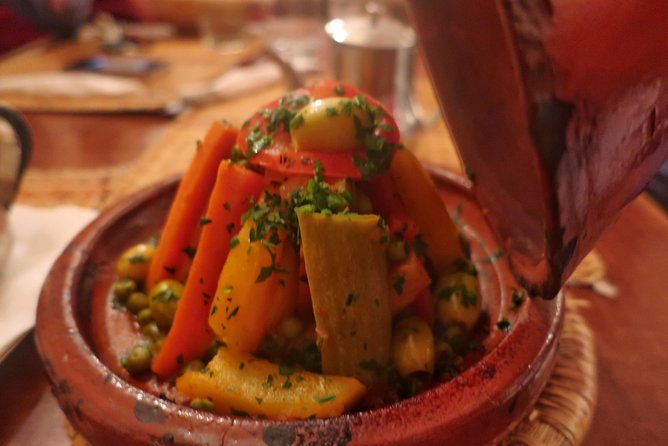
At $54.45 per person, the price is reasonable if the full format is delivered. You are paying for a local guide, food at several stops, mint tea, and a three-course dinner. A comparable evening of independent sampling could cost less, but you would need to find the stalls, choose safe and appealing portions, understand what you are ordering, and locate a rooftop restaurant yourself.
The value is strongest for a first evening in Marrakech. You get an introduction to dishes, the medina, and Jemaa el-Fna without spending your whole night guessing where to go. It also works well for solo visitors, since the group gives you company while you eat.
The price is less attractive if the dinner is missing or if the herbalist stop takes too much of the limited three-hour schedule. Confirm the dinner, arrive ready to walk, and ask about the route if you have strong food preferences.
The activity is highly rated overall, with 98 percent recommending it and a 4.9 rating from 1,425 reviews. Those numbers point to a strong record, but they do not erase the occasional problems with timing, substitute guides, group size, and dinner clarity.
Who Will Enjoy This Evening Most?
I would choose this tour if you want a broad taste of Moroccan food and prefer guidance over independent trial and error. It suits adventurous eaters who are open to snails, sheep’s head, cactus fruit, and unfamiliar drinks, as well as people who mainly want pastries, soup, tea, and a rooftop meal.
It is also a good fit for solo visitors. The group setting gives you an easy way to meet people, and the guide handles the route through the medina.
Families can enjoy it, but strollers are a concern. The narrow streets, stairs, and small eating places can be difficult. Anyone with limited mobility should ask about the route before booking, since the tour involves walking and the activity information only says that most people can participate.
You may prefer a private food tour if you dislike groups or need a fixed menu. With up to 15 people and routes that change, this experience favors variety and local atmosphere over control.
Should You Book It?
Book this tour if your priority is range: sweets, soup, tea, olives, street food, and a Moroccan dinner in one evening. The strongest guides add useful cultural context, and the rooftop finish gives the night a proper sense of place.
Before paying, send your dietary needs and ask for confirmation that the three-course dinner is included in your route. If you dislike sales-oriented stops, ask whether the herbalist visit will be part of the evening. With those points settled, $54.45 buys a generous introduction to Marrakech’s food culture and a practical way to find flavors you might otherwise miss.
FAQ
How long does the Marrakech food tour last?
The tour lasts approximately three hours, including the food tastings, walking through the medina, and the final dinner.
Where does the tour begin?
It begins at Poste du Maroc on Rue Beni Marine, Marrakech 48000, Morocco.
Where does the tour end?
The activity ends back at the meeting point.
Is dinner included?
Dinner is included in the tour description and is intended to be a three-course Moroccan meal at a rooftop restaurant. Since one account describes an evening without dinner, confirm this detail with the provider or guide on your tour date.
How many people can join the group?
The maximum group size is 15 people.
What foods might I taste?
Possible tastings include Moroccan pastries, coconut macaroons, kaab ghzal, harira, chebakia, babbouche snails, msemmen, olives, dried fruits, nuts, sfenj, cactus fruit, sheep’s head, fruit smoothies, and mint tea. The exact route varies.
Can vegetarians or people with dietary restrictions join?
Yes. You should notify the provider after booking about vegetarian needs or other dietary requirements.
Is hotel pickup included?
No. Hotel pickup and drop-off are not included. You must make your own way to the meeting point.
What is the cancellation policy?
You can cancel for a full refund up to 24 hours before the experience start time. Changes or cancellations made less than 24 hours before the start time are not refunded.
Just added in Marrakech
- Quad Ride In The Agafay Desert★ 5.0 · 39 reviews
- Quad Biking Agafay desert★ 5.0 · 20 reviews
- Marrakech: Tailor-Made City Tour With Your Own Private Guide★ 4.9 · 236 reviews
- Surf Training and Lunch on Essaouira Day Trip from Marrakech★ 4.9 · 51 reviews
- Essaouira: Surf Trip from Marrakech★ 4.9 · 31 reviews
- Marrakech palm grove: Sunset camel ride★ 4.8 · 194 reviews
- Marrakech: Sunrise Desert Tour with Camel Ride and Breakfast★ 4.4 · 36 reviews
- Marrakech : Agafay Desert Sunset Camel Ride & Luxury Dinner★ 4.3 · 39 reviews
Food Tours, compared.
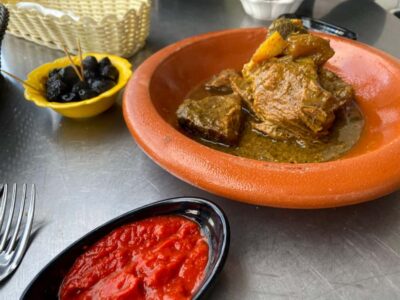
Marrakech Night Street Food Tour / Taste The Real Marrakech
Read our review →
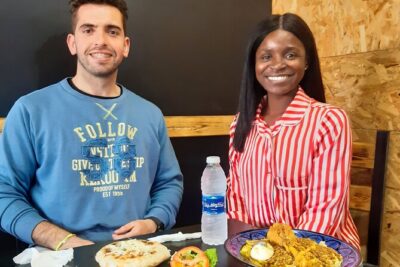
Authentic Food Tour in Agadir – Eat Like A Local
Read our review →
Casablanca Food Tour – Moroccan Street Food Tour
Read our review →Browse the lists this tour appears in