
Reviewed · MEDINA & SOUK TOURS
Marrakech: Medina Stories Food Tour with 15+ Tastings
Marrakech’s best food is often served in places you would walk past without noticing. This four-hour tour leads you from Bab Doukkala through the medina, stopping for 15 or more tastings at bakeries, tiny cafés, market stalls, and old local eateries before ending above Jemaa el Fnaa.
I like the way the tour connects food with daily life. You may see bread being baked in a communal oven, learn how tangia cooks in a hammam fire, and try dishes you would be unlikely to order alone. I also like the small group limit of eight and the guides, especially Rachid, who are praised for clear explanations, good humor, and a warm manner.
The main drawback is dietary choice. This is not a practical tour for vegans, people with severe allergies, or anyone with celiac disease. Vegetarians can join, but the experience provides four or five fewer tastings, so you should contact the operator before booking if food restrictions matter.
Key points at a glance
- Start at Bab Doukkala: Meet north of the Koutoubia Mosque and walk south through the medina.
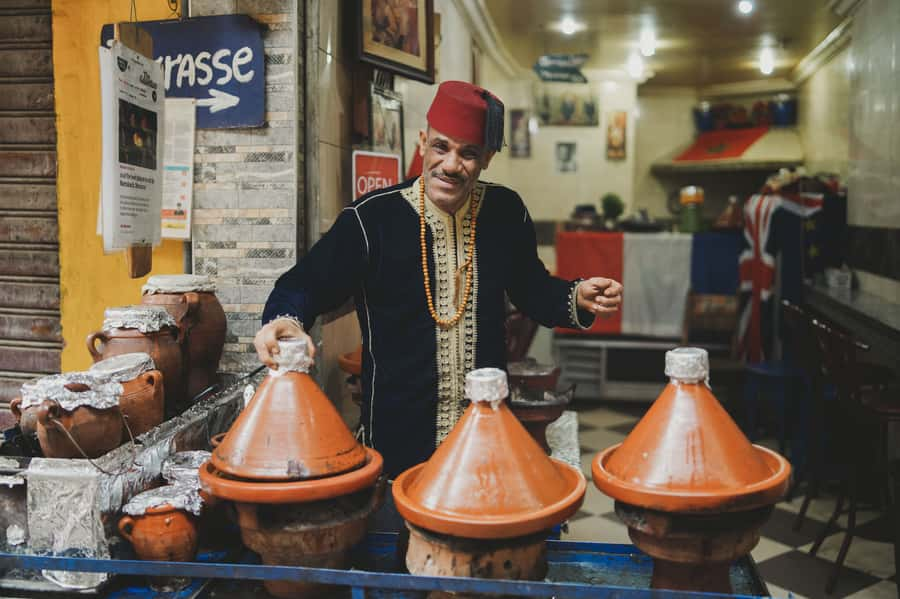
- More than a standard tagine tour: Expect sardines, escargot, chicken skewers, harira, dates, tangia, pastries, coffee, and mint tea.
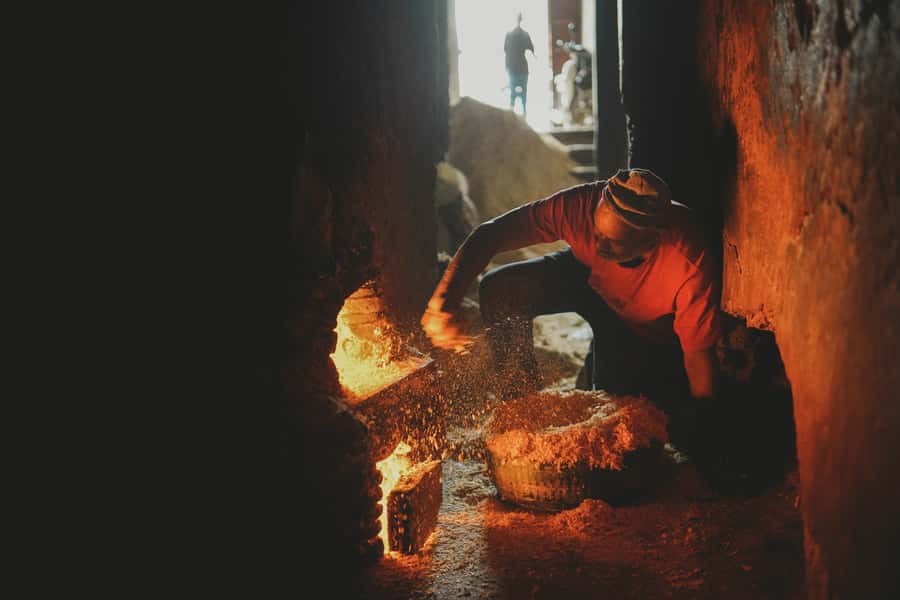
- Behind-the-scenes food stops: See a community bakery and the fire used to cook tangia in a hammam.
- Small group setting: The group is limited to eight, which makes questions and food sharing easier.
- Finish above Jemaa el Fnaa: The final hour includes tea, snacks, and a rooftop view over Marrakech’s main square.
- Come very hungry: The tastings can add up to lunch and dinner, not just a few samples.
Why this food tour feels different from a walk through the souks
You can walk through Marrakech’s medina for hours and still miss most of its everyday food culture. Many stalls have no clear menu, dishes may be unfamiliar, and the busiest vendors can feel hard to approach. A local guide changes that.
The point here is not simply to eat a lot. It is to understand why food works the way it does in Moroccan life. You learn why bread carries special importance, what argan oil is used for, why dates may be served in odd numbers, and how communal ovens support a neighborhood.
The best part is the access. You may enter a local bakery, see bread being handled and baked, and visit the basement fire of a hammam where tangia cooks slowly in the embers. These are working places, not displays prepared for tourists. You are still a visitor, of course, but the tour gives you a more useful look at how meals reach the table.
The guide also helps you order with confidence after the tour. By the end, you will have seen unfamiliar foods prepared, heard what goes into them, and learned which stalls or cafés are worth returning to. That practical knowledge can improve the rest of your time in Marrakech.
Other medina and souk tours in Marrakech people book:
- Marrakech: Bahia Palace, Saadian Tombs, Souk and Medina Tour
★ 4.7 · 4,974 reviews - Marrakech: Ben Youssef, Secret Garden, & Souks Walking Tour
★ 4.6 · 2,802 reviews - Marrakech: Colorful Medina Souks Guided Walking Tour
★ 4.7 · 2,470 reviews
Bab Doukkala begins the four-hour walk
The meeting point is Bab Doukkala, on the Rue Boutouil side of the gate. The gate has four arches, with road traffic passing through the two central arches and pedestrians using the smaller arches at the sides. Look for the small sidewalk kiosk near one of the pedestrian arches.
This location is around a 20-minute walk north of the Koutoubia Mosque. You can also take a taxi from your hotel. Give yourself extra time, since the gate sits at the edge of a busy part of the city and the meeting point can be confusing if you arrive at the wrong side.
Starting here gives the tour a useful shape. You begin away from the main square, then work through the medina and souks toward Jemaa el Fnaa. That means you see more than the central tourist streets and get a better sense of how the city changes as you walk.
Wear comfortable shoes. The pace is described as easy, but you will be on your feet for four hours, with repeated stops, narrow lanes, and uneven walking surfaces. The tour runs in rain, so bring an umbrella or rain gear if the forecast looks uncertain.
First tastings: bakeries, grills, and market food
The first hour focuses on street food and local food businesses around the northern side of the medina. This is where the tour begins to earn its price. Instead of filling up on one large plate, you receive small portions across many stops.
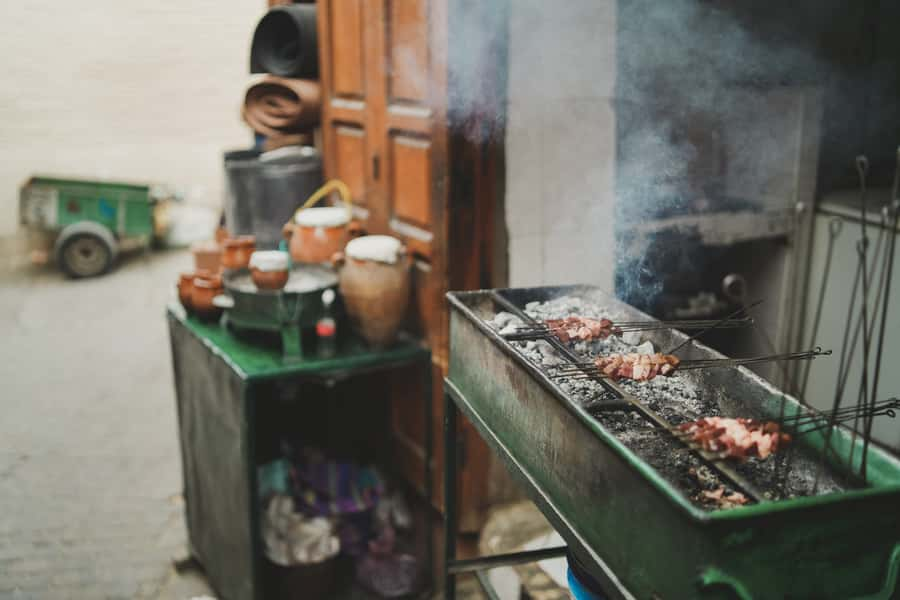
You might try sardines seasoned with cumin and cooked in a wood-fired bakehouse. You may see meat being grilled over charcoal, with chicken skewers or liver among the foods available. Other stops can include local snacks, bread, and dishes that are hard to identify from appearance alone.
The portions are usually arranged so you can taste widely without becoming full too soon. Still, the food keeps coming. Some people count more than 20 separate items and drinks, even though the advertised minimum is 15 tastings.
I find this format better than a meal at one restaurant because it shows the range of Moroccan cooking. You can compare smoky, spicy, sour, sweet, and herbal flavors in a single afternoon. You also get a chance to watch vendors work, rather than simply receiving a finished plate at a table.
The guide handles much of the communication. That matters when a food stall has no English menu or when you want to know whether a dish contains a particular ingredient. It also makes it easier to step into small places that might feel intimidating on your own.
Two hours through the medina and its working kitchens
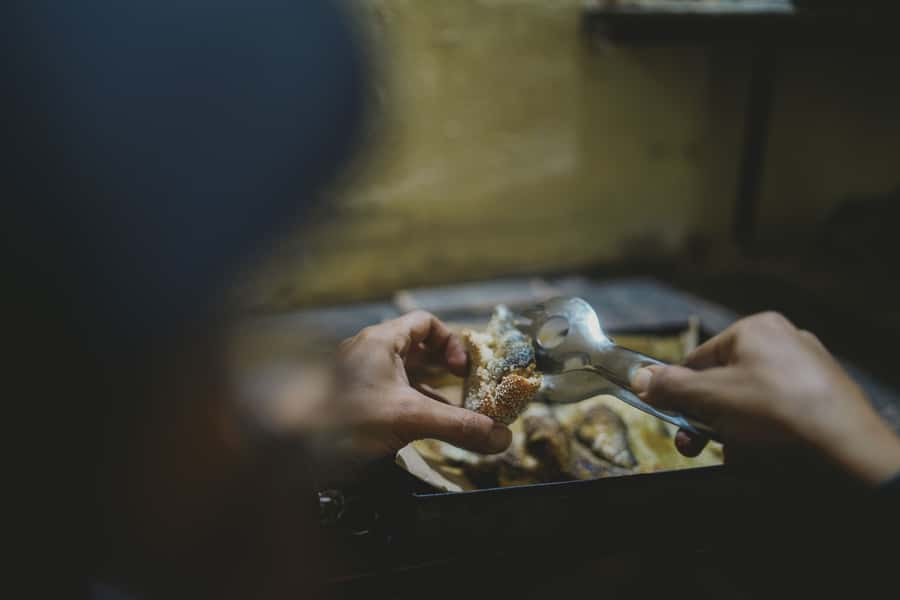
The longest part of the tour lasts about two hours in the medina. This is the heart of the experience, with food stops mixed into a walk through the lanes, souks, and smaller eateries.
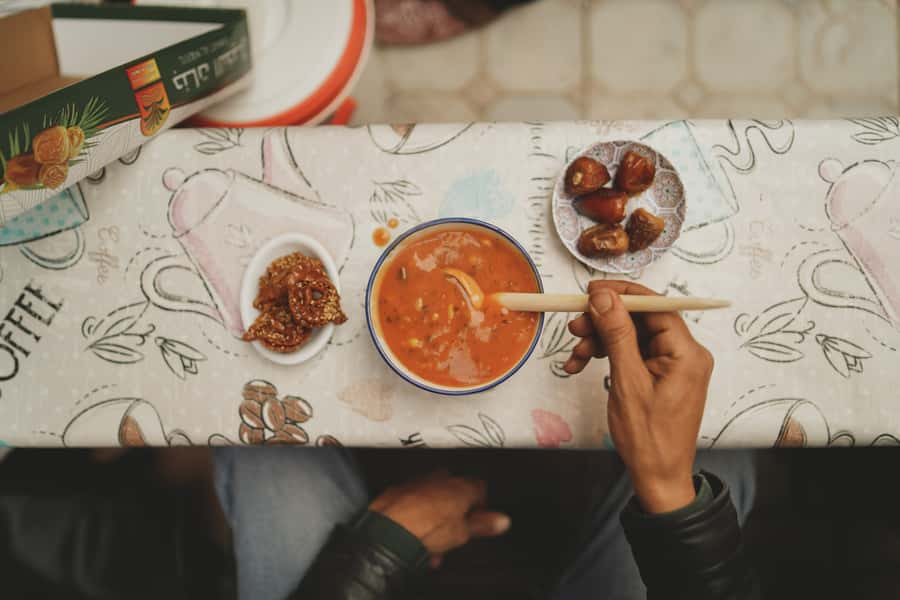
Expect a broad mix of sweet and savory foods. Harira, the warming Moroccan soup, may arrive with dates. The combination gives you a useful lesson in balance: a lightly spiced soup followed by the concentrated sweetness of a date.
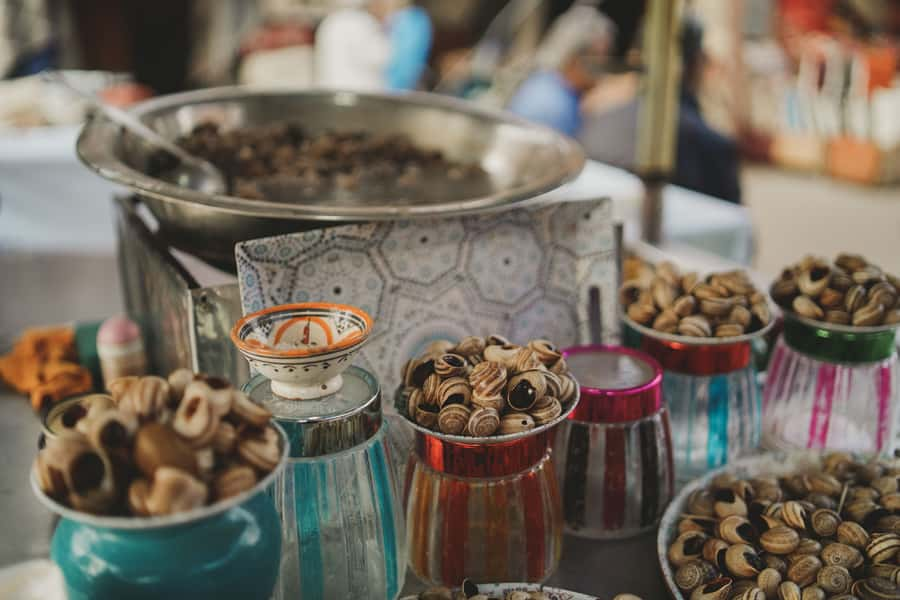
You may also try escargot simmered with ras el hanout, a fragrant Moroccan spice blend. It is a good example of why a guide helps. The dish may look unfamiliar, and the eating method or seasoning may not be obvious, but a short explanation makes it far less daunting.
Tangia is another important stop. This slow-cooked dish is traditionally prepared in a clay vessel and left in the embers of a hammam fire. Seeing the cooking place gives the dish a social context. The hammam is not only a bathing site. Its fire can also support the preparation of food for the neighborhood.
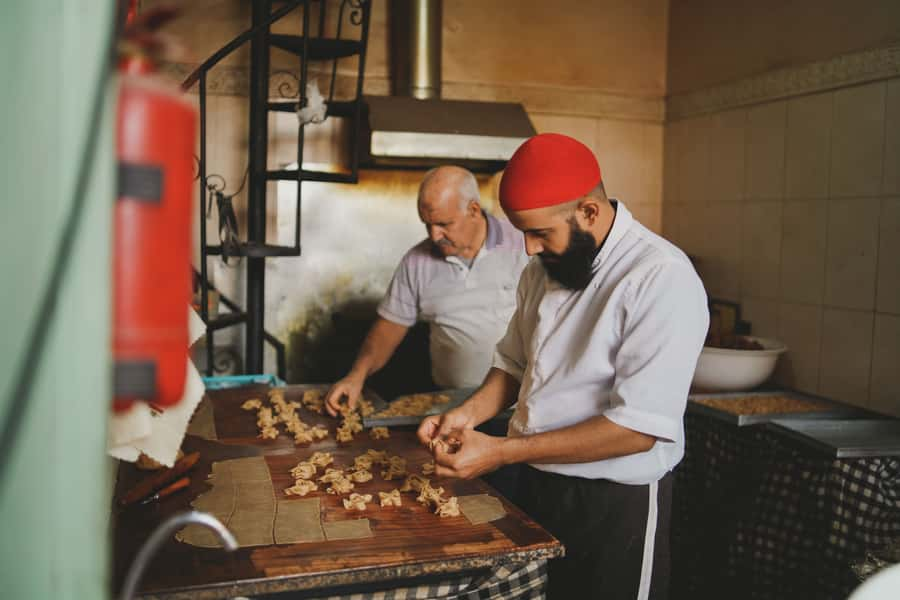
Several people particularly value the community bakery visit. Bread is central to Moroccan meals, and these ovens show how food production can be shared locally. You may also have a chance to shape a pastry or sweet, though hands-on activities can vary by departure.
The stops are generally well timed. Food is often prepared or arranged before the group arrives, and seating may be ready at some locations. That keeps the four hours moving without making you feel rushed. The group limit of eight also helps. You can hear the guide, ask questions, and avoid the long pauses that larger food tours often create.
More eating your way round Marrakech:
- Marrakech: Street Food Tour by Night
★ 4.8 · 2,838 reviews - Authentic Moroccan Food Tour in Marrakech with Dinner
★ 5.0 · 1,423 reviews - Marrakech: Jemma El Fnaa Food Tour with Dinner
★ 4.7 · 394 reviews - Marrakech Night Street Food Tour / Taste The Real Marrakech
★ 4.9 · 200 reviews
The food matters, but the stories make it memorable

Rachid, also spelled Rashid in some descriptions, has led many departures and is known for explaining ingredients, cooking methods, and customs in plain language. Other departures have been led by guides named Said or Sayid. The common thread is an English-speaking local guide who connects the dishes to Moroccan life.
You may hear personal stories about growing up in Morocco, the work behind a local bakery, or the skill required to pour mint tea from a height. The guide can also explain why particular foods are eaten in certain ways and how to recognize ingredients you may want to find again.
The tour is especially useful for first-time visitors. The medina can feel confusing at first, with lanes that bend sharply and shops that look similar. Moving through it with a food purpose helps you get your bearings without turning the afternoon into a formal sightseeing walk.
I would book it early in your stay. You will learn where to eat, how to approach local vendors, and which dishes deserve another try. Several foods may be worth returning to later, and the route gives you a rough north-to-south view of the central medina.
Jemaa el Fnaa finishes with tea and a rooftop view
The final hour brings you to Jemaa el Fnaa, Marrakech’s main square. Here the emphasis shifts toward tea, street food, snacks, and a chance to look back over the route you have covered.
The rooftop ending is a smart choice. The square can be loud and tiring at ground level, with vendors, food stalls, performers, and constant movement. From above, you can watch the activity without being pressed into ordering another meal or navigating the crowd at close range.
If your timing catches sunset, the rooftop offers a particularly attractive finish. You can sip mint tea, take in the square, and let the food settle before heading back to your hotel or continuing into the evening.
The square is worth seeing, but I would not rely on it alone for your food education. A guide can help you decide what to try and which stalls suit your interests. The tour’s earlier stops are often more revealing because they show ordinary neighborhood food rather than only the most visible dishes in the main square.
What the $55 price really covers
At $55 per person, the tour is not the cheapest way to eat in Marrakech. You could buy individual snacks for far less. But that comparison misses what is included.
The fee covers four hours with a local foodie guide, more than 15 tastings, bottled water, access to a small group of no more than eight, and the time spent finding and arranging each stop. It also covers the judgment involved in choosing places where you can taste a wide range of food without having to guess what to order.
If you count the food as a substantial lunch and dinner, the price becomes easier to justify. The value is stronger still if you are new to Marrakech and want a fast education in local dishes. The tour may save you from spending money on meals you do not enjoy simply because the menu or stall was hard to read.
Alcohol is not included. Hotel pickup and drop-off are also not included, so plan for your own taxi or walk to Bab Doukkala. At the end, taxis are available around Jemaa el Fnaa.
Free cancellation is available up to 24 hours before the start, and you can reserve now and pay later. Check the available departure times when booking, since the four-hour schedule can affect whether you catch daylight or sunset at the rooftop.
Dietary limits need serious attention
This tour is built around local street food and small vendors. That is its strength, but it also limits control over ingredients and preparation.
It is not suitable for vegans, pregnant women, people with food allergies, or people following a celiac diet. Severe allergies and celiac disease are particular concerns because of shared surfaces and the risk of traces or cross-contamination.
Vegetarians can take part in some cases, but you should expect four or five fewer tastings because many of the main stops rely on meat or fish. One vegetarian departure still included most of the experience, but the tour is clearly designed around the full local menu, not a vegetarian substitute route.
If you have a mild preference rather than a strict medical restriction, ask before booking. Do not assume the guide can change every dish at a street vendor.
Who will enjoy this most
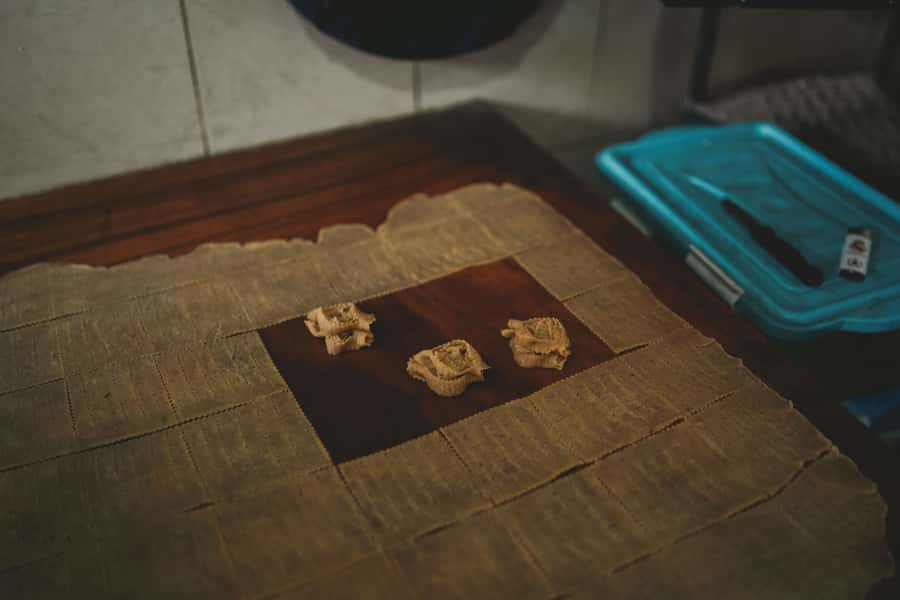
I would recommend this tour to first-time visitors, curious eaters, and anyone who wants a practical introduction to the medina. It suits people who enjoy trying small portions rather than sitting down for one long meal.
It is also a good fit if you feel hesitant about street food. You will have a local guide beside you, bottled water is included, and the stops are organized rather than left to chance. Hand sanitizer and tissues may also be provided during the route.
Families with young children should consider the four-hour walking time and the unfamiliar foods. The tour information does not specify a minimum age, so check before booking if that matters to your group.
Bring an empty stomach. Skipping lunch is sensible if you take an afternoon or evening departure. The amount can be enough for two meals, and some people still cannot finish every tasting.
Should you book the Medina Stories Food Tour?
Book it if you want more than tagine and mint tea. The best reasons are the range of food, the access to working bakeries and ovens, the small group, and the chance to learn how everyday Moroccan cooking fits into community life.
I would especially choose it near the start of a Marrakech visit. You will leave with a fuller stomach, a better sense of the medina, and a list of foods and stalls to seek out later.
Skip it if you need strict dietary control, dislike eating meat and fish, or prefer a slow restaurant meal. For everyone else, $55 is a fair price for a four-hour food route that combines tasting, local context, and a fine rooftop finish above Jemaa el Fnaa.
FAQ
How long does the Marrakech food tour last?
The tour lasts four hours. The route includes about one hour near the opening food stops, two hours in the medina, and one hour around Jemaa el Fnaa.
Where does the tour begin?
It begins at Bab Doukkala, on the Rue Boutouil side of the gate. The address is Bab Doukkala, Marrakesh 40000, Morocco.
Where does the tour finish?
The tour finishes at Jemaa el Fnaa, Marrakech’s main square.
How many food tastings are included?
The tour includes more than 15 tastings, ranging from street food and snacks to full dishes, tea, coffee, and other drinks. The exact number can vary, and some departures include more than 20 items.
Is the tour suitable for vegetarians?
Vegetarians can join, but the tour information says they will receive four or five fewer tastings because there are limited alternatives. The experience is not designed for vegans.
Can people with food allergies or celiac disease join?
No. The tour is considered unsuitable for severe allergies and celiac diets because of the risk of traces and cross-contamination at street food vendors.
Is hotel transportation included?
No. Hotel pickup and drop-off are not included. You can take a taxi to Bab Doukkala, and taxi services are available near Jemaa el Fnaa after the tour.
What should I bring?
Wear comfortable shoes and dress for the weather. Bring an umbrella or rain gear if rain is possible. Most importantly, arrive hungry.
More medina and souk tours elsewhere in Morocco
- Marrakech: Saadian Tombs & Bahia Palace, Medina Guided Tour
★ 4.6 · 1,989 reviews - Marrakech Monuments & Souks 3-Hour Tour
★ 3.8 · 1,540 reviews - Marrakech: Bahia Palace, Madrasa Ben Youssef and Medina Tour
★ 4.7 · 1,347 reviews - Marrakech: Madrassa Ben Youssef, Secret Garden & Medina Tour
★ 4.8 · 1,303 reviews
Just added in Marrakech
- Quad Ride In The Agafay Desert★ 5.0 · 39 reviews
- Quad Biking Agafay desert★ 5.0 · 20 reviews
- Marrakech: Tailor-Made City Tour With Your Own Private Guide★ 4.9 · 236 reviews
- Surf Training and Lunch on Essaouira Day Trip from Marrakech★ 4.9 · 51 reviews
- Essaouira: Surf Trip from Marrakech★ 4.9 · 31 reviews
- Marrakech palm grove: Sunset camel ride★ 4.8 · 194 reviews
- Marrakech : Agafay Desert Sunset Camel Ride & Luxury Dinner★ 4.3 · 39 reviews
- Marrakech: Sunrise Desert Tour with Camel Ride and Breakfast★ 4.4 · 36 reviews
Medina & Souk Tours, compared.
Bahia Palace, Saadian Tombs, Souk and Medina Tour
Read our review →
Ben Youssef, Secret Garden, & Souks Walking Tour
Read our review →
Museum, Al Attarine Madrasa & Tannery and Medina Tour
Read our review →
Bahia Palace, Madrasa Ben Youssef and Medina Tour
Read our review →
Explore Fes: Unforgettable Guided Walking Tour of the Medina
Read our review →Browse the lists this tour appears in