
Reviewed · CYCLING TOURS
Marrakech: Cycling Tour in Palm Groove with Local Breakfast
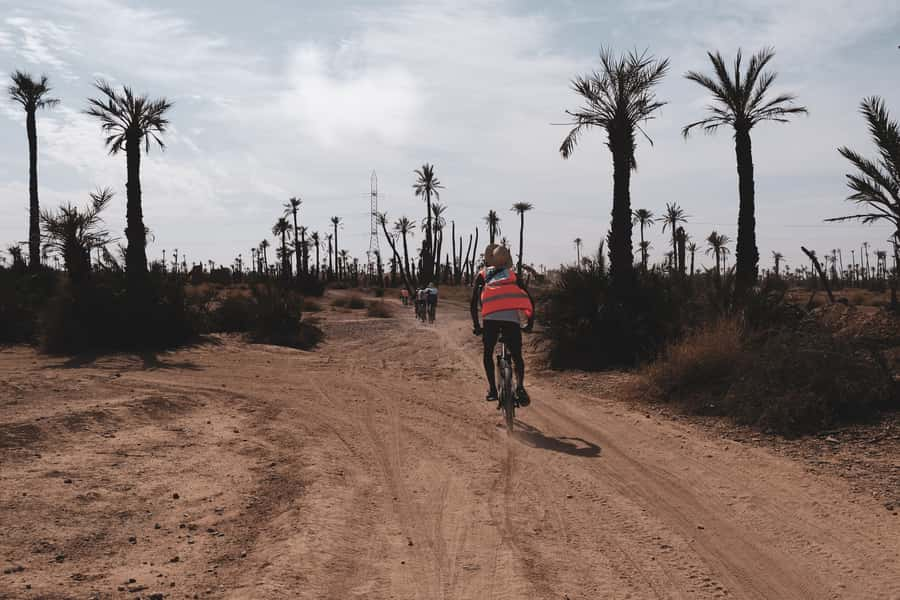
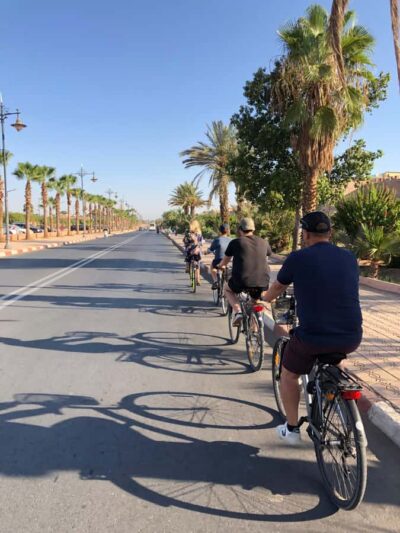
The most interesting part of this Palmeraie cycling tour is the sharp change in scenery. In about 15 minutes, you leave the city center behind and trade Marrakech’s traffic and walls for palm groves, village lanes, old water channels, and small craft workshops. It is a useful way to see how the oasis works, not just how it looks.
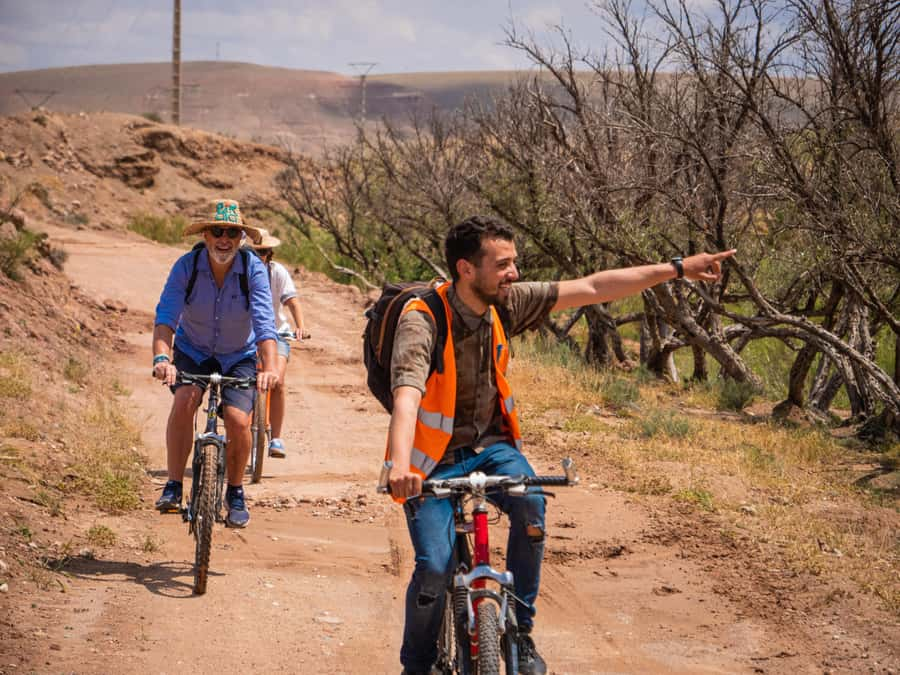
I like the mix of local breakfast and practical history, especially the stop with Aziz, where you share fresh bread, butter, olive oil, olives, tea, juice, and Moroccan pastries. I also like the young guides, including Ahmed, Yassim, Ayoub, and Khawla, who explain daily life, water, bread, palms, and architecture in a relaxed way. The main drawback is the ride through and out of the Medina. It is flat and manageable, but the narrow streets can feel tricky until you get used to the bike.
Key points to know before you ride
- A 17-kilometer route: Expect a mostly gentle, flat ride lasting about 150 minutes.
- A real change of scene: Move from villas and large private compounds to tiny villages in the Palmeraie.
- Breakfast with Aziz: Stop for bread, butter, olive oil, olives, tea or juice, and Moroccan pastries.
- Water and village life: Learn how old irrigation systems support the palm oasis.
- Hands-on local culture: See Moroccan bread baking and small zellige tile workshops.
- Best for curious cyclists: You need to feel comfortable on a bike, but the pace is described as gentle.
From Pikala Bikes into the Marrakech Palmeraie
You meet at the Pikala Bikes headquarters, not at your hotel or riad. Hotel pickup and drop-off are not included, so allow time to reach the meeting point before the start. The ride begins with roughly 15 minutes of cycling from the city center.
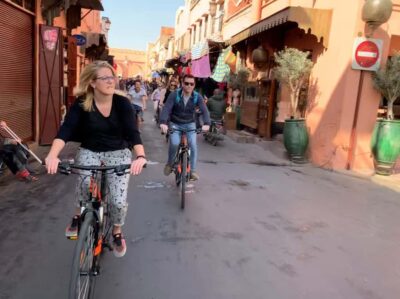
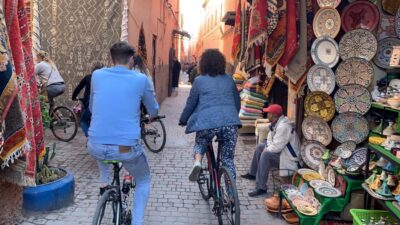
That opening stretch matters. It is not the calmest part of the outing, and the Medina can be a challenging place to cycle. Narrow streets, pedestrians, and changing traffic require attention. One parent riding with her daughter found the first and last sections nerve-racking at first, but said the guide’s advice helped her feel in control. Another cyclist who rides often at home still found the Medina section a little demanding.
I would treat this first part as a short skill check rather than a scenic highlight. Listen closely to your guide, leave space around you, and do not rush. The guides are trained young locals, and their role is not only to explain the route. They also help you handle the city streets and keep the group together.
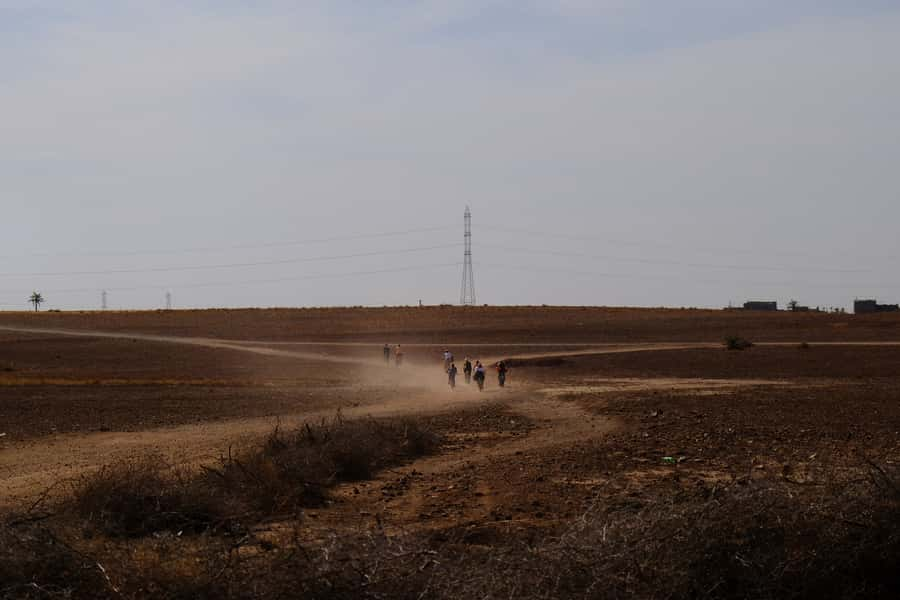
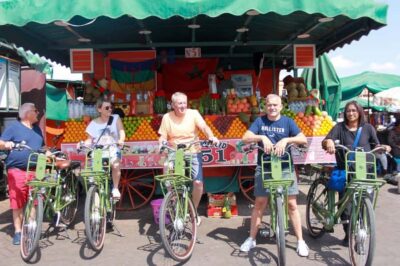
Once you clear the central streets, the ride feels easier. The route is generally flat, and one account puts the total distance at about 17 kilometers. That is not a race distance, but it is enough to make sensible clothing, water, and sun protection worthwhile. Water and suncream are included, along with the bikes.
Other rides on two wheels around Marrakech:
- Marrakech: Cultural Bicycle Tour with Pastry and Tea
★ 4.8 · 583 reviews - Marrakech: Bicycle Tour with a Local Guide
★ 4.7 · 495 reviews - Marrakech : Electric Bicycle City Tour
★ 4.8 · 363 reviews
Villas, castles, and villages in one short ride
The Palmeraie gives you a useful contrast that is hard to see from a taxi window. On one side, you pass fancy villas and large private compounds. Soon after, you turn onto off-track roads and reach small villages where local families still live within the oasis.
This contrast is not presented as a simple postcard scene. Your guide explains how communities manage life in a dry setting and why water remains so important. You also learn about the special place of palm trees in the oasis, both as a source of shade and as part of the area’s identity.
The route has several changes of mood. There are open stretches, palm-lined sections, village lanes, and stops where the guide points out details you could easily miss on your own. It is worth choosing this trip if you want more than a pleasant bike ride. The guide’s explanations give meaning to the irrigation channels, palms, fields, buildings, and working spaces around you.
Do not expect a polished sightseeing circuit with grand monuments at every turn. Much of the value is in seeing ordinary places and hearing how they fit together. The reward is a closer look at the oasis as a living area rather than a backdrop for resorts.
Tea, bread, and breakfast at Aziz’s atelier
The food stop with Aziz is the heart of the outing. You pause at his atelier for tea or juice and a simple Moroccan breakfast of fresh bread, butter, olive oil, olives, and pastries. The setting is peaceful, and Aziz shares stories about the place and the people who live there.
This is not a large restaurant meal. Think of it as a generous local snack and a chance to sit down after the first section of riding. For many people, that is exactly the right balance. You get to try everyday Moroccan foods in a social setting, without losing much of the cycling time.
Bread is especially important here because it is not treated as just another item on the table. The tour later connects breakfast to the village oven, where you see how bread is baked and learn about its place in Moroccan culture. That link makes the meal more meaningful than a standard tea stop.
The ingredients are simple, but they suit the setting. Tear bread, dip it in olive oil, try it with butter or olives, and take time with the tea. If you want a large breakfast or have strict dietary needs, the information provided does not promise a full menu or special alternatives, so you should ask before booking.
Old irrigation systems and the value of water
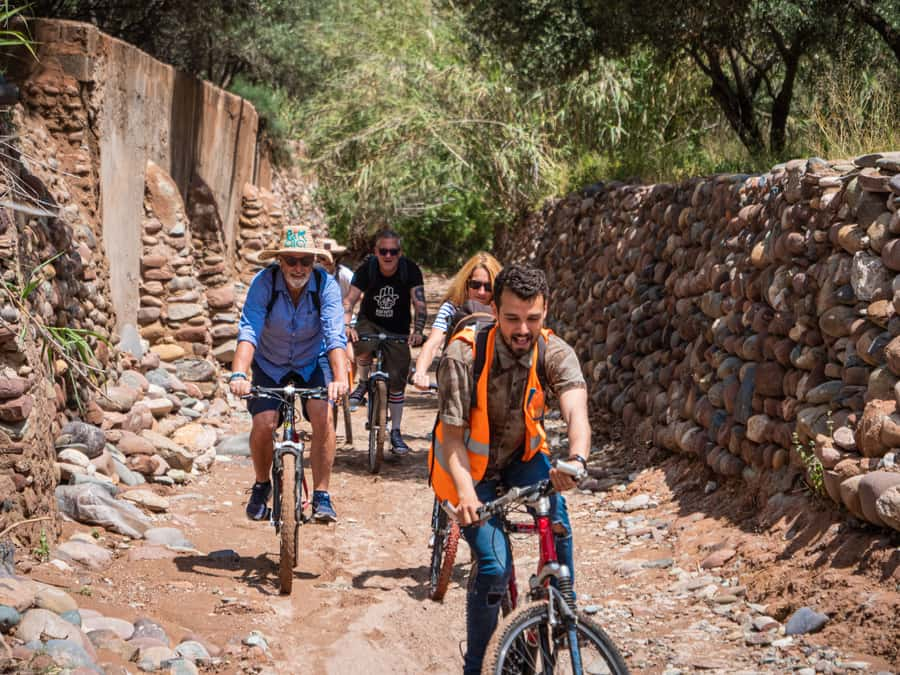
One of the strongest parts of the tour is the explanation of water. Marrakech’s palm oasis exists in a dry region, so the old irrigation system is not a decorative relic. It shows how communities have shared and directed scarce water across difficult ground.
Your young guide explains how the local community survives in these conditions and takes you to see an old water system. The exact form and condition of the system can vary, but the point is clear: the oasis depends on careful use of water, not simply on the presence of palm trees.
I like this stop because it adds practical context to the ride. You are not just looking at palms and village paths. You are learning why the area exists, what keeps it working, and why water is such a serious subject in local life.
The tour does not include a visit to the Water Museum. That is a separate cost and activity, so do not assume the irrigation stop includes museum entry. You still get an introduction to the water system, but anyone wanting a formal museum visit should plan it separately.
Same base, a different sort of day:
- Marrakech: Agafay Desert Sunset, Camel Ride, and Dinner Show
★ 4.6 · 35,119 reviews - From Marrakech: Ouzoud Waterfalls Guided Hike and Boat Trip
★ 4.7 · 33,630 reviews - Marrakech: Agafay Desert Quad & Camel Rides with Dinner Show
★ 4.8 · 27,382 reviews - Marrakech: Agafay Desert Quad Biking Tour with Dinner-Show
★ 4.8 · 16,569 reviews
Bread baking and the meaning of a village oven
A visit to a local oven gives the tour another everyday detail. You watch village women baking bread in an open-air setting and learn why bread carries such weight in Moroccan culture.
This is a short stop, not a cooking class. You are there to observe the process and understand its place in village life. The experience works because it is connected to the breakfast at Aziz’s atelier. You first eat the bread, then see the work and shared routine behind it.
I would approach this moment respectfully. It is a working local space, not a staged performance designed only for photographs. Follow the guide’s instructions, watch quietly, and let the explanation lead. The supplied details do not promise that every visitor bakes bread personally, so do not book this expecting hands-on cooking.
Zellige tiles in small local workshops
The route also includes stops at tiny Moroccan craft ateliers producing zellige tiles. Zellige is the colorful geometric tilework associated with Moroccan design, and these small workshops show the craft at a human scale.
You can expect your guide to explain the artistry and point out how the tiles are made or used. The information does not specify a full demonstration, a shopping stop, or a chance to make your own tile, so keep expectations modest. The value is in seeing the craft where it is practiced and connecting it to Moroccan architecture.
This stop adds variety to the ride. You move from water management to food, then to decorative arts. It also helps explain details you see elsewhere in Marrakech, where tile patterns can look ornamental until you understand the skill behind them.
What the guides add to the experience
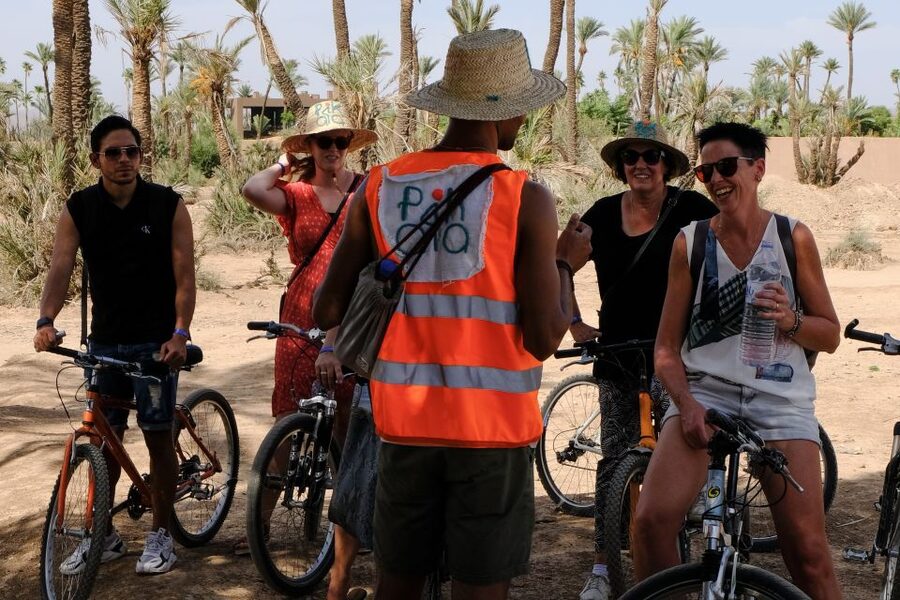
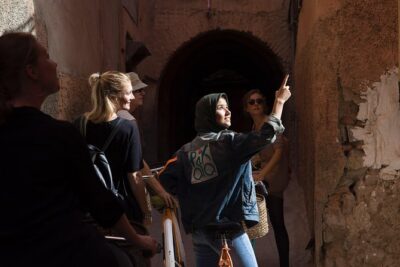
The guides are a major part of the tour. English and French are available, and the comments about the guiding are consistently warm. Ahmed is described as patient, attentive, and careful about safety. Yassim shared details about local culture and his experience growing up in Morocco. Ayoub was praised for his pleasant manner, while Khawla brought enthusiasm and explained culture and architecture clearly.
Those names matter because this is not an audio-guided route. Your understanding depends on the person leading you. A good guide helps you read the streets, answers questions, explains local customs, and adjusts the pace when needed.
The guides are young locals, which gives the tour a personal angle. You hear about the area from people connected to present-day Marrakech rather than only receiving a standard historical script. That does not mean every guide will tell the same stories, but the central themes remain the same: water, palms, village life, bread, architecture, and local craft.
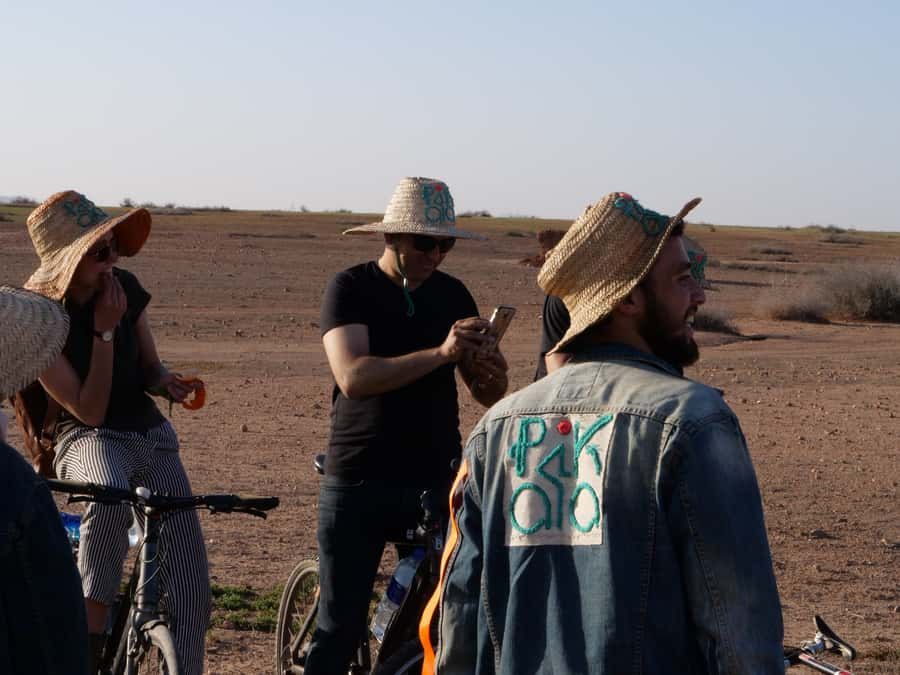
The group size is not specified. One outing had only two participants, while many other people were gathered at Pikala Bikes for different tours. Your ride may therefore feel quite personal or may include a larger group. Either way, the guide’s care with safety is an important benefit during the Medina section.
Is $34 a fair price?
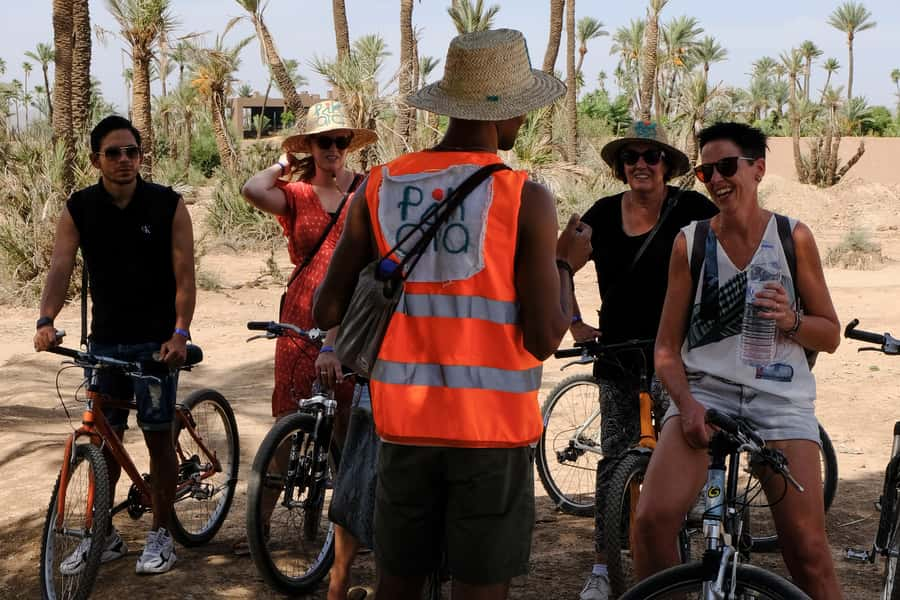
At $34 per person, the tour offers solid value if you want several experiences in one outing. You get a bike, water, suncream, a live guide, the full ride, a breakfast stop with tea or juice and pastries, and visits connected to local food, irrigation, and craft.
You are also paying for access and interpretation, not just bike hire. Renting a bicycle alone would not give you the route through the villages, the explanation of the water system, the introduction to Aziz, or the context behind the bread oven and zellige workshops.
The price is less compelling if you only want a short, easy ride or if you are uncomfortable cycling in city traffic. The opening and closing sections require attention, and the route lasts two and a half hours. You should also remember that hotel transfers and the Water Museum are not included.
For an active morning or afternoon, I think the cost is reasonable. It combines transport under your own power, food, local contact, and a look at parts of the Palmeraie that are easy to miss from a vehicle.
Who should book this Palmeraie ride?
I would choose this tour if you want to:
- See the Palmeraie beyond its villas and resort compounds
- Learn how water supports life in a dry oasis
- Meet local people in a small, informal setting
- Pair gentle cycling with food and craft stops
- Support the work of Pikala Bikes
- Hear directly from a young Moroccan guide about local life
It suits adults, families with older children, and people who cycle regularly at home. One mother and daughter completed it together, and experienced cyclists found the route comfortable once they passed through the Medina.
I would think twice if you dislike cycling near pedestrians or feel anxious on a bike. The ride is mostly flat, but flat does not mean completely effortless. The Medina can feel hectic, and you need enough confidence to steer, stop, and follow instructions in tight streets.
Wear comfortable clothes and shoes, and expect strong sun. The tour provides water and suncream, but you should still arrive prepared for an outdoor ride. The duration is fixed at 150 minutes, so plan it as a substantial half-day activity rather than a quick add-on.
Booking, languages, and cancellation
The tour runs with a live guide in English or French. Starting times vary, so check availability for your preferred date. You meet at Pikala Bikes headquarters, and no hotel or riad transfer is provided.
You can reserve now and pay later, which is useful if your Marrakech schedule is still shifting. Free cancellation is available up to 24 hours before the start for a full refund.
Should you book it?
Book this cycling tour if you want to understand the Palmeraie as a working oasis, not just photograph palm trees. The best parts are the gentle village ride, the water story, breakfast with Aziz, the bread oven, and the small zellige workshops.
Skip it if you want a completely traffic-free bike path, a long gourmet meal, or a formal museum tour. For most active visitors, though, $34 buys a friendly and useful introduction to Marrakech beyond the Medina, with guides who help you manage the difficult street sections and make the local details easier to understand.
FAQ
Where does the cycling tour meet?
You meet at the Pikala Bikes headquarters. Hotel or riad pickup and drop-off are not included.
How long does the tour last?
The activity lasts 150 minutes, or two and a half hours. The route begins with about 15 minutes of cycling from Marrakech’s city center.
How far do you cycle?
The route is described as a gentle, mostly flat ride of about 17 kilometers.
What food and drinks are included?
At Aziz’s place, you receive tea or juice and Moroccan pastries, along with fresh bread, butter, olive oil, and other breakfast items such as olives. Water is also included.
Is the Water Museum included?
No. The Water Museum is not included in the tour price.
What languages are available?
The live tour guide service is available in English and French.
Just added in Marrakech
- Quad Ride In The Agafay Desert★ 5.0 · 39 reviews
- Quad Biking Agafay desert★ 5.0 · 20 reviews
- Marrakech: Tailor-Made City Tour With Your Own Private Guide★ 4.9 · 236 reviews
- Surf Training and Lunch on Essaouira Day Trip from Marrakech★ 4.9 · 51 reviews
- Essaouira: Surf Trip from Marrakech★ 4.9 · 31 reviews
- Marrakech palm grove: Sunset camel ride★ 4.8 · 194 reviews
- Marrakech : Agafay Desert Sunset Camel Ride & Luxury Dinner★ 4.3 · 39 reviews
- Marrakech: Sunrise Desert Tour with Camel Ride and Breakfast★ 4.4 · 36 reviews
Cycling Tours, compared.
Guided City Cycling Tour – Culture, Colors & Charm
Read our review →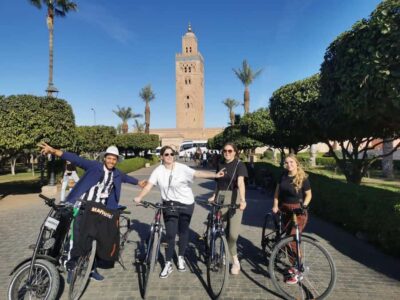

Guided Cycling Adventure in Casablanca with Licensed Tour Guide
Read our review →Browse the lists this tour appears in