
Reviewed · CYCLING TOURS
Marrakech: Bicycle Tour with a Local Guide
Marrakech makes most sense once you understand how its pieces fit together. This three-hour bicycle tour links the modern districts, red city walls, royal quarters, souks, and Medina in one moving introduction. You cover much more ground than you could on foot, and the bike gets you into lanes where a minibus has no chance.
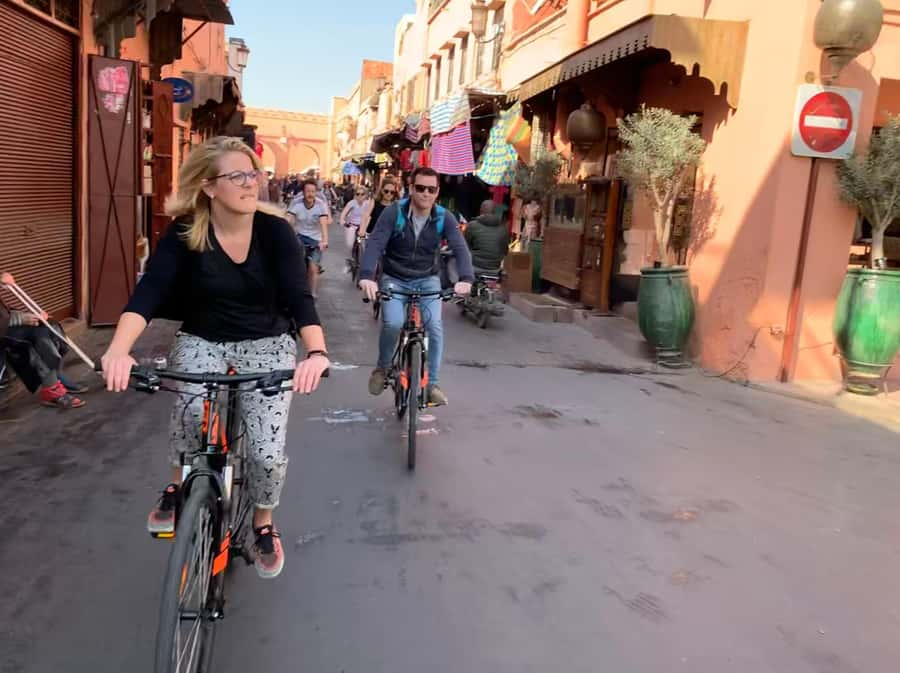
I like the way the route mixes major sights with ordinary city life. One moment you are beside the Koutoubia Mosque or the Saadian Tombs; the next, you are watching bread being made or seeing Moroccan mosaic work in progress. I also like the guides’ practical help. Ziad, Salma, Tarik, Miriam, and others have helped riders find their way through the traffic and offered useful tips for the rest of a Marrakech stay.
The catch is simple: cycling here can be nerve-racking. Cars, motorbikes, donkey carts, horse carriages, buses, pedestrians, and other bicycles all share the road. Some crossings feel chaotic, helmets may not be offered, and the guide cannot give a long talk while steering through a crowded lane.
Key points to know before you book
- The best city orientation: See Gueliz, Hivernage, the Medina, Kasbah, Jewish Quarter, and city walls in one morning.
- A real local route: The tour includes narrow souk lanes, working neighborhoods, bakeries, craft shops, and roads beyond the standard sightseeing circuit.
- Expect traffic: Some sections require confidence, close attention, and the ability to follow the guide quickly.
- Good early-stay activity: Use it on your first day to learn the shape of Marrakech and mark places to revisit.
- Bring your own small bag: The bikes have no baskets, so carry water and personal items in a backpack.
- Strong guide reputation: Guides including Ziad, Salma, Tarik, Miriam, Hanan, and Abdou are praised for humor, care, and local explanations.
Why a bicycle is a smart way to see Marrakech
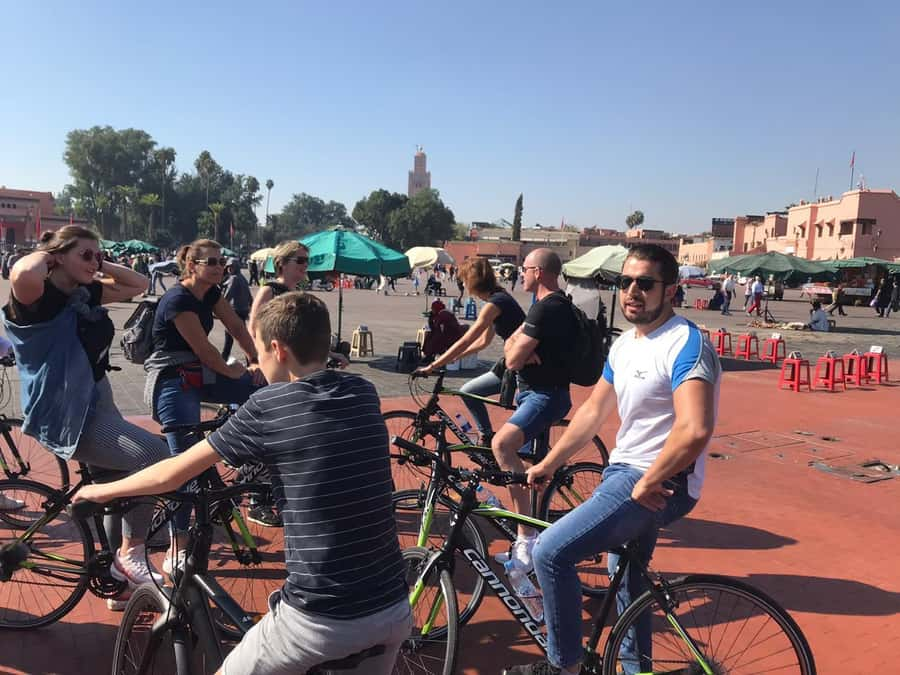
Marrakech is not one compact sightseeing zone. The old Medina sits behind its red walls, while Gueliz and Hivernage show a newer side of the city. The Kasbah and Jewish Quarter add another layer, and the main monuments are spread among streets that can be slow to cross on foot.
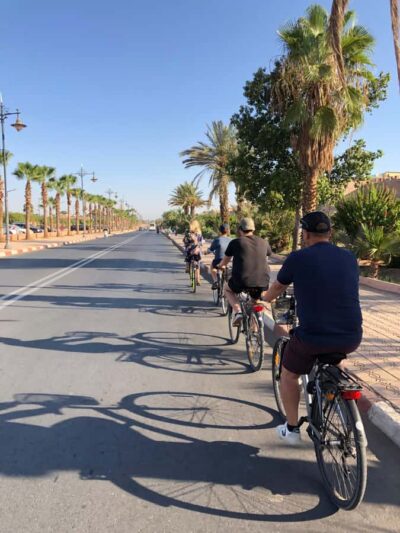
A bicycle helps you connect these areas quickly. You get the breeze as you ride beside the walls, and you can reach viewpoints and streets that would take much longer to cover walking. I find this especially useful at the start of a stay, when the city still feels like a maze.
The bike also changes your view of the city. You are not sealed inside a vehicle, and you are not limited to the broad roads used by larger tours. You hear the street, smell the bakeries, and watch daily routines from close range. At the same time, you need to stay alert. This is city cycling, not a quiet countryside ride.
The price is $34 per person for three hours, including the bicycle and local guide. That is good value if you want both orientation and sightseeing in one outing. It is also less useful if your main aim is detailed access to monuments, since entrance fees are not included and the stops are mainly viewed from the outside or used as points for explanation and photos.
Other rides on two wheels around Marrakech:
- Marrakech: Cultural Bicycle Tour with Pastry and Tea
★ 4.8 · 583 reviews - Marrakech : Electric Bicycle City Tour
★ 4.8 · 363 reviews - Cycling Adventure in Marrakech
★ 5.0 · 289 reviews
Starting in Gueliz and Hivernage
The meeting point is the Morocco Toubkal Adventure shop at 22 Rue Oum Errabia. Depending on the booking details, the end point may be listed as the Atlas Sport Bike Shop or the Toubkal Adventure shop. Check the confirmed meeting information carefully, since the start and finish details can matter if you have a tight plan afterward.
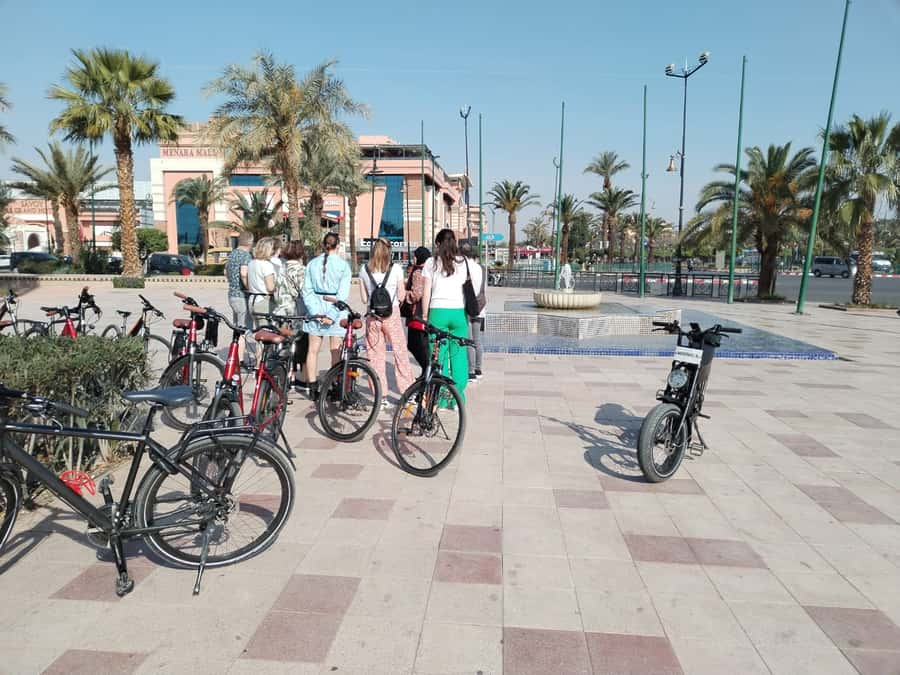
The ride begins with Marrakech’s newer districts, including Gueliz and Hivernage. This is a useful first contrast with the Medina. The streets are broader, the buildings feel more modern, and the pace of movement is different.
You have time for a photo stop and a general introduction before the route turns toward the older parts of town. Your guide may be one of several team members, including Ziad, Salma, Tarik, Miriam, Hanan, or Abdou. The strongest guides do more than point at monuments. They explain how the city works, answer questions, and help you feel less lost once you start exploring on your own.
The exact route can vary with traffic and group pace. One four-star assessment noted that the tour sometimes felt rushed, so do not expect long visits at every stop. The value is the broad picture and the amount of ground covered.
Koutoubia Mosque and the gardens behind it
Koutoubia is one of Marrakech’s clearest landmarks. Its minaret helps you orient yourself when the Medina’s lanes begin to look alike, and the mosque’s position near Jemaa el Fnaa makes it a natural part of a first city ride.
The tour includes time around the mosque and the gardens behind it. This gives you a calmer place for photographs and a chance to look back at the city’s red-clay buildings. Your guide can provide context while the bicycles are parked, although the overall tour is designed to keep moving.
You should not confuse this stop with a full interior visit. Entrance fees are not part of the activity, and the main focus is the route, the setting, and the outside view. If Koutoubia is a major personal priority, plan separate time to return on foot.
The Saadian Tombs, Kasbah, and Jewish Quarter
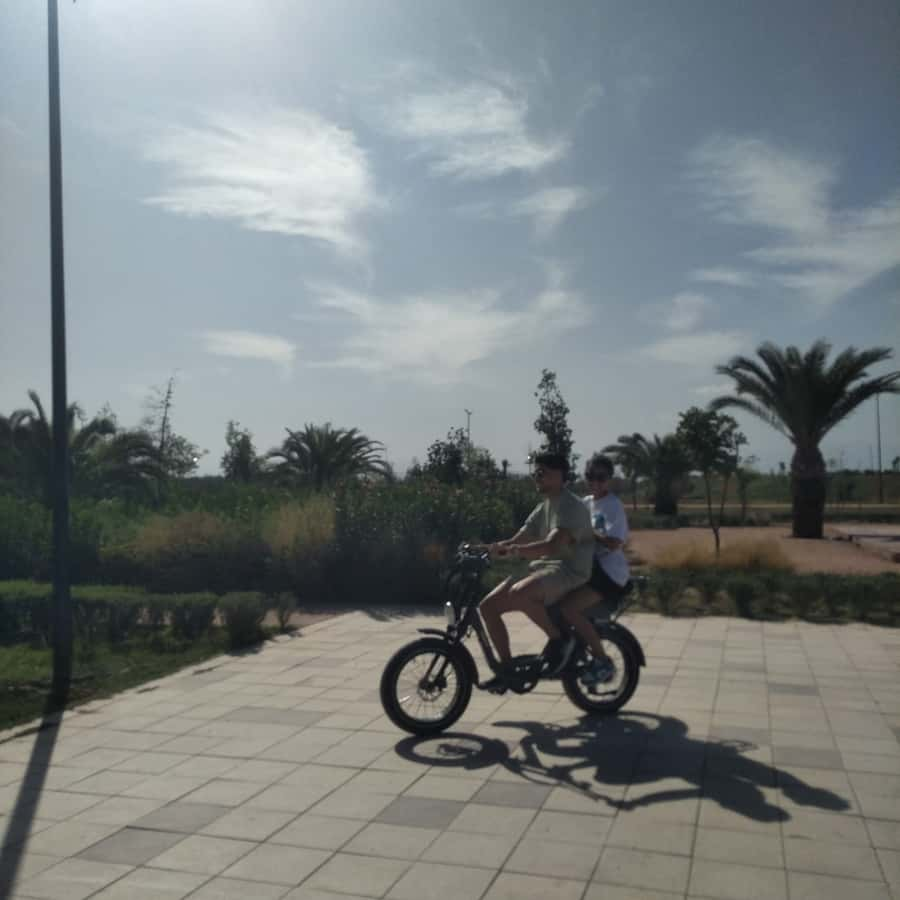
The route continues through the Kasbah district and past the Saadian Tombs. This part of Marrakech brings you close to royal history, old walls, and quieter lanes that feel different from the central square.
The Saadian Tombs are an important monument, but the bicycle stop is not a substitute for paying to enter. You can use the tour to learn where the tombs are and decide if you want to come back later for a slower visit. That is one of the strengths of this format: it helps you choose where to spend your limited sightseeing time.
The Jewish Quarter adds another useful piece to the city story. It is easy to spend a whole visit in the souks and miss how different quarters developed around them. Riding through this area gives you a broader sense of Marrakech rather than reducing the city to its famous square and shopping lanes.
Some riders find the narrow streets around the old city exciting. Others find them difficult, especially at crossings. Stay close to the guide and be ready to stop when the group is split by traffic.
Same base, a different sort of day:
- Marrakech: Agafay Desert Sunset, Camel Ride, and Dinner Show
★ 4.6 · 35,119 reviews - From Marrakech: Ouzoud Waterfalls Guided Hike and Boat Trip
★ 4.7 · 33,630 reviews - Marrakech: Agafay Desert Quad & Camel Rides with Dinner Show
★ 4.8 · 27,382 reviews - Marrakech: Agafay Desert Quad Biking Tour with Dinner-Show
★ 4.8 · 16,569 reviews
Bahia Palace and the route toward Jemaa el Fnaa
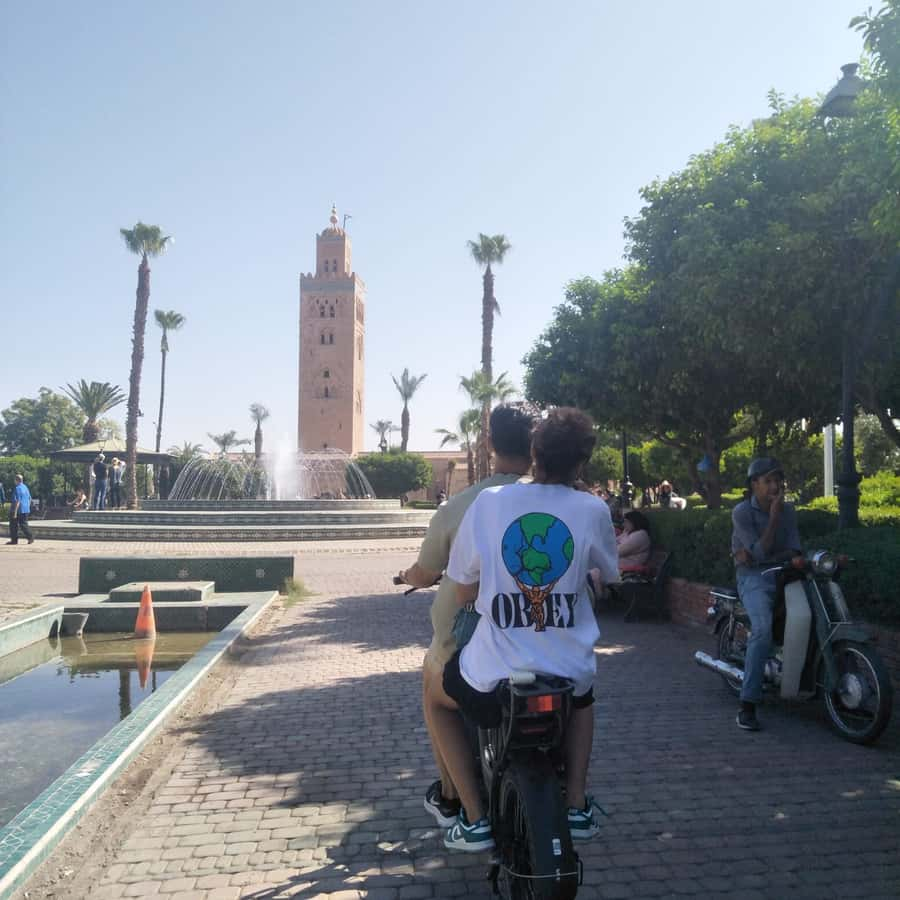
Bahia Palace is another major landmark on the route. The palace is known for its decorative spaces and Moroccan design, but this bicycle outing treats it as one stop in a larger city circuit. You may get photographs and an explanation before continuing.
If you want to see the palace interiors in detail, you will need to pay the entrance fee separately and return at another time. I see this as a fair trade for a tour that also reaches neighborhoods and streets you would not cover on a palace-only visit.
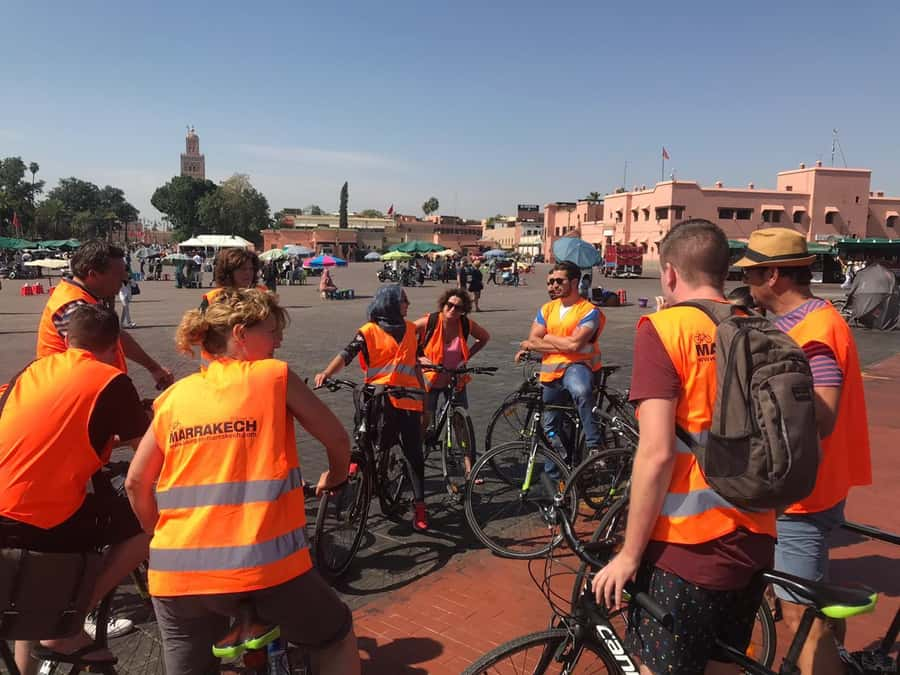
The route then heads toward Jemaa el Fnaa, Marrakech’s famous central square. Reaching the square by bicycle gives you a useful sense of how the Medina opens into a large public space. It is also a natural point to finish the historic-center section before returning to the bike shop.
You may have time for photos, but this is not a food tour or a long stop for juice. Beverages are not included. Bring water, and if you want a fresh fruit drink in the square, save that for after the organized ride.
The Medina and souks: the most exciting section
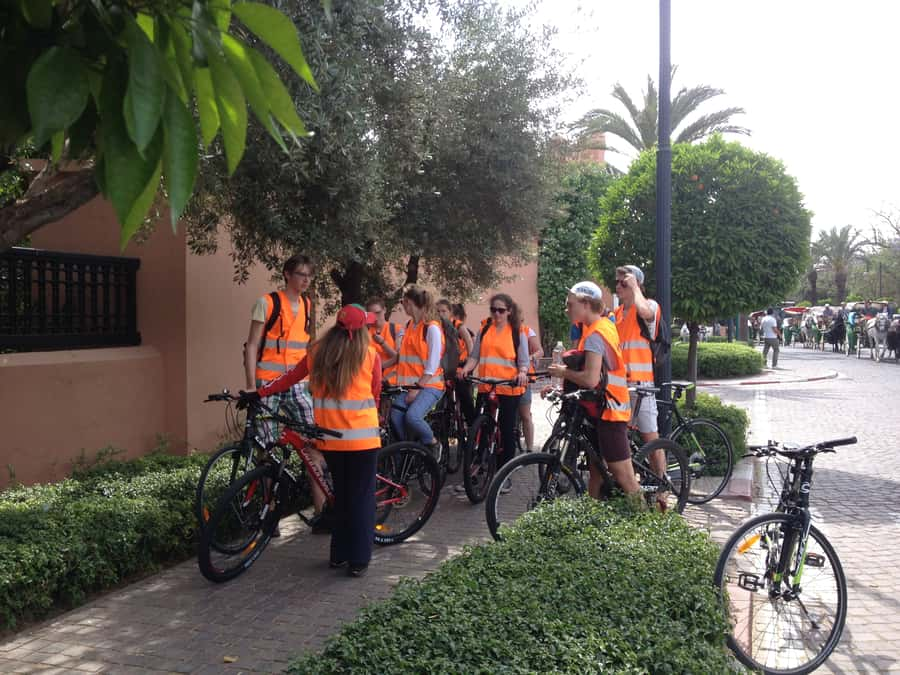
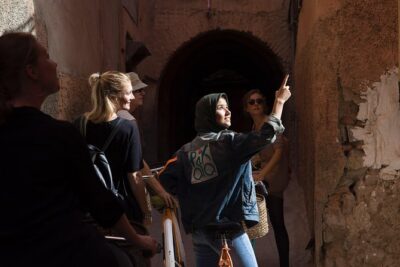
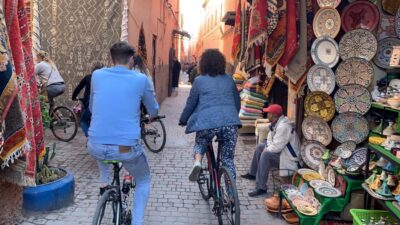
For many riders, the best part is the trip through the Medina’s small alleyways. This is where a bicycle offers something different from walking. You can pass through connected lanes and get a sense of the old city’s layout, even though you will still need to slow down and sometimes dismount.
The route can include souk streets with motorbikes, pedestrians, carts, and animals. A guide such as Ziad or Salma can make a big difference here by choosing a sensible pace and telling you when to stay close. You need to follow instructions quickly, since the guide may not be able to stop for a long explanation in the middle of a tight passage.
The Medina is also where the activity feels least polished and most authentic. You may see a traditional bread maker at work, a tile craftsman handling Moroccan mosaics, or a local workshop that you would probably miss on a standard sightseeing route. One stop at a bread bakery became a highlight for some riders because it showed a daily tradition rather than a staged attraction.
A group of around 14 people can make these lanes harder to manage. At narrow junctions, the front of the group may get through before the back. Keep the rider ahead of you in sight, and do not stop suddenly without checking behind.
City walls, practical local stops, and guide quality
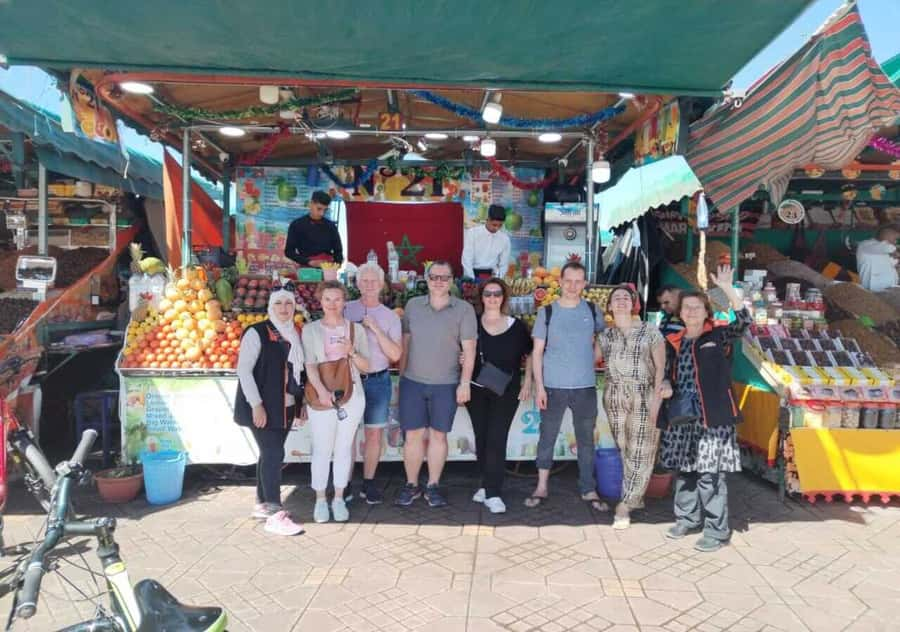
The ride beside Marrakech’s medieval red-clay walls is one of the most memorable visual parts of the outing. The walls help explain the old city’s shape, and they give you a clear change of pace after the cramped Medina lanes.
The guides also add value through small details. You might hear how to spot genuine argan oil rather than a cheaper oil sold under a similar label, or receive advice about food, money exchange, and places to visit later. A guide may also point out a reliable place for a drink or suggest a restaurant after the tour.
The guide team speaks Dutch, English, French, Spanish, and German. The actual language depends on availability, so confirm the preferred language when booking. Several guides have been praised for humor and patience, with Ziad repeatedly singled out for clear explanations and a friendly manner. Salma has also been praised for looking after nervous riders, while Tarik is noted for local advice and careful handling of busy roads.
Do not expect a formal lecture at every monument. The guide has to ride, watch traffic, keep the group together, and choose safe stopping points. The information is strongest when the group is parked. On the move, it is usually brief.
How difficult and safe is the cycling?
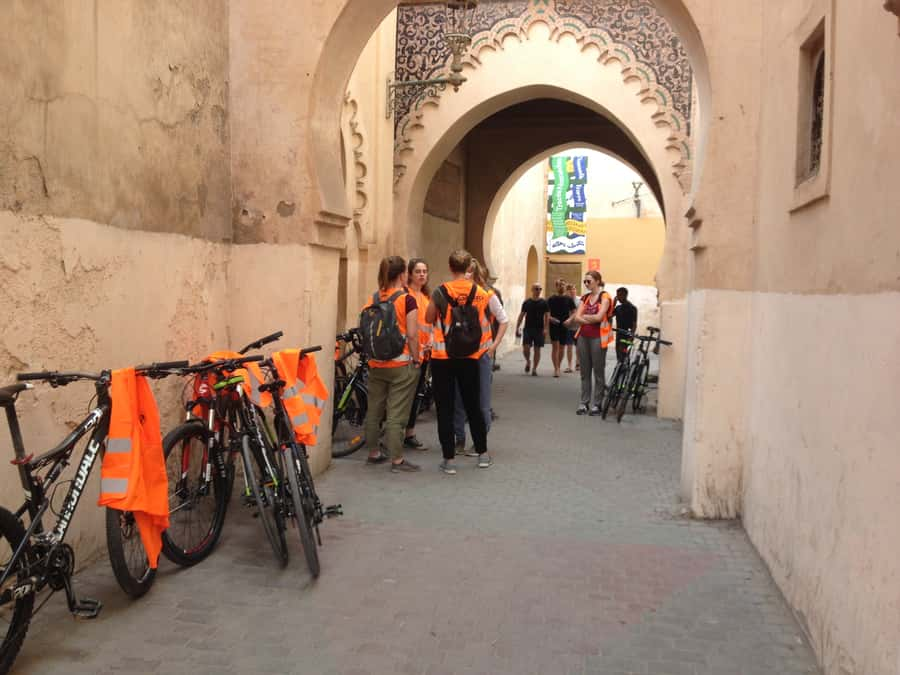
You must be able to ride a bicycle. The tour is not suitable for someone who cannot cycle, and it is not the right choice if heavy urban traffic causes serious anxiety.
The bikes are described as well maintained and easy to ride, with different bikes available in some cases. The supplied information does not promise helmets, and several riders specifically noted that helmets were not offered. If you want one, ask before setting off or bring your own if practical. One rider also suggested that bells would help, so do not assume every bike has one.
Morning timing can improve the experience. A 9:30 start was described as helpful because the Medina streets were quieter. From November 1 through March 31, the morning tour starts at 10:00, with a 9:45 meeting time. Winter mornings can be chilly, so wear layers.
Short skirts are not allowed. Choose practical clothing that lets you pedal comfortably and provides suitable coverage for historic and religious areas. Bring a backpack because the bikes have no baskets. Water, sunglasses, and a small amount of personal gear are sensible, but avoid a heavy pack.
Who gets the most from this $34 tour?
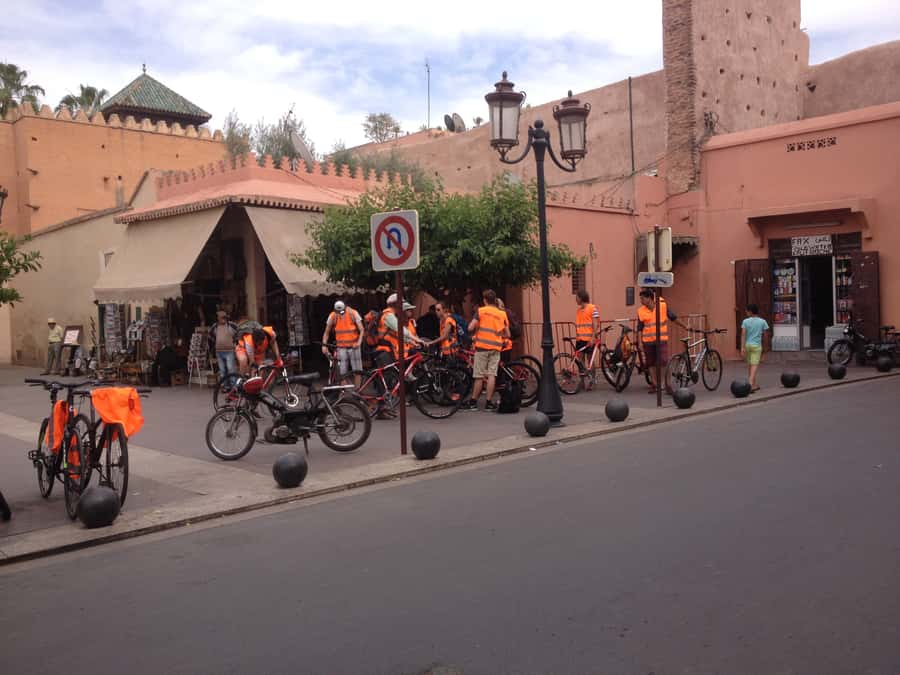
I would choose this activity early in a Marrakech visit. It gives you a working map of the city, shows you where the old and new areas meet, and helps you recognize places when you return on foot. Three hours is long enough to cover a lot without taking an entire day.
It suits confident cyclists, first-time visitors, active couples, solo visitors, and families with children who can manage city riding. An eight-year-old enjoyed the experience with careful guidance, but age alone does not tell you if a child will cope with the traffic. You know your family’s cycling ability best.
It is less suitable for anyone who wants a slow, detailed monument tour. It is also a poor fit if you need a completely controlled route with little traffic. The tour’s appeal is precisely that it takes you into the real movement of Marrakech, and that comes with noise, sudden obstacles, and moments that feel hair-raising.
At $34, the value is strongest when you count the guide’s orientation, bike rental, route planning, and access to everyday areas. You still need to budget for monument admissions and drinks. I would not book it only to see Koutoubia, Bahia Palace, or the Saadian Tombs, since you can visit those places separately. I would book it to connect the city’s many parts and get local help before exploring alone.
Should you book the Marrakech bicycle tour?
Book it if you want to get your bearings fast, enjoy active sightseeing, and accept that Marrakech traffic is part of the experience. The route gives you old and new neighborhoods, major landmarks, craft activity, city walls, and Medina lanes in a single morning.
Skip it if you are not comfortable on a bicycle or if busy roads will spoil the day. For everyone else, this is a practical and memorable introduction to Marrakech, especially when you ride early in your stay and use the rest of your visit to return to the places that caught your eye.
FAQ
How long does the Marrakech bicycle tour last?
The tour lasts three hours, including the guided bicycle route through Marrakech.
Where do I meet the guide?
Meet the guide at the Morocco Toubkal Adventure shop. The listed starting location is 22 Rue Oum Errabia, Toubkal Adventure and biking in Marrakech.
What areas does the bicycle tour visit?
The route includes Gueliz, Hivernage, Koutoubia Mosque, the gardens behind it, the Kasbah, the Jewish Quarter, the Saadian Tombs, Bahia Palace, Jemaa el Fnaa, the Medina, and its small alleyways.
Are entrance fees included?
No. Entrance fees for historical monuments are not included in the tour price.
Are drinks included?
No. Beverages are not included. Bring water, especially if you are not used to cycling in Marrakech.
What languages are available?
Live guides may speak Dutch, English, French, Spanish, or German. Availability depends on the specific tour.
Do I need to bring anything?
Bring a backpack because the bicycles do not have baskets. Wear suitable clothing, and dress warmly for chilly winter mornings. You must be able to ride a bicycle, and short skirts are not allowed.
Just added in Marrakech
- Quad Ride In The Agafay Desert★ 5.0 · 39 reviews
- Quad Biking Agafay desert★ 5.0 · 20 reviews
- Marrakech: Tailor-Made City Tour With Your Own Private Guide★ 4.9 · 236 reviews
- Surf Training and Lunch on Essaouira Day Trip from Marrakech★ 4.9 · 51 reviews
- Essaouira: Surf Trip from Marrakech★ 4.9 · 31 reviews
- Marrakech palm grove: Sunset camel ride★ 4.8 · 194 reviews
- Marrakech : Agafay Desert Sunset Camel Ride & Luxury Dinner★ 4.3 · 39 reviews
- Marrakech: Sunrise Desert Tour with Camel Ride and Breakfast★ 4.4 · 36 reviews
Cycling Tours, compared.
Guided City Cycling Tour – Culture, Colors & Charm
Read our review →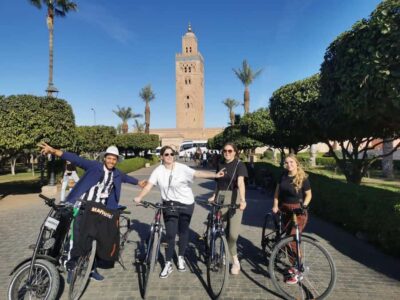
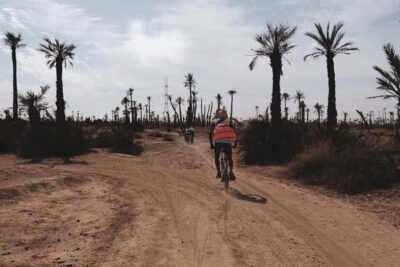
Cycling Tour in Palm Groove with Local Breakfast
Read our review →
Guided Cycling Adventure in Casablanca with Licensed Tour Guide
Read our review →Browse the lists this tour appears in