
Reviewed · FOOD TOURS
Marrakech: Street Food Tour with a Local Guide
Marrakech’s best food often sits in plain sight: a steaming bowl of harira, a griddle piled with msemen, or a busy stand serving sardine balls. This three-hour walk takes you beyond the obvious tourist stops and into local eating spots, with 10 to 12 tastings included.
I like the generous portions and the way the tour doubles as a Medina orientation. Guides such as Abdo, Abdul, Ahmed, and Miriam explain what you are eating, how it fits Moroccan life, and where you can return later. The main drawback is simple: you need to arrive very hungry, and crowded souk stops or scooter traffic can make parts of the walk less relaxed.
Key points at a glance
- 10 to 12 tastings included: Try Moroccan pancakes, soups, sweets, grilled meat, sardine dishes, juices, and snacks without paying extra at each stop.
- A useful first-day activity: The route helps you learn your way around Jemaa el Fnaa, the souks, Mellah, Riad Zitoun Jdid, and Kasba.
- Local eating places: The guide leads you to stalls and small food spots you might pass without noticing on your own.
- Morning or evening departures: Food choices change with the time of day, so ask what will be served when you book.
- Shared or private format: Choose a social group walk or arrange a more personal experience.
- Strong value at $34: With food, drinks, guiding, and tastings included, this can replace several small meals and a separate Medina orientation.
Why this food walk works so well in Marrakech
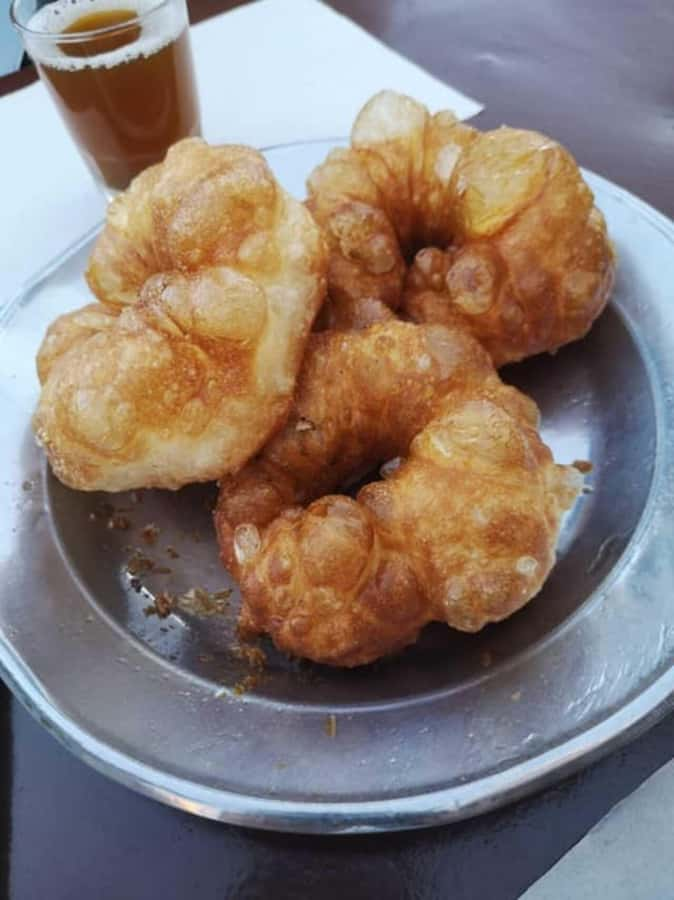
The smart thing about this tour is that it treats food as a key to the city. You are not simply handed a plate and told its name. You walk through several parts of the Medina, stop where people are eating, and learn how Moroccan food fits daily life and local customs.
That makes the experience useful beyond the three hours. You gain the confidence to order from other stalls later, recognize familiar foods, and judge what you want to try. One especially practical benefit is learning what dishes cost and how local eating places work, something that can feel unclear during your first hours in Marrakech.
The guides also add cultural context. You may hear about traditions around food, changing roles in Moroccan society, and details about everyday life in Marrakech. This is one reason I would schedule the tour near the start of your stay, rather than saving it for the final evening.
The tour has a 4.9 rating from 3,119 reviews, and the praise centers on three points: the amount of food, the range of stops, and the guides’ ability to make a busy part of the city feel manageable. That praise matches the structure of the experience. It is part meal, part walking tour, and part introduction to Marrakech.
More eating your way round Agadir:
- Authentic Food Tour in Agadir – Eat Like A Local
★ 5.0 · 117 reviews - Agadir with a Local–Balade Authentic & Tasting Street Food
★ 5.0 · 21 reviews - Authentic Food Tour in Agadir – Eat Like A Local
★ 5.0 · 21 reviews
Starting at Café Argana on Jemaa el Fnaa
The meeting point is Café Argana, at Jemaa el Fnaa square. The café is identified by its green symbol. If you are unsure, look toward the food stands and the juice sellers for the name written in green, plus a large ice cream sculpture in front.
This is a sensible meeting point, but Jemaa el Fnaa can be confusing, especially at night. Arrive with a few minutes to spare and look for the guide holding an official guiding card. Your name should be on the booking list.
The square is an appropriate place to begin because it quickly shows you Marrakech at full volume. Food stalls, juice sellers, performers, shoppers, and pedestrians all share the same space. Your guide explains the route before you set off, which helps you keep track of the group once you enter the narrower streets.
The walk may be offered in the morning or later in the day. An evening departure around 5 p.m. can work especially well, since you get some daylight at the beginning and reach food areas as the city shifts toward dinner. In cooler months, bring a light jacket. The temperature can drop as the evening continues.
Jemaa el Fnaa and the first taste of local life
The first section includes a walk around Jemaa el Fnaa and a tea ceremony, lasting about 25 minutes. Moroccan tea is more than a warm drink. It is part of the country’s welcoming customs, and it gives the guide an easy way to introduce local manners and food culture.
This opening stop also gives you time to ask practical questions. If you are unsure about spices, portion sizes, or how to approach a food stall, ask early. The guide can point out what is mild, what is sweet, and what may be unfamiliar.
The square is crowded and noisy, so stay close to your guide. Motor scooters and foot traffic are regular parts of Medina walking, and one stop can feel tight when several people gather around a vendor. The group leaders generally wait until everyone is together before moving on, but you still need to pay attention.
Riad Zitoun Jdid and Moroccan sweets
The route then moves into Riad Zitoun Jdid for dessert and street food tastings. This area gives you a change from the open square. The streets feel more tucked away, and the food stops become less obvious to someone exploring without a guide.
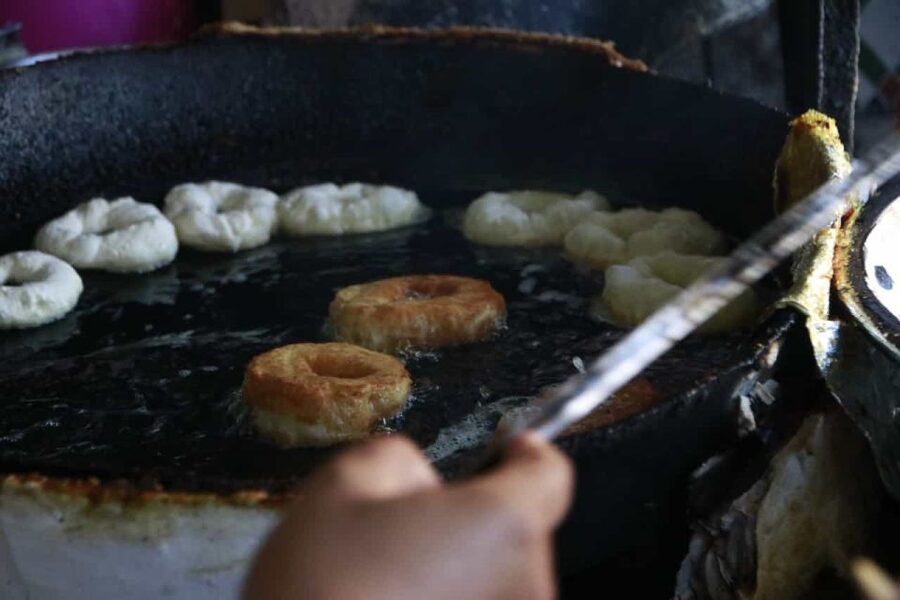
Depending on the hour, you might try chebakia, a sweet pastry often associated with brunch and festive meals. You may also encounter Moroccan pancakes such as msemen or harcha. Msemen is folded and griddled, with a crisp surface and soft layers. Harcha is made with semolina and has a different, more crumbly texture.
These are useful foods to learn early because they appear in cafés, markets, and homes across Morocco. A guide can explain the differences far more clearly than a menu translation. You may also discover which sweets you want to buy later as gifts or snacks.
Same base, a different sort of day:
- Agadir or Taghazout: Paradise Valley Atlas Mountains Tour
★ 4.4 · 2,905 reviews - Agadir/Taghazout : Quad Bike Safari Desert
★ 4.8 · 1,496 reviews - From Marrakech: Full-Day Trip to Agadir
★ 4.7 · 1,314 reviews - Agadir/Taghazout: Quad Bike and Sandboarding Tour
★ 4.7 · 1,286 reviews
Mellah, soup, pancakes, and a taste of Jewish Marrakech
The Mellah stop combines a photo break with local snacks and more tasting. The historic Jewish quarter is a particularly good place for the food and cultural parts of the tour to meet.
A typical combination here may include harira, sweet treats, and pancakes. Harira is a well-known Moroccan soup, usually made with tomatoes, legumes, herbs, and spices. The supplied food options describe it as vegetarian, but recipes can vary, so ask the guide if ingredients matter to you.
The pairing of savory soup with something sweet is part of the fun. It may not match your usual meal pattern, but it shows how Moroccan eating habits can move between flavors in the same sitting. The Mellah also gives the guide a chance to explain local history and neighborhood traditions without turning the tour into a formal lecture.
This is one of the places where the guide’s role matters most. A food name alone tells you little. The explanation of how a dish is served, when people eat it, and why a particular neighborhood is associated with certain foods adds real value.
Kasba for grilled food and regional snacks
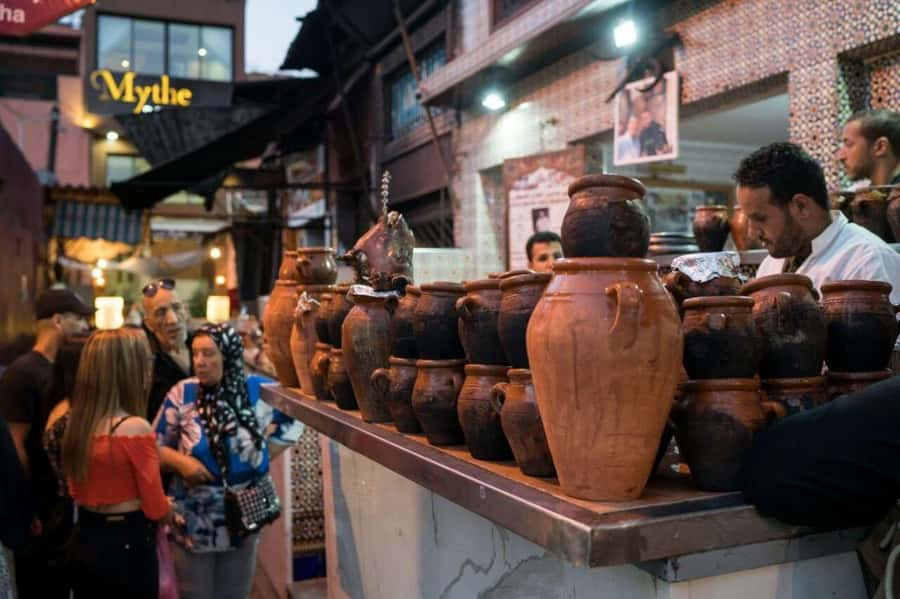
In Kasba, the tour continues with street food, regional dishes, and a walk through another part of the Medina. Possible tastings include chwa, grilled beef or chicken, and khobzaa, bread served with eggs and vegetables.
These foods are more substantial than the early sweets and pancakes. Portions can be full-size rather than tiny samples, which explains why the repeated advice is to skip a meal beforehand or eat only a light one. You are not simply nibbling for three hours.
The guide may also offer sardil mechoui, sardine balls cooked over coals. This is a good example of the sort of dish you might not choose alone, either because the name is unfamiliar or because the stall looks too local and informal. Having someone explain it and guide you through the first taste lowers that barrier.
If you dislike fish, meat, eggs, or strong spices, tell the guide before the walk begins. Allergy information should also be shared in advance. Alternatives may be possible, but the more specific you are, the easier it is for the guide to adjust the food choices.
Souk Semmarine and the final round of tastings
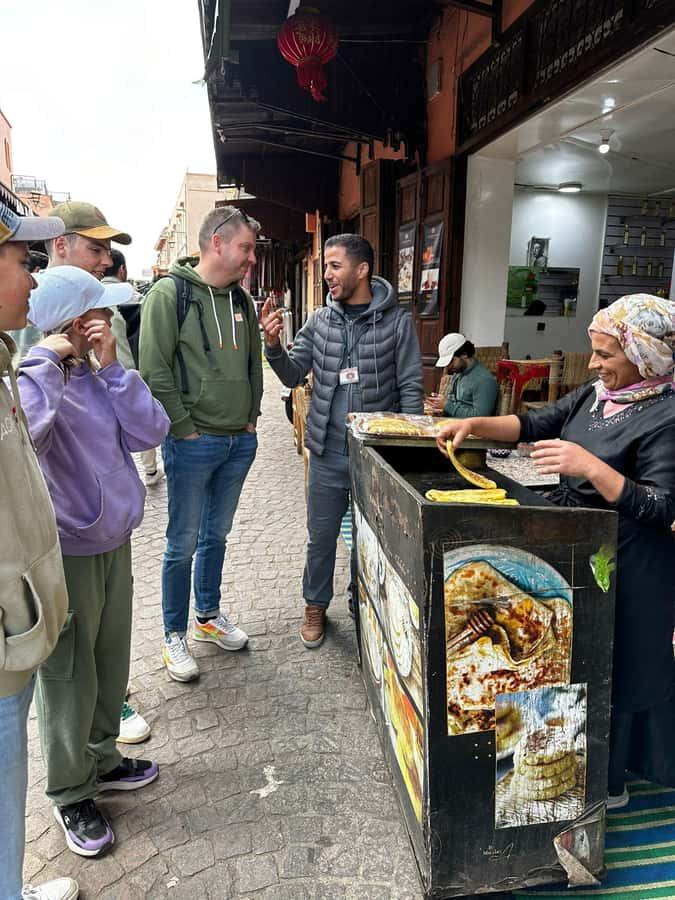
The final major area is Souk Semmarine, one of Marrakech’s best-known market streets. Here you have time for food tasting, a short break, shopping, and a visit to the food market.
This part of the route is useful because you can connect the food to the goods sold around it. You may see nuts, dates, olives, spices, bread, and fresh produce. The tour includes nuts and fresh fruit juice among the possible tastings, along with raib, a Moroccan frozen yogurt, and khoudenjal, a hot herbal infusion.
The food list is broad, but the exact selection depends on the time of day and your preferences. Morning foods may include pancakes, soup, sweets, and tea. Afternoon or evening routes may lean more toward grilled meat, sardine dishes, juice, and heavier snacks.
The souk is also where the pace may feel least calm. Shopping activity, narrow lanes, and scooter noise can interrupt conversation. I would not choose this walk if you want a quiet, sit-down tasting in one restaurant. Choose it if you want to eat while moving through the city and accept a little noise as part of the setting.
The walk returns to Café Argana. Since hotel pickup and drop-off are not included, plan your route back to your accommodation before you start. Transport to and from the meeting point may be arranged for an additional charge if you call ahead.
What you may eat during the three hours
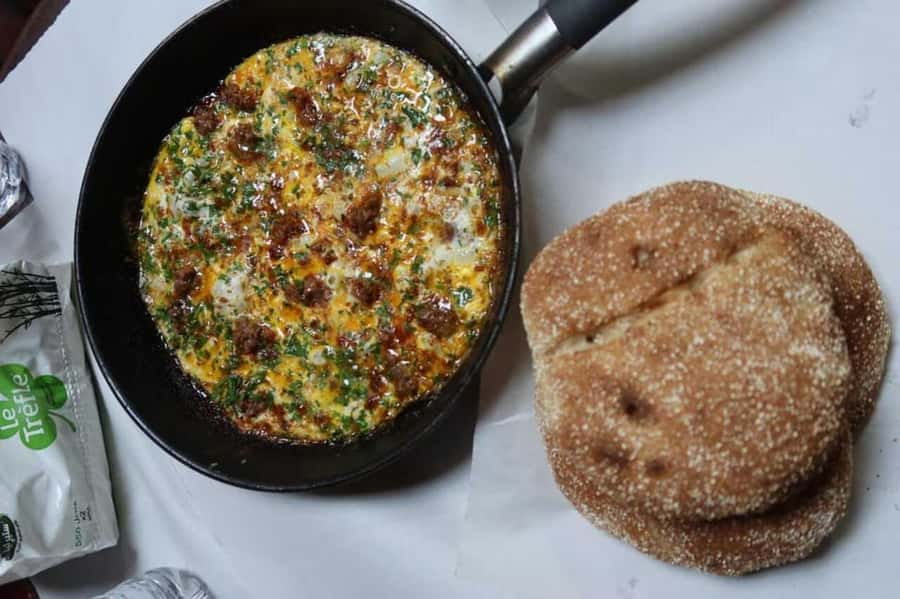
The exact menu changes, but the advertised choices give you a clear idea of the range:
- Msemen and harcha, two Moroccan pancakes
- Harira, a famous Moroccan soup
- Chebakia, a sweet pastry
- Khoudenjal, a hot herbal drink
- Khobzaa with eggs and vegetables
- Raib, frozen yogurt
- Chwa, grilled beef or chicken
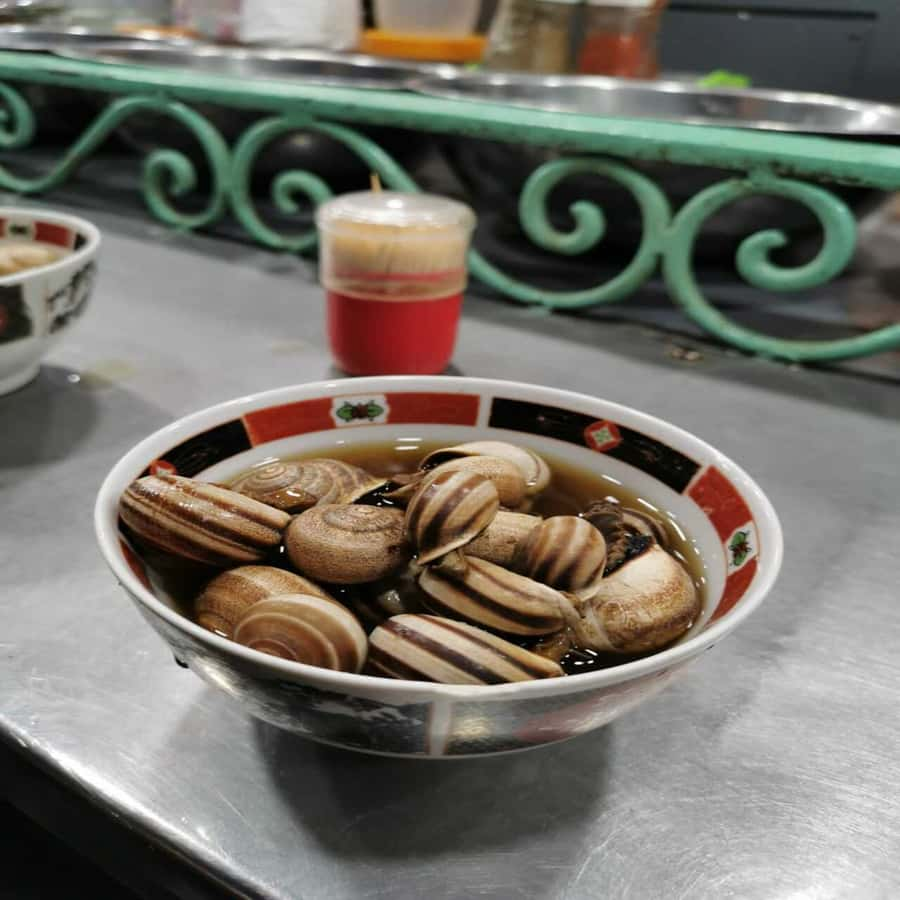
- Berbouche, snail soup
- Sardil mechoui, sardine balls cooked over coals
- Maklla, a Moroccan version of chakchouka
- Assir, fresh fruit juice
- Nuts
You may not receive every item on this list. The route depends on opening hours, the time of day, availability, and your food preferences. Still, expect a serious amount of food. Several portions may be enough to fill you before the walk ends.
Berbouche, the snail soup, is likely to be the most unusual option for many people. You do not have to pretend every dish will be your favorite. The value is in being able to try unfamiliar food with an explanation and a local guide nearby.
Guide quality and the feel of the group
The guide can make or break a food walk, and this experience has several named guides praised for clear explanations and friendly handling of the group. Abdo, Abdul, Abdoo, Ahmed, Mariam, and Miriam are among the guides associated with recent departures.
Your assigned guide may differ, but expect multilingual support in English, German, Dutch, and Arabic. Some guides also speak French, as noted during one departure. If you are in a mixed-language group, ask at the start how explanations will be handled.
A good guide here does three jobs. First, the guide finds the food stops. Second, the guide translates the dishes into something you can understand. Third, the guide keeps people together in crowded streets and checks whether anyone has allergies or trouble with a dish.
The tour can be shared or private. A shared group is a good way to meet other people and keep the price low. A private tour should suit you better if you want more control over the pace, food choices, or questions, though the supplied information does not state the private-tour surcharge.
Is $34 a good value?
At $34 per person, this tour offers strong value if you want a meal-sized amount of food plus a guided walk. Food and drinks are included, along with all tastings, so you do not need to carry cash for each stop.
The value is not only in the number of dishes. You are also paying for access to places you might walk past, help with unfamiliar foods, and an introduction to several Medina neighborhoods. If you later return to a food stand on your own, the tour has already done part of the work of finding it.
The price is less compelling if you prefer to choose every dish yourself or already feel comfortable navigating Marrakech’s food markets. It is also not a replacement for a long restaurant dinner. You will eat while walking between stops, and the setting can be noisy and crowded.
Practical advice before you go
Wear comfortable shoes. The route covers several neighborhoods on foot, and the ground in the Medina is not the place for delicate footwear.
Arrive hungry, but not dehydrated. You may receive enough food to replace dinner, and full portions are common. Several people have found that eating a normal meal beforehand leaves them uncomfortably full.
Tell the guide about allergies before the tour begins. Alternative dishes may be available, but do not wait until a plate is in front of you.
Alcohol and drugs are not allowed. Alcoholic drinks are also not included.
The information gives two different accessibility notes: the activity details say wheelchair accessible, while the suitability section says it is not suitable for wheelchair users. Because the route runs through narrow market lanes and crowded areas, confirm current access arrangements before booking if you use a wheelchair.
The tour is listed as unsuitable for people over 70. That may relate to the walking, crowds, or food-heavy format, so older participants should confirm directly before reserving.
Free cancellation is available up to 24 hours before the start, and you can reserve now and pay later. Check the available start times because food choices depend on when you go.
Who should book this Marrakech food tour?
I would book this for a first or second day in Marrakech. It helps you get your bearings, introduces local dishes without guesswork, and gives you a map in your head for later meals.
It is especially good for curious eaters, couples, solo visitors who want company, and anyone who feels cautious about ordering from an unfamiliar stall. The guide’s presence makes it easier to try dishes such as snail soup or sardine balls without making the whole meal a gamble.
You should think twice if you dislike walking, need a quiet seated meal, or have strict dietary requirements that make spontaneous tastings difficult. The tour includes a lot of food, but the stops and menu can change.
For most visitors, the combination of a three-hour Medina walk, 10 to 12 tastings, local drinks, and cultural explanation makes $34 a sensible buy. Book it early in your stay, skip the meal before it, wear good shoes, and keep the rest of the evening light.
FAQ
How long does the Marrakech street food tour last?
The tour lasts about three hours. It includes walking between food stops, explanations from the guide, and tastings in several Medina neighborhoods.
How many foods will I taste?
You can expect to sample between 10 and 12 specialty foods. The exact dishes depend on the time of day, availability, and your food preferences.
Are food and drinks included in the price?
Yes. Food, drinks, and all tastings are included. Alcoholic drinks are not included.
Where does the tour meet?
The meeting point is Café Argana at Jemaa el Fnaa square. Look for the green symbol, nearby juice sellers, and the large ice cream sculpture. The guide should be in front of the café with an official guiding card.
Can I choose a private tour?
Yes. You can choose between a shared group tour and a private tour.
Which languages are available?
Live guiding is available in English, German, Dutch, and Arabic. French may also be available with some guides, so confirm when booking if you need French.
What should I bring?
Bring comfortable shoes and arrive hungry. You should also tell the guide about any food allergies before the tour begins.
Just added in Agadir
- boat trip from 9 am to 3 pm fishing & swimming & barbecue & dessert★ 4.0 · 36 reviews
- Sandboarding guided experience from Agadir&Taghazout★ 5.0 · 39 reviews
- Agadir airport Transfers to or from agadir hotels★ 5.0 · 66 reviews
- Jeep 4×4 Safari Desert Dunes & Atlantic Ocean with Berber Lunch★ 4.5 · 45 reviews
- Agadir Jeep Safari Desert Day Trip including Lunch & camel ride★ 5.0 · 24 reviews
- Visit Taroudant and Tiout 1 day From Agadir★ 4.5 · 24 reviews
- 8 Day Outstanding Surf & Yoga Holiday in Tamraght, Agadir★ 5.0 · 18 reviews
- Buggy cfmoto 1000 in Agadir★ 4.5 · 40 reviews
Food Tours, compared.
Authentic Moroccan Food Tour in Marrakech with Dinner
Read our review →
Marrakech Night Street Food Tour / Taste The Real Marrakech
Read our review →

Authentic Food Tour in Agadir – Eat Like A Local
Read our review →
Casablanca Food Tour – Moroccan Street Food Tour
Read our review →Browse the lists this tour appears in