
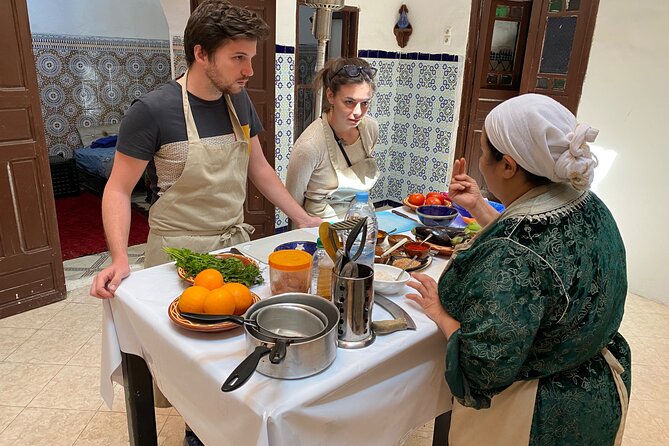
Reviewed · COOKING CLASSES
Half-Day Cooking Class with Local Chef Laila in Marrakech
The best part of this Marrakech cooking class happens before the first pot reaches the stove. You join Chef Laila at a local market, learn how to judge fresh produce, and get a practical introduction to Moroccan herbs and spices. Back in the kitchen, you prepare a three-course meal and learn how ras el hanout shapes the main dish.
I like the family atmosphere, which comes through in the way Laila, her children, and other family members help teach and host. I also like the flexibility: the menu can be adjusted for vegetarians, vegans, and food allergies. The main thing to keep in mind is that the market visit does not always happen, and a larger group can mean more chopping and watching than individual cooking.
Key points to know before booking
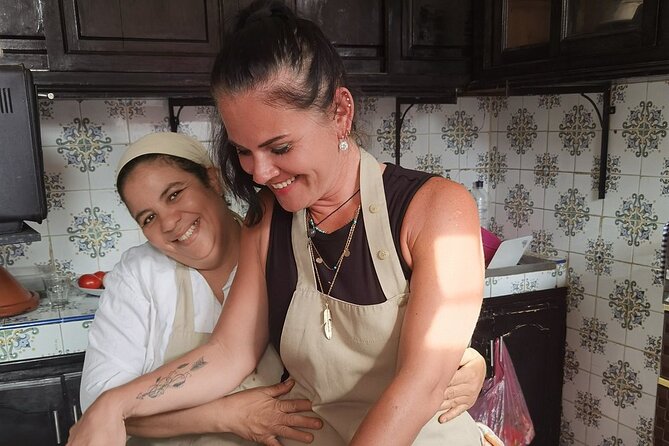
- Market shopping comes first: Learn how to choose produce and identify Moroccan spices before cooking.
- A full four-and-a-half hours: The class includes the market, tea, preparation, cooking, and a shared meal.
- Laila’s family helps host: Her son Hamza and other family members may lead or assist when needed.
- Three courses are included: You prepare an appetizer or salads, a Moroccan main course, and dessert.
- Vegetarian and vegan options are available: Food allergies are checked before the menu is chosen.
- Good value at $34.76: You receive instruction, a meal, a cultural experience, and recipes or techniques to use at home.
Starting near Rue Riad Zitoun el Jdid
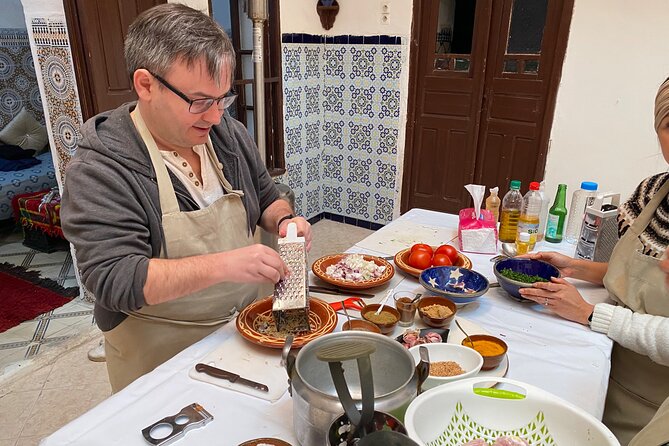
The class begins at 3 Rue Riad Zitoun el Jdid in Marrakech, and it ends back at the same meeting point. The location is near public transportation, which helps if you are staying outside the medina or do not want to walk the entire way.
The experience lasts about four hours and 30 minutes. You can choose a morning session that leads to lunch or an afternoon session that ends with dinner. Pick the time that fits your sightseeing plans, but remember that this is not a quick demonstration. You are giving the cooking class half a day, so avoid booking it between two tightly timed excursions.
The meeting point matters in Marrakech. Medina addresses can be confusing, and the supplied location gives you a fixed place to start rather than asking you to find a private kitchen on your own. You receive confirmation when booking, and the mobile ticket makes it easy to keep the details on your phone.
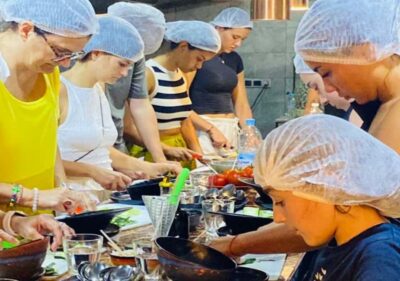
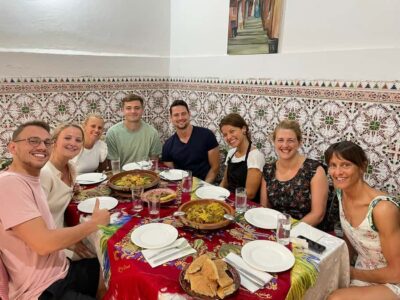
The maximum group size is 20 people. That is not a tiny private lesson, so you should expect a social class rather than one-on-one coaching. In practice, some groups are smaller, and one account describes eight people sitting together for the final meal. Still, if you want every knife cut watched closely, a large session may feel less personal.
Other cooking classes in Marrakech people book:
- Marrakech: Moroccan Cooking Class with Pickup
★ 4.6 · 1,862 reviews - Marrakech: Traditional Moroccan Cooking Class & Market Visit
★ 4.8 · 1,861 reviews - Marrakesh: Moroccan Dishes Cooking Class with a Local Chef
★ 5.0 · 1,615 reviews
Choosing produce in a Marrakech market
When the market visit takes place, it gives the class a useful local beginning. Instead of meeting the food only after it has been washed, chopped, and arranged in bowls, you learn what to look for when buying it. Laila explains how to judge the quality of produce and introduces the herbs and spices that give Moroccan cooking its character.
That lesson is easy to underestimate. Moroccan food often depends on a careful balance of spice, sweetness, acidity, and slow cooking. Seeing the raw ingredients first helps you understand why the final dishes taste the way they do. It also gives you something useful to take home: better instincts when shopping for produce and seasonings.
The market stop is not guaranteed for every session. One participant specifically found that it did not happen, despite being part of the advertised plan. If the market is important to you, confirm the current arrangement when booking or at the start of the class. The cooking portion still goes ahead, but the experience is less complete without that first look at local shopping.
Moroccan tea before the cooking begins
After the market, you go to the cooking location, where you learn how to make Moroccan tea. This is a good pause between shopping and food preparation. Tea is not just a drink here. It sets the tone for sitting together, talking, and preparing food as a shared activity.
The class is hands-on, but it is not presented as a formal culinary school. You do not need cooking skills. Expect clear explanations, group participation, chopping, seasoning, and preparation rather than a technical examination of knife work or professional kitchen methods.
Language should be manageable for many visitors. Hamza has led classes in both English and French, explaining ingredients and processes clearly. Laila is also praised for making people feel included and for using humor to keep the group relaxed. If the chef changes, the family approach remains part of the experience.
Building a Moroccan three-course meal
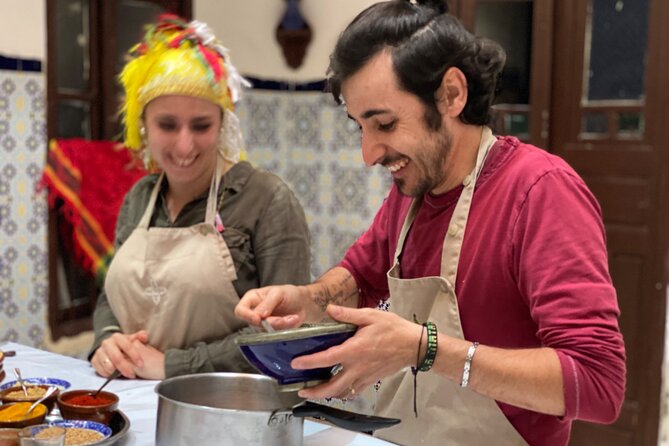
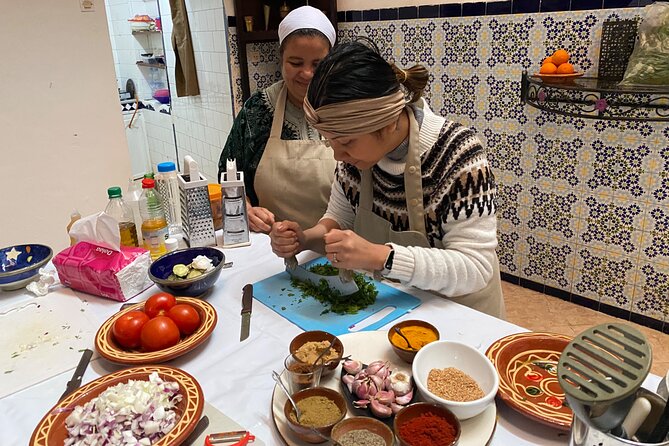
The cooking begins with the main course, using ras el hanout, the well-known Moroccan spice blend. You learn how the spices are handled and how they fit into the dish rather than simply watching someone else add them. The menu can vary, but the food prepared in different sessions has included tagine, salads, sweet chicken tagine, vegetarian tagine, and dessert.
The appetizer course may take the form of several Moroccan salads. This is useful because it shows that a Moroccan meal is not built around one heavy dish alone. You may work with several small preparations before moving to the main course.
The main course is the heart of the class. Tagine appears often in the food described, including both chicken and vegetarian versions. The cooking process gives you a better sense of Moroccan seasoning than ordering tagine in a restaurant. You see how the ingredients are combined, how the spice blend is used, and how the dish is finished.
Dessert comes later, after the savory cooking is under control. The supplied details do not name one fixed dessert, so you should not book expecting a specific sweet. The important point is that the class includes a dessert course, not just a main dish and tea.
The class also works well for mixed groups. One person can eat meat while another follows a vegetarian or vegan menu, provided the needs are shared in advance. Food allergies are checked before the menu is selected. Tell the host clearly about allergies when you meet, since the menu is chosen to suit the whole group.
More cooking in Marrakech:
- Moroccan Cooking Class & Marrakech Market Visit with Chef Khmisa
★ 5.0 · 1,504 reviews - Marrakech: Moroccan Cooking Class with a Local Family
★ 4.9 · 668 reviews - Marrakech: Moroccan Cuisine Cooking Class in Local Home
★ 4.8 · 508 reviews - Marrakech: Moroccan Cooking Workshop at La Maison Arabe
★ 5.0 · 446 reviews
Cooking with Laila’s family
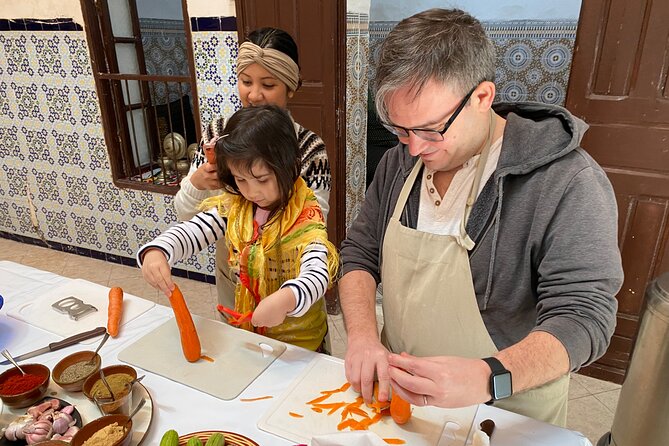
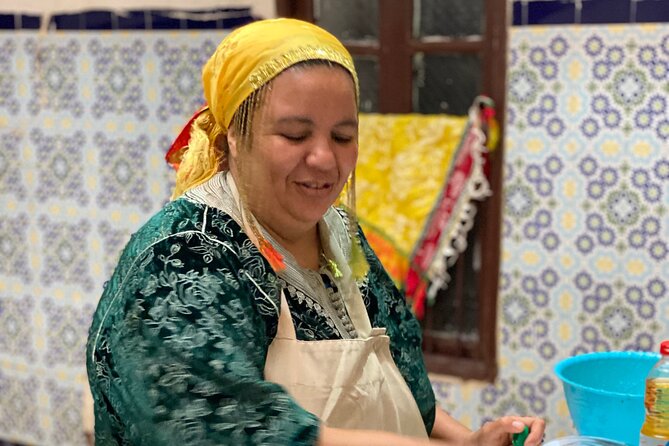
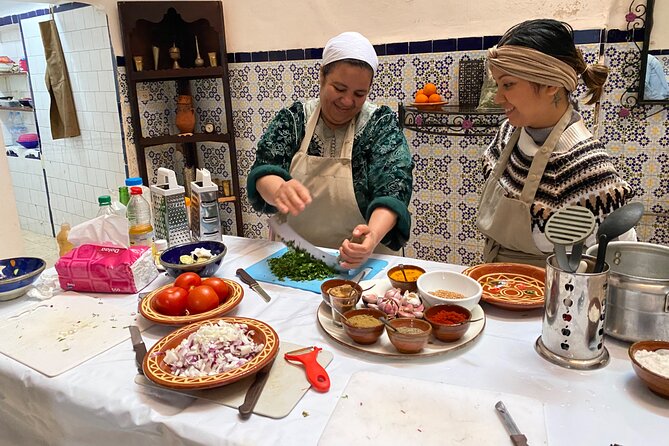
The strongest part of this experience is the human connection. Laila is described as warm, funny, patient, and good at making each person feel noticed. Her family helps with teaching, serving, and the practical work of hosting. That can make the class feel more like an invitation into a family kitchen than a staged restaurant lesson.
Laila may not lead every session herself. When she was ill, her son Hamza took over and handled the class well. Hamza’s sister has also helped host sessions. This is worth knowing if you are booking specifically to meet Laila in person. You are booking the family’s cooking class, but the lead teacher can change.
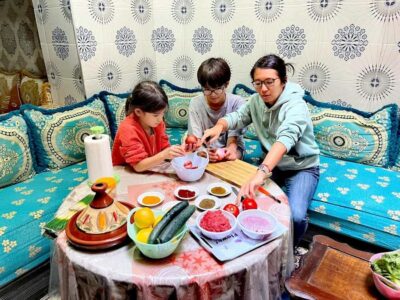
The family format has another benefit: it creates a relaxed social setting. People are encouraged to talk and take part, then sit together for the meal. You can expect laughter and conversation along with the cooking. Solo visitors can join without needing to bring a partner, while families and groups of friends have an easy way to spend time together.
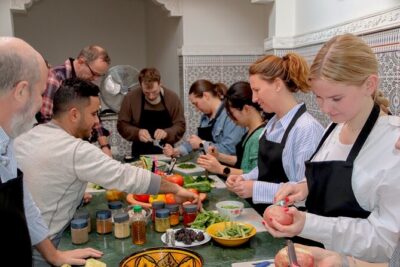
There is a tradeoff. In a group class, not every person will perform every step. One participant found that the session involved a lot of chopping and preparation, with limited cooking per person. If you want to make every element from start to finish, ask how the group will divide the work. If you enjoy shared tasks and a social meal, the format should suit you well.
Sitting down to eat what you made
The final meal gives the class its reward. You sit down with the group and eat the salads or appetizer, main course, and dessert you helped prepare. The food is described as generous, so arrive hungry rather than treating this as a small tasting.
This meal also helps you judge the class fairly. The value is not only in the number of dishes. You receive a meal in a family setting, a lesson in spices, a market introduction when available, and ideas you can try after returning home. Several dishes are practical enough to repeat in your own kitchen, especially if you enjoy tagine, Moroccan salads, or spiced chicken.
The food can also be better suited to you than a fixed restaurant menu. Vegetarians and vegans can request appropriate choices, and the host checks about allergies. Still, you should communicate your needs early and clearly. Adaptation is offered, but the exact menu is not fixed in the information provided.
Is $34.76 a good price?
At $34.76 per person, this is a strong value for a four-and-a-half-hour activity. A typical paid cooking class includes instruction and food, but this one also includes a possible market visit, Moroccan tea, family hosting, and a full three-course meal.
The price is especially fair if you want one activity that combines culture and lunch or dinner. You are not simply paying for a plate of tagine. You are paying for the process of shopping, seasoning, preparing, cooking, and eating together.
The value drops slightly if your main goal is intensive personal instruction. A group of up to 20 people can limit your time at the stove, and the market visit may not take place. You may spend part of the class watching or sharing preparation tasks.
For most visitors, I would still call it a good buy. The cooking is accessible, the food is substantial, and the family setting adds something a standard restaurant cannot provide. It is also priced low enough to leave room in your budget for other Marrakech activities.
Who should book this class?
I would recommend it to first-time visitors who want a friendly introduction to Moroccan food. You learn useful basics without needing prior cooking experience, and the meal gives you an immediate taste of what you have prepared.
It suits solo visitors, couples, families, and groups of friends. Parents should note that the format is social and hands-on, but the supplied details do not state a minimum age. If you are booking for children, confirm the age policy first.
It is also a good choice for anyone who plans to cook Moroccan food at home. The focus on herbs, spices, produce quality, and ras el hanout gives you more than a one-time meal. You leave with techniques and ideas that can be used again.
I would hesitate only if you want a private class, exact control over the menu, or a guaranteed market tour. The maximum group size is 20, the lead teacher may be a member of Laila’s family, and the market visit has not occurred in every session.
Booking, cancellation, and weather details
The activity offers free cancellation if you cancel at least 24 hours before the local start time. Cancellations inside that window are not refunded, and changes made within 24 hours are not accepted.
The class requires good weather. If poor weather causes a cancellation, you are offered another date or a full refund. The experience is commonly booked about 16 days ahead, so reserve early if your Marrakech schedule is fixed.
Should you book Chef Laila’s cooking class?
Book it if you want a warm, social cooking experience with a real meal at the end. The family hosting, spice instruction, adaptable menu, and reasonable price make this one of the more useful half-day food activities in Marrakech.
Go in with the right expectations. This is not guaranteed to be a private lesson, the market visit may be skipped, and you may do more chopping than cooking. If that sounds acceptable, you will get a generous meal, practical Moroccan food tips, and a welcoming way to spend half a day.
FAQ
Where does the cooking class begin?
The class begins at 3 Rue Riad Zitoun el Jdid, Marrakesh 40000, Morocco.
Where does the activity end?
The activity ends back at the meeting point.
How long does the class last?
The class lasts approximately four hours and 30 minutes.
Is there a morning or afternoon option?
Yes. You can choose a morning session with lunch or an afternoon session with dinner.
Is a market visit included?
The planned experience includes visiting a local market to select herbs, spices, and fresh produce. However, the market visit may not take place in every session.
Who teaches the class?
Chef Laila leads the experience when available. Her son Hamza and other members of her family may lead or assist with the class.
Can vegetarians and vegans take part?
Yes. The menu can be adapted for vegetarian and vegan participants.
Can the class accommodate food allergies?
Food allergies are checked before the menu is selected, and the class can be adapted for allergy needs.
How many people can join the activity?
The maximum group size is 20 travelers.
What is the cancellation policy?
You can receive a full refund if you cancel at least 24 hours before the experience starts. Cancellations or changes made less than 24 hours before the start time are not refunded or accepted.
Just added in Marrakech
- Quad Ride In The Agafay Desert★ 5.0 · 39 reviews
- Quad Biking Agafay desert★ 5.0 · 20 reviews
- Marrakech: Tailor-Made City Tour With Your Own Private Guide★ 4.9 · 236 reviews
- Surf Training and Lunch on Essaouira Day Trip from Marrakech★ 4.9 · 51 reviews
- Essaouira: Surf Trip from Marrakech★ 4.9 · 31 reviews
- Marrakech palm grove: Sunset camel ride★ 4.8 · 194 reviews
- Marrakech: Sunrise Desert Tour with Camel Ride and Breakfast★ 4.4 · 36 reviews
- Marrakech : Agafay Desert Sunset Camel Ride & Luxury Dinner★ 4.3 · 39 reviews
Cooking Classes, compared.
Traditional Moroccan Cooking Class & Market Visit
Read our review →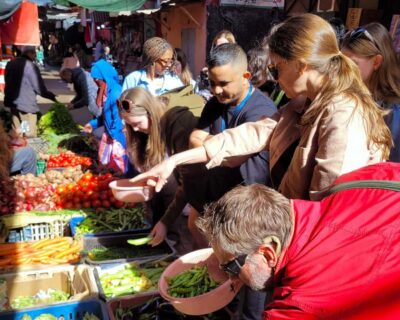
Moroccan Dishes Cooking Class with a Local Chef
Read our review →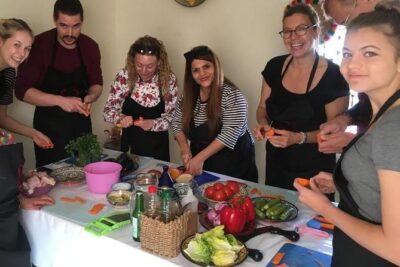
Moroccan Cooking Class & Marrakech Market Visit with Chef Khmisa
Read our review →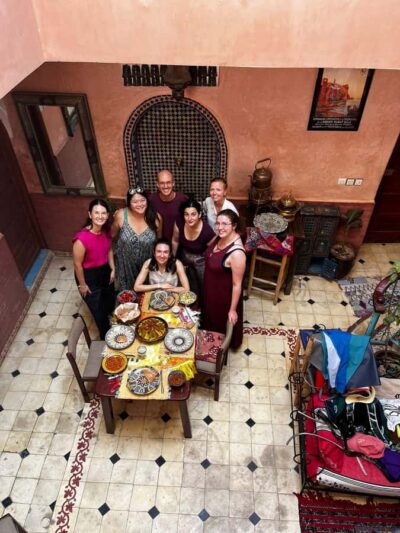
Marrakesh cooking class with chef Hassan – Local dishes
Read our review →Browse the lists this tour appears in