
Reviewed · COOKING CLASSES
Marrakech: Moroccan Cooking Workshop at La Maison Arabe
The best part of this Marrakech cooking workshop is that you do not just watch a chef prepare Moroccan food. You chop, season, stir, and cook at your own station, then sit down to eat what you made. The longer class adds salads, tagine or couscous, dessert, bread, and a proper tea ceremony.
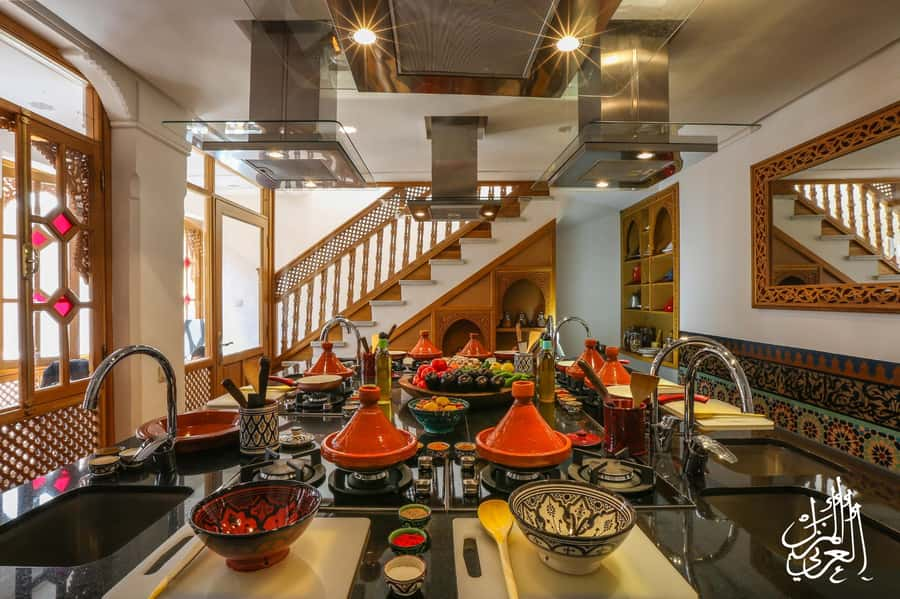
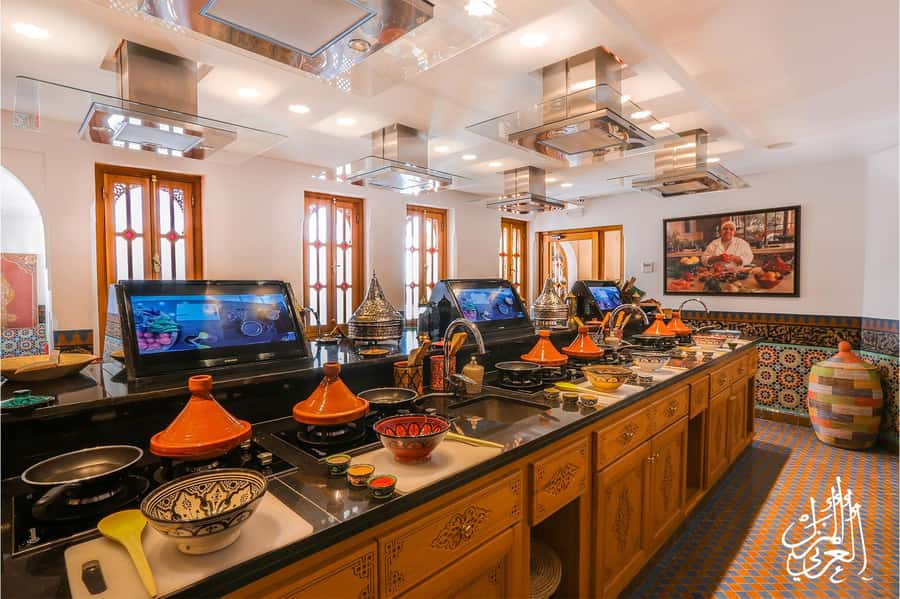
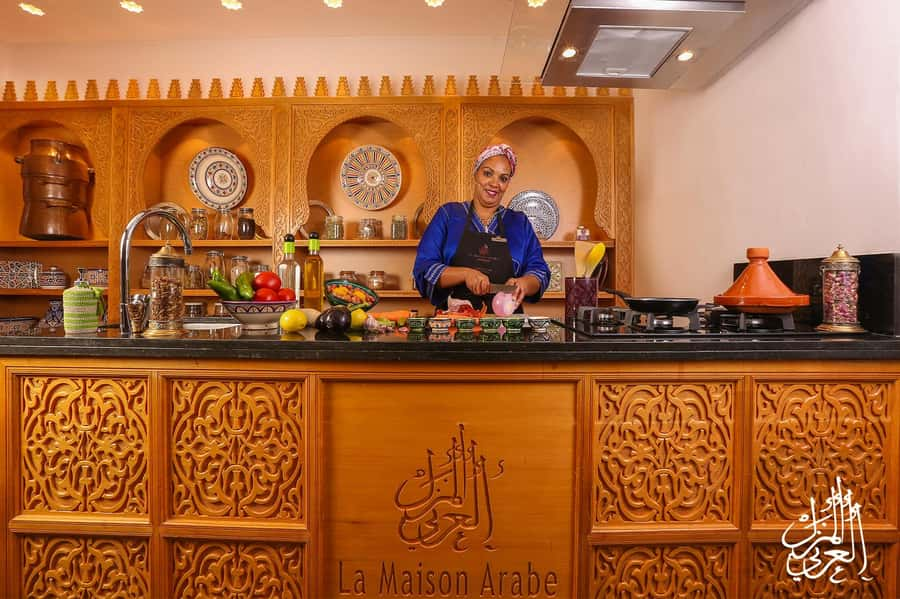
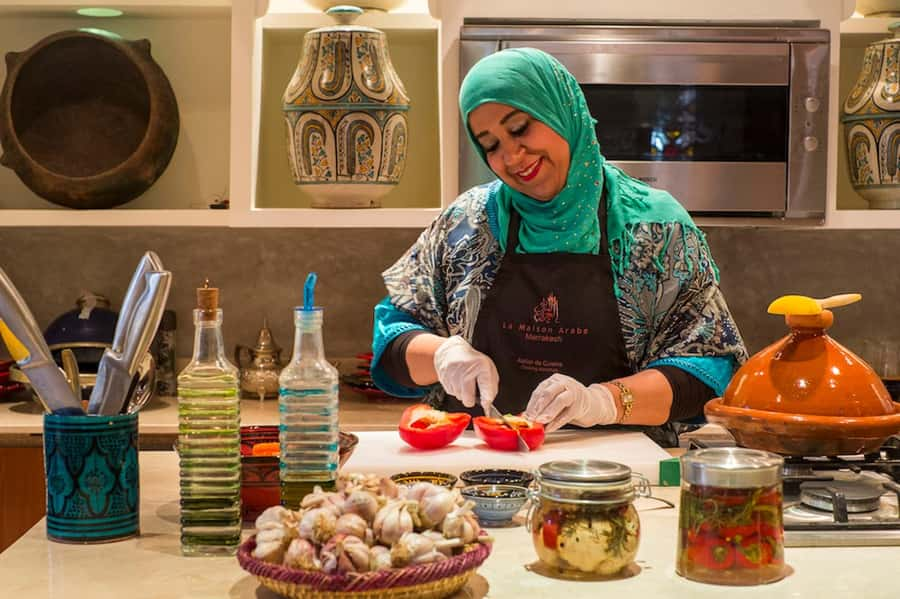
I like the clean, modern kitchen and the way each person gets an individual workstation. I also like the warm teaching style of the dadas, traditional Moroccan cooks, with translation in Arabic, English, or French. One thing to consider: at $35 per person, it costs more than some Marrakech cooking classes, and the one-hour option gives you only a short taste of the full experience.
Key points at a glance
- Choose your pace: Take a one-hour express class or spend three hours preparing several Moroccan dishes.
- Cook your own tagine: The popular short class usually centers on chicken tagine, with time to eat it afterward.
- Learn from a dada: Traditional Moroccan cooks explain the methods, spices, and cultural meaning behind the food.
- Use an individual station: You handle the ingredients yourself rather than standing behind a demonstration counter.
- Enjoy more than the main dish: The longer session includes starters, bread, dessert, tea, and a sit-down meal.
- Plan for practical limits: The class is for ages 12 and up, is not suitable for wheelchair users, and does not include transportation.
Starting at La Maison Arabe near the Medina
Your meeting point is the front desk of La Maison Arabe, a convenient location close to Marrakech’s Medina. That matters because you can fit the class into a sightseeing day without arranging a separate transfer across the city.
The workshop may take place near the riad-hotel or at the property’s secret gardens, away from the noise of the narrow streets. The setting gives the lesson a calmer feel than a crowded market stall, while keeping you close to the old city.
You should arrive in comfortable clothes and bring water. Outside drinks are not allowed in the workshop, although afternoon tea is part of the experience. Transportation to or from attractions is not included, so plan your route before the class, especially if you are staying outside the central area.
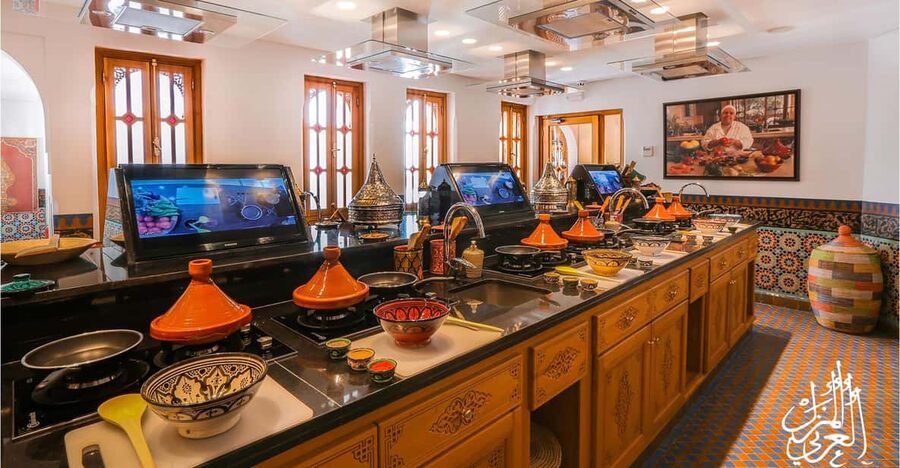
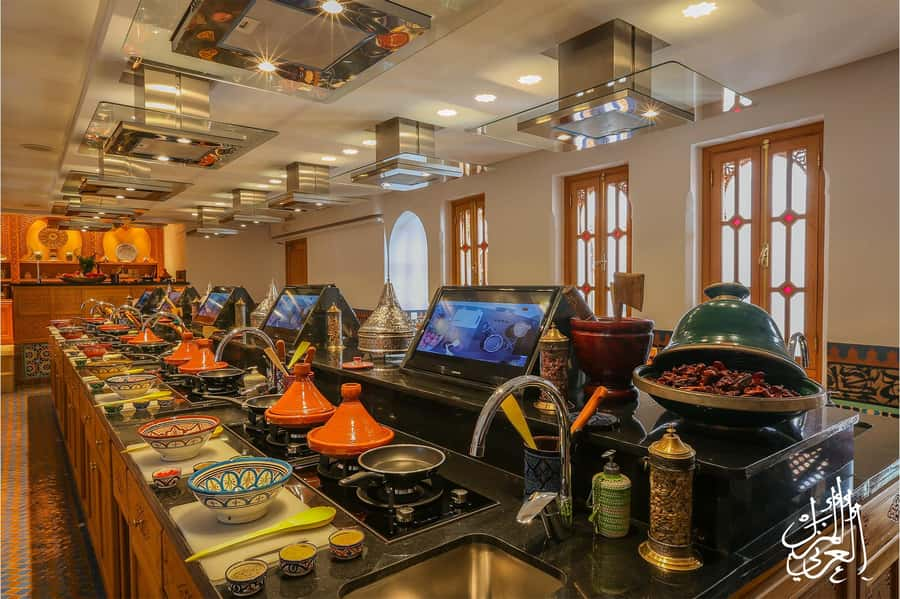
The atmosphere is polished rather than rough and rustic. The kitchen has modern equipment, clean work surfaces, and everything arranged for the lesson. That may sound like a small point, but it makes a difference when you are handling several ingredients and trying to follow instructions in a new language.
Other cooking classes in Marrakech people book:
- Marrakech: Moroccan Cooking Class with Pickup
★ 4.6 · 1,862 reviews - Marrakech: Traditional Moroccan Cooking Class & Market Visit
★ 4.8 · 1,861 reviews - Marrakesh: Moroccan Dishes Cooking Class with a Local Chef
★ 5.0 · 1,615 reviews
What happens during the one-hour express class
The one-hour option is built for a quick introduction to Moroccan cooking. You get straight to the practical work, which makes it a useful choice if your Marrakech schedule is packed or if you want one focused activity between other plans.
Chicken tagine is the dish most often described for the short session. You prepare the ingredients, season the dish, and follow the cooking process with help from the instructor and translator. The recipe is designed for ordinary home cooks, so you do not need professional kitchen experience.
The teacher demonstrates each step and explains what you are doing as you go. Instructions may also be shown on a screen, which helps when the group includes several languages. Arabic, English, and French are available, and the translation keeps the class moving without making you feel lost.
The short class still includes tasting your food at the end. You are not simply handed a recipe and sent away. You sit down and eat the tagine you prepared, which gives the session a satisfying finish.
There is a tradeoff. One hour is enough to learn a dish, but not enough for the broader food lesson offered by the longer class. You will likely miss the full tea ceremony, several additional courses, and the extended discussion of Moroccan spices and food traditions. If cooking is one of your main interests in Marrakech, I would choose three hours.
The three-hour class gives Moroccan cuisine room to breathe
The three-hour workshop is the better pick if you want a full meal and a more rounded introduction to Moroccan food. You do not cook continuously for three hours. Instead, the session mixes hands-on preparation with demonstrations, tea, cultural explanation, and time to enjoy the finished dishes.
The exact menu can vary, but the longer class includes starters, a tagine or couscous, dessert, handmade flatbread, and tea. You may prepare two appetizers and a main course, then watch demonstrations of other side dishes. This gives you a wider picture of how a Moroccan meal is built, rather than focusing only on one pot.
The main course is often a tagine. The conical clay vessel is more than a souvenir symbol. It is a practical cooking tool, and the class shows you how the ingredients come together inside it. You learn that Moroccan food does not need to be difficult or fussy to taste impressive. Several participants have found the tagine simple enough to recreate at home, especially after receiving the recipe.
Couscous may be offered as the main dish instead, so check the menu when booking if you have your heart set on tagine. The supplied information presents tagine or couscous as the main-course choice, not a guarantee of one fixed recipe for every class.
Tea, bread, and the parts between the chopping
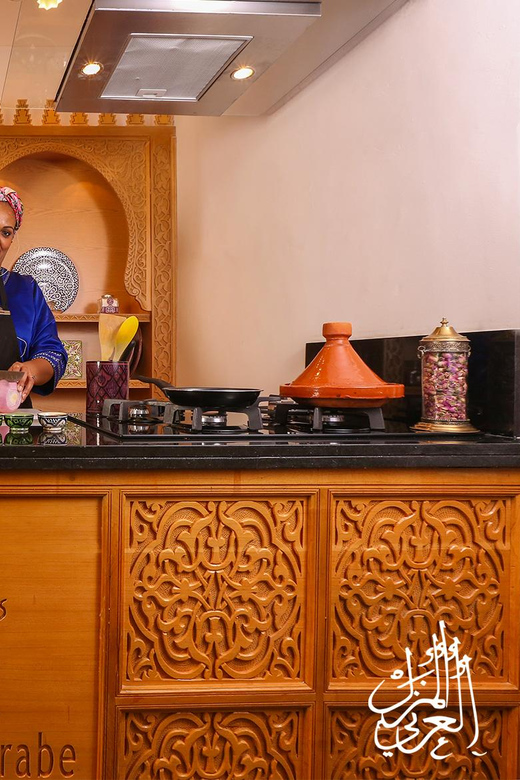
The tea ceremony is one of the most useful cultural parts of the class. You do not just receive a glass of mint or saffron tea with lunch. The instructors explain the ritual and show you how Moroccan tea is prepared and served.
That pause also lets the cook answer questions about Moroccan food, spices, and customs. The lesson becomes less about copying a recipe and more about understanding why meals are served in a particular way.
Flatbread making adds another practical skill. Bread is central to Moroccan meals, and seeing the dough handled alongside the main dish helps you understand how the separate parts of the meal fit together. The class includes a demonstration, and depending on the format, you may have a chance to take part in the preparation.
These moments are especially helpful for anyone who wants cultural context without sitting through a formal lecture. The cooks explain things while you work, and the translator keeps the conversation open to the whole group.
More cooking in Marrakech:
- Moroccan Cooking Class & Marrakech Market Visit with Chef Khmisa
★ 5.0 · 1,504 reviews - Half-Day Cooking Class with Local Chef Laila in Marrakech
★ 5.0 · 952 reviews - Marrakech: Moroccan Cooking Class with a Local Family
★ 4.9 · 668 reviews - Marrakech: Moroccan Cuisine Cooking Class in Local Home
★ 4.8 · 508 reviews
Individual stations make the lesson genuinely hands-on
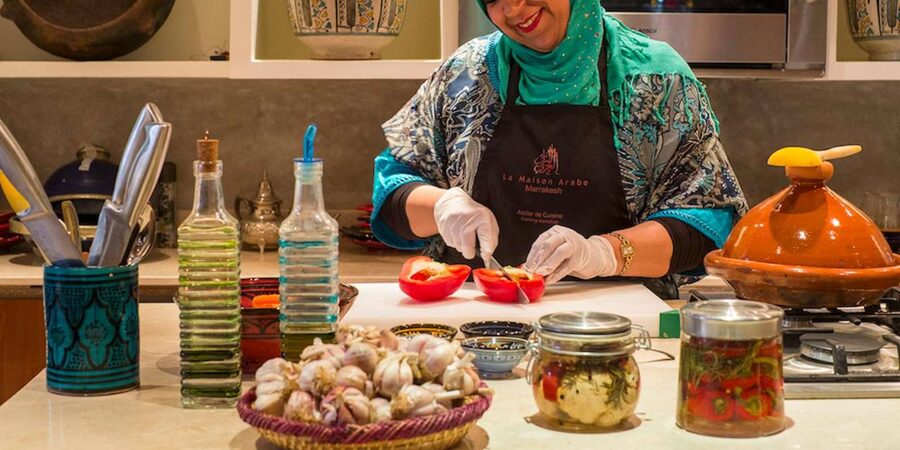
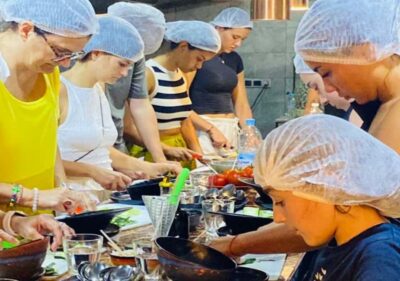
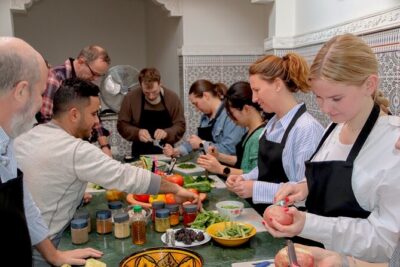
A major strength of this workshop is the layout. Each participant has an individual workstation, so you are not fighting for a turn with a knife or watching someone else do all the important work.
You should still expect some shared activity. The class is conducted in a small group, and the meal is enjoyed together afterward. That balance works well: you get to make your own food, then share the table with the other people in the session.
The individual stations also make the class suitable for beginners. You can focus on your own ingredients and repeat a step if needed. The cooks are described as patient and clear, and the teaching is aimed at helping basic home cooks follow the method.
Names of staff noted during the sessions include Hayat, Wafa, Sanaa, Fatiha, Rokaya, Sana, Hasna, Habiba, and Mohammed. You may not meet all of them, since staffing can vary, but the experience is built around local cooks rather than a distant presenter reading instructions from a script.
The meal at the end is part of the lesson
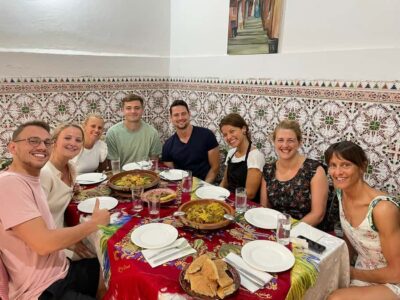
When the cooking is finished, you eat the food you prepared. This is more important than it may sound. You can see the result of each step and judge the balance of the spices while the method is still fresh in your mind.
The meal may include your tagine, salads or other starters, bread, dessert, and tea depending on the class length. The food is served as a proper sit-down meal rather than a quick sample at the workstation. Several sessions have taken place in the hotel restaurant or on a rooftop, adding a pleasant social finish.
You are not rushed out as soon as the plate is cleared. The format allows time to talk with the group and staff, although the exact pace depends on the day’s schedule. That relaxed ending is a good reason to avoid booking another activity immediately afterward.
Vegetarian needs have been accommodated in at least some sessions, but the supplied details do not promise a fixed vegetarian menu. If you need a specific diet, ask before booking rather than assuming the standard recipe can be changed.
Is $35 a fair price?
At $35 per person, this is not the cheapest cooking class in Marrakech. You can find simpler lessons in the city, often with a more informal setting. The question is what you want included.
Here, your fee covers the cooking instruction, fresh local ingredients, food tasting, lunch, afternoon tea, and the longer cultural elements when you choose the three-hour format. You also get a clean, well-equipped kitchen, an individual station, translation, and a recipe to take home. Some sessions finish with a small tagine gift, a thoughtful extra that makes the experience more memorable.
For the one-hour class, the value depends on your schedule. It is a compact activity with a real meal at the end, not a full culinary course. If you have only a free afternoon or want to avoid spending half a day in a kitchen, the short version is sensible.
For the three-hour class, I think the price is easier to justify. You receive several dishes, a tea ritual, bread, instruction, and time to eat with the group. It is also a good option for a family group, a couple, or colleagues who want one shared activity in Marrakech.
Who will enjoy this class most?
You will get the most from the workshop if you like to participate rather than watch. The class suits curious beginners, home cooks, food-focused visitors, and anyone who wants an edible memory of Morocco to take home through the recipe.
It is also a strong group activity. You cook at your own station, but the meal brings everyone together, making it easy for families, friends, couples, and work groups to share the experience.
The class is not suitable for children under 12. One session included both a 12-year-old and a 75-year-old, suggesting that the activity can work across a wide age range once participants meet the minimum age.
It is not suitable for wheelchair users, according to the activity information. If mobility access matters to you, confirm the arrangement directly before paying.
Solo visitors can join, too. The small-group format gives you company without requiring you to bring a full party. If you are traveling alone and feel unsure about committing to three hours, the express version offers a lower-risk introduction, though the longer class provides more food and context.
Useful booking and timing advice
You can choose a duration from one to three hours, with starting times shown when you check availability. I would avoid placing the workshop beside a fixed tour or airport transfer, since the cooking, meal, and conversation can take longer than the active preparation itself.
Wear comfortable clothing that you do not mind wearing in a kitchen. Bring water for before or after the class, but do not bring drinks into the workshop.
The instructor languages are Arabic, English, and French. If you book in a mixed-language group, expect translation during the demonstrations. The system works best when you pay attention to both the spoken explanation and the visual steps on the screen.
Free cancellation is available up to 24 hours before the activity for a full refund. You can also reserve now and pay later, which helps if your Marrakech plans are still shifting.
Should you book the La Maison Arabe cooking workshop?
I would book it if you want a polished, practical introduction to Moroccan food and you value doing the work yourself. The individual stations, fresh ingredients, clean kitchen, friendly local cooks, and meal at the end give it more substance than a simple demonstration.
Choose the three-hour workshop if food is a major reason for your Marrakech visit. You will get the tea ceremony, bread, starters, dessert, and wider cultural explanation that make the class feel complete.
Choose the one-hour option if your schedule is tight or you mainly want to learn one tagine recipe. It is shorter and more focused, but it does not offer the same range of dishes.
I would skip it only if you are looking for the cheapest possible class, need wheelchair access, are traveling with a child under 12, or do not want to spend part of your Marrakech visit indoors. For most food-loving visitors, $35 is reasonable for the quality of the setting, the amount of food, and the chance to recreate the meal at home.
FAQ
Where does the cooking workshop meet?
The meeting point is the front desk of La Maison Arabe in Marrakech. The workshop may take place near the riad-hotel or at the property’s secret gardens.
How long does the class last?
You can choose between a one-hour express workshop and a three-hour cooking workshop. Starting times depend on availability.
What dishes will I prepare?
The express class generally focuses on a traditional Moroccan dish, often chicken tagine. The three-hour class includes starters, tagine or couscous, dessert, and flatbread, though the exact menu can vary.
Is the food included?
Yes. Food tasting and lunch are included, along with afternoon tea. Drinks are not included, and outside drinks are not allowed.
What languages are available?
Instruction and translation are available in Arabic, English, and French.
Is the class suitable for children?
The activity is not suitable for children under 12. Participants aged 12 and older may attend.
Can I cancel or pay later?
You can cancel up to 24 hours in advance for a full refund. A reserve-now, pay-later option is also available.
Just added in Marrakech
- Quad Ride In The Agafay Desert★ 5.0 · 39 reviews
- Quad Biking Agafay desert★ 5.0 · 20 reviews
- Marrakech: Tailor-Made City Tour With Your Own Private Guide★ 4.9 · 236 reviews
- Surf Training and Lunch on Essaouira Day Trip from Marrakech★ 4.9 · 51 reviews
- Essaouira: Surf Trip from Marrakech★ 4.9 · 31 reviews
- Marrakech palm grove: Sunset camel ride★ 4.8 · 194 reviews
- Marrakech: Sunrise Desert Tour with Camel Ride and Breakfast★ 4.4 · 36 reviews
- Marrakech : Agafay Desert Sunset Camel Ride & Luxury Dinner★ 4.3 · 39 reviews
Cooking Classes, compared.
Traditional Moroccan Cooking Class & Market Visit
Read our review →
Moroccan Dishes Cooking Class with a Local Chef
Read our review →
Moroccan Cooking Class & Marrakech Market Visit with Chef Khmisa
Read our review →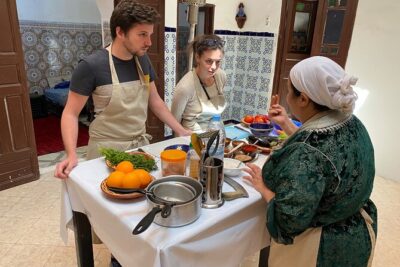
Half-Day Cooking Class with Local Chef Laila in Marrakech
Read our review →
Marrakesh cooking class with chef Hassan – Local dishes
Read our review →Browse the lists this tour appears in