
Reviewed · COOKING CLASSES
Moroccan Cooking Class & Marrakech Market Visit with Chef Khmisa
The best part of this Marrakech experience happens before the cooking begins. You meet Chef Khmisa, a Moroccan chef with 25 years of experience, then walk with her through a local souk to choose fresh ingredients for your meal. Back in her traditional Medina home, you learn the kitchen work behind familiar Moroccan dishes instead of simply ordering them at a restaurant.
I like the market visit and the shared meal most. The shopping gives you a closer look at everyday food culture, while the cooking session turns the group into a working team. The main drawback is that this is a shared class, with up to 15 people, so the hands-on time may feel less personal than a private lesson.
Key points at a glance
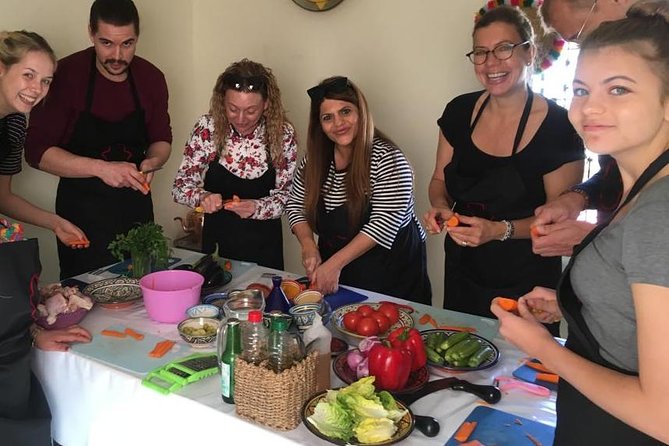
- Shop with Chef Khmisa in a local souk: Pick up fresh groceries and see spices, herbs, and produce used in Moroccan cooking.
- Cook inside a traditional Medina home: The workshop takes place at Khmisa’s home, not in a polished hotel kitchen.
- Learn the mint tea ritual: Tea is served on arrival, with time to learn the preparation and pouring customs.
- Prepare a full Moroccan meal: The menu includes a starter, main course, and dessert, with vegetarian and vegan options available.
- Expect a social class: The maximum group size is 15, and the meal is shared after everyone helps prepare it.
- Pay about $39.39 per person: For a three-hour class with lunch, a guide, ingredients, and tea or coffee, the price is fair.
Meeting Chef Khmisa at Bab Doukkala Mosque
The class begins at Bab Doukkala Mosque, a useful landmark on the edge of Marrakech’s Medina. You are responsible for getting to the meeting point, since hotel pickup and drop-off are not included. Plan to arrive early enough to find the mosque without rushing, especially if you are still learning your way around the old city.
Khmisa leads the cooking side of the activity. She has worked in well-known hotels in Rabat and Marrakech and specializes in Moroccan cuisine and pastry. Kawtar assists with the class and communication, drawing on her hospitality and tourism training.
That pairing matters. Cooking demonstrations can become difficult when a teacher is explaining techniques while also trying to manage a group. Kawtar helps keep the session moving and gives you a second person to approach with questions.
The class is conducted in French and English. The exact menu is discussed after you arrive, and food allergies and restrictions are addressed before shopping begins. This is a useful feature, since Moroccan cooking often includes preserved ingredients, nuts, dairy, and strong spice blends.
Other cooking classes in Marrakech people book:
- Marrakech: Moroccan Cooking Class with Pickup
★ 4.6 · 1,862 reviews - Marrakech: Traditional Moroccan Cooking Class & Market Visit
★ 4.8 · 1,861 reviews - Marrakesh: Moroccan Dishes Cooking Class with a Local Chef
★ 5.0 · 1,615 reviews
Walking through the less-touristed souk
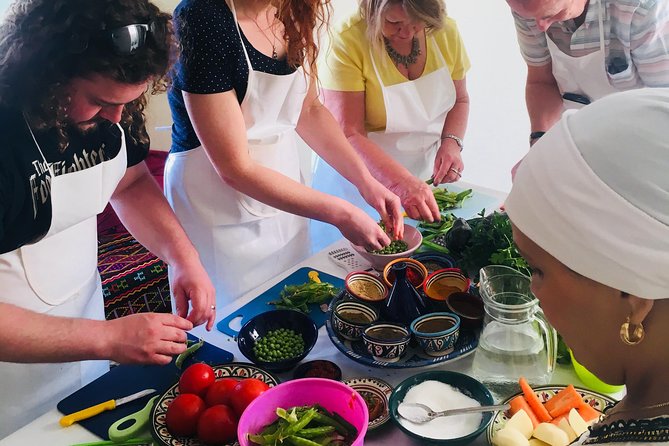
After introductions, you walk with the chef to a local food market. The route is part of the lesson, not just a way to pass time before cooking. You see the ingredients in their everyday setting and help select the food that will later appear on your table.
The market is described as being away from the most tourist-focused side of Marrakech. That gives the walk a practical feel. You are not simply stopping at a spice shop for a staged demonstration. You are helping buy groceries among market stalls, with the chef explaining what to choose and how those items fit into the menu.
The exact shopping list depends on the dishes chosen that day. You might handle herbs, vegetables, spices, oils, or other fresh ingredients used in the meal. Several menu examples include chicken tagine with preserved lemon, vegetable tagine, and several small appetizers, but you should not book expecting one fixed menu every time.
I like this part because it connects the plate to the place. You begin to understand that Moroccan food is not only about adding a dramatic pile of spices. It is also about selecting fresh produce, balancing herbs and seasoning, and allowing the ingredients time to cook together.
The downside is that the souk is still a working market. You may encounter narrow paths, crowds, and the ordinary movement of Medina life. Wear comfortable shoes and keep your belongings secure. The market walk is short, but it is not a smooth, controlled tour route.
Entering a traditional house in the Medina
Once the shopping is complete, you return to Khmisa’s workshop, a traditional Moroccan house in the heart of the Medina. The setting gives the class a more personal character than a large culinary school or restaurant kitchen.
You begin with Moroccan mint tea. The tea service is treated as a lesson in itself, including the preparation and pouring ritual. Some participants are invited to try the pouring, which adds a small but memorable cultural detail before the chopping and cooking begin.
Tea is also a welcome pause after the market walk. It gives the group time to introduce themselves and discuss the menu. If you are traveling alone, this is one of the easier ways to meet people during your Marrakech stay. The format encourages conversation because everyone later sits down to eat the same meal.
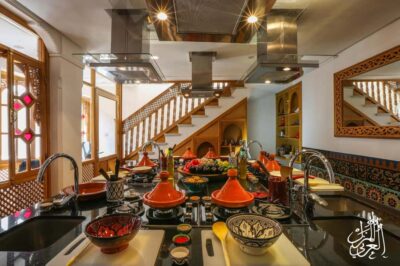
The home setting has one practical trade-off. A private house may feel warm and genuine, but it is not designed like a spacious demonstration kitchen. With a full group, you may need to pay attention to where you are standing and wait briefly for access to a work surface or utensil.
Preparing starters, tagines, and dessert
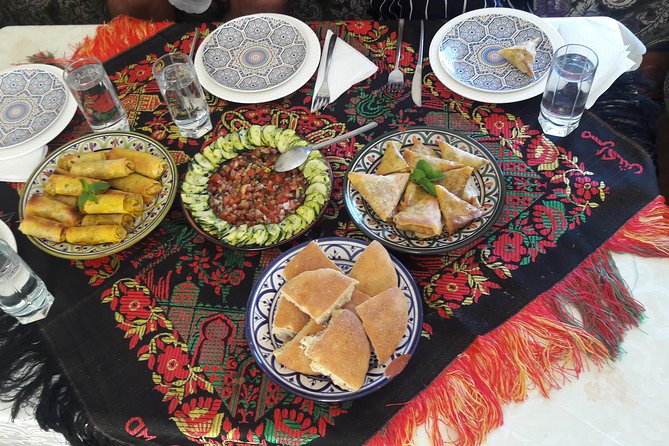
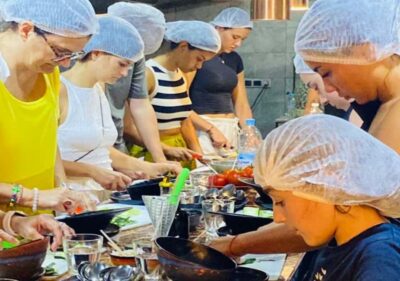
The meal includes a starter, a main course, and one dessert. Everyone works together, with Khmisa explaining the steps, techniques, and use of Moroccan spices as the dishes come together.
The small dishes are often where the class becomes most active. One session included four appetizers, followed by chicken and vegetable tagines and a simple dessert. The menu can change, so think of those dishes as examples rather than guarantees.
Tagine is a particularly useful dish to learn because it shows how Moroccan cooking builds flavor gradually. Chicken with preserved lemon is one preparation associated with this class, and it has received especially strong praise for its savory, bright flavor. A vegetable tagine may also be included, making the meal more suitable for mixed groups.
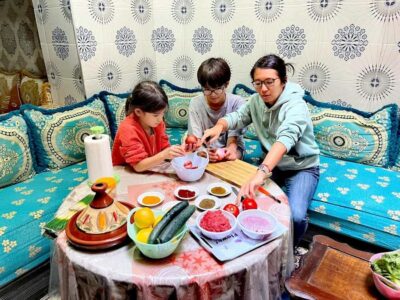
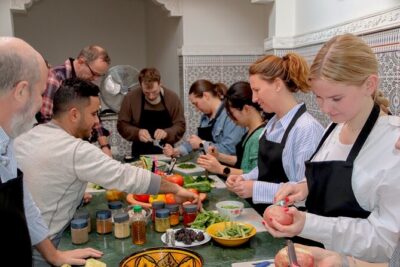
Do not expect a silent demonstration in which you watch from the side. The format is designed as teamwork. You may chop, mix, season, prepare garnishes, or help with other stages of the meal. The precise role each person gets can depend on group size and the menu.
That shared approach is a strength for families and friends. Children can take part in suitable preparation tasks, and people with different cooking backgrounds can work at the same table. It may be less appealing if you want a long, technical lesson on one dish, since the class aims to produce a complete meal in roughly three hours.
The cooking also gives you practical ideas to use at home. You learn how spices, herbs, oils, and fresh ingredients are combined rather than receiving only a list of dishes to photograph. Still, bring a small notebook or use your phone if you want to record proportions and steps. Recipe follow-up has not been consistent for every participant, so it is wise to take notes during the session rather than rely entirely on recipes being sent later.
More cooking in Marrakech:
- Half-Day Cooking Class with Local Chef Laila in Marrakech
★ 5.0 · 952 reviews - Marrakech: Moroccan Cooking Class with a Local Family
★ 4.9 · 668 reviews - Marrakech: Moroccan Cuisine Cooking Class in Local Home
★ 4.8 · 508 reviews - Marrakech: Moroccan Cooking Workshop at La Maison Arabe
★ 5.0 · 446 reviews
Eating the meal you helped make
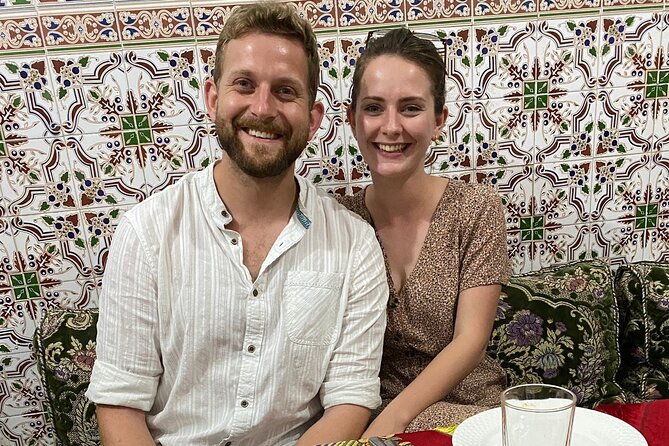
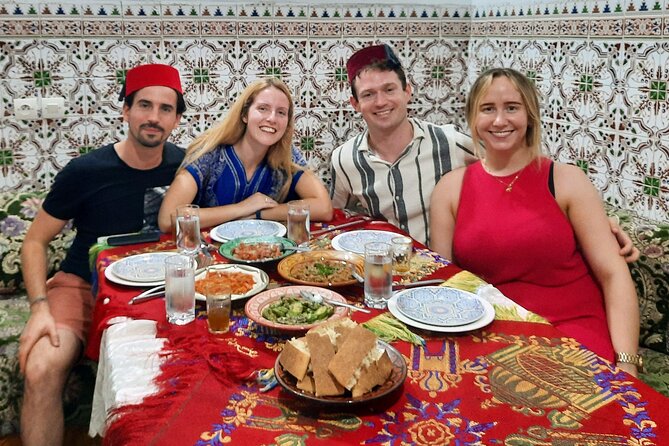
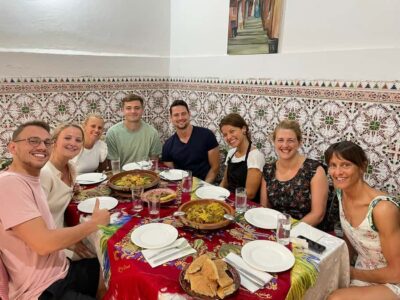
After the cooking is finished, you sit down to eat the results. Lunch is included, along with coffee or tea, so the final meal is not an extra purchase. The food is served as the payoff for the work, but also as another chance to understand Moroccan dining customs.
The shared table is a major part of the appeal. You eat with the people who prepared the meal beside you, which makes the activity feel more like a communal lunch than a standard cooking demonstration. It is also a good fit for solo visitors who want a social afternoon without committing to a full group tour of Marrakech.
The food itself is repeatedly described as a highlight, particularly the tagine with preserved lemon, the appetizers, and the mint tea. I would keep expectations sensible: the final result depends on the day’s menu and the group’s pace. But the format gives you a meal that has a clear connection to the market, the chef, and the work you did in the kitchen.
Cleanup is part of the shared process. The meal is not served by a separate restaurant team while you walk away from the cooking. That is a small point, but it helps explain the family-style character of the class.
What the $39.39 price really covers
At about $39.39 per person, this is a good-value activity for Marrakech. The price includes the three-hour class, the market walk, ingredients, lunch, the English or French-speaking guide and chef, and tea or coffee.
A restaurant meal alone can give you the taste of Moroccan food, but not the market visit or cooking instruction. A private class would usually offer more individual attention, but this shared session keeps the cost modest.
The group limit is 15 people. That is not a tiny class, so do not expect one-to-one coaching throughout. At the same time, the activity is described as hands-on, and the cooking is organized as group work. Your experience will depend partly on how actively you step forward and take a task.
For a solo visitor, the cost includes a ready-made social setting. For a couple or family, it offers a practical way to spend half a day together. Food-focused visitors will get the most from it, but you do not need serious kitchen skills to take part.
Who should book this Marrakech class
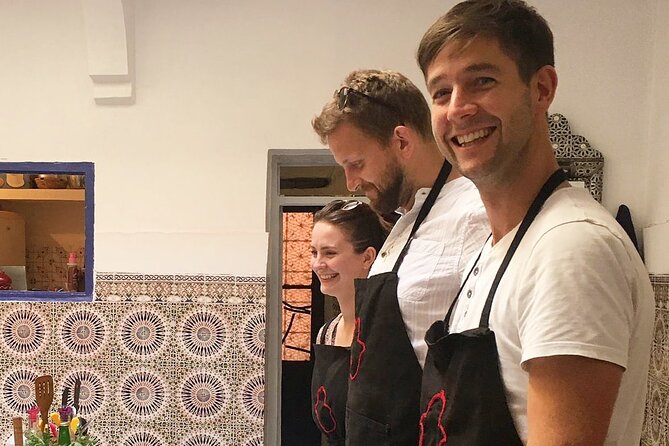
I would choose this class if you want more than a meal and prefer local food explained through action. It suits people who enjoy markets, cooking, shared tables, and informal cultural contact.
It is especially useful early in a Marrakech visit. After learning the role of spices, preserved lemon, herbs, and tea, you may notice more when you eat at other restaurants or shop in the Medina. The class gives you a framework for understanding dishes that might otherwise arrive at your table without explanation.
Families can also make good use of it, since the work is divided among the group and children can participate. Vegetarians and vegans are catered for, but tell the organizers about your needs before cooking begins. The same applies to allergies and other dietary restrictions.
You may want a different format if you dislike group activities, have limited mobility for walking through a market, or want advanced pastry training. The walk is part of the experience, and the class is built around cooperation rather than private instruction.
The activity requires a minimum number of participants. If that minimum is not reached and the session is canceled, you are offered another date or experience, or a full refund. Otherwise, cancellation is free up to 24 hours before the start time. Inside that window, the payment is not refunded.
My verdict: a strong value for food-focused visitors
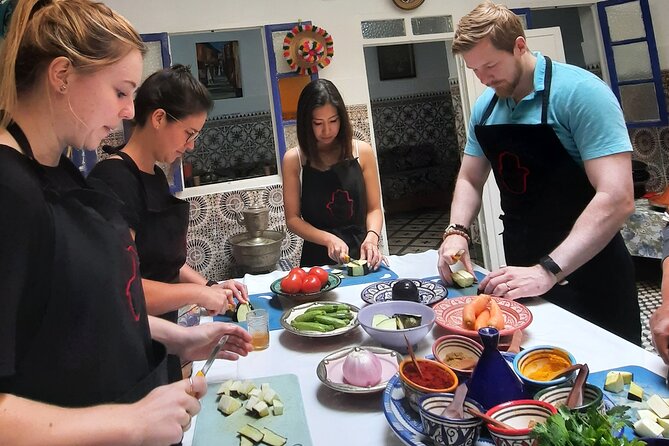
I recommend booking this class if you want a warm, practical introduction to Moroccan food and do not mind sharing the kitchen. The strongest elements are the local market visit, Chef Khmisa’s long experience, the mint tea ritual, and the chance to sit down to a meal made by the whole group.
Book it with two expectations in mind: the menu can vary, and the class may include as many as 15 people. Take your own notes, ask questions while the food is being prepared, and treat the market walk as part of the lesson rather than a quick stop.
At $39.39, the combination of groceries, instruction, tea, and lunch is hard to fault. If your ideal Marrakech afternoon involves spices, conversation, and a tagine you helped prepare, this is a sensible choice.
FAQ
Where does the cooking class begin?
The activity begins at Bab Doukkala Mosque, Mosquée Bab Doukkala, Marrakech 40000, Morocco. You need to make your own way to the meeting point because hotel pickup and drop-off are not included.
How long does the experience last?
The class lasts approximately three hours. This includes the market walk, mint tea service, cooking, and the shared meal.
What food is included?
The menu includes a starter, a main course, and one dessert. The exact dishes are discussed after arrival and can vary. Examples include appetizers, chicken tagine with preserved lemon, vegetable tagine, and a simple dessert.
Are vegetarian or vegan menus available?
Yes. Vegetarian and vegan options are available. You should also discuss allergies and dietary restrictions before the shopping and cooking begin.
Is the class private?
No. It is a shared session with a maximum of 15 participants. Private sessions are available on request by contacting the provider directly.
What is included in the price?
The price includes lunch, the local French and English-speaking guide and chef, and coffee or tea. Hotel transportation and optional gratuities are not included.
Just added in Marrakech
- Quad Ride In The Agafay Desert★ 5.0 · 39 reviews
- Quad Biking Agafay desert★ 5.0 · 20 reviews
- Marrakech: Tailor-Made City Tour With Your Own Private Guide★ 4.9 · 236 reviews
- Surf Training and Lunch on Essaouira Day Trip from Marrakech★ 4.9 · 51 reviews
- Essaouira: Surf Trip from Marrakech★ 4.9 · 31 reviews
- Marrakech palm grove: Sunset camel ride★ 4.8 · 194 reviews
- Marrakech: Sunrise Desert Tour with Camel Ride and Breakfast★ 4.4 · 36 reviews
- Marrakech : Agafay Desert Sunset Camel Ride & Luxury Dinner★ 4.3 · 39 reviews
Cooking Classes, compared.
Traditional Moroccan Cooking Class & Market Visit
Read our review →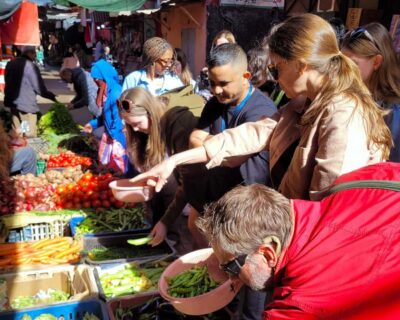
Moroccan Dishes Cooking Class with a Local Chef
Read our review →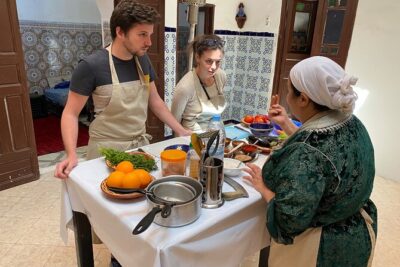
Half-Day Cooking Class with Local Chef Laila in Marrakech
Read our review →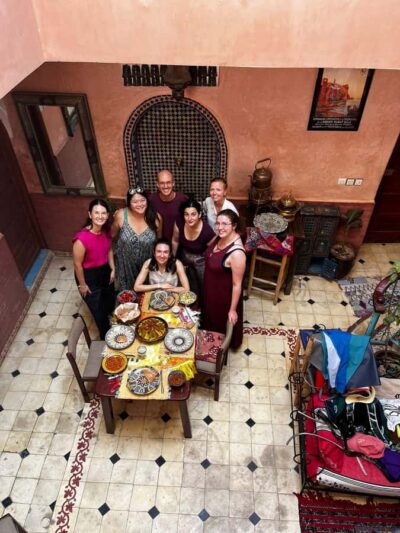
Marrakesh cooking class with chef Hassan – Local dishes
Read our review →Browse the lists this tour appears in