
Reviewed · COOKING CLASSES
Marrakech: Traditional Moroccan Crepes & Bread Cooking Class
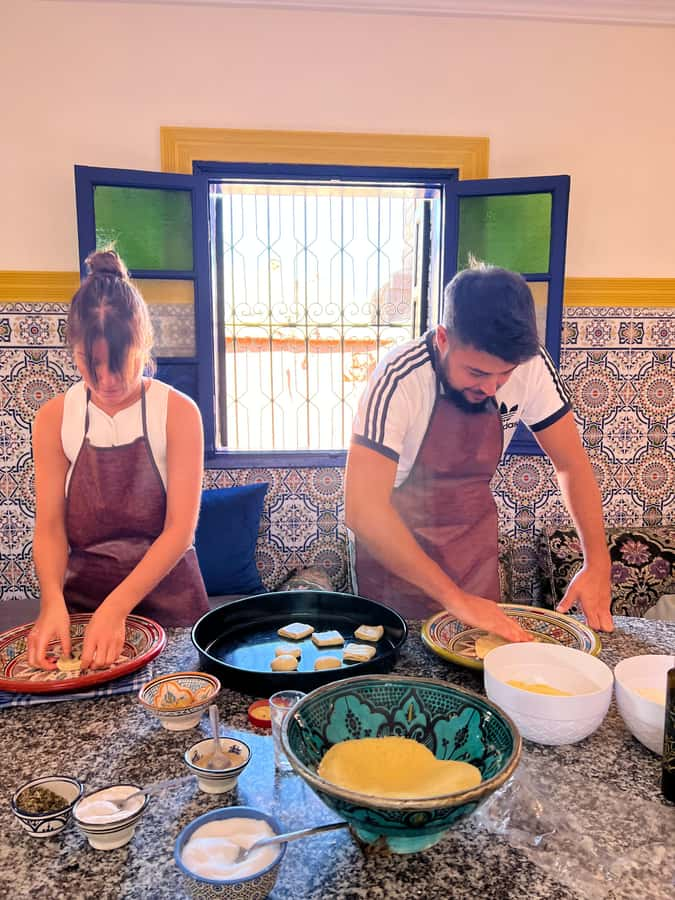
Marrakech’s most useful souvenirs may be the recipes you can repeat at home. In this two-hour bread class, you make msemen, harcha, and batbout from scratch, then cook and eat the results with Moroccan mint tea. I like the small group size, limited to 10, and the fact that you work with the dough rather than simply watching a demonstration. I also like the local setting near Bab Doukkala, where the walk to the workshop passes through food markets used mainly by residents.
The main drawback is communication. Arabic, French, and English are offered, but the person demonstrating may not always speak your language directly. One participant also had to follow up for the promised electronic recipes, so keep an eye on your inbox after the class. People with gluten intolerance or food allergies should skip this activity.
Key points at a glance
- Three very different Moroccan breads: Learn flaky msemen, crumbly semolina harcha, and soft, pocket-like batbout.
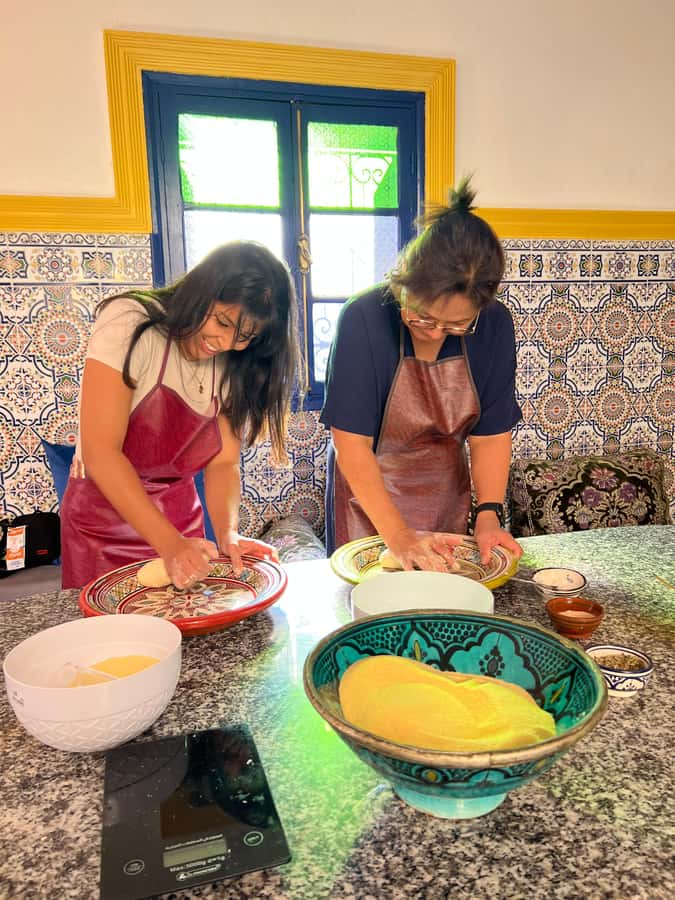
- Small classes make a difference: With no more than 10 participants, you have a fair chance to get help with folding, shaping, and cooking.
- A real hands-on lesson: You receive an apron, ingredients, utensils, and guidance from start to finish.
- Mint tea is part of the lesson: You do not just drink tea with the bread. You help prepare it and learn about the traditional serving ritual.
- A useful Marrakech location: The workshop is at 44 Der Hajra, near Bab Doukkala, with a walk through local food markets.
- Good value at $37: The price includes the class, tasting, tea, and recipes, but not transportation or personal spending.
Three Moroccan breads, three different techniques
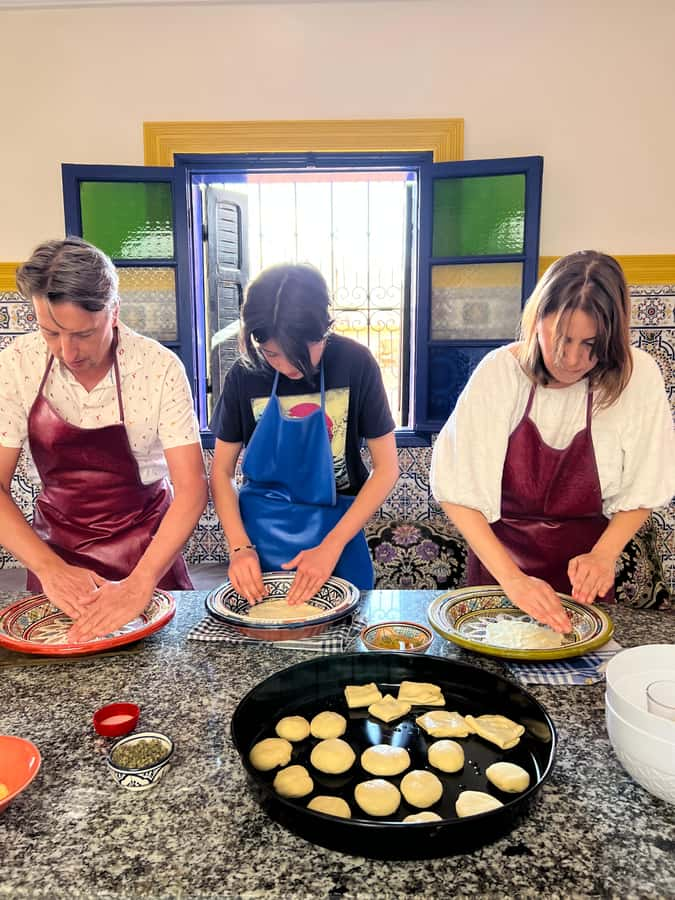
The appeal of this class is its variety. You are not making the same dough three times with minor changes. Each bread teaches a different skill, so the lesson feels more like a compact introduction to Moroccan home baking.
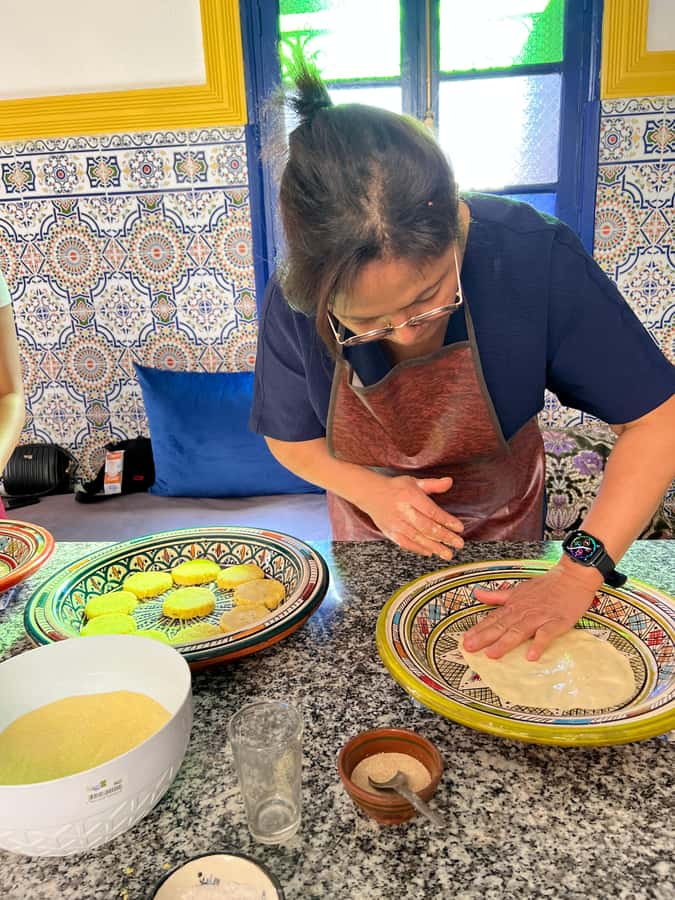
Msemen is the star for many people. This square Moroccan crepe has thin layers created by stretching and folding dough with oil or fat before cooking it on a hot surface. The method looks simple when an experienced cook does it quickly, but the hands-on practice helps you understand how thin the dough should be and how to fold it without tearing.
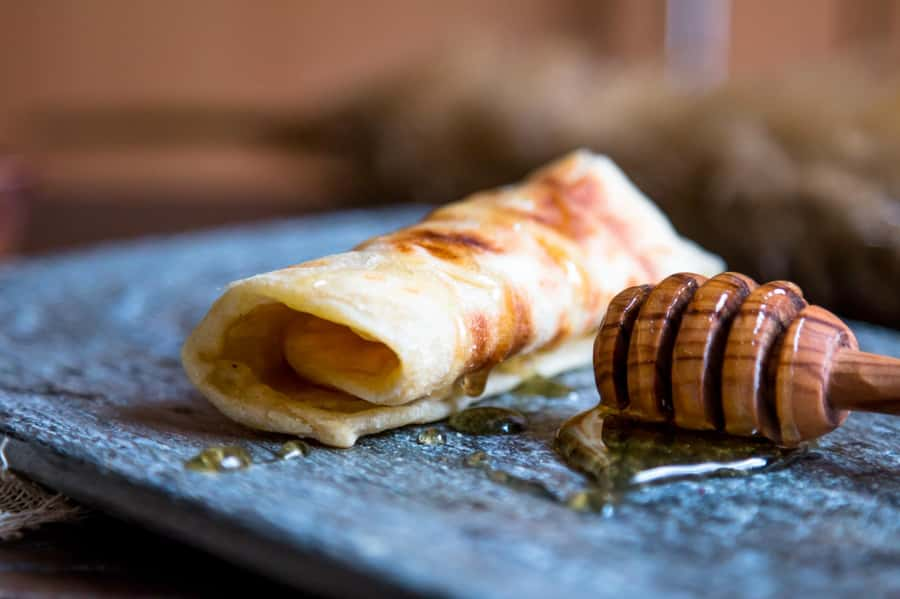
You may have already eaten msemen at breakfast in Morocco, perhaps with honey, jam, olives, or tea. Learning to make it gives you a better sense of why the bread has its distinctive flaky texture. It also makes a good recipe to take home because the ingredients are familiar and the process is memorable.
Harcha is a semolina galette with a different feel. It is more crumbly and tender than msemen, and it does not depend on the same thin layers. You learn how to handle the semolina mixture and shape the cakes before cooking them. This is a useful contrast, since you can see how a change in flour and technique produces a completely different bread.
Batbout is a soft Moroccan flatbread, often compared with pita. Its preparation and cooking method differ again, giving you a third lesson in shaping and heat. The finished bread is pleasant with savory or sweet accompaniments, and it is the sort of everyday food you can imagine making for breakfast or a light meal at home.
The class gives you time to make, cook, and taste all three. That matters. A quick demonstration can leave you remembering only the final appearance, while shaping the dough yourself shows you where mistakes happen and how the texture changes under your hands.
Other cooking classes in Marrakech people book:
- Marrakech: Moroccan Cooking Class with Pickup
★ 4.6 · 1,862 reviews - Marrakech: Traditional Moroccan Cooking Class & Market Visit
★ 4.8 · 1,861 reviews - Marrakesh: Moroccan Dishes Cooking Class with a Local Chef
★ 5.0 · 1,615 reviews
What happens during the two-hour class
You meet at the workshop at 44 Der Hajra, Bab Doukkala, Marrakech. Transportation is not included, so you arrange your own way there. The location is in the city rather than at a separate cooking school outside Marrakech, and some participants have found the walk through nearby food markets part of the appeal.
I would allow extra time to find the address, especially if you are unfamiliar with Bab Doukkala. The operator has sent directions by WhatsApp to some participants, which can be helpful, but it is still sensible to check your meeting instructions before leaving your accommodation.
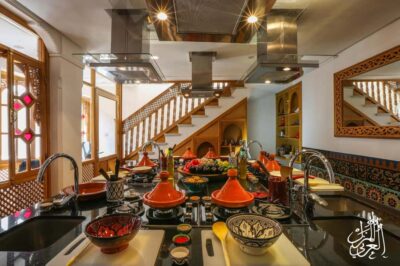
Once inside, you receive an apron and the equipment and ingredients needed for the lesson. You do not need to shop for flour, semolina, oil, or other supplies. Wear clothes that are easy to move in and suitable for baking, and bring water. The class is active, but not strenuous.
The host first demonstrates the techniques, then you work through the recipes yourself. The teaching is practical: shaping, folding, preparing the dough, and cooking each bread. The small group limit of 10 is useful here. When you are learning a technique that depends on touch and timing, it is much easier to ask for help in a group of this size than in a large demonstration class.
The instructor may be supported by translation. Arabic, French, and English are the listed languages. Fatima and Jamila have both led sessions mentioned by name, and their approach appears to be very hands-on. Jamila, in particular, helped participants through the process even when spoken communication was limited. That is worth knowing if you are concerned about language. You may not receive a long spoken explanation for every step, but a clear demonstration and direct help can still carry the lesson.
After the dough is prepared, you cook the breads. The class does not end when the last piece leaves the pan. You sit down to taste what you made, usually with simple accompaniments such as olives, jam, honey, or similar table items. One participant had enough bread to take some home, while another found there was more than could be eaten during the session. The amount you take away will depend on the group size and how much is produced.
The Moroccan mint tea ritual
Mint tea is not just a drink added at the end. It is part of Moroccan hospitality and an important piece of the class.
After the breads are prepared and cooked, you help make the tea. You learn how it is prepared and served, then pour and taste it alongside your baking. This provides a natural pause after the work with the dough, and it gives you something distinctly Moroccan to practice as well as the breads.
The tea also changes the mood of the class. You move from concentrating on texture and heat to sitting together, eating, and talking about your time in Morocco. The activity is social without requiring a formal conversation or a long presentation.
If you want to recreate the full experience at home, pay attention to the pouring and serving as well as the ingredients. The tea ritual is one of the small cultural details that makes this more than a basic pancake lesson.
Why the small group matters
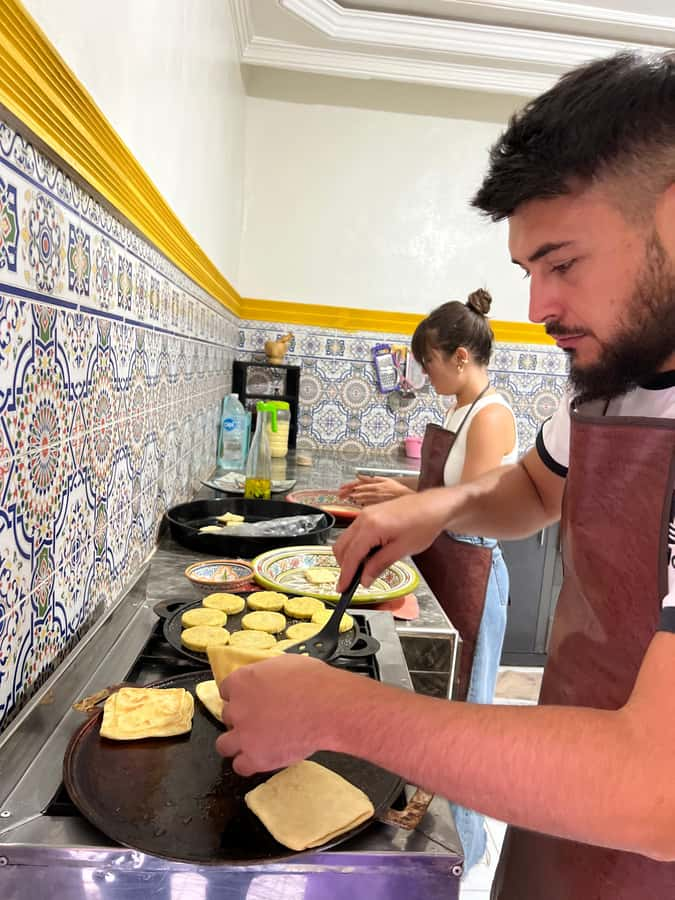
The maximum group size is 10, though some sessions can be much smaller. One class had only two participants, while another had three. A group of nine still allowed people to ask questions and receive help, according to the details of that session.
The smaller the group, the more individual attention you are likely to receive. This matters most with msemen, where the stretching and folding can be awkward at first. You may also want help judging the right thickness or knowing when a bread is ready to turn.
The trade-off is that the quality of communication can vary with the particular instructor and group. One participant enjoyed the cooking but found that the demonstrator did not speak English and could not answer questions. A translator helped another group. If you need detailed verbal instruction, send a message ahead of time to confirm how English support will work during your session.
Still, cooking has its own language. Watching the hands, copying the motion, and getting direct correction can be enough for many people. The class is designed around doing, not sitting quietly through a lecture.
More cooking in Marrakech:
- Moroccan Cooking Class & Marrakech Market Visit with Chef Khmisa
★ 5.0 · 1,504 reviews - Half-Day Cooking Class with Local Chef Laila in Marrakech
★ 5.0 · 952 reviews - Marrakech: Moroccan Cooking Class with a Local Family
★ 4.9 · 668 reviews - Marrakech: Moroccan Cuisine Cooking Class in Local Home
★ 4.8 · 508 reviews
The setting near Bab Doukkala
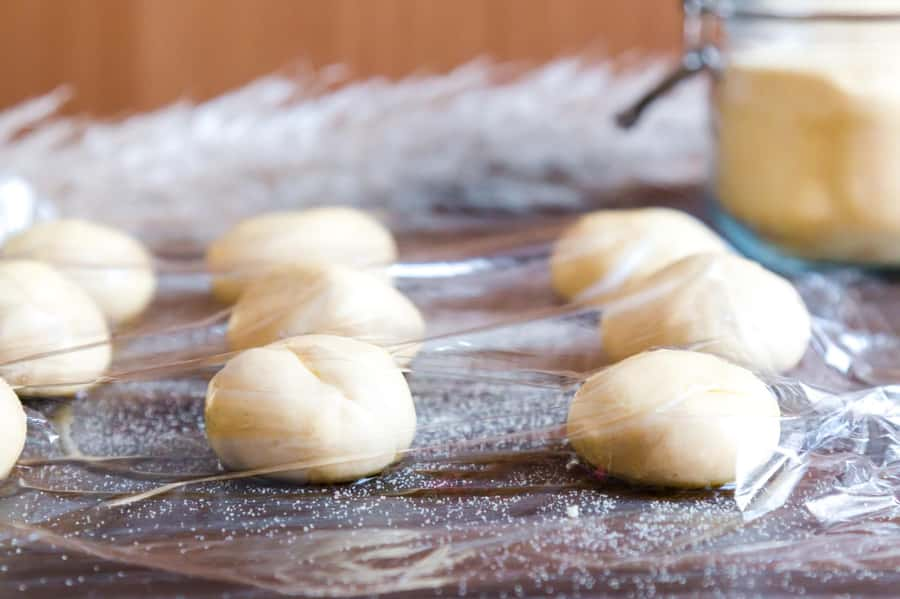
Bab Doukkala gives you a useful slice of everyday Marrakech. The workshop is not described as a grand restaurant or a polished hotel kitchen. It is a more domestic setting, and one participant compared the atmosphere to cooking at home.
That is a plus if you want a food activity with a local feel. The walk toward the workshop can lead through markets where residents shop, rather than only through the parts of Marrakech set up for sightseeing. You should still focus on the directions and allow time for the narrow streets and unfamiliar turns.
The setting may also mean that this is not the right choice if you expect a highly formal culinary school. You are coming for direct instruction, simple equipment, and a warm kitchen experience. The value is in learning food that Moroccan families actually make, not in using restaurant-level facilities.
Is $37 a fair price?
At $37 per person, the class is reasonably priced for a two-hour food activity in central Marrakech. Your fee covers the interactive lesson, apron, ingredients, utensils, host guidance, tasting, mint tea preparation, and electronic recipes.
The strongest value comes from the number of things included. You learn three breads rather than one dish, and you eat the results rather than buying a separate meal afterward. You also leave with recipes that can help you repeat the experience at home.
Transportation is not included. That is not a major concern if you are staying in Marrakech and can reach Bab Doukkala on foot or arrange your own ride. It does mean you should add a little time and possible local transport cost when comparing this with classes that include hotel pickup.
The class is also good value for families with older children, provided everyone is comfortable working with flour and hot cooking surfaces. Children under four are not accepted. A family of four paid for four places in one session and enjoyed the activity together, but younger children may find the two-hour format demanding.
The recipes are a practical souvenir
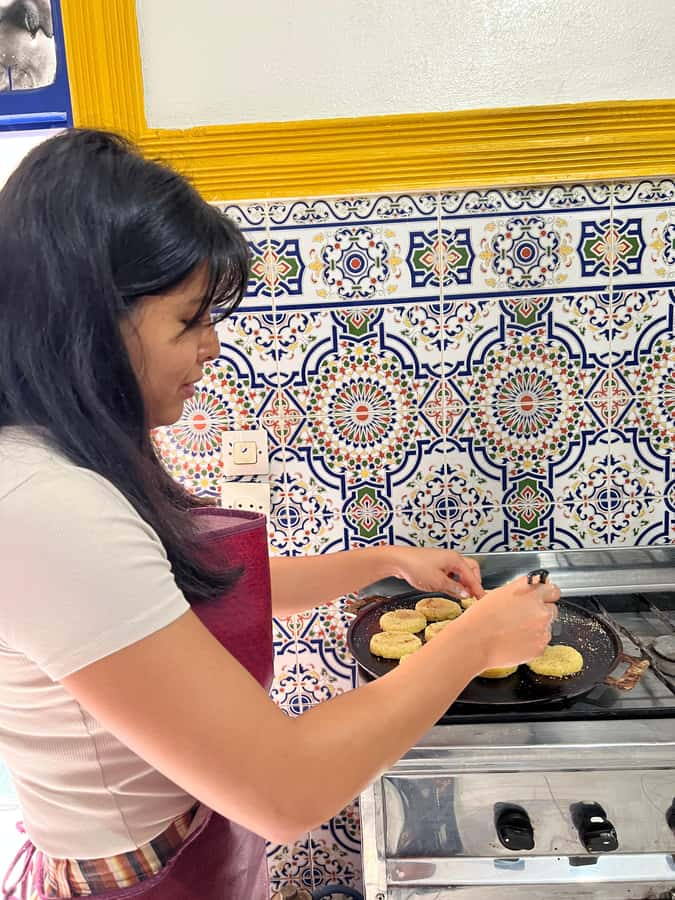
Food souvenirs often disappear quickly. An electronic recipe is more useful, especially for msemen, since the technique can be hard to remember from a single demonstration.
The recipes are included, but check that they arrive after the class. One participant had not received them and needed to chase them up. That appears to be an administrative issue rather than part of the cooking itself, but it is worth watching for if you want to bake at home.
You may also be able to take leftovers away. Bring this up during the class if there is more bread than you can eat. The amount available will depend on production and the number of people in your group, so do not book on the assumption that you will receive a large takeaway box.
Who should book this class?
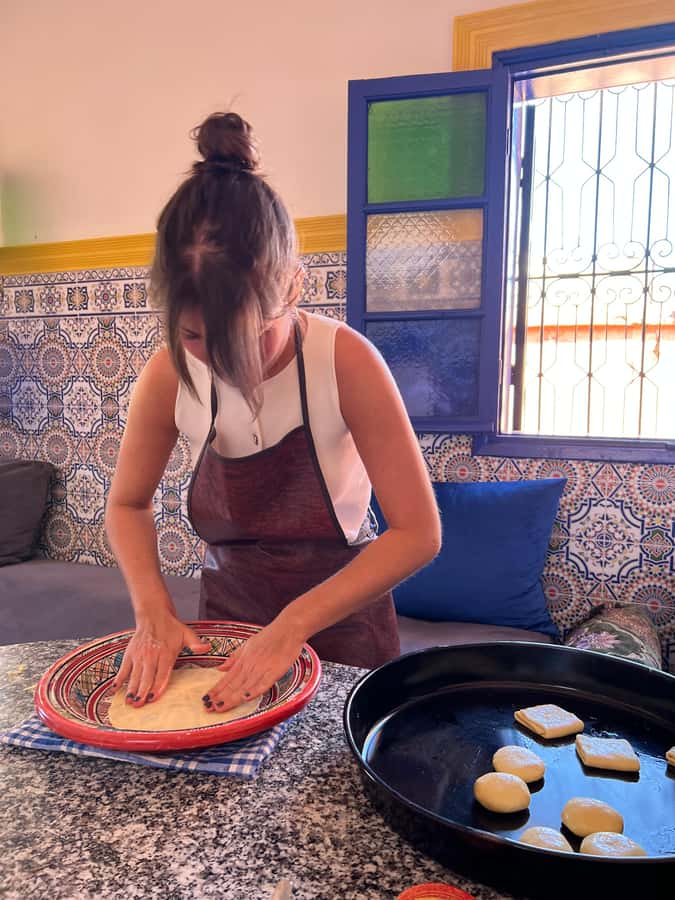
I would choose this for someone who likes food, wants a short activity between sightseeing stops, or has already enjoyed Moroccan bread and wants to understand how it is made. It works particularly well for couples, families with children over four, and small groups of friends.
It is also a good break from the busy streets of Marrakech. You spend two hours focused on a simple task, then sit down with tea and food you prepared yourself. That change of pace can be welcome after time in the medina.
I would not choose it if you have a food allergy, gluten intolerance, or need a fully formal English-language cooking lecture. The class uses gluten-based breads, and communication may depend partly on demonstration and translation.
The class is also not aimed at advanced bakers seeking professional instruction. You are learning approachable Moroccan home recipes. The joy is in the technique, the setting, and the chance to eat your work.
Booking and practical details
You can cancel up to 24 hours before the activity for a full refund, and the reserve-now, pay-later option keeps your plans flexible. Starting times vary, so check availability for the date you want.
Bring water and wear comfortable clothes suitable for baking. An apron is supplied, but flour, oil, and dough can still make a mess, so avoid clothing you are determined to keep spotless. Bring an appetite, since you will taste the breads and tea at the end.
The class is not suitable for children under four, people with food allergies, or people with gluten intolerance. The listed languages are Arabic, French, and English, and the group is limited to 10 participants.
Should you book the Marrakech bread class?
Yes, if you want an affordable, hands-on food activity with a strong local feel. The three breads give you real variety, the mint tea ritual adds cultural context, and the small group format gives you a fair chance to get help. The class is especially worthwhile if you have been eating msemen in Morocco and want to make it yourself later.
Before booking, confirm the meeting directions and be realistic about language support. If you are comfortable learning by watching and doing, the occasional communication gap should not stop you. If you need detailed spoken instruction or cannot eat gluten, choose another activity.
FAQ
How long does the Marrakech bread class last?
The class lasts two hours, including the bread preparation, cooking, tasting, and mint tea activity.
Which Moroccan breads will I make?
You will make msemen, a Moroccan crepe; harcha, a semolina pancake or galette; and batbout, a Moroccan flatbread similar to pita.
Is mint tea included?
Yes. You help prepare traditional Moroccan mint tea, learn about the tea ritual, and taste it with the breads you make.
Where is the workshop?
The workshop is at 44 Der Hajra, Bab Doukkala, Marrakech. Transportation to and from the experience is not included.
What languages are available?
The listed languages are Arabic, French, and English. Some sessions may also use translation or rely on hands-on demonstrations.
Are ingredients and equipment provided?
Yes. The class includes an apron, all necessary ingredients, utensils, and guidance from the host.
Can children join the class?
Children under four are not permitted. The supplied information does not give an upper age limit, so older children can participate if they are comfortable with the baking activity.
Just added in Marrakech
- Quad Ride In The Agafay Desert★ 5.0 · 39 reviews
- Quad Biking Agafay desert★ 5.0 · 20 reviews
- Marrakech: Tailor-Made City Tour With Your Own Private Guide★ 4.9 · 236 reviews
- Surf Training and Lunch on Essaouira Day Trip from Marrakech★ 4.9 · 51 reviews
- Essaouira: Surf Trip from Marrakech★ 4.9 · 31 reviews
- Marrakech palm grove: Sunset camel ride★ 4.8 · 194 reviews
- Marrakech: Sunrise Desert Tour with Camel Ride and Breakfast★ 4.4 · 36 reviews
- Marrakech : Agafay Desert Sunset Camel Ride & Luxury Dinner★ 4.3 · 39 reviews
Cooking Classes, compared.
Traditional Moroccan Cooking Class & Market Visit
Read our review →
Moroccan Dishes Cooking Class with a Local Chef
Read our review →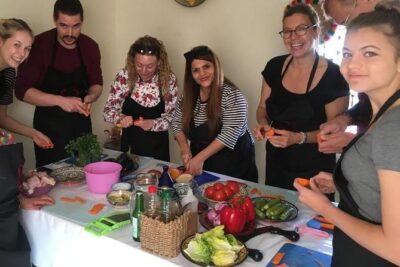
Moroccan Cooking Class & Marrakech Market Visit with Chef Khmisa
Read our review →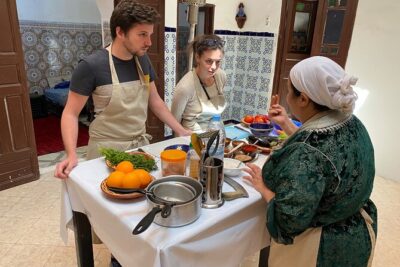
Half-Day Cooking Class with Local Chef Laila in Marrakech
Read our review →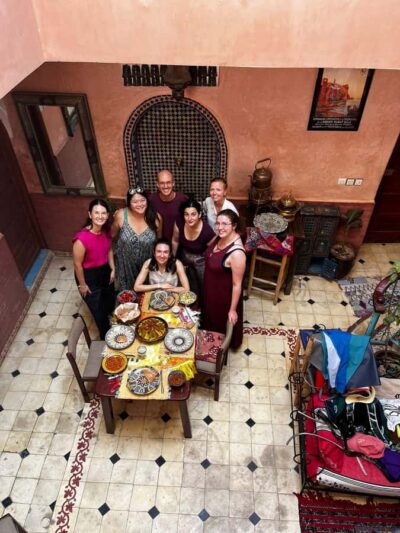
Browse the lists this tour appears in