
Reviewed · COOKING CLASSES
Marrakech: Moroccan Cooking Class for vegetarians and vegan
Marrakech cooking is at its best when you stop watching from the sidelines and start chopping, seasoning, and stirring. This four-hour class takes you from a meeting point near Andalusia Restaurant into an authentic family home in the Medina, where Yasser or Fatima guides you through Moroccan dishes before you sit down to eat them together.
I like two things right away: vegetarians and vegans are taken seriously, and the lesson gives you enough time to make a starter, main dish, sides, and dessert without racing through the work. The chance to talk with the family over tea, coffee, or juice also gives the class a personal touch that a restaurant meal cannot match.
The main consideration is navigation. The meeting point can be tricky to find, and some groups are mixed, with meat being prepared separately from the vegetarian food. If either point matters to you, arrive early and confirm the arrangement with the chef.
Key points to know before you book
- Four hours of real participation: You help prepare the food instead of simply watching a demonstration.
- Vegetarian and vegan menus: Vegetable tagine, Moroccan salads, side dishes, and dessert can form a full meal.
- Yasser and Fatima lead the class: Both are praised for clear explanations, friendly teaching, and strong language skills in English and French.
- A family-home setting: Tea, conversation, and a meal with the family add a cultural side to the cooking.
- Spice education is central: You learn how Moroccan spices taste and how to choose them in the souks.
- Good value at $30: The price includes drinks, cookies, the lesson, and the meal, but not transport.
From Andalusia Restaurant into the Medina
Your class begins near Andalusia Restaurant, where the chef is scheduled to wait about 30 minutes before the start time. That early meeting arrangement matters in Marrakech, where Medina lanes can twist into one another and a familiar restaurant is easier to spot than a private home.
I would not treat the meeting point as a casual suggestion. Give yourself extra time, keep the booking details handy, and be ready to call if you cannot see the group. One participant found the final approach difficult even with a taxi driver, and a family member had to guide the group through the last narrow passages.
This is not a transport-inclusive activity. You arrange your own way to the meeting point, and the chef then leads you to the house. That short walk is part of the setting, but it also explains why arriving early is sensible.
Other cooking classes in Marrakech people book:
- Marrakech: Moroccan Cooking Class with Pickup
★ 4.6 · 1,862 reviews - Marrakech: Traditional Moroccan Cooking Class & Market Visit
★ 4.8 · 1,861 reviews - Marrakesh: Moroccan Dishes Cooking Class with a Local Chef
★ 5.0 · 1,615 reviews
Tea first, then a look inside family life
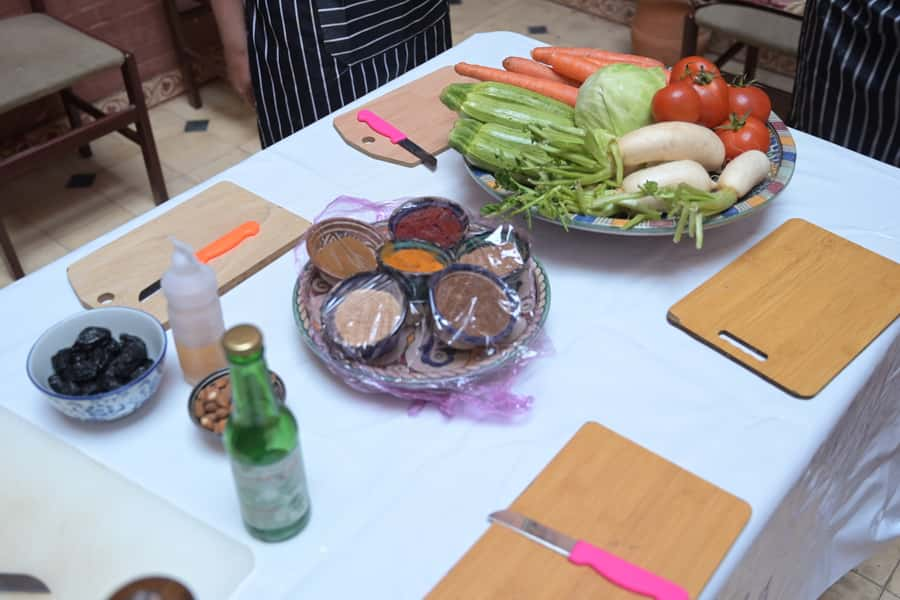
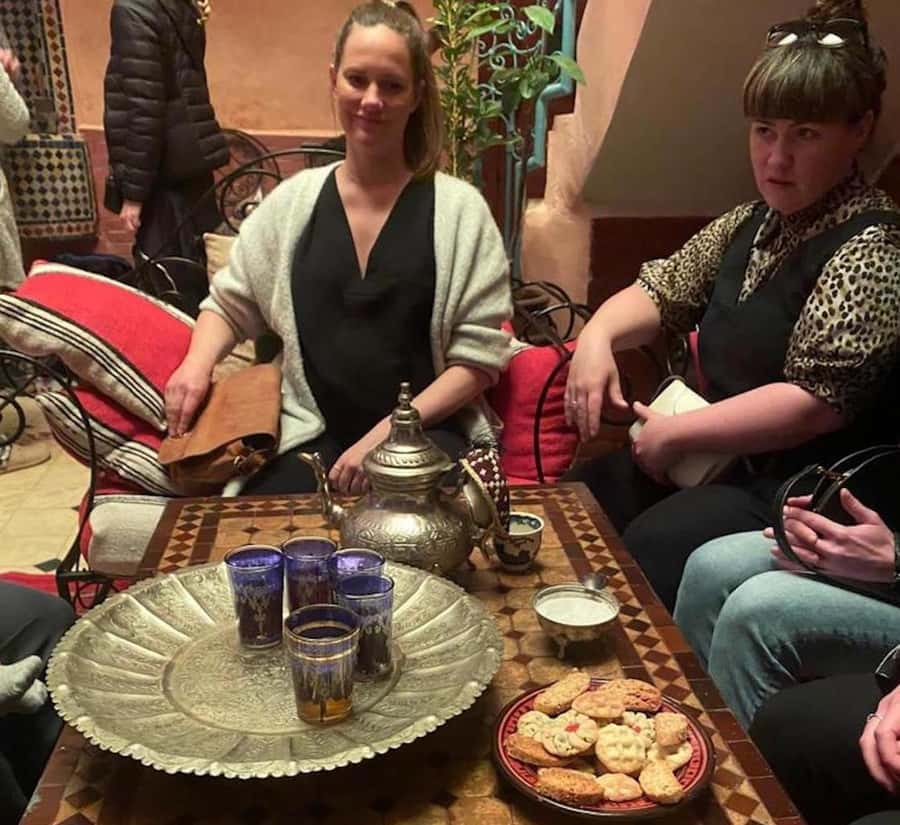
At the house, you are welcomed with Moroccan tea, coffee, or juice, along with cookies. The opening conversation is not filler. It gives you a chance to meet the family, ask about food customs, and see how the lesson will work before the knives and cooking pots come out.
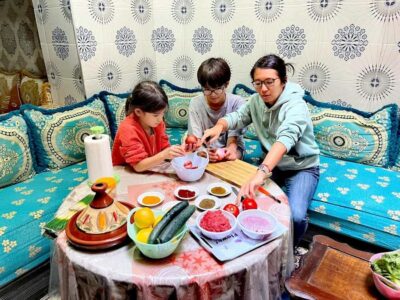
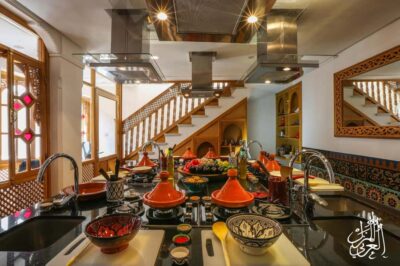
The class takes place in an authentic Moroccan home in the heart of the Medina. Some sessions use a lovely riad rooftop terrace, giving you an airy place to cook and later share the meal. The setting feels more personal than a commercial kitchen, though the exact room or terrace can vary.
This is one of the strongest parts of the experience for me. You are not only learning that Moroccan food uses cumin, saffron, ginger, or other familiar spices. You are also seeing how food fits into ordinary family hospitality, conversation, and shared meals.
The class is offered in English and French. An English or French audio guide is also listed as included. Yasser has been praised for his English and French, while Fatima is described as patient, funny, and clear in her teaching. If you are not confident with culinary vocabulary, the hands-on format helps because you can watch each step as it is explained.
Taste the spices before you cook
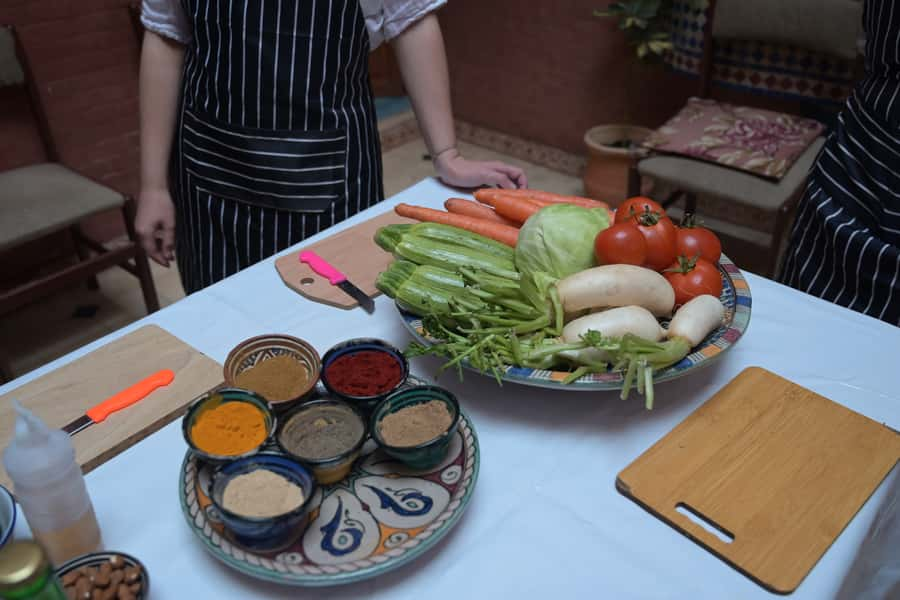
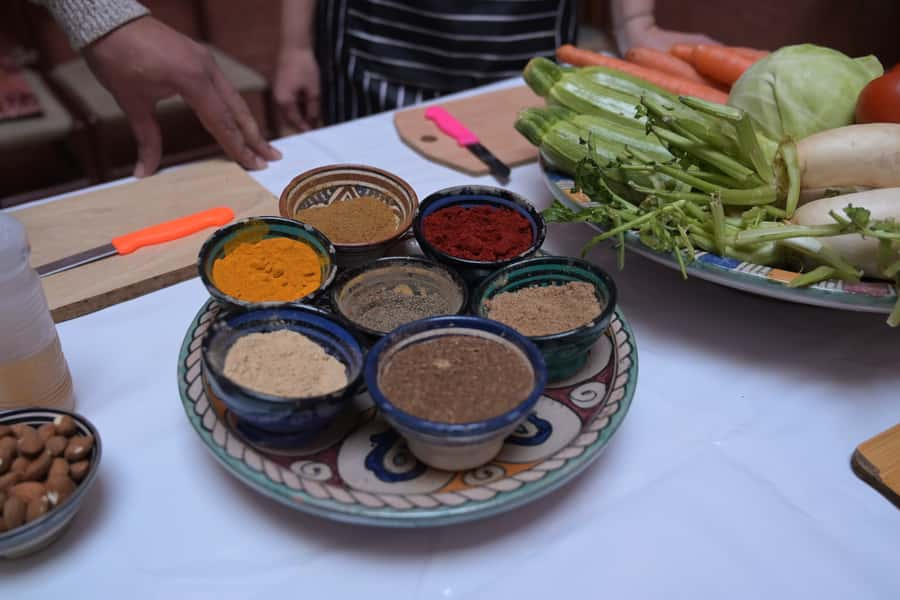
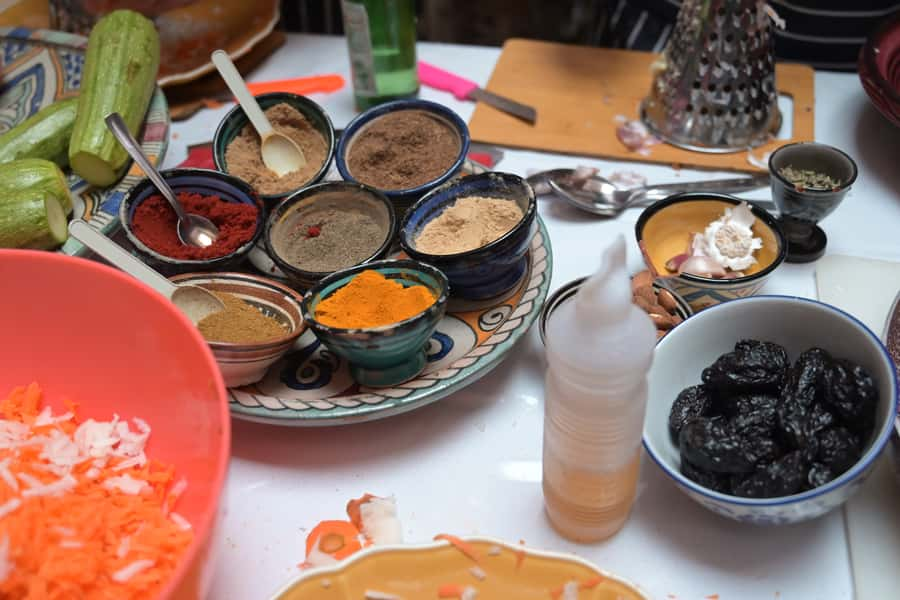
The cooking lesson begins with the spice cupboard. You learn what the seasonings taste like and how they are used in Moroccan food. This is useful beyond the class because spice stalls in the souks can be crowded with colorful powders and persuasive sales talk.
The practical value is knowing what you are looking for. You can ask about the flavor of a spice, compare blends, and make a more informed choice instead of buying a bright powder simply because it looks attractive. The family also makes and sells fresh spice blends, tea, and saffron, so you may have the option to take ingredients home.
I like that the spice talk is linked directly to the cooking. You do not receive a dry list of names and then forget them. You taste, season, and see how the amount changes the dish. Yasser is also praised for sharing general cooking advice, not only instructions for the recipes on the table.
Prepare the starter, main dish, and dessert
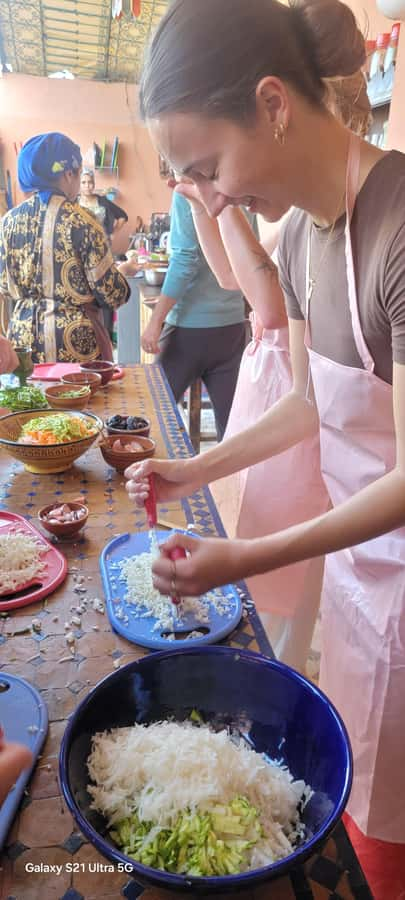
The menu is suggested by the chef, with vegetarian, vegan, and allergy needs taken into account. The exact dishes can vary, but the class is designed around three parts of a Moroccan meal.
More cooking in Marrakech:
- Moroccan Cooking Class & Marrakech Market Visit with Chef Khmisa
★ 5.0 · 1,504 reviews - Half-Day Cooking Class with Local Chef Laila in Marrakech
★ 5.0 · 952 reviews - Marrakech: Moroccan Cooking Class with a Local Family
★ 4.9 · 668 reviews - Marrakech: Moroccan Cuisine Cooking Class in Local Home
★ 4.8 · 508 reviews
Moroccan salads or briwat
You may begin with Moroccan salads or briwat. Salads in Morocco are not always a single bowl of raw leaves. They can include cooked vegetables, herbs, seasoning, and different textures, making them a useful introduction to the country’s approach to small side dishes.
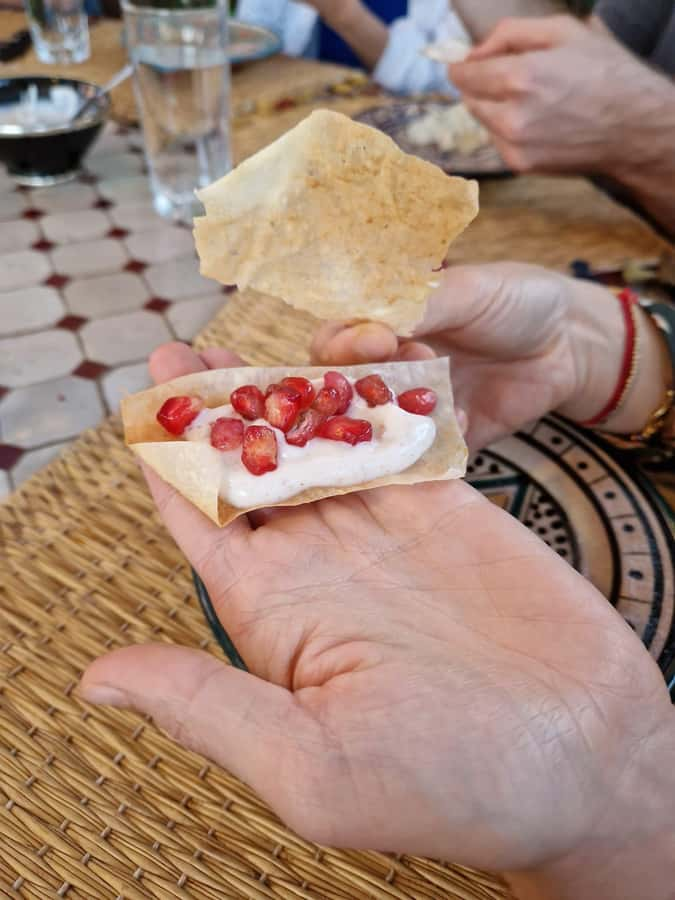
Briwat gives you another possible route, with pastry work and filling preparation. The chef supplies what you need for the recipe and explains the process as you work. Since everyone participates, you can expect to chop, mix, season, and handle parts of the preparation rather than simply stand nearby.
Tagine, couscous, or tanjia
The main course may be a tagine, couscous, or tanjia. For vegetarians and vegans, vegetable tagine is the most clearly documented option. One class prepared a vegetable tagine along with three vegan side dishes and dessert, while the meat-eating participants made a separate chicken tagine.
This mixed arrangement is worth understanding. The activity is marketed for vegetarians and vegans, but not every group is exclusively plant-based. Meat may be cooked in the same general class, with separate preparation for the vegetable food. If strict separation is important to you, tell the provider in advance and confirm the plan when you meet.
The cooking itself is the heart of the class. You take part in the preparation of the tagine and hear why particular spices and methods are used. That explanation is more useful than receiving a recipe card alone, because Moroccan cooking often depends on timing, layering, and judgment.
Couscous or tanjia may appear instead of, or alongside, tagine depending on the menu. The supplied information does not promise one fixed dish, so book this as a lesson in Moroccan cooking rather than a guarantee of one exact recipe.
Moroccan dessert
Dessert rounds out the meal. It is included, and most of the food receives strong praise, though one participant found the dessert a little basic. That is a fair warning if you are expecting a complicated pastry course.
I would still see dessert as part of the value of the class. You are learning how a Moroccan meal moves from savory dishes to something sweet, and the lesson gives the group a final task before everyone sits down together.
The meal is part of the lesson
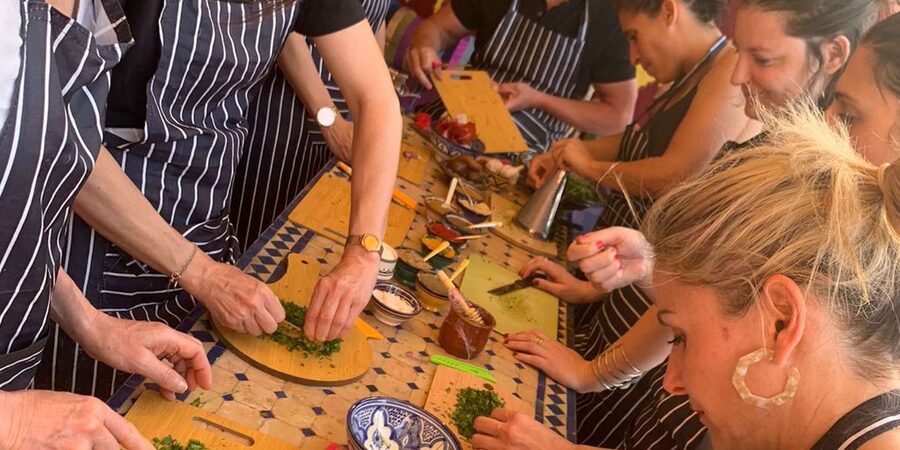
After the cooking, you eat the food you helped prepare with the family and the rest of the group. This shared meal is not an extra snack tagged onto the end. It lets you judge the seasoning, texture, and balance of the dishes while the cooking steps are still fresh in your mind.
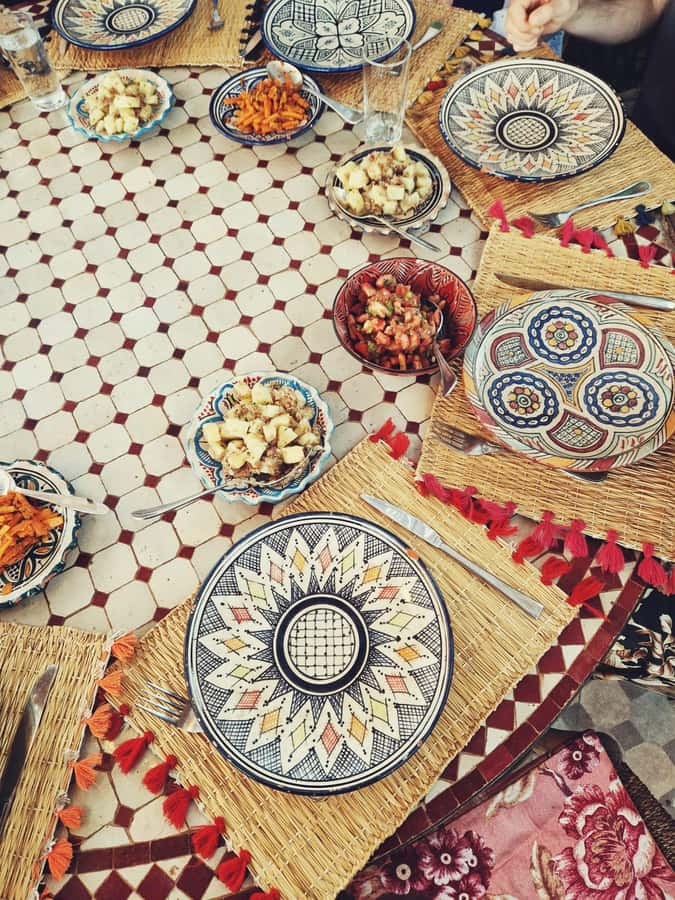
Several participants described the food as among the best meals of their Marrakech stay. That claim makes sense for a simple reason: the meal is fresh, prepared under guidance, and seasoned to suit the group. You also have the satisfaction of recognizing the work on your plate.
The meal can be especially generous for plant-based diners. A vegan menu may include vegetable tagine, several side dishes, salads, and dessert, rather than a single vegetable plate while others eat a fuller meal. Still, tell the provider about allergies or restrictions before the class so the chef can plan properly.
Drinks and cookies are included, as are the cooking lesson and meal. Transport is not included. At $30 per person, that is a strong package for four hours, especially when you count the food, instruction, family setting, and time at the table.
What Yasser and Fatima bring to the class
The named experience provider is Cooking class with chef Fatima, but the class may be led by Fatima or her brother Yasser. Both names appear often in the experience details, so do not be surprised if the instructor differs from the name shown in your booking information.
Yasser is described as friendly, patient, multilingual, and good at keeping the group involved. He also offers practical suggestions for things to do in Marrakech, cooking tools to buy, and spices to take home. Fatima is praised for her warmth, humor, cutting tips, and clear explanations of Moroccan ingredients.
This matters because a cooking class can become dull if one person does all the work. Here, the teaching style is built around participation. People chop and cook together, and the pace is generally relaxed enough to ask questions.
The group atmosphere can vary. One family took the class with a 12-year-old daughter and found it a successful family activity. Other sessions included adults preparing different dishes. If you are looking for a quiet private lesson, this may not be the right format, since the experience is designed around shared cooking and conversation.
Why four hours is the right length
A 90-minute class might be enough for one quick demonstration. It would be a poor fit for this menu. Preparing a starter, main dish, and dessert takes time, especially when the chef explains spices and techniques along the way.
The four-hour schedule allows the class to breathe. You can learn a cutting technique, ask why a spice is added, help with several dishes, and still have time to eat. One participant specifically felt that a shorter class would have been rushed.
The tradeoff is that this is a substantial block of your day. If you only want a quick introduction to Moroccan food, four hours may feel long. If you want to learn recipes you can repeat at home, the extra time is precisely what makes the class worthwhile.
Some participants received the recipes afterward through WhatsApp, including additional recipes. That is a useful bonus when it happens, but it is not listed as a formal inclusion, so I would not book solely on that expectation.
Dietary needs, families, and accessibility
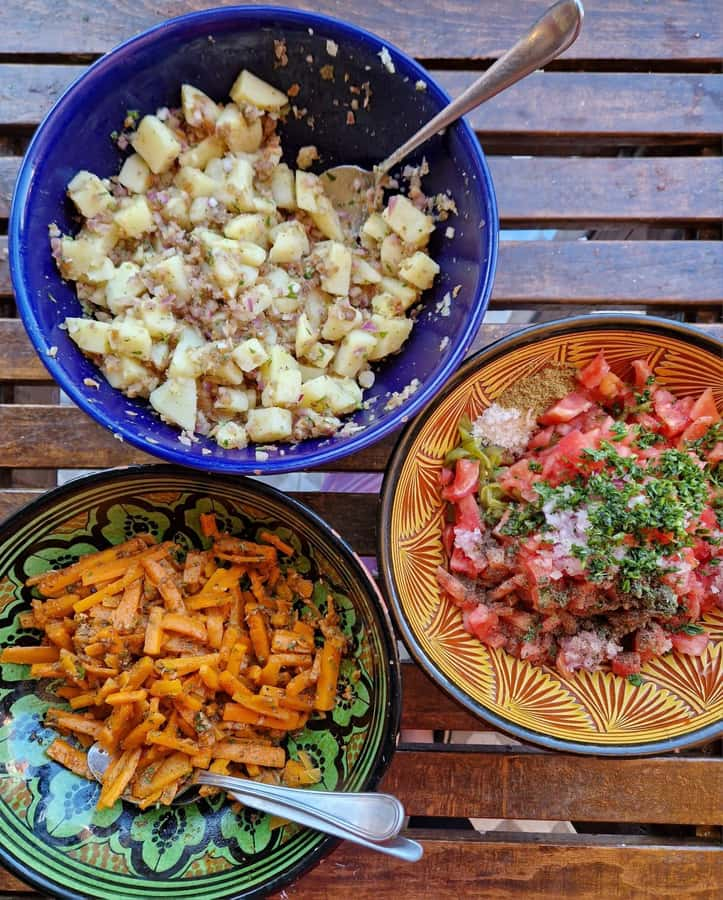
This activity is a particularly good fit for vegetarians and vegans who want more than a token meat-free option. The chef can adjust the menu for vegetarian, vegan, and allergy requirements, and plant-based food can include the main course, sides, and dessert.
You should still state your needs clearly before cooking begins. A mixed group may prepare meat dishes, even if your own food stays separate. One participant was comfortable keeping some distance from the meat preparation, while another class kept the meat and vegetables well apart.
Families can also do well here. A 12-year-old took part successfully, and the work is divided among the group. The cooking, eating, and conversation offer more variety than a standard sightseeing stop, though parents should use their judgment around knives, hot cookware, and the rooftop setting.
The activity is listed as wheelchair accessible. Because the route includes a meeting point and access to a Medina home, I would still confirm the exact route and room setup before booking if you use a wheelchair.
The small drawbacks to keep in mind
The confusing final approach is the clearest practical weakness. The chef helps lead the group from the meeting point, but you need to get to that meeting point first. Do not assume a taxi can take you directly to the home.
A second point is the mixed menu. Even with separate preparation, the sight or smell of meat may matter to some vegans. Ask about the group setup in advance if this would affect your comfort.
The dessert may be less memorable than the main dishes. The lesson is also not a private, custom menu unless that is specifically arranged. You are joining a shared class, so the pace and menu can reflect the whole group.
Finally, transport is not included. That is normal for a Medina cooking class, but it means you should include the cost and time of reaching the meeting point in your day’s plan.
Booking, cancellation, and what to bring
The class costs $30 per person and lasts four hours. You can reserve now and pay later, which helps if your Marrakech schedule is still changing. Cancellation is free up to 24 hours in advance for a full refund.
Bring a phone if you want to photograph the ingredients and preparation. The chef allows pictures, and the lesson offers plenty of visual detail, from spice colors to the finished tagine. Wear something comfortable for cooking and walking through the Medina, though no special equipment is listed as required.
English and French are available, and the audio guide is listed in both languages. Check the starting time when booking because several times may be available.
Should you book this Marrakech cooking class?
I would book this class if you want to cook a full Moroccan meal, not just watch a chef demonstrate one dish. The strongest reasons are the four-hour format, the family-home setting, the practical spice lesson, and the reliable attention given to vegetarian and vegan food.
It is also a good pick for families and food-focused visitors who want conversation and cultural context along with lunch. At $30, the included drinks, cookies, meal, and instruction make the price attractive.
I would pause if you need a fully private class, a fixed menu, or a meat-free environment with no meat preparation anywhere nearby. I would also plan carefully for the meeting point. For most people who accept those limits, this is a warm, hands-on way to understand Moroccan food and leave Marrakech with recipes, spice knowledge, and a meal you helped make.
FAQ
How long does the cooking class last?
The activity lasts four hours, including the cooking lesson and the meal.
How much does the class cost?
The listed price is $30 per person.
Where is the meeting point?
The meeting point is next to Andalusia Restaurant.
Is transport included?
No. Transport to the meeting point is not included.
Are vegetarian and vegan menus available?
Yes. Vegetarian, vegan, and allergy requirements can be accommodated.
Will meat be prepared during the class?
Some groups are mixed, so other participants may prepare meat. The vegetarian and meat dishes are kept separate according to the supplied experience details.
Who teaches the class?
The class is provided by chef Fatima, and sessions may also be led by her brother Yasser.
What languages are available?
The instructor languages are English and French. An English and French audio guide is also listed as included.
What food will I prepare?
The menu may include Moroccan salads or briwat, a main dish such as tagine, couscous, or tanjia, and Moroccan dessert. The chef suggests the menu.
Can I cancel for a refund?
Yes. You can cancel up to 24 hours before the activity for a full refund.
Just added in Marrakech
- Quad Ride In The Agafay Desert★ 5.0 · 39 reviews
- Quad Biking Agafay desert★ 5.0 · 20 reviews
- Marrakech: Tailor-Made City Tour With Your Own Private Guide★ 4.9 · 236 reviews
- Surf Training and Lunch on Essaouira Day Trip from Marrakech★ 4.9 · 51 reviews
- Essaouira: Surf Trip from Marrakech★ 4.9 · 31 reviews
- Marrakech palm grove: Sunset camel ride★ 4.8 · 194 reviews
- Marrakech: Sunrise Desert Tour with Camel Ride and Breakfast★ 4.4 · 36 reviews
- Marrakech : Agafay Desert Sunset Camel Ride & Luxury Dinner★ 4.3 · 39 reviews
Cooking Classes, compared.
Traditional Moroccan Cooking Class & Market Visit
Read our review →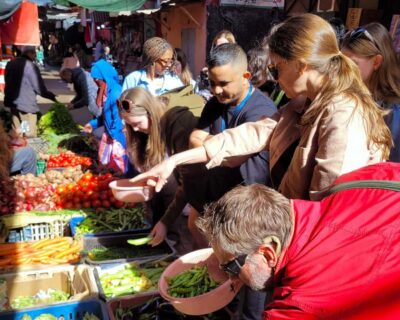
Moroccan Dishes Cooking Class with a Local Chef
Read our review →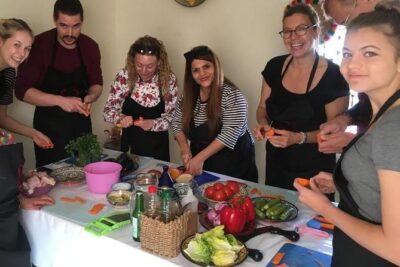
Moroccan Cooking Class & Marrakech Market Visit with Chef Khmisa
Read our review →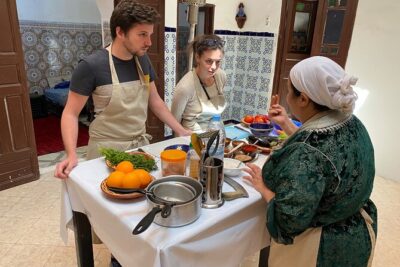
Half-Day Cooking Class with Local Chef Laila in Marrakech
Read our review →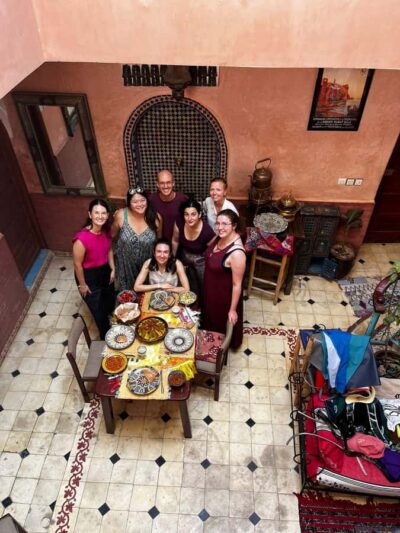
Browse the lists this tour appears in