
Reviewed · COOKING CLASSES
Marrakech: Moroccan Cooking Class with a Local Family
Moroccan food makes more sense once you have handled the spices, chopped the vegetables, and watched a tagine slowly come together. This four-hour class takes you into a family home or riad in the Medina, where Fatima, Yasser, or another local chef guides you through salads, briwat, a main dish, and dessert. I like the hands-on format and the chance to ask about daily Moroccan life over tea. The main consideration is that the market visit described in some details is not always part of the session.
I also like the practical spice lesson, especially if you plan to shop in the souks later. You learn how to recognize common Moroccan ingredients before buying them, then receive recipes to use at home. The rooftop setting can be chilly in colder months, and transport to the meeting point is not included, so bring a layer and allow time to find the starting place.
Key points to know before booking
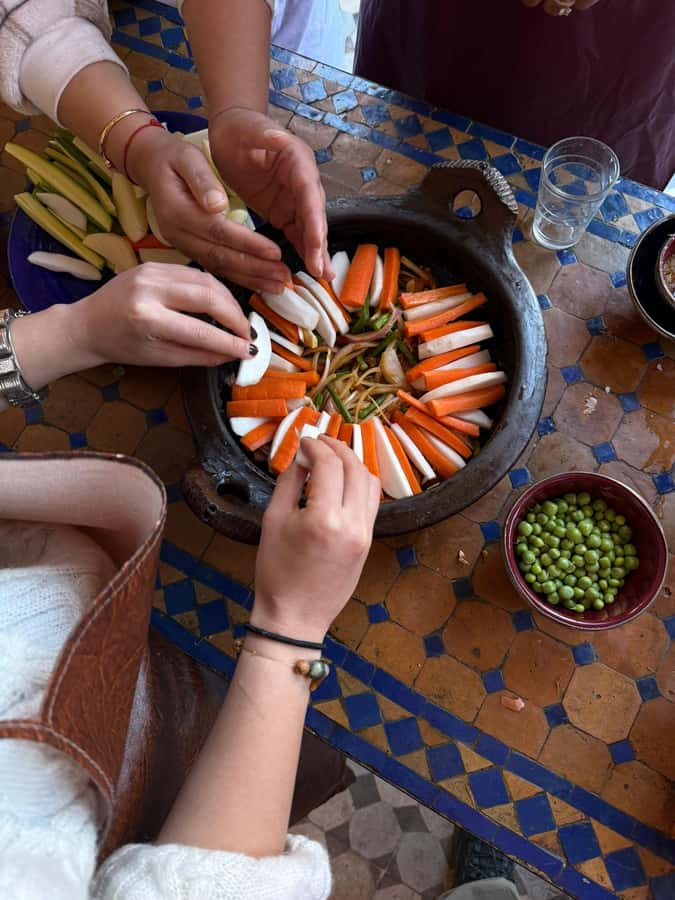
- Four hours of real kitchen work: You help prepare starters, a main course, and dessert rather than simply watching a demonstration.
- A family-style setting: The class takes place in an authentic Moroccan house or riad, often with tea, coffee, juice, and conversation.
- Several local hosts: Fatima and Yasser receive especially strong praise for their patience, humor, language skills, and ability to include children and first-time cooks.
- Useful souk advice: The spice introduction can help you choose ingredients and avoid paying too much for poor-quality products.
- Dietary needs are welcomed: Vegetarian, vegan, and allergy requests are stated to be manageable.
- Recipes come afterward: You receive the dishes you prepared, and some sessions also provide cooking videos.
Cooking Moroccan food inside a Medina home
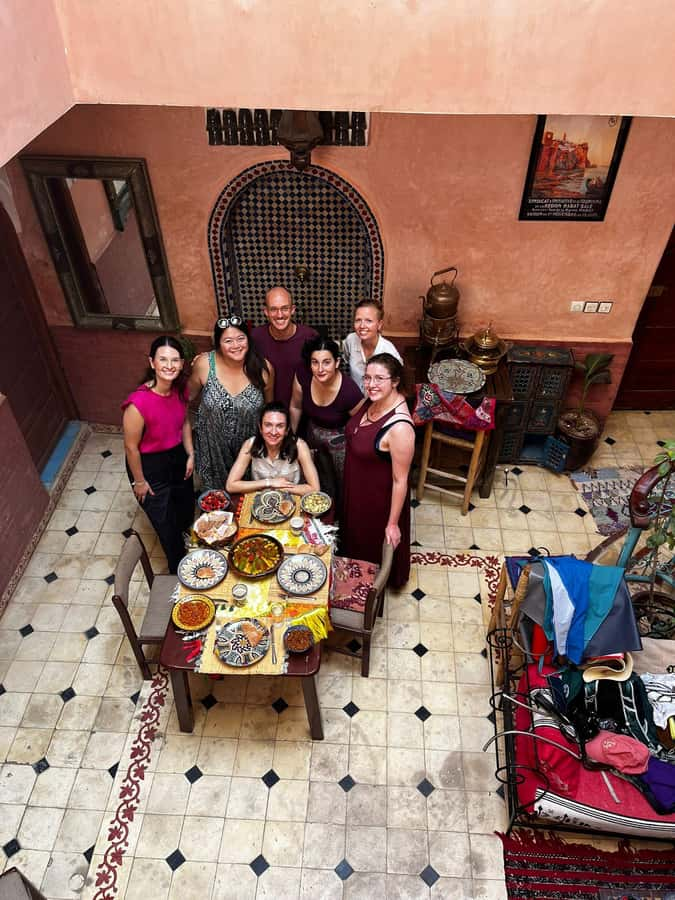
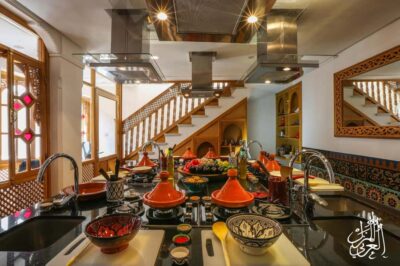
The best part of this activity is the setting. You are not in a polished hotel kitchen built for tourists. You enter a Moroccan home or riad in the heart of the Medina, where the class has a more personal feel.
The exact room can vary. Several sessions take place on a rooftop terrace, while others are described as being inside a beautiful riad. That difference matters in winter. Marrakech can feel cool after sunset, and one participant specifically advised bringing a sweater or jacket for colder months.
You begin with Moroccan tea, coffee, or juice, along with cookies. This opening is not just filler before the cooking starts. It gives you time to meet the host’s family, settle into the room, and ask about Moroccan customs and everyday life.
The family atmosphere is one of the strongest reasons to book this class. The cooking is the main event, but the conversation gives the food some context. You learn how dishes fit into Moroccan home life, how spices are used, and why shared meals matter.
The meeting point is in front of Andalusia Restaurant, next to Mohamed V High School. The location is described as easy to find, though the riad itself may be down a maze of Medina lanes. I would save the meeting point on your phone and arrive with a few extra minutes. The class does not include transport.
Other cooking classes in Marrakech people book:
- Marrakech: Moroccan Cooking Class with Pickup
★ 4.6 · 1,862 reviews - Marrakech: Traditional Moroccan Cooking Class & Market Visit
★ 4.8 · 1,861 reviews - Marrakesh: Moroccan Dishes Cooking Class with a Local Chef
★ 5.0 · 1,615 reviews
The spice lesson comes before the chopping
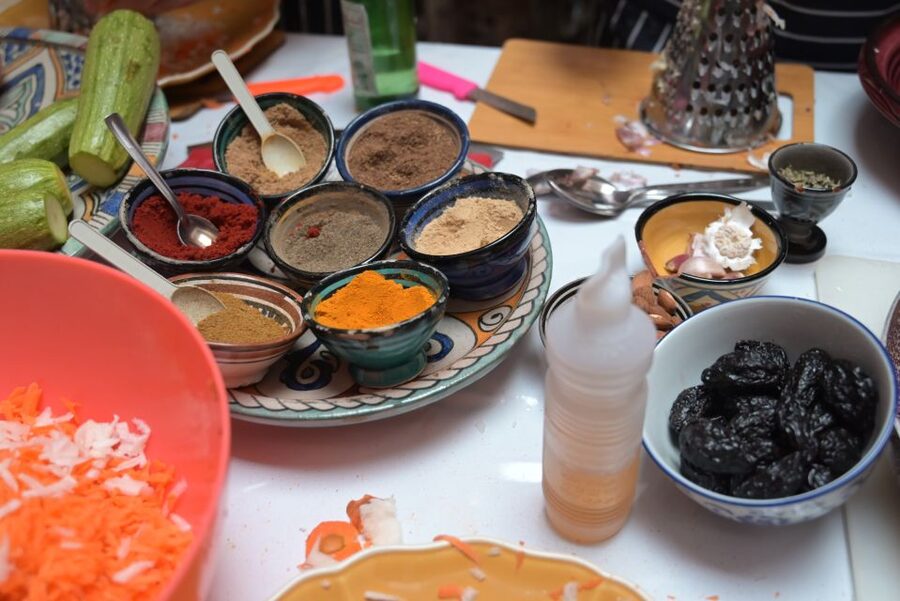
Before you start preparing food, the chef introduces common Moroccan spices and vegetables. This is one of the most useful parts of the class if you plan to visit the souks afterward.
You get guidance on what the spices taste like and how they appear in Moroccan cooking. That gives you a better basis for shopping than simply pointing at colorful piles and choosing by smell. You also learn which ingredients belong in particular dishes and how seasoning affects the final result.
This session can be especially helpful if you want to take spices home. One participant even received freshly milled spices. Another described the class as a good step to take before buying spices or a tajine, since the advice can help you find fair prices and better ingredients.
The teaching is aimed at ordinary home cooks, not professionals. You do not need advanced skills. Basic cooks get clear tasks, while more experienced people can pay attention to knife work, seasoning, and technique.
Knife skills receive more attention than some people expect. You may learn different ways to cut vegetables, how to avoid wasting food, and how to prepare ingredients neatly. One practical limitation is that not every task is handled by participants. In one session, the staff cleaned the chicken and heated the dishes. The class remains hands-on, but it is not a full professional kitchen shift from raw ingredients to serving.
Preparing salads, briwat, and the main dish
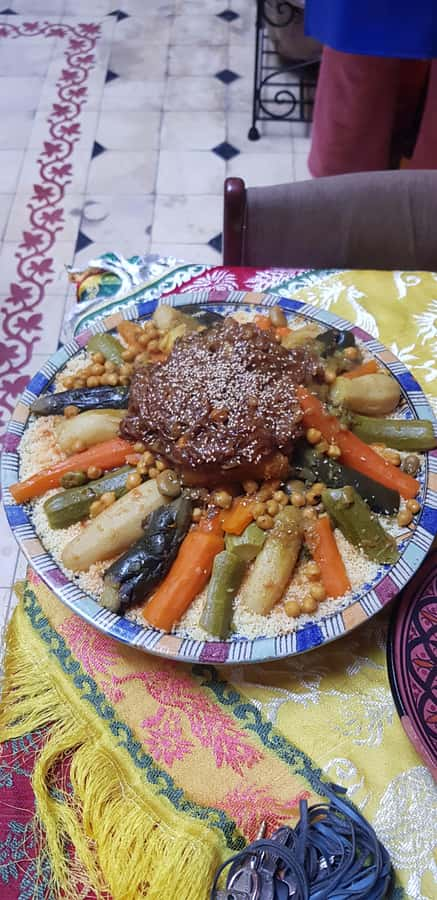
The menu is suggested by the chef and can vary. The planned choices include Moroccan salads or briwat for the starter, followed by a main dish such as tagine, couscous, or tanjia. Dessert completes the meal.
This variety gives the class a good shape. You are not spending four hours on one pot. Instead, you work across several parts of a Moroccan meal and see how different textures and flavors fit together.
Moroccan salads are often a useful introduction because they involve several vegetables, herbs, spices, and preparations. Briwat offers a different lesson, with pastry and filling. The chef explains the steps and makes sure everyone has a chance to take part.
The main dish is often tagine. You learn how the ingredients are arranged and how the distinctive cooking vessel is used. The aim is not just to produce lunch. You leave with a better sense of how to handle the dish at home, including the order of preparation and the balance of seasoning.
Couscous or tanjia may appear instead, depending on the menu. Since the chef suggests the dishes, ask at the start what you will be making. That helps you know where to focus and gives you a chance to mention dietary needs before cooking begins.
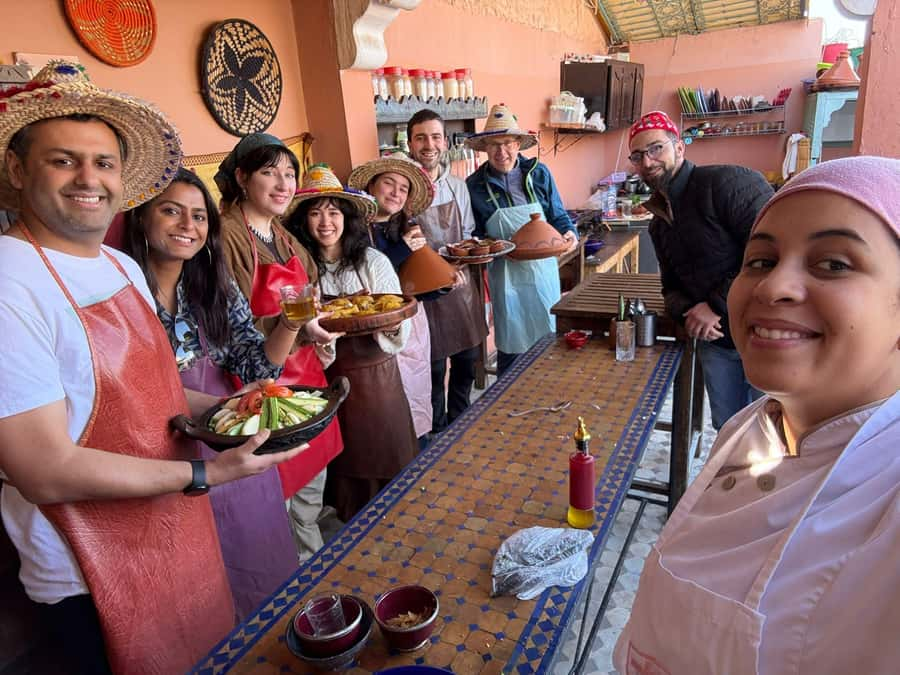
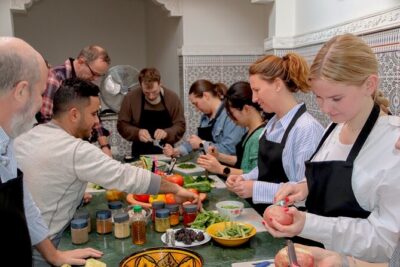
The class is designed to include everyone. Families with children have found that the host gave each person a role. Beginners received help without being rushed, while more confident cooks still had things to learn. This shared work also makes the class social, especially when people arrive from different countries.
Fatima, Yasser, and the value of a good host
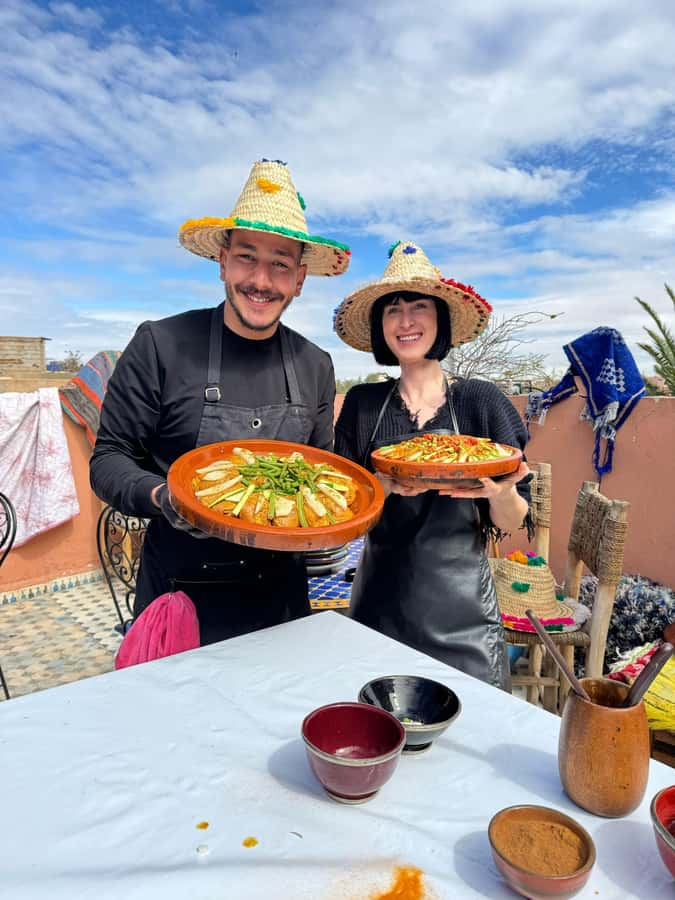
The host makes a major difference in a cooking class. Fatima is identified as the chef behind the experience, and Yasser frequently leads sessions. Leila and assistant chefs may also be involved.
Fatima is praised for patience, practical teaching, and getting children involved. Yasser is described as funny, attentive, and good at keeping the whole group engaged. He also speaks several languages, which helps when the group includes people with different levels of English.
The listed languages are English, French, and Arabic. That is useful for a class built around quick instructions, demonstrations, and questions. You can ask about a spice, a cooking step, or a cultural habit without relying entirely on gestures.
A good host also prevents the class from becoming a production line. Each person should get a chance to chop, season, stir, shape, or arrange something. The strongest sessions appear to divide the work so that children, couples, and solo participants all have a role.
Group size can affect the feel. One session had only 10 people, and other bookings were small enough to create a relaxed atmosphere. Larger groups may feel more social, but you may need to speak up if you want extra time with the chef. The experience is built around group participation, not private tuition.
More cooking in Marrakech:
- Moroccan Cooking Class & Marrakech Market Visit with Chef Khmisa
★ 5.0 · 1,504 reviews - Half-Day Cooking Class with Local Chef Laila in Marrakech
★ 5.0 · 952 reviews - Marrakech: Moroccan Cuisine Cooking Class in Local Home
★ 4.8 · 508 reviews - Marrakech: Moroccan Cooking Workshop at La Maison Arabe
★ 5.0 · 446 reviews
Eating the meal you prepared
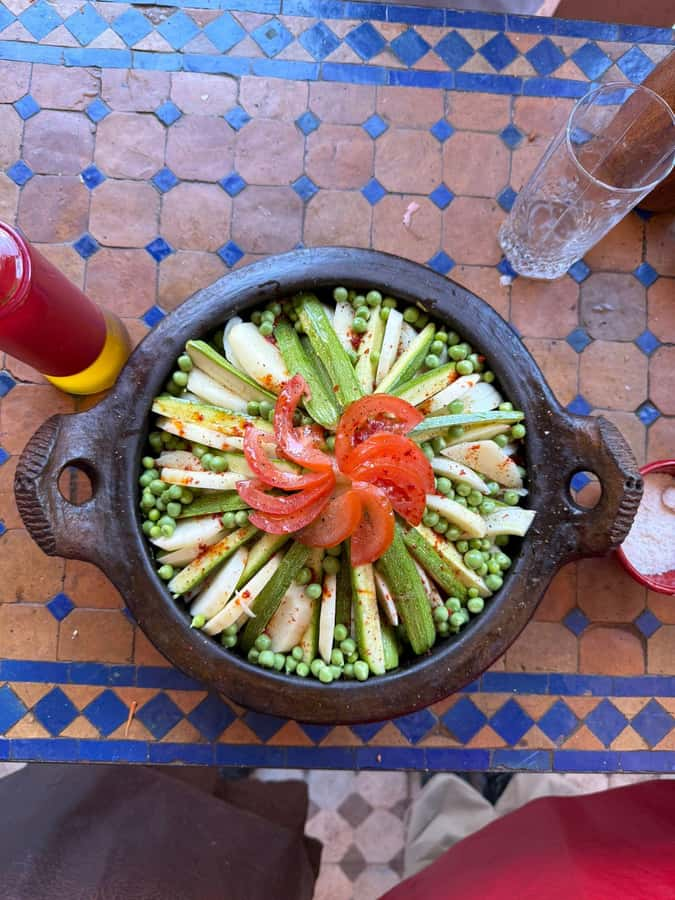
After the cooking comes the part everyone is waiting for: sitting down and eating what you made.
The meal can include several side dishes, a chicken or vegetable tagine, and dessert. Vegetarian and vegan cooking is available, and allergies are not presented as a problem. Still, tell the host before the class begins so the menu can be planned properly.
The food is often the high point. Many people describe the finished dishes as the best meal they had in Morocco or in Marrakech. That does not mean every plate will suit every palate. Moroccan food uses strong seasoning, and one participant noted the generous use of spices. If you prefer mild food, ask how much heat or seasoning will be used.
Eating together also completes the lesson. You can taste the result while the method is still fresh in your mind. A tagine eaten in the same room where you prepared it feels different from ordering one at a restaurant. You understand the work behind the dish, from cutting the vegetables to building the seasoning.
Some people have received leftovers or takeaways, but this should not be treated as guaranteed. The included meal is the reliable part. Drinks are included as well.
What you get for $33
At $33 per person, this is a strong value for a four-hour activity. The price includes the cooking lesson, equipment, drinks, and the meal. You also gain practical instruction, a cultural conversation, and recipes for later use.
Compare that with the cost of a restaurant meal alone. A restaurant gives you a finished plate. This class gives you several dishes, time with a local family, and skills you can repeat in your own kitchen. The recipes make the value last beyond the afternoon.
The price does not include transport. Since the meeting point is near Andalusia Restaurant and Mohamed V High School, you need to reach it yourself. This is easy to manage if you are staying in or near the Medina, but allow extra time for navigation.
The class lasts four hours, so it works best when you do not have another tightly timed activity immediately afterward. Cooking groups can run at a relaxed pace, and the meal is part of the experience. Rushing away just as the food is served would miss much of the point.
Free cancellation is available up to 24 hours before the activity for a full refund. You can also reserve now and pay later, which helps if your Marrakech schedule is still changing.
The market question and other practical limits
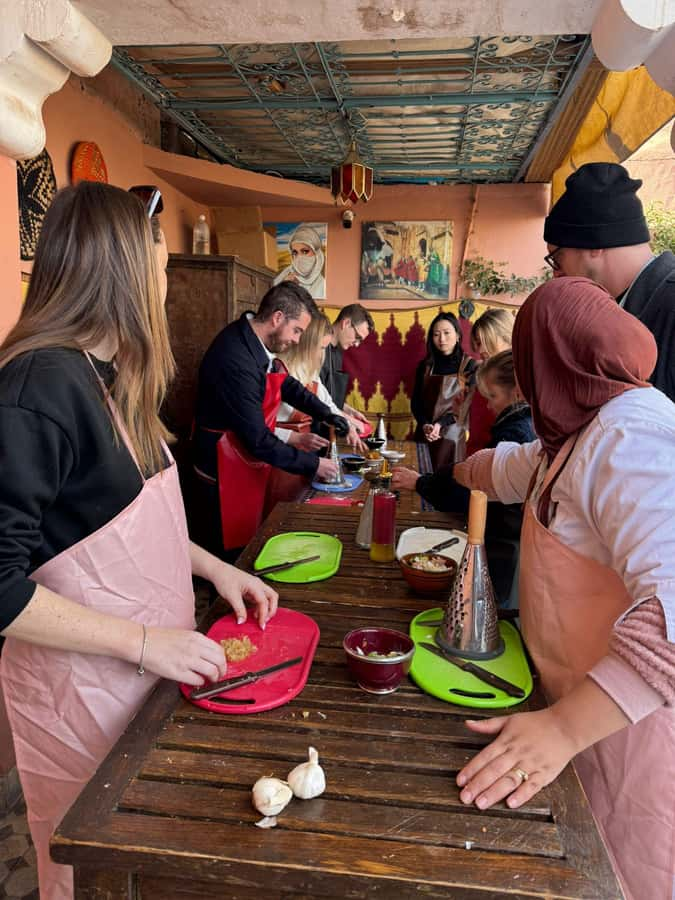
The description emphasizes Moroccan ingredients and suggests learning what to buy in the souks. Some people expect a separate market visit, but that does not always happen. Several sessions focused entirely on cooking, with fresh vegetables already provided.
This is not necessarily a weakness. A market stop would add color, but it would also take time away from knife practice, spice instruction, and preparing the meal. If a market visit is essential to you, confirm the day’s plan before booking. If you mainly want to cook, the no-market format may suit you better.
The class is listed as wheelchair accessible. The meeting point and the exact riad layout can still affect how easy the route feels, so it is sensible to confirm the details if you use a wheelchair.
The rooftop setting deserves another mention. It can be pleasant and open, but temperatures change quickly. Bring a jacket in colder months. Comfortable clothing is sensible because you will be standing, chopping, and handling ingredients for much of the session.
Who will enjoy this Marrakech cooking class
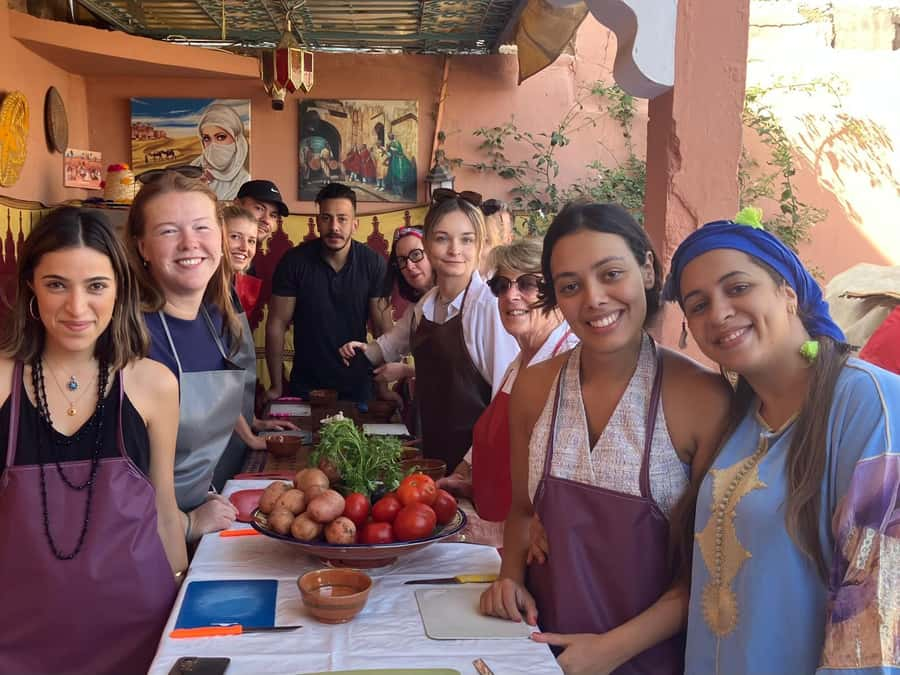
I would recommend it to families, couples, solo visitors, and anyone who likes learning by doing. Children can take part, and the hosts have experience keeping different ages involved.
It is also a good choice for vegetarians and vegans, provided you explain your needs ahead of time. People who already cook will find useful details in the spice lesson and knife work, while beginners can follow simple instructions.
This may not suit you if you want a private, highly polished culinary school or a guaranteed market tour. It is a family-style class with shared tasks, changing menus, and a social atmosphere. You should expect a local cooking experience rather than a formal chef certification course.
I would book it early in your Marrakech stay. The spice advice can help with later souk shopping, and the host may offer useful ideas for meals around the city. Just remember that the meeting point is self-guided, transport is not included, and the class may be held outdoors on a rooftop.
Should you book it?
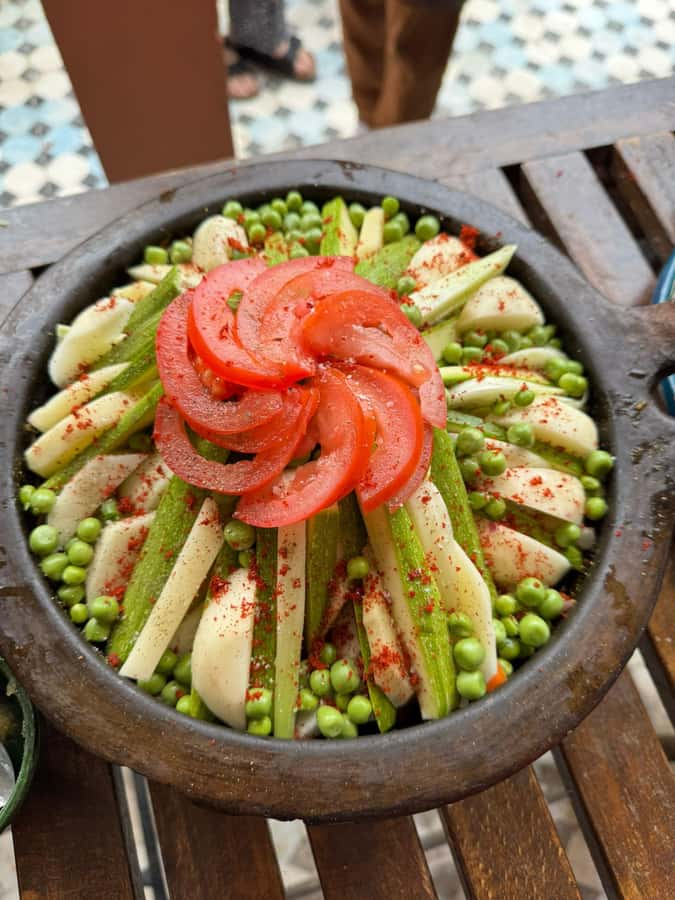
Book this class if you want more than a meal and would like to understand how Moroccan dishes are made. For $33, you get four hours of cooking, food, drinks, equipment, recipes, and time with a local family. That is a lot of contact with Moroccan food and culture for the price.
I would choose it especially for families and first-time visitors who want a friendly introduction to Marrakech cuisine. Ask about the menu, market visit, and dietary needs at the start. Bring a jacket in cool weather, arrive early at the Andalusia Restaurant meeting point, and be ready to chop, taste, and share the work.
FAQ
How long does the cooking class last?
The class lasts four hours. This includes the cooking lesson and the shared meal.
How much does the experience cost?
The listed price is $33 per person.
Where is the meeting point?
Meet in front of Andalusia Restaurant, next to Mohamed V High School.
Is transport included?
No. Transport is not included, so you need to make your own way to the meeting point.
What languages are spoken?
The hosts or greeters speak English, French, and Arabic.
What food will we prepare?
The menu can include Moroccan salads or briwat, a main dish such as tagine, couscous, or tanjia, and a Moroccan dessert. The chef suggests the menu.
Can vegetarians, vegans, and people with allergies take part?
Yes. Vegetarian, vegan, and allergy requirements are stated to be manageable.
Do I receive the recipes?
Yes. Recipes are provided at the end. Some sessions also include videos showing how to prepare the dishes at home.
Is the class wheelchair accessible?
Yes. The activity is listed as wheelchair accessible.
Just added in Marrakech
- Quad Ride In The Agafay Desert★ 5.0 · 39 reviews
- Quad Biking Agafay desert★ 5.0 · 20 reviews
- Marrakech: Tailor-Made City Tour With Your Own Private Guide★ 4.9 · 236 reviews
- Surf Training and Lunch on Essaouira Day Trip from Marrakech★ 4.9 · 51 reviews
- Essaouira: Surf Trip from Marrakech★ 4.9 · 31 reviews
- Marrakech palm grove: Sunset camel ride★ 4.8 · 194 reviews
- Marrakech: Sunrise Desert Tour with Camel Ride and Breakfast★ 4.4 · 36 reviews
- Marrakech : Agafay Desert Sunset Camel Ride & Luxury Dinner★ 4.3 · 39 reviews
Cooking Classes, compared.
Traditional Moroccan Cooking Class & Market Visit
Read our review →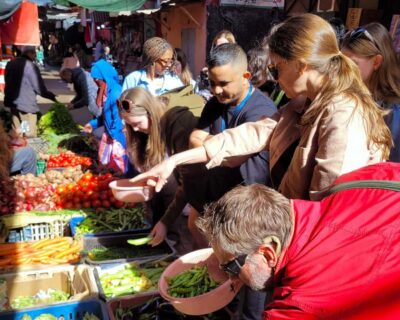
Moroccan Dishes Cooking Class with a Local Chef
Read our review →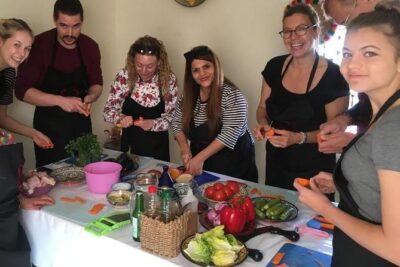
Moroccan Cooking Class & Marrakech Market Visit with Chef Khmisa
Read our review →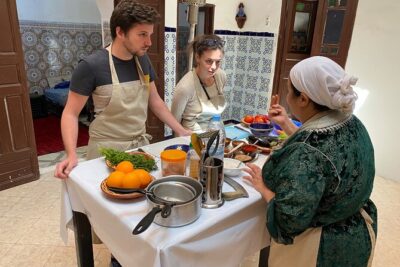
Half-Day Cooking Class with Local Chef Laila in Marrakech
Read our review →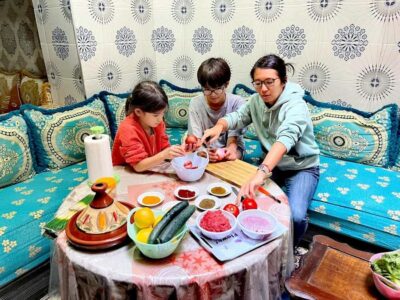
Marrakesh cooking class with chef Hassan – Local dishes
Read our review →Browse the lists this tour appears in