
Reviewed · COOKING CLASSES
Marrakech: Moroccan Cuisine Cooking Class in Local Home
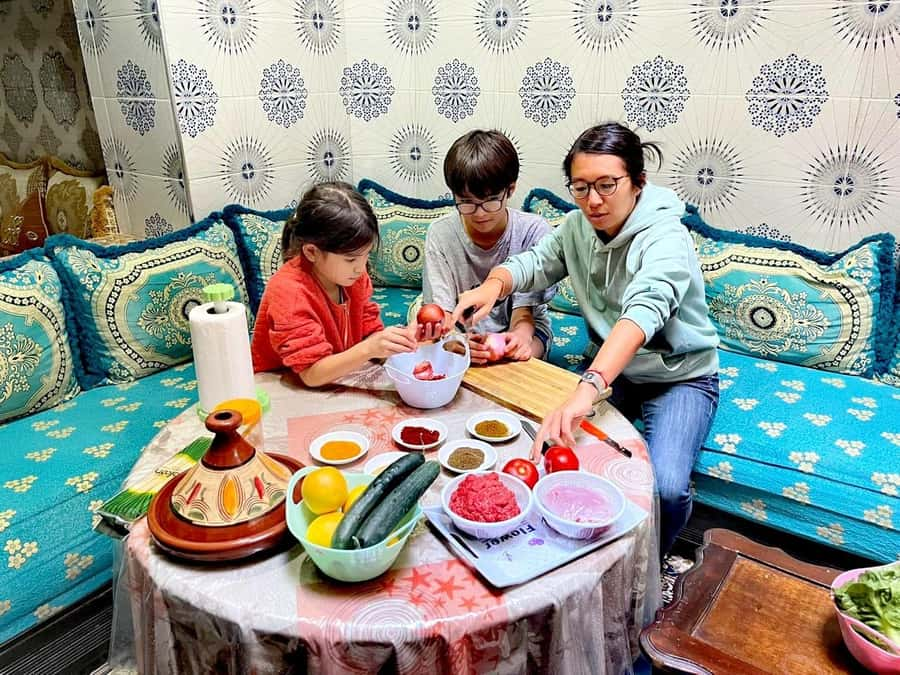
The best part of this Marrakech cooking class is that you leave the tourist lanes and cook inside a local Moroccan home. Abdo, also called Abdul or Abdoo by some participants, guides you through bread, salads, tagines, tea, and dessert, then sits down with you to eat the meal you helped make. I like the generous menu and the relaxed, funny teaching style. I also like that the class feels social rather than formal.
The main drawback is finding the meeting point. You meet in front of Riad Les Etoiles Berberes, not inside it, and the house is nearby but not necessarily at the riad itself. Use Google Maps rather than Apple Maps, arrive early, and look for the guide in a green hat. The menu may change, and transportation is not included.
Key Points
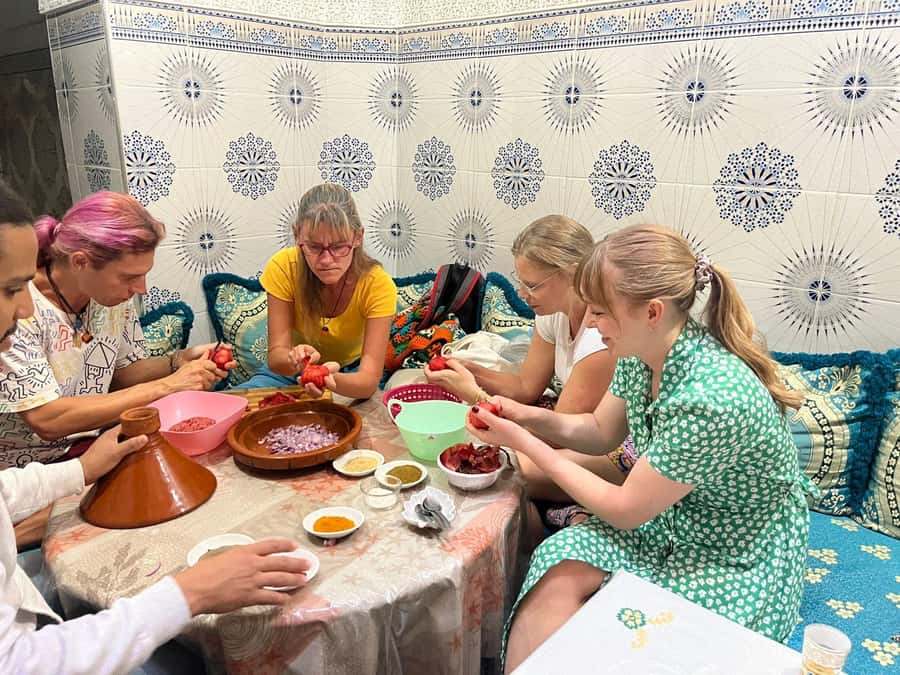
- Cook a full Moroccan meal: Prepare bread, tagines, salads, zaalouk, and fruit dessert during the three-hour class.
- Meet Abdo and his team: The bilingual hosts teach in English, Dutch, French, or Arabic, with Abdo often praised for his humor and warmth.
- Learn in a real home: The setting gives you a closer look at local daily life than a standard cooking school.
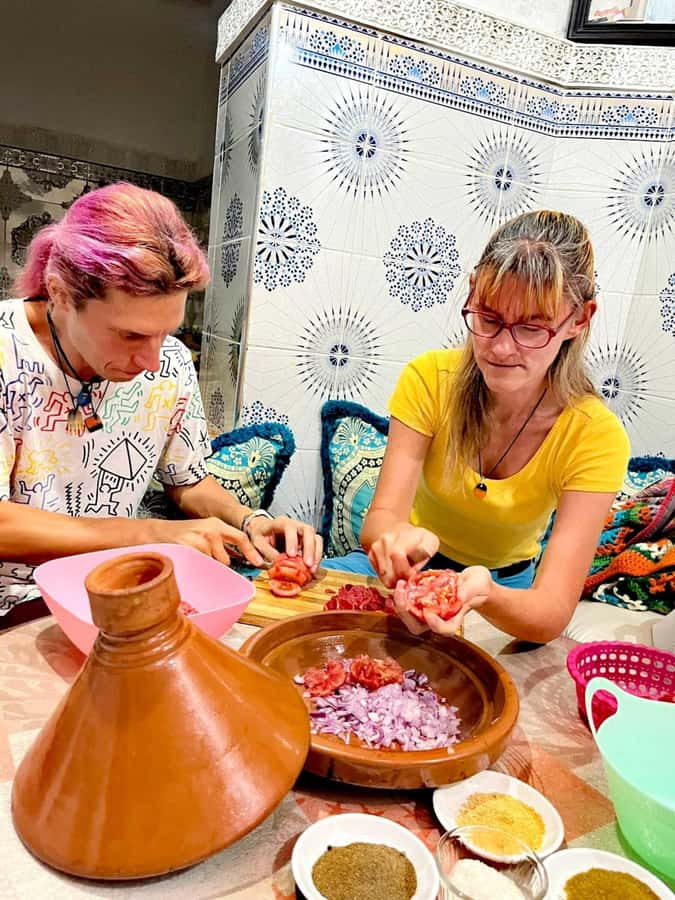
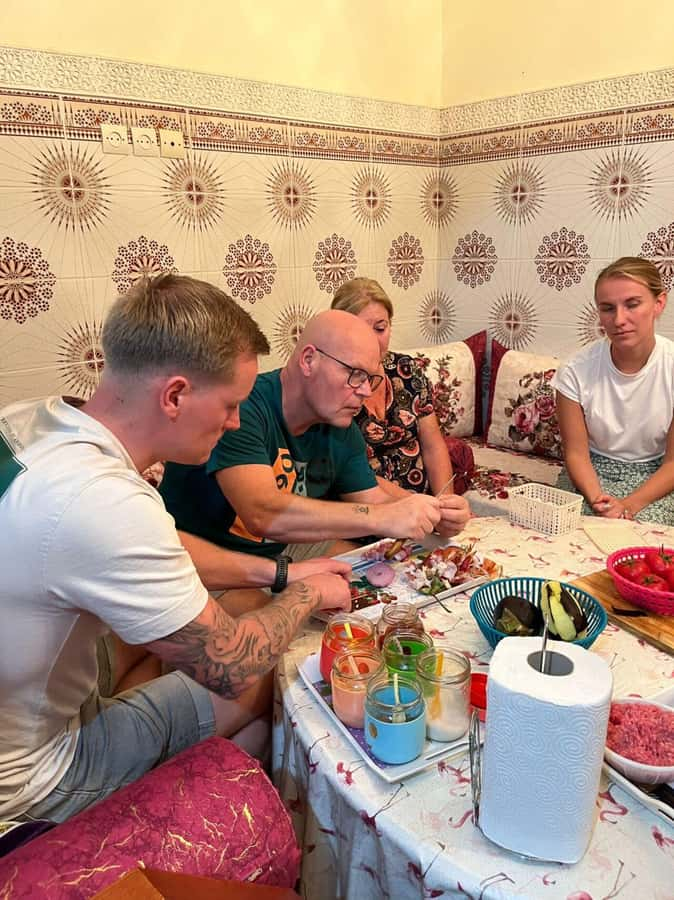
- Expect hands-on work: You chop, peel, season, shape, and cook instead of simply watching a chef.
- Share the finished meal: The class ends around a communal table with the food you prepared.
- Pay a low price: At $24 per person, this is one of the better-value cultural activities in Marrakech.
Cooking Moroccan Food in a Marrakech Home
Marrakech is full of food tours and cooking schools, but this class takes a more personal route. You walk through the medina to a traditional home, meet your guide, and spend the next three hours cooking with a small group or a larger family party.
The exact group size can vary. Some sessions have only five or six people, while others accommodate around nine, twelve, or even eleven. That matters because a smaller group gives you more time with the guide, but the hosts have also shown they can organize a larger gathering without leaving people idle.
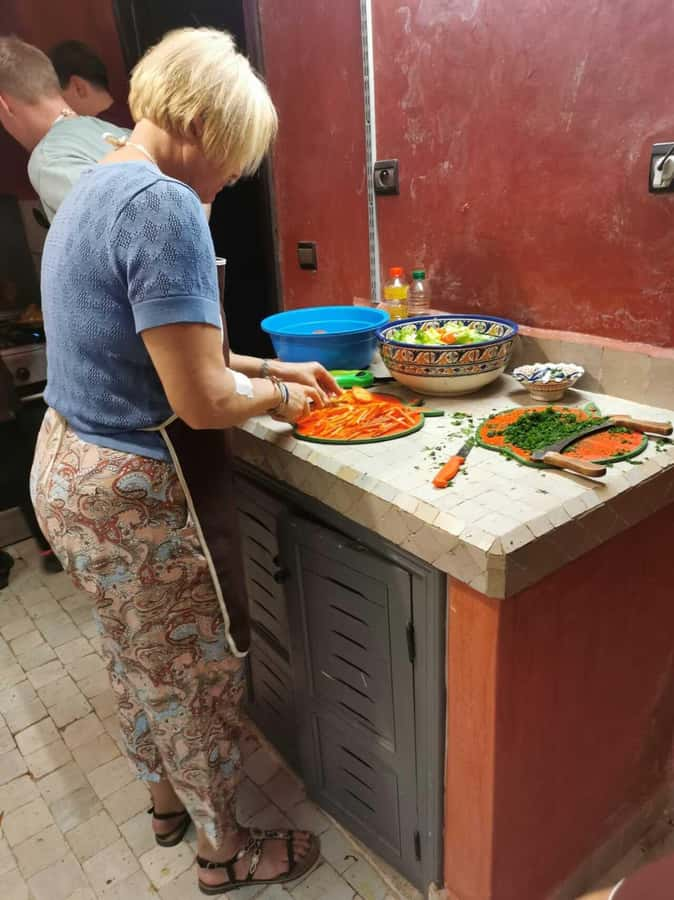
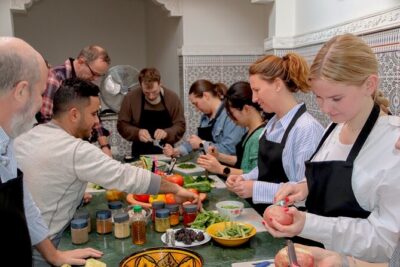
I like the setting because it changes the tone of the class. You are not sitting at a demonstration counter watching someone else do all the work. You are in a household kitchen, handling ingredients and sharing a table afterward. The surroundings are simple rather than polished, which is part of the appeal.
This is still a practical activity. You will not just hear a talk about Moroccan food. You will prepare it step by step, ask questions, and receive recipes to use at home.
Other cooking classes in Marrakech people book:
- Marrakech: Moroccan Cooking Class with Pickup
★ 4.6 · 1,862 reviews - Marrakech: Traditional Moroccan Cooking Class & Market Visit
★ 4.8 · 1,861 reviews - Marrakesh: Moroccan Dishes Cooking Class with a Local Chef
★ 5.0 · 1,615 reviews
Finding Riad Les Etoiles Berberes
The meeting instructions deserve careful attention. The guide waits about ten minutes before the starting time in front of Riad Les Etoiles Berberes. You should not go inside the riad. The cooking house is close by, so the riad serves as the meeting landmark.
Look for a guide wearing a green hat. The guide checks names before leading the group to the house, which helps prevent confusion in the narrow medina lanes.
Give yourself extra time. A few people have found the location hard to reach, and one useful piece of advice is to use Google Maps instead of Apple Maps. The medina can turn a short walk into a puzzle of small lanes, turns, and similar-looking entrances.
Transportation is not included. If your accommodation is in the medina, you may be able to walk to the meeting point. If not, arrange your own way there and avoid cutting the timing too close. Wear comfortable shoes and clothes, and bring a hair tie if you have long hair.
A Three-Hour Menu of Tagines, Salads, and Bread
The menu gives this class real value. You are not preparing just one dish and then waiting for it to cook. The food may vary, but the planned meal can include several dishes:
- Fresh Moroccan bread
- Chicken tagine with olives and golden fries
- Meatball tagine with melted cheese
- Tomato and green pepper salad
- Zaalouk, a seasoned Moroccan eggplant dish
- Fruit salad for dessert
- Moroccan mint tea
Other sessions have included skewers, zucchini, orange and cinnamon, pastries, and two types of tagine. The menu is changeable, so you should see the dishes as examples rather than a fixed promise.
The variety is useful because Moroccan cooking is not one flavor or one cooking method. You get a sense of how vegetables are seasoned, how tagine cooking builds flavor slowly, and how salads and dessert balance a substantial main course.
The chicken tagine brings together familiar Moroccan ingredients such as olives and spices, while the meatball version offers a different texture and a richer finish with melted cheese. Zaalouk is especially useful to learn because eggplant is transformed into a soft, seasoned salad rather than served as a plain side dish.
Bread adds another hands-on element. You learn how Moroccan bread is made rather than simply tearing off a piece at the table. The process also gives you something easy to try again at home.
Abdo’s Teaching Style Makes Beginners Feel at Ease
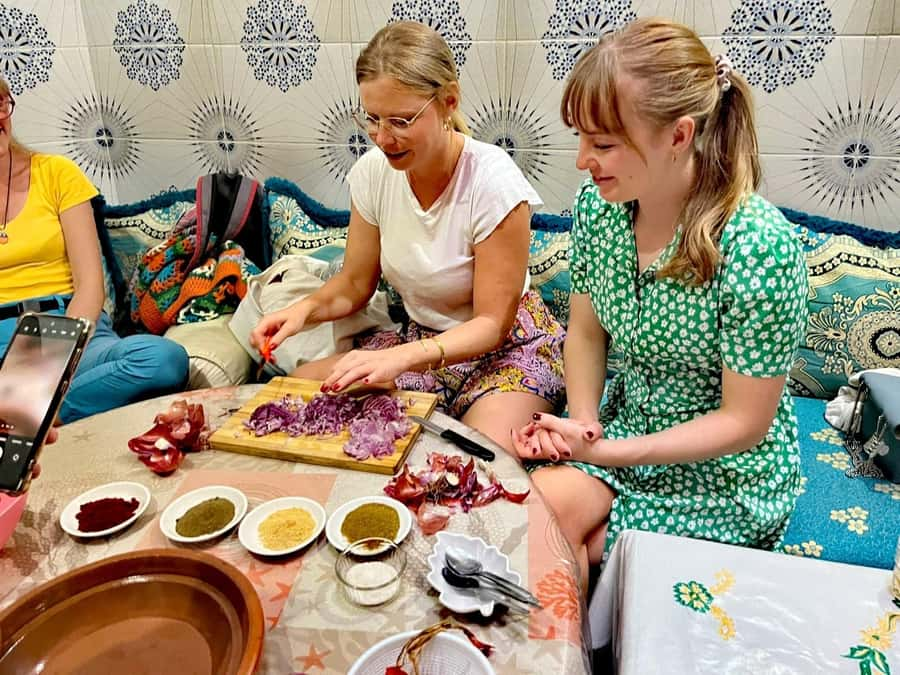
You do not need cooking experience for this class. The instructions are designed for beginners, but experienced home cooks can still pick up useful methods and seasoning ideas.
Abdo is often the main guide, and his teaching style is informal. He explains each stage, gives people jobs, keeps the group talking, and uses humor to help everyone relax. He has also been praised for answering questions about food, shopping, spices, tea, and life in Marrakech.
The class uses several languages. Live guidance is available in English, Dutch, French, and Arabic. The host may switch between English and French when the group includes both language groups, but the aim is to keep everyone involved.
That group participation is important. A cooking class can be disappointing if one person does all the chopping while everyone else watches. Here, the format is designed so you can peel vegetables, cut ingredients, season dishes, shape food, and help with the cooking.
Some sessions have included playful touches, such as a competition to pour Moroccan tea in the traditional way and a group score for cooking performance. These details are not guaranteed, but they show the kind of light, social tone you can expect.
More cooking in Marrakech:
- Moroccan Cooking Class & Marrakech Market Visit with Chef Khmisa
★ 5.0 · 1,504 reviews - Half-Day Cooking Class with Local Chef Laila in Marrakech
★ 5.0 · 952 reviews - Marrakech: Moroccan Cooking Class with a Local Family
★ 4.9 · 668 reviews - Marrakech: Moroccan Cooking Workshop at La Maison Arabe
★ 5.0 · 446 reviews
The Cultural Conversation Around the Food
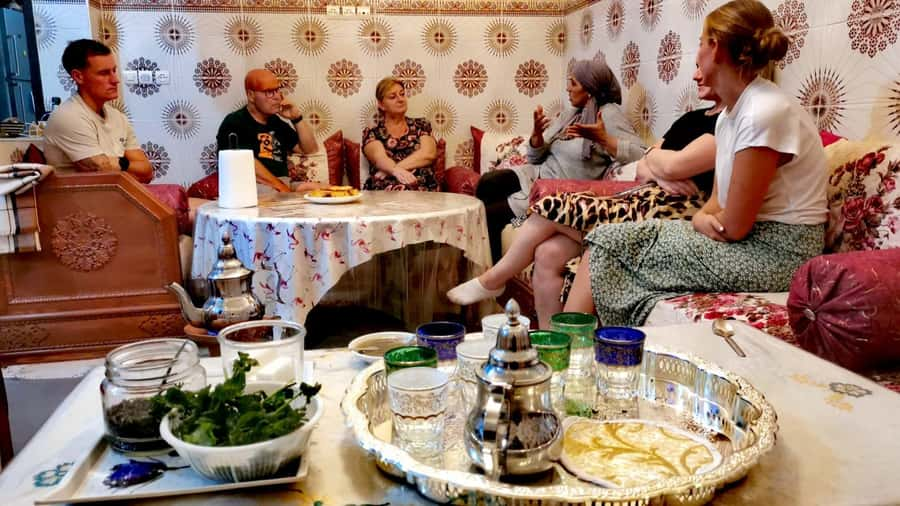
The cooking is only half of the activity. During the preparation, the guide talks about Moroccan social customs, family traditions, tea, spices, and local life.
Tea is a recurring theme. You may learn how Moroccan mint tea is prepared and how it is served, including the high pour that makes the ritual recognizable. This is more useful than simply drinking tea at a cafe because you get context for why tea matters in Moroccan hospitality.
The guide can also offer practical advice about buying spices, choosing cooking tools, and getting around Marrakech. If you are taking the class early in your stay, that information may help shape the rest of your visit. One participant specifically wished the class had been booked on the first day because of the shopping and city tips.
The conversation can move beyond recipes. You might hear about family meals, socializing, local neighborhoods, and everyday Moroccan customs. The result is a better sense of how food fits into life here, not just a list of dishes to copy.
This is where the home setting earns its place. A formal school can teach technique well, but a family-run home creates more opportunities for informal conversation and cultural exchange.
Sitting Down to Eat What You Prepared
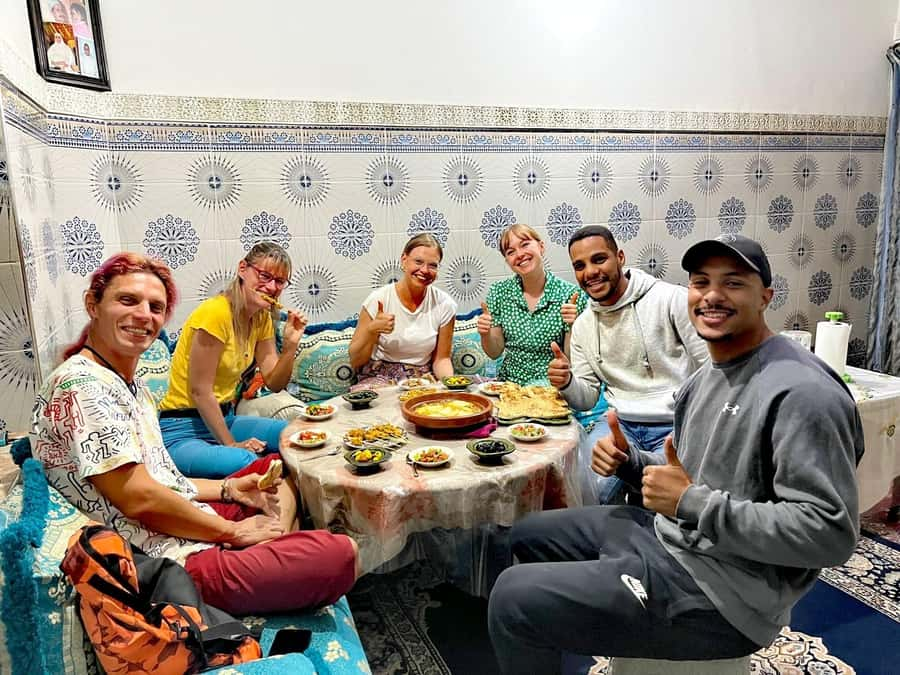
After the work is done, the group sits together for lunch or dinner. You eat the food prepared during the class, including the bread, salads, tagines, and dessert that the menu includes.
That shared meal gives the class a clear finish. You can taste the results while the guide answers final questions and explains how the dishes are normally served. It also gives the group time to talk to one another, which is part of the fun when people from different countries cook together.
The portions are described as generous, and the food is generally the part people remember most. Still, keep your expectations sensible. This is a beginner-friendly group class, not a private chef’s tasting menu. The recipes are straightforward enough to recreate, and the aim is participation rather than elaborate restaurant presentation.
Plating tips are included, so you may learn simple ways to arrange the food before serving. The recipes are sent home with you, making the meal more useful than a one-time dinner. You can try the tagines, salads, or bread again after your trip.
How the $24 Price Compares
At $24 per person, this class offers a lot for the money. You get three hours of instruction, ingredients, a full meal, cultural conversation, tea, and recipes. Transportation is the main extra cost to consider.
The value is strongest if you want both a meal and an activity. A restaurant dinner gives you food, but not the process behind it. A short demonstration might cost less, but it would not provide the same amount of chopping, cooking, and conversation.
The price also works well for families and groups. Larger parties have been accommodated, and children or young adults can take part in simple tasks. The host’s friendly manner helps people who feel unsure about cooking join in without embarrassment.
The tradeoff is that the experience may not feel perfectly uniform from one date to another. The menu changes, group sizes vary, and the level of personal attention depends partly on how many people are booked. That is normal for a home-based class, but it is worth knowing if you want a private lesson with a fixed menu.
Who Should Book This Marrakech Cooking Class?
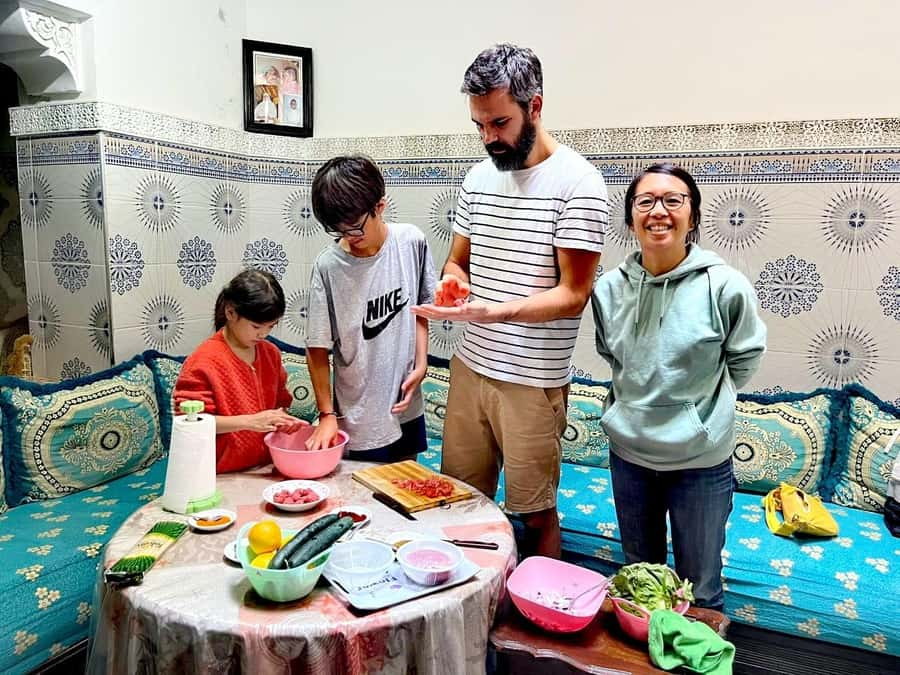
I would recommend this activity to first-time visitors who want a cultural activity that is easy to understand and easy to enjoy. You get food, conversation, practical recipes, and a look at local life without committing to a full-day excursion.
It is also a good choice for families. The tasks can be shared among different ages, and the relaxed setting is less intimidating than a formal culinary course. The class has worked well for groups with young adults, and the guide makes an effort to keep everyone involved.
You do not need to be a cook. In fact, beginners may get the most from the clear instructions and simple methods. If you already cook often, focus on the Moroccan approach to seasoning, tagine preparation, tea, and salads rather than expecting advanced technique.
Vegetarians can also request changes. The menu can be modified for dietary restrictions, but you should tell the provider as soon as possible. Do not wait until you arrive, especially if your needs are strict or include several exclusions.
The class may not suit you if you dislike communal meals, group activities, or walking through confusing medina lanes. It is also not the right pick if you want alcohol with dinner, since alcohol is not allowed. Smoking, drugs, and excessive noise are not allowed either.
Practical Details Before You Go
The activity lasts three hours, with lunch or dinner depending on the starting time. Check the available times when booking because the schedule is not fixed in the information provided.
Wear comfortable clothing and shoes. Cooking can involve standing, chopping, and moving around the kitchen, so dress for participation rather than for a formal evening out.
The activity is listed as wheelchair accessible, but the meeting point is in the medina and the cooking takes place in a home. If you use a wheelchair, contact the provider before booking to confirm that the route and house arrangement fit your needs.
You can cancel up to 24 hours before the start for a full refund. The reserve-now, pay-later option lets you hold a place without paying immediately, which is useful when your Marrakech schedule is still changing.
The overall rating is 4.8 from 508 reviews, and the strongest praise centers on the same points: friendly instruction, delicious food, a welcoming host, and the feeling of being in a real home rather than a staged venue.
Should You Book It?
Yes, if you want a low-cost, social way to learn about Moroccan food and daily life. The combination of a full menu, hands-on work, tea, storytelling, and recipes makes this more useful than a basic dinner out.
Book it early in your stay if you can. The shopping tips, spice advice, and local suggestions may help with the rest of your visit. Just allow extra time to find Riad Les Etoiles Berberes, use Google Maps, tell the host about dietary needs, and remember that the menu can change.
If you want a private, polished culinary lesson, this may feel too informal. If you want to cook, laugh, ask questions, and eat a generous Moroccan meal in a local home, it is an excellent $24 choice.
FAQ
How long does the Moroccan cooking class last?
The class lasts three hours, including the hands-on cooking, cultural conversation, and shared meal.
How much does the experience cost?
The listed price is $24 per person.
Where do I meet the guide?
Meet in front of Riad Les Etoiles Berberes. Do not go inside the riad. The cooking house is nearby.
How will I recognize the guide?
The guide wears a green hat and checks your name before taking you to the house.
Which languages are available?
The live guide can speak English, Dutch, French, and Arabic.
Is the class suitable for beginners?
Yes. The class is suitable for beginners as well as people with previous cooking experience.
What food will I prepare?
The menu can include Moroccan bread, chicken tagine with olives and fries, meatball tagine with melted cheese, tomato and green pepper salad, zaalouk, fruit salad, and mint tea. The menu may change.
Can the menu be changed for dietary restrictions?
Yes. The menu can be modified for dietary restrictions. Tell the provider as soon as possible.
Is transportation included?
No. You must make your own way to the meeting point.
What should I bring?
Bring comfortable shoes, comfortable clothes, cash, and a hair tie. Smoking, alcohol, drugs, and excessive noise are not allowed.
Just added in Marrakech
- Quad Ride In The Agafay Desert★ 5.0 · 39 reviews
- Quad Biking Agafay desert★ 5.0 · 20 reviews
- Marrakech: Tailor-Made City Tour With Your Own Private Guide★ 4.9 · 236 reviews
- Surf Training and Lunch on Essaouira Day Trip from Marrakech★ 4.9 · 51 reviews
- Essaouira: Surf Trip from Marrakech★ 4.9 · 31 reviews
- Marrakech palm grove: Sunset camel ride★ 4.8 · 194 reviews
- Marrakech: Sunrise Desert Tour with Camel Ride and Breakfast★ 4.4 · 36 reviews
- Marrakech : Agafay Desert Sunset Camel Ride & Luxury Dinner★ 4.3 · 39 reviews
Cooking Classes, compared.
Traditional Moroccan Cooking Class & Market Visit
Read our review →
Moroccan Dishes Cooking Class with a Local Chef
Read our review →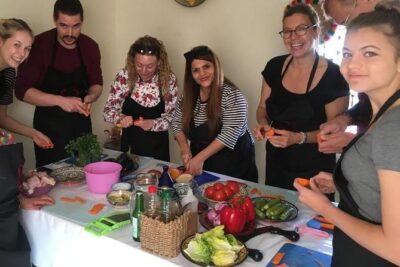
Moroccan Cooking Class & Marrakech Market Visit with Chef Khmisa
Read our review →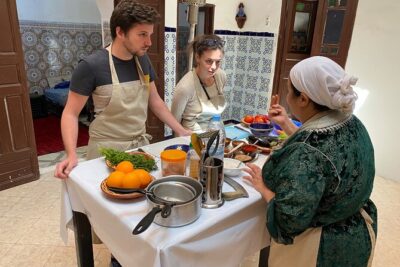
Half-Day Cooking Class with Local Chef Laila in Marrakech
Read our review →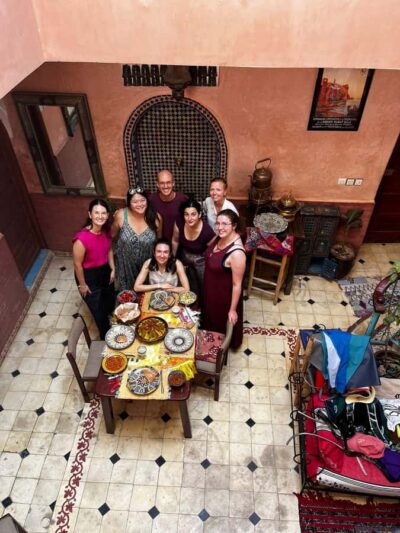
Marrakesh cooking class with chef Hassan – Local dishes
Read our review →Browse the lists this tour appears in