
Reviewed · COOKING CLASSES
Rabat: Cooking Class in a Family Home
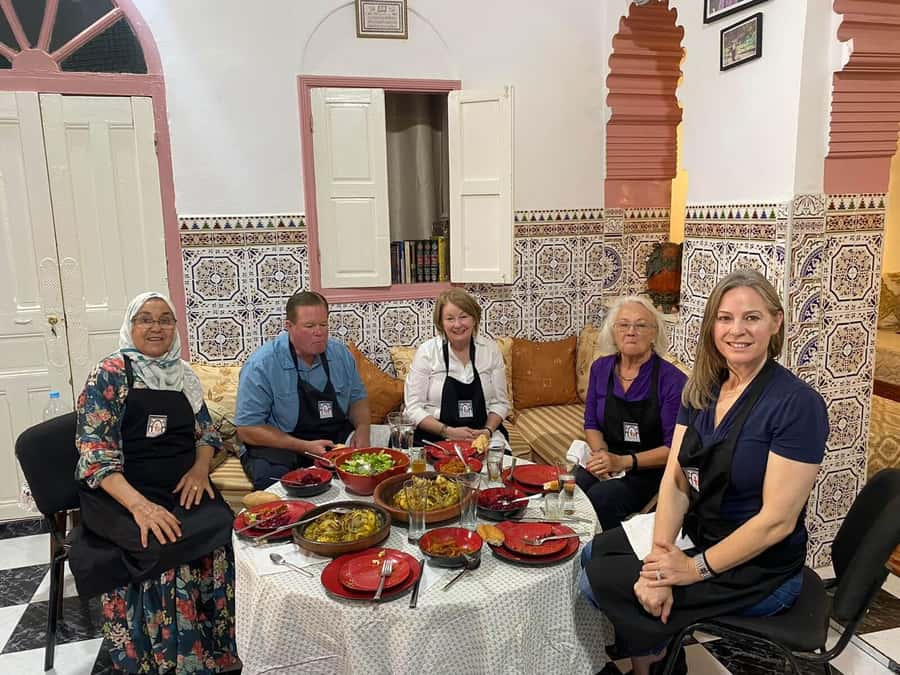
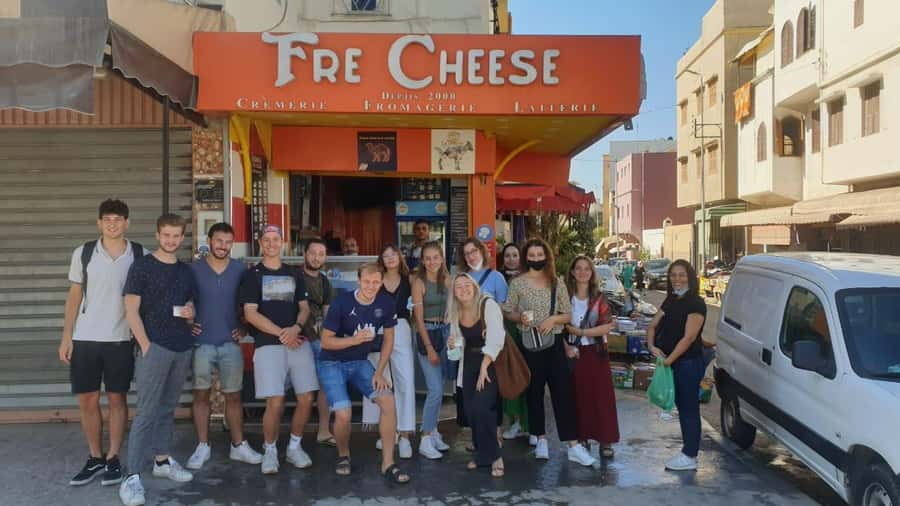
Rabat’s best food lesson may begin before you reach the kitchen. You meet near the Hopital Moulay Youssef tram station, walk through a local market, choose fresh ingredients, then carry them into a family home for a three-course meal. I like the market-to-table format and the chance to cook in a real home rather than a polished cooking studio.
I also like the personal scale. Groups are limited to eight, and Imane may host with her mother-in-law, an experienced chef who once cooked for ambassadors. The main consideration is that this is a four-hour experience without transportation, so you need to reach the meeting point yourself and be ready for a social, hands-on afternoon.
Key points to know before you book
- Shop before you cook: You select fresh ingredients at a local market and can discuss what you want to prepare.
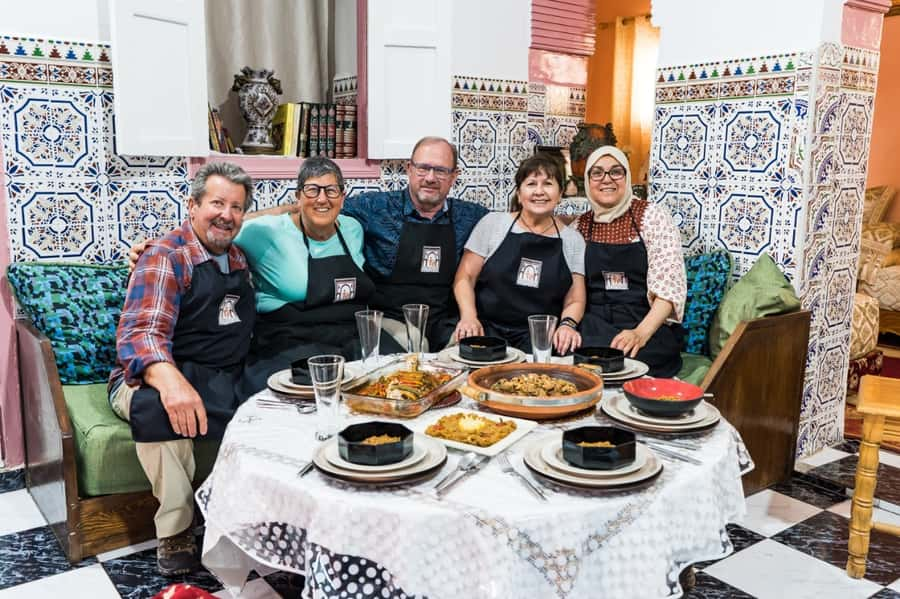
- Cook in a family home: The lesson takes place in a historic Moroccan family house, not a restaurant kitchen.
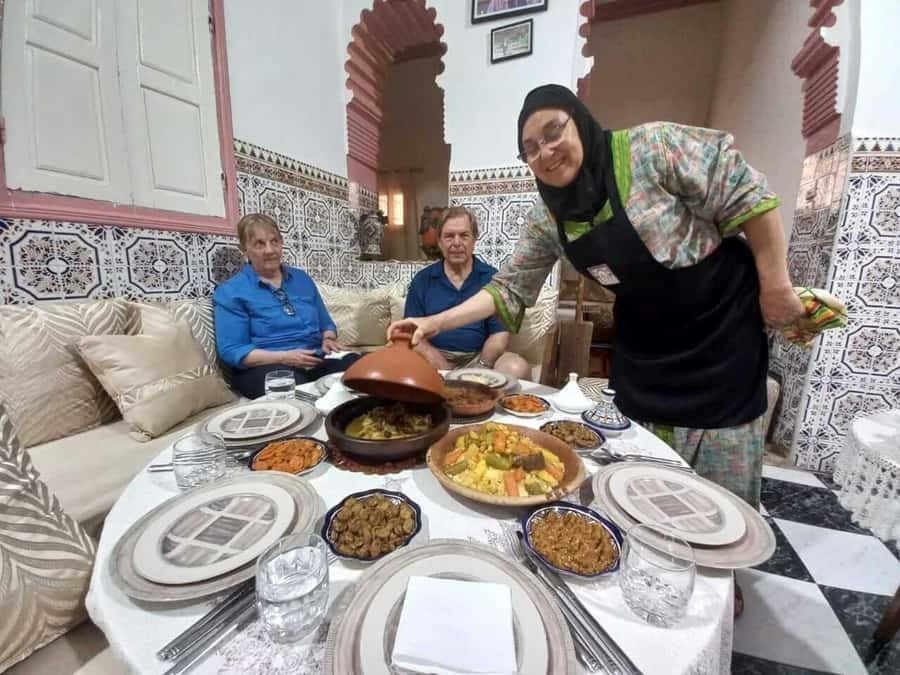
- Menus can vary: Past meals have included couscous, chicken tagine, aubergine, peppers, fruit salad, and a Moroccan millefeuille with orange blossom and saffron.
- Small groups matter: With no more than eight participants, you should get room to help, ask questions, and take notes.
- Tea finishes the meal: Tea or coffee and bottled water are included, along with the full meal you prepare.
- Bring your appetite and curiosity: This suits people who want conversation, cultural context, and practical cooking rather than a quick demonstration.
Meeting Imane at the Rabat tram station
Your meeting point is the Hopital Moulay Youssef tram station in Rabat. From there, your host or greeter leads you into a nearby neighborhood and toward the local market.
The guide may speak French or English. Imane is named in the strongest personal accounts of the experience, sometimes working alongside her mother-in-law. The family connection is part of the appeal: you are not simply following a chef through a commercial class. You are being welcomed into a household setting where food, family, and conversation share the same table.
Allow time to arrive at the station before the stated start. Transportation is not included, and the activity does not pick you up from your hotel. The meeting point is clear, but you should still check the exact starting time when booking because availability changes by date.
The group limit of eight is a useful middle ground. It is small enough for hands-on work, yet large enough for the meal to feel social. If you prefer a private lesson with constant one-to-one attention, this may feel more communal than personal. If you enjoy meeting people from different places, the format should suit you well.
More cooking in Morocco:
- Marrakech: Moroccan Cooking Class with Pickup
★ 4.6 · 1,862 reviews - Marrakech: Traditional Moroccan Cooking Class & Market Visit
★ 4.8 · 1,861 reviews - Marrakesh: Moroccan Dishes Cooking Class with a Local Chef
★ 5.0 · 1,615 reviews
Choosing ingredients in a neighborhood market
The first real lesson takes place among the market stalls. You walk with your host, look at the available produce, and buy what will become your meal. This is more useful than receiving a premeasured basket because you see how a Moroccan cook actually begins a dish.
Your host asks about your preferences and helps decide the menu. That flexibility matters. You might work with couscous, chicken, vegetables, herbs, fruit, or ingredients used in Moroccan sweets. A past menu included a traditional Moroccan couscous prepared in keeping with the Friday custom, while another group made chicken tagine with seasoned aubergine and peppers.
The market visit also gives your guide a chance to explain ingredients and local customs. You can ask about what you are buying instead of trying to identify everything later from a recipe card. If you have a strong preference, such as wanting couscous or hoping to learn tagine, say so early. The menu is shaped around your request when possible.
One especially interesting detail concerns the dessert. A group that requested a Moroccan millefeuille bought the special pastry at the market. The dough was made from flour, water, and salt, rolled into extremely thin sheets, fried, cut into rounds, and stacked with homemade pastry cream flavored with orange blossom and saffron. That is the sort of preparation you are unlikely to notice in a restaurant.
The market portion is not simply a shopping errand. It shows you that Moroccan cooking starts with decisions about fresh ingredients and familiar household methods. The tradeoff is that the market stop is not a formal food tour with a long list of vendor tastings. Its purpose is to gather what you will cook.
Cooking inside a historic family house
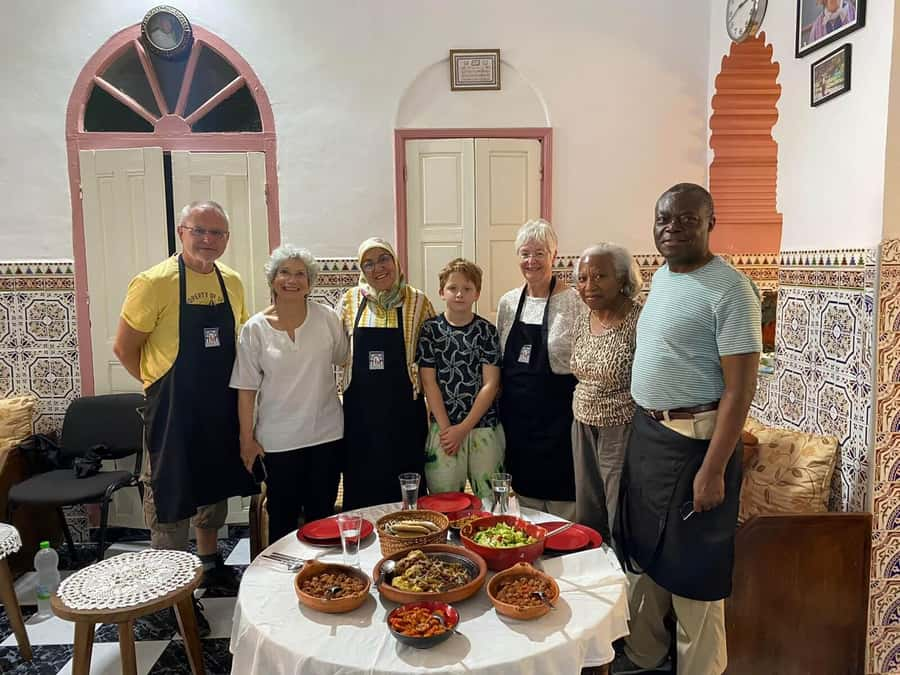
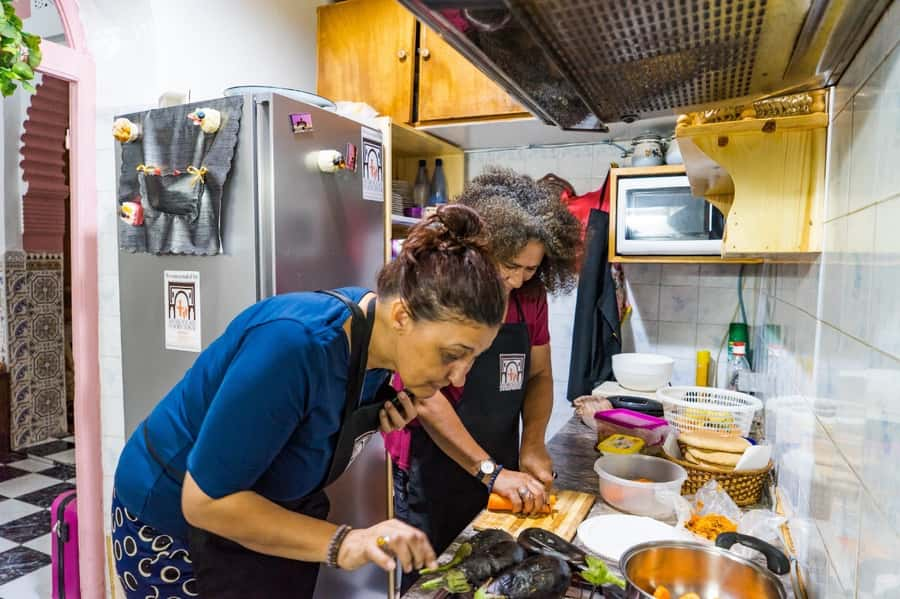
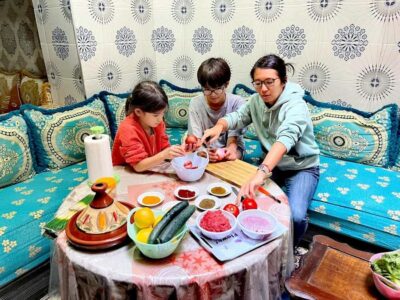
After shopping, you continue to the family home. The setting changes the tone of the experience. Instead of standing behind a counter while someone else handles the work, you join the cooking process in a private household kitchen.
Your host explains the recipes and techniques, then brings you into the preparation. The exact tasks depend on the menu. You may chop, season, assemble, stir, or help with the pastry. The cooking is described as interactive, so this is not the right choice if you want to sit back and watch a professional do everything.
The teaching style appears practical rather than rigid. One especially useful point is that the chef may add a bit of this and a bit of that instead of measuring every ingredient with laboratory precision. That is common in home cooking, and it teaches you how flavor is adjusted by taste and experience.
You should still receive full recipes, which makes the class more useful after your trip. Take notes and photographs as you go. The class allows this, and recording the small details can help when you try to repeat the dishes at home. Pay attention to sequence, texture, and seasoning, not just ingredient lists.
The family setting also gives you a look at Moroccan hospitality. The hosts are described as warm and welcoming, and the cooking takes place in a lively social atmosphere. At times, the chef’s mother-in-law joins the teaching. Her background as a former chef for ambassadors adds a professional layer to the home setting, but the mood remains friendly rather than formal.
A possible limitation is that the supplied details do not promise a fixed menu, a private kitchen, or a particular dish every time. If you need to avoid an ingredient, ask about that when the host discusses your preferences. The class is flexible, but the available market ingredients and the group’s choices help shape the final meal.
Three courses, with Moroccan details
The meal is designed as a full three-course menu. The precise combination can change, but the examples give you a good sense of the range.
A starter may be built around vegetables and bread. One meal included aubergine and peppers that were peeled, chopped, and seasoned with several spices. This kind of dish is a good lesson in texture and balance because the vegetables are not treated as filler. They become a central part of the first course.
The main course may be couscous or tagine. Couscous carries particular cultural weight in Morocco, and preparing it for a Friday meal connects the class to a weekly family tradition. A chicken tagine offers a different lesson, with its slow cooking and layered seasoning. You are not just tasting these foods at a restaurant. You are helping create them and seeing how the ingredients change as they cook.
Dessert may be as simple as fresh fruit with orange juice, or it may be a more involved pastry. A fruit salad with freshly pressed orange juice gives the meal a light finish. The Moroccan millefeuille described above is a more ambitious option, with thin fried pastry, pastry cream, orange blossom, and saffron.
The range makes this experience appealing to repeat visitors to Morocco. You can ask for a dish you have already enjoyed and learn how it is made at home. First-time visitors can use the host’s advice to choose a menu that shows several sides of Moroccan food.
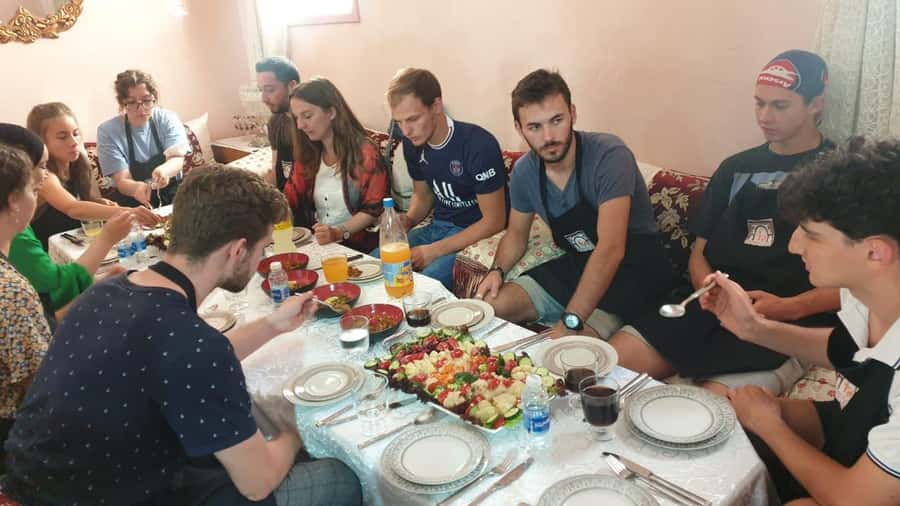
Drinks include tea or coffee and bottled water. Moroccan tea is the natural final note, and the tea service is part of the welcome rather than an afterthought. The food you prepare is served after the workshop, so you should expect to eat a substantial meal during the four-hour session.
Same base, a different sort of day:
- Marrakech: Agafay Desert Sunset, Camel Ride, and Dinner Show
★ 4.6 · 35,119 reviews - From Marrakech: Ouzoud Waterfalls Guided Hike and Boat Trip
★ 4.7 · 33,630 reviews - Marrakech: Agafay Desert Quad & Camel Rides with Dinner Show
★ 4.8 · 27,382 reviews - Marrakech: Agafay Desert Quad Biking Tour with Dinner-Show
★ 4.8 · 16,569 reviews
Eating together and learning through conversation
Once the cooking is finished, you sit down to eat the menu you helped prepare. This is where the class becomes more than a set of kitchen tasks. You can discuss the food, ask about Moroccan customs, and compare cooking habits across the group.
Conversation is a major part of the experience. The host can speak French or English, and the small group gives you more chance to ask questions. If you are interested in household traditions, religious customs around food, or the way recipes change between families, this is the time to ask.
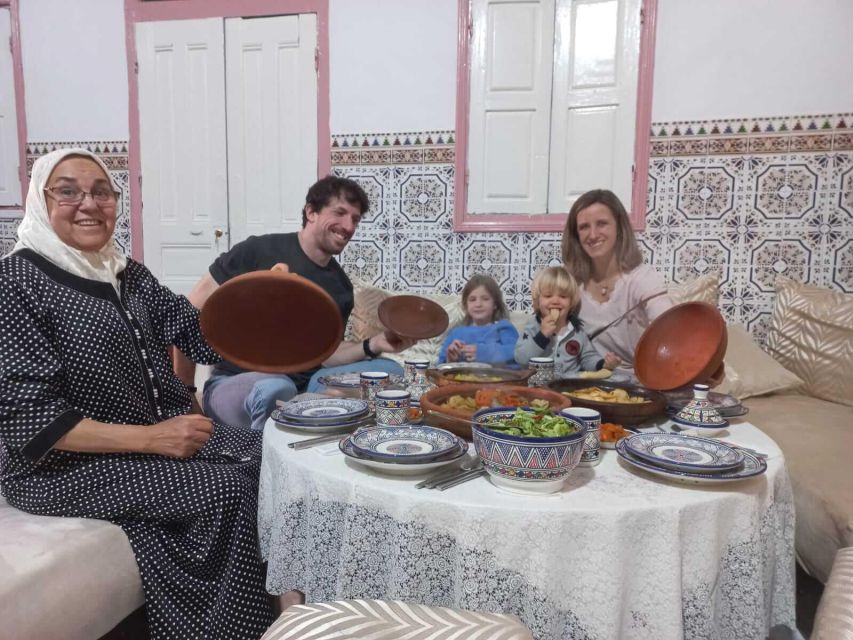
One past meal included the chef, her daughter-in-law, and a small granddaughter at the table. That detail gives you a sense of the family character of the setting. You are not promised a particular family member at every session, but the experience is built around sharing food in a home.
The meal also lets you judge the recipes for yourself. A demonstration can look easy until you try it alone. Here, you taste the result immediately and can ask why a spice was added, how the texture was achieved, or what could be changed next time.
Keep in mind that a family meal is less predictable than a restaurant service. The pace may depend on the menu, the group, and the conversation. For me, that is part of the value. If you need a tightly timed activity with a fixed end to the minute, a home cooking class may require more patience.
What the $72 price includes
The cost is $72 per person for four hours. That includes the market visit, the cooking session, the three-course menu, tea or coffee, and bottled water. You are also paying for instruction, the ingredients used during the class, and access to a family setting that is not part of an ordinary restaurant meal.
The value depends on how you use the experience. If you only want lunch, $72 is more than the cost of eating a simple Moroccan meal. If you want a market visit, cooking instruction, cultural conversation, and a substantial meal in one four-hour activity, the price is easier to justify.
The included recipes improve the value because they give you something to take home beyond a memory. The class can also help you order more confidently in Morocco later, since you will understand the basic ingredients and preparation behind several familiar dishes.
Friends can join the meal after the cooking class for an additional €15. That is useful if someone in your group wants the family dining experience but does not want to take part in the market visit or cooking session. Confirm the arrangement in advance rather than arriving with extra people unexpectedly.
Free cancellation is available up to 24 hours before the activity for a full refund, and you can reserve now and pay later. Those terms help if your Rabat schedule is still shifting, but they do not change the need to arrange your own way to the tram station.
Who should book this Rabat cooking class?
I would choose this for you if you care about how Moroccan food is made, not just how it tastes. It is a strong match for couples, families, solo visitors, and small groups who enjoy conversation and are happy to work with others.
It is also a good choice for anyone who wants a home-based experience. The family house, the changing menu, and the shared table give the afternoon a personal quality that a standard restaurant meal cannot provide.
Families with older children may find the hands-on format engaging, though the supplied information does not specify a minimum age. Ask before booking if age, allergies, or dietary needs are important to your plans.
You may want a different activity if you dislike group cooking, need a guaranteed menu, or want transportation included. The class is built around participation and flexibility. It rewards curiosity more than speed.
Practical advice for making the most of the afternoon
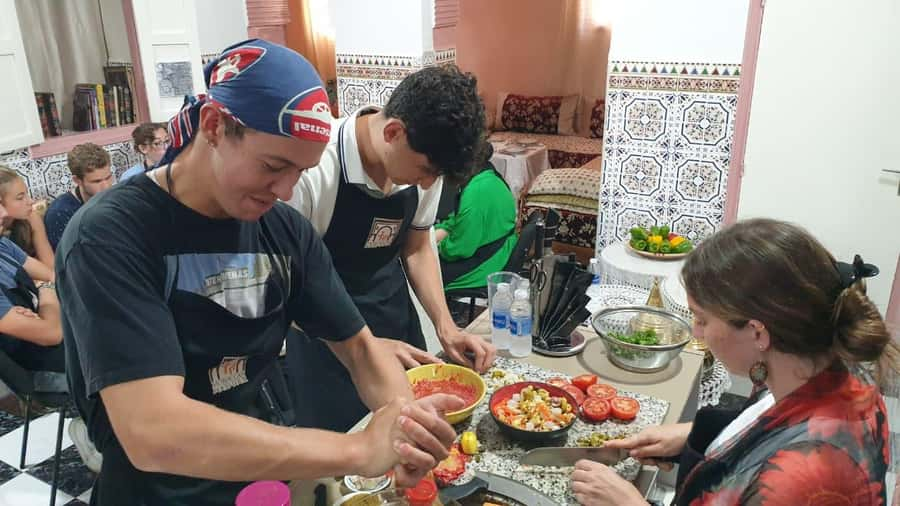
Arrive at the Hopital Moulay Youssef tram station with a little time to spare. Wear comfortable clothing suitable for cooking and shoes you can walk in during the market visit.
Tell the host what you want to learn at the start. If couscous, tagine, or Moroccan pastry interests you most, say so while the menu is being planned. Your preferences can help shape the shopping and cooking.
Bring your phone or a small notebook. You can photograph the process and write down recipes, ingredient names, and cooking steps. Since Moroccan home cooking often relies on judgment rather than exact measures, note visual clues such as texture, color, and thickness.
Keep your schedule loose after the class. The experience lasts four hours, but a shared meal and conversation work best when you are not watching the clock. Have a light breakfast or lunch beforehand, but arrive ready for a full meal.
Should you book MoroccanFoodTour?
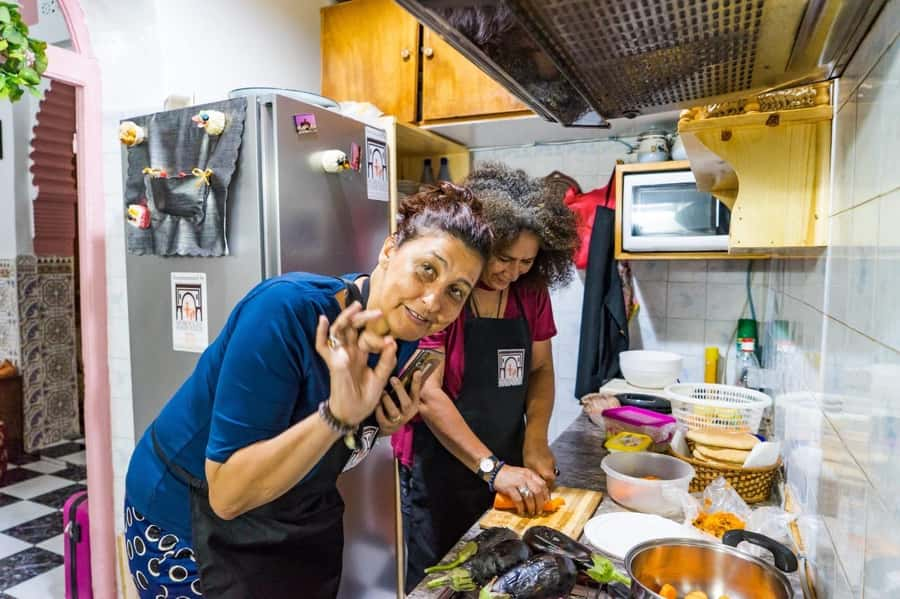
Book it if you want a personal introduction to Moroccan food, with the market, kitchen, and dining table all connected. The strongest reasons are the small group, the option to shape the menu, the chance to cook with Imane and her family, and the practical recipes you can use later.
The $72 price is fair for four hours of instruction, ingredients, drinks, and a full meal, especially if you value local contact over a polished tourist production. Skip it if you want hotel pickup, a fixed menu, or a short demonstration with no group participation.
For most food-focused visitors to Rabat, this is a worthwhile afternoon. You leave with more than a full stomach. You understand how a Moroccan meal begins at the market, takes shape in a family kitchen, and ends around a shared table.
FAQ
Where does the cooking class meet?
The meeting point is the Hopital Moulay Youssef tramway station in Rabat.
How long does the experience last?
The cooking class and market visit last four hours.
How much does the activity cost?
The listed price is $72 per person.
What languages are available?
The host or greeter can provide the experience in French or English.
How many people can join the group?
The activity is limited to eight participants.
What food and drinks are included?
You prepare and eat a three-course menu. Tea or coffee and bottled water are included.
Can friends join only for the meal?
Yes. Friends can join the meal after the cooking class for an additional €15.
Just added in Morocco
- Fes to Chefchaouen Day Trip★ 5.0 · 20 reviews
- FES TO Chefchaouen Day Trip- luxury Private Tour★ 5.0 · 49 reviews
- Fes to Volubilis, Moulay Idriss and Meknes Private Day Trip★ 5.0 · 92 reviews
- walking day : private excursion in the ancient city of Fez★ 5.0 · 27 reviews
- Fes to Middle Atlas Private Day Trip★ 5.0 · 48 reviews
- Private Guided Tour in Fez Medina★ 5.0 · 94 reviews
- Volubilis and Meknes day trip from Fez★ 4.5 · 17 reviews
- Tour guide in the old city of Fez★ 4.0 · 18 reviews
Cooking Classes, compared.
Traditional Moroccan Cooking Class & Market Visit
Read our review →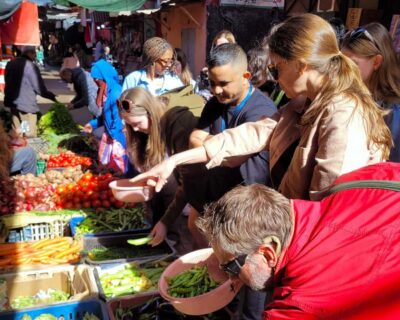
Moroccan Dishes Cooking Class with a Local Chef
Read our review →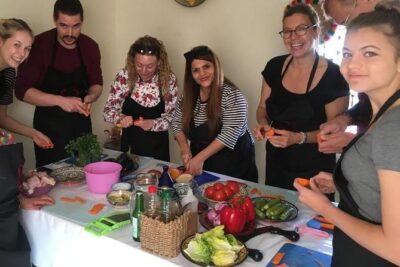
Moroccan Cooking Class & Marrakech Market Visit with Chef Khmisa
Read our review →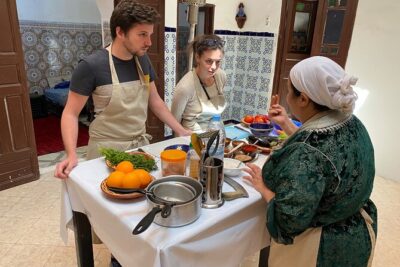
Half-Day Cooking Class with Local Chef Laila in Marrakech
Read our review →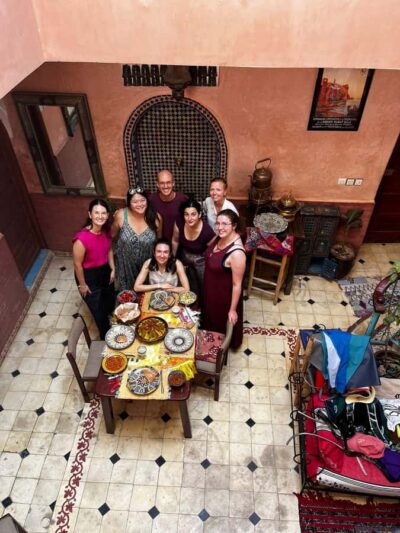
Browse the lists this tour appears in