
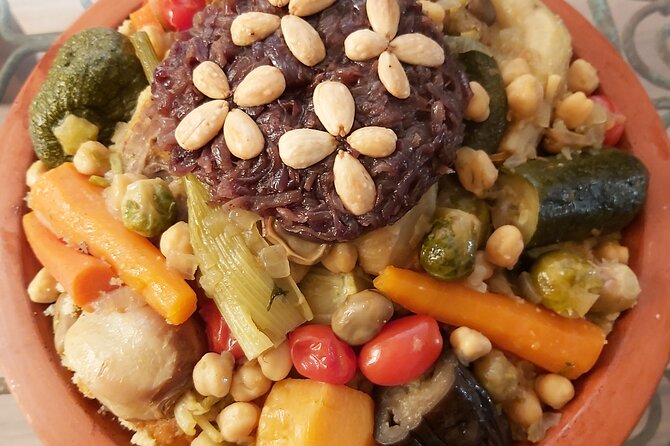
Reviewed · COOKING CLASSES
Traditional Moroccan and Berber cooking classes
Essaouira’s best food lesson may begin not at a restaurant, but around a Moroccan table with mint tea, small cakes, and a host named Khadija. This private class takes you through the full meal, from spice selection and chopping to cooking and sitting down to eat what you made.
I like two things right away: you take part in every stage, and the class uses fresh, mainly local produce. The second is the warm home setting. Khadija’s welcome and the chance to talk over the meal make this feel more personal than a standard demonstration.
The main consideration is time. Three hours is enough for a satisfying meal and a clear introduction, but not enough to master every Moroccan dish. The class also requires good weather and a minimum number of participants, so keep the cancellation terms in mind.
Key points at a glance
- A private class with Khadija: Only your group takes part, creating a more relaxed setting for questions and conversation.
- Choose from classic dishes: Depending on the menu, you may prepare tagine, couscous, pastilla, Moroccan salads, or a combination of these.
- Learn the spice logic: Ras el hanout, cumin, saffron, cinnamon, preserved lemon, and olives are explained as working ingredients, not just names on a shelf.
- Eat the meal you prepare: The lesson ends around a shared table, with the main dish and salads cooked by the group.
- Languages are flexible: The host speaks French, English, Arabic, and Berber.
- Recipe cards are included: You leave with a practical reference for trying the dishes at home.
A Moroccan welcome with tea and small cakes
The class begins at 21 Av. Princesse Lalla Amina in Essaouira. You meet Khadija there and enter a Moroccan setting designed for conversation as much as cooking.
The opening is simple and useful. Over mint tea or spiced coffee and small Moroccan cakes, Khadija explains the plan for the session. You also learn about the preparation of mint tea, a small lesson that sets the tone for the rest of the class.
This opening matters because Moroccan cooking depends on more than a list of ingredients. It is also about how a meal is offered, shared, and paced. Starting with tea gives you a chance to settle in before the knives and pans appear.
The private format helps here. You are not trying to hear a guide over a large group, and you can ask about a spice, a technique, or a dish that catches your interest. Khadija speaks English, French, Arabic, and Berber, so communication is a strong part of the experience.
More cooking in Essaouira:
- l’Atelier – Moroccan Cooking Workshop in Essaouira
★ 5.0 · 110 reviews - Traditional Moroccan Cooking Class
★ 5.0 · 81 reviews - Essaouira: Traditional Family Style Moroccan Cooking Class
★ 5.0 · 58 reviews
Choosing the menu and understanding the spices
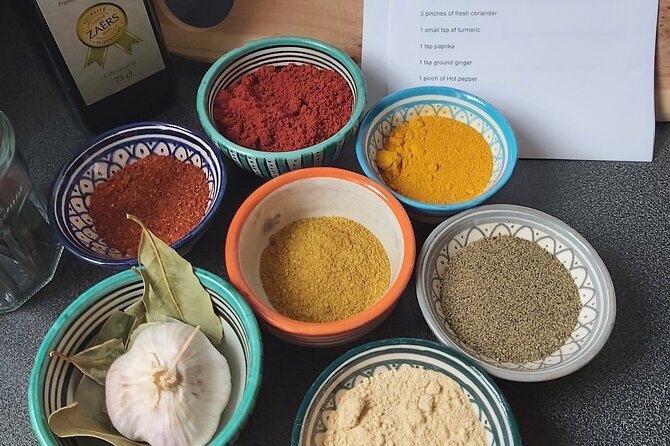
After the introduction, Khadija presents the chosen recipes. The menu can include tagine, couscous, pastilla, Moroccan salads, and home-made desserts. The exact selection matters, so if you have a particular dish in mind, ask about it when booking or at the start of the class.
The spice lesson is one of the most useful parts for anyone who wants to repeat the food at home. You are introduced to ras el hanout, cumin, saffron, cinnamon, preserved lemon, olives, and other Moroccan condiments. The focus is on what each ingredient does in the dish.
That distinction is important. A cooking class is more useful when you learn why an ingredient is added, not just when to add it. Cumin may shape a salad, preserved lemon may bring a sharp salty note to a cooked dish, and cinnamon may work in a way that surprises anyone who knows it only from sweet recipes.
I also like that the class uses fresh, quality produce, mainly from local sources. That choice supports the host’s aim of keeping the food close to its Moroccan setting and reducing unnecessary transport. It also means the menu can reflect what is available and good at the time of your visit.
Cutting, seasoning, and building the main dish
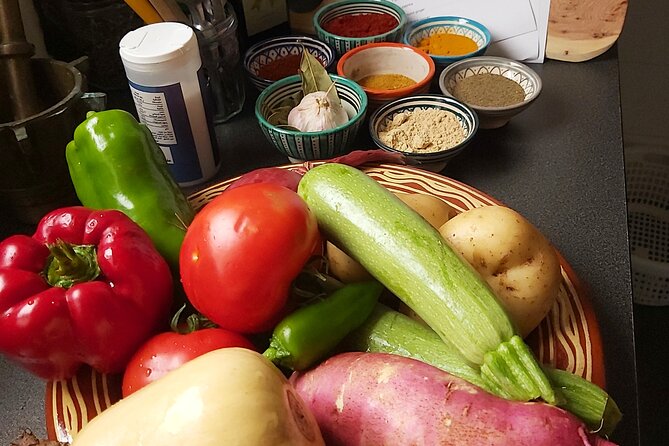
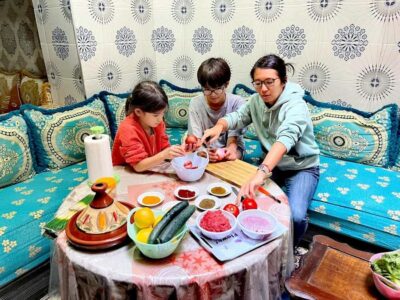
The central part of the class is hands-on. You help cut ingredients, season them, and prepare the main dish rather than simply watching Khadija work.
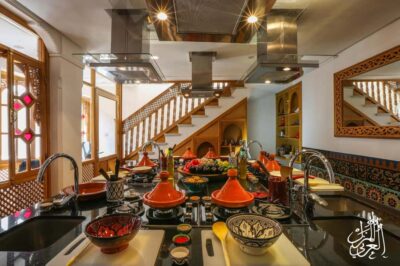
For tagine, you learn the slow cooking method that brings meat or vegetables together with spices, aromatics, and sauces. The class focuses on the simmering process, so you can see how the dish develops rather than treating the tagine as a decorative serving pot.
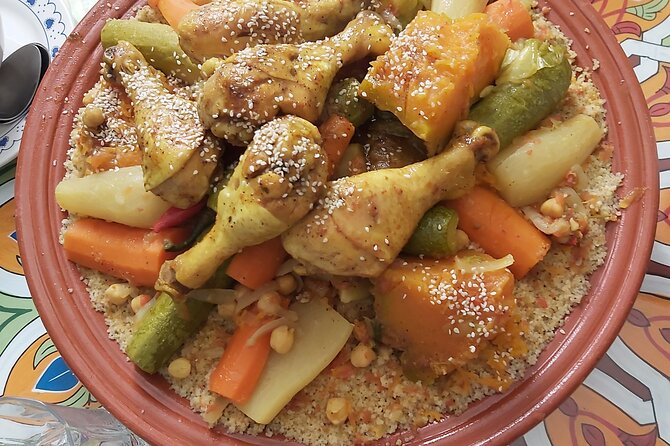
Couscous brings a different technique. The grains are steamed, and the class explains the process used to get the right texture. This is valuable because couscous can look easy but becomes heavy or dry when handled poorly.
Pastilla offers another change of pace. Its key feature is a crisp pastry exterior, which requires care and attention. If this is on your menu, you get an introduction to the contrast between the delicate pastry and the seasoned filling.
The practical benefit is clear: you are learning movements and timing you can remember. Cutting ingredients, mixing seasonings, and watching a dish cook together gives you more to take home than a recipe read from a card.
There is also a limit. A three-hour class cannot provide a full professional lesson in every technique. You will get a useful working introduction, not a complete course in Moroccan cuisine. That makes this best for curious home cooks and food lovers, rather than someone seeking advanced culinary training.
Moroccan salads that balance the meal
The salads are not treated as a side note. You may prepare carrot salad with chermoula, aubergine zaalouk, or taktouka.
Each has a different character. Carrot salad with chermoula brings herbs and seasoning to a simple vegetable base. Zaalouk turns aubergine into a soft, seasoned preparation. Taktouka uses cooked vegetables and Moroccan flavors in another style.
These dishes help you understand how a Moroccan meal is built. The table is not only about one large main course. Small vegetable dishes add color, texture, acidity, and spice, and they give you several recipes that are practical to make at home.
For many people, the salads may be the most useful take-home lesson. A tagine can require a special pot or a long cooking time, while a carrot salad or taktouka is easier to fit into an ordinary weeknight meal. The recipe cards let you revisit the details after you return home.
Same base, a different sort of day:
- From Marrakech: Essaouira & Atlantic Coast Full-Day Trip
★ 4.4 · 1,100 reviews - Big dunes and atlantic coast tour 2 HOURS
★ 5.0 · 439 reviews - Essaouira: Surf Lessons
★ 4.9 · 412 reviews - 3 hours ride on camel at sunset
★ 5.0 · 326 reviews
Sitting down to eat what you prepared
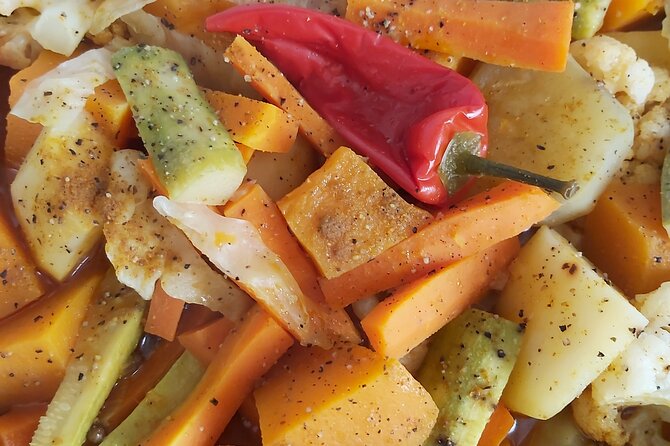
Once the cooking is finished, you sit down together and eat the meal. This shared table is a major part of the class, not an afterthought.
The setting is private and personal. The class is held in a Moroccan home environment, and the meal gives you time to talk with Khadija about food, culture, and daily life in Essaouira. The experience is designed around sharing and respect, values that come through in the structure of the afternoon.
This is also where the menu choices become meaningful. You taste the effect of the spices after handling them yourself. You can compare the salads with the main dish and see how the different textures work together.
The host pays close attention to cleanliness and hygiene throughout the session. That is worth noting in any cooking class, especially one held in a home setting. The food is prepared with care, and the clean working habits are part of the lesson.
Mint tea or spiced coffee, bottled water, and small Moroccan cakes are included. The drinks and snacks make the class feel complete, though you should not expect a separate restaurant-style meal beyond what you prepare as part of the course.
What the 5 out of 5 rating tells you
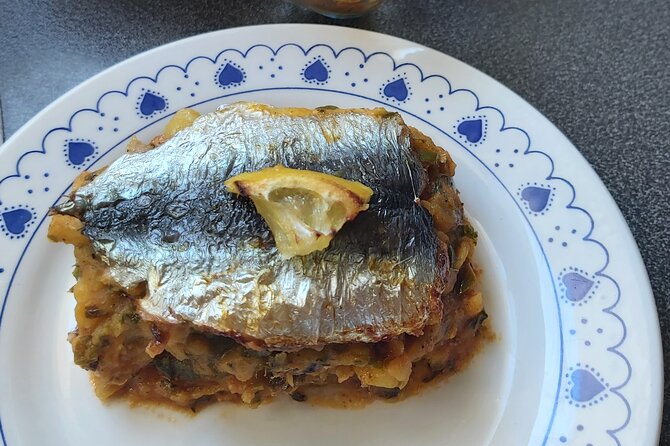
This experience has a 5 out of 5 rating from 40 published ratings, with 100 percent recommending it. The strongest pattern is not simply that people enjoyed the food. The praise centers on the welcome, the quality of the explanations, the private setting, and the meal shared afterward.
That matches the design of the class. Khadija is both teacher and host, and those roles are closely linked. You are not just shown how to make Moroccan food. You are received in a home, encouraged to participate, and invited to stay at the table for a longer conversation.
The class also handles food preferences with some flexibility. One published experience specifically notes that dining wishes were taken into account. Still, you should communicate dietary needs before the class rather than assume that every menu can be changed at short notice.
The language range is another practical strength. English, French, Arabic, and Berber are spoken, giving you a better chance of discussing ingredients and techniques without relying only on gestures or translation.
Is $58.31 good value?
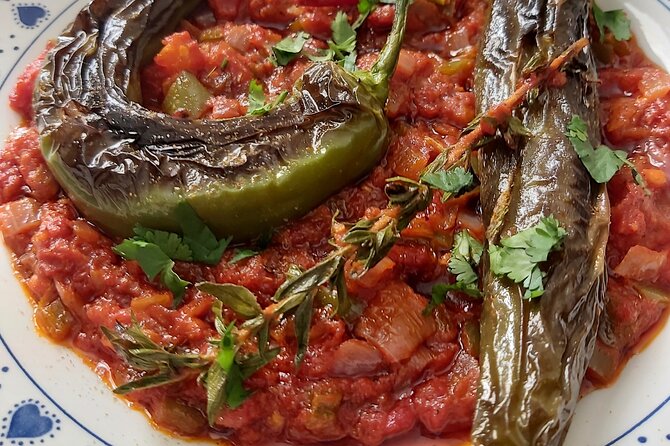
At $58.31 per person, the price is fair for a private three-hour experience that includes instruction, ingredients, drinks, snacks, the meal, and recipe cards. You are paying for more than food. You are also paying for a small group setting and direct time with the host.
The private format is especially important when comparing this with a larger cooking demonstration. Your group is the only group taking part, so you can ask questions and work directly on the dishes. For couples, families, or a small group of friends, that personal attention can justify the price.
The value depends on your priorities. If you mainly want a cheap meal, a restaurant will cost less and take less time. If you want to learn several Moroccan techniques and share a meal in a home setting, the class offers more than a standard lunch.
The class is booked on average 13 days in advance. That is a useful planning clue. If your Essaouira schedule is fixed, reserve ahead rather than leaving this for the last morning of your trip.
Who should book this Essaouira class?
I would recommend it to anyone who wants food to be part of the cultural experience, not just something served at the end of a sightseeing day.
It suits:
- Couples looking for a private activity with plenty of conversation
- Families who want children or teenagers to take part in a practical lesson
- First-time visitors who want an introduction to Moroccan spices and dishes
- Home cooks who would like recipes they can repeat after the trip
- Visitors who prefer a relaxed meal and personal contact over a large group tour
- Anyone curious about Berber and Moroccan food traditions
It may be less suitable if you want an advanced pastry course, a full market visit, or a long multi-day culinary program. None of those is promised here. The focus is a compact, welcoming kitchen class followed by the meal.
You should also consider mobility and transport. The activity begins and ends at 21 Av. Princesse Lalla Amina, and private transportation is not included. The meeting point is near public transportation. Service animals are allowed.
Free cancellation is available up to 24 hours before the start time for a full refund. Changes or cancellations inside that 24-hour window are not accepted for a refund. If poor weather or an insufficient minimum number of participants causes the class to be canceled, you are offered another date or a full refund.
The final verdict for food-minded visitors
Book this class if you want to learn by doing, eat in a private Moroccan setting, and leave with recipes you can use. Khadija’s multilingual hosting, careful hygiene, fresh local produce, and shared meal give the experience a personal center that a simple cooking demonstration cannot match.
The main tradeoff is its limited length. You will not become an expert in every Moroccan dish in three hours, and the exact menu may vary. But for a first step into tagine, couscous, pastilla, Moroccan salads, and the spices behind them, this is a well-priced and practical choice in Essaouira.
FAQ
Where does the cooking class start?
The class starts at 21 Av. Princesse Lalla Amina, Essaouira 44000, Morocco.
Where does the activity finish?
The activity ends back at the meeting point.
How long does the class last?
The class lasts approximately three hours.
How much does the experience cost?
The listed price is $58.31 per person.
Is the cooking class private?
Yes. Only your group participates in the activity.
Which languages does the host speak?
The host speaks French, English, Arabic, and Berber.
What dishes might I prepare?
The possible recipes include tagine, couscous, pastilla, Moroccan salads, and home-made desserts. The class may also include carrot salad with chermoula, aubergine zaalouk, or taktouka.
Are drinks and snacks included?
Yes. The experience includes mint tea or spiced coffee, bottled water, and small Moroccan cakes.
Do I receive recipes after the class?
Yes. Recipe cards are distributed at the end of the course.
Can I cancel for a full refund?
Yes, if you cancel at least 24 hours before the experience start time. Cancellations made less than 24 hours before the start time are not refunded. If the class is canceled because of poor weather or an insufficient minimum number of participants, you are offered another date or a full refund.
Just added in Essaouira
- Private Kitesurf Lesson in Essaouira Morocco★ 5.0 · 38 reviews
- Group Kitesurfing lesson with a Local in Essaouira Morocco★ 5.0 · 175 reviews
- Individual Lessons of Kite Surf in Essaouira★ 5.0 · 113 reviews
- Surf Rental★ 5.0 · 31 reviews
- How To Be A Real Moroccan Chef★ 5.0 · 101 reviews
- Private Surf Lesson★ 5.0 · 21 reviews
- Essaouira: Private Transfer from or to Essaouira Airport★ 5.0 · 17 reviews
- The Sunday Market in Had Draa & Local Food Tasting.★ 5.0 · 33 reviews
Cooking Classes, compared.
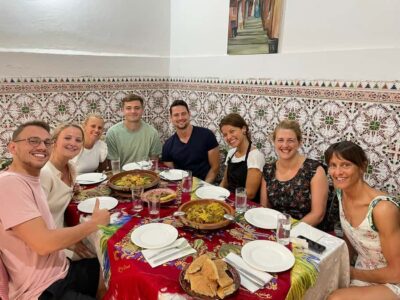
Traditional Moroccan Cooking Class & Market Visit
Read our review →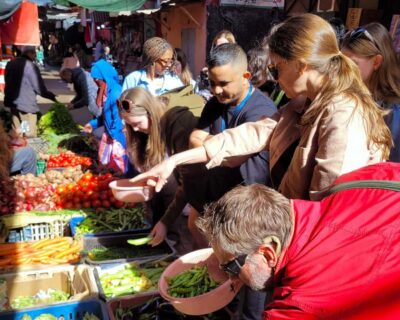
Moroccan Dishes Cooking Class with a Local Chef
Read our review →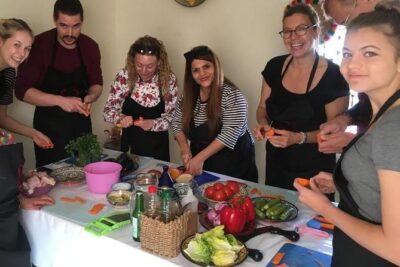
Moroccan Cooking Class & Marrakech Market Visit with Chef Khmisa
Read our review →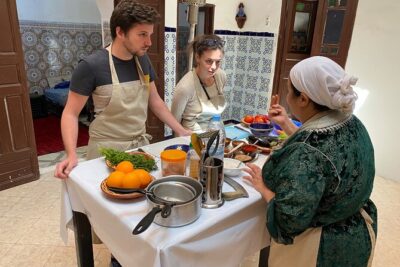
Half-Day Cooking Class with Local Chef Laila in Marrakech
Read our review →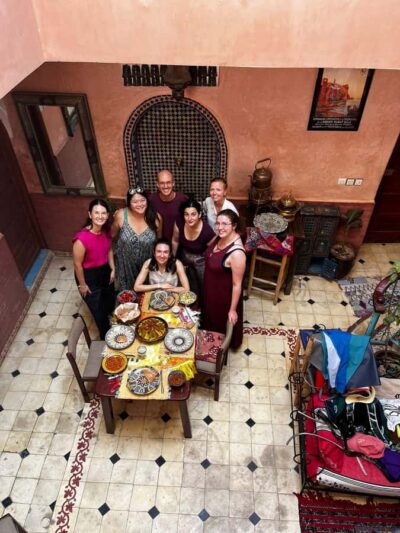
Browse the lists this tour appears in