
Reviewed · COOKING CLASSES
Join Best Moroccan Cooking Class with Chef Khadija ( Over 35 years Experience )
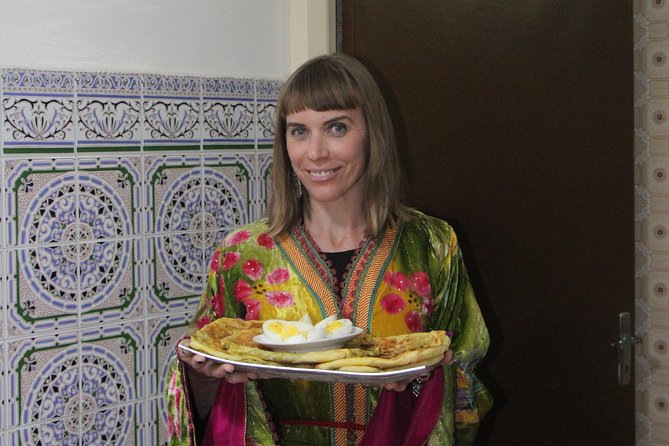
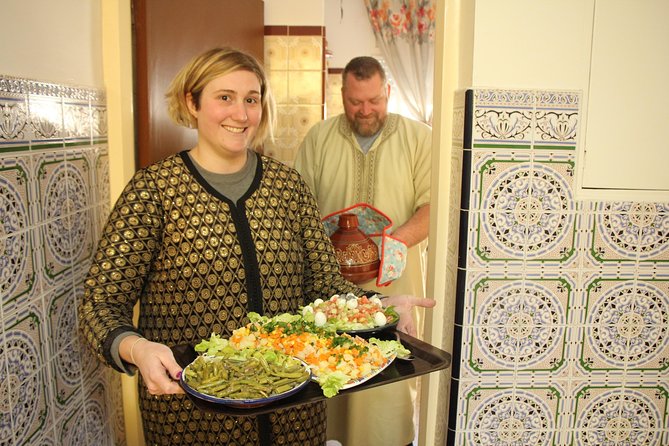
The best part of this Rabat cooking class is that you enter Chef Khadija’s family home, not a polished cooking school. Tea, homemade sweets, kitchen work, and lunch all happen in a traditional villa, giving you a close look at Moroccan food and hospitality.
I like the practical teaching. You help cut, season, mix, and shape the food, then receive written notes so you can try the recipes at home. I also like the warm family setting, including the chance to meet relatives and, at times, get English help from Khadija’s sister Marla.
The main consideration is that this is not a tightly scripted professional kitchen class. Chef Khadija does much of the cooking, and the visit can run longer than the advertised two and a half hours. That suits you if you want lunch and conversation, but less so if you need a fast, hands-on lesson.
Key points to know before booking
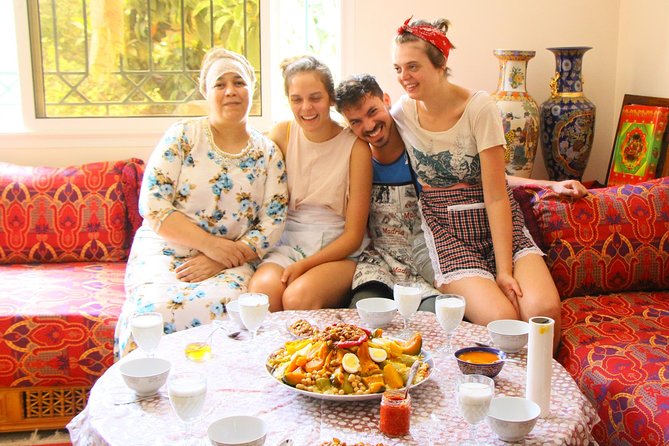
- Traditional villa setting: You cook in Chef Khadija’s home in the Agdal Riyad area of Rabat.
- A full Moroccan menu: Depending on your choice, you may prepare tagine, couscous, batboute bread, vegetable sides, pastilla, or za’alouk.
- Tea comes first: The visit begins with Moroccan mint tea and sweets before the kitchen work starts.
- Dietary choices are possible: Vegetarian and vegan menus can be arranged, as well as meat-based dishes.
- Small groups: The stated maximum is six people, which keeps the class personal.
- Useful take-home help: Khadija provides paper and a pen for notes, and some participants have also received takeout containers.
A Moroccan welcome before the cooking starts
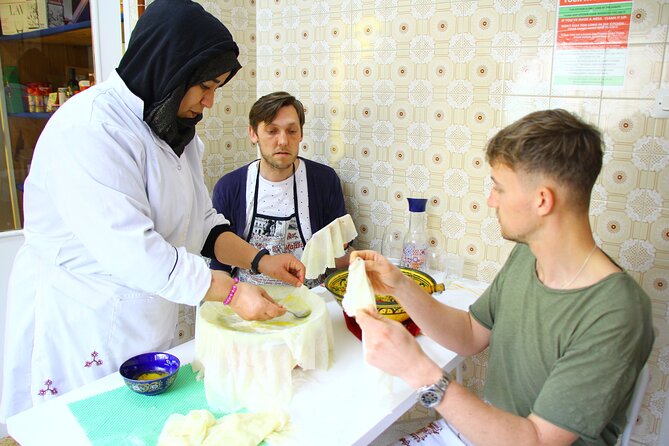
The meeting point is by Mosquée Sheikh Saif on Avenue As Sanaobar in Agdal Riyad. The activity ends back there. The house is near public transportation, and one solo participant found it relatively easy to reach by taxi, which is useful because a home address can be harder to spot than a restaurant or hotel.
Once you arrive, expect a welcome built around Moroccan hospitality rather than a quick introduction and a plastic name badge. Chef Khadija serves traditional mint tea and sweets, then explains the meal. This opening matters because Moroccan tea is not just a drink to swallow before work begins. It sets the pace of the visit and gives you time to meet the people in the home.
You may meet Khadija’s son and other family members during the visit. That makes the class feel social and personal, though it also means the setting is less formal than a commercial school. If you are hoping for a quiet, highly structured lesson, keep that difference in mind.
Chef Khadija has more than 35 years of experience, and her teaching style is practical. She answers questions, explains measurements, and shows how the ingredients come together. One particularly useful detail is her explanation of informal kitchen measures, such as what half a tea glass means when measuring liquid. That kind of information is often more valuable than a long list of exact weights because it reflects how Moroccan home cooking is actually done.
More cooking in Morocco:
- Marrakech: Moroccan Cooking Class with Pickup
★ 4.6 · 1,862 reviews - Marrakech: Traditional Moroccan Cooking Class & Market Visit
★ 4.8 · 1,861 reviews - Marrakesh: Moroccan Dishes Cooking Class with a Local Chef
★ 5.0 · 1,615 reviews
Choosing your menu with Chef Khadija
If you have already discussed your meal, the class can begin with that plan. If not, Khadija will ask what you would like to cook. The menu is not presented as one fixed dish for every booking, so you have some room to shape the meal around your interests and diet.
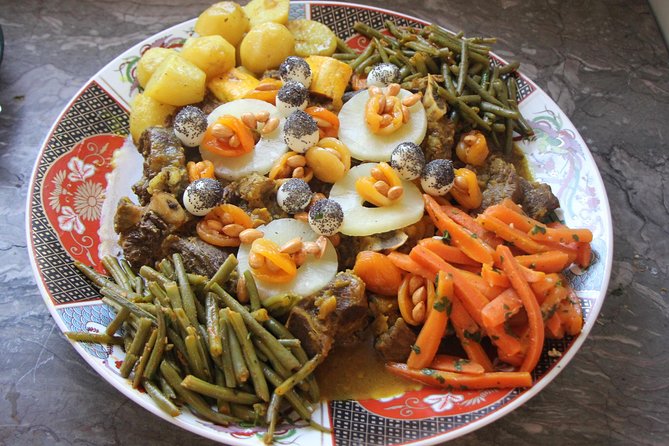
Possible dishes include chicken tagine, beef couscous, Moroccan breads, vegetable sides, za’alouk, and pastilla. The exact combination can vary. A chicken tagine may be paired with batboute bread and several vegetable dishes, while a couscous menu might include zucchini, pumpkin, caramelized onions, almonds, and dates.
This flexibility is one of the strongest reasons to book the class. If you have already eaten tagine all over Morocco, you can ask about a dish you have not tried. If za’alouk, a cooked eggplant salad, has become a favorite during your time in Morocco, you can request it. If you do not eat meat, the menu can be adjusted for vegetarian or vegan cooking.
You should communicate dietary needs before the class when possible. The information confirms that vegetarian and vegan options can be accommodated, but it does not promise that every last-minute request will be available. A clear menu discussion helps Khadija shop and prepare the right ingredients.
Cutting, seasoning, and learning the home method
The cooking portion begins in the kitchen, where you help prepare the ingredients. Expect plenty of basic work such as cutting onions and vegetables, along with seasoning and other preparation steps. This is not a demonstration where you simply sit and watch, but it is also not a class where you personally prepare every dish from beginning to end.
Khadija handles much of the cooking, particularly the parts that need timing and experience. That balance makes sense in a home kitchen. Moroccan food often depends on knowing when onions have softened enough, when spices have opened in the oil, or when vegetables are tender without falling apart. A cook with decades of practice can keep the meal moving while explaining what she is doing.
I like that the lesson focuses on repeatable habits rather than restaurant tricks. You learn how Moroccan cooks use spices, how bread dough is handled, and how several simple vegetable dishes can support a main course. A small detail can make a big difference: zucchini and green beans, for example, are seasoned in a way that turns familiar vegetables into some of the most memorable parts of the meal.
The breads are another useful part of the lesson. Batboute is a soft Moroccan bread cooked on the stovetop, and it works well with tagine and vegetable dishes. Learning bread alongside the main course gives you a better sense of how a Moroccan meal is built. It is not only about one pot of meat. Bread, vegetables, sauce, and tea all have a place at the table.
What the meal may include
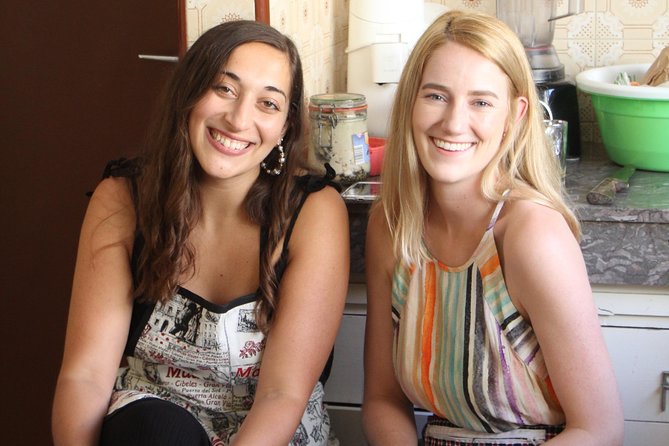
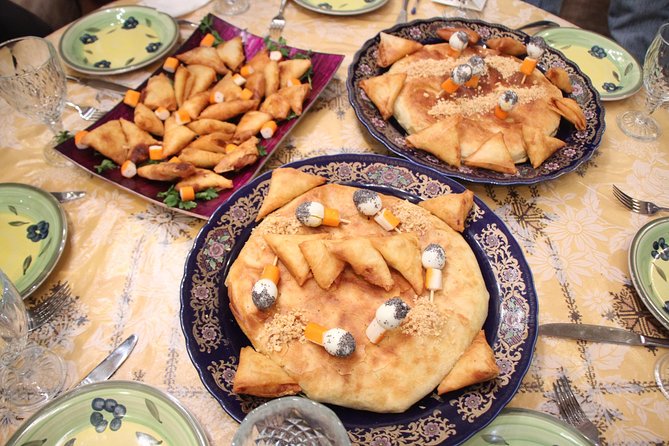
A typical menu can be generous. One possible class includes chicken tagine, two vegetable sides, and two breads. Other menus have included beef couscous with zucchini, pumpkin, caramelized onions, almonds, and dates. Pastilla is also available, though it requires more detailed preparation and may be a better choice if you are especially interested in technique.
The food is prepared for you to eat at the end, so this is both a lesson and a meal. You should arrive ready to eat lunch rather than expecting a small tasting. The advertised schedule begins around 10:30 a.m. and finishes around 2 p.m., making the morning session a natural replacement for lunch.
Allow extra time. The stated duration is about two hours and thirty minutes, but the visit can last three and a half to four hours depending on the menu and the flow of the day. That is not necessarily a problem. It simply means you should avoid booking a tightly timed museum visit or train immediately afterward.
The setting may not always be a formal shared meal with Chef Khadija. The cooking keeps her busy, and one participant was disappointed not to eat with her. If sitting down together with the host is essential to you, ask about that in advance. The meal itself remains part of the visit, but the chef may be working, serving, or preparing for the next task.
Same base, a different sort of day:
- Marrakech: Agafay Desert Sunset, Camel Ride, and Dinner Show
★ 4.6 · 35,119 reviews - From Marrakech: Ouzoud Waterfalls Guided Hike and Boat Trip
★ 4.7 · 33,630 reviews - Marrakech: Agafay Desert Quad & Camel Rides with Dinner Show
★ 4.8 · 27,382 reviews - Marrakech: Agafay Desert Quad Biking Tour with Dinner-Show
★ 4.8 · 16,569 reviews
Tea, sweets, and the value of a home setting
Moroccan mint tea is one of the highlights from the moment you arrive. It is sweet green tea, traditionally poured from a height, and it gives the visit a clear local character. The tea and sweets are not filler. They are part of the welcome and help explain why Moroccan meals often feel like a social occasion rather than a simple refueling stop.
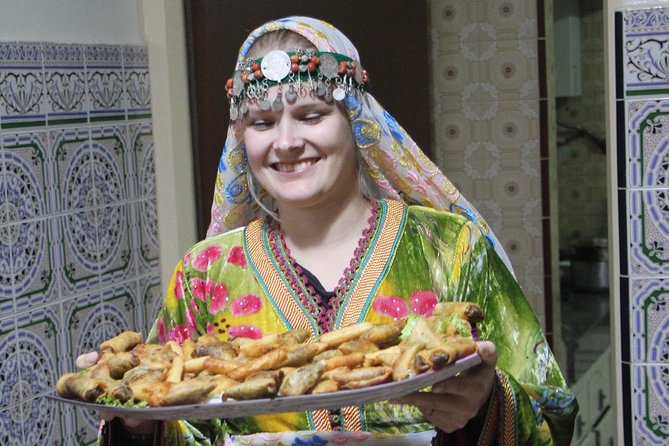
The villa setting adds another layer. You see the home where the food is made, rather than a room designed only for tourists. The house has been described as very clean and beautiful, and some participants have been offered traditional clothing to try while enjoying the finished food. Those touches are not the core of the class, but they can make the visit feel more connected to daily Moroccan life.
A home setting also comes with normal home-setting limits. The space is not built for a large crowd, and the rhythm may depend on family routines. That is why the small group size matters. With a stated maximum of six people, you have a better chance to ask questions and get close to the preparation than you would in a large group.
Communication, notes, and learning to cook at home
Chef Khadija may speak only limited English, but this has not prevented the class from working well. Her demonstrations, gestures, and practical instruction carry much of the lesson. When available, her sister Marla can help with English and has been described as an excellent English speaker.
You should still bring patience and a willingness to watch closely. If you want to remember a particular spice blend or cooking order, write it down as you go. Khadija provides paper and a pen for notes, and the class is designed to leave you with the steps needed to recreate the dishes at home.
That written guidance gives the $52.34 price more value than a meal alone. In Rabat, you can certainly find cheaper food, but a restaurant will not show you how the dish was made or explain how to repeat it. Here, the price covers the meal, instruction, tea, sweets, and a personal setting.
Some participants have also been given takeout containers. Do not treat that as a guaranteed part of every booking, but it is a thoughtful possibility if the meal is more generous than you can finish. You are also welcome to take photos and videos, which helps if you want a visual record of the preparation.
Timing, price, and who will enjoy it most
The class costs $52.34 per person and is offered daily at approximately 10:30 a.m. or 3 p.m. The morning session is listed as running until around 2 p.m., while the afternoon option gives you a chance to cook later in the day. Since the activity is often booked about 22 days ahead, reserve early if your Rabat schedule is fixed.
I consider the price fair for a small-group home meal with a chef who has more than 35 years of experience. The value is strongest if you cook, ask questions, take notes, and care about the menu. If you only want to eat Moroccan food, a good restaurant will cost less and take less time.
This class suits several types of visitors:
- Home cooks who want recipes and methods they can use after returning home.
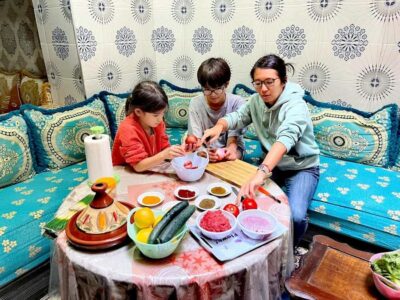
- Families with children, since the host has welcomed children and allowed them to help with preparation.
- Vegetarians and vegans, provided the menu is arranged ahead of time.
- Solo visitors, because the small setting makes it possible to attend alone.
- Food-focused couples and small groups looking for a personal alternative to a standard city tour.
It is less suitable if you need a precise two-hour schedule, expect to do every cooking task yourself, or prefer a professional classroom with fluent English instruction throughout. The class works best when you see it as a meal and cultural visit with hands-on cooking, not as a technical culinary school course.
Booking details that matter in Rabat
Confirmation is provided at booking. The experience requires a minimum number of participants, so a cancellation for that reason may lead to another date or a full refund. You can cancel for a full refund up to 24 hours before the start time. Changes or cancellations inside that 24-hour window are not accepted for a refund.
The meeting location should be checked carefully because it is a private home experience. The listed starting point is Mosquée Sheikh Saif, Avenue As Sanaobar, Agdal Riyad, Morocco. A taxi may be the simplest option if you are unfamiliar with the neighborhood, though the area is also near public transportation.
Bring an appetite, comfortable clothing, and a phone for photos if you want them. Ask about the menu, language support, and whether you will sit with the chef before arriving. Those three questions will help set the right expectations.
Should you book Chef Khadija’s cooking class?
I would book this if you want Moroccan food explained in a warm home setting, especially if you enjoy cooking and want recipes you can repeat. The strongest features are the personal welcome, the flexible menu, the generous meal, and Khadija’s clear practical guidance.
Book with a relaxed schedule. The class may last longer than the listed two and a half hours, and Chef Khadija may do more of the cooking than you expect. For a visitor who values local contact over polished production, that is part of the appeal. For someone seeking a fast, fully hands-on lesson, it may feel less exact.
At $52.34, the class offers good value when you count the tea, sweets, meal, instruction, notes, and small group setting. You leave with more than a full stomach. You leave with a better sense of how Moroccan home cooking works.
FAQ
Where does the cooking class begin?
It begins at Mosquée Sheikh Saif on Avenue As Sanaobar in Agdal Riyad, Rabat, Morocco.
Where does the activity end?
The activity ends back at the meeting point.
How long does the class last?
The listed duration is approximately two hours and thirty minutes. The morning session generally starts around 10:30 a.m. and finishes around 2 p.m., though the visit can run longer.
What time options are available?
The class is available daily starting at approximately 10:30 a.m. or 3 p.m.
Can vegetarian or vegan meals be arranged?
Yes. Vegetarian and vegan diets can be accommodated, along with meat-based menus.
What dishes might I learn to prepare?
Possible dishes include chicken tagine, beef couscous, batboute bread, vegetable sides, za’alouk, and pastilla. The menu can be discussed and customized.
How many people can join?
The stated maximum is six participants.
Can I cancel for a full refund?
Yes. You can cancel at least 24 hours before the local start time for a full refund. Cancellations or changes made less than 24 hours before the start time are not refunded.
Just added in Morocco
- Fes to Chefchaouen Day Trip★ 5.0 · 20 reviews
- FES TO Chefchaouen Day Trip- luxury Private Tour★ 5.0 · 49 reviews
- Fes to Volubilis, Moulay Idriss and Meknes Private Day Trip★ 5.0 · 92 reviews
- walking day : private excursion in the ancient city of Fez★ 5.0 · 27 reviews
- Fes to Middle Atlas Private Day Trip★ 5.0 · 48 reviews
- Private Guided Tour in Fez Medina★ 5.0 · 94 reviews
- Volubilis and Meknes day trip from Fez★ 4.5 · 17 reviews
- Tour guide in the old city of Fez★ 4.0 · 18 reviews
Cooking Classes, compared.
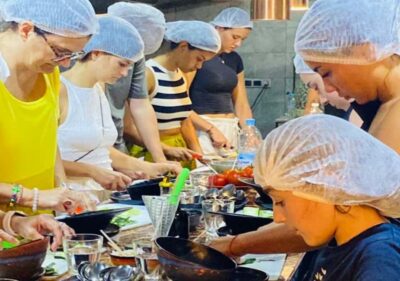
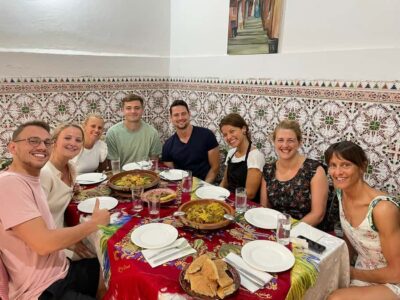
Traditional Moroccan Cooking Class & Market Visit
Read our review →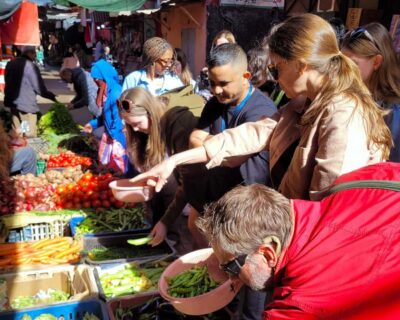
Moroccan Dishes Cooking Class with a Local Chef
Read our review →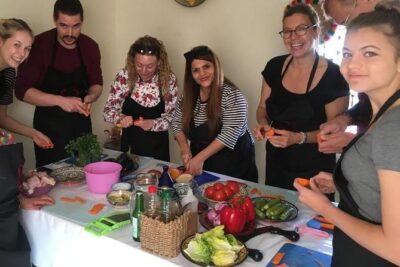
Moroccan Cooking Class & Marrakech Market Visit with Chef Khmisa
Read our review →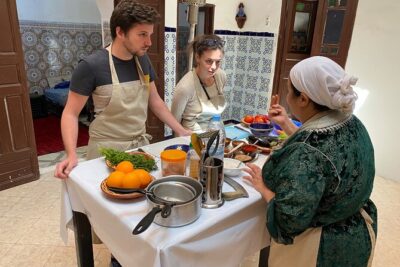
Half-Day Cooking Class with Local Chef Laila in Marrakech
Read our review →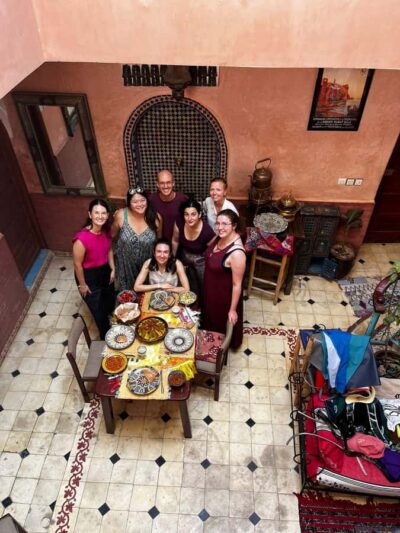
Browse the lists this tour appears in