
Reviewed · COOKING CLASSES
Casablanca : Traditional Moroccan Cooking Class with Locals
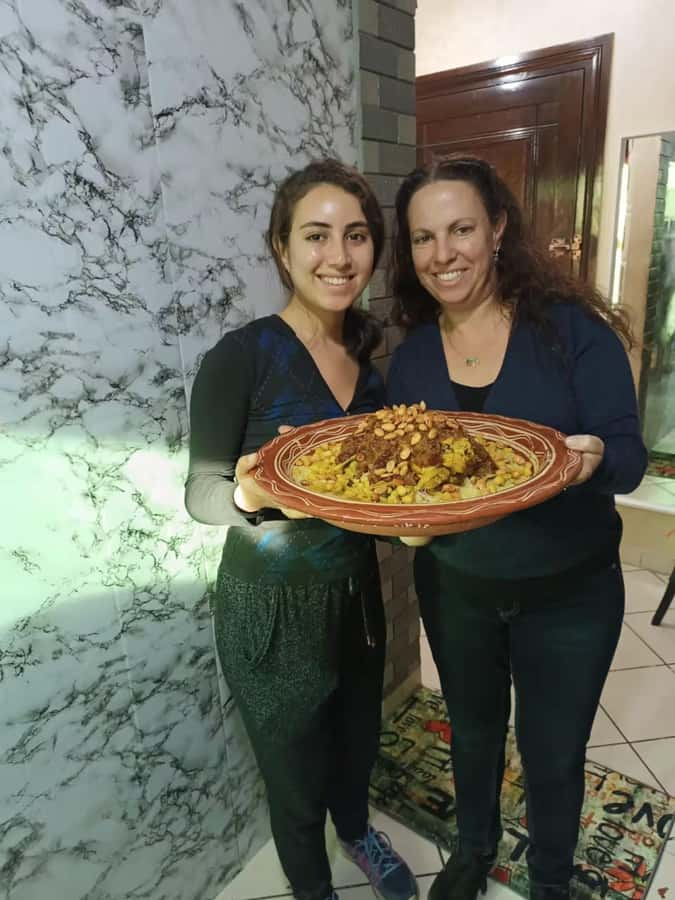
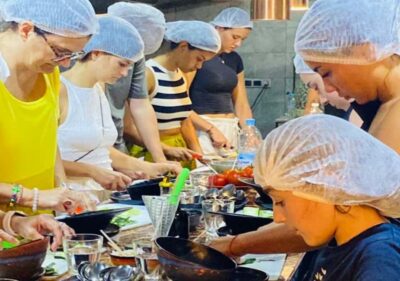
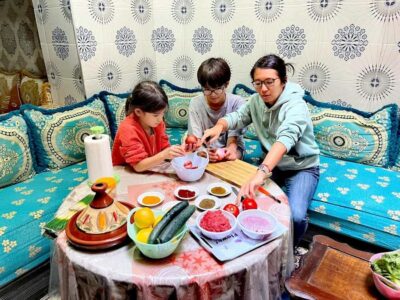
Casablanca’s best food lesson may happen far from a polished cooking studio. Inas welcomes you into her family home, where you prepare Moroccan dishes with recipes and methods learned from her grandmother and mother. You do not just watch someone cook. You chop, season, stir, learn, and then eat the results with the family.
I like the personal scale, with no more than 10 people, and I like the way food opens the door to Moroccan customs and everyday life. The use of family techniques, including the small tips that rarely appear in cookbooks, gives the class real purpose. The main consideration is simple: you are visiting a local home, not a formal culinary school, so expect a warm, informal setting rather than a polished professional kitchen.
Key points at a glance
- Inas teaches inside her family home: This is a personal cultural visit as well as a cooking class.
- You prepare Moroccan staples: The menu can include tagine, couscous, pastilla, and Moroccan salads.
- Family methods matter here: Inas learned from her grandmother and mother, who each had more than 40 years of cooking experience.
- The meal is part of the lesson: After cooking, you sit down and eat together with the family.
- Small groups keep it personal: The class is limited to 10 participants.
- The meeting point is specific: Find Résidence El Fath on Abdellah Ibrahim Street, at BIM Attacharok.
A Casablanca cooking class inside a real family home
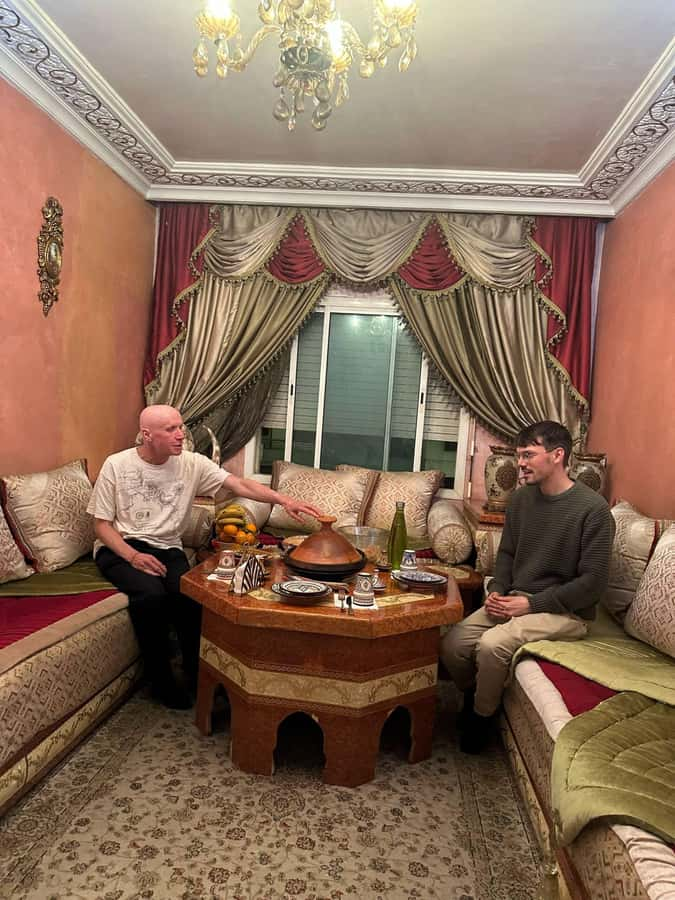
The setting shapes this experience from the moment you arrive. You meet at Résidence El Fath, on Abdellah Ibrahim Street by BIM Attacharok, then enter a local family home in Casablanca. That detail matters. You are not being placed in a tourist restaurant or a classroom designed to look Moroccan. You are stepping into the family’s own space.
Inas is the host and cooking teacher. She learned from her grandmother and mother, both of whom had more than 40 years of experience with Moroccan cuisine. That family connection gives the lesson a useful sense of continuity. You are not simply following a standard recipe printed for visitors. You are learning how this household approaches familiar dishes.
I like this kind of class because the food has a story before it reaches the plate. Tagine, couscous, pastilla, and Moroccan salads are not just items on a menu. They are part of home cooking, family meals, hospitality, and celebration. A kitchen lesson gives you a practical way to understand those customs without sitting through a formal lecture.
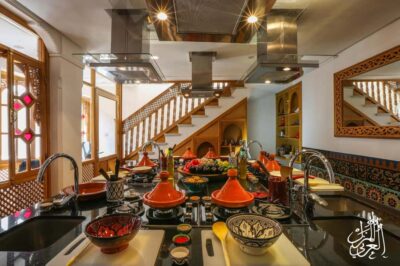
The home setting also means you should arrive with the right expectations. The experience is described as friendly and relaxed, and the setting is clearly informal. If you want a professional workstation, restaurant-style presentation, or a highly structured chef demonstration, this may feel too domestic. If you want to see how food and hospitality connect in a Moroccan household, it is a strong fit.
More cooking in Casablanca:
- Old local Market visit+Moroccan cooking class with a local family
★ 5.0 · 84 reviews - Private Casablanca Market Tour and Cooking Class with Chamsi
★ 5.0 · 33 reviews - Private Market Tour & Cooking Class in Casablanca with Transfers
★ 5.0 · 20 reviews
Preparing tagine, couscous, pastilla, and salads
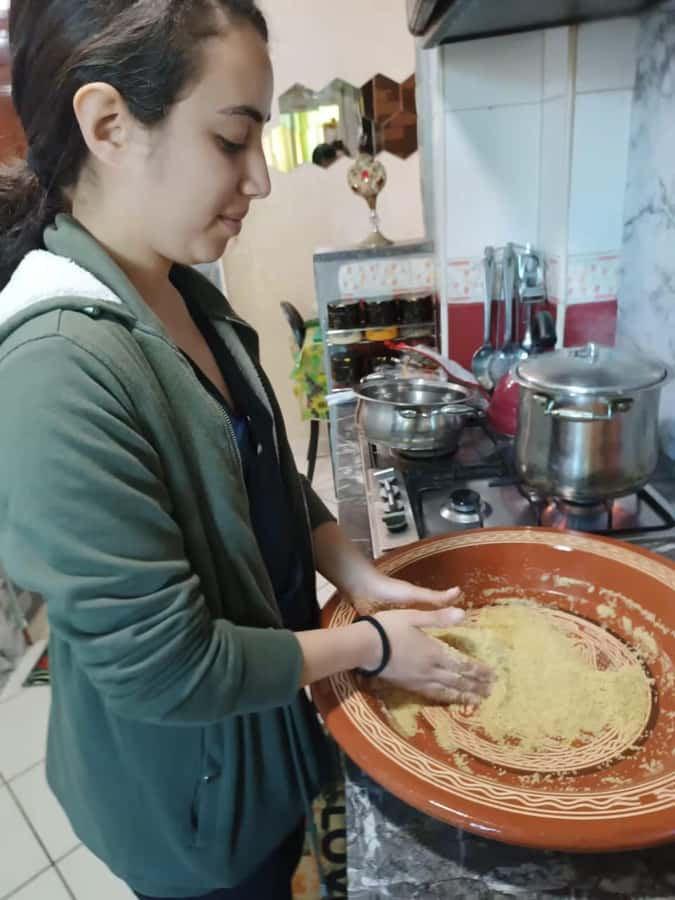
The exact dishes can vary, but the class focuses on well-known Moroccan staples. Tagine is one likely centerpiece, and one session included tagine with preserved lemon. Couscous with vegetables was also prepared during that class. Pastilla and Moroccan salads are included among the possible dishes.
That variety gives you a good introduction to different parts of Moroccan cooking. Tagine teaches you about slow cooking and the way spices, vegetables, meat, preserved ingredients, or other additions build flavor over time. Couscous introduces one of Morocco’s most familiar dishes and shows how grains and vegetables can form the center of a shared meal. Pastilla brings a different style, with a more elaborate presentation and a contrast of savory and sweet flavors.
You should not expect a fixed restaurant menu with every dish prepared on every date. The information describes dishes such as tagine or couscous or pastilla, along with salads. Ask about the planned menu when you book if one particular dish matters most to you.
The class is hands-on. You will work with fresh local ingredients and traditional methods rather than simply watching Inas do all the work. That makes the four-hour duration useful. You have time to take part, ask questions, follow the process, and sit down for the meal without rushing through the afternoon.
I also like that the teaching is aimed at home cooks. One participant found the recipes clear and easy to follow and left feeling ready to try them at home. That is a good measure of a cooking class. You should leave with more than a full stomach. You should understand enough of the method to repeat at least some of it in your own kitchen.
The value of learning family cooking methods
The phrase secret tips can sound like sales language, but here it points to a real benefit of being taught by a home cook. Family recipes often rely on small judgments that a written recipe leaves out: how ingredients should look before the next step, how seasoning is adjusted, or when a dish is ready. Inas can explain those choices as you work.
This is where the class differs from simply ordering Moroccan food. In a restaurant, you taste the finished dish. Here, you see how ingredients become a meal and how a cook makes decisions along the way. You also have a chance to ask about the customs connected to the food.
The family background matters too. Inas learned from two older generations of cooks, and the class presents those methods as part of a living household tradition. You are not promised a formal culinary qualification, and this is not a substitute for professional chef training. But for a visitor who wants practical Moroccan recipes and a better sense of home cooking, the family approach has real value.
The class is offered in Arabic, French, and English. That language range makes the lesson more accessible, especially when discussing detailed cooking steps. Group size is limited to 10, which should allow more direct help than a large demonstration. With a full group, the amount of hands-on time can vary, so it is sensible to take an active role rather than wait for instructions at every step.
The shared meal is more than a final course
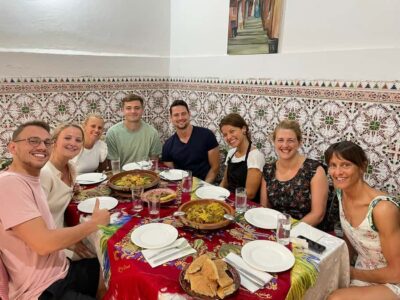
Once the cooking is finished, you sit with the family and eat together. This is one of the most important parts of the experience. The meal turns a cooking lesson into a social visit, with time for stories, customs, and conversation.
Moroccan hospitality is central to the class. The family does not simply teach you, then send you away with a container of food. You share the food in the same home where it was prepared. That makes the experience feel connected from start to finish: ingredients, cooking, conversation, and the table all belong to one setting.
Several participants described Inas and her family as welcoming and patient. One person said the family treated them like family by the end of the evening. Another valued the chance to make friends with other people in the group, including visitors from Australia. These details show why the small-group format matters. You are likely to have a more social afternoon than you would in a large class where everyone keeps to their own workstation.
Dietary needs are worth raising before the class. Inas has accommodated dietary requests, but you should not assume every request can be handled automatically. Contact the provider in advance and explain what you need so the menu can be planned sensibly.
Same base, a different sort of day:
- From Marrakech: Casablanca Tour with Hassan II Mosque Visit
★ 4.7 · 4,756 reviews - Casablanca: Hassan II Mosque Premium Tour with Entry Ticket
★ 4.5 · 2,971 reviews - Casablanca City Tour with Hassan II mosque ticket
★ 5.0 · 2,480 reviews - Casablanca: City Tour with Hassan II Mosque Entry Ticket
★ 4.6 · 1,137 reviews
Four hours that suit a relaxed Casablanca day
The activity lasts four hours. That is long enough for a complete cooking session and a shared meal, so you should treat it as a major half-day plan rather than a quick stop between attractions.
A typical flow is likely to include arrival at the home, introductions, an explanation of the dishes and ingredients, hands-on preparation, cooking time, and the final meal. The pace should be relaxed enough for conversation and questions. Cooking is not always fast, especially when traditional methods are involved, so the length allows the food to receive proper attention.
The class can work well early in a Casablanca stay. You will gain a useful introduction to Moroccan food before ordering meals elsewhere. It can also be a good choice near the end of a visit, when you want a more personal memory than another sightseeing stop.
Transportation is not included. You must make your own way to Résidence El Fath on Abdellah Ibrahim Street at BIM Attacharok, and you should allow time to find the exact residence and meeting point. The information does not include a pickup service, hotel transfer, or accommodation.
One participant who arrived by car received protected indoor parking from Inas. That was a personal convenience rather than a stated part of the package, so do not count on it without asking. The safest plan is to confirm arrival instructions and transport details before the day of the class.
Is $60 a fair price?
At $60 per person, this is not the cheapest way to eat in Casablanca. It is also not just the price of a meal. You are paying for four hours of instruction, ingredients, a cultural visit, and a shared meal with the family.
I consider that reasonable value for people who want active participation. A restaurant meal may cost less and may let you sample Moroccan flavors, but it will not teach you how the food was made or introduce you to the household behind it. A standard cooking demonstration may offer more equipment and structure, but it may not include the same personal contact.
The value is strongest if you will use what you learn later. Someone who wants to recreate tagine, couscous, or Moroccan salad at home gains more from this class than someone who only wants a single meal. The family techniques and practical guidance are part of what you are buying.
The value is weaker if you dislike group activities, prefer a formal kitchen, or want a menu guaranteed in advance. A maximum of 10 people is small, but it is still a group. The class is also hosted in a private home, so the experience is personal rather than luxurious.
Booking offers some useful flexibility. You can reserve now and pay later, and cancellation is allowed up to 24 hours in advance for a full refund. Check the available starting times, since the four-hour session does not have one universal departure time.
Who will enjoy this experience most?
I would recommend the class to you if food is one of your main ways of getting to know a place. It suits couples, friends, solo visitors, and families who are comfortable sharing a kitchen and a table with new people.
It is especially good for:
- Home cooks: You get practical methods, not just a tasting.
- First-time visitors to Morocco: The food provides an easy entry into local customs.
- People who value personal contact: You spend time with Inas and her family in their home.
- Small groups of friends: The four-hour format gives you time to cook and talk.
- Visitors with dietary needs: Inas has shown flexibility, but you should explain your needs ahead of time.
- People looking for an alternative to sightseeing: This offers a closer look at daily life than a quick visit to a major attraction.
You may want to choose another activity if your main goal is a professional chef lesson, a luxury food setting, or a tightly fixed menu. This class is about household cooking and welcome, not culinary performance.
What to know before you book
The home setting is the biggest strength and the main point to consider. You should be comfortable entering a local residence and taking part in a family activity. The atmosphere is described as warm and informal, but it will not feel like a commercial studio with identical workstations for every participant.
Wear something comfortable for several hours of cooking and eating. The supplied information does not set a dress code or list specific equipment, so ask if you have concerns about what to bring.
Confirm the dish plan if you have a strong preference for tagine, couscous, pastilla, or salads. Also confirm your meeting instructions, especially if you are unfamiliar with Casablanca or arriving by car. The meeting point is Résidence El Fath on Abdellah Ibrahim Street at BIM Attacharok, and transportation is not included.
The available teaching languages are Arabic, French, and English. Groups are limited to 10 people. Those details make the activity approachable, but the amount of individual instruction can still depend on the number of people attending.
Should you book the Casablanca cooking class?
Book it if you want to cook Moroccan food with a real family, learn methods passed through generations, and share the finished meal at the same table. The personal welcome from Inas, the small group, and the chance to ask about food and customs give this experience more substance than a standard meal.
Think twice if you want a formal culinary school, guaranteed dishes, or transport from your hotel. For everyone else, $60 buys a useful four-hour introduction to Moroccan home cooking and a genuine social connection in Casablanca. I would choose it for the chance to learn tagine and couscous directly from Inas, then sit down with her family and enjoy what we prepared together.
FAQ
Where does the cooking class take place?
The class takes place in a local family’s home in Casablanca. The meeting point is Résidence El Fath on Abdellah Ibrahim Street at BIM Attacharok.
How long does the experience last?
The cooking class lasts four hours. Starting times depend on availability.
What dishes can I learn to prepare?
The class can include traditional dishes such as tagine, couscous, pastilla, and Moroccan salads. The exact menu may vary.
Who teaches the cooking class?
Inas leads the class and welcomes participants into her family home. She learned Moroccan cooking from her grandmother and mother.
Which languages are available?
The class is offered in Arabic, French, and English.
How many people can join the class?
It is a small-group experience limited to 10 participants.
Is a meal included?
Yes. After the cooking session, you share the prepared meal with the local family.
Is transportation included?
No. Transportation to and from the meeting point is not included.
Can I request help with dietary needs?
Dietary requests can be accommodated in some cases. You should discuss your needs with Inas before the class.
Can I cancel the booking?
You can cancel up to 24 hours in advance for a full refund. You can also reserve now and pay later.
Just added in Casablanca
- Casablanca Airport Transfer from hotel in Casablanca★ 5.0 · 18 reviews
- Your Private Casablanca Transfer★ 5.0 · 52 reviews
- Exclusive tour of Casablanca with access to the Hassan II Mosque★ 5.0 · 205 reviews
- 14 Days From Casablanca- Morocco Grand Tour★ 5.0 · 24 reviews
- Sunset Camel Ride in the Palm Grove Of Marrakech★ 5.0 · 34 reviews
- Casablanca Night Tour with Andalusian Dinner Show★ 4.5 · 25 reviews
- Chefchaouen the Blue City Full-Day Trip from Casablanca★ 4.5 · 79 reviews
- Marrakeck City tour from Casablanca all the day around trip★ 5.0 · 35 reviews
Cooking Classes, compared.
Traditional Moroccan Cooking Class & Market Visit
Read our review →
Moroccan Dishes Cooking Class with a Local Chef
Read our review →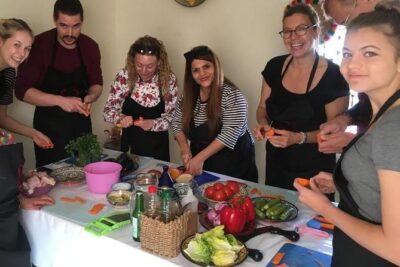
Moroccan Cooking Class & Marrakech Market Visit with Chef Khmisa
Read our review →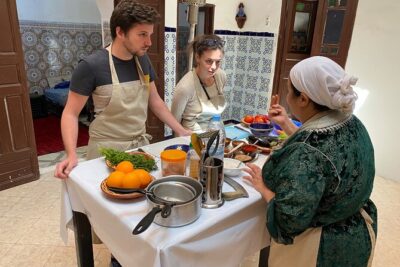
Half-Day Cooking Class with Local Chef Laila in Marrakech
Read our review →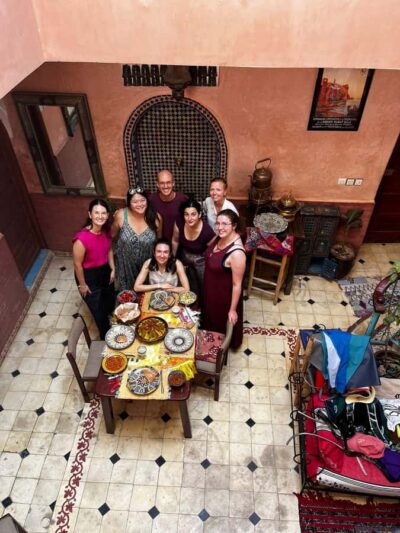
Browse the lists this tour appears in