
Reviewed · COOKING CLASSES
Moroccan Cooking Class: Farm-to-Table Tagine
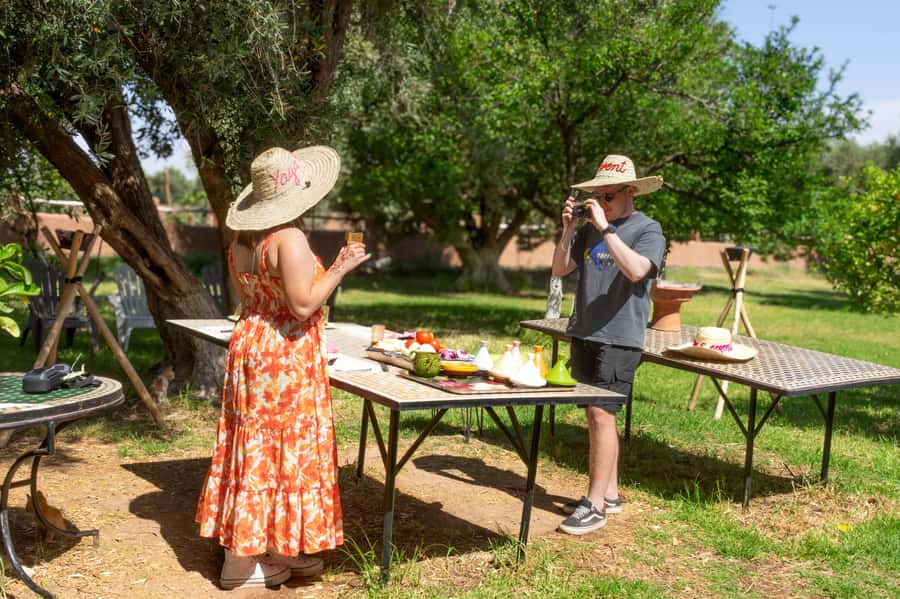
A quiet farm, an open wood fire, and a tagine you prepare yourself make this a fine break from Marrakech’s crowded streets. You’ll cook with produce grown on-site, walk among olive and citrus trees, and sit down to a meal that connects the recipe with rural Moroccan life. Hannah is the main instructor, with other family members helping on some sessions.
I like the hands-on pace, especially the chance to make both a chicken and a vegetable tagine in some classes. I also like the farm visit, where you may meet horses, donkeys, sheep, and peacocks while your food cooks. The main drawbacks are the outdoor setting, which means sun and walking, and the fact that pregnant women and wheelchair users cannot take part.
Key points at a glance
- Two tagine recipes may be prepared: Classes can include chicken and vegetable versions, plus a fresh side salad.
- A real working farm: Walk through olive, lemon, orange, and clementine trees and see seasonal produce growing.
- Open-fire cooking: Your tagine cooks over a specialized wood fire, giving the class a strong sense of place.
- Warm, family-led teaching: Hannah, her sister, Nesrin, and other helpers have worked with adults, solo visitors, and children.
- A full meal is included: Eat your tagine with bread, salads, olives, fruit, and local side dishes.
- Transport is part of the price: Pickup and return are arranged from Hotel Ali in central Marrakech.
Leaving Marrakech for a farm kitchen
The experience begins at Hotel Ali, a busy and easy-to-recognize meeting point in central Marrakech. Arrive 15 minutes early. The pickup area can be crowded, so pay attention to the driver and keep your phone available before departure.
Transport to and from the farm is included in the $94 price. That matters here. You are not simply paying for a lesson in a city kitchen, but for the ride into the countryside, the farm visit, the ingredients, and lunch. One driver named Abdo has been praised for being prompt and friendly, and some pickups have included a return close to the visitor’s riad.
Communication at pickup deserves a little care. One visitor had no mobile data and missed calls and messages on the morning of the trip. I would confirm the pickup details in advance and arrive early, rather than trying to sort it out in the crush outside Hotel Ali.
The drive takes you away from the noise and traffic of central Marrakech. The setting is a family-run farm, with gardens and groves rather than a polished restaurant backdrop. That is the point. You get a look at food production and rural life before sitting down to cook.
Other cooking classes in Marrakech people book:
- Marrakech: Moroccan Cooking Class with Pickup
★ 4.6 · 1,862 reviews - Marrakech: Traditional Moroccan Cooking Class & Market Visit
★ 4.8 · 1,861 reviews - Marrakesh: Moroccan Dishes Cooking Class with a Local Chef
★ 5.0 · 1,615 reviews
Mint tea beneath the olive trees
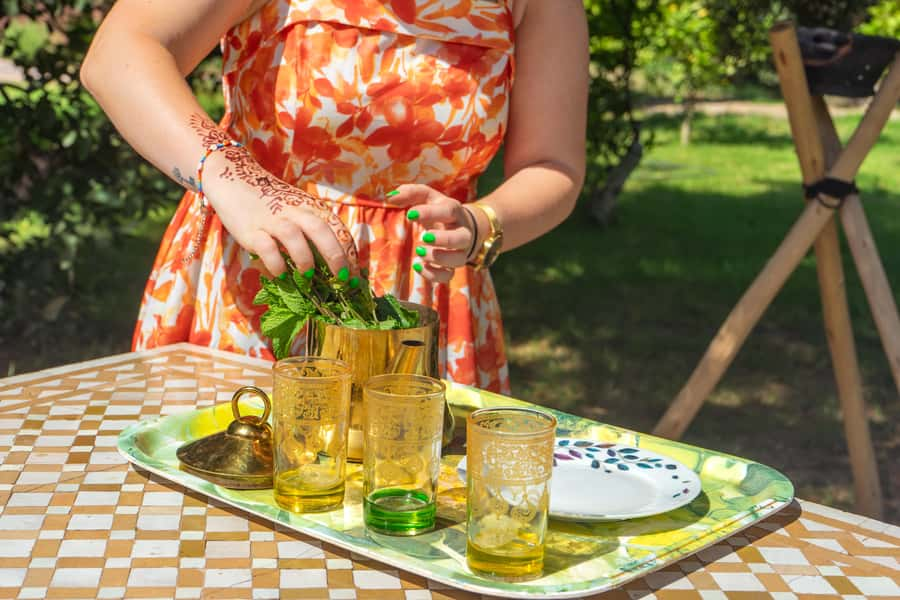
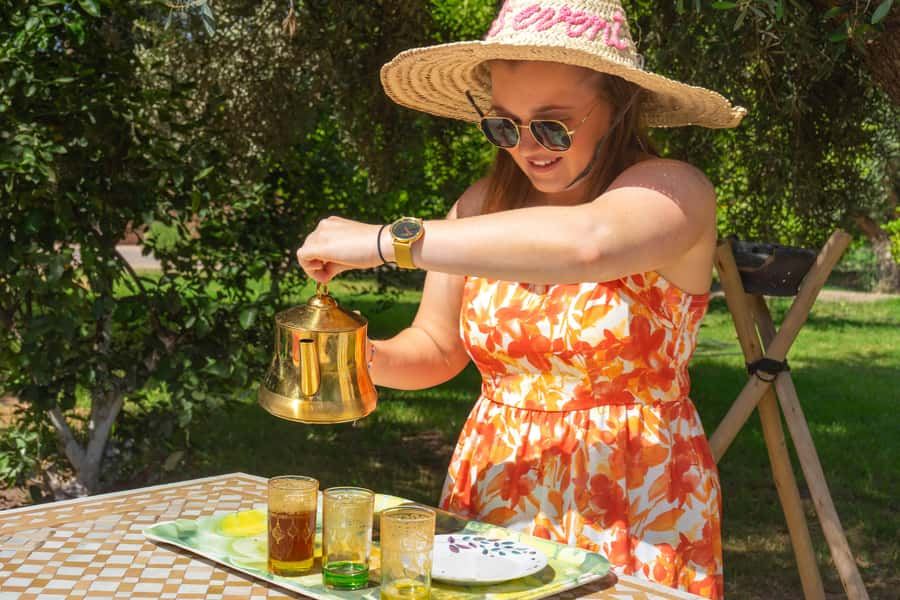
On arrival, expect a welcome with Moroccan mint tea under the olive trees. It is a gentle start, giving you time to settle in before the cooking begins.
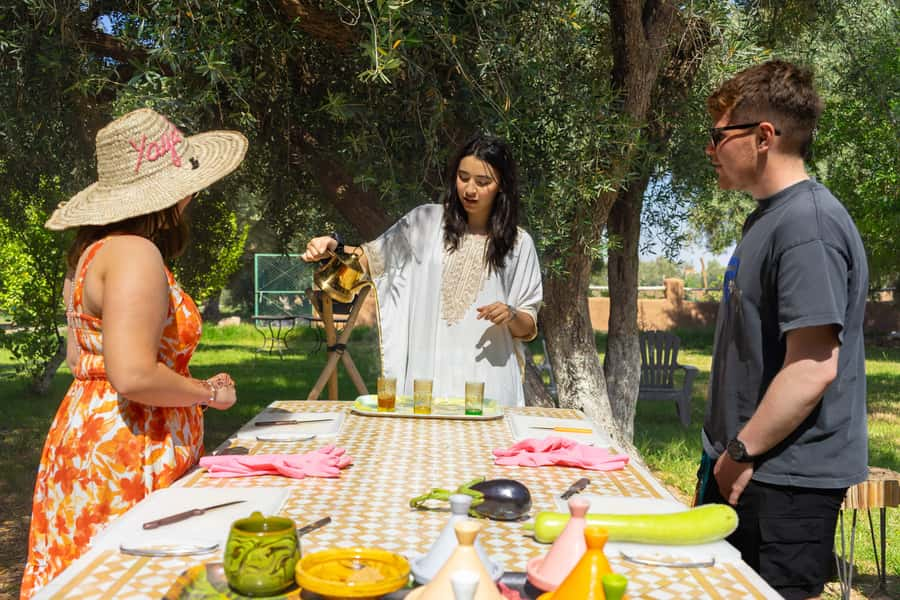
The opening introduction covers the main ingredients and basic Moroccan cooking methods. You will see the vegetables and spices used for the tagine, then begin preparing the dish yourself. The class is not just a demonstration where you watch someone else chop and season. You are expected to take part.
The guides speak English and French. Hannah has been especially noted for a patient teaching style, a good sense of humor, and clear explanations of Moroccan food and customs. The exact group size depends on your booking, since private and small-group options are available.
That smaller format can make a real difference. You can ask about spice combinations, cooking times, and substitutions without shouting across a large room. Families also have a useful advantage here. Children aged 9 to 14 have taken part successfully, and the instructors have helped them stay involved rather than treating them as extra luggage at the table.
Preparing tagine with fresh farm produce
Tagine refers both to the conical cooking vessel and to the slow-cooked dish prepared inside it. During this class, you learn the building blocks: selecting vegetables, grinding spices, arranging ingredients, and layering flavors before the pot goes over the fire.
The ingredients are fresh and organic, with produce grown on the farm when available. That farm-to-table link gives the cooking real meaning. You are not just following a recipe from a card. You can see the kind of gardens and trees that supply the meal.
The menu can include two tagines, usually a chicken version and a vegetable version, along with a salad. Vegetarian needs and allergies have been accommodated during past sessions, but you should state your requirements when booking. The information provided does not promise every dietary request, so do not wait until the cooking starts.
The open wood fire is one of the more memorable details. Cooking outdoors makes the process feel less like a standard class and more like a shared household task. It also means conditions can vary with the weather. Wear comfortable clothing and shoes, and bring water, a hat, and sunscreen.
Do not expect a slick cooking studio with every tool lined up in stainless steel. The appeal is the setting, the local method, and the chance to work with a family that cooks in its own environment. For some people, that makes the experience more personal. If you prefer air conditioning and a tightly timed kitchen lesson, this may feel rustic.
What happens while the tagine cooks
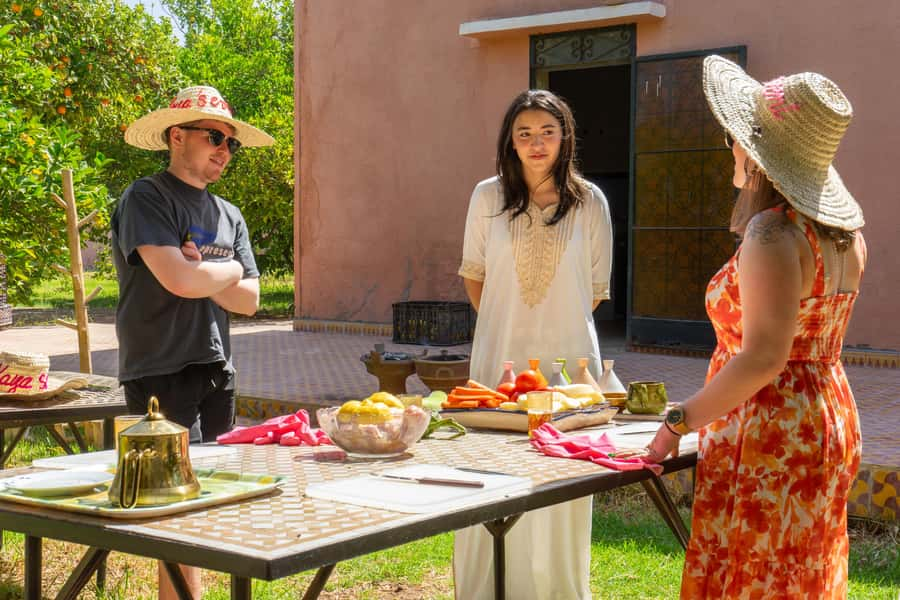
Tagine takes time, and the waiting period is put to good use. You can walk around the farm, see the organic gardens, and learn about seasonal produce.
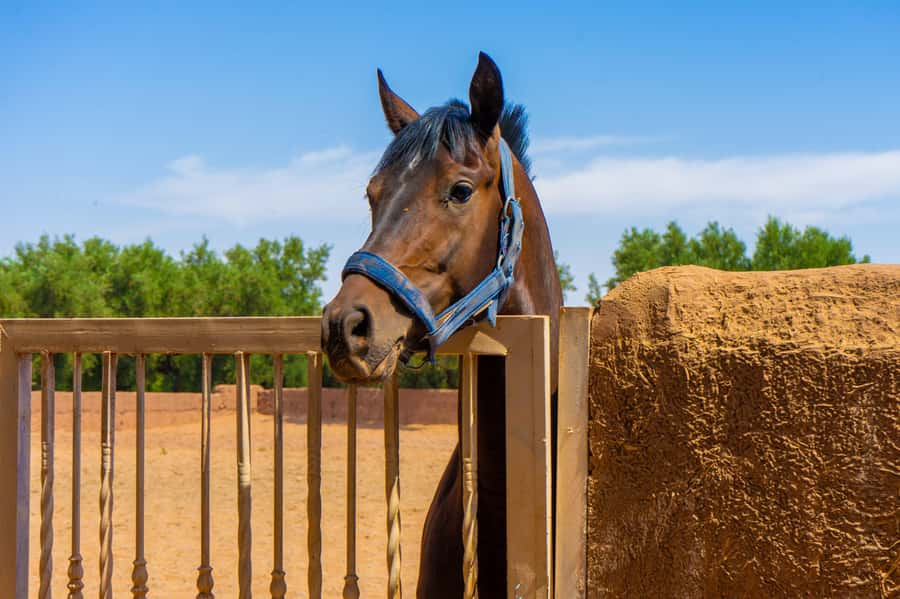
The grounds include olive trees and citrus trees, including lemon, orange, and clementine trees. Some sessions have also included a horse farm, with racing horses, donkeys, sheep, and peacocks. The animals are not a separate attraction with a formal show. They are part of the working setting, which gives the visit a relaxed, rural feel.
This is where the experience differs from a cooking class held inside the medina. Marrakech can be noisy and intense, while the farm offers open space and time to wander. You are still learning about food, but you also get a pause from shops, traffic, and the tight lanes of the old city.
The walk is not described as difficult, but you should be comfortable on your feet and ready for outdoor paths. Wheelchair users cannot take part, and the activity is not suitable for pregnant women. Those restrictions are important to consider before booking, not after you arrive.
Bring a camera if you like taking pictures. The olive groves, gardens, animals, and open-fire cooking offer more varied scenes than a standard indoor lesson. Ask before photographing people or private areas, and keep your camera out of the way when working near the fire.
More cooking in Marrakech:
- Moroccan Cooking Class & Marrakech Market Visit with Chef Khmisa
★ 5.0 · 1,504 reviews - Half-Day Cooking Class with Local Chef Laila in Marrakech
★ 5.0 · 952 reviews - Marrakech: Moroccan Cooking Class with a Local Family
★ 4.9 · 668 reviews - Marrakech: Moroccan Cuisine Cooking Class in Local Home
★ 4.8 · 508 reviews
Bread, olive oil, and a proper farm lunch
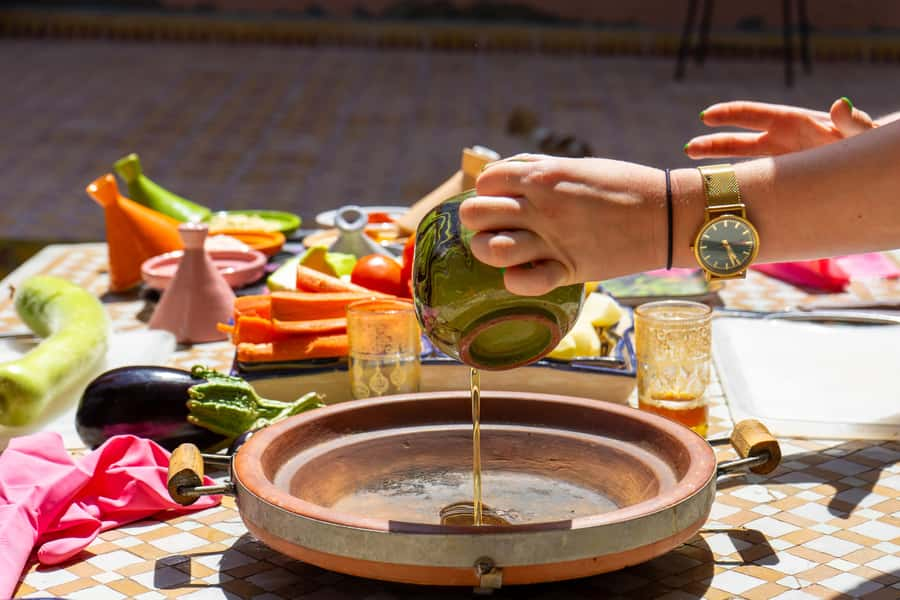
While the tagine finishes, you taste homemade bread, olive oil, and local side dishes. These small items are not filler. Bread is central to Moroccan meals, and tasting it with local olive oil helps you notice the quality of simple ingredients.
When the tagine is ready, the group gathers around a communal table. Lunch includes the dish you prepared, with bread, fresh salads, olives, and fruit for dessert. In some sessions, the chicken and vegetable tagines are served together, giving you a chance to compare the two.
The communal table is a good fit for people who enjoy food as a social event. You eat what you cooked, surrounded by the farm that supplied much of the meal. That connection is the strongest reason to choose this over a restaurant lunch.
Portions, exact dishes, and the number of tagines can vary by group. The experience description promises lunch with the prepared tagine and local accompaniments, while individual classes have included two tagines and salad. If you have a particular menu in mind, ask before booking.
The recipes are another practical benefit. Hannah has offered recipes for the dishes prepared, along with additional tagine recipes in some cases. You may not reproduce the farm setting at home, but you can bring back a useful cooking skill instead of only a photograph.
How the guides shape the experience
The people leading the class are a major part of its appeal. Hannah has guided solo visitors, couples, families, and small groups. Her approach appears to be patient and practical, with room for questions and different levels of cooking confidence.
Her sister and helpers have also assisted during some sessions. Nesrin is one of the names associated with the farm experience, and younger helpers have helped with both the cooking and the farm visit. Since this is a family-run setting, the exact team may vary.
That personal approach is especially helpful if you are traveling with children. The class gives them clear jobs, from handling ingredients to watching the tagine cook, while the farm provides a reason to move around between steps. Teenagers and younger children have both been included in past groups.
Solo visitors can also book this comfortably. One solo participant had a private class and prepared two kinds of tagine with individual guidance. If you want the most direct instruction, check whether a private option is available for your date.
The language options are English and French. If you need detailed help with allergies or cooking substitutions, explain those needs clearly before the lesson begins.
Is $94 a fair price?
At $94 per person, this is not the cheapest way to eat lunch in Marrakech. You can find a lower-cost meal in the city. But the comparison is not really between this class and a restaurant plate.
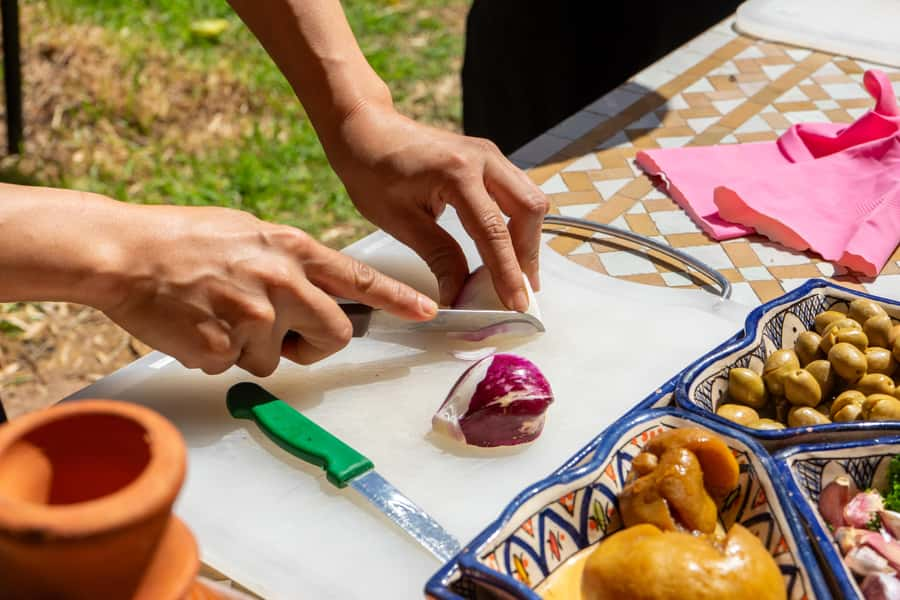
The price includes round-trip transportation, a three-hour cooking class, a local instructor, organic ingredients, the farm walk, tastings, and lunch. You also receive time in a rural setting and the chance to take the recipe home. For visitors who want a full half-day style outing without arranging separate transport, the package is reasonably priced.
The value is strongest if you care about participation. If you only want to eat tagine, spend your money at a restaurant. If you want to understand how the dish is assembled, see where some ingredients grow, and cook your own meal, the added cost makes more sense.
Private or small-group availability may also improve the value for families, couples, and solo visitors. You receive more attention and can set a comfortable pace. Ask about the group format when checking availability, since the experience can be arranged in different ways.
Free cancellation up to 24 hours before the activity and the reserve-now, pay-later option make it easier to fit into a changing Marrakech schedule. Still, the three-hour duration is fixed, so leave enough time around it if you have a flight or another timed booking. One visitor with a same-day flight received help getting back in time, but I would not rely on a tight connection.
What to bring and who should book
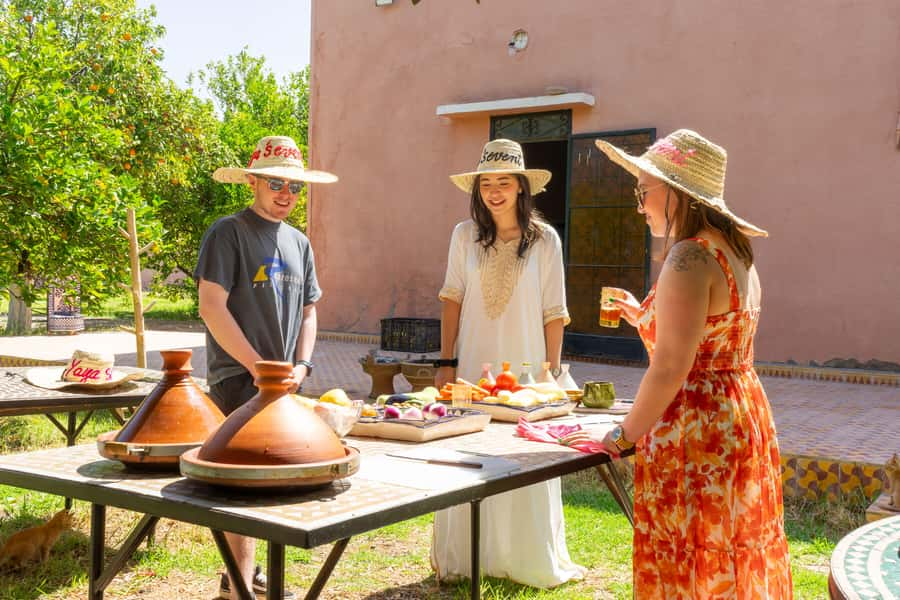
Wear light, comfortable clothes and shoes suitable for walking around the farm. A hat, sunscreen, and water bottle are practical necessities, especially during hot weather. Bring a camera if you want pictures of the gardens and animals.
Smoking and pets are not allowed. The outdoor setting also means you should be ready for sun, dust, and uneven ground. The activity is not suitable for pregnant women or wheelchair users.
I would recommend this class to:
- Food lovers who want to cook rather than simply watch
- Couples looking for a quiet countryside outing
- Families with children who enjoy animals and hands-on activities
- Solo visitors who want a small-group or private lesson
- Anyone who wants a break from central Marrakech
- Home cooks who would like Moroccan recipes to use later
I would be more cautious if you have limited mobility, dislike outdoor heat, need a fully guaranteed menu, or prefer a short demonstration with no walking. This experience is about the farm setting as much as the tagine.
Should you book the farm-to-table tagine class?
Book it if you want more than a meal. The best parts are the open-fire cooking, the organic produce, the peaceful olive groves, and the patient instruction from Hannah and her family team. The farm walk and animal encounters give the three hours a welcome sense of variety.
Skip it if your schedule is packed, you need wheelchair access, or you are looking for a city-center activity with no transport time. For most food-focused visitors, though, the $94 covers a satisfying mix of cooking, lunch, countryside, and local contact. Confirm the pickup details, arrive early at Hotel Ali, and bring sun protection. You’ll leave with a full stomach and a recipe you can try at home.
FAQ
Where does the cooking class take place?
It takes place on a family-run farm just outside Marrakech, in the Marrakesh-Safi region.
Where is the meeting point?
Meet in front of Hotel Ali in central Marrakech.
Is transportation included?
Yes. Transportation to and from the farm is included.
How long does the experience last?
The cooking class and farm visit last three hours.
What languages do the instructors speak?
The instructors speak English and French.
What food is included?
You prepare and eat a Moroccan tagine using fresh ingredients. The meal also includes homemade bread, olive oil, local side dishes, salads, olives, and fruit. Some sessions include both chicken and vegetable tagines.
Can vegetarians or people with allergies take part?
Vegetarian dishes and allergies have been accommodated during past classes. Tell the provider about your needs when booking.
Is the class suitable for children?
Children have taken part successfully, including children aged 9 to 14. The instructors can involve them in the cooking and farm activities.
Is the activity suitable for wheelchair users or pregnant women?
No. The activity is not suitable for wheelchair users or pregnant women.
What should I bring?
Bring comfortable clothing, walking shoes, a hat, sunscreen, water, and a camera if desired. Arrive 15 minutes before the start time.
Can I cancel or pay later?
You can cancel up to 24 hours in advance for a full refund. The reserve-now, pay-later option lets you book without paying immediately.
More farm visits near Marrakech
Just added in Marrakech
- Quad Ride In The Agafay Desert★ 5.0 · 39 reviews
- Quad Biking Agafay desert★ 5.0 · 20 reviews
- Marrakech: Tailor-Made City Tour With Your Own Private Guide★ 4.9 · 236 reviews
- Surf Training and Lunch on Essaouira Day Trip from Marrakech★ 4.9 · 51 reviews
- Essaouira: Surf Trip from Marrakech★ 4.9 · 31 reviews
- Marrakech palm grove: Sunset camel ride★ 4.8 · 194 reviews
- Marrakech: Sunrise Desert Tour with Camel Ride and Breakfast★ 4.4 · 36 reviews
- Marrakech : Agafay Desert Sunset Camel Ride & Luxury Dinner★ 4.3 · 39 reviews
Cooking Classes, compared.
Traditional Moroccan Cooking Class & Market Visit
Read our review →
Moroccan Dishes Cooking Class with a Local Chef
Read our review →
Moroccan Cooking Class & Marrakech Market Visit with Chef Khmisa
Read our review →
Half-Day Cooking Class with Local Chef Laila in Marrakech
Read our review →
Browse the lists this tour appears in